バイオ肥料市場
バイオ肥料市場調査報告書 タイプ別(窒素固定、リン酸溶解、その他)、作物タイプ別(穀物・穀類、豆類・油糧種子、果物・野菜)、形状別(乾燥、液体)、用途別(葉面処理、根浸漬、植物根付け、その他)、微生物タイプ別(リゾビウム、アゾトバクター、アゾスピリルム、シュードモナス、バチルス、VAM、その他)および地域別(北米、ヨーロッパ、南米、アジア太平洋、中東およびアフリカ) - 2035年までの予測
Forecast Period
2025-2035
CAGR
10.53%
2024 Market Size
$ 2.24 Billion
2035 Market Size
$ 6.75 Billion
世界のバイオ肥料市場の概要
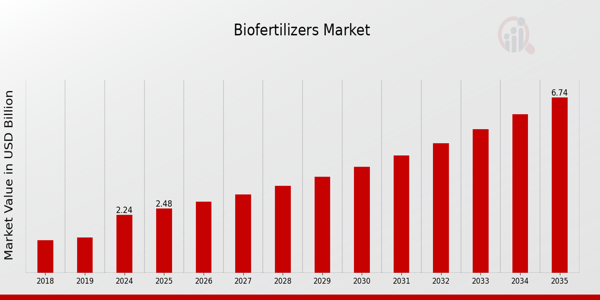
MRFR分析によると、バイオ肥料市場規模は2023年に2(10億米ドル)と推定されています。バイオ肥料市場業界は、2024年の2.24(10億米ドル)から2035年までに67.5(10億米ドル)に成長すると予想されています。バイオ肥料市場のCAGR(成長率)は、予測期間(2025年~)中に約10.53%と予想されています。 2035)
主要なバイオ肥料市場動向のハイライト
バイオ肥料市場は、いくつかの主要な市場推進要因によって顕著な成長を遂げています。持続可能な農業と化学肥料が土壌の健康に及ぼす悪影響に対する意識の高まりにより、バイオ肥料の需要が高まっています。農家は、バイオ肥料が土壌の肥沃度を高め、作物の収量を増加させ、環境への影響を軽減することをますます認識しつつあります。持続可能な農業慣行を促進するさまざまな国の政府政策に支えられた有機農業の推進も、もう 1 つの重要な推進力です。 バイオ肥料業界には、検討すべき機会がいくつかあります。
微生物製剤や植物の成長を促進する根粒菌など、バイオ肥料開発における革新的な技術は、企業が製品の有効性を高め、環境に配慮した消費者にアピールする道を提供します。また、非伝統的な作物やさまざまな気候帯でのバイオ肥料の適用を拡大する可能性もあり、これは新しい市場や顧客ベースの開拓に役立ちます。 最近の傾向は、合成代替品よりもバイオベースの製品を好む傾向が高まっていることを示しています。これは多くの地域で明らかであり、消費者はよりクリーンで環境に優しい農業を求めています。
バイオ肥料と精密農業技術の統合もますます一般的になってきており、効率的な資源利用と最適化された作物管理が促進されます。さらに、特定の農業ニーズに合わせた高度なバイオ肥料配合物の開発に焦点を当てて、研究機関と農業企業とのコラボレーションが増加しています。全体的に、バイオ肥料市場は、イノベーションと消費者意識の高まりによって、より持続可能な農業実践に向けて移行しています。
出典: 一次調査、二次調査、市場調査の将来データベースとアナリストのレビュー
バイオ肥料市場の推進要因
オーガニック製品の需要の高まり
有機農業と持続可能な農業に向けた動きは、バイオ肥料市場業界の重要な推進力です。有機製品の健康上の利点に対する一般の意識の高まりにより、より多くの農家が有機技術を採用するようになりました。食糧農業機関 (FAO) によると、2020 年に有機農業は世界中で約 7,230 万ヘクタールをカバーしており、この数字は劇的に増加する可能性があります。特に、国際有機農業運動連盟(IFOAM)などの有名な団体は、有害な化学物質を使用せずに土壌肥沃度を向上させる能力を理由に、バイオ肥料で処理された畑への関心が高まっていることを示しています。
その結果、有機農業技術への変化によりバイオ肥料の需要が高まり、農業へのより持続可能なアプローチが可能になると予測されています。
政府の支援と取り組み
世界中の国々は持続可能な農業の重要性をますます認識しており、それがバイオ肥料の使用を支援するさまざまな政府の取り組みにつながっています。国連食糧農業機関の報告書によると、いくつかの政府がバイオ肥料の採用促進を目的とした支援プログラムを開始している。たとえば、インド政府の持続可能な農業に関する国家使命は、農業における化学物質の投入を削減するためにバイオ肥料の使用を強調しています。
このような政府の支援は、研究開発活動を強化するだけでなく、バイオ肥料を利用する農家への財政的支援も増やし、それによってバイオ肥料産業の成長を促進します。
バイオ肥料生産における技術の進歩
バイオ肥料生産プロセスにおける技術の進歩は、バイオ肥料市場業界の成長に大きく貢献しました。微生物技術と遺伝子工学の革新により、バイオ肥料の効率と有効性が向上しました。さまざまな農業技術協会の報告書によると、新しい生産技術により、製造業者はより高い収量と生産コストの削減が可能になります。
この運用効率の向上は、特に費用対効果と付加価値が重視されている市場では非常に重要です。老舗農業企業は研究機関と提携してバイオ肥料技術を強化し、市場の成長をさらに推進しています。
バイオ肥料市場セグメントの洞察
バイオ肥料市場タイプの洞察
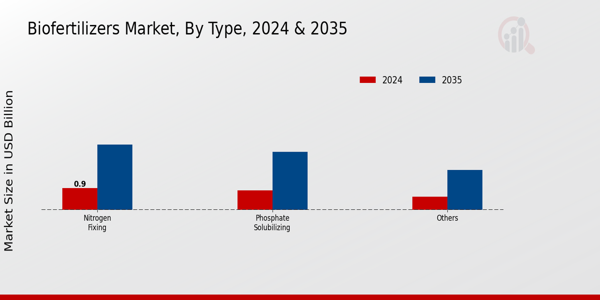
バイオ肥料市場は、持続可能な農業と土壌の健康に焦点を当てたダイナミックなセクターであり、主にタイプ別に窒素固定、リン酸可溶化、その他に分類され、成長とイノベーションの主要分野を反映しています。 2024 年の窒素固定セグメントの評価額は 9 億米ドルとなり、市場全体への重要な貢献者としての地位を確立しており、成長が期待され、2035 年までに評価額は 27 億米ドルに達すると予想されます。
このセグメントの優位性は、大気中の窒素を植物が利用できる形に変換することで土壌の肥沃度を高める能力に根ざしており、それによって化学肥料への依存を減らし、環境に優しい農業慣行を促進します。逆に、リン酸塩可溶化セグメントは、2024年に8億米ドルと評価され、2035年までに24億米ドルに成長すると予想されており、リンの利用可能性を向上させる上で重要な役割を果たしています。土壌は植物の成長と作物の収量にとって非常に重要です。
リンは植物が利用できない形で結合していることが多いため、この栄養素を可溶化するバイオ肥料の有効性は持続可能な農業実践をサポートし、農業システムにおけるリンの重要性を強調します。その他のカテゴリーは、2024年の評価額が5億4,000万ドルと最も小さいものの、2035年までに16億5,000万ドルに上昇し、従来型ではないさまざまなタイプのバイオ肥料が含まれており、ニッチ市場や分野内のイノベーションに貢献しています。これらの各セグメントは、有機農業、化学肥料の削減、持続可能な農業実践の実施に焦点を当てた広範な市場動向を反映しています。
環境の持続可能性と食糧安全保障がますます重視される中、バイオ肥料市場は大きな需要が見込まれており、これらの重要な農業投入物への研究、開発、投資の機会が強調されています。
出典: 一次調査、二次調査、市場調査の将来データベースとアナリストのレビュー
バイオ肥料市場の作物タイプに関する洞察
バイオ肥料市場は、さまざまな農産物にわたる多様な用途により、作物タイプセグメントの影響を大きく受けます。市場は2024年に22億4,000万米ドルの評価額に達すると予測されており、持続可能な農業実践に対する需要の増加が市場の成長を推進しています。穀物と穀物は食料安全保障に不可欠であり、収量と土壌の健康を高めるためにバイオ肥料を多量に使用する必要があります。
さらに、豆類や油糧種子は窒素固定作物としても重要な役割を果たしており、土壌の栄養素の補充に役立ち、貴重な分野となっています。健康志向の食生活の一部としてますます増えている果物や野菜には、品質を向上させ、保存期間を延ばすために集中的にバイオ肥料が施用されています。これらのカテゴリーの重要性は、作物生産におけるそのカテゴリーのシェアを反映しており、生産者が環境に優しいソリューションを求める中での市場拡大の可能性を強調しています。持続可能な農業に対する意識の高まりと有機農業を推進する厳格な規制枠組みにより、この分野は成長を続けており、バイオ肥料業界にイノベーションと発展の機会をもたらしています。
バイオ肥料市場形態に関する洞察
バイオ肥料市場は形態別に分割されており、顕著なカテゴリは乾燥バイオ肥料と液体バイオ肥料です。 2024 年の時点で、市場は 22 億 4,000 万米ドルと評価されており、環境に優しい農業ソリューションに対する需要の着実な増加を反映しています。乾式バイオ肥料セグメントは、保管の容易さ、施用効率、保存期間の延長により特に重要であり、土壌の健康と作物の収量を向上させたいと考えている農家の間で人気の選択肢となっています。
逆に、液体バイオ肥料は、その迅速な有効性と既存の農業実践、特に施肥システムにシームレスに統合できる能力で注目を集めています。全体的に、バイオ肥料業界のデータは、持続可能な農業に対する認識の高まり、農業生産性向上の必要性、有機農業イニシアチブに対する政府の支援によって力強い成長軌道を描いていることを示しています。市場の成長は環境への懸念の高まりによってさらに加速され、持続可能な農業にとってバイオ肥料の採用がますます重要になっています。
2035年までに価値が67億5,000万米ドルに達すると予測されるバイオ肥料市場は、利害関係者がイノベーションを起こし、農業分野での需要の高まりに応える魅力的な機会を反映しています。
バイオ肥料市場アプリケーションの洞察
バイオ肥料市場の収益は、持続可能な農業実践に対する意識の高まりによるアプリケーションセグメント内の大幅な成長を反映しています。 2024 年の市場規模は 22 億 4,000 万米ドルと予測されており、世界中でバイオ肥料の採用が増加していることがわかります。このセグメントには、葉の処理、根の浸漬、植物の発根などのさまざまな用途が含まれており、それぞれが農業の生産性と土壌の健康に独自に貢献します。
葉処理は、作物の収量を向上させながら栄養素の吸収を高め、持続可能な農業に不可欠であるため、注目を集めています。根の浸漬は、植物全体の健康と回復力にとって重要な強力な根系を確立する上で重要な役割を果たします。その他のカテゴリーには、特定の作物のニーズに合わせた一連の革新的な用途が含まれており、バイオ肥料の多用途性が強調されています。この市場の成長は、オーガニック食品への需要の高まりと、環境に優しい農業慣行を促進する政府の支援的な取り組みによって促進されています。
ただし、バイオ肥料に関する教育の強化や合成肥料との競争などの課題が存在します。全体的に、バイオ肥料市場データは、市場の成長を促進し、持続可能な農業実践をサポートする上でアプリケーションセグメントの重要性を強調しています。
バイオ肥料市場の微生物の種類に関する洞察
バイオ肥料市場の微生物タイプセグメントは、土壌肥沃度と作物の生産性を高める上で重要な役割を果たし、市場全体の成長に大きく貢献します。世界中で持続可能な農業への需要の高まりを反映して、2024 年までにバイオ肥料市場は 22 億 4,000 万米ドルに達すると予想されます。このセグメントには、マメ科植物の窒素固定に不可欠な根粒菌や、大気中の窒素を固定する能力で知られ、多様な環境で作物に多大な利益をもたらすアゾトバクターなど、さまざまな種類の微生物が含まれています。アゾスピリルムは、植物の成長と回復力を高める成長促進細菌としても重要です。
シュードモナス属とバチルス属は病気の抑制と栄養素の可溶化における役割が認められており、持続可能な農業に不可欠なものとなっています。さらに、小胞性アーバスキュラー菌根菌(VAM)は、栄養素、特にリンの摂取を大幅に強化し、植物の根との共生関係を生み出します。バイオ肥料業界の統計は、農家が化学肥料に代わる環境に優しい代替品を求める傾向が強まっており、有機農業への傾向が高まっていることを示しています。この部門の成長は、従来の農業慣行が環境に与える影響に対する意識の高まりと、土壌の健康と持続可能性を促進する農業の推進によって推進されています。
これらの微生物が農業生産性の向上に貢献するため、この分野は持続可能な有機農業ソリューションの需要に合わせて継続的な成長が見込まれると予想されます。
バイオ肥料市場の地域的洞察
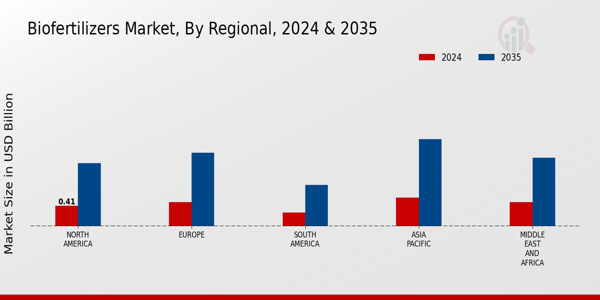
バイオ肥料市場には大きな地域差があり、主要分野がその全体的な評価に際立って貢献しています。地域の多様な力学を反映し、2024 年の市場規模は 22 億 4,000 万米ドルと見込まれています。北米は重要な役割を果たしており、その価値は4億1,500万米ドルに上りますが、持続可能な農業慣行がますます重視されるため、2035年までに12億7,900万米ドルに成長すると予想されています。
もう1つの著名な地域であるヨーロッパの市場価値は2024年に4億8,400万米ドルと評価されており、厳しい環境規制と有機農業のトレンドにより14億8,600万米ドルに増加すると予想されています。アジア太平洋地域は5億8,100万米ドルで市場の大部分を占め、2035年までに17億6,300万米ドルに達すると予測されています。発展途上国の農業生産性向上の必要性が、発展途上国の堅調な成長に貢献しています。南米は2億7,700万米ドルと評価され、8億3,000万米ドルに成長すると予想されており、作物強化のためのバイオ肥料の可能性が徐々に認識されつつある。
最後に、中東とアフリカは、2024年の評価額が4億8,400万米ドルで、農業分野におけるバイオ肥料の意識と導入の高まりを反映して、13億8,300万米ドルに上昇すると予想されています。これらの地域の洞察は、バイオ肥料市場内の多様な需要と成長の可能性を集合的に示しており、持続可能な農業におけるイノベーションと投資の機会を浮き彫りにしています。
出典: 一次調査、二次調査、市場調査の将来データベースとアナリストのレビュー
バイオ肥料市場の主要企業と競争力に関する洞察
バイオ肥料市場の競争に関する洞察は、環境の持続可能性と有機農業の実践が革新と成長を推進する急速に進化する状況を明らかにします。農業が土壌肥沃度、気候変動、より健康的な食料生産の需要に関連する課題の増大に直面する中、バイオ肥料が土壌栄養素を自然に補充する実行可能な解決策として浮上しています。この市場は、確立された農業大手から、生物学的および環境に優しいソリューションに焦点を当てた革新的な新興企業まで、多様なプレーヤーによって特徴付けられます。
これらの競合他社は、バイオテクノロジーと微生物学の進歩を活用して、有機農産物に対する消費者の嗜好の高まりに対応しながら、作物の収量を増やし、土壌の健康を改善できる一連のバイオ肥料を開発しています。従来の化学肥料は徐々にバイオベースの代替肥料に置き換えられ、研究、製品開発、市場浸透の限界を継続的に押し上げる競争環境を促進しています。クラフト ケミカル カンパニーは、イノベーションと持続可能性への取り組みを通じて、バイオ肥料市場で恐るべき存在感を確立しています。
強力な研究開発イニシアチブで知られるクラフト ケミカル カンパニーは、その有効性と信頼性が高く評価されているバイオ肥料製品のポートフォリオを開発しました。同社の強みは、高いブランド名声、広範な流通ネットワーク、農業機関や研究機関との協力パートナーシップにあります。この協力的なアプローチにより、製品の提供が強化されるだけでなく、持続可能な農業における新たなトレンドの先を行くことが保証されます。
クラフト ケミカル カンパニーは、品質と顧客中心のソリューションを戦略的に重視しているため、環境に優しい農法を求める農家の間で好ましい選択肢として位置づけられており、成長するバイオ肥料市場で大きなシェアを獲得することができています。AgBiome は、農業バイオテクノロジーへの最先端のアプローチで知られる、バイオ肥料市場のもう 1 つの注目すべきプレーヤーです。同社の主要な製品とサービスは、土壌の健康を強化し、植物の成長を促進する微生物ソリューションを中心としており、持続可能な農業実践に大きく貢献しています。
AgBiome の強みは、微生物ゲノミクスにおける深く根付いた専門知識とイノベーション能力にあり、これが市場でのプレゼンスを強化するために他の企業との厳選されたパートナーシップや戦略的合併につながっています。これらのコラボレーションにより、AgBiome は製品ラインナップを拡大し、新しい市場にアクセスできるようになり、バイオ肥料ソリューションのリーダーとしての地位を固めることができました。同社は研究開発に熱心に取り組んでおり、新しく効果的な微生物ベースの製品を継続的に導入できる体制を整えており、ダイナミックなバイオ肥料市場でさらなる成長に向けた有利な条件を作り出しています。
バイオ肥料市場の主要企業は次のとおりです。
- クラフトケミカルカンパニー
- アグバイオーム
- アグロフォレストリー研究
- ヴァラグロ
- ビオルチム
- バイオテクノロジー製品
- シンジェンタ
- アラビア農業サービス
- ラビプラスト
- ノボザイム
- バイオワークス
- BASF
- イチョウバイオワークス
- ラレマンド
- ニュートリフィールド
バイオ肥料市場の産業発展
バイオ肥料市場の最近の動向は、持続可能な農業実践への注目の高まりを反映しています。 Kraft Chemical Company、AgBiome、Valagro などの企業は、環境への懸念やバイオベースのソリューションを好む規制改革によって高まる有機肥料の需要に応えるために、製品範囲を拡大しています。 2023年10月、ノボザイムズは、革新的な微生物製剤を通じてバイオ肥料の有効性を高めることを目的とした戦略的パートナーシップを発表し、製品効率の向上に向けた協力の傾向を示しています。
また、BASFやGinkgo BioWorksなどの企業がバイオベースの投入分野での競争力を高めるために研究開発に多額の投資を行っており、市場評価の上昇も顕著である。さらに、最近の合併・買収活動が目立っています。たとえば、Biolchim は 2023 年 9 月に Biotech Products を買収し、製品提供を強化しました。過去数年間にわたり、バイオ肥料への多額の投資が注ぎ込まれており、これは業界の持続可能性と化学肥料への依存度の低減に向けた積極的な移行を反映しています。これらの傾向は、持続可能な農業実践を促進する上でのバイオ製品の重要性を関係者がますます認識しており、農業環境における重要な変化を強調しています。
バイオ肥料市場セグメンテーションの洞察
バイオ肥料市場タイプの見通し
- 窒素固定
- リン酸可溶化
- その他
バイオ肥料市場の作物タイプの見通し
- シリアルと穀物
- 豆類と油糧種子
- 果物と野菜
バイオ肥料市場形態の見通し
- ドライ
- 液体
バイオ肥料市場応用展望
- 葉の処理
- 根の浸漬
- 植物の発根
- その他
バイオ肥料市場の微生物の種類の見通し
- 根粒菌
- アゾトバクター
- アゾスピリルム
- シュードモナス属
- バチルス
- VAM
- その他
バイオ肥料市場の地域展望
- 北米
- ヨーロッパ
- 南アメリカ
- アジア太平洋地域
- 中東とアフリカ
市場のハイライト
FAQs
2024年のバイオ肥料市場で期待されていた市場は何でしたか?
バイオ肥料市場の規模は2024年までに22.4億USDに達する見込みです。
著者
Author

Snehal Singh

共有:


Secondary Research
The secondary research process involved comprehensive analysis of agricultural regulatory databases, peer-reviewed agronomy journals, crop science publications, and authoritative agricultural organizations. Key sources included the US Department of Agriculture (USDA), Environmental Protection Agency (EPA), Food and Agriculture Organization (FAO), European Commission Fertilizing Products Regulation (EU-FPR), Association of American Plant Food Control Officials (AAPFCO), Biological Products Industry Alliance (BPIA), The Fertilizer Institute (TFI), International Fertilizer Industry Association (IFA), National Organic Program (NOP), Agricultural and Processed Food Products Export Development Authority (APEDA), National Bank for Agriculture and Rural Development (NABARD), Department for Environment Food and Rural Affairs (DEFRA-UK), ECOCERT Organic Certification Standards, Organic Trade Association (OTA), National Center for Biotechnology Information (NCBI/PubMed), and national agriculture ministry reports from India (Ministry of Agriculture & Farmers Welfare), China (Ministry of Agriculture and Rural Affairs), Brazil (Ministry of Agriculture, Livestock, and Food Supply), and key regional markets. These sources were used to collect acreage statistics under organic cultivation, microbial strain registration data, field efficacy studies, subsidy and policy frameworks, and competitive landscape analysis for nitrogen-fixing biofertilizers (Rhizobium, Azotobacter, Azospirillum), phosphate-solubilizing microbes (Bacillus, Pseudomonas), potassium-mobilizing species, and other functional microorganisms.
Primary Research
To gather both qualitative and quantitative information, the primary research process involved interviewing players from both the supply and demand sides. From the supply side, we heard from CEOs, VPs of R&D, managers of regulatory affairs, and marketing directors from companies that make bio-fertilizer, microbial inoculants, and agricultural biotech. Farm operations managers, agronomists, procurement officials from farming collectives and cooperatives, distributors from agrochemical retail networks, and sustainability executives from large-scale commercial farming organizations made up the demand-side sources. Through primary research, we were able to confirm the pipelines for developing microbial strains, validate market segmentation across liquid and carrier-based formulations, and gain insights into agronomic adoption patterns, pricing dynamics per hectare application, and trends in subsidy utilization.
Primary Respondent Breakdown:
By Designation: C-level Primaries (30%), Director Level (32%), Others (38%)
By Region: North America (32%), Europe (30%), Asia-Pacific (28%), Rest of World (10%)
Market Size Estimation
Global market valuation was derived through revenue mapping and application acreage analysis. The methodology included:
Identification of 50+ key manufacturers across North America, Europe, Asia-Pacific, and Latin America
Product mapping across nitrogen-fixing (Rhizobium, Azotobacter, Azospirillum), phosphate-solubilizing (Bacillus, Pseudomonas, Aspergillus), potassium-mobilizing, and specialty microbial inoculant categories
Analysis of reported and modeled annual revenues specific to bio-fertilizer product portfolios and microbial strain technology licensing
Coverage of manufacturers representing 75-80% of global market share in 2024
Extrapolation using bottom-up (cultivated acreage × application rate × ASP by country/region) and top-down (manufacturer revenue validation against national agricultural input statistics) approaches to derive segment-specific valuations for seed treatment, soil treatment, and foliar application modes
Reference
共有:
無料サンプルをダウンロード
このレポートの無料サンプルを受け取るには、以下のフォームにご記入ください
共有:
Customer Stories

“This is really good guys. Excellent work on a tight deadline. I will continue to use you going forward and recommend you to others. Nice job”

Noah Malgeri
Co-Founder

“Thanks. It’s been a pleasure working with you, please use me as reference with any other Intel employees.”

Joseph Aguayo
Sales Operations & Pricing Manager

“Thanks for sending the report it gives us a good global view of the Betaïne market.”

Peter Groot koerkamp
Account and Business Manager

“Thank you, this will be very helpful for OQS.”

La Terria Dodd
Program Support Specialist

“We found the report very insightful! we found your research firm very helpful. I'm sending this email to secure our future business.”

Younghwan Choi
Senior Retail Manager

“I am very pleased with how market segments have been defined in a relevant way for my purposes (such as "Portable Freezers & refrigerators" and "last-mile"). In general the report is well structured. Thanks very much for your efforts.”

Mark Irwin
Management Consultant

“I have been reading the first document or the study, ,the Global HVAC and FP market report 2021 till 2026. Must say, good info! I have not gone in depth at all parts, but got a good indication of the data inside!”

Rob Kooiker
Group Product Manager HVAC & Fire Protection GMA

“We got the report in time, we really thank you for your support in this process. I also thank to all of your team as they did a great job.”

Akif Moroglu
Strategy & Business Development Director

“The Automotive 48V ECU Components Procurement Intelligence Study” was a complex project, but the Market Research Future (MRFR) team handled it with quality, agility, and customer-centricity. They delivered all requested data on time and within the agreed scope. The team, including Shubhendra Anand and Rahul Gotadki, was always readily available to clarify questions and swiftly implement necessary adjustments, driving the project to a successful conclusion within a very demanding timeframe.
I would also like to specifically commend Akshay Agarwal for his responsiveness and support at every stage—from our initial inquiry on May 6th through to final delivery on June 18th. His dedication made the entire process seamless.”

Guilherme Gomes Martins
Product Management Director

ケーススタディ
Aerospace & Defense

