Data Analytics Market Summary
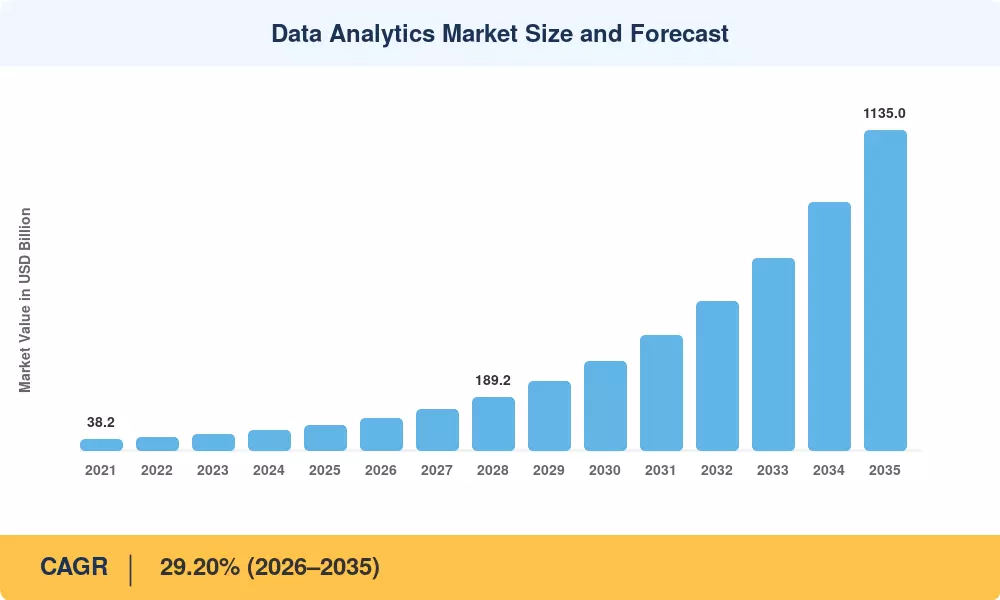
データ分析市場は2025年に推定875億米ドルに達し、2026年には1130.5億米ドル、2035年には11350億米ドルに成長する見込みで、予測期間中の年平均成長率(CAGR)は29.20%です。この加速は、企業のデジタルトランスフォーメーションの義務と世界中のデータガバナンス規制の強化という背景の中で起こっています。2025年9月に施行された欧州連合のデータ法と、2023年10月の米国のAI安全に関する大統領令は、組織がアドホックツールではなく構造化された分析プラットフォームに投資するよう促すコンプライアンス主導の需要を生み出しました[1][2]。
データ分析市場全体で、かなりの規模の技術的変化が進行中です。従来のオンプレミスデータウェアハウスや手動でコーディングされたレポートパイプラインは、リアルタイムの取り込み、自動的なインサイト生成、自然言語クエリが可能なクラウドネイティブでAI強化された分析プラットフォームに取って代わられています。2024年には、グローバルな企業の分析およびビジネスインテリジェンスソフトウェアへの支出が380億米ドルを超え、前年比17.5%の増加を示しています[3]。ハイパースケールクラウドプロバイダーは、大規模言語モデルの機能を分析スタックに直接統合し、データエンジニアリングとビジネス意思決定の間のギャップを縮小しています。
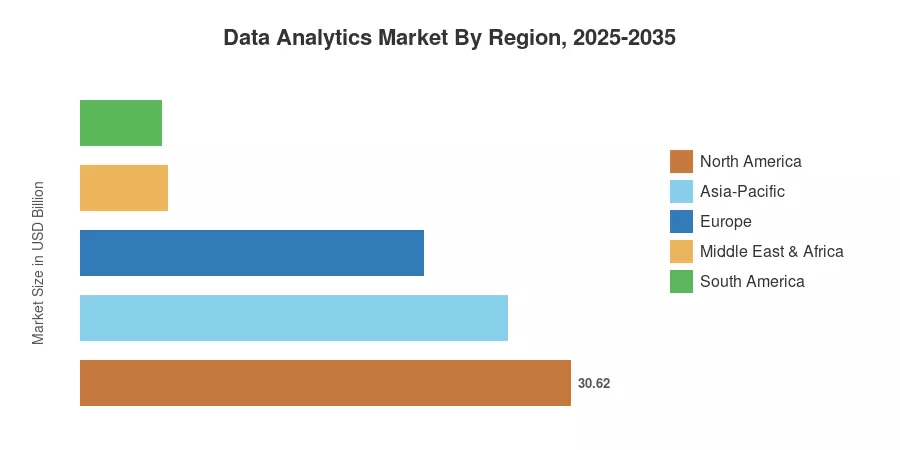
北米は2025年の収益の35.00%を占めるデータ分析市場の最大のシェアを持ち、成熟したクラウドインフラと金融サービスおよびテクノロジー分野での高い1席あたりの分析支出に支えられています。アジア太平洋地域は、インドのデジタルインディアプログラムと中国の積極的なデータセンターの構築により、30.50%のCAGRで最も成長が早い地域となっています。ヨーロッパは約24.50%のシェアを持ち、GDPRの施行、EU AI法、および透明なアルゴリズムガバナンスへの需要の高まりに後押しされています。生成AI、エッジコンピューティング、コンポーザブルデータアーキテクチャの融合は、10年末まで競争のダイナミクスを再構築することが期待されています。
レポートの主なポイント
• 分析タイプ別
- 記述的分析は2025年にデータ分析市場の約25.10%を占め、過去の運用ダッシュボードへの持続的な需要を反映しています。
- 処方的分析は2035年までに30.10%のCAGRで進展する見込みで、AI駆動の最適化エンジンがサプライチェーンや価格設定のワークフローに導入されることによって推進されます。
• ソリューション別
- データ管理ソリューションは2025年にデータ分析市場の22.60%を占めました。
• 展開別
- クラウド展開は予測期間中に30.40%のCAGRで成長しており、企業が資本集約型のオンプレミススタックから移行しています。
• 組織の規模別
- 大企業は2025年のデータ分析市場の収益の63.80%を生み出しましたが、中小企業は30.30%のCAGRで採用を加速しています。
• 地域別
- 北米は2025年のデータ分析市場の収益の35.00%を占めました。
- アジア太平洋地域は30.50%のCAGRを記録する見込みで、すべての地域の中で最も高いです。
市場規模と予測(2021–2035)
市場規模の算出は、ベンダーの財務開示からのトップダウン収益分析、28の垂直市場にわたるボトムアップ企業ライセンス追跡、2024年第4四半期に実施された220人のCIOおよびCDOとの一次インタビューとのクロスリファレンスを組み合わせた三角測量手法に基づいています。すべての歴史的値は監査された会社の提出書類に対して調整されており、予測値はモンテカルロの信頼区間内で29.20%のCAGRを適用しています。





















.webp?v=1787579599)
