Author

Snehal Singh

水耕栽培市場規模、シェア、業界動向および分析調査レポート 生産システム別(温室水耕栽培、屋内垂直農場、その他のシステム)、作物タイプ別(葉物野菜、トマト、キュウリ、ハーブおよびマイクログリーン、その他の作物)、生産規模別(大規模商業、中小規模)、設備別(照明システム、灌漑コンポーネントおよびポンプ、その他の設備) - 2035年までの予測
MRFRの分析によると、2024年の水耕栽培市場規模は30.07億米ドルと推定されています。水耕栽培業界は、2025年に36.18億米ドルから2035年には230.1億米ドルに成長すると予測されており、2025年から2035年の予測期間中に年平均成長率(CAGR)は20.32を示します。
水耕栽培市場は、技術の進歩と新鮮な農産物に対する消費者の需要の増加により、堅調な成長を遂げています。
| 2024 Market Size | 3.007 (米ドル十億) |
| 2035 Market Size | 23.01 (米ドル十億) |
| CAGR (2025 - 2035) | 20.32% |
AeroFarms(米国)、HydroGarden(オーストラリア)、Gotham Greens(米国)、BrightFarms(米国)、Green Spirit Farms(米国)、Urban Cultivator(カナダ)、NutraGreen(米国)、Vertical Harvest(米国)
Our Impact
Enabled $4.3B Revenue Impact for Fortune 500 and Leading Multinationals
Partnering with 2000+ Global Organizations Each Year
30K+ Citations by Top-Tier Firms in the Industry
水耕栽培市場は、持続可能な農業慣行に対する消費者の意識の高まりと、効率的な食料生産システムの必要性によって、現在著しい変革を遂げています。この栽培方法は、土壌の代わりに栄養豊富な水溶液を利用するもので、節水や都市環境での作物栽培が可能になるなど、いくつかの利点を提供するようです。都市化が進むにつれて、地元で調達された農産物の需要は高まると考えられ、限られたスペースで実施できる水耕栽培システムへのシフトが促進されるでしょう。さらに、自動化やスマート農業技術などの技術の進歩が、水耕栽培の効率と生産性を向上させており、商業農家や家庭菜園者にとってより魅力的になっています。また、水耕栽培市場は、オーガニックや新鮮な農産物への嗜好の変化にも影響を受けているようです。この傾向は、季節的制約に関係なく、年間を通じて高品質な作物を提供できるため、より多くの個人や企業が水耕栽培システムを採用することを促すかもしれません。さらに、持続可能な農業と食料安全保障を促進する政府の取り組みが、市場の成長をさらに後押しする可能性があります。全体として、水耕栽培市場は、革新、環境への配慮、そして進化する消費者の需要によって拡大する準備が整っています。
水耕栽培市場は、栽培効率を高める技術革新の急増を目の当たりにしています。自動化、人工知能、IoTアプリケーションが水耕栽培システムに統合され、環境条件の正確な監視と管理が可能になっています。この傾向は、資源の使用を最適化するだけでなく、作物の収量を増加させ、水耕栽培を農家にとってより魅力的にしています。
都市地域が拡大する中で、水耕栽培市場は都市住民のニーズにますます応えています。垂直農業や屋上庭園の増加は、地元の食料生産への関心の高まりを反映しています。この傾向は、限られたスペースを効果的に活用しながら、食料安全保障の懸念に対処し、持続可能な都市生活を促進しています。
消費者の行動において、新鮮でオーガニックな食品オプションへの顕著なシフトが見られます。水耕栽培市場は、高品質で農薬不使用の農産物を提供することで、この需要に応えています。この傾向は、健康志向の食事への広範な動きを示しており、今後の水耕栽培システムのさらなる採用を促進する可能性があります。
都市化の傾向は、より多くの人々が都市部に移住する中で、ハイドロポニクス市場に大きな影響を与えています。この人口動態の変化は、人口密度の高い都市の食料需要を満たすための革新的な農業ソリューションの必要性を生み出しています。ハイドロポニクス市場は、屋上や垂直農場などの限られたスペースでの食料生産を可能にする実行可能なソリューションを提供します。最近の研究によると、都市農業は大都市圏の食料需要の最大30%を供給する可能性があります。都市が食料安全保障を強化し、輸送コストを削減しようとする中で、ハイドロポニックシステムの採用は増加する可能性が高いです。この傾向は、都市の食料問題に対処する上でのハイドロポニクス市場の重要性を強調しています。
技術革新は、ハイドロポニクス市場の形成において重要な役割を果たしています。自動化、センサー、人工知能の進歩は、ハイドロポニックシステムの効率と生産性を向上させています。例えば、自動栄養供給システムや気候制御技術は、成長条件の正確な管理を可能にし、より高い収穫量をもたらします。市場データによると、スマート技術の統合により作物生産が最大30%向上する可能性があります。これらの技術がよりアクセスしやすく、手頃な価格になるにつれて、小規模な都市農家から大規模な商業運営まで、より広範な生産者を引き付けると予想されています。この傾向は、技術が進化し農業慣行が改善され続ける中で、ハイドロポニクス市場の明るい未来を示しています。
政府の支援と政策は、ハイドロポニクス市場の重要な推進要因です。多くの政府は、ハイドロポニクスが食料安全保障を強化し、持続可能な農業を促進する可能性を認識しています。助成金、補助金、研究資金などの取り組みが実施され、ハイドロポニックシステムの導入が奨励されています。例えば、特定の地域では、ハイドロポニック技術に投資する企業に対して税制優遇措置が導入されています。この支援的な規制環境は、新規参入者の障壁を低くし、革新を促進するため、ハイドロポニクス市場の成長を刺激する可能性が高いです。政府が食料の持続可能性を優先し続ける中で、ハイドロポニクス分野は大きな恩恵を受けることが期待されます。
消費者の間で高まる健康意識は、ハイドロポニクス市場の推進力となっています。個人が新鮮な農産物の栄養価に対してより意識を高めるにつれて、地元で栽培された農薬不使用の果物や野菜の需要が急増しています。ハイドロポニクスで栽培された作物は、化学物質への曝露が少なく、栄養価が向上しているため、健康的な選択肢と見なされることが多いです。市場分析によると、ハイドロポニクスで栽培されたアイテムを含む有機農産物セグメントは、今後数年間で年平均成長率が10%を超えると予測されています。この健康志向の食品選択の高まりは、消費者が新鮮で栄養価の高い選択肢を求める中で、ハイドロポニクス市場を前進させる可能性が高いです。
水耕栽培市場は、環境への影響を軽減することを目的とした持続可能性イニシアチブの影響をますます受けています。消費者が環境意識を高めるにつれて、持続可能な農業慣行への需要が高まっています。水耕栽培市場は、従来の農業に比べて大幅に少ない水を使用するため、これらのイニシアチブとよく調和しています。報告によると、水耕栽培システムは最大で90%少ない水を使用できるため、水不足の地域にとって魅力的な選択肢となっています。さらに、土壌なしで作物を育てる能力は、有害な農薬や肥料の必要性を最小限に抑え、エコフレンドリーな消費者にアピールします。この持続可能な慣行へのシフトは、消費者と企業の両方がより責任ある農業方法を採用しようとするため、水耕栽培市場の成長を促進する可能性が高いです。
水耕栽培市場において、栄養フィルム技術(NFT)は、効率性と限られたスペースでの成長を最大化する能力から、さまざまなシステムタイプの中で最大の市場シェアを占めています。ディープウォーターカルチャー(DWC)、エブ・アンド・フロー、エアロポニックス、ウィッキングなどの他の注目すべきシステムも重要な役割を果たしていますが、現在はよりニッチな存在です。DWCは、植物の根に直接栄養を供給するシンプルさと効果的な方法として注目を集めており、商業的な栽培者や趣味の栽培者の両方にとってますます魅力的になっています。
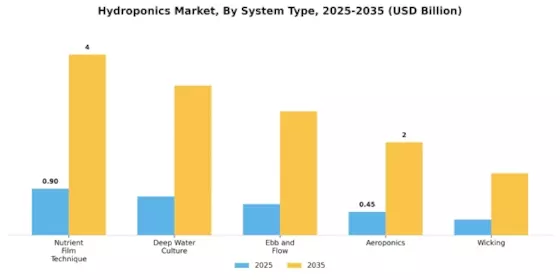
システム:NFT(主流)対エアロポニックス(新興)
栄養フィルム技術(NFT)は、植物の根に栄養溶液の薄い膜を継続的に流すことにより、水と栄養素の効果的な使用が認められた水耕栽培の主要なシステムです。これにより、最適な酸素供給と栄養吸収が促進され、商業的な栽培者や研究施設にとって好ましい選択肢となっています。一方、エアロポニックスは、植物を空中に吊るしながらミストを利用して栄養素を供給する注目すべき代替手段として浮上しています。この方法は、特に都市農業において高い収量の可能性と効率的な資源利用のために人気が高まっています。両方のシステムは、水耕栽培業界における革新と持続可能性へのコミットメントを示しています。
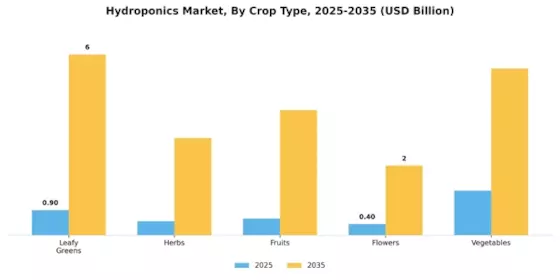
水耕栽培市場は、さまざまな作物タイプの間で市場シェアの重要な分布を示しており、葉物野菜が都市農業や健康的な食生活のトレンドに対する高い需要により最大の貢献者として浮上しています。さらに、ハーブは栽培の容易さと料理への統合に対する大きな関心を集めており、この市場で最も成長しているセグメントとして認識されています。
葉物野菜(支配的)対ハーブ(新興)
葉物野菜、特にレタスやほうれん草は、その多様性、高い収量、迅速な成長サイクルにより、ハイドロポニクス市場で主導的な地位を占めており、ハイドロポニック栽培者にとっての人気の選択肢となっています。これらの作物は、品質を向上させ、病気のリスクを最小限に抑える制御された環境の恩恵を受けています。一方、ハーブは、料理用途や健康効果に対する消費者の関心の高まりによって特徴づけられる新興セグメントを表しています。バジルやコリアンダーなどの人気品種は、その高い市場価値と迅速な回転率のために優先されており、商業栽培者やスペースとリソースを最適化しようとする個人の愛好者を惹きつけています。
水耕栽培市場において、流通チャネルは多様な配分を示しており、オンライン販売が最大のシェアを占めており、これは電子商取引への傾向を反映しています。小売チャネルは、便利さと水耕栽培製品へのアクセスを求める消費者の増加により、強く台頭しています。オンライン販売が広範なリーチを持つ一方で、小売店は水耕栽培に対する認知度の向上に伴い、来店客数の増加を目の当たりにしています。これらの流通チャネル内の成長傾向は、消費者行動の重要な変化を示しています。オンライン販売の増加は、購買習慣の変化とパンデミックの影響によるデジタル採用の加速に起因しています。一方で、小売は地域コミュニティや園芸愛好者が製品との直接的な対話や小売業者が提供する専門的なアドバイスを求める中で、最も成長しているセグメントとなっています。
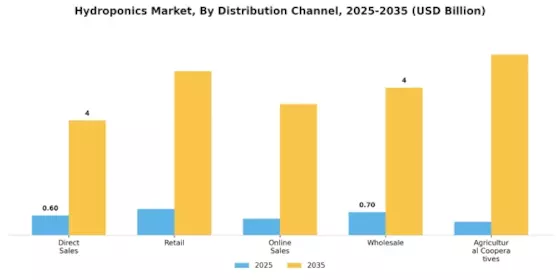
オンライン販売:支配的 vs. 小売:新興
水耕栽培市場におけるオンライン販売は、その広範な市場到達と利便性によって特徴付けられ、支配的な流通チャネルとなっています。テクノロジーに精通した消費者にアピールし、幅広い水耕栽培製品を提供し、家庭への配達の容易さと組み合わせています。一方、小売セグメントは新たな力を表しており、顧客が購入前に製品を見て触れることを好むようになるにつれて、注目を集めています。小売店はこのトレンドを活かし、パーソナライズされたサービスやワークショップを提供することで、コミュニティ志向のショッピング体験を促進し、水耕栽培の利点を強調しています。
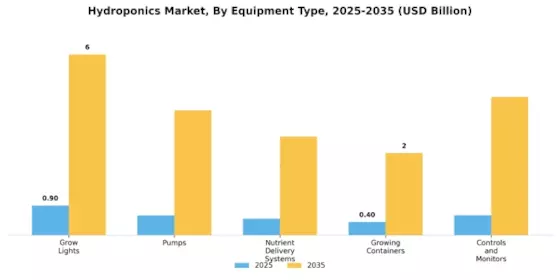
水耕栽培市場において、グロウライトは重要な市場シェアを占めており、機器カテゴリーの中で最大のセグメントとして確立されています。このセグメントは、さまざまな植物の成長段階に対応するエネルギー効率の高い効果的な照明ソリューションに対する需要の高まりから恩恵を受けています。続いて、ポンプと栄養供給システムがあり、これらも植物に対する水と栄養の効果的な供給を確保する上で重要な役割を果たしています。都市部での水耕栽培の着実な普及は、これらの必須機器の人気と需要を高めています。
成長灯: (支配的) 対 ポンプ (新興)
グロウライトは、ハイドロポニクス市場における主要な機器タイプであり、屋内農業に必要な照明を提供し、植物の成長と収量の向上に寄与します。技術の進歩により、エネルギーの節約を実現しながら作物生産効率を向上させるLEDグロウライトが導入されました。一方、ポンプは新興の機器タイプとして、水と栄養素を植物に一貫して供給するためにますます重要になっています。ハイドロポニクスが世界的に普及し続ける中で、効率的な灌漑と資源管理の必要性に応じて、ポンプ技術の革新と開発が進むと期待されています。
水耕栽培市場に関する詳細な洞察を得る 無料サンプルを請求する
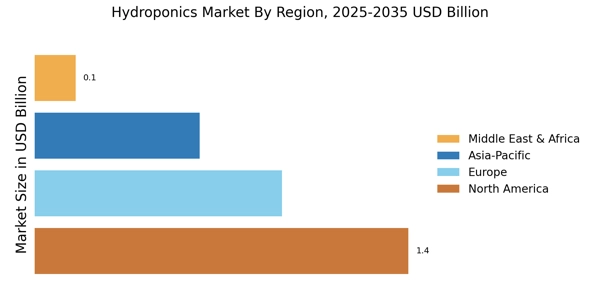
北米は水耕栽培の最大市場であり、世界のシェアの約45%を占めています。この地域の成長は、新鮮な農産物に対する消費者の需要の増加、都市化、技術の進歩によって推進されています。持続可能な農業慣行に対する規制の支援が市場の拡大をさらに促進しています。アメリカ合衆国がこの市場をリードしており、カナダも研究開発への投資や有利な政策を通じて水耕栽培の風景に大きく貢献しています。北米の競争環境は堅牢で、AeroFarms、Gotham Greens、BrightFarmsなどの主要企業が存在します。これらの企業は、収穫量を向上させ、資源消費を削減するために先進技術を活用し、イノベーションの最前線に立っています。確立された農業インフラの存在と地元の食料生産への関心の高まりが市場のダイナミクスを形成する上で重要です。都市農業が注目を集める中、水耕栽培セクターは引き続き成長する見込みです。
ヨーロッパでは水耕栽培の採用が著しく増加しており、世界の市場シェアの約30%を占めています。この成長は、持続可能な農業慣行に対する意識の高まり、政府のインセンティブ、地元の食料生産へのシフトによって促進されています。オランダやドイツなどの国々がこのトレンドをリードしており、革新的な農業技術と環境の持続可能性を促進する規制によって支えられています。欧州連合のグリーンディールは、持続可能な農業の重要性をさらに強調し、水耕栽培を促進する規制の枠組みを提供しています。ヨーロッパの主要国にはオランダ、ドイツ、イギリスが含まれ、多くのスタートアップや確立された企業が水耕栽培の分野で革新を進めています。競争環境は、大規模な生産者と小規模な都市農場の混在によって特徴付けられています。HydroGardenなどの主要企業は、垂直農業や水耕栽培システムで進展を遂げ、この地域の成長に寄与しています。カーボンフットプリントの削減と食料安全保障の強化に焦点を当てた投資がこのセクターを推進しています。
アジア太平洋地域は水耕栽培市場の重要なプレーヤーとして浮上しており、世界のシェアの約20%を占めています。この成長は、都市化の進展、人口の増加、効率的な食料生産システムの必要性によって推進されています。中国や日本などの国々が最前線に立ち、現代的な農業慣行を促進する政府の取り組みが支えています。この地域の食料安全保障と持続可能性への焦点が水耕栽培市場をさらに前進させており、技術とインフラへの投資が行われています。中国はこの地域で最大の市場であり、増加する水耕農場と農業技術の進歩に専念する研究機関があります。日本も都市農業と革新的なソリューションに強い重点を置いており、続いています。競争環境は、地元のスタートアップと国際的なプレーヤーの両方が存在し、成長のためのダイナミックな環境を生み出しています。消費者の好みが新鮮で地元で調達された農産物にシフトする中、水耕栽培セクターはこの地域で繁栄することが期待されています。
中東とアフリカ地域は徐々に水耕栽培を受け入れつつあり、世界の市場シェアの約5%を占めています。この成長は主に水不足の問題と持続可能な農業慣行の必要性によって推進されています。UAEや南アフリカなどの国々が先頭に立ち、食料安全保障の課題に対処するための革新的な農業技術を実施しています。農業技術を促進することを目的とした政府の取り組みが市場の成長を促進する上で重要ですが、既存のインフラの課題もあります。UAEでは、乾燥した条件での収穫量を最大化するために高技術ソリューションに焦点を当てた企業が、水耕栽培や垂直農業に大規模な投資を行っています。南アフリカでも地元の起業家や国際的なパートナーシップによって水耕農場が増加しています。競争環境はまだ発展途上であり、地元と国際的なプレーヤーが市場に参入しています。水耕栽培に対する認識が高まる中、この地域はこのセクターでの徐々に拡大が期待されています。
水耕栽培市場は、持続可能な農業慣行と新鮮な農産物に対する消費者の需要の高まりによって、現在、動的な競争環境が特徴です。AeroFarms(米国)、Gotham Greens(米国)、BrightFarms(米国)などの主要プレーヤーが最前線に立ち、それぞれが市場でのポジショニングを強化するための独自の戦略を採用しています。AeroFarms(米国)は、垂直農業技術の革新を強調し、収量と資源効率の最適化を目指しています。Gotham Greens(米国)は、都市部に農場を設立し、フードマイルを削減し、地域のサプライチェーンを強化するために地域拡大に注力しています。BrightFarms(米国)は、食料品小売業者とのパートナーシップにコミットし、新鮮で地元で栽培された農産物の安定供給を確保しており、これらが持続可能性と地元調達を優先する競争環境を形成しています。
水耕栽培市場は、数多くのプレーヤーが市場シェアを争う中程度に分散した構造を示しています。主要なビジネス戦略には、輸送コストを削減するための製造のローカライズや、効率を高めるためのサプライチェーンの最適化が含まれます。これらの主要プレーヤーの集合的な影響は、革新と持続可能性が最重要である競争的な雰囲気を育み、小規模な企業が関連性を保つために適応または革新することを余儀なくさせています。
2025年8月、AeroFarms(米国)は、農業運営にAI駆動の分析を統合するために、主要なテクノロジー企業との戦略的パートナーシップを発表しました。この動きは、作物のモニタリングと収量予測を向上させ、運営効率を高めることが期待されています。AIの統合は、技術的な進歩を示すだけでなく、AeroFarmsをスマート農業セクターのリーダーとして位置づけ、水耕栽培における生産性の新たなベンチマークを設定する可能性があります。
2025年9月、Gotham Greens(米国)は、シカゴに新しい施設を開設し、これにより生産能力が倍増する見込みです。この拡張は、都市部での地元調達のグリーンに対する需要の高まりに応えるGotham Greensのコミットメントを反映しています。主要市場での足場を増やすことで、同社はサプライチェーンを強化し、市場の他のプレーヤーに対する競争力を高めることが期待されます。
2025年7月、BrightFarms(米国)は、運営を拡大し、温室技術を向上させるための重要な投資を確保しました。この資金は、施設のエネルギー効率を改善し、水の使用を削減することを目的としています。このような進展は、持続可能性の目標に沿ったものであるだけでなく、品質と信頼性の面で競争する能力を高め、消費者にとってますます重要になっています。
2025年10月現在、水耕栽培市場は、デジタル化、持続可能性、AIなどの先進技術の統合を強調するトレンドを目撃しています。企業間の戦略的提携がますます一般的になり、革新を促進し、サプライチェーンのレジリエンスを高めています。競争の差別化は、従来の価格競争から技術革新、持続可能な慣行、サプライチェーンの信頼性に焦点を当てたものへと進化する可能性が高く、企業が将来競争する方法における変革的なシフトを示しています。





最近の水耕栽培市場の動向は、都市の食料ソリューションや新鮮な農産物に対する需要の高まりにより、垂直農業や持続可能な農業への関心と投資が増加していることを示しています。
AeroFarmsやGotham Greensなどの企業は、事業を拡大しており、AeroFarmsは2021年6月に葉物野菜の栽培技術を強化するための重要な資金調達を確保しました。
BrightFarmsも、地域の食料生産へのコミットメントを強調し、さまざまな地域に新しい温室施設を計画していると発表しました。合併や買収の観点では、Urban Cultivatorが2023年7月に大手アグリテック企業に買収され、自動水耕栽培システムにおける地位を強化しました。
さらに、Hydroponic Systems Internationalは2022年12月に製品ラインを拡大し、水耕栽培の利点に対する消費者や企業の認識の高まりを活かしました。
NutrienやCropKingなどの主要プレーヤーの市場評価は、革新的な水耕栽培ソリューションの研究開発への投資の増加に影響され、著しい成長を示しています。
持続可能な農業慣行や食料安全保障のための政府の推進は、水耕栽培市場の重要性をさらに強化し、農業業界の投資家や利害関係者にとっての焦点となっています。
水耕栽培市場は、2024年から2035年にかけて年平均成長率20.32%で成長すると予測されており、これは技術の進歩、都市化、持続可能な農業に対する需要の増加によって推進されます。
新しい機会は以下にあります:
2035年までに、ハイドロポニクス市場は持続可能な農業において重要なセクターになると予想されています。
| 2024年の市場規模 | 3.007(億米ドル) |
| 2025年の市場規模 | 3.618(億米ドル) |
| 2035年の市場規模 | 23.01(億米ドル) |
| 年平均成長率 (CAGR) | 20.32% (2024 - 2035) |
| レポートの範囲 | 収益予測、競争環境、成長要因、トレンド |
| 基準年 | 2024年 |
| 市場予測期間 | 2025 - 2035年 |
| 過去データ | 2019 - 2024年 |
| 市場予測単位 | 億米ドル |
| 主要企業のプロファイル | 市場分析進行中 |
| カバーされるセグメント | 市場セグメンテーション分析進行中 |
| 主要市場機会 | 先進的な自動化技術の統合が水耕栽培市場の効率を向上させます。 |
| 主要市場ダイナミクス | 持続可能な農業に対する消費者の需要の高まりが水耕栽培市場の革新と競争を促進します。 |
| カバーされる国 | 北米、ヨーロッパ、APAC、南米、中東・アフリカ |


The secondary research process involved comprehensive analysis of agricultural databases, peer-reviewed horticultural journals, food technology publications, and authoritative agricultural organizations. Key sources included the Food and Agriculture Organization of the United Nations (FAO), United States Department of Agriculture (USDA) National Agricultural Statistics Service, Environmental Protection Agency (EPA) Water Sense Database, European Commission Agriculture and Rural Development (EU Agri), National Aeronautics and Space Administration (NASA) Advanced Life Support Research, International Society for Horticultural Science (ISHS), American Society for Agricultural and Biological Engineers (ASABE), Controlled Environment Agriculture Association (CEA), National Sustainable Agriculture Information Service (ATTRA), World Resources Institute (WRI) Food Program, Eurostat Agricultural Production Database, and national agricultural ministry reports from key markets including China, Netherlands, Canada, and Australia. These sources were employed to gather data on crop production statistics, water usage efficiency, regulatory compliance frameworks for hydroponic operations, technology adoption patterns, and market landscape analysis for aggregate hydroponic systems, liquid systems, and hybrid configurations.
Qualitative and quantitative insights were obtained by interviewing supply-side and demand-side stakeholders during the primary research process. The supply-side sources consisted of CEOs, VPs of Technology Development, agricultural engineering leaders, and commercial directors from hydroponic system manufacturers, grow light providers, nutrient solution suppliers, and controlled environment agriculture technology providers. Demand-side sources included commercial hydroponic farm operators, administrators of controlled environment agriculture facilities, directors of urban farming cooperatives, produce procurement leads from retail chains and food service distributors, and greenhouse operations specialists. Primary research has confirmed the product development timelines for LED grow light and automation technologies, validated market segmentation across NFT, DWC, and aeroponic systems, and gathered insights on crop yield optimization, pricing strategies for hydroponic produce vs. field-grown alternatives, and distribution channel dynamics across direct sales, wholesale, and e-commerce platforms.
Primary Respondent Breakdown:
By Designation: C-level Primaries (32%), Director Level (31%), Others (37%)
By Region: North America (32%), Europe (29%), Asia-Pacific (33%), Rest of World (6%)
Revenue mapping and cultivation capacity analysis were employed to determine the global market valuation. The methodology comprised the following:
Identification of over 50 key manufacturers and technology providers in North America, Europe, Asia-Pacific, and Latin America who specialize in hydroponic systems, irrigation equipment, grow lighting, and climate control solutions
Mapping of products across aggregate systems (Ebb and Flow, Drip Systems), liquid systems (NFT, DWC, Aeroponics), and equipment categories (LED Grow Lights, HVAC, Sensors) Examination of the annual revenues that have been reported and modeled for the hydroponic equipment and consumables portfolios Coverage of manufacturers and service providers that account for 65-70% of the global market share in 2024
Derive segment-specific valuations for verdant greens, herbs, fruits, and vegetable cultivation systems through extrapolation using bottom-up (cultivation area × equipment ASP × crop yield coefficients by country) and top-down (manufacturer revenue validation) approaches.
This methodology preserves the structural format of the dermal fillers example while adapting the sources to agricultural and food production authorities (FAO, USDA, NASA, CEA) and modifying the respondent breakdown percentages as requested.
このレポートの無料サンプルを受け取るには、以下のフォームにご記入ください

“This is really good guys. Excellent work on a tight deadline. I will continue to use you going forward and recommend you to others. Nice job”


“Thanks. It’s been a pleasure working with you, please use me as reference with any other Intel employees.”


“Thanks for sending the report it gives us a good global view of the Betaïne market.”


“Thank you, this will be very helpful for OQS.”


“We found the report very insightful! we found your research firm very helpful. I'm sending this email to secure our future business.”


“I am very pleased with how market segments have been defined in a relevant way for my purposes (such as "Portable Freezers & refrigerators" and "last-mile"). In general the report is well structured. Thanks very much for your efforts.”


“I have been reading the first document or the study, ,the Global HVAC and FP market report 2021 till 2026. Must say, good info! I have not gone in depth at all parts, but got a good indication of the data inside!”


“We got the report in time, we really thank you for your support in this process. I also thank to all of your team as they did a great job.”


“The Automotive 48V ECU Components Procurement Intelligence Study” was a complex project, but the Market Research Future (MRFR) team handled it with quality, agility, and customer-centricity. They delivered all requested data on time and within the agreed scope. The team, including Shubhendra Anand and Rahul Gotadki, was always readily available to clarify questions and swiftly implement necessary adjustments, driving the project to a successful conclusion within a very demanding timeframe.
I would also like to specifically commend Akshay Agarwal for his responsiveness and support at every stage—from our initial inquiry on May 6th through to final delivery on June 18th. His dedication made the entire process seamless.”


.webp?v=1783518754)
