産業用ロボティクス市場

産業用ロボティクス市場の規模、シェアおよびアプリケーション別の調査報告書(ハンドリング、組み立ておよび分解、溶接およびはんだ付け、ディスペンシング、クリーンルーム、処理、その他)、エンドユース別(自動車、電子機器、金属および重機械、化学、ゴムおよびプラスチック、食品、その他)および地域別(北米、ヨーロッパ、アジア太平洋、その他の地域) – 2035年までの業界予測
ID: MRFR/SEM/1401-CR
200 Pages
Nirmit Biswas, Aarti Dhapte
Last Updated: July 28, 2026
Industrial Robotics Market
Market Size
Forecast Period2025 - 2035
CAGR (2025 - 2035)9.77%
2024 Market Size$ 20.68 Billion
2025 Market Size$ 22.7 Billion
2035 Market Size$ 57.67 Billion
Key Players
ABB
KUKA
FANUC
Yaskawa
Siemens
Mitsubishi Electric
Opportunities
  • Rising Labor Costs
  • Increased Demand for Automation
  • Advancements in Robotics Technology

産業用ロボティクス市場 概要

市場調査の未来の分析によると、産業用ロボット市場の規模は2024年に206.8億米ドルと推定されています。産業用ロボット業界は、2025年に227億米ドルから2035年までに576.7億米ドルに成長すると予測されており、2025年から2035年の予測期間中に年平均成長率(CAGR)は9.77%となります。

主要な市場動向とハイライト

産業用ロボティクス市場は、技術の進歩と自動化の需要の増加により、堅調な成長を遂げています。

  • 協働ロボットの台頭は、特に北米における職場のダイナミクスを変革しています。
  • AIと機械学習の統合は、特にアジア太平洋地域において、さまざまな分野での運用効率を向上させています。
  • 持続可能性への関心の高まりは、特に自動車セグメントにおいてロボティクスの設計と応用に影響を与えています。
  • 自動化に対する需要の増加と労働コストの上昇は、ハンドリングおよびエレクトロニクスセグメントの成長を促進する主要な要因です。

市場規模と予測

2024年の市場規模 20.68(米ドル十億)
2035年の市場規模 57.67(米ドル十億)
CAGR(2025 - 2035) 9.77%

主要なプレーヤー

ABB(スイス)、KUKA(ドイツ)、FANUC(日本)、Yaskawa(日本)、Siemens(ドイツ)、三菱電機(日本)、ユニバーサルロボット(デンマーク)、オムロン(日本)、ロックウェルオートメーション(米国)、シュナイダーエレクトリック(フランス)

産業用ロボティクス市場 運転手

上昇する労働コスト

産業ロボティクス市場は、さまざまな地域で観察される労働コストの上昇に大きく影響されています。特に発展途上国では賃金が引き続き上昇しており、企業は収益性を維持するためにコスト効果の高いソリューションを求めざるを得ません。産業用ロボットの導入は、反復的な作業を自動化し、手作業への依存を減らすための実行可能な代替手段を提供します。このシフトは、労働コストのインフレの影響を軽減するだけでなく、運用効率を向上させます。データによると、ロボット自動化を導入した企業は数年以内に投資収益率を達成できる可能性があり、現在の経済状況において魅力的な提案となっています。その結果、産業ロボティクス市場は、労働問題に対処するために自動化を優先する組織によって引き続き拡大する見込みです。

自動化の需要の増加

産業ロボティクス業界は、さまざまなセクターで自動化の需要が顕著に増加しています。製造業、自動車産業、電子機器などの業界は、生産性と効率を向上させるためにロボットソリューションをますます採用しています。最近のデータによると、自動化市場は今後5年間で約10%の年平均成長率(CAGR)で成長する見込みです。この傾向は、生産プロセスにロボティクスを統合する強い傾向を示しており、労働コストを削減し、人為的なエラーを最小限に抑えます。企業が競争力を維持しようとする中で、産業用ロボットの採用は戦略的な必須事項となり、産業ロボティクス市場の成長を促進しています。

ロボティクス技術の進歩

技術の進歩は、産業ロボティクス市場を形成する上で重要な役割を果たしています。改善されたセンサー、強化された人工知能、洗練された制御システムなど、ロボティクスの革新により、ロボットはより高い精度と信頼性で複雑な作業を実行できるようになっています。協働ロボット、またはコボットの導入は特に注目に値し、彼らは人間のオペレーターと安全に協力して作業するように設計されています。この技術の進化は、産業用ロボットの能力を拡大するだけでなく、中小企業にとってもよりアクセスしやすくします。その結果、産業ロボティクス市場は新しいアプリケーションやユースケースの流入を目撃し、その成長をさらに促進する可能性があります。

Eコマースと物流の拡大

産業ロボティクス業界は、Eコマースと物流セクターの拡大により変革的な影響を受けています。オンラインショッピングがますます普及する中で、効率的な倉庫管理と配送ソリューションの需要が急増しています。ロボティクス技術は、注文の履行、在庫管理、出荷プロセスを自動化するために活用されています。データによると、物流自動化市場は今後数年で大幅に成長する見込みで、予測されるCAGRは15%以上です。この傾向は、運用効率を向上させ、迅速な配達に対する消費者の期待の高まりに応える上での産業用ロボットの重要な役割を強調しています。その結果、産業ロボティクス市場は、物流における自動化の急増する需要から利益を得る可能性があります。

品質と精度への注目の高まり

品質管理と精度は、特に製薬や航空宇宙などの分野において、産業ロボティクス業界で最も重要です。高品質な製品の需要は、最小限の偏差で複雑な作業を実行できる高度なロボットシステムの使用を必要とします。最先端の視覚システムとフィードバックメカニズムを備えた産業用ロボットは、製品が厳格な品質基準を満たすことを保証します。この品質への強調は、廃棄物や再作業を減少させるだけでなく、顧客満足度を向上させます。業界が製造プロセスにおける精度の価値をますます認識する中で、ロボティクスの採用は加速する可能性があり、産業ロボティクス市場の成長をさらに促進します。

市場セグメントの洞察

By Application: Welding (Largest) vs. Material Handling (Fastest-Growing)

The industrial robotics market's application segment is diverse, with welding taking the lead as the largest contributor due to its established presence in manufacturing environments. Material handling, on the other hand, is rapidly gaining ground as companies increasingly adopt robotics to enhance efficiency in logistics and storage processes. Other applications like assembly, painting, and packaging also play significant roles but with lesser shares in comparison to welding and material handling. Growth trends in the industrial robotics application segment are being driven by advancements in automation technologies and the growing demand for high precision and efficiency in production lines. The need for flexibility in manufacturing processes is pushing sectors such as material handling into the spotlight, while industries focused on welding are consolidating their market share through innovations that enhance the quality and speed of operations.

Welding (Dominant) vs. Material Handling (Emerging)

Welding robots have become the cornerstone of the industrial robotics landscape, dominating a significant portion of the market thanks to their versatility and precision in joining materials. They are extensively used in automotive and heavy industries where strength and durability of welds are paramount. On the other hand, material handling robots represent an emerging force in the market, capitalizing on the growing need for automation in logistics and warehouses. These robots streamline processes like picking, sorting, and transporting goods, leading to increased operational efficiency. As industries shift towards more integrated automation solutions, both welding and material handling will continue to evolve, with the latter likely seeing faster adoption rates due to changing market dynamics.

By End Use: Automotive (Largest) vs. Electronics (Fastest-Growing)

In the industrial robotics market, the automotive sector stands as the largest end-use segment, benefiting from the ongoing demand for automation to enhance manufacturing efficiency and productivity. This segment comprises a significant portion of the total market share due to the extensive use of robotics in assembly, painting, welding, and packaging processes within the automotive industry. On the other hand, the electronics segment is rapidly expanding as manufacturers increasingly adopt robotic solutions to meet the high precision and speed required in electronics assembly. This growth reflects a shift in manufacturing strategies towards the incorporation of advanced robotics for greater operational effectiveness. As technological advancements continue to evolve in automation, the industrial robotics market is experiencing transformative growth in various sectors, particularly in electronics. The increasing complexity of electronic products necessitates innovative robotics solutions for assembly and inspection tasks. Additionally, the shift towards Industry 4.0 and the Internet of Things is driving the integration of smart robotics in manufacturing environments, enabling more agile and adaptable production lines. These trends signify a strong demand for robotics in both the automotive and electronics industries, underscoring the importance of technological innovation in maintaining a competitive edge.

Automotive: Dominant vs. Electronics: Emerging

The automotive sector holds a dominant position in the industrial robotics market, characterized by vast automation applications ranging from welding and assembly to quality assurance. This segment benefits from established technological standards, with robotics playing a pivotal role in streamlining production processes and enhancing safety in manufacturing plants. Meanwhile, the electronics segment is emerging as a vital area of growth, driven by the escalating demand for smart gadgets and the need for high-precision assembly solutions. Robotics in this segment is increasingly adapting to meet the unique requirements posed by miniature components and intricate device designs. As industries strive to enhance productivity and performance, both segments are pivotal, reflecting the diverse applications of industrial robotics.

By Type: Articulated Robot (Largest) vs. Collaborative Robot (Fastest-Growing)

In the industrial robotics market, articulated robots hold the largest market share, widely adopted for their versatility and ability to handle various tasks with precision. SCARA and Delta robots follow, catering specifically to assembly and packaging operations, while Cartesian and Collaborative robots are gaining momentum due to their ease of use and ability to operate alongside human workers. Collaborative robots, in particular, are expanding rapidly as businesses seek to enhance automation with safer and more flexible solutions for collaborative tasks.

Robots: Articulated (Dominant) vs. Collaborative (Emerging)

Articulated robots are dominant in the industrial robotics market due to their complexity and capability to perform intricate maneuvers, making them invaluable in manufacturing processes where precision is crucial. These robots typically consist of rotary joints, allowing for a high degree of freedom in movement. In contrast, collaborative robots are emerging as a significant force, designed to work alongside human operators safely. Their intuitive programming and adaptability to various tasks are attracting interest from small to medium enterprises seeking automation solutions that enhance productivity without the need for extensive safety measures.

By Technology: Artificial Intelligence (Largest) vs. Computer Vision (Fastest-Growing)

The industrial robotics market is significantly influenced by several key technologies. Artificial Intelligence stands out as the largest segment, commanding a significant share due to its widespread application in enhancing robot capabilities and decision-making processes. In contrast, Computer Vision is emerging as the fastest-growing segment as it is increasingly integrated into robotics for precise navigation, safety, and quality inspection tasks, indicating a shift in technological focus across the industry.

Artificial Intelligence (Dominant) vs. Computer Vision (Emerging)

Artificial Intelligence (AI) has established itself as the dominant force in the industrial robotics market, enabling robots to learn and adapt to complex environments, enhancing efficiency and productivity. AI's applications extend to predictive maintenance, allowing manufacturers to minimize downtime. On the other hand, Computer Vision is rapidly emerging as a critical tech, providing robots with the ability to interpret visual data, essential for tasks such as object recognition and obstacle avoidance. This technology's relevance is surging as industries place a greater emphasis on automation and accuracy, making it a cornerstone for future advancements in industrial robotics.

By Functionality: Pick and Place (Largest) vs. Machine Tending (Fastest-Growing)

In the industrial robotics market, the functionality segment showcases a dynamic distribution among various applications. The majority of the market share is concentrated in the pick and place category, which leads as the largest value due to its extensive use in assembly lines across numerous industries. Machine tending is closely following as an emerging force, increasingly gaining traction due to the automation of machine operations. Quality control, inspection, and sorting also hold significant shares but are positioned at a lesser scale compared to pick and place and machine tending.

Pick and Place (Dominant) vs. Machine Tending (Emerging)

Pick and place robots are widely recognized as the dominant force in the industrial robotics market, serving a crucial role in enhancing efficiency and precision in manufacturing environments. Their versatility allows for a broad range of applications, from packaging to assembly processes. In contrast, machine tending robots are emerging rapidly as a vital segment, driven by the need for increased automation in machine operations. These robots streamline processes by efficiently loading and unloading machines, thereby minimizing downtime and operational costs. Together, both segments represent a critical shift toward advanced automation, catering to evolving industry demands.

産業用ロボティクス市場に関する詳細な洞察を得る

地域の洞察

北米:革新と投資のハブ

北米は産業用ロボットの最大市場であり、世界のシェアの約35%を占めています。この地域の成長は、自動化技術の進展、効率の需要の増加、政府の支援政策によって推進されています。米国がこの市場をリードし、カナダがそれに続いています。製造業者はロボットソリューションを通じて生産性を向上させ、労働コストを削減しようとしています。この地域には、主要な産業用ロボット企業が集まっています。米国主導の革新がロボット産業を形成しています。競争環境は、ロックウェルオートメーションやABBなどの主要プレーヤーと新興企業によって支配されています。確立された企業の存在は革新とコラボレーションを促進し、製造における自動化を促進するための米国政府の取り組みが市場の成長をさらに刺激しています。この地域のR&Dと技術革新への焦点は、産業用ロボットセクターのリーダーとしての地位を確立しています。

ヨーロッパ:製造の強国

ヨーロッパは産業用ロボットの第二の最大市場であり、世界の市場シェアの約30%を占めています。この地域の成長は、特にドイツとフランスにおける強力な製造基盤によって促進されており、産業は生産性と競争力を高めるために自動化をますます採用しています。革新と持続可能性を促進する規制枠組みも、ロボットソリューションへの需要を推進する重要な役割を果たしています。ドイツは産業用ロボットセクターのリーダーとして際立っており、KUKAやSiemensなどの主要プレーヤーが集まっています。競争環境は、確立された企業と革新的なスタートアップの混合によって特徴付けられ、技術革新のためのダイナミックな環境を育んでいます。製造におけるデジタルトランスフォーメーションを支援するための欧州連合の取り組みは、ロボット投資に対する地域の魅力をさらに高めています。

アジア太平洋:新興市場のダイナミクス

アジア太平洋地域は、産業用ロボット市場で急速な成長を遂げており、世界のシェアの約25%を占めています。この地域の拡大は、特に中国や日本などの国々での産業自動化の増加によって推進されており、製造セクターは効率を改善しコストを削減するためにロボットに多額の投資を行っています。アジア太平洋の拡大は、世界の産業用ロボット市場を強化します。技術革新を支援する政府の取り組みも重要な成長の触媒です。中国はこの地域で最大の市場であり、地元の製造業者とFANUCやYaskawaなどの国際的なプレーヤーが強い存在感を示しています。競争環境は進化しており、国内企業の市場参入が急増しています。この地域のスマート製造とインダストリー4.0への焦点は、世界の産業用ロボットの風景における重要なプレーヤーとしての地位を確立しています。

中東とアフリカ:資源豊富なフロンティア

中東とアフリカ地域は、産業用ロボット市場において徐々に台頭しており、現在、世界のシェアの約10%を占めています。成長は主に、UAEや南アフリカなどの国々でのインフラおよび製造セクターへの投資の増加によって推進されています。経済の多様化と技術能力の向上を目指す政府の取り組みも、ロボットソリューションへの需要の高まりに寄与しています。競争環境はまだ発展途上であり、地元企業と国際企業が市場に参入しています。主要なプレーヤーは、石油・ガス、製造、物流などのセクターに焦点を当てて存在感を確立し始めています。この地域が自動化技術への投資を続けるにつれて、産業用ロボット市場は今後数年で大幅に拡大することが期待されています。

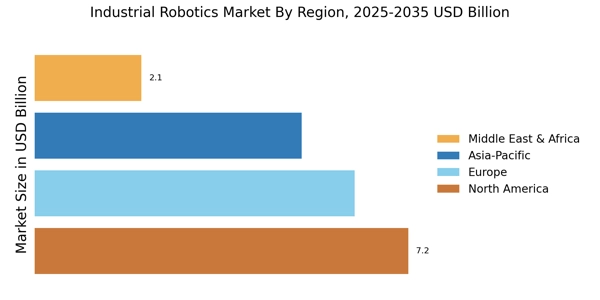
産業用ロボティクス市場 Regional Image

主要企業と競争の洞察

産業用ロボット市場は、急速な技術革新とさまざまな分野での自動化需要の増加によって推進される動的な競争環境を特徴としています。産業用ロボット企業間の競争は依然として激しいです。ABB(スイス)、KUKA(ドイツ)、FANUC(日本)などの主要なプレーヤーは、各々が市場ポジションを強化するための独自の戦略を採用しています。ABB(スイス)は、ロボットソリューションに人工知能を統合することに重点を置き、運用効率と柔軟性を向上させています。KUKA(ドイツ)は、自動車セクターにおける戦略的パートナーシップを強調し、リーチを拡大し製品提供を強化しています。グローバルリーダーは産業用ロボット業界に影響を与えています。一方、FANUC(日本)は、ロボット技術を革新するために研究開発に多額の投資を行っており、高精度自動化ソリューションのリーダーとしての地位を確立しています。これらの戦略は、技術革新と戦略的コラボレーションにますます焦点を当てた競争環境に寄与しています。戦略的提携は、広範なロボット産業を形成しています。ビジネス戦術の観点から、企業はリードタイムを短縮し、サプライチェーンを最適化するために製造をローカライズしています。これは、適度に断片化された市場において特に重要です。このローカリゼーションは、顧客のニーズに対する応答性を向上させるだけでなく、グローバルなサプライチェーンの混乱に伴うリスクを軽減します。産業用ロボット市場の競争構造は、少数のプレーヤーが支配している一方で、特にロボットの専門的なアプリケーションにおいて小規模企業がニッチを切り開く機会が十分に残っていることを示しています。

2025年8月、ABB(スイス)は物流セクター向けに新しいAI駆動のロボットプラットフォームを発表しました。この戦略的な動きは、倉庫および流通における自動化の成長トレンドに沿ったものであり、ABBが急速に拡大する市場セグメントに参入することを可能にします。このプラットフォームの導入は、クライアントの運用効率を向上させ、ABBの革新的なロボットソリューションのリーダーとしての地位を強化することが期待されています。2025年9月、KUKA(ドイツ)は、次世代のロボット組立ラインを開発するために主要な自動車メーカーと提携しました。このコラボレーションは、自動車業界における自動化の進展に対するKUKAのコミットメントを示すだけでなく、製造業者の専門知識を活用することで競争力を高めます。このようなパートナーシップは、両者の革新を促進し、成長を推進する可能性があります。2025年7月、FANUC(日本)は中小企業(SME)向けに設計された新しい協働ロボットシリーズを発表しました。この戦略的イニシアチブは、歴史的にロボット市場でサービスが行き届いていなかった中小企業向けのアクセス可能な自動化ソリューションの需要の高まりに対応しているため、特に注目に値します。このセグメントに対応することで、FANUCは顧客基盤を拡大し、市場リーダーシップを強化することができます。2025年10月現在、産業用ロボット市場はデジタル化、持続可能性、人工知能の統合を強調するトレンドを目撃しています。戦略的提携は競争環境を形成し、企業がリソースと専門知識をプールして革新を推進することを可能にしています。今後、競争の差別化は、従来の価格競争から技術革新、サプライチェーンの信頼性、カスタマイズされたソリューションの提供能力に焦点を移すようです。このシフトは、急速に変化する市場における機敏性と適応性の重要性を強調しています。

産業用ロボティクス市場市場の主要企業には以下が含まれます

業界の動向

2022年6月: ABBは、OmniVanceブランドの下で変革的な製品を発表し、次世代の柔軟なAutomatica 2022を発表しました:OmniVance FlexArc Compact CellとOmniVance Machining Cellおよびソフトウェア。

2022年2月: FANUCは、FANUCとBMW AGの間で締結された契約に基づき、新しい生産ラインと工場向けに3,500台のロボットを供給します。これらのロボットは、BMWモデルの既存および将来の世代の開発に使用されます。

2017年2月: MRK-Systeme GmbHは、KUKAロボットを使用してBMWグループのために自動化ソリューションを作成しました。このソリューションは、クランクシャフトハウジングの品質保証を人間工学に配慮した方法で提供するために、ブラビアのランドシュタットユニットを支援します。これらの発表は、進行中の産業用ロボットニュースを反映しています。

今後の見通し

産業用ロボティクス市場 今後の見通し

産業用ロボティクス市場は、2025年から2035年までの期間に9.77%のCAGRで成長する見込みであり、自動化の需要、技術の進歩、労働力不足が推進要因となります。

新しい機会は以下にあります:

  • 中小企業向けの協働ロボットの開発。
  • 予知保全ソリューションのためのAI駆動の分析の統合。
  • 特化したロボットソリューションで新興市場への拡大。

2035年までに、産業用ロボティクス市場は革新と広範な採用が特徴の堅調な市場になると予想されます。ロボティクス市場における革新は引き続き重要です。

市場セグメンテーション

産業用ロボット市場の最終用途の展望

  • 自動車
  • 電子機器
  • 金属および重機
  • 化学
  • ゴムおよびプラスチック
  • 食品
  • その他

産業用ロボット市場のアプリケーションの展望

  • ハンドリング
  • 組み立ておよび分解
  • 溶接およびはんだ付け
  • ディスペンシング
  • クリーンルーム
  • 加工
  • その他

レポートの範囲

市場規模 2024 206.8(億米ドル)
市場規模 2025 227(億米ドル)
市場規模 2035 576.7(億米ドル)
年平均成長率(CAGR) 9.77%(2025 - 2035)
レポートの範囲 収益予測、競争環境、成長要因、トレンド
基準年 2024
市場予測期間 2025 - 2035
歴史的データ 2019 - 2024
市場予測単位 億米ドル
主要企業のプロファイル ABB(CH)、KUKA(DE)、FANUC(JP)、Yaskawa(JP)、Siemens(DE)、三菱電機(JP)、ユニバーサルロボット(DK)、オムロン(JP)、ロックウェルオートメーション(US)、シュナイダーエレクトリック(FR)
カバーされるセグメント アプリケーション、エンドユーザー、地域
主要市場機会 人工知能の統合は、産業用ロボット市場における効率性と適応性を向上させます。
主要市場ダイナミクス 自動化需要の高まりが、産業用ロボット市場における技術革新と競争のダイナミクスを推進します。
カバーされる国 北米、ヨーロッパ、アジア太平洋、南米、中東・アフリカ

FAQs

2024年の産業用ロボット市場の現在の評価額はどのくらいですか?

産業用ロボット市場は2024年に460億米ドルと評価されました。

2035年の産業用ロボットセクターの市場評価額はどのくらいになると予測されていますか?

市場は2035年までに790億米ドルに達すると予測されています。

2025年から2035年までの産業用ロボット市場の予想年間成長率(CAGR)はどのくらいですか?

2025年から2035年の予測期間中の産業用ロボット市場の予想CAGRは5.04%です。

産業用ロボット市場で重要な成長が期待されるアプリケーションセグメントはどれですか?

溶接や材料搬送などのアプリケーションセグメントは、それぞれ80億米ドルから130億米ドル、120億米ドルから200億米ドルに成長すると予測されています。

産業用ロボット市場を推進する主要な最終用途セクターは何ですか?

主要な最終用途セクターには、自動車、電子機器、製薬が含まれ、評価額は50億米ドルから250億米ドルの範囲です。

産業用ロボット市場で支配的になると予想されるロボットの種類は何ですか?

アーティキュレーテッドロボットとコラボレーティブロボットが支配的になると予想されており、それぞれ150億米ドルから250億米ドル、80億米ドルから150億米ドルの評価額が見込まれています。

技術は産業用ロボット市場の成長にどのように影響しますか?

IoTやセンサー技術などの技術は大きな成長が見込まれており、それぞれ190億米ドルから340億米ドル、90億米ドルから150億米ドルに達すると予測されています。

産業用ロボット市場で最も需要が高いと予想される機能は何ですか?

ピックアンドプレースや品質管理などの機能は成長が見込まれており、それぞれ100億米ドルから160億米ドル、80億米ドルから120億米ドルの評価額が期待されています。

産業用ロボット市場の主要なプレーヤーは誰ですか?

市場の主要なプレーヤーには、ABB、KUKA、FANUC、Yaskawaなどが含まれます。

今後数年間で産業用ロボット市場の成長を促進する可能性のある要因は何ですか?

AI、機械学習の進展、産業全体での自動化の増加などの要因が市場の成長を促進する可能性があります。

著者
Author
Author Profile
Nirmit Biswas LinkedIn
Senior Research Analyst
With 5+ years of expertise in Market Intelligence and Strategic Research, Nirmit Biswas specializes in ICT, Semiconductors, and BFSI. Backed by an MBA in Financial Services and a Computer Science foundation, Nirmit blends technical depth with business acumen. He has successfully led 100+ projects for global enterprises and startups, including Amazon, Cisco, L&T and Huawei, delivering market estimations, competitive benchmarking, and GTM strategies. His focus lies in transforming complex data into clear, actionable insights that drive growth, innovation, and investment decisions. Recognized for bridging engineering innovation with executive strategy, Nirmit helps businesses navigate dynamic markets with confidence.
Co-Author
Co-Author Profile
Aarti Dhapte LinkedIn
AVP - Research
A consulting professional focused on helping businesses navigate complex markets through structured research and strategic insights. I partner with clients to solve high-impact business problems across market entry strategy, competitive intelligence, and opportunity assessment. Over the course of my experience, I have led and contributed to 100+ market research and consulting engagements, delivering insights across multiple industries and geographies, and supporting strategic decisions linked to $500M+ market opportunities. My core expertise lies in building robust market sizing, forecasting, and commercial models (top-down and bottom-up), alongside deep-dive competitive and industry analysis. I have played a key role in shaping go-to-market strategies, investment cases, and growth roadmaps, enabling clients to make confident, data-backed decisions in dynamic markets.

Research Approach

Secondary Research

The secondary research process involved comprehensive analysis of regulatory databases, technical standards repositories, peer-reviewed engineering journals, industry publications, and authoritative manufacturing organizations. Key sources included the International Federation of Robotics (IFR), International Organization for Standardization (ISO) Technical Committee 299 (Robotics), IEEE Robotics and Automation Society, American National Standards Institute (ANSI/RIA R15.06), European Committee for Electrotechnical Standardization (CENELEC), Occupational Safety and Health Administration (OSHA) Robotics Safety Guidelines, National Institute of Standards and Technology (NIST) Manufacturing Engineering Laboratory, EU Eurostat Manufacturing Statistics, Japan Robot Association (JARA) statistics, China Robot Industry Alliance (CRIA), International Labour Organization (ILO) automation employment data, and national industrial statistics bureaus from key manufacturing markets. These sources were used to collect robot deployment statistics, safety certification data, patent filings, production capacity metrics, and technology adoption trends for articulated robots, SCARA robots, delta/parallel robots, collaborative robots (cobots), Cartesian robots, and autonomous mobile robots (AMRs).

Primary Research

To gather both qualitative and quantitative insights, supply-side and demand-side stakeholders were interviewed during the primary research phase. CEOs, CTOs, VPs of engineering, heads of product development, regulatory compliance officers, and worldwide sales directors from suppliers of automation components, system integrators, and industrial robot manufacturers were examples of supply-side sources. Plant managers, automation engineers, directors of manufacturing, heads of procurement from automakers, electronics contract manufacturers, metal fabrication plants, chemical processing plants, food and beverage manufacturers, and logistics/warehousing operators were among the demand-side sources. In addition to confirming product development roadmaps and gathering information on integration challenges, total cost of ownership models, and after-sales service dynamics, primary research validated market segmentation across handling, assembling & disassembling, welding & soldering, dispensing, cleanroom, and processing applications.

Primary Respondent Breakdown:

By Designation: C-level Primaries (28%), Director Level (32%), Others (40%)

By Region: North America (30%), Europe (33%), Asia-Pacific (32%), Rest of World (5%)

Market Size Estimation

Global market valuation was derived through revenue mapping and unit shipment analysis. The methodology included:

Identification of 60+ key manufacturers across North America, Europe, Asia-Pacific, and Latin America

Product mapping across articulated robots, SCARA robots, delta robots, collaborative robots, Cartesian gantry systems, and mobile robotics platforms

Analysis of reported and modeled annual revenues specific to industrial robot hardware, software, and integration services portfolios

Coverage of manufacturers representing 75-80% of global market share in 2024

Extrapolation using bottom-up (unit shipments × ASP by robot type and country) and top-down (manufacturer revenue validation) approaches to derive segment-specific valuations for automotive, electronics, metal & heavy machinery, chemical/rubber/plastics, and food processing end-use verticals

無料サンプルをダウンロード

このレポートの無料サンプルを受け取るには、以下のフォームにご記入ください

Download PDF ×

We do not share your information with anyone. However, we may send you emails based on your report interest from time to time. You may contact us at any time to opt-out.