Author

Pradeep Nandi

자전거 헬멧 시장 조사 보고서 정보 유형별(도로용 헬멧, 스포츠용 헬멧, MTB 헬멧), 용도별(일상 교통 및 스포츠/모험), 지역별(북미, 유럽, 아시아 태평양 및 기타 지역) – 2034년까지 시장 전망
Our Impact
Enabled $4.3B Revenue Impact for Fortune 500 and Leading Multinationals
Partnering with 2000+ Global Organizations Each Year
30K+ Citations by Top-Tier Firms in the Industry
The rapid growth of the e-bike market is significantly impacting the Global Bike Helmet Market Industry. As e-bikes become increasingly popular due to their convenience and efficiency, the demand for helmets specifically designed for e-bike riders is likely to rise. E-bike riders often travel at higher speeds than traditional cyclists, necessitating helmets that offer enhanced protection. This trend is further supported by the increasing number of e-bike users, which is expected to drive helmet sales. The intersection of these two markets suggests a robust growth trajectory for the helmet industry, aligning with the overall expansion of cycling-related products.
The Global Bike Helmet Market Industry is poised for substantial growth, with projections indicating a market value of 1.05 USD Billion in 2024 and an anticipated increase to 1.87 USD Billion by 2035. This growth trajectory reflects a compound annual growth rate of 5.36% from 2025 to 2035. Factors contributing to this expansion include rising safety awareness, increased cycling participation, and technological innovations in helmet design. The market's evolution is likely to be influenced by changing consumer preferences and regulatory frameworks that prioritize cyclist safety. As these dynamics unfold, the industry is expected to adapt and thrive.
The increasing popularity of cycling as a mode of transportation and recreation is significantly influencing the Global Bike Helmet Market Industry. Urban areas are witnessing a surge in cycling infrastructure, such as dedicated bike lanes and rental services, which encourages more people to cycle. This trend is further supported by environmental concerns and the push for sustainable transportation options. As cycling becomes more mainstream, the demand for bike helmets is anticipated to grow. By 2035, the market is projected to reach 1.87 USD Billion, reflecting the expanding cycling community and the associated need for protective gear.
The growing awareness of safety among cyclists is a primary driver for the Global Bike Helmet Market Industry. As more individuals recognize the importance of wearing helmets to prevent head injuries, the demand for high-quality helmets is likely to rise. Educational campaigns and safety regulations implemented by various governments further reinforce this trend. For instance, countries with stringent helmet laws have reported increased helmet usage, which correlates with a decline in cycling-related injuries. This heightened focus on safety is expected to contribute to the market's growth, with projections indicating a market value of 1.05 USD Billion in 2024.
Government regulations and initiatives aimed at promoting cycling safety are pivotal drivers of the Global Bike Helmet Market Industry. Many countries have enacted laws mandating helmet use for cyclists, particularly for children and young adults. These regulations are often accompanied by public awareness campaigns that emphasize the importance of helmet usage. Additionally, government-sponsored programs that provide subsidies or incentives for purchasing helmets can further stimulate market growth. As these initiatives gain traction, they are expected to bolster helmet sales, contributing to the projected market growth to 1.05 USD Billion in 2024.
Technological advancements in helmet design are reshaping the Global Bike Helmet Market Industry. Innovations such as lightweight materials, improved ventilation systems, and enhanced impact resistance are making helmets more appealing to consumers. Manufacturers are increasingly focusing on integrating smart technologies, such as built-in lights and communication systems, which cater to the needs of modern cyclists. These advancements not only enhance safety but also improve comfort and usability. As a result, the market is likely to experience a compound annual growth rate of 5.36% from 2025 to 2035, driven by consumer demand for high-performance helmets.
The application segment of the bike helmet market is divided into several key categories including Recreational, Commuting, Sporting, Mountain Biking, and Road Cycling. Among these, Recreational helmets capture the largest share due to their broad appeal to casual cyclists. Sporting helmets, on the other hand, are gaining traction rapidly, driven by the increasing popularity of biking as a competitive sport and the growing number of cycling events.
Recreational: Dominant vs. Sporting: Emerging
Recreational bike helmets dominate the market due to their versatility and appeal to a wide audience, who use them for casual rides, family outings, and urban commuting. These helmets are designed to be comfortable, lighter, and stylish, catering to casual cyclists who prioritize safety without sacrificing aesthetics. In contrast, Sporting helmets are emerging as a vital segment, driven by the surge in competitive cycling and sporting events. These helmets are engineered for performance, featuring advanced aerodynamic designs and enhanced safety standards, meeting the demands of serious bikers and athletes.
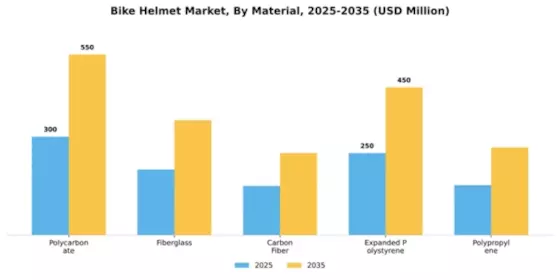
Polycarbonate emerges as the largest segment in the Bike Helmet Market, dominating the material distribution due to its exceptional durability and impact resistance. This widely used material accounts for a significant share among various bike helmet offerings, appealing to both casual and professional cyclists. Following closely, Expanded Polystyrene serves as a robust alternative, while Fiberglass and Polypropylene maintain a niche market presence. Though Carbon Fiber holds a smaller share, its advanced properties cater to high-end segments, pushing its growth trajectory upward. The growth trends in the Bike Helmet Market are significantly influenced by increasing consumer awareness regarding safety and performance. As biking continues to gain popularity globally, the demand for high-quality, lightweight helmets made from advanced materials like Carbon Fiber is surging. Furthermore, technological advancements and enhanced design standards are promoting the development of helmets that offer superior protection without compromising comfort, thereby elevating the appeal of materials like Polycarbonate and Expanded Polystyrene. The shift towards sustainability is also sparking interest in Fiberglass and Polypropylene as manufacturers explore eco-friendly options, ensuring a bright future for these materials in the market.
Material: Polycarbonate (Dominant) vs. Carbon Fiber (Emerging)
Polycarbonate helmets are well-regarded for their strength and lightweight nature, making them the dominant choice among cycling enthusiasts and casual riders alike. These helmets offer excellent protection against impacts and are often more affordable than their counterparts, which aids in their widespread adoption. Additionally, the ease of manufacturing and ability to mold complex shapes allow for varied designs, enhancing the appeal of Polycarbonate. In contrast, Carbon Fiber helmets are gaining traction as an emerging option due to their superior strength-to-weight ratio. Highly favored among competitive riders, Carbon Fiber helmets showcase cutting-edge technology that prioritizes both safety and performance. As more cyclists seek advanced features in helmets, the Carbon Fiber segment is expected to witness robust growth, driven by innovation and a preference for high-performance equipment.
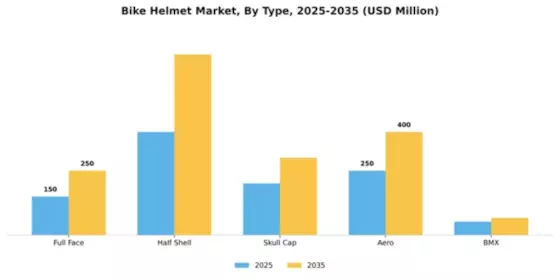
In the Bike Helmet Market, the distribution of market share among the different types of helmets reveals distinct preferences among consumers. The Full Face helmet segment stands out as the largest, as it is widely favored by off-road and motocross riders for its comprehensive protection and robust build. In contrast, the Half Shell helmets have seen a significant rise in popularity due to their lightweight design and increased ventilation, appealing especially to casual cyclists and commuters looking for comfort and style without sacrificing safety. The growth trends in the Bike Helmet Market are being driven by increasing awareness of safety among cyclists and a growing trend toward outdoor activities. As more individuals take up biking for fitness and commuting, the demand for various helmet types is on the rise. The Half Shell segment is particularly gaining traction among younger riders and urban commuters, motivated by the stylish and versatile options available. Meanwhile, Full Face helmets remain a staple for enthusiasts, highlighting the diverse needs within the market.
Full Face (Dominant) vs. Half Shell (Emerging)
The Full Face helmet segment dominates the Bike Helmet Market, characterized by its robust construction and superior safety features, making it a preferred choice for extreme sports athletes and motocross riders. These helmets provide comprehensive coverage, protecting the entire head, face, and jaw, which is crucial for high-risk activities. On the other hand, the Half Shell helmet segment is an emerging player within the market, appealing to urban commuters and casual riders due to its lightweight and sleek design. With its enhanced airflow and minimalistic style, this type of helmet has become increasingly popular among younger demographics, symbolizing a blend of safety and lifestyle preferences that resonate with modern cyclists.
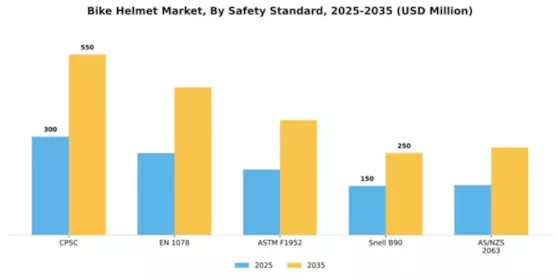
In the Bike Helmet Market, the distribution of market share among safety standards reflects a competitive landscape. The CPSC standard currently dominates the market, being a widely recognized benchmark in the United States, ensuring helmets meet rigorous safety requirements. In contrast, the EN 1078 standard, prevalent in Europe, is gaining traction due to increasing awareness among consumers regarding safety and technology advancements in helmet features. This shift signifies a diversification of safety standards being accepted and preferred by consumers. The growth trends within the Safety Standard segment are propelled by shifting consumer preferences towards safety, innovation, and regulatory changes that emphasize compliance with international standards. As biking activities increase globally, so does the demand for compliant helmets. Factors such as enhanced safety features, lightweight materials, and comfort are driving manufacturers to align their products with emerging standards like EN 1078, thus creating a competitive edge. This shift not only suggests a growth opportunity for the manufacturers but also highlights the overall advancement towards better safety in the bike helmet market.
CPSC (Dominant) vs. Snell B90 (Emerging)
The CPSC standard is considered the dominant safety standard in the bike helmet market, being recognized for its rigorous testing protocols that ensure high levels of protection for users. Manufacturers who comply with CPSC regulations often have a competitive advantage, as consumers trust their safety certifications. In contrast, the Snell B90 standard is an emerging standard that, while not as widely adopted, emphasizes advanced impact protections and is favored among serious cyclists. Helmets meeting the Snell B90 criteria often include enhanced padding and materials, making them more appealing to performance-focused users. As cycling continues to grow in popularity, the Snell B90 standard may start to capture a more significant share, especially among enthusiasts looking for premium safety performance.
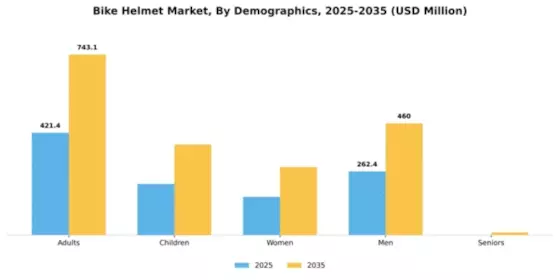
In the Bike Helmet Market, the demographic segment insights reveal that adults comprise the largest share of the overall market, driven by their increased awareness regarding safety and the rising popularity of cycling as a form of transportation and recreation. Children, on the other hand, represent the fastest-growing segment, with a notable increase in emphasis on safety gear among parents and schools. This growth is further enhanced by initiatives promoting cycling among younger populations. The growth trends indicate a robust increase in demand for children’s helmets, fueled by the surge in cycling safety campaigns and the introduction of innovative helmet designs tailored to attract younger users. The adult segment, while the largest, is also evolving, with preferences shifting towards helmets that offer advanced protective features, stylish designs, and added comforts. Such dynamics reflect an overall trend towards brand loyalty and heightened safety consciousness across all demographics.
Adults: (Dominant) vs. Children (Emerging)
The adult demographic in the Bike Helmet Market is characterized by a high level of brand loyalty, with consumers gravitating towards helmets that combine safety with comfort and style. This segment prefers helmets that meet rigorous safety standards and offer features such as ventilation and customizable fittings. In contrast, the children's segment is emerging rapidly, attracting attention due to unique designs featuring popular characters and vibrant colors. Safety campaigns targeting this group emphasize the importance of helmet usage from a young age, encouraging manufacturers to innovate further. The characteristics of children's helmets are often tailored for play, with features catering to younger users' preferences, thus fostering growth driven by parental purchases for safety and compliance with school regulations.
Bike Helmet Market에 대한 더 자세한 통찰력 얻기 무료 샘플 요청


The overall market valuation of the Bike Helmet Market was 1052.38 USD Million in 2024.
The projected valuation for the Bike Helmet Market in 2035 is 1867.42 USD Million.
The expected CAGR for the Bike Helmet Market during the forecast period 2025 - 2035 is 5.35%.
Key players in the Bike Helmet Market include Bell, Giro, Specialized, Kask, Met, Scott, Troy Lee Designs, ABUS, and Lazer.
The Recreational segment generated revenues between 210.0 and 380.0 USD Million.
The Commuting segment achieved revenues ranging from 250.0 to 450.0 USD Million.


The secondary research process involved comprehensive analysis of regulatory databases, peer-reviewed engineering journals, sports safety publications, and authoritative transportation organizations. Key sources included the US Consumer Product Safety Commission (CPSC), European Committee for Standardization (CEN/EN 1078), Snell Memorial Foundation, ASTM International (F1447 standards), National Highway Traffic Safety Administration (NHTSA), European Cyclists' Federation (ECF), World Health Organization (WHO) Global Status Report on Road Safety, Insurance Institute for Highway Safety (IIHS), Centers for Disease Control and Prevention (CDC) Injury Center, Sports & Fitness Industry Association (SFIA), PeopleForBikes, International Mountain Bicycling Association (IMBA), Bicycle Helmet Safety Institute (BHSI), national transport ministry reports from key markets, and customs/trade databases (UN Comtrade, Eurostat). These sources were used to collect safety standard compliance data, helmet performance testing results, cycling participation statistics, injury prevention studies, regulatory framework analysis, and import/export dynamics for polycarbonate, EPS foam, and carbon fiber helmet categories.
Qualitative and quantitative insights were obtained by interviewing supply-side and demand-side stakeholders during the primary research process. CEOs, VPs of Product Development, R&D heads, and supply chain coordinators from helmet manufacturers, component suppliers (shell and foam vendors), and OEMs comprised the supply-side sources. Sporting goods retailers, cycling club presidents, bike-share program operators, cycling safety advocates, specialty bike shop owners, and procurement leads from adventure tourism companies constituted demand-side sources. The primary research validated market segmentation, confirmed product innovation timelines, and collected insights on consumer preference shifts, pricing strategies by distribution channel, and the impact of e-bike adoption on helmet design requirements.
Primary Respondent Breakdown:
By Designation: C-level Primaries (40%), Director Level (25%), Others (35%)
By Region: North America (32%), Europe (30%), Asia-Pacific (28%), Rest of World (10%)
Global market valuation was derived through revenue mapping and unit volume analysis. The methodology included:
Identification of over 40 significant manufacturers in North America, Europe, Asia-Pacific, and Latin America
Product mapping across road helmets, MTB helmets (full-face and half-shell), and sports helmets, segmented by material composition (polycarbonate, carbon fiber, fiberglass, EPS foam variants)
Analysis of reported and modeled annual revenues specific to helmet portfolios
Coverage of manufacturers representing 75-80% of global market share in 2024
Extrapolation using bottom-up (unit sales × ASP by country/region) and top-down (manufacturer revenue validation and trade data triangulation) approaches to derive segment-specific valuations for commuter, recreational, and professional cycling applications
이 보고서의 무료 샘플을 받으려면 아래 양식을 작성하십시오

“This is really good guys. Excellent work on a tight deadline. I will continue to use you going forward and recommend you to others. Nice job”


“Thanks. It’s been a pleasure working with you, please use me as reference with any other Intel employees.”


“Thanks for sending the report it gives us a good global view of the Betaïne market.”


“Thank you, this will be very helpful for OQS.”


“We found the report very insightful! we found your research firm very helpful. I'm sending this email to secure our future business.”


“I am very pleased with how market segments have been defined in a relevant way for my purposes (such as "Portable Freezers & refrigerators" and "last-mile"). In general the report is well structured. Thanks very much for your efforts.”


“I have been reading the first document or the study, ,the Global HVAC and FP market report 2021 till 2026. Must say, good info! I have not gone in depth at all parts, but got a good indication of the data inside!”


“We got the report in time, we really thank you for your support in this process. I also thank to all of your team as they did a great job.”


“The Automotive 48V ECU Components Procurement Intelligence Study” was a complex project, but the Market Research Future (MRFR) team handled it with quality, agility, and customer-centricity. They delivered all requested data on time and within the agreed scope. The team, including Shubhendra Anand and Rahul Gotadki, was always readily available to clarify questions and swiftly implement necessary adjustments, driving the project to a successful conclusion within a very demanding timeframe.
I would also like to specifically commend Akshay Agarwal for his responsiveness and support at every stage—from our initial inquiry on May 6th through to final delivery on June 18th. His dedication made the entire process seamless.”



