Smart Home Security Camera Market

홈 보안 카메라 시장 조사 보고서 - 2030년 글로벌 전망
ID: MRFR/SEM/31546-HCR
100 Pages
Aarti Dhapte, Aarti Dhapte
Last Updated: July 20, 2026
Smart Home Security Camera Market
Market Size
Forecast Period2025 - 2035
CAGR (2025 - 2035)15.32%
2024 Market Size$ 12.93 Billion
2025 Market Size$ 14.91 Billion
2035 Market Size$ 62.02 Billion
Key Players
Amazon
Google
Ring
Arlo Technologies
Nest Labs
Wyze Labs
Opportunities
  • Technological Advancements
  • Increased Consumer Awareness
  • Rising Adoption of Smart Home Devices

홈 보안 카메라 시장 개요

p홈 보안 카메라 시장 규모는 2021년 22억 달러로 평가되었습니다. 홈 보안 카메라 시장은 2022년 24억 달러에서 2030년 48억 달러로 성장할 것으로 예상되며, 예측 기간(2024년~2030년) 동안 연평균 성장률(CAGR) 10.13%를 기록할 것으로 예상됩니다. 홈 보안 카메라 시장은 스마트 홈의 확산에 큰 영향을 받고 있습니다. 사물 인터넷(IoT) 발전 또한 홈 보안 카메라 시장 성장을 견인하는 주요 요인입니다. 이는 홈 보안 카메라 산업의 성장에 영향을 미치는 가장 중요한 핵심 시장 동인입니다.

그림 1: 홈 보안 카메라 시장 규모, 2023-2032년(10억 달러)
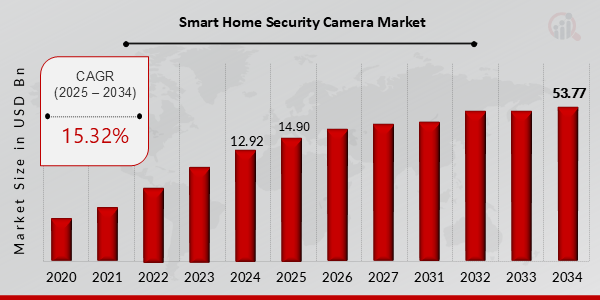
홈 보안 카메라 시장 개요

출처: 2차 조사, 1차 조사, MRFR 데이터베이스 및 분석가 리뷰

홈 보안 카메라 시장 동향

h3범죄율 증가로 시장 성장 촉진 p범죄율 증가가 홈 보안 카메라 수요를 견인하고 있습니다. 범죄율 증가로 인해 소비자들은 특히 주거 지역의 안전 및 보안 시스템에 더욱 관심을 기울이고 있습니다. 더 안전하고 보안적인 주택 소유자는 스마트 알람, 스마트 카메라, 스마트 사물함과 같은 스마트 가전제품을 선호하고 있습니다. 주택 침입 통계에 따르면 모든 침입의 88%가 가정에서 발생하며 보안 시스템이 없는 주택에서 도난당할 가능성이 300% 더 높습니다.

또한 FBI는 미국 법 집행 통계 소스인 연방수사국 범죄 데이터 탐색기 기사에 따르면 그 해에 전국 18,806개 법 집행 기관 중 11,794개에서 받은 데이터를 기반으로 2021년 국가 범죄 통계를 계산했습니다. 11,794개 법 집행 기관, 즉 전체 인구의 64%가 전국 사건 기반 보고 시스템(NIBRS)을 사용하여 2021년에 미국에서 694,050건의 폭력 범죄 발생과 817,020건의 범죄를 기록했습니다. 전 세계 범죄율 증가로 인해 가정용 보안 카메라 시장이 확대되고 있습니다. 이러한 요인이 시장 연평균 성장률(CAGR)을 견인하고 있습니다.

안전 및 보안에 대한 인식이 높아짐에 따라 성장 잠재력이 있습니다. 간편하고 저렴한 가정용 보안 카메라 솔루션을 통해 최상의 보안 수준을 제공할 수 있습니다. 더 많은 사람들이 도난 및 불법 침입에 대한 보안 조치에 대해 인식함에 따라 가정용 보안 카메라 시장 동향은 더욱 빠르게 성장할 것입니다. 최신 기술과 보안 카메라의 결합은 더욱 유연한 환경을 제공할 것입니다. 인공지능과 머신러닝은 가정용 보안 카메라 분야에 긍정적인 변화를 가져올 것입니다. 신체 감지, 얼굴 인식, 그리고 새로운 위험 요소 발견 등이 모두 가능합니다. 인공지능이 강화된 보안 카메라는 침입자와 집주인의 얼굴을 모두 인식할 수 있습니다. 주택 소유자는 발생 가능한 범죄 활동을 예측하여 자산과 재산을 보호할 수 있습니다.

홈 보안 카메라 시장은 특히 개발도상국과 선진국에서 스마트 홈 보급률 증가에 힘입어 성장하고 있습니다. 또한, 홈 자동화 프로세스를 통해 24시간 보안에 접근할 수 있는 보안 장치의 중요성이 커짐에 따라 다양한 실내외 보안 스마트 홈 보안 카메라가 가능해졌습니다. 스마트폰, 태블릿 또는 웨어러블 기기의 원격 기술을 통해 조명, 잠금 장치, 보안 카메라와 같은 홈 자동화 장치가 확산됨에 따라 최적의 안전을 보장하려는 소비자의 요구가 증가하고 있습니다.

인공지능(AI), 가상현실(VR), 증강현실(AR)을 활용하는 솔루션은 COVID-19 팬데믹을 비롯한 끊임없이 진화하는 문제들에 대처하는 방식에 큰 영향을 미칠 것으로 예상됩니다. 현재 팬데믹 상황으로 인해 제약 회사와 의료 기관들은 다양한 분야에서 필수적인 기술로 활용될 AI에 대한 RD 지출을 늘리도록 장려될 것입니다. 따라서 이러한 측면이 전 세계적으로 홈 보안 카메라 시장 매출을 가속화할 것으로 예상됩니다.

홈 보안 카메라 시장 부문 분석

h3홈 보안 카메라 제품 분석 p홈 보안 카메라 시장은 제품별로 돔 보안 카메라, 불릿 보안 카메라, IP 보안 카메라로 세분화되었습니다. IP 보안 부문은 2021년 시장 성장을 주도했으며, 2022년부터 2030년까지 예측 기간 동안 가장 빠르게 성장할 것으로 예상됩니다. 아날로그에서 IP 카메라로의 빠른 전환은 비디오 감시 솔루션 도입에 변화를 가져왔으며, 비디오 분석 및 신경망 개발을 가능하게 했을 뿐만 아니라 더욱 선명하고 고화질의 디지털 이미지를 생성할 수 있게 되었습니다. IP 카메라는 순수 디지털 신호를 전송하기 때문에 더 높은 비디오 정보를 제공하며, 따라서 얼굴 인식 및 차량 번호판 인식에 더 적합합니다.

가정용 보안 카메라 유형 분석

p가정용 보안 카메라 시장은 유형별로 실내 보안 카메라와 실외 보안 카메라로 구분됩니다. 실내 보안 카메라는 2021년 시장을 장악했으며, 2022년부터 2030년까지 예측 기간 동안 가장 빠르게 성장할 것으로 예상됩니다. 도난, 절도, 침입 사고의 증가는 가정 내 이러한 보안 조치 도입을 촉진하고 있습니다. Safewise의 블로그 게시물에 따르면 2021년 4월 21일 기준으로 미국에서는 26초마다 절도가 발생할 것으로 예상됩니다. 사람들은 원격 접속을 통해 하루 종일 집을 완벽하게 통제하기 위해 실내 보안 시스템을 선택합니다.

그림 2: 유형별 가정용 보안 카메라 시장, 2021년 및 2030년(10억 달러)
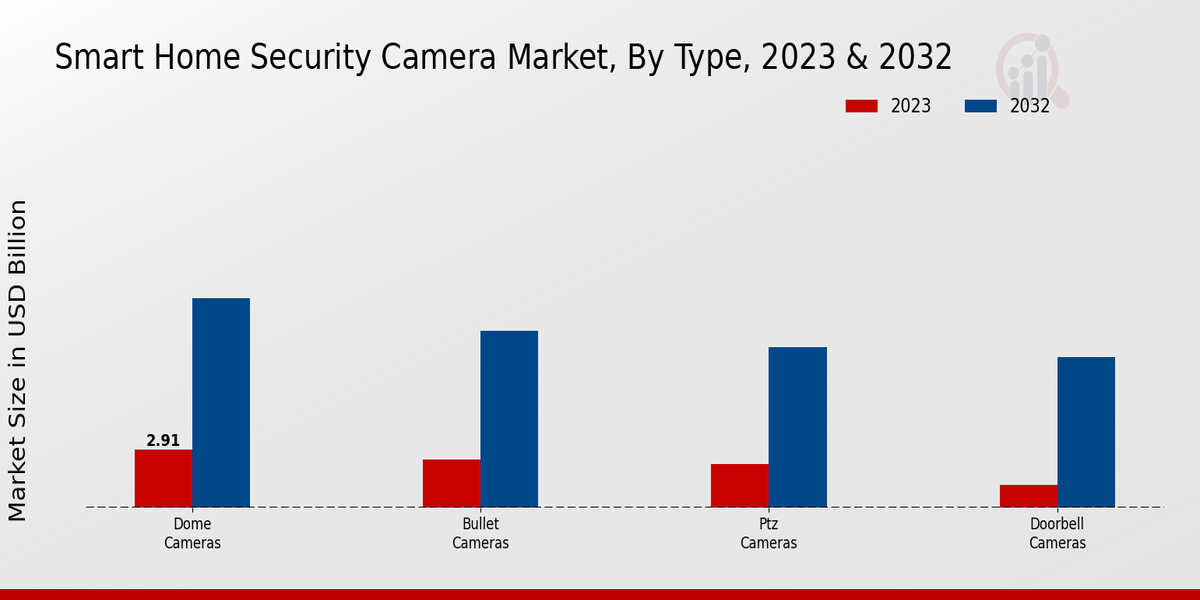
홈 보안 카메라 시장

출처: 2차 조사, 1차 조사, MRFR 데이터베이스 및 분석가 리뷰

홈 보안 카메라 해상도 인사이트

p홈 보안 카메라 시장 데이터는 해상도를 기준으로 비HD(Non-HD) 및 HD(High-HD)로 구분되었습니다. 애플리케이션 리플랫포밍(re-platforming) 부문이 2021년 시장을 주도했으며, 2022년부터 2030년까지 예측 기간 동안 가장 빠르게 성장할 것으로 예상됩니다. 안전 및 보안 목적으로 사용되는 비디오 감시 시스템이 증가함에 따라 고품질 보안 카메라에 대한 수요가 증가하고 있습니다. 감시 시스템과 함께 사용할 경우 고화질(HD) 보안 카메라는 이미지의 선명도와 품질을 향상시키는 데 도움이 됩니다. 이 카메라는 고해상도 외에도 넓은 다이내믹 레인지, 지속 가능성, 향상된 시야각, 그리고 기술 호환성을 제공하여 보안 업계 전반에 걸쳐 HD 카메라의 광범위한 도입을 지원합니다.

홈 보안 카메라 서비스 분석

p홈 보안 카메라 시장 데이터는 서비스별로 전문가용 및 관리형으로 분류되었습니다. 전문가용 부문은 2021년 시장을 장악했으며, 2022년부터 2030년까지 예측 기간 동안 가장 빠르게 성장할 것으로 예상됩니다. 스마트 잠금 장치, 컨트롤러, 판독기, 비상 보안 시스템, 그리고 TV 및 PDA와 같은 모니터링 도구와 같은 하드웨어 항목의 적절한 설치는 보안 시스템 통합의 구성 요소입니다. 이러한 기술을 출입 통제 시스템 및 침입 경보 관리 시스템과 같은 기존 보안 솔루션과 통합하는 것은 전문 보안 시스템 서비스의 일부입니다.

홈 보안 카메라 지역 분석

p이 연구는 지역별로 북미, 유럽, 아시아 태평양 및 기타 지역에 대한 시장 분석 정보를 제공합니다. 북미 홈 보안 카메라 시장은 2021년 9억 달러 규모를 기록했으며, 스마트 홈에서 IoT 활용이 증가함에 따라 연구 기간 동안 연평균 43.20%의 성장률을 보일 것으로 예상됩니다. 사람들은 기존에 널리 사용되던 설치형 Wi-Fi 카메라 대신 스마트 보안 카메라를 사용하여 자산 보안을 강화하고 있습니다. 다양한 장점 덕분에 이 지역의 많은 가정이 이러한 고급 스마트 보안 카메라를 설치했습니다.

또한, 시장 보고서에서 조사한 주요 국가는 미국, 캐나다, 독일, 프랑스, ​​영국, 이탈리아, 스페인, 중국, 일본, 인도, 호주, 한국, 브라질입니다.

그림 3: 2021년 지역별 가정용 보안 카메라 시장 점유율(%)
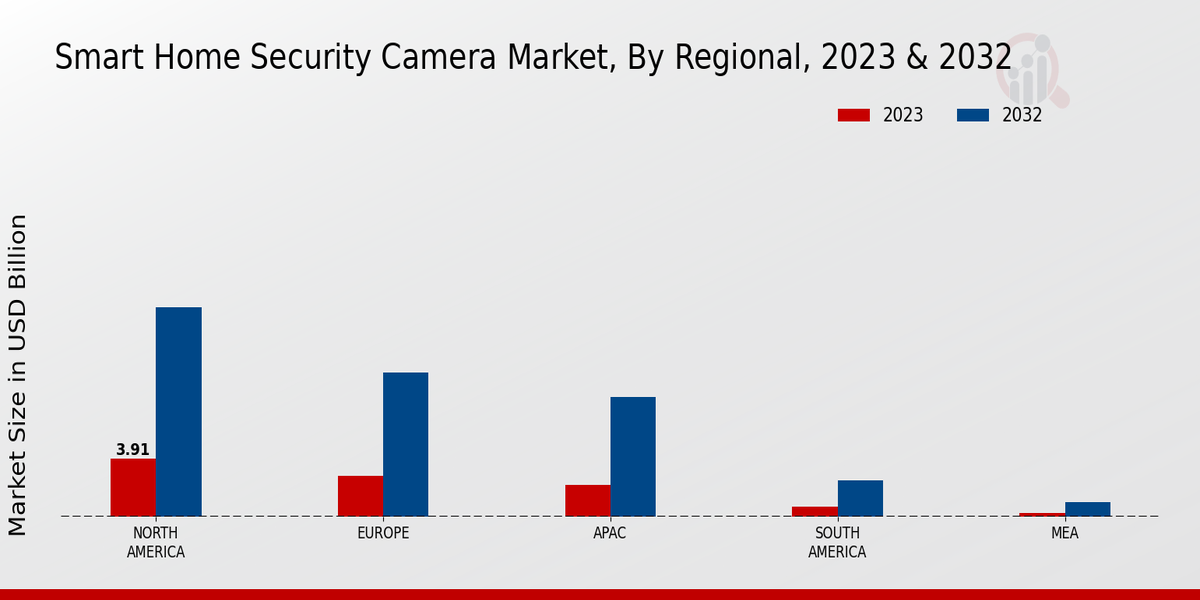
가정용 보안 카메라 시장

출처: 2차 조사, 1차 조사, MRFR 데이터베이스 및 분석가 리뷰

아시아 태평양 가정용 보안 카메라 시장은 가장 빠르게 성장하는 시장 점유율을 차지합니다. 팬데믹 기간 동안 감시 시스템 사용이 증가했습니다. 아시아 태평양 지역의 여러 국가에서 드론부터 CCTV 카메라까지 모든 것을 활용하여 코로나바이러스 접촉 추적, 격리자 모니터링, 그리고 전반적인 전파 관리를 위한 대규모 감시 기술을 동원하고 있습니다. 이로 인해 사생활 침해가 증가하고 있으며, 이는 일부 사람들에게 경각심을 불러일으키고 있습니다. 또한, 중국 가정용 보안 카메라 시장이 가장 큰 시장 점유율을 차지했으며, 인도 가정용 보안 카메라 시장은 이 지역에서 가장 빠르게 성장하는 시장이었습니다.

유럽 가정용 보안 카메라 시장은 2022년부터 2030년까지 상당한 연평균 성장률(CAGR)로 성장할 것으로 예상됩니다. 예측 기간 동안 스마트 및 유선 주택에 대한 수요를 촉진할 것으로 예상되는 중요한 측면은 보안 문제의 중요성이 커지고 있다는 것입니다. HVAC 컨트롤러, 보안 및 출입 통제 장치, 엔터테인먼트 컨트롤과 같은 최첨단 무선 기술의 등장은 이 지역의 시장 확장을 촉진할 것으로 예상됩니다. 또한, 영국 가정용 보안 카메라 시장이 가장 큰 시장 점유율을 차지했으며, 독일 가정용 보안 카메라 시장은 이 지역에서 가장 빠르게 성장하는 시장이었습니다.

가정용 보안 카메라 주요 시장 참여자 및 경쟁 통찰력

p주요 시장 참여자들은 제품 라인을 확장하기 위해 RD에 막대한 투자를 하고 있으며, 이는 홈 보안 카메라 산업의 성장에 기여할 것입니다. 시장 참여자들은 신제품 출시, 계약 체결, 인수합병, 투자 확대, 시장 개발 및 다른 기관과의 협력 등 전 세계 시장 진출을 위한 다양한 전략적 이니셔티브를 추진하고 있습니다. 업계 경쟁사들은 점점 더 경쟁이 치열해지고 성장하는 시장에서 사업을 확장하고 생존하기 위해 비용 효율적인 제품을 제공해야 합니다.

제조업체들이 홈 보안 카메라 산업에서 고객에게 이익을 제공하고 사업을 확장하기 위해 채택하는 주요 사업 전략 중 하나는 운영 비용을 절감하기 위한 현지 생산입니다. 최근 몇 년 동안 홈 보안 카메라 산업은 의료 분야에 가장 큰 이점을 제공해 왔습니다. 항저우 히크비전 디지털 테크놀로지(중국), 모토로라 홈(미국), 선전 레시 비디오 테크와 같은 홈 보안 카메라 시장의 주요 업체들은 다음과 같습니다. Co. Ltd(중국), Netgear Inc.(미국), ADT Security Services(미국) 및 FrontPoint Security Solutions LLC(미국).

ADT Inc.(원래 ADT Corporation)는 미국 전역의 가정, 소규모 사업장 및 대기업에 전자 보안, 화재 예방 및 기타 관련 경보 모니터링 서비스를 제공하는 미국 기업입니다. 플로리다주 보카 레이턴에 본사가 있습니다. 2019년 6월, ADT와 유명 다세대 주택 관리 회사인 BH Management Services, LLC는 협력 계약을 체결했습니다. 이 파트너십의 주요 목표는 스마트 기술 통합 및 편의성을 갖춘 서비스를 제공하는 것이었습니다.

미국 통신 회사인 Motorola, Inc.는 일리노이주 샴버그에 본사를 두고 있습니다. 2007년부터 2009년까지 43억 달러의 손실을 기록한 후, 2011년 1월 4일, 모토로라 모빌리티와 모토로라 솔루션즈라는 두 개의 독립 상장 기업으로 분할되었습니다. 모토로라 모빌리티가 조직 개편의 일환으로 분사된 이후, 모토로라 솔루션즈는 모토로라의 법적 후계자로 인정받고 있습니다. 레노버는 2014년에 모토로라 모빌리티를 인수했습니다.

가정용 보안 카메라 시장의 주요 기업은 다음과 같습니다.

ul
  • 항저우 히크비전 디지털 테크놀로지(중국)

  • 모토로라 홈(미국)

  • Shenzhen Leshi Video Tech. Co. Ltd(중국)

  • FrontPoint Security Solutions LLC(미국)

h2홈 보안 카메라 산업 동향 p2020년 6월: Arlo Technologies에서 Ultra 2 무선 스포트라이트 카메라 시스템을 출시했습니다. 이 카메라는 4K 화질과 180도 초광각 시야각 등 최첨단 기능을 제공하여 사용자 경험을 향상시킵니다.

2020년 5월: Vivint Smart Home에서 AI 기반 초인종 카메라인 Vivint Doorbell Camera Pro를 출시했습니다. 이 카메라는 현관 도둑이나 기타 잠재적 위험 요소를 지능적으로 감지하여 물품을 보호하는 데 적극적으로 도움을 줍니다. 초인종 카메라는 범죄를 조기에 감지하여 주택 소유자에게 안심을 제공합니다.

가정용 보안 카메라 시장 세분화

h3가정용 보안 카메라 제품 전망(10억 달러, 2018-2030년) ul
  • 돔형 보안 카메라

  • 총알형 보안 카메라

  • IP 보안 카메라

h3가정용 보안 카메라 유형 전망(10억 달러, 2018-2030년) ul
  • 실내형 보안 카메라

  • 실외형 보안 카메라

h3가정용 보안 카메라 해상도 전망(10억 달러, 2018-2030년) ul
  • 비HD

  • HD

h3홈 보안 카메라 서비스 전망(10억 달러, 2018-2030년) ul
  • 전문가

  • 관리형

h3홈 보안 카메라 지역 전망(10억 달러, 2018-2030년) ul
  • 북부 미국

ul

    미국

    캐나다

ul
  • 유럽

ul

    독일

    프랑스

    영국

    이탈리아

    스페인

    나머지 유럽

ul

    아시아 태평양

      중국

      일본

      인도

      호주

      한국

      호주

      나머지 아시아 태평양

    기타 국가

      중간 동쪽

      아프리카

      라틴 아메리카

FAQs

What is the current valuation of the Smart Home Security Camera Market?

The Smart Home Security Camera Market was valued at 12.93 USD Billion in 2024.

What is the projected market size for the Smart Home Security Camera Market by 2035?

The market is projected to reach 62.02 USD Billion by 2035.

What is the expected CAGR for the Smart Home Security Camera Market during the forecast period 2025 - 2035?

The expected CAGR for the market during 2025 - 2035 is 15.32%.

Which types of cameras dominate the Smart Home Security Camera Market?

Bullet Cameras, valued at 18.2 USD Billion, appear to dominate the market among various types.

How do wired and wireless cameras compare in market valuation?

Wireless Cameras are projected to reach 20.0 USD Billion, surpassing Wired Cameras at 12.0 USD Billion.

What is the market valuation for residential applications of smart home security cameras?

Residential applications accounted for a valuation of 25.0 USD Billion in the market.

Which features are most sought after in smart home security cameras?

Motion Detection, valued at 18.73 USD Billion, seems to be a highly sought-after feature.

Who are the key players in the Smart Home Security Camera Market?

Key players include Amazon, Google, Ring, and Arlo Technologies, among others.

What is the market valuation for commercial applications of smart home security cameras?

Commercial applications were valued at 18.0 USD Billion in the market.

What is the projected growth for hybrid cameras in the Smart Home Security Camera Market?

Hybrid Cameras are expected to reach a valuation of 15.02 USD Billion by 2035.

저자
Author
Author Profile
Aarti Dhapte LinkedIn
AVP - Research
A consulting professional focused on helping businesses navigate complex markets through structured research and strategic insights. I partner with clients to solve high-impact business problems across market entry strategy, competitive intelligence, and opportunity assessment. Over the course of my experience, I have led and contributed to 100+ market research and consulting engagements, delivering insights across multiple industries and geographies, and supporting strategic decisions linked to $500M+ market opportunities. My core expertise lies in building robust market sizing, forecasting, and commercial models (top-down and bottom-up), alongside deep-dive competitive and industry analysis. I have played a key role in shaping go-to-market strategies, investment cases, and growth roadmaps, enabling clients to make confident, data-backed decisions in dynamic markets.
Co-Author
Co-Author Profile
Aarti Dhapte LinkedIn
AVP - Research
A consulting professional focused on helping businesses navigate complex markets through structured research and strategic insights. I partner with clients to solve high-impact business problems across market entry strategy, competitive intelligence, and opportunity assessment. Over the course of my experience, I have led and contributed to 100+ market research and consulting engagements, delivering insights across multiple industries and geographies, and supporting strategic decisions linked to $500M+ market opportunities. My core expertise lies in building robust market sizing, forecasting, and commercial models (top-down and bottom-up), alongside deep-dive competitive and industry analysis. I have played a key role in shaping go-to-market strategies, investment cases, and growth roadmaps, enabling clients to make confident, data-backed decisions in dynamic markets.

Research Approach

Secondary Research

The secondary research process involved comprehensive analysis of regulatory databases, industry publications, IoT security standards, and authoritative technology and consumer safety organizations. Key sources included the US Federal Communications Commission (FCC), National Institute of Standards and Technology (NIST), Consumer Technology Association (CTA), Security Industry Association (SIA), Electronic Security Association (ESA), IEEE Standards Association, US Consumer Product Safety Commission (CPSC), European Telecommunications Standards Institute (ETSI), European Union Agency for Cybersecurity (ENISA), National Cyber Security Centre (NCSC-UK), Internet of Things Security Foundation (IoTSF), International Electrotechnical Commission (IEC), National Center for Electronics Recycling (NCER), Pew Research Center (Technology Adoption Studies), US Census Bureau (Housing and Technology Statistics), Eurostat (Digital Economy & Society Statistics), International Data Corporation (IDC), Consumer Electronics Show (CES) Market Research, and national telecommunications regulatory authorities from key markets. These sources were used to collect shipment statistics, regulatory compliance data, cybersecurity standards, smart home adoption trends, and competitive landscape analysis for dome cameras, bullet cameras, PTZ cameras, doorbell cameras, and emerging AI-enabled surveillance technologies.

Primary Research

Qualitative and quantitative insights were obtained by interviewing supply-side and demand-side stakeholders during the primary research process. The supply-side sources consisted of CEOs, VPs of Product Development, Chief Information Security Officers (CISOs), IoT hardware engineering leaders, and commercial directors from semiconductor suppliers, cloud service providers, and smart camera manufacturers. Smart home system integrators, residential security service providers, commercial facility managers, retail loss prevention directors, and procurement leads from property management firms, smart home builders, and enterprise security departments constituted demand-side sources. Market segmentation was validated, AI and machine learning integration roadmaps were confirmed, and consumer privacy concerns, subscription pricing models, and the adoption of interoperability standards were gathered through primary research.

Primary Respondent Breakdown:

By Designation: C-level Primaries (28%), Director Level (32%), Others (40%)

By Region: North America (32%), Europe (30%), Asia-Pacific (33%), Rest of World (5%)

Market Size Estimation

Global market valuation was derived through revenue mapping and unit shipment analysis. The methodology included:

Identification of 50+ key manufacturers across North America, Europe, Asia-Pacific, and Latin America

Product mapping across dome cameras, bullet cameras, PTZ cameras, doorbell cameras, and AI-enabled camera categories

Analysis of reported and modeled annual revenues specific to smart security camera portfolios, including hardware sales and recurring subscription revenues

Coverage of manufacturers representing 75-80% of global market share in 2024

Extrapolation using bottom-up (unit shipments × ASP by country/segment) and top-down (manufacturer revenue validation) approaches to derive segment-specific valuations, incorporating cloud storage subscription attach rates and smart home ecosystem integration revenues

무료 샘플 다운로드

이 보고서의 무료 샘플을 받으려면 아래 양식을 작성하십시오

Download PDF ×

We do not share your information with anyone. However, we may send you emails based on your report interest from time to time. You may contact us at any time to opt-out.
















