North America : Leading Market for Acupuncture
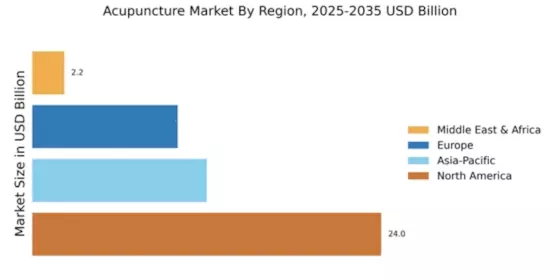
North America leads in the Acupuncture Market size, accounting for over 49.79% of the global revenue in 2024. The growth is driven by increasing acceptance of alternative medicine, rising healthcare costs, and a growing focus on holistic health. Regulatory support from organizations like the National Certification Commission for Acupuncture and Oriental Medicine has further catalyzed market expansion.
- According to Centers for Disease Control and Prevention, approximately 24% of U.S. adults experience chronic pain, supporting sustained demand for complementary pain-management options such as acupuncture. This large patient population continues driving adoption across healthcare facilities and wellness centers.
The demand for acupuncture is also fueled by its effectiveness in pain management and stress relief, making it a preferred choice for many consumers. The competitive landscape in North America is robust, with key players such as the Acupuncture Now Foundation and the American Academy of Medical Acupuncture leading the charge. The U.S. remains the dominant country, with a well-established infrastructure for acupuncture education and practice. The presence of numerous accredited institutions ensures a steady supply of qualified practitioners, enhancing the market's credibility and growth potential. As awareness of acupuncture's benefits continues to rise, the market is expected to expand further.
- GE Healthcare continues expanding healthcare technology solutions that support integrated and patient-centered care delivery. Increasing investment in outpatient and chronic disease management infrastructure creates favorable conditions for complementary therapies including acupuncture across North American healthcare networks.
Europe : Emerging Acupuncture Market
Europe Acupuncture Market size was valued at USD 10 Billion in 2024, making it the second-largest regional market with a 20.75% share. The growth is driven by increasing consumer interest in alternative therapies and a shift towards preventive healthcare. Regulatory frameworks in countries like Germany and the UK are becoming more supportive, allowing for greater integration of acupuncture into mainstream healthcare. This trend is further supported by rising healthcare costs and a growing body of research validating acupuncture's efficacy in treating various conditions.
- The European Medicines Agency supports evidence-based healthcare practices across Europe through rigorous scientific evaluation frameworks. Growing emphasis on patient-centered treatment approaches and integrative care models continues encouraging broader acceptance of complementary therapies, including acupuncture, within regional healthcare systems.
Leading countries in this region include Germany, the UK, and France, where acupuncture is increasingly recognized as a legitimate treatment option. The competitive landscape features organizations like The British Acupuncture Council and the Australian Acupuncture and Chinese Medicine Association, which play pivotal roles in promoting standards and education. As more practitioners enter the market, the availability of acupuncture services is expected to increase, further driving market growth.
Asia-Pacific : Rapidly Growing Market
The Asia-Pacific region, with a market size of $12.0 million, is experiencing rapid growth in acupuncture practices. This surge is driven by increasing health awareness, a cultural inclination towards traditional medicine, and government initiatives promoting alternative therapies. Countries like China and Australia are at the forefront, with significant investments in acupuncture education and practice. The global demand for authentic Chinese acupuncture continues to anchor the region’s market dominance, as practitioners utilize centuries-old techniques to treat systemic imbalances.
The region's diverse population is also contributing to the rising demand for personalized healthcare solutions. China remains the largest market for acupuncture, with a rich history and extensive integration into the healthcare system. Australia is emerging as a key player, with a growing number of practitioners and clinics. The competitive landscape is characterized by a mix of traditional practitioners and modern wellness centers. The presence of organizations advocating for acupuncture's benefits is also notable, enhancing its acceptance in the region.
Middle East and Africa : Niche Market with Potential
The Middle East and Africa region represents a niche market for acupuncture, with a market size of $2.2 million. The growth is driven by increasing awareness of alternative therapies and a rising demand for holistic health solutions. Regulatory bodies are beginning to recognize acupuncture as a viable treatment option, which is essential for its integration into healthcare systems. The region's diverse cultural landscape also contributes to the growing acceptance of acupuncture among various populations.
Countries like South Africa and the UAE are leading the way in adopting acupuncture practices, supported by a growing number of trained practitioners. The competitive landscape is still developing, with local organizations working to establish standards and promote education in acupuncture. As the market matures, there is significant potential for growth, particularly as more consumers seek out alternative health solutions.