Adhesive for Drug Delivery System Market Research Report Information By Resin Type (Acrylic, Polyisobutylene, Silicone, and Others), By Technology (Hydration-Mediation Adhesion, Bonding-Mediation Adhesion, Receptor-Mediation Adhesion, and Others), And By Region (North America, Europe, Asia-Pacific, And Rest Of The World) –Market Forecast Till 2035.
As per MRFR analysis, the Adhesive for Drug Delivery System Market was estimated at 4436.6 USD Million in 2024. The Adhesive for Drug Delivery System industry is projected to grow from 4701.65 USD Million in 2025 to 7625.87 USD Million by 2035, exhibiting a compound annual growth rate (CAGR) of 5.01% during the forecast period 2025 - 2035.
Key Market Trends & Highlights
The Adhesive for Drug Delivery System Market is poised for substantial growth driven by technological advancements and increasing patient-centric approaches.
North America remains the largest market for adhesive drug delivery systems, driven by advanced healthcare infrastructure and innovation.
The Asia-Pacific region is emerging as the fastest-growing market, fueled by rising healthcare investments and a growing population.
Transdermal drug delivery systems dominate the market, while ocular drug delivery systems are witnessing rapid growth due to increasing demand for targeted therapies.
Key market drivers include the rising demand for targeted drug delivery and innovations in biocompatible materials, which enhance patient compliance.
Market Size & Forecast
2024 Market Size
4436.6 (USD Million)
2035 Market Size
7625.87 (USD Million)
CAGR (2025 - 2035)
5.01%
Major Players
3M (US), B. Braun Melsungen AG (DE), Medtronic (US), Johnson & Johnson (US), Adhesives Research (US), Henkel AG & Co. KGaA (DE), AptarGroup (US), H.B. Fuller Company (US), Sika AG (CH)
Our Impact
Enabled $4.3B Revenue Impact for Fortune 500 and Leading Multinationals
Partnering with 2000+ Global Organizations Each Year
30K+ Citations by Top-Tier Firms in the Industry
Adhesive for Drug Delivery System Market Trends
The Adhesive for Drug Delivery System Market is currently experiencing a notable evolution, driven by advancements in technology and increasing demand for efficient drug delivery methods. The integration of innovative adhesive materials is enhancing the efficacy of transdermal patches, oral films, and other delivery systems. This market appears to be influenced by a growing emphasis on patient compliance and the need for targeted therapies. As healthcare providers seek to improve treatment outcomes, the role of adhesives in drug delivery is becoming increasingly critical. Furthermore, the rising prevalence of chronic diseases necessitates the development of more sophisticated delivery mechanisms, which could further propel market growth.
In addition, the Adhesive for Drug Delivery System Market is likely to benefit from ongoing research and development efforts aimed at creating biocompatible and biodegradable adhesives. These advancements may address safety concerns and enhance the overall patient experience. Regulatory bodies are also playing a pivotal role in shaping the market landscape by establishing guidelines that ensure the safety and effectiveness of adhesive products. As the industry continues to evolve, collaboration between manufacturers, healthcare professionals, and regulatory agencies will be essential in driving innovation and meeting the diverse needs of patients and providers alike.
Technological Advancements
The Adhesive for Drug Delivery System Market is witnessing a surge in technological innovations that enhance the performance and functionality of adhesive products. New materials and formulations are being developed to improve adhesion properties, stability, and drug release profiles. This trend indicates a shift towards more sophisticated delivery systems that can cater to specific therapeutic needs.
Focus on Patient Compliance
There is a growing emphasis on patient compliance within the Adhesive for Drug Delivery System Market. Manufacturers are increasingly designing adhesives that are user-friendly and comfortable, thereby encouraging adherence to treatment regimens. This trend suggests that improving the patient experience is becoming a priority for stakeholders in the healthcare sector.
Regulatory Influence
Regulatory bodies are playing a crucial role in shaping the Adhesive for Drug Delivery System Market. Stricter guidelines and standards are being established to ensure the safety and efficacy of adhesive products. This trend highlights the importance of compliance in product development and may drive innovation as companies strive to meet these evolving requirements.
Adhesive for Drug Delivery System Market Drivers
Market Growth Projections
The Global Adhesive for Drug Delivery System Market Industry is projected to experience robust growth in the coming years. With a market value anticipated to reach 3.25 USD Billion in 2024 and further expand to 7.5 USD Billion by 2035, the industry is poised for significant development. The compound annual growth rate of 7.9% from 2025 to 2035 underscores the increasing investment in adhesive technologies for drug delivery. This growth is driven by various factors, including technological advancements, rising chronic disease prevalence, and regulatory support. The market's trajectory suggests a promising future for stakeholders involved in adhesive development and application.
Rising Demand for Targeted Drug Delivery
The Global Adhesive for Drug Delivery System Market Industry is experiencing a notable increase in demand for targeted drug delivery systems. This trend is driven by the growing need for precision in therapeutic applications, particularly in oncology and chronic disease management. Adhesives that facilitate localized drug delivery are gaining traction, as they enhance the efficacy of treatments while minimizing systemic side effects. The market is projected to reach 3.25 USD Billion in 2024, reflecting a robust growth trajectory. As healthcare providers seek innovative solutions to improve patient outcomes, the adoption of advanced adhesive technologies is likely to accelerate, further propelling market expansion.
Increasing Prevalence of Chronic Diseases
The Global Adhesive for Drug Delivery System Market Industry is significantly impacted by the rising prevalence of chronic diseases such as diabetes, cardiovascular disorders, and cancer. These conditions necessitate effective and efficient drug delivery systems that can provide consistent therapeutic effects. Adhesives that facilitate transdermal and implantable drug delivery are particularly valuable in managing these diseases. The growing patient population requiring long-term medication regimens is driving the demand for innovative adhesive solutions. As healthcare systems adapt to these challenges, the market is poised for substantial growth, with projections indicating a rise to 7.5 USD Billion by 2035.
Technological Advancements in Adhesive Formulations
Innovations in adhesive formulations are significantly influencing the Global Adhesive for Drug Delivery System Market Industry. The development of bioadhesive materials, which can adhere to biological tissues, is enhancing the effectiveness of drug delivery systems. These advancements allow for sustained release profiles and improved patient compliance. For instance, the incorporation of smart polymers that respond to physiological conditions is emerging as a game changer. Such technologies not only optimize drug release but also reduce the frequency of administration. As a result, the market is expected to witness a compound annual growth rate of 7.9% from 2025 to 2035, indicating a strong future for adhesive-based drug delivery solutions.
Growing Focus on Patient-Centric Healthcare Solutions
The Global Adhesive for Drug Delivery System Market Industry is witnessing a paradigm shift towards patient-centric healthcare solutions. This trend emphasizes the need for drug delivery systems that enhance patient experience and adherence to treatment regimens. Adhesives that enable easy application and minimize discomfort are becoming increasingly popular. For instance, transdermal patches that utilize advanced adhesive technologies are gaining traction due to their convenience and effectiveness. As healthcare providers prioritize patient outcomes, the demand for such innovative adhesive solutions is expected to rise. This focus on patient-centricity is likely to drive market growth, aligning with the broader trends in healthcare.
Regulatory Support for Advanced Drug Delivery Systems
Regulatory bodies are increasingly recognizing the importance of advanced drug delivery systems, which is positively influencing the Global Adhesive for Drug Delivery System Market Industry. Initiatives aimed at streamlining the approval process for innovative adhesive technologies are fostering a conducive environment for market growth. For example, the introduction of guidelines that support the development of biocompatible and biodegradable adhesives is encouraging manufacturers to invest in research and development. This regulatory support not only enhances the safety and efficacy of drug delivery systems but also boosts consumer confidence. Consequently, the market is likely to expand as new adhesive products gain regulatory approval.
Market Segment Insights
By Application: Transdermal Drug Delivery (Largest) vs. Injectable Drug Delivery (Fastest-Growing)
The Adhesive for Drug Delivery System Market showcases a diverse range of applications, with transdermal drug delivery representing the largest segment. This segment has gained significant traction due to its effective and non-invasive approach, capturing a substantial share of the market. Injectable drug delivery, while traditionally significant, is now experiencing rapid growth as more innovative solutions emerge, catering to both therapeutic and patient-centric needs. As a result, these two applications exemplify the varying dynamics at play within the market.
Furthermore, market growth trends are being driven by technological advancements and increased investments in research and development. The aging population and the rising prevalence of chronic diseases are creating demand for more effective drug delivery systems. Transdermal delivery remains favored for its compliance and convenience, while injectable delivery is evolving, with new formulations and delivery methods enhancing efficacy and patient experience. The focus remains on personalized medicine, which is fueling innovation in both sectors.
Drug Delivery Method: Transdermal (Dominant) vs. Injectable (Emerging)
Transdermal drug delivery is the dominant method in the adhesive for drug delivery system market, recognized for its ability to provide consistent and controlled release of pharmaceuticals through the skin. This method significantly improves patient compliance as it eliminates the need for frequent dosing and enables the administration of wide variety of drugs. On the other hand, injectable drug delivery is emerging with new advancements, particularly in biopharmaceuticals, which enhance drug absorption and efficacy. This segment is characterized by innovations in needle-free injection technologies and smart delivery devices, which cater to patient comfort and safety. Together, these methods reflect the diverse yet strategic approaches being employed to improve drug delivery efficiency.
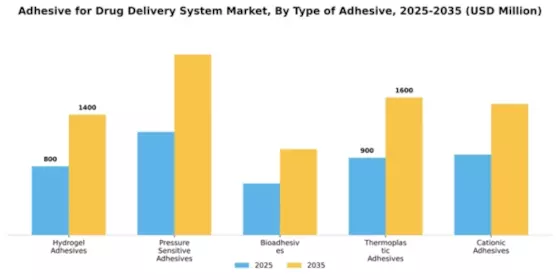
By Type of Adhesive: Hydrogel Adhesives (Largest) vs. Bioadhesives (Fastest-Growing)
The 'Adhesive for Drug Delivery System Market' showcases a diverse landscape with various types of adhesives. Hydrogel adhesives currently dominate the market due to their superior biocompatibility and moisture retention properties, making them ideal for transdermal drug delivery systems. Following behind are pressure sensitive adhesives, which are favored for their easy application and versatility in several medical applications. Bioadhesives, while smaller in market share, are emerging rapidly due to their natural origin and effectiveness in targeted drug delivery, particularly in wound care applications.
Growth trends in this segment are driven primarily by an increasing interest in the development of personalized medicine and innovative drug delivery methods. Hydrogel adhesives are witnessing sustained demand due to advancements in biomedical research and technology, allowing for improved performance and user comfort. In contrast, bioadhesives are capturing attention due to their sustainable nature and minimal risk of side effects, aligning with the growing focus on natural health products. This shift is further bolstered by regulatory support and increased research funding, enhancing the overall attractiveness of bioadhesives in the pharmaceutical landscape.
Hydrogel Adhesives (Dominant) vs. Bioadhesives (Emerging)
Hydrogel adhesives are characterized by their ability to maintain moisture, making them essential in applications where hydration is crucial, such as in transdermal patches and wound dressings. Their established position in the market is a result of extensive research and development efforts that have optimized their formulation for enhanced drug release profiles. Meanwhile, bioadhesives are gaining traction as an emerging alternative due to their natural composition, offering unique advantages in biocompatibility and patient safety. These adhesives adhere effectively to biological tissues, making them particularly promising for localized drug delivery in various therapeutic areas, including oncology and wound healing. As consumers increasingly prioritize safety and efficacy, bioadhesives are positioned for rapid growth alongside established players like hydrogel adhesives.
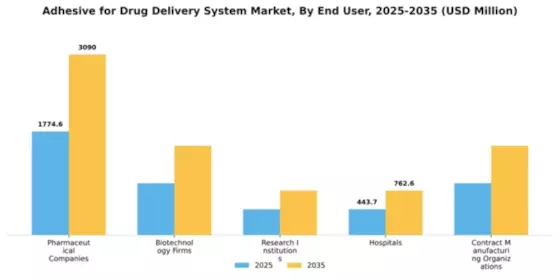
By End Use: Pharmaceuticals (Largest) vs. Biologics (Fastest-Growing)
The Adhesive for Drug Delivery System Market segment shows a diverse distribution among various end uses. Pharmaceuticals remain the largest segment, driven by their extensive applications in drug formulation and delivery. Biologics, on the other hand, are rapidly gaining traction due to the increasing demand for biologically derived therapies, making this segment notably significant in the overall market landscape.
Growth trends indicate a shift towards personalized medicine and biopharmaceuticals, propelling the biologics segment into the forefront. Additionally, the rising incidences of chronic diseases underscore the importance of effective drug delivery systems in the pharmaceutical sector. Innovations in adhesive technologies are tailored to enhance drug stability and absorption, further catalyzing growth in these segments.
Pharmaceuticals: Dominant vs. Biologics: Emerging
Pharmaceuticals are characterized by their dominant presence in the adhesive for drug delivery system market, primarily due to their established application in various therapeutic areas. They facilitate drug stability and controlled release, which are critical for patient adherence and efficacy. In contrast, biologics are emerging as a significant segment, driven by advancements in therapeutic modalities and a growing focus on personalized medicine. The distinctive requirement for biocompatibility and tailored adhesive properties to suit biologic formulations positions this segment as a central focus for innovation. As the market evolves, the collaboration between pharmaceutical companies and biotherapeutic developers is likely to enhance the effectiveness of drug delivery systems, fostering growth opportunities for these segments.
By Formulation Type: Liquid Formulations (Largest) vs. Gel Formulations (Fastest-Growing)
The Adhesive for Drug Delivery System Market shows a diverse range of formulation types with liquid formulations dominating market share due to their versatility and efficacy. Among the key players, liquid formulations hold the largest segment, favored for their ease of application and rapid absorption into the body, making them the preferred choice in many therapeutic applications. In contrast, gel formulations are witnessing rapid growth as they combine the benefits of both liquid and solid properties, appealing to a modern market that values user-friendly and effective drug delivery solutions.
Remarkable growth in the adhesive for drug delivery systems can be attributed to advancements in biocompatible materials and an increasing demand for targeted therapies. Gel formulations are particularly gaining traction due to their ability to provide sustained release while minimizing adverse effects, which appeals to both pharmaceutical companies and patients. The ongoing innovation and research in adhesive technologies are expected to further bolster these segments, paving the way for the continued expansion of both liquid and gel formulations in the market.
Liquid Formulations (Dominant) vs. Gel Formulations (Emerging)
Liquid formulations in the adhesive for drug delivery systems are highly regarded for their fluidity, allowing for a seamless application that enhances drug absorption. They are predominant across various therapeutic areas, offering advantages such as quick onset of action while ensuring precise dosage. These formulations are particularly effective for high-viscosity drugs and complex drug delivery systems. On the other hand, gel formulations represent an emerging trend, characterized by their unique properties that combine stability and flexibility. They provide an innovative approach by allowing drugs to be slowly released over time, thereby improving patient compliance and minimizing the frequency of administration. As the demand for advanced delivery methods rises, gel formulations are increasingly being integrated into novel drug delivery systems, positioning them as significant players in the market.
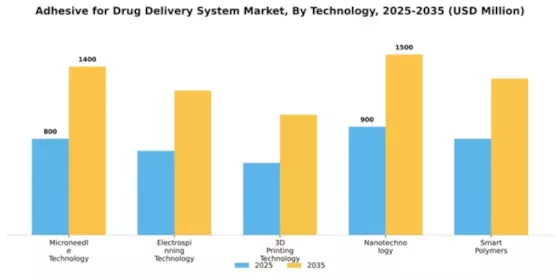
By Technology: Microneedle Technology (Largest) vs. Nanotechnology (Fastest-Growing)
Within the adhesive for drug delivery system market, microneedle technology holds the largest share, appealing particularly for its minimally invasive application and capability to enhance drug delivery efficacy. Other technologies such as electrospinning and 3D printing are also making strides but currently do not match the market dominance of microneedles. Nanotechnology plays a crucial role in enhancing compound solubility and bioavailability, thereby attracting notable attention as it captures a growing share of the market.
Technology: Microneedle (Dominant) vs. Nanotechnology (Emerging)
Microneedle technology is distinguished by its ability to deliver drugs through tiny, pain-free needles, making it a preferred choice among patients and healthcare providers. This segment is firmly established in the market due to its successful applications in vaccines and therapeutic agents. Conversely, nanotechnology, while emergent, is rapidly gaining traction due to its potential for increasing drug delivery efficiency at a molecular level. It supports innovative formulations that can target specific tissues or cells, making it a promising candidate for future drug delivery systems that require precision and personalization.
Get more detailed insights about Adhesive for Drug Delivery System MarketRequest Free Sample
Regional Insights
North America : Market Leader in Innovation
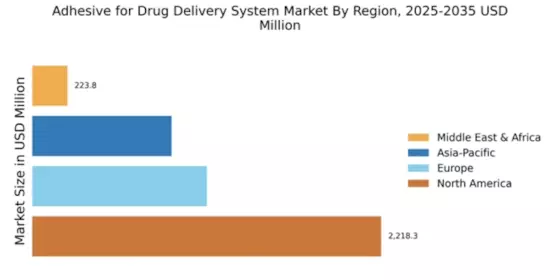
North America is poised to maintain its leadership in the Adhesive for Drug Delivery System market, holding a significant share of 2218.3M in 2024. The region's growth is driven by increasing healthcare expenditures, advancements in drug delivery technologies, and a robust regulatory framework that supports innovation. The demand for biocompatible and efficient adhesive solutions is on the rise, fueled by the growing prevalence of chronic diseases and the need for effective drug delivery methods.
The competitive landscape in North America is characterized by the presence of major players such as 3M, Medtronic, and Johnson & Johnson. These companies are investing heavily in R&D to develop innovative adhesive solutions tailored for drug delivery applications. The U.S. remains the leading country, supported by a strong healthcare infrastructure and a focus on patient-centric solutions. The market is expected to grow further as regulatory bodies continue to promote advancements in medical adhesives.
Europe : Emerging Market with Potential
Europe is witnessing a growing demand for Adhesive for Drug Delivery Systems, with a market size of 1109.15M in 2024. The region's growth is driven by increasing investments in healthcare and a rising focus on innovative drug delivery methods. Regulatory support for advanced medical technologies is also a key factor, as European agencies encourage the development of safer and more effective adhesive solutions for medical applications.
Leading countries in Europe include Germany, France, and the UK, where major players like B. Braun Melsungen AG and Henkel AG are actively involved in the market. The competitive landscape is marked by a mix of established companies and emerging startups, all striving to innovate and capture market share. The European market is expected to expand as healthcare providers increasingly adopt advanced adhesive technologies to enhance patient outcomes.
Asia-Pacific : Rapidly Growing Market
The Asia-Pacific region is rapidly emerging as a significant player in the Adhesive for Drug Delivery System market, with a market size of 885.3M in 2024. The growth is driven by increasing healthcare investments, a rising population, and a growing demand for advanced medical technologies. Regulatory bodies in countries like China and India are also promoting the development of innovative adhesive solutions, which is expected to further boost market growth.
Key countries in this region include China, Japan, and India, where local and international players are competing to capture market share. Companies like Medtronic and AptarGroup are expanding their presence in Asia-Pacific, focusing on developing region-specific adhesive solutions. The competitive landscape is dynamic, with a mix of established firms and new entrants striving to innovate and meet the growing demand for effective drug delivery systems.
Middle East and Africa : Emerging Market Opportunities
The Middle East and Africa region is gradually emerging in the Adhesive for Drug Delivery System market, with a market size of 223.75M in 2024. The growth is driven by increasing healthcare investments and a rising demand for advanced medical technologies. Regulatory frameworks in several countries are evolving to support the introduction of innovative adhesive solutions, which is expected to enhance market growth in the coming years.
Leading countries in this region include South Africa and the UAE, where there is a growing interest in adopting advanced drug delivery systems. The competitive landscape is characterized by a mix of local and international players, with companies like H.B. Fuller Company and Sika AG looking to expand their footprint. As healthcare infrastructure improves, the demand for effective adhesive solutions is anticipated to rise significantly.
Key Players and Competitive Insights
The Adhesive for Drug Delivery System Market is characterized by a dynamic competitive landscape, driven by innovation, regulatory advancements, and increasing demand for efficient drug delivery mechanisms. Key players such as 3M (US), B. Braun Melsungen AG (DE), and Medtronic (US) are strategically positioned to leverage their technological expertise and extensive product portfolios. 3M (US) focuses on developing advanced adhesive technologies that enhance drug stability and delivery efficiency, while B. Braun Melsungen AG (DE) emphasizes partnerships with healthcare providers to tailor solutions that meet specific clinical needs. Medtronic (US) is actively pursuing mergers and acquisitions to expand its capabilities in drug delivery systems, thereby shaping a competitive environment that prioritizes innovation and collaboration.In terms of business tactics, companies are increasingly localizing manufacturing to reduce lead times and optimize supply chains. The market appears moderately fragmented, with several players vying for market share, yet the collective influence of major companies like Henkel AG & Co. KGaA (DE) and Johnson & Johnson (US) is notable. These firms are not only enhancing their operational efficiencies but also investing in research and development to stay ahead in a rapidly evolving market.
In November Henkel AG & Co. KGaA (DE) announced the launch of a new line of bioadhesives specifically designed for transdermal drug delivery applications. This strategic move is significant as it aligns with the growing trend towards biocompatible materials, potentially enhancing patient compliance and therapeutic outcomes. The introduction of these bioadhesives could position Henkel as a leader in sustainable drug delivery solutions, reflecting a broader industry shift towards environmentally friendly products.
In October Johnson & Johnson (US) expanded its collaboration with a leading biotech firm to develop smart adhesive technologies that integrate with digital health platforms. This partnership is indicative of the increasing convergence of healthcare and technology, suggesting that the future of drug delivery systems may heavily rely on data-driven insights and real-time monitoring. Such innovations could redefine patient engagement and treatment efficacy, thereby enhancing Johnson & Johnson's competitive edge.
In December Medtronic (US) revealed its plans to invest in AI-driven analytics to optimize adhesive formulations for drug delivery systems. This initiative underscores the growing importance of artificial intelligence in enhancing product performance and customization. By leveraging AI, Medtronic aims to streamline its R&D processes, potentially leading to faster time-to-market for new adhesive solutions.
As of December current competitive trends indicate a strong emphasis on digitalization, sustainability, and AI integration within the Adhesive for Drug Delivery System Market. Strategic alliances are increasingly shaping the landscape, fostering innovation and enhancing product offerings. The shift from price-based competition to a focus on technological advancement and supply chain reliability is evident. Companies that prioritize innovation and sustainability are likely to differentiate themselves in this evolving market, suggesting a future where competitive advantage hinges on the ability to adapt to changing consumer and regulatory demands.
Key Companies in the Adhesive for Drug Delivery System Market include
Industry Developments
July 2022: Arkema finalized the acquisition of Permoseal, a leading provider of adhesive solutions for do-it-yourself (DIY), packaging, and construction sectors, thereby strengthening its footprint in South Africa.
July 2022: Mapei initiated the construction of its third manufacturing plant in Kosi, Mathura, aimed at meeting the growing demand from Northern India.
Future Outlook
Adhesive for Drug Delivery System Market Future Outlook
The Adhesive for Drug Delivery System Market is projected to grow at 5.01% CAGR from 2025 to 2035, driven by technological advancements and increasing demand for targeted therapies.
New opportunities lie in:
Development of bioadhesive polymers for enhanced drug stability.
Integration of smart adhesive technologies for real-time monitoring.
Expansion into emerging markets with tailored adhesive solutions.
By 2035, the market is expected to achieve substantial growth, reflecting evolving healthcare needs.
Market Segmentation
Adhesive for Drug Delivery System Market End User Outlook
Pharmaceutical Companies
Biotechnology Firms
Research Institutions
Hospitals
Contract Manufacturing Organizations
Adhesive for Drug Delivery System Market Application Outlook
Transdermal Drug Delivery
Ocular Drug Delivery
Oral Drug Delivery
Nasal Drug Delivery
Implantable Drug Delivery
Adhesive for Drug Delivery System Market Type of Adhesive Outlook
Hydrogel Adhesives
Pressure Sensitive Adhesives
Bioadhesives
Thermoplastic Adhesives
Cationic Adhesives
Report Scope
MARKET SIZE 2024
4436.6(USD Million)
MARKET SIZE 2025
4701.65(USD Million)
MARKET SIZE 2035
7625.87(USD Million)
COMPOUND ANNUAL GROWTH RATE (CAGR)
5.01% (2025 - 2035)
REPORT COVERAGE
Revenue Forecast, Competitive Landscape, Growth Factors, and Trends
BASE YEAR
2024
Market Forecast Period
2025 - 2035
Historical Data
2019 - 2024
Market Forecast Units
USD Million
Key Companies Profiled
3M (US), B. Braun Melsungen AG (DE), Medtronic (US), Johnson & Johnson (US), Adhesives Research (US), Henkel AG & Co. KGaA (DE), AptarGroup (US), H.B. Fuller Company (US), Sika AG (CH)
Segments Covered
Application, Type of Adhesive, End User
Key Market Opportunities
Advancements in biocompatible adhesives enhance targeted drug delivery efficiency in the Adhesive for Drug Delivery System Market.
Key Market Dynamics
Rising demand for advanced drug delivery systems drives innovation in adhesive technologies and regulatory adaptations.
Countries Covered
North America, Europe, APAC, South America, MEA
FAQs
What is the projected market valuation for the Adhesive for Drug Delivery System Market by 2035?
The projected market valuation for the Adhesive for Drug Delivery System Market is 7625.87 USD Million by 2035.
Which companies are considered key players in the Adhesive for Drug Delivery System Market?
Key players in the market include 3M, B. Braun Melsungen AG, Medtronic, Johnson & Johnson, Adhesives Research, H.B. Fuller Company, Henkel AG & Co. KGaA, Avery Dennison Corporation, and Sika AG.
What was the overall market valuation for the Adhesive for Drug Delivery System Market in 2024?
The overall market valuation for the Adhesive for Drug Delivery System Market was 4436.6 USD Million in 2024.
What is the expected CAGR for the Adhesive for Drug Delivery System Market during the forecast period 2025 - 2035?
The expected CAGR for the Adhesive for Drug Delivery System Market during the forecast period 2025 - 2035 is 5.01%.
How does the market for Injectable Drug Delivery compare to other segments?
The market for Injectable Drug Delivery is projected to range from 1500.0 to 2500.0 USD Million, indicating a robust position compared to other segments.
What are the different types of adhesives used in drug delivery systems?
The different types of adhesives include Hydrogel Adhesives, Pressure Sensitive Adhesives, Bioadhesives, Thermoplastic Adhesives, and Cationic Adhesives.
What is the valuation range for Oral Drug Delivery in the market?
The valuation range for Oral Drug Delivery is projected between 1200.0 and 2000.0 USD Million.
Which end-use segment has the highest projected valuation in the Adhesive for Drug Delivery System Market?
The Pharmaceuticals end-use segment has the highest projected valuation, ranging from 1500.0 to 2500.0 USD Million.
What formulation types are included in the Adhesive for Drug Delivery System Market?
Formulation types include Liquid Formulations, Solid Formulations, Semi-Solid Formulations, Powder Formulations, and Gel Formulations.
What technologies are driving innovation in the Adhesive for Drug Delivery System Market?
Technologies driving innovation include Microneedle Technology, Electrospinning Technology, 3D Printing Technology, Nanotechnology, and Smart Polymers.
Author
Author
Nidhi Mandole
Senior Research Analyst
She is an extremely curious individual currently working in Healthcare and Medical Devices Domain. Nidhi is comfortably versed in data centric research backed by healthcare educational background. She leverages extensive data mining and analytics tools such as Primary and Secondary Research, Statistical Analysis, Machine Learning, Data Modelling. Her key role also involves Technical Sales Support, Client Interaction and Project management within the Healthcare team. Lastly, she showcases extensive affinity towards learning new skills and remain fascinated in implementing them.
read more
Co-Author
Rahul Gotadki
Research Manager
He holds an experience of about 9+ years in Market Research and Business Consulting, working under the spectrum of Life Sciences and Healthcare domains. Rahul conceptualizes and implements a scalable business strategy and provides strategic leadership to the clients. His expertise lies in market estimation, competitive intelligence, pipeline analysis, customer assessment, etc.
The secondary research process involved comprehensive analysis of regulatory databases, peer-reviewed pharmaceutical and materials science journals, clinical publications, and authoritative health and chemical organizations. Key sources included the US Food & Drug Administration (FDA) Center for Drug Evaluation and Research (CDER) and FDA 510(k) Premarket Notification Database, European Medicines Agency (EMA) Committee for Medicinal Products for Human Use (CHMP), International Conference on Harmonisation of Technical Requirements for Pharmaceuticals for Human Use (ICH), US Pharmacopeia (USP), International Organization for Standardization (ISO 10993 for biocompatibility), National Institutes of Health (NIH) PubMed/MEDLINE, National Center for Biotechnology Information (NCBI), World Health Organization (WHO) Global Health Observatory, Centers for Disease Control and Prevention (CDC) National Center for Health Statistics, Organisation for Economic Co-operation and Development (OECD) Health Statistics, EU Eurostat Health Database, American Chemical Society (ACS) Publications, Adhesive and Sealant Council (ASC), International Federation of Pharmaceutical Manufacturers Associations (IFPMA), European Federation of Pharmaceutical Industries and Associations (EFPIA), Pharmaceutical Research and Manufacturers of America (PhRMA), and national health ministry and regulatory authority reports from key markets (China NMPA, Japan PMDA, India CDSCO, Health Canada, TGA Australia). These sources were used to collect drug delivery system approval data, adhesive biocompatibility and safety studies, clinical efficacy data, transdermal/oral/ocular/implantable patch and device statistics, raw material and polymer regulatory standards, and market landscape analysis for acrylic, polyisobutylene, silicone, and other resin-based adhesive technologies.
Primary Research
Qualitative and quantitative insights were obtained by interviewing supply-side and demand-side stakeholders during the primary research process. Supply-side sources comprised CEOs, VPs of R&D, leaders of regulatory affairs, chief technology officers, and commercial directors from pharmaceutical packaging companies, specialty chemical suppliers, transdermal patch OEMs, and medical adhesive manufacturers. Demand-side sources included chief pharmacists, drug delivery scientists, formulation heads, procurement leads from pharmaceutical and biotechnology companies, clinical research directors from contract research organizations (CROs), and medical directors from hospitals and specialty clinics that utilized adhesive-based drug delivery systems. Market segmentation was validated across resin types and adhesion technologies through primary research. Product pipeline timelines for next-generation bioadhesives and smart polymers were confirmed, and clinical adoption patterns for transdermal, ocular, oral, nasal, and implantable platforms were gathered, as well as pricing strategies for.
Primary Respondent Breakdown:
By Designation: C-level Primaries (32%), Director Level (30%), Others (38%)
By Region: North America (32%), Europe (30%), Asia-Pacific (28%), Rest of World (10%)
Market Size Estimation
Global market valuation was derived through revenue mapping and unit volume analysis across adhesive technologies for drug delivery. The methodology included:
Identification of 50+ key manufacturers and suppliers across North America, Europe, Asia-Pacific, and Latin America, including 3M, B. Braun Melsungen AG, Medtronic, Johnson & Johnson, Adhesives Research, Henkel AG & Co. KGaA, AptarGroup, H.B. Fuller Company, Sika AG, and emerging specialty adhesive firms
Product mapping across acrylic, polyisobutylene, silicone, and other resin types, segmented by hydration-mediation, bonding-mediation, receptor-mediation, and other adhesion technologies
Analysis of reported and modeled annual revenues specific to adhesive portfolios for drug delivery applications (transdermal, ocular, oral, nasal, and implantable)
Coverage of manufacturers representing 70–75% of global market share in 2024
Extrapolation using bottom-up (unit volume × average selling price by country and application) and top-down (manufacturer revenue validation and cross-reference with pharmaceutical packaging spend) approaches to derive segment-specific valuations for resin types, technologies, and regional markets
No country-specific reports available for this market.
Customer Stories
“This is really good guys. Excellent work on a tight deadline. I will continue to use you going forward and recommend you to others. Nice job”
Noah MalgeriCo-Founder
“Thanks. It’s been a pleasure working with you, please use me as reference with any other Intel employees.”
Joseph AguayoSales Operations & Pricing Manager
“Thanks for sending the report it gives us a good global view of the Betaïne market.”
Peter Groot koerkampAccount and Business Manager
“Thank you, this will be very helpful for OQS.”
La Terria DoddProgram Support Specialist
“We found the report very insightful! we found your research firm very helpful. I'm sending this email to secure our future business.”
Younghwan ChoiSenior Retail Manager
“I am very pleased with how market segments have been defined in a relevant way for my purposes (such as "Portable Freezers & refrigerators" and "last-mile").
In general the report is well structured. Thanks very much for your efforts.”
Mark IrwinManagement Consultant
“I have been reading the first document or the study, ,the Global HVAC and FP market report 2021 till 2026. Must say, good info! I have not gone in depth at all parts, but got a good indication of the data inside!”
Rob KooikerGroup Product Manager HVAC & Fire Protection GMA
“We got the report in time, we really thank you for your support in this process. I also thank to all of your team as they did a great job.”
Akif MorogluStrategy & Business Development Director
“The Automotive 48V ECU Components Procurement Intelligence Study” was a complex project, but the Market Research Future (MRFR) team handled it with quality, agility, and customer-centricity. They delivered all requested data on time and within the agreed scope. The team, including Shubhendra Anand and Rahul Gotadki, was always readily available to clarify questions and swiftly implement necessary adjustments, driving the project to a successful conclusion within a very demanding timeframe.
I would also like to specifically commend Akshay Agarwal for his responsiveness and support at every stage—from our initial inquiry on May 6th through to final delivery on June 18th. His dedication made the entire process seamless.”
Guilherme Gomes MartinsProduct Management Director