Agricultural Disinfectants Market Size, Share, Industry Trend & Analysis Global Information by Type (Hypochlorites & Halogens, Oxidizing Agents & Aldehydes, Quaternary Ammonium Compounds & Phenols others), by Form (Powder, Liquid others) Application, End-Use and Region – Forecast till 2035
Forecast Period
2025 - 2035
CAGR
4.73%
2024 Market Size
$ 2,637.17 Million
2035 Market Size
$ 4,403.8 Million
Agriculture● Updated July 28, 2026Report ID: MRFR/Agri/3814-HCR|Pages: 128|Author: Snehal Singh
Agricultural Disinfectants Market Summary
As per MRFR analysis, the Agricultural Disinfectants Market Size was estimated at 2637.17 USD Million in 2024. The Agricultural Disinfectants industry is projected to grow from 2792.12 in 2025 to 4403.8 by 2035, exhibiting a compound annual growth rate (CAGR) of 4.73% during the forecast period 2025 - 2035.
Key Market Trends & Highlights
The Agricultural Disinfectants Market is experiencing a dynamic shift towards sustainability and technological innovation.
The North American market remains the largest, driven by stringent regulatory compliance and a focus on food safety.
The Asia-Pacific region is emerging as the fastest-growing market, fueled by increasing agricultural activities and modernization efforts.
In the crop protection segment, liquid disinfectants dominate, while the soil disinfection segment is witnessing rapid growth due to rising awareness of soil health.
Key market drivers include the rising demand for organic produce and increased awareness of plant health, which are shaping product development and market strategies.
Market Size & Forecast
2024 Market Size
2637.17 (USD Million)
2035 Market Size
4403.8 (USD Million)
CAGR (2025 - 2035)
4.73%
Major Players
BASF SE (DE), Bayer AG (DE), Syngenta AG (CH), FMC Corporation (US), Ecolab Inc. (US), DeLaval (SE), Neogen Corporation (US), Zoetis Inc. (US)
Our Impact
Enabled $4.3B Revenue Impact for Fortune 500 and Leading Multinationals
Partnering with 2000+ Global Organizations Each Year
30K+ Citations by Top-Tier Firms in the Industry
Agricultural Disinfectants Market Trends
The Agricultural Disinfectants Market is currently experiencing a notable transformation, driven by increasing awareness regarding the importance of biosecurity in agricultural practices. Farmers and agricultural businesses are increasingly recognizing the necessity of maintaining hygiene standards to prevent the spread of pathogens that can adversely affect crop yields and livestock health. This heightened focus on sanitation is prompting a shift towards more effective and environmentally friendly disinfectant solutions. As a result, manufacturers are innovating and developing products that not only meet regulatory requirements but also align with sustainable agricultural practices.\n\nMoreover, the Agricultural Disinfectants Market is witnessing a growing trend towards the adoption of advanced technologies in product formulation. Innovations such as nanotechnology and biocontrol agents are being explored to enhance the efficacy of disinfectants while minimizing their environmental impact. This trend suggests a potential shift in consumer preferences towards products that are both effective and safe for use in agricultural settings. As the market evolves, it appears that the integration of technology and sustainability will play a crucial role in shaping the future landscape of agricultural disinfectants, ultimately benefiting both producers and consumers alike.
Sustainability Focus
There is an increasing emphasis on sustainable practices within the Agricultural Disinfectants Market. Stakeholders are prioritizing eco-friendly formulations that minimize environmental impact while ensuring effective pathogen control. This trend reflects a broader movement towards sustainability in agriculture, where consumers demand products that align with their values.
Technological Advancements
The integration of advanced technologies is becoming more prevalent in the Agricultural Disinfectants Market. Innovations such as nanotechnology and biocontrol agents are being utilized to enhance the effectiveness of disinfectants. These advancements not only improve performance but also address safety concerns associated with traditional chemical disinfectants.
Regulatory Compliance
Regulatory frameworks governing agricultural practices are evolving, leading to stricter guidelines for disinfectant usage. The Agricultural Disinfectants Market is adapting to these changes by developing products that comply with new regulations. This trend indicates a proactive approach by manufacturers to ensure their offerings meet the necessary safety and efficacy standards.
Agricultural Disinfectants Market Drivers
Rising Demand for Sustainable Agriculture
The Global agricultural disinfectants Industry is witnessing a notable shift towards sustainable agricultural practices. Farmers increasingly recognize the importance of reducing chemical residues and enhancing food safety. This trend is driven by consumer preferences for organic products and regulatory pressures aimed at minimizing environmental impact. As a result, the demand for eco-friendly disinfectants is on the rise, contributing to the market's growth. In 2024, the market is projected to reach 4.18 USD Billion, with a significant portion attributed to sustainable solutions that align with global agricultural standards.
Emerging Markets and Global Trade Dynamics
The Global Agricultural Disinfectants Industry is experiencing growth due to emerging markets and evolving global trade dynamics. Countries in Asia-Pacific and Latin America are increasingly investing in agricultural modernization, leading to higher demand for disinfectants. As these regions expand their agricultural sectors, the need for effective pathogen control becomes paramount. Furthermore, global trade agreements facilitate the exchange of agricultural products, necessitating stringent biosecurity measures. This trend is likely to bolster the market, as the demand for agricultural disinfectants rises in tandem with increased agricultural productivity.
Regulatory Support for Agricultural Practices
Regulatory frameworks supporting the use of agricultural disinfectants are shaping the Global Agricultural Disinfectants Industry. Governments worldwide are implementing stringent guidelines to promote safe and effective disinfectant use in agriculture. These regulations not only ensure food safety but also encourage the adoption of innovative disinfectant solutions. Compliance with these regulations often necessitates the use of approved disinfectants, thereby driving market demand. As regulatory bodies continue to emphasize the importance of biosecurity measures, the market is poised for growth, aligning with global agricultural standards.
Increasing Awareness of Plant Health Management
The Global Agricultural Disinfectants Industry is significantly influenced by the growing awareness of plant health management among farmers. Effective disease management is essential for maximizing crop yields and ensuring food security. Disinfectants play a vital role in preventing the spread of pathogens that can devastate crops. As farmers become more educated about the benefits of using disinfectants, the demand for these products is likely to increase. This heightened awareness is expected to contribute to a compound annual growth rate of 4.1% from 2025 to 2035, reflecting a robust market trajectory.
Technological Advancements in Disinfectant Formulations
Innovations in disinfectant formulations are playing a crucial role in the Global Agricultural Disinfectants Industry. Advanced technologies, such as nanotechnology and biocontrol agents, are enhancing the efficacy of disinfectants while reducing toxicity. These developments not only improve pathogen control but also cater to the growing demand for safer agricultural practices. The integration of smart technologies in application methods further optimizes usage, leading to cost savings for farmers. As the industry evolves, these technological advancements are expected to drive market growth, with projections indicating a market value of 6.5 USD Billion by 2035.
Market Segment Insights
By Application: Crop Protection (Largest) vs. Animal Health (Fastest-Growing)
In the Agricultural Disinfectants Market, the segment distribution showcases that Crop Protection holds the largest share, reflecting its essential role in safeguarding crops from diseases and pests. This segment's prominence is attributed to increasing agricultural productivity and the rising need for effective disease management solutions. Following closely is the Animal Health segment, which is rapidly expanding as the importance of livestock sanitation gains recognition among producers. The Equipment Sanitization, Water Treatment, and Soil Disinfection segments also contribute significantly, but with smaller shares in the overall market.
Crop Protection (Dominant) vs. Soil Disinfection (Emerging)
The Crop Protection segment stands as a dominant player in the agricultural disinfectants market, driven by increasing demand for crop yield and quality due to changing agricultural practices. It encompasses a variety of disinfectants designed to manage and prevent the spread of pathogens that can severely affect crops. In contrast, the Soil Disinfection segment is emerging as a crucial aspect of maintaining soil health and fertility, with rising awareness about soil-borne diseases. This segment focuses on products aimed at treating the soil before planting, thereby ensuring better crop growth and disease resistance. Although currently smaller, Soil Disinfection is gaining traction as sustainable agriculture practices become central to farming operations.
By Formulation Type: Liquid (Largest) vs. Aerosol (Fastest-Growing)
In the Agricultural Disinfectants Market, the formulation type segment exhibits distinct characteristics. Liquid formulations currently dominate the market due to their ease of use and versatility in application, holding the majority share. Following them, powdered and granular formulations cater to specific needs, providing targeted solutions for various agricultural challenges. Aerosol formulations have also found their niche, appealing to users seeking convenient and ready-to-use solutions. The growth trends within this segment indicate a shift towards more efficient and user-friendly applications, spurred by the increasing need for effective pest control and biosecurity measures. The rise in organic farming practices is also driving the demand for innovative formulations, including aerosols and concentrates, which are perceived as both effective and environmentally friendly options.
Liquid (Dominant) vs. Aerosol (Emerging)
Liquid formulations play a dominant role in the Agricultural Disinfectants Market due to their superior applicability and effectiveness in treating a wide range of pathogens. Their user-friendly nature allows for easier application and formulation versatility, making them a preferred choice among farmers and agronomists. On the other hand, aerosol formulations are emerging rapidly, driven by the demand for convenience and ease in handling. They provide a practical solution for smaller-scale applications and target specific areas without the need for extensive equipment. As biosecurity concerns rise, aerosols are gaining popularity for their precise application methods, efficient distribution, and reduced wastage, making them an attractive option for modern agricultural practices.
By Active Ingredient: Quaternary Ammonium Compounds (Largest) vs. Hydrogen Peroxide (Fastest-Growing)
The Agricultural Disinfectants Market showcases a diverse array of active ingredients, with Quaternary Ammonium Compounds leading in market share due to their broad spectrum efficacy and versatility in various applications. Following closely are Chlorine Compounds and Phenolic Compounds, which, while significant, do not match the extensive adoption seen with Quaternary Ammonium Compounds. Hydrogen Peroxide, although currently lesser in share, is gaining traction due to increasing demand for eco-friendly solutions. In terms of growth trends, Hydrogen Peroxide is positioned as the fastest-growing segment, driven by consumer preferences for non-toxic alternatives and regulatory pressures on harmful chemicals. Quaternary Ammonium Compounds continue to dominate due to their effectiveness in a range of agricultural settings. The shift towards sustainable practices and organic farming is also expected to enhance the adoption of these disinfectants, reshaping the competitive landscape of the market.
Quaternary Ammonium Compounds (Dominant) vs. Hydrogen Peroxide (Emerging)
Quaternary Ammonium Compounds, acknowledged as the dominant player in the Agricultural Disinfectants Market, offer exceptional antimicrobial properties and ease of use that appeal to a wide range of agricultural professionals. These compounds are effective against bacteria, viruses, and fungi, making them a preferred choice in both large-scale farming and smaller agricultural practices. In contrast, Hydrogen Peroxide is emerging rapidly within this market space, thanks to its biodegradable nature and safety profile for humans and livestock alike. Its increasingly recognized efficacy in various conditions further strengthens its position as the go-to option for those seeking environmentally friendly disinfecting solutions. As the industry shifts towards sustainability, both of these active ingredients will play pivotal roles, but their characteristics and target markets significantly differentiate them.
By End Use: Farms (Largest) vs. Greenhouses (Fastest-Growing)
In the Agricultural Disinfectants Market, Farms represent the largest segment due to their crucial role in crop production and livestock management. The demand for effective disinfectants in farms is primarily driven by the need to maintain hygiene, prevent disease outbreaks, and protect overall plant and animal health. Greenhouses, while smaller in share, are experiencing rapid growth as the adoption of controlled environmental agriculture increases globally, highlighting a shift towards more intensive agricultural practices. The growth trends for this segment are influenced by several factors, including increased awareness of biosecurity measures, advancements in disinfection technology, and a rising preference for eco-friendly and less hazardous products. Additionally, the emerging markets in developing regions are driving demand for disinfectants tailored for specific end uses, leading to innovations and broader applications across various farming practices.
Farms (Dominant) vs. Research Laboratories (Emerging)
Farms are seen as the dominant segment in the Agricultural Disinfectants Market due to their vast scale and importance in ensuring food security and animal health. The reliance on effective disinfectants in farms is a necessity to mitigate the risks of pathogen transmission and crop diseases, solidifying their market position. On the other hand, Research Laboratories are categorized as an emerging segment, driven by the need for rigorous hygiene protocols in testing environments and the increasing focus on agricultural innovation and biotechnology. As they deal with sensitive materials and require high-precision sanitation processes, the demand for specialized disinfectant products in laboratories is anticipated to grow, reflecting the ongoing research and development in agricultural practices.
By Distribution Channel: Direct Sales (Largest) vs. Online Sales (Fastest-Growing)
The Agricultural Disinfectants Market showcases a diverse distribution channel landscape, with Direct Sales leading the sector in market share. This channel allows manufacturers to maintain closer relationships with their customers, providing tailored solutions that meet specific agricultural needs. In contrast, Online Sales have emerged as a significant competitor, capitalizing on the increasing shift towards e-commerce and the growing familiarity among agricultural producers with digital platforms.
Direct Sales (Dominant) vs. Online Sales (Emerging)
Direct Sales in the Agricultural Disinfectants Market represents a traditional and established method for reaching customers, particularly among large-scale farms and agricultural entities that prefer personalized service and direct communication with suppliers. This segment is characterized by robust relationships between producers and end-users, often resulting in higher trust levels and loyalty. Conversely, Online Sales have surged as an emerging channel, appealing to tech-savvy agricultural producers seeking convenience and a broader range of options. As observed, online platforms are thriving due to their ability to provide comprehensive product information, competitive pricing, and immediate access to suppliers, positioning them as a vital player in the marketplace.
Get more detailed insights about Agricultural Disinfectants MarketRequest Free Sample
Regional Insights
North America : Market Leader in Disinfectants
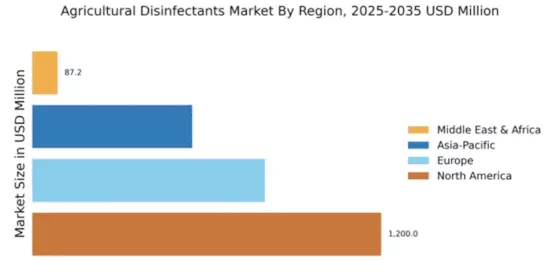
North America is poised to maintain its leadership in the Agricultural Disinfectants Market, holding a significant market share of 1200.0 million. The region's growth is driven by stringent regulations on agricultural practices, increasing awareness of biosecurity, and a rising demand for sustainable farming solutions. The adoption of advanced technologies and innovative products further fuels market expansion, making it a key player in the global landscape. The United States and Canada are the leading countries in this region, with major companies like BASF SE, Bayer AG, and Ecolab Inc. dominating the market. The competitive landscape is characterized by continuous product development and strategic partnerships among key players. The presence of robust agricultural sectors in these countries ensures a steady demand for effective disinfectants, reinforcing North America's market position.
Europe : Regulatory Framework Driving Growth
Europe's Agricultural Disinfectants Market is valued at 800.0 million, driven by stringent EU regulations aimed at enhancing food safety and environmental sustainability. The increasing focus on organic farming and the need for effective disease control in crops are significant growth drivers. Regulatory bodies are promoting the use of approved disinfectants, which is expected to boost market demand in the coming years. Germany, France, and the UK are the leading countries in this region, with a competitive landscape featuring key players like Bayer AG and Syngenta AG. The market is characterized by innovation and a strong emphasis on research and development. The presence of established agricultural practices and a growing emphasis on biosecurity measures further enhance the market's potential.
Asia-Pacific : Emerging Market with Growth Potential
The Asia-Pacific region, valued at 550.0 million, is witnessing rapid growth in the Agricultural Disinfectants Market, driven by increasing agricultural productivity and the need for effective disease management. The rising population and demand for food security are significant factors propelling market expansion. Additionally, government initiatives to promote modern farming techniques are expected to further boost the market in this region. China, India, and Australia are the leading countries in this market, with a competitive landscape that includes key players like FMC Corporation and Neogen Corporation. The region is characterized by a mix of traditional and modern agricultural practices, creating opportunities for innovative disinfectant solutions. The growing awareness of biosecurity measures among farmers is also contributing to market growth.
Middle East and Africa : Developing Market with Challenges
The Middle East and Africa region, with a market size of 87.17 million, is developing steadily in the Agricultural Disinfectants Market. The growth is driven by increasing agricultural activities and the need for effective disease control in crops. However, challenges such as regulatory hurdles and limited access to advanced technologies may hinder market expansion. The focus on improving agricultural practices is expected to drive demand for disinfectants in the coming years. Countries like South Africa and Kenya are leading the market in this region, with a competitive landscape that includes both local and international players. The presence of key companies like Zoetis Inc. highlights the potential for growth. As awareness of biosecurity measures increases, the market is expected to evolve, presenting opportunities for innovative solutions.
Key Players and Competitive Insights
The Agricultural Disinfectants Market is characterized by a competitive landscape that is increasingly shaped by innovation, sustainability, and strategic partnerships. Key players such as BASF SE (DE), Bayer AG (DE), and Ecolab Inc. (US) are actively pursuing strategies that emphasize product development and market expansion. BASF SE (DE) has focused on enhancing its portfolio through the introduction of eco-friendly disinfectants, which aligns with the growing demand for sustainable agricultural practices. Meanwhile, Bayer AG (DE) has been investing in digital transformation initiatives to optimize its product offerings and improve customer engagement, thereby reinforcing its market position. Ecolab Inc. (US) has adopted a strategy centered on partnerships with agricultural producers to develop tailored disinfectant solutions, which further solidifies its competitive edge in the market.The business tactics employed by these companies reflect a concerted effort to localize manufacturing and optimize supply chains, which are crucial in a moderately fragmented market. This competitive structure allows for a diverse range of products and services, catering to various agricultural needs. The collective influence of these key players is significant, as they not only drive innovation but also set industry standards that smaller companies often strive to meet.In November BASF SE (DE) announced the launch of a new line of biodegradable disinfectants aimed at reducing environmental impact. This strategic move is particularly important as it addresses the increasing regulatory pressures and consumer preferences for sustainable products. By positioning itself as a leader in eco-friendly solutions, BASF SE (DE) is likely to enhance its market share and appeal to environmentally conscious consumers.In October Bayer AG (DE) unveiled a digital platform designed to provide farmers with real-time data on disinfectant efficacy and application techniques. This initiative not only enhances Bayer's product offerings but also demonstrates its commitment to leveraging technology for improved agricultural practices. The integration of digital tools into traditional farming methods could potentially revolutionize how disinfectants are utilized, leading to more effective disease management in crops.In September Ecolab Inc. (US) entered into a strategic partnership with a leading agricultural cooperative to co-develop customized disinfectant solutions tailored to specific regional needs. This collaboration is indicative of Ecolab's approach to fostering strong relationships within the agricultural sector, allowing for more targeted and effective product development. Such partnerships may enhance Ecolab's market penetration and customer loyalty, positioning it favorably against competitors.As of December the Agricultural Disinfectants Market is witnessing trends that emphasize digitalization, sustainability, and the integration of artificial intelligence (AI) in product development. Strategic alliances are increasingly shaping the competitive landscape, enabling companies to pool resources and expertise for innovation. The shift from price-based competition to a focus on technological advancement and supply chain reliability is evident, suggesting that future competitive differentiation will hinge on the ability to innovate and adapt to changing market demands.
Key Companies in the Agricultural Disinfectants Market include
Future Outlook
Agricultural Disinfectants Market Future Outlook
The Agricultural Disinfectants Market is projected to grow at a 4.73% CAGR from 2025 to 2035, driven by increasing agricultural productivity, stringent regulations, and rising awareness of biosecurity measures.
New opportunities lie in:
Development of eco-friendly disinfectant formulations Integration of IoT for real-time monitoring of disinfectant efficacy Expansion into emerging markets with tailored product offerings
By 2035, the market is expected to achieve robust growth, reflecting evolving agricultural practices and heightened biosecurity concerns.
Market Segmentation
Agricultural Disinfectants Market End Use Outlook
Farms
Greenhouses
Livestock Facilities
Food Processing Plants
Research Laboratories
Agricultural Disinfectants Market Application Outlook
Crop Protection
Animal Health
Equipment Sanitization
Water Treatment
Soil Disinfection
Agricultural Disinfectants Market Formulation Type Outlook
Liquid
Powder
Granular
Aerosol
Concentrate
Agricultural Disinfectants Market Active Ingredient Outlook
Chlorine Compounds
Quaternary Ammonium Compounds
Hydrogen Peroxide
Peracetic Acid
Phenolic Compounds
Agricultural Disinfectants Market Distribution Channel Outlook
Direct Sales
Online Sales
Retail Sales
Wholesale Distribution
Agricultural Cooperatives
Report Scope
MARKET SIZE 2024
2637.17(USD Million)
MARKET SIZE 2025
2792.12(USD Million)
MARKET SIZE 2035
4403.8(USD Million)
COMPOUND ANNUAL GROWTH RATE (CAGR)
4.73% (2025 - 2035)
REPORT COVERAGE
Revenue Forecast, Competitive Landscape, Growth Factors, and Trends
BASE YEAR
2024
Market Forecast Period
2025 - 2035
Historical Data
2019 - 2024
Market Forecast Units
USD Million
Key Companies Profiled
BASF SE (DE), Bayer AG (DE), Syngenta AG (CH), FMC Corporation (US), Ecolab Inc. (US), DeLaval (SE), Neogen Corporation (US), Zoetis Inc. (US)
Segments Covered
Application, Formulation Type, Active Ingredient, End Use, Distribution Channel
Key Market Opportunities
Adoption of advanced biocidal formulations enhances efficacy in the Agricultural Disinfectants Market.
Key Market Dynamics
Rising demand for sustainable agricultural practices drives innovation in agricultural disinfectants and regulatory compliance.
What is the current valuation of the Agricultural Disinfectants Market?
As of 2024, the Agricultural Disinfectants Market was valued at approximately 2637.17 USD Million.
What is the projected market size for the Agricultural Disinfectants Market by 2035?
The market is expected to reach a valuation of around 4403.8 USD Million by 2035.
What is the expected CAGR for the Agricultural Disinfectants Market during the forecast period?
The market is projected to grow at a CAGR of 4.73% from 2025 to 2035.
Which application segment holds the highest market value in the Agricultural Disinfectants Market?
The Crop Protection segment was valued at 800.0 to 1300.0 USD Million, indicating its leading position.
What are the key active ingredients used in agricultural disinfectants?
Chlorine Compounds and Quaternary Ammonium Compounds are among the primary active ingredients, with market values of 500.0 to 800.0 USD Million and 600.0 to 1000.0 USD Million, respectively.
Which distribution channel is expected to generate the most revenue in the Agricultural Disinfectants Market?
Direct Sales is anticipated to be the most lucrative distribution channel, with a valuation range of 790.0 to 1300.0 USD Million.
What is the market value range for the Equipment Sanitization application segment?
The Equipment Sanitization segment was valued between 400.0 and 700.0 USD Million.
How does the market for Animal Health disinfectants compare to other segments?
The Animal Health segment was valued at 600.0 to 1000.0 USD Million, showcasing its substantial contribution to the overall market.
Which companies are considered key players in the Agricultural Disinfectants Market?
Key players include BASF SE, Bayer AG, Syngenta AG, and FMC Corporation, among others.
What is the market value range for the Soil Disinfection segment?
The Soil Disinfection segment was valued between 337.17 and 603.8 USD Million.
Author
Author
Snehal Singh
Manager - Research
High acumen in analyzing complex macro & micro markets with more than 6 years of work experience in the field of market research. By implementing her analytical skills in forecasting and estimation into market research reports, she has expertise in Packaging, Construction, and Equipment domains. She handles a team size of 20-25 resources and ensures smooth running of the projects, associated marketing activities, and client servicing.
Research Methodology on Agriculture Disinfectants Market
The research methodology adopted in this report is an analytical technique based on primary and secondary research whose purpose is to provide a comprehensive analysis of the global Agricultural Disinfectants Market. Primary research involved in-depth interviews and questionnaires with various leading industry experts such as agricultural technicians, Chief Executive Officers (CEOs), Vice Presidents (VPs), and field marketing personnel who have useful insights into the market. They help in understanding the trends and developments witnessed in the market and reaching a general consensus on future market growth.
Secondary research sources such as business journals and other internet sources, have been used to identify and assemble data, potential products and service providers in particular markets and gather information and strategic decisions taken recently by the top players in the Agricultural Disinfectants Market.
Research Objectives
To understand the scope and the in-depth analysis of the market.
To analyze the market structure in terms of segmentation, applications, and regions.
To study and forecast the market size in terms of value for 2023 to 2030.
To understand the demand and supply trends in the market and to identify the driving and restraining factors for the same.
To study the competitive landscape in the market to identify the key players and their strategies.
To identify and analyze the macro and micro economic factors that are impacting the market.
To identify the attractive investment pockets in the market and gain in-depth knowledge about the same.
To list the major strategic initiatives taken by the industry players in recent years.
To analyze the key sources of primary and secondary data employed in this report.
Data Collection
Data was collected from various primary and secondary research sources including the World Bank, industry-specific journals, online databases, and other statistical sources. Secondary sources of data collection included in this report are the company websites, press releases, company annual reports, promotional materials, and other external databases.
Market Estimation
Market share and size were estimated using data obtained from primary sources such as company reports and public databases, as well as multiple secondary research methods such as databases, directories, books, and various other relevant sources. The market was segmented based on various factors such as product type, application, and region. Market estimates were then obtained by triangulating the data collected from different sources. In addition, market shares of the leading players in the market were also studied.
Data Validation
The data obtained from primary and secondary sources is validated using a third-party expert opinion. A separate team of experts was employed by the research firm to conduct data validation using interviews and questionnaires. Expert opinions were used to cross-check the data obtained from both primary and secondary research sources. The two important aspects of data validation include data correction and data triangulation.
Data Triangulation
Data triangulation was done by the research firm to verify the data obtained from both primary and secondary research sources. Data triangulation was done using statistical and graphical techniques such as data correlation and regression analysis. The results obtained after this triangulation process were then used to draw a final conclusion.
Pricing Analysis
The pricing strategy of various companies in the Agricultural Disinfectants Market was based on various factors such as the cost of production, current market trends, and the competitive environment. Data on pricing analyses was obtained after conducting in-depth interviews and discussions with leading industry experts.
Econometric Forecasting Modelling
This report employed econometric forecasting modelling to project various factors of the market. The econometric forecasting modelling was done using historical data collected from both primary and secondary sources and the findings of econometric models were further verified using data gathered from industry experts.
Industry Analysis
This report included a detailed industry analysis which focused on the industry's present and future growth prospects, along with the current trends and strategies adopted by the leading players in the market. Industry analysis was done by performing Porter's Five Forces Analysis, which focused on the bargaining power of suppliers and buyers, the threat of new entrants, the intensity of competition, and the threat of substitutes.
Regional Analysis
This report included a detailed regional analysis which encompassed the current and future trends of the market in various regions. Regional analysis was done by conducting interviews, surveys, and various other activities. The estimated market value of the Agricultural Disinfectants Market was used to further draw the conclusion and validate the findings of the report with the market forecast from 2023 to 2030.
“This is really good guys. Excellent work on a tight deadline. I will continue to use you going forward and recommend you to others. Nice job”
Noah MalgeriCo-Founder
“Thanks. It’s been a pleasure working with you, please use me as reference with any other Intel employees.”
Joseph AguayoSales Operations & Pricing Manager
“Thanks for sending the report it gives us a good global view of the Betaïne market.”
Peter Groot koerkampAccount and Business Manager
“Thank you, this will be very helpful for OQS.”
La Terria DoddProgram Support Specialist
“We found the report very insightful! we found your research firm very helpful. I'm sending this email to secure our future business.”
Younghwan ChoiSenior Retail Manager
“I am very pleased with how market segments have been defined in a relevant way for my purposes (such as "Portable Freezers & refrigerators" and "last-mile").
In general the report is well structured. Thanks very much for your efforts.”
Mark IrwinManagement Consultant
“I have been reading the first document or the study, ,the Global HVAC and FP market report 2021 till 2026. Must say, good info! I have not gone in depth at all parts, but got a good indication of the data inside!”
Rob KooikerGroup Product Manager HVAC & Fire Protection GMA
“We got the report in time, we really thank you for your support in this process. I also thank to all of your team as they did a great job.”
Akif MorogluStrategy & Business Development Director
“The Automotive 48V ECU Components Procurement Intelligence Study” was a complex project, but the Market Research Future (MRFR) team handled it with quality, agility, and customer-centricity. They delivered all requested data on time and within the agreed scope. The team, including Shubhendra Anand and Rahul Gotadki, was always readily available to clarify questions and swiftly implement necessary adjustments, driving the project to a successful conclusion within a very demanding timeframe.
I would also like to specifically commend Akshay Agarwal for his responsiveness and support at every stage—from our initial inquiry on May 6th through to final delivery on June 18th. His dedication made the entire process seamless.”
Guilherme Gomes MartinsProduct Management Director