×
Request Free Sample ×

Kindly complete the form below to receive a free sample of this Report

Leading companies partner with us for data-driven Insights

clients tt-cursor
Hero Background

aircraft-afp-and-atl-composites-market

ID: MRFR/PCM/38038-HCR
100 Pages
Chitranshi Jaiswal
October 2025

Aircraft AFP and ATL Composites Market Research Report: By Application (Aerospace Structures, Interior Components, Control Surfaces, Rocket Motor Cases), By Material Type (Carbon Fiber Composites, Glass Fiber Composites, Aramid Fiber Composites, Thermoplastic Composites), By Manufacturing Process (Automated Fiber Placement, Automated Tape Layup, Hand Layup, Resin Transfer Molding), By End Use (Commercial Aviation, Military Aviation, General Aviation) and By Regional (North America, Europe, South America, Asia Pacific, Middle East and Africa)... read more

Share:
Download PDF ×

We do not share your information with anyone. However, we may send you emails based on your report interest from time to time. You may contact us at any time to opt-out.

aircraft-afp-and-atl-composites-market Infographic
Purchase Options

aircraft-afp-and-atl-composites-market Summary

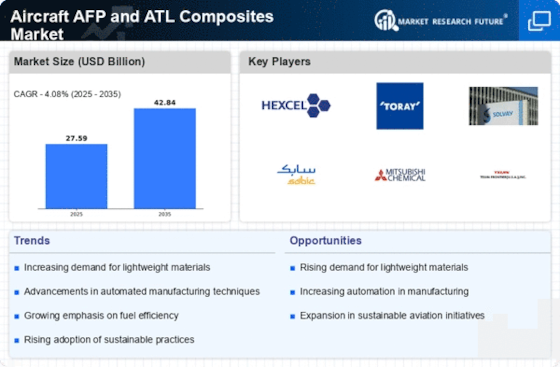
As per MRFR analysis, the Aircraft AFP and ATL Composites Market was estimated at 27.59 USD Billion in 2024. The Aircraft AFP and ATL Composites industry is projected to grow from 28.72 USD Billion in 2025 to 42.84 USD Billion by 2035, exhibiting a compound annual growth rate (CAGR) of 4.08 during the forecast period 2025 - 2035.

Key Market Trends & Highlights

The Aircraft AFP and ATL Composites Market is poised for substantial growth driven by sustainability and technological advancements.

  • North America remains the largest market for aircraft composites, driven by robust aerospace manufacturing capabilities.
  • The Asia-Pacific region is emerging as the fastest-growing market, fueled by increasing investments in commercial aviation.
  • Aerospace structures continue to dominate the market, while interior components are witnessing rapid growth due to evolving consumer preferences.
  • Key market drivers include the rising demand for lightweight materials and a growing focus on fuel efficiency regulations.

Market Size & Forecast

2024 Market Size 27.59 (USD Billion)
2035 Market Size 42.84 (USD Billion)
CAGR (2025 - 2035) 4.08%

Major Players

Hexcel Corporation (US), Toray Industries Inc. (JP), Solvay SA (BE), SABIC (SA), Mitsubishi Chemical Corporation (JP), Teijin Limited (JP), Cytec Industries Inc. (US), Gurit Holding AG (CH), Aerospace Composite Products (US)

aircraft-afp-and-atl-composites-market Trends

The Aircraft AFP and ATL Composites Market is currently experiencing a notable transformation driven by advancements in manufacturing technologies and increasing demand for lightweight materials in the aerospace sector. The adoption of Automated Fiber Placement (AFP) and Automated Tape Laying (ATL) processes is enhancing production efficiency and reducing waste, which appears to be appealing to manufacturers aiming for sustainability. Furthermore, the growing emphasis on fuel efficiency and performance optimization in aircraft design is likely to propel the utilization of composite materials, as they offer superior strength-to-weight ratios compared to traditional materials. This shift towards composites is not merely a trend but seems to be a fundamental change in how aircraft are constructed, indicating a long-term commitment to innovation in the industry. In addition, the Aircraft AFP and ATL Composites Market is witnessing an increase in collaborations between aerospace manufacturers and material suppliers. These partnerships are fostering the development of new composite materials that meet stringent regulatory standards while also enhancing performance characteristics. As the market evolves, it appears that the integration of advanced materials will play a crucial role in shaping the future of aircraft design and manufacturing. The focus on reducing environmental impact, coupled with the need for improved operational efficiency, suggests that the market will continue to expand, driven by technological advancements and strategic alliances among key players.

Sustainability Initiatives

The Aircraft AFP and ATL Composites Market is increasingly influenced by sustainability initiatives. Manufacturers are prioritizing eco-friendly materials and processes, aiming to minimize environmental impact. This trend reflects a broader industry shift towards greener practices, which may enhance brand reputation and meet regulatory requirements.

Technological Advancements

Technological advancements in manufacturing processes are reshaping the Aircraft AFP and ATL Composites Market. Innovations in automation and material science are improving production efficiency and product quality. These developments could lead to reduced costs and faster turnaround times, making composites more accessible to a wider range of applications.

Collaborative Development

Collaborative development between aerospace companies and material suppliers is becoming more prevalent in the Aircraft AFP and ATL Composites Market. Such partnerships are fostering innovation and enabling the creation of advanced composite materials that meet evolving industry demands. This trend may drive competitive advantage and enhance product offerings.

aircraft-afp-and-atl-composites-market Drivers

Rising Investment in Aerospace R&D

The Aircraft AFP and ATL Composites Market is benefiting from a marked increase in investment in aerospace research and development. Governments and private entities are channeling funds into innovative projects aimed at enhancing aircraft performance and sustainability. This influx of capital is fostering the development of advanced composite materials and manufacturing techniques, particularly those utilizing AFP and ATL technologies. Recent reports indicate that global aerospace R&D spending is expected to reach over 30 billion dollars by 2026, reflecting a commitment to innovation in the sector. This investment not only supports the creation of next-generation aircraft but also stimulates the Aircraft AFP and ATL Composites Market by driving demand for cutting-edge materials and processes. As a result, the industry is likely to see accelerated growth and technological advancements.

Expansion of Commercial Aviation Sector

The Aircraft AFP and ATL Composites Market is poised for growth due to the expansion of the commercial aviation sector. As air travel demand continues to rise, airlines are investing in new aircraft to accommodate increasing passenger numbers. This trend is leading to a heightened demand for advanced composite materials, particularly those produced using AFP and ATL technologies. Recent forecasts suggest that the commercial aviation market will grow at a rate of approximately 5% annually over the next decade. This growth is likely to drive the need for lightweight, durable materials that enhance aircraft performance and reduce maintenance costs. Consequently, the Aircraft AFP and ATL Composites Market stands to benefit significantly from this expansion, as manufacturers seek to meet the evolving needs of the aviation sector.

Increasing Demand for Lightweight Materials

The Aircraft AFP and ATL Composites Market is experiencing a notable surge in demand for lightweight materials. This trend is primarily driven by the aviation sector's ongoing efforts to enhance fuel efficiency and reduce emissions. Composites, particularly those manufactured using Automated Fiber Placement (AFP) and Automated Tape Laying (ATL) technologies, offer significant weight savings compared to traditional materials. According to recent data, the use of advanced composites can lead to weight reductions of up to 20% in aircraft structures. This reduction not only contributes to lower operational costs but also aligns with regulatory pressures for greener aviation solutions. As airlines and manufacturers prioritize sustainability, the Aircraft AFP and ATL Composites Market is poised for substantial growth, reflecting a shift towards more efficient and environmentally friendly aircraft designs.

Growing Focus on Fuel Efficiency Regulations

The Aircraft AFP and ATL Composites Market is increasingly influenced by stringent fuel efficiency regulations imposed by aviation authorities worldwide. These regulations are compelling manufacturers to adopt advanced materials and technologies that enhance the aerodynamic performance of aircraft. Composites produced through AFP and ATL methods are particularly well-suited for meeting these regulatory demands, as they allow for the design of lighter and more fuel-efficient aircraft. The International Air Transport Association has set ambitious targets for reducing carbon emissions, which further drives the need for innovative solutions in aircraft design. As compliance with these regulations becomes paramount, the Aircraft AFP and ATL Composites Market is expected to expand, with manufacturers seeking to leverage advanced composites to achieve regulatory compliance and improve operational efficiency.

Technological Innovations in Manufacturing Processes

Technological advancements in manufacturing processes are playing a pivotal role in shaping the Aircraft AFP and ATL Composites Market. Innovations such as improved automation and precision in AFP and ATL techniques are enhancing production efficiency and product quality. These technologies enable manufacturers to produce complex composite structures with greater accuracy and reduced waste. For instance, the integration of digital twin technology allows for real-time monitoring and optimization of the manufacturing process. As a result, production timelines are shortened, and costs are minimized. The market is projected to witness a compound annual growth rate of approximately 10% over the next five years, driven by these technological innovations. Consequently, the Aircraft AFP and ATL Composites Market is likely to attract increased investment and research, further propelling its expansion.


Market Segment Insights

By Application: Aerospace Structures (Largest) vs. Interior Components (Fastest-Growing)

In the Aircraft AFP and ATL Composites Market, the distribution of market share is notably skewed, with Aerospace Structures commanding the largest portion. This segment is critical due to its extensive applications in fuselage and wing construction, fundamental to aircraft integrity and performance. Conversely, Interior Components are emerging rapidly, capturing the attention of manufacturers and consumers alike for their role in enhancing passenger comfort and aesthetic appeal. The growth trends in this market are significantly influenced by technological advancements and increasing demand for lightweight materials. Aerospace Structures benefit from their established presence and reliability, while Interior Components are experiencing a surge due to a shift towards enhanced passenger experiences. Moreover, sustainability initiatives compel manufacturers to seek innovative composite solutions that cater to both functionality and environmental standards.

Aerospace Structures (Dominant) vs. Control Surfaces (Emerging)

Aerospace Structures remain dominant in the Aircraft AFP and ATL Composites Market due to their critical function in the structural integrity of aircraft. They are characterized by their ability to withstand high pressures and loads while minimizing weight, which is essential for fuel efficiency. Innovations in composite technology are further solidifying their position, as manufacturers continuously seek materials that offer greater strength-to-weight ratios. On the other hand, Control Surfaces represent an emerging segment, gaining traction for their vital role in aircraft agility and control. As advancements in manufacturing processes improve the precision and performance of these components, they are becoming increasingly attractive for both retrofit applications and new aircraft designs, indicating a promising trajectory in future market growth.

By Material Type: Carbon Fiber Composites (Largest) vs. Glass Fiber Composites (Fastest-Growing)

In the Aircraft AFP and ATL Composites Market, Carbon Fiber Composites lead the segment share due to their superior strength-to-weight ratio and impressive mechanical properties. As aircraft manufacturers aim for enhanced fuel efficiency and performance, the demand for carbon fiber composites continues to rise, making it the dominant material choice in aerospace applications. In contrast, Glass Fiber Composites are gaining momentum as they offer a cost-effective solution coupled with reasonable performance characteristics, appealing to manufacturers looking to balance cost-efficiency with performance across various aircraft components.

Carbon Fiber Composites (Dominant) vs. Glass Fiber Composites (Emerging)

Carbon Fiber Composites are recognized for their lightweight nature, exceptional tensile strength, and resistance to fatigue, making them essential for high-performance applications in the aerospace sector. These composites are increasingly utilized in structural components, thereby critically reducing aircraft weight and improving fuel efficiency. On the other hand, Glass Fiber Composites, while slightly less advanced in performance, are emerging strongly due to their lower production costs and adequate strength. They are primarily used in non-structural applications, yet their adaptability and cost-effectiveness position them as a favored alternative in many new aircraft designs.

By Manufacturing Process: Automated Fiber Placement (Largest) vs. Automated Tape Layup (Fastest-Growing)

In the Aircraft AFP and ATL Composites Market, the manufacturing process segment displays a varied distribution among its components. Automated Fiber Placement (AFP) dominates this segment, attributed to its precision and efficiency in composite material application. On the other hand, Automated Tape Layup (ATL) is quickly gaining traction due to advancements in technology and its suitability for larger aerospace components, allowing for a more streamlined manufacturing process. Hand Layup and Resin Transfer Molding remain essential for specific applications but have seen slower adoption rates compared to AFP and ATL. The growth trends in this segment are heavily influenced by innovations in automation and material technology. As manufacturers strive for higher production rates and better quality composites, AFP and ATL have emerged as key players. The rapid development of composite materials compatible with automated processes and increasing demand for lightweight aircraft are significant drivers behind their growth. Additionally, the aerospace industry's shift towards sustainability and efficiency aligns well with the capabilities of these advanced manufacturing methods, further enhancing their market potential.

Manufacturing Methods: Automated Fiber Placement (Dominant) vs. Hand Layup (Emerging)

Automated Fiber Placement (AFP) stands out as the dominant manufacturing method in the Aircraft AFP and ATL Composites Market due to its remarkable ability to apply fibers with precision and consistency, thereby enhancing the structural integrity of lightweight components. Meanwhile, Hand Layup, although seen as more traditional, is emerging as a valuable method for custom and small-scale applications. AFP offers superior production rates and reduces labor costs, while Hand Layup is favored for its flexibility and lower initial investment, particularly for prototypes and specialized parts. Together, these methods contribute to a diversified manufacturing landscape, catering to varying needs in aircraft component fabrication, where both efficiency and craftsmanship play crucial roles.

By End Use: Commercial Aviation (Largest) vs. Military Aviation (Fastest-Growing)

In the Aircraft AFP and ATL Composites Market, the distribution of market share among end-use segments reveals a clear dominance of Commercial Aviation, which represents the largest share. This segment benefits from the increasing demand for air travel and the subsequent rise in aircraft production, leading to higher composite material utilization. Conversely, the Military Aviation segment is witnessing significant growth driven by modernization efforts in defense procurement and increasing adoption of advanced composite materials for weight reduction and enhanced performance. As the Aircraft AFP and ATL Composites Market evolves, the growth trends for these segments are significantly influenced by technological advancements and sustainability initiatives. Commercial Aviation continues to thrive due to the expansion of fleet size and replacement of older aircraft with fuel-efficient models. In contrast, Military Aviation's rapid growth is propelled by global geopolitical tensions and the need for advanced capabilities, compelling defense forces to invest heavily in innovative composite solutions.

Commercial Aviation (Dominant) vs. Military Aviation (Emerging)

Commercial Aviation's dominance in the Aircraft AFP and ATL Composites Market stems from its extensive applications in passenger and cargo airframes, driving substantial demand for lightweight and durable materials. This segment's focus on enhancing fuel efficiency and reducing emissions aligns with global sustainability trends, further solidifying its stronghold. In contrast, Military Aviation, characterized as an emerging segment, is increasingly leveraging advanced composite materials to enhance aircraft performance and survivability. Factors such as modular design, innovative manufacturing processes, and the need for lightweight structures are propelling this segment's growth. The increasing complexity of military operations and the emphasis on next-generation aircraft underscore the strategic importance of composites in military programs.

Get more detailed insights about aircraft-afp-and-atl-composites-market

Regional Insights

North America : Aerospace Innovation Leader

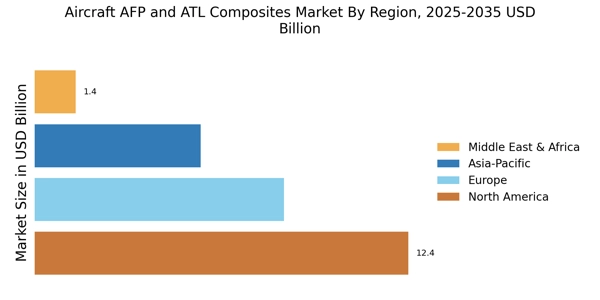
North America is the largest market for Aircraft AFP and ATL Composites, holding approximately 45% of the global market share. The region's growth is driven by increasing demand for lightweight materials in aircraft manufacturing, stringent regulations promoting fuel efficiency, and advancements in composite technologies. The U.S. Federal Aviation Administration (FAA) has also introduced regulations that encourage the use of advanced materials, further boosting market growth. The United States is the leading country in this sector, with major players like Hexcel Corporation and Cytec Industries Inc. dominating the landscape. Canada also plays a significant role, contributing to the market with its aerospace manufacturing capabilities. The competitive environment is characterized by continuous innovation and partnerships among key players, ensuring a robust supply chain and technological advancements.

Europe : Sustainable Aviation Focus

Europe is the second-largest market for Aircraft AFP and ATL Composites, accounting for around 30% of the global market share. The region's growth is fueled by increasing investments in sustainable aviation technologies and regulatory frameworks aimed at reducing carbon emissions. The European Union's Green Deal and various national initiatives are pushing for the adoption of lightweight composite materials to enhance fuel efficiency and reduce environmental impact. Leading countries in this market include Germany, France, and the United Kingdom, where major aerospace manufacturers are increasingly integrating advanced composites into their aircraft designs. Key players such as Toray Industries and Solvay SA are actively involved in research and development, ensuring that Europe remains at the forefront of innovation in the aerospace sector. The competitive landscape is marked by collaborations between manufacturers and research institutions to drive technological advancements.

Asia-Pacific : Emerging Market Potential

Asia-Pacific is witnessing rapid growth in the Aircraft AFP and ATL Composites Market, holding approximately 20% of the global market share. The region's expansion is driven by increasing air travel demand, rising investments in aerospace infrastructure, and government initiatives to boost local manufacturing capabilities. Countries like China and India are focusing on enhancing their aerospace sectors, supported by favorable regulations and investments in technology. China is the largest market in the region, with significant contributions from local manufacturers and partnerships with global players. Japan and India are also emerging as key players, with companies like Mitsubishi Chemical Corporation and Teijin Limited making strides in composite technologies. The competitive landscape is evolving, with a focus on innovation and collaboration among industry stakeholders to meet the growing demand for advanced materials in aviation.

Middle East and Africa : Resource-Rich Opportunities

The Middle East and Africa region is gradually emerging in the Aircraft AFP and ATL Composites Market, holding about 5% of the global market share. The growth is primarily driven by increasing investments in the aerospace sector, particularly in the Gulf Cooperation Council (GCC) countries, which are focusing on diversifying their economies. Regulatory support for local manufacturing and partnerships with international firms are also contributing to market expansion. Countries like the United Arab Emirates and South Africa are leading the way in aerospace development, with initiatives aimed at enhancing local capabilities. The presence of key players such as SABIC and Gurit Holding AG is strengthening the competitive landscape. As the region continues to invest in infrastructure and technology, the demand for advanced composite materials is expected to rise, creating new opportunities for growth.

aircraft-afp-and-atl-composites-market Regional Image

Key Players and Competitive Insights

The Aircraft AFP and ATL Composites Market is characterized by its dynamic environment, driven by technological advancements, evolving manufacturing techniques, and increasing demand for lightweight materials in the aerospace industry. As aircraft manufacturers strive for enhanced performance, fuel efficiency, and durability, composite materials produced through Automated Fiber Placement (AFP) and Automated Tape Laying (ATL) processes are becoming indispensable. This market exhibits fierce competition among key players, who are continually innovating to offer superior products and incorporate sustainable solutions in their operations.

The interplay of market forces, regulatory frameworks, and customer preferences significantly shapes the strategies and growth trajectories of companies within the sector, indicating a landscape ripe for competitive analysis.Northrop Grumman holds a significant position within the Aircraft AFP and ATL Composites Market, leveraging its extensive portfolio of aerospace and defense technologies. The company is renowned for its cutting-edge engineering capabilities and a strong commitment to research and development, establishing it as a leader in composite manufacturing. Northrop Grumman's strengths lie in its ability to integrate advanced materials into next-generation aircraft systems, enhancing structural integrity while reducing weight.

Its focus on innovation in manufacturing processes, including AFP and ATL technology, allows Northrop Grumman to maintain a competitive edge in delivering high-performance composite components tailored to the unique demands of military and commercial applications. Moreover, the company's established relationships with defense organizations and commercial airlines further bolster its market presence, ensuring a consistent demand for its advanced composite solutions.Boeing is another pivotal player within the Aircraft AFP and ATL Composites Market, recognized for its extensive experience in aerospace manufacturing and innovation.

The company has invested heavily in composite technologies, implementing AFP and ATL methods to optimize the performance and efficiency of its aircraft. Boeing's strengths include its commitment to quality and performance, illustrated through its high standards for safety and reliability. With a diverse product range that encompasses commercial, defense, and space systems, Boeing's advanced composite components significantly contribute to weight reduction and fuel efficiency, aligning with industry goals for sustainability.

Furthermore, the company's strong focus on collaborative partnerships with suppliers and research institutions promotes continuous innovation, enabling Boeing to stay ahead of the competitive curve in the global market for AFP and ATL composites. By enhancing its manufacturing capabilities and expanding its technology portfolio, Boeing positions itself as a formidable contender in meeting the increasing demands for advanced materials in aviation.

Key Companies in the aircraft-afp-and-atl-composites-market market include

Industry Developments

Recent developments in the Global Aircraft AFP (Automated Fiber Placement) and ATL (Automated Tape Laying) Composites Market have shown significant activity concerning major industry players such as Northrop Grumman, Boeing, and Airbus, who are focusing on improving production efficiency and reducing costs through advanced manufacturing techniques. Concurrently, companies like Solvay and Hexcel are enhancing their product portfolios with innovative composite materials aimed at catering to increasing demands in aerospace design and performance. In terms of market dynamics, Spirit AeroSystems and Lockheed Martin are also exploring collaborations to develop next-generation composite solutions that align with sustainability goals in aircraft manufacturing.

Recent acquisition trends have seen Northrop Grumman expanding its capabilities while both Raytheon Technologies and Honeywell are enhancing their portfolios through strategic partnerships aimed at composite technology advancements. The overall growth in market valuation for companies like Mitsubishi Heavy Industries and Toray Industries is pushing the advancements in composite technologies, impacting competitive positioning and driving new product development in the aerospace sector. As the demand for lightweight materials continues to rise, these movements reflect a robust interest in expanding market reach and technological innovation among key players.

Future Outlook

aircraft-afp-and-atl-composites-market Future Outlook

The Aircraft AFP and ATL Composites Market is projected to grow at a 4.08% CAGR from 2024 to 2035, driven by advancements in manufacturing technologies and increasing demand for lightweight materials.

New opportunities lie in:

  • Development of automated AFP systems for enhanced production efficiency.
  • Expansion into emerging markets with tailored composite solutions.
  • Investment in R&D for bio-based composite materials to meet sustainability goals.

By 2035, the market is expected to solidify its position as a leader in advanced composite technologies.

Market Segmentation

aircraft-afp-and-atl-composites-market End Use Outlook

  • Commercial Aviation
  • Military Aviation
  • General Aviation

aircraft-afp-and-atl-composites-market Application Outlook

  • Aerospace Structures
  • Interior Components
  • Control Surfaces
  • Rocket Motor Cases

aircraft-afp-and-atl-composites-market Material Type Outlook

  • Carbon Fiber Composites
  • Glass Fiber Composites
  • Aramid Fiber Composites
  • Thermoplastic Composites

aircraft-afp-and-atl-composites-market Manufacturing Process Outlook

  • Automated Fiber Placement
  • Automated Tape Layup
  • Hand Layup
  • Resin Transfer Molding

Report Scope

MARKET SIZE 202427.59(USD Billion)
MARKET SIZE 202528.72(USD Billion)
MARKET SIZE 203542.84(USD Billion)
COMPOUND ANNUAL GROWTH RATE (CAGR)4.08% (2024 - 2035)
REPORT COVERAGERevenue Forecast, Competitive Landscape, Growth Factors, and Trends
BASE YEAR2024
Market Forecast Period2025 - 2035
Historical Data2019 - 2024
Market Forecast UnitsUSD Billion
Key Companies ProfiledMarket analysis in progress
Segments CoveredMarket segmentation analysis in progress
Key Market OpportunitiesAdvancements in automated fiber placement technology enhance efficiency in the Aircraft AFP and ATL Composites Market.
Key Market DynamicsRising demand for lightweight materials drives innovation in Aircraft Automated Fiber Placement and Automated Tape Laying composites.
Countries CoveredNorth America, Europe, APAC, South America, MEA

Leave a Comment

FAQs

What is the projected market valuation for the Aircraft AFP and ATL Composites Market in 2035?

The projected market valuation for the Aircraft AFP and ATL Composites Market in 2035 is 42.84 USD Billion.

What was the overall market valuation for the Aircraft AFP and ATL Composites Market in 2024?

The overall market valuation for the Aircraft AFP and ATL Composites Market in 2024 was 27.59 USD Billion.

What is the expected CAGR for the Aircraft AFP and ATL Composites Market during the forecast period 2025 - 2035?

The expected CAGR for the Aircraft AFP and ATL Composites Market during the forecast period 2025 - 2035 is 4.08%.

Which application segment is projected to have the highest valuation by 2035?

The Aerospace Structures application segment is projected to reach a valuation of 15.0 USD Billion by 2035.

What are the projected valuations for Carbon Fiber Composites by 2035?

The projected valuation for Carbon Fiber Composites is expected to reach 16.0 USD Billion by 2035.

Download Free Sample

Kindly complete the form below to receive a free sample of this Report

Compare Licence

×
Features License Type
Single User Multiuser License Enterprise User
Price $4,950 $5,950 $7,250
Maximum User Access Limit 1 User Upto 10 Users Unrestricted Access Throughout the Organization
Free Customization
Direct Access to Analyst
Deliverable Format
Platform Access
Discount on Next Purchase 10% 15% 15%
Printable Versions