×
Request Free Sample ×

Kindly complete the form below to receive a free sample of this Report

* Please use a valid business email

Leading companies partner with us for data-driven Insights

clients tt-cursor
Hero Background

Anal Fistula Treatment Market

ID: MRFR/HC/7410-HCR
128 Pages
Rahul Gotadki
October 2025

Anal Fistula Treatment Market Research Report By Surgery Type (Fistulotomy, Laser Surgery, Endoscopic Fistula Treatment (EFT), Bioprosthetic Plug), By Fistula Type (Inter-Sphincteric Fistula, Trans-Sphincteric Fistula, Supra-Sphincteric Fistula, Extra-Sphincteric Fistula), By Treatment Route (Hospital-based, Clinic-based, Home healthcare), By Age (0-18 Years, 19-64 Years, 65 Years and Above), By Diagnosis Confirmation (Anoscopy, Rectosigmoidoscopy, Endoscopic Ultrasound, Magnetic Resonance Imaging (MRI)) and By Regional (North America, Europ... read more

Share:
Download PDF ×

We do not share your information with anyone. However, we may send you emails based on your report interest from time to time. You may contact us at any time to opt-out.

Anal Fistula Treatment Market Infographic
Purchase Options

Anal Fistula Treatment Market Summary

As per MRFR analysis, the Anal Fistula Treatment Market Size was estimated at 1345.23 USD Million in 2024. The Anal Fistula Treatment industry is projected to grow from 1413.32 in 2025 to 2315.79 by 2035, exhibiting a compound annual growth rate (CAGR) of 5.06 during the forecast period 2025 - 2035.

Key Market Trends & Highlights

The Anal Fistula Treatment Market is experiencing a shift towards minimally invasive techniques and increased patient engagement.

  • Minimally invasive techniques are gaining traction, reflecting a broader trend towards less invasive surgical options.
  • Telemedicine integration is becoming more prevalent, enhancing patient access to care and follow-up services.
  • In North America, hospitals remain the largest segment, while in Asia-Pacific, ambulatory surgical centers are emerging as the fastest-growing segment.
  • The rising incidence of anal fistula cases and advancements in surgical techniques are key drivers propelling market growth.

Market Size & Forecast

2024 Market Size 1345.23 (USD Million)
2035 Market Size 2315.79 (USD Million)
CAGR (2025 - 2035) 5.06%

Major Players

Medtronic (US), Johnson & Johnson (US), Boston Scientific (US), Stryker (US), B. Braun Melsungen AG (DE), Smith & Nephew (GB), Conmed Corporation (US), Cook Medical (US), Hollister Incorporated (US)

Anal Fistula Treatment Market Trends

The Anal Fistula Treatment Market is currently experiencing a notable evolution, driven by advancements in medical technology and an increasing awareness of gastrointestinal health. The rise in the prevalence of anal fistulas, often linked to conditions such as Crohn's disease and other inflammatory bowel diseases, has prompted healthcare providers to seek more effective treatment options. Innovative surgical techniques, including minimally invasive procedures, are gaining traction, as they tend to offer quicker recovery times and reduced postoperative complications. Furthermore, the integration of telemedicine into patient care is reshaping how individuals access treatment, allowing for more personalized and timely interventions. In addition to technological advancements, the Anal Fistula Treatment Market is influenced by a growing emphasis on patient education and support. Healthcare professionals are increasingly focusing on providing comprehensive information regarding treatment options, potential risks, and recovery processes. This shift towards patient-centered care is likely to enhance treatment adherence and overall satisfaction. As the market continues to evolve, it appears poised for further growth, with ongoing research and development efforts aimed at improving therapeutic outcomes and expanding the range of available treatment modalities.

Minimally Invasive Techniques

Minimally invasive surgical options are becoming more prevalent in the Anal Fistula Treatment Market. These techniques, which often involve smaller incisions and reduced tissue damage, are associated with shorter recovery times and less postoperative pain. As a result, patients are increasingly opting for these procedures, leading to a shift in treatment paradigms.

Telemedicine Integration

The integration of telemedicine into the Anal Fistula Treatment Market is transforming patient care. This approach allows for remote consultations and follow-ups, making it easier for patients to access specialists and receive timely advice. The convenience of telehealth services is likely to enhance patient engagement and adherence to treatment plans.

Focus on Patient Education

There is a growing emphasis on patient education within the Anal Fistula Treatment Market. Healthcare providers are prioritizing the dissemination of information regarding treatment options and recovery processes. This focus on educating patients is expected to improve treatment outcomes and foster a more collaborative relationship between patients and healthcare professionals.

Anal Fistula Treatment Market Drivers

Market Growth Projections

The Global Anal Fistula Treatment Market Industry is projected to experience substantial growth over the next decade. With a market size anticipated to reach 1.35 USD Billion in 2024 and further expand to 2.31 USD Billion by 2035, the industry is on a promising trajectory. The compound annual growth rate (CAGR) of 5.01% from 2025 to 2035 reflects the increasing demand for effective treatment options and advancements in medical technology. This growth is indicative of the evolving landscape of anal fistula treatment, where innovation and patient needs drive market dynamics.

Rising Healthcare Expenditure

The Global Anal Fistula Treatment Market Industry is positively impacted by rising healthcare expenditure across various regions. Governments and private sectors are increasingly investing in healthcare infrastructure, which facilitates better access to treatment options for patients suffering from anal fistula. Enhanced funding for medical research and development also contributes to the introduction of new therapies and technologies. As healthcare systems evolve and expand, the market is projected to grow, with estimates suggesting it could reach 2.31 USD Billion by 2035. This financial commitment underscores the importance of addressing anal fistula treatment within broader healthcare initiatives.

Growing Awareness and Education

Increased awareness and education regarding anal fistula and its treatment options are pivotal drivers in the Global Anal Fistula Treatment Market Industry. Campaigns aimed at educating the public about symptoms, risk factors, and available treatments have led to earlier diagnosis and intervention. Healthcare organizations and patient advocacy groups play a crucial role in disseminating information, which encourages individuals to seek medical attention sooner. This heightened awareness is likely to result in a larger patient base requiring treatment, thereby expanding the market. As awareness continues to grow, the industry anticipates a steady increase in demand for effective treatment solutions.

Rising Incidence of Anal Fistula

The Global Anal Fistula Treatment Market Industry is experiencing growth due to the increasing incidence of anal fistula cases worldwide. Factors such as dietary habits, sedentary lifestyles, and rising rates of inflammatory bowel diseases contribute to this trend. For instance, the prevalence of Crohn's disease, a significant risk factor for anal fistula, has been on the rise globally. This growing patient population necessitates effective treatment options, thereby driving demand in the market. As the industry adapts to these needs, it is projected to reach a market size of 1.35 USD Billion in 2024, indicating a robust response to the escalating healthcare challenge.

Advancements in Surgical Techniques

Innovations in surgical techniques are significantly influencing the Global Anal Fistula Treatment Market Industry. Minimally invasive procedures, such as laser therapy and fibrin glue application, have emerged as effective alternatives to traditional surgery. These advancements not only enhance patient recovery times but also reduce complications associated with conventional methods. As healthcare providers increasingly adopt these innovative approaches, patient outcomes improve, leading to higher satisfaction rates. The market is expected to benefit from these technological advancements, contributing to a projected growth rate of 5.01% CAGR from 2025 to 2035, as more patients seek these modern treatment options.

Increasing Demand for Non-Invasive Treatments

The demand for non-invasive treatment options is reshaping the Global Anal Fistula Treatment Market Industry. Patients increasingly prefer treatments that minimize recovery time and reduce the risk of complications. Non-invasive methods, such as endoscopic techniques and biological therapies, are gaining traction due to their effectiveness and lower associated risks. This shift in patient preference is prompting healthcare providers to adapt their offerings, leading to an expansion of the market. As non-invasive treatments become more widely accepted, the industry is likely to see sustained growth, aligning with the broader trend of patient-centered care.
Market Segment Insights

By Treatment Type: Fistulotomy (Largest) vs. Seton Placement (Fastest-Growing)

In the Anal Fistula Treatment Market, the treatments are primarily divided into Fistulotomy, Seton Placement, Flap Surgery, and Ligation of the Fistula Tract. Fistulotomy holds a significant share, being the most commonly performed surgical procedure due to its effectiveness in eliminating anal fistulas. Conversely, Seton Placement is gaining traction, particularly among patients with complex fistulas, due to its effectiveness in non-invasive management. As a result, Fistulotomy remains a prevalent choice while Seton Placement shows increasing adoption.

Fistulotomy (Dominant) vs. Flap Surgery (Emerging)

Fistulotomy stands out as the dominant method in the Anal Fistula Treatment Market due to its straightforward approach and high success rates for uncomplicated fistulas. It involves the surgical excision of the fistula tract, ensuring a permanent solution. On the other hand, Flap Surgery, which is gaining recognition as an emerging alternative treatment, is particularly useful for patients with challenging or recurrent fistulas. It involves using a tissue flap to cover the defect, minimizing the chance of recurrence. The growth of Flap Surgery is attributed to its adaptability in complex cases and the rising demand for minimally invasive techniques.

By End User: Hospitals (Largest) vs. Ambulatory Surgical Centers (Fastest-Growing)

In the Anal Fistula Treatment Market, hospitals currently hold a dominant market share, benefiting from a comprehensive range of surgical services and a high patient influx, reflecting their established healthcare framework. Specialty clinics, while relevant, capture a smaller segment, appealing mainly to patients seeking targeted treatments. In contrast, ambulatory surgical centers are gaining traction, catering to patients desiring outpatient procedures that are less invasive and more cost-effective.

Hospitals: Dominant vs. Ambulatory Surgical Centers: Emerging

Hospitals are recognized as the dominant end-user segment for anal fistula treatments due to their extensive resources, including access to specialized surgical teams and advanced technologies. They offer a wide variety of procedures, ensuring patients receive comprehensive care. Conversely, ambulatory surgical centers are emerging as a preferred option for patients favoring convenience and reduced recovery times. These centers focus on outpatient care, providing efficient treatment with minimal overnight stays, which appeals to a growing patient population looking for cost-effective and expedited care options.

By Diagnosis Method: Physical Examination (Largest) vs. Imaging Techniques (Fastest-Growing)

In the Anal Fistula Treatment Market, the Diagnosis Method segment is predominantly led by Physical Examination, which maintains the largest share. This traditional method remains widely utilized among healthcare practitioners due to its immediacy and straightforward approach to identifying anal fistulas. Imaging Techniques, though less prevalent, are progressively gaining traction, as advancements in technology improve their accuracy and reliability, contributing to a gradual shift in diagnostic preferences.

Physical Examination (Dominant) vs. Imaging Techniques (Emerging)

Physical Examination, as the dominant diagnosis method in the Anal Fistula Treatment Market, is characterized by its hands-on, immediate approach, allowing healthcare providers to quickly assess the condition. This method relies primarily on the clinician's expertise in identifying symptoms during the examination. Conversely, Imaging Techniques are emerging as vital diagnostic tools, offering better visual insights into the structure and extent of the anal fistula. This segment benefits from ongoing developments in imaging technologies, such as MRI and ultrasound, increasing their implementation and acceptance in clinical practice.

By Severity of Condition: Chronic Fistula (Largest) vs. Acute Fistula (Fastest-Growing)

In the Anal Fistula Treatment Market, the distribution among the severity of conditions reveals that Chronic Fistula represents the largest segment due to its prevalence and the need for ongoing management. Acute Fistula, while smaller in size, is rapidly emerging as a significant category owing to increased awareness and quicker treatment options that are being developed. This segmentation indicates varied treatment insights and strategies that cater to different patient needs across these segments.

Chronic Fistula (Dominant) vs. Acute Fistula (Emerging)

Chronic Fistula is characterized by its persistent nature and typically requires complex surgical intervention, making it a dominant segment in treatment considerations. It accounts for a significant proportion of cases requiring specialized care, often leading to a multi-disciplinary approach for management. On the other hand, Acute Fistula, which may occur suddenly, is becoming increasingly relevant due to advancements in treatment techniques that allow for faster recovery and minimal intervention. This emergent trend is driven by patient demand for effective and immediate care options, setting a competitive landscape for both segments.

By Patient Demographics: Adults (Largest) vs. Pediatric Patients (Fastest-Growing)

In the Anal Fistula Treatment Market, the distribution of patient demographics reveals that adults represent the largest segment due to the prevalence of conditions associated with age and lifestyle factors. Adult patients often experience anal fistulas stemming from chronic illnesses or lifestyle-related issues, making them the primary consumers of treatment options. Conversely, pediatric patients are emerging as a fast-growing segment, driven by increasing awareness of paediatric healthcare and the need for specialized treatment options in younger populations. The growth trends for the Anal Fistula Treatment Market among these demographics are remarkable. While adult treatments are evolving with advancements in surgical techniques and post-operative care, the pediatric segment is rapidly gaining attention. Factors such as early diagnosis, advancements in minimally invasive procedures, and an increased focus on child health within healthcare systems are driving this growth. The recognition of unique challenges in treating pediatric patients is also prompting the development of tailored treatment solutions, thereby enhancing market expansion.

Adults (Dominant) vs. Pediatric Patients (Emerging)

The adult demographic in the Anal Fistula Treatment Market is recognized as the dominant segment, primarily due to the high incidence of anal fistulas resulting from various medical conditions and lifestyle choices. Adults typically seek treatment options that combine efficacy with recovery comfort, and advancements in surgical techniques and post-operative care continue to cater to their needs. On the other hand, pediatric patients represent an emerging segment with distinct characteristics. The growth in this area is fueled by heightened awareness and advocacy for children's health, alongside the establishment of specialized clinics and services. This segment requires tailored treatment approaches that consider the physiological and psychological needs of children, promoting early intervention and unique management strategies. As a result, the pediatric segment is rapidly gaining momentum in the market.

Get more detailed insights about Anal Fistula Treatment Market

Regional Insights

North America : Market Leader in Treatment

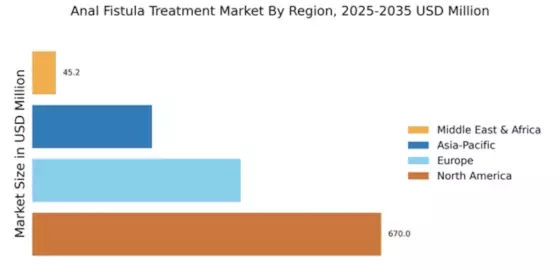
North America is poised to maintain its leadership in the Anal Fistula Treatment Market, holding a significant market share of $670.0M in 2024. The region's growth is driven by advanced healthcare infrastructure, increasing prevalence of anal fistulas, and a strong focus on innovative treatment options. Regulatory support and reimbursement policies further enhance market accessibility, fostering demand for effective solutions. The competitive landscape in North America is robust, featuring key players such as Medtronic, Johnson & Johnson, and Boston Scientific. These companies are at the forefront of technological advancements, offering a range of treatment modalities. The presence of established healthcare systems and a high level of awareness among patients contribute to the region's dominance, ensuring continued growth in the coming years.

Europe : Emerging Market Dynamics

Europe's Anal Fistula Treatment Market is projected to reach $400.0M, driven by increasing healthcare investments and a rising incidence of anal disorders. The region benefits from stringent regulatory frameworks that promote patient safety and treatment efficacy. Additionally, the growing emphasis on minimally invasive procedures is expected to catalyze market growth, aligning with patient preferences for less invasive options. Leading countries such as Germany, France, and the UK are pivotal in shaping the market landscape, with a strong presence of key players like B. Braun Melsungen AG and Smith & Nephew. The competitive environment is characterized by collaborations and innovations aimed at enhancing treatment outcomes. As healthcare policies evolve, the market is likely to witness further advancements in treatment methodologies, ensuring better patient care.

Asia-Pacific : Rapidly Growing Market

The Asia-Pacific region is witnessing significant growth in the Anal Fistula Treatment Market, projected to reach $230.0M. Factors such as increasing healthcare expenditure, rising awareness about anal health, and a growing patient population are driving demand. Additionally, government initiatives aimed at improving healthcare access are expected to further boost market growth, making treatment more accessible to patients in need. Countries like China, India, and Japan are leading the charge in this market, with a mix of local and international players competing for market share. Companies such as Conmed Corporation and Cook Medical are actively involved in expanding their product offerings. The competitive landscape is evolving, with a focus on innovative solutions tailored to meet the unique needs of the region's diverse population, ensuring a promising future for the market.

Middle East and Africa : Emerging Healthcare Landscape

The Middle East and Africa region is gradually emerging in the Anal Fistula Treatment Market, with a market size of $45.23M. The growth is primarily driven by increasing healthcare investments and a rising awareness of anal health issues. Additionally, government initiatives aimed at improving healthcare infrastructure are expected to enhance access to treatment options, fostering market growth in the region. Countries such as South Africa and the UAE are at the forefront of this market, with a growing number of healthcare facilities and increasing patient awareness. The competitive landscape is characterized by a mix of local and international players, striving to provide effective treatment solutions. As healthcare policies evolve, the region is likely to see a surge in innovative treatment options, catering to the needs of the population.

Key Players and Competitive Insights

The Anal Fistula Treatment Market is characterized by a competitive landscape that is increasingly shaped by innovation, strategic partnerships, and a focus on patient-centric solutions. Key players such as Medtronic (US), Johnson & Johnson (US), and Boston Scientific (US) are at the forefront, leveraging their extensive research and development capabilities to introduce advanced treatment modalities. These companies appear to be strategically positioned to capitalize on the growing demand for minimally invasive procedures, which are becoming the preferred choice among healthcare providers and patients alike. Their operational focus on enhancing product efficacy and safety is likely to drive market growth, while their collaborative efforts with healthcare institutions may further solidify their competitive edge.

In terms of business tactics, companies are increasingly localizing manufacturing to reduce costs and improve supply chain efficiency. This approach not only enhances responsiveness to market demands but also mitigates risks associated with global supply chain disruptions. The market structure is moderately fragmented, with several players vying for market share. However, the collective influence of major companies is significant, as they set industry standards and drive innovation through competitive practices.

In November 2025, Medtronic (US) announced the launch of a new line of bioengineered tissue products aimed at improving healing rates in anal fistula surgeries. This strategic move is indicative of Medtronic's commitment to advancing surgical techniques and enhancing patient outcomes. By integrating cutting-edge technology into their product offerings, the company is likely to strengthen its market position and appeal to a broader range of healthcare providers.

Similarly, in October 2025, Johnson & Johnson (US) expanded its partnership with leading healthcare institutions to develop a comprehensive training program for surgeons specializing in anal fistula treatments. This initiative not only underscores the company's dedication to education and skill enhancement but also positions it as a thought leader in the field. By fostering collaboration with healthcare professionals, Johnson & Johnson is likely to enhance its brand reputation and drive adoption of its innovative solutions.

In September 2025, Boston Scientific (US) unveiled a new digital platform designed to streamline patient management and follow-up care for anal fistula patients. This platform integrates telehealth capabilities, allowing for remote monitoring and consultations. The strategic importance of this development lies in its potential to improve patient engagement and adherence to treatment protocols, thereby enhancing overall treatment outcomes. As digital health solutions gain traction, Boston Scientific's proactive approach may provide a competitive advantage in the evolving landscape.

As of December 2025, current trends in the Anal Fistula Treatment Market are increasingly defined by digitalization, sustainability, and the integration of artificial intelligence (AI) into treatment protocols. Strategic alliances among key players are shaping the landscape, fostering innovation and enhancing service delivery. The competitive differentiation is likely to evolve from traditional price-based competition to a focus on technological advancements, patient-centric solutions, and supply chain reliability. This shift suggests that companies that prioritize innovation and adaptability will be better positioned to thrive in the future.

Key Companies in the Anal Fistula Treatment Market market include

Industry Developments

  • Q2 2024: Biolitec Launches New LEONARDO Mini Laser for Anal Fistula Treatment Market Biolitec announced the launch of its LEONARDO Mini laser system specifically designed for minimally invasive anal fistula treatment, aiming to improve patient outcomes and reduce recovery times.
  • Q2 2024: Cook Medical Receives CE Mark for New Seton Drainage System for Anal Fistula Cook Medical obtained CE Mark approval for its new Seton Drainage System, expanding its portfolio of devices for the management of anal fistula in European markets.
  • Q2 2024: Medtronic Announces Partnership with Mayo Clinic to Advance Anal Fistula Treatment Market Research Medtronic entered into a research partnership with Mayo Clinic to develop and clinically validate new technologies for the treatment of complex anal fistulas.
  • Q3 2024: Biorestorative Therapies Initiates Phase II Clinical Trial for Stem Cell-Based Anal Fistula Therapy Biorestorative Therapies began a Phase II clinical trial evaluating the safety and efficacy of its stem cell-based therapy for patients with refractory anal fistula.
  • Q3 2024: Takeda Receives FDA Orphan Drug Designation for Anal Fistula Biologic Candidate Takeda Pharmaceuticals received FDA Orphan Drug Designation for its investigational biologic therapy targeting patients with complex anal fistula associated with Crohn’s disease.
  • Q3 2024: Israeli Startup Fistulix Raises $12 Million Series A to Develop Minimally Invasive Anal Fistula Device Fistulix, an Israeli medical device startup, secured $12 million in Series A funding to accelerate development and clinical testing of its minimally invasive anal fistula closure device.
  • Q4 2024: Olympus Opens New R&D Facility Focused on Colorectal and Anal Fistula Devices Olympus inaugurated a new research and development center dedicated to advancing technologies for colorectal and anal fistula treatment in Hamburg, Germany.
  • Q4 2024: BD Announces Launch of Next-Generation Fistula Plug for U.S. Market BD (Becton, Dickinson and Company) launched its next-generation fistula plug, designed to improve healing rates for patients with anal fistula, in the United States.
  • Q1 2025: SurgiGraft Receives FDA 510(k) Clearance for Biologic Anal Fistula Repair Matrix SurgiGraft received FDA 510(k) clearance for its new biologic matrix product intended for the surgical repair of anal fistulas.
  • Q1 2025: Novo Nordisk Appoints New Head of Anal Fistula Therapeutics Division Novo Nordisk announced the appointment of Dr. Anna Larsen as the new head of its Anal Fistula Therapeutics Division, signaling increased focus on this therapeutic area.
  • Q2 2025: Coloplast Acquires UK-Based Anal Fistula Device Maker FistulaMed Coloplast completed the acquisition of FistulaMed, a UK-based manufacturer of minimally invasive anal fistula treatment devices, to expand its colorectal product portfolio.
  • Q2 2025: Smith & Nephew Signs Distribution Agreement for Anal Fistula Laser System in Asia-Pacific Smith & Nephew entered into a distribution agreement to market its anal fistula laser treatment system across key Asia-Pacific markets.

Future Outlook

Anal Fistula Treatment Market Future Outlook

The Anal Fistula Treatment Market is projected to grow at a 5.06% CAGR from 2024 to 2035, driven by advancements in surgical techniques, increasing awareness, and rising healthcare expenditure.

New opportunities lie in:

  • Development of minimally invasive surgical devices
  • Expansion of telehealth services for post-operative care
  • Investment in regenerative medicine for faster recovery solutions

By 2035, the market is expected to achieve substantial growth, reflecting evolving treatment methodologies and increased patient access.

Market Segmentation

Anal Fistula Treatment Market End User Outlook

  • Hospitals
  • Specialty Clinics
  • Ambulatory Surgical Centers

Anal Fistula Treatment Market Treatment Type Outlook

  • Fistulotomy
  • Seton Placement
  • Flap Surgery
  • Ligation of the Fistula Tract

Anal Fistula Treatment Market Diagnosis Method Outlook

  • Physical Examination
  • Imaging Techniques
  • Endoscopy

Anal Fistula Treatment Market Patient Demographics Outlook

  • Adults
  • Pediatric Patients
  • Geriatric Patients

Anal Fistula Treatment Market Severity of Condition Outlook

  • Acute Fistula
  • Chronic Fistula
  • Complex Fistula

Report Scope

MARKET SIZE 20241345.23(USD Million)
MARKET SIZE 20251413.32(USD Million)
MARKET SIZE 20352315.79(USD Million)
COMPOUND ANNUAL GROWTH RATE (CAGR)5.06% (2024 - 2035)
REPORT COVERAGERevenue Forecast, Competitive Landscape, Growth Factors, and Trends
BASE YEAR2024
Market Forecast Period2025 - 2035
Historical Data2019 - 2024
Market Forecast UnitsUSD Million
Key Companies ProfiledMedtronic (US), Johnson & Johnson (US), Boston Scientific (US), Stryker (US), B. Braun Melsungen AG (DE), Smith & Nephew (GB), Conmed Corporation (US), Cook Medical (US), Hollister Incorporated (US)
Segments CoveredTreatment Type, End User, Diagnosis Method, Severity of Condition, Patient Demographics
Key Market OpportunitiesEmergence of minimally invasive techniques enhances patient outcomes in the Anal Fistula Treatment Market.
Key Market DynamicsRising demand for minimally invasive procedures drives innovation in anal fistula treatment options and technologies.
Countries CoveredNorth America, Europe, APAC, South America, MEA

Leave a Comment

FAQs

What is the projected growth of the Anal Fistula Treatment market?

The Anal Fistula Treatment market is the expected increase in total market value of 2.32 USD billion over a defined forecast period 2025–2035. It is driven by factors such as demand trends, technological advances, regulatory changes, and geographic expansion.

What is the size of the Anal Fistula Treatment market?

Anal Fistula Treatment market size was valued at approximately 1.35 billion USD in 2024. This figure will reach 2.32 billion USD covering all regions (America, Europe, Asia, MEA and ROW), focusing its segments / services / distribution channels till 2035.

What is the CAGR of the Anal Fistula Treatment market?

Anal Fistula Treatment market is expected to grow at a CAGR of 5.06% between 2025 and 2035.

How much will the Anal Fistula Treatment market be worth by 2035?

Anal Fistula Treatment market is expected to be worth of 2.32 billion USD, reflecting growth driven by usage, technology and global demands by the end of 2035.

How will the Anal Fistula Treatment market perform over the next 10 years?

Over the next 10 years the Anal Fistula Treatment market is expected to shift from usd billion 1.35 to 2.32 billion USD, led by adoption of advanced tech, demographic trends, regulatory approvals, with potential headwinds from 2025 to 2035.

What is the expected market valuation of the Global Anal Fistula Treatment Market in 2024?

In 2024, the Global Anal Fistula Treatment Market is expected to be valued at approximately 1.22 billion USD.

What are the key factors driving growth in the Global Anal Fistula Treatment Market?

Key factors driving growth include increasing awareness about anal fistula conditions and advancements in surgical techniques.

Which region is expected to dominate the Anal Fistula Treatment Market during the forecast period?

North America is expected to dominate the Anal Fistula Treatment Market during the forecast period.

What is the significance of minimally invasive surgeries in the Anal Fistula Treatment Market?

Minimally invasive surgeries are significant as they reduce recovery time and improve patient outcomes.

Who are the prominent competitors in the Global Anal Fistula Treatment Market?

Prominent competitors in the market include leading pharmaceutical and medical device companies specializing in surgical treatments.

Download Free Sample

Kindly complete the form below to receive a free sample of this Report

Compare Licence

×
Features License Type
Single User Multiuser License Enterprise User
Price $4,950 $5,950 $6,250
Maximum User Access Limit 1 User Upto 10 Users Unrestricted Access Throughout the Organization
Free Customization
Direct Access to Analyst
Deliverable Format
Platform Access
Discount on Next Purchase 10% 15% 15%
Printable Versions