×
Request Free Sample ×

Kindly complete the form below to receive a free sample of this Report

* Please use a valid business email

Leading companies partner with us for data-driven Insights

clients tt-cursor
Hero Background

Architectural Acoustic Panel Market

ID: MRFR/PCM/21418-HCR
111 Pages
Pradeep Nandi
October 2025

Architectural Acoustic Panel Market Research Report By Material (Fiberglass, Wood, Metal, Textiles, Composite Materials), By Product Type (Ceiling Panels, Wall Panels, Sound Baffles, Acoustic Clouds, Curtains and Drapes), By Application (Commercial Buildings, Residential Buildings, Industrial Facilities, Educational Institutions, Auditoriums and Concert Halls), By Noise Control Level (Low (NRC 0.50-0.70), Medium (NRC 0.70-0.90), High (NRC 0.90 or higher)), By Installation Method (Suspended, Surface Mounted, Concealed, Freestanding, Adhesive-... read more

Share:
Download PDF ×

We do not share your information with anyone. However, we may send you emails based on your report interest from time to time. You may contact us at any time to opt-out.

 Architectural Acoustic Panel Market Infographic
Purchase Options

Architectural Acoustic Panel Market Summary

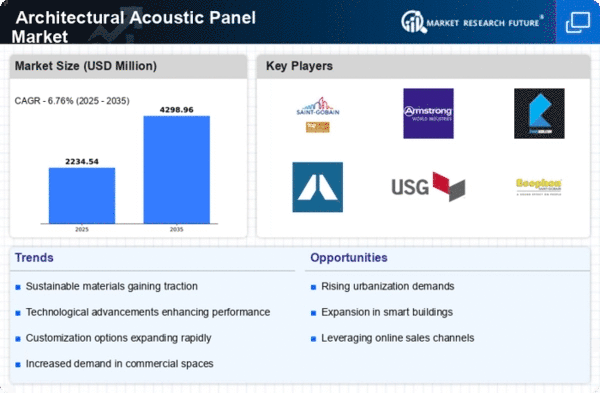
As per MRFR analysis, the Architectural Acoustic Panel Market Size was estimated at 2093.05 USD Million in 2024. The Architectural Acoustic Panel industry is projected to grow from 2234.58 in 2025 to 4298.96 by 2035, exhibiting a compound annual growth rate (CAGR) of 6.76 during the forecast period 2025 - 2035.

Key Market Trends & Highlights

The Architectural Acoustic Panel Market is experiencing a dynamic shift towards sustainability and technological integration.

  • The market is witnessing a notable increase in the adoption of sustainable materials, reflecting a broader environmental consciousness.
  • Integration of smart technology into acoustic panels is becoming prevalent, enhancing functionality and user experience.
  • Customization and aesthetic appeal are driving demand, particularly in the North American market, where design considerations are paramount.
  • Rising demand for noise control solutions and government regulations are key drivers, particularly influencing the growth of the sound absorption segment.

Market Size & Forecast

2024 Market Size 2093.05 (USD Million)
2035 Market Size 4298.96 (USD Million)
CAGR (2025 - 2035) 6.76%

Major Players

Armstrong World Industries (US), Ecophon (SE), Saint-Gobain (FR), Rockfon (DK), USG Corporation (US), Knauf Insulation (DE), Boral Limited (AU), GIKEN (JP), SAS International (GB)

Architectural Acoustic Panel Market Trends

The Architectural Acoustic Panel Market is currently experiencing a notable evolution, driven by a growing awareness of sound management in various environments. As urbanization continues to rise, the demand for effective noise control solutions in commercial, residential, and industrial spaces appears to be increasing. This trend is likely influenced by the need for improved acoustic comfort in workplaces, educational institutions, and public venues. Furthermore, advancements in materials and design are enabling manufacturers to create aesthetically pleasing panels that blend seamlessly with interior decor, thereby enhancing their appeal to architects and designers alike. In addition, sustainability is becoming a pivotal factor in the Architectural Acoustic Panel Market. Consumers and businesses are increasingly seeking eco-friendly products that contribute to green building certifications. This shift towards sustainable practices may lead to a greater emphasis on the use of recycled materials and low-emission manufacturing processes. As a result, companies that prioritize environmental responsibility could gain a competitive edge in this evolving landscape. Overall, the Architectural Acoustic Panel Market seems poised for growth, driven by innovation, sustainability, and a heightened focus on acoustic performance across various sectors.

Sustainable Materials Adoption

The Architectural Acoustic Panel Market is witnessing a shift towards the use of sustainable materials. Manufacturers are increasingly incorporating recycled and eco-friendly components into their products. This trend aligns with the growing consumer demand for environmentally responsible solutions, which may enhance the market's appeal to eco-conscious buyers.

Integration of Smart Technology

There is a rising trend towards the integration of smart technology within acoustic panel systems. These innovations may include sound-absorbing panels equipped with sensors that monitor noise levels and adjust accordingly. Such advancements could enhance user experience and provide more effective sound management solutions.

Customization and Aesthetic Appeal

Customization is becoming a key focus in the Architectural Acoustic Panel Market. Clients are seeking tailored solutions that not only meet acoustic requirements but also align with their design preferences. This trend suggests that manufacturers who offer a variety of styles, colors, and finishes may attract a broader customer base.

Architectural Acoustic Panel Market Drivers

Rising Demand for Noise Control Solutions

The Global Architectural Acoustic Panel Market Industry experiences a surge in demand for effective noise control solutions across various sectors, including residential, commercial, and industrial applications. This trend is largely driven by increasing urbanization and the subsequent rise in noise pollution levels. As cities expand, the need for soundproofing materials becomes more pronounced, leading to a projected market value of 2.09 USD Billion in 2024. The growing awareness of the impact of noise on health and productivity further propels the adoption of acoustic panels, making them essential in modern architectural designs.
Market Segment Insights

By Application: Sound Absorption (Largest) vs. Noise Reduction (Fastest-Growing)

The Architectural Acoustic Panel Market is characterized by diverse applications, with sound absorption holding the largest market share. This segment is favored in settings such as auditoriums, offices, and public spaces where effective sound management is critical. Noise reduction follows closely, demonstrating a rapidly growing presence as urban environments intensify and the demand for quieter spaces increases. The shift towards open-plan designs is further driving the adoption of panels specifically designed to reduce noise pollution. Growth trends within the Architectural Acoustic Panel Market are heavily influenced by increased urbanization and heightened awareness regarding sound management. Additionally, the rise in construction activities in residential and commercial buildings enhances the emphasis on acoustic solutions. Sustainability trends are also fostering innovations in materials that offer both aesthetic value and functional benefits, pushing the noise reduction segment to the forefront of market development.

Sound Absorption (Dominant) vs. Aesthetic Enhancement (Emerging)

In the Architectural Acoustic Panel Market, sound absorption is recognized as the dominant segment, primarily utilized for its efficiency in managing sound reflection and echo within various environments. Panels designed for sound absorption utilize specialized materials that minimize reverberation, making them essential for performance venues and offices. In contrast, aesthetic enhancement is emerging as a vital segment, focusing on the visual appeal of acoustic panels. These panels are increasingly designed in various styles and finishes, creating a fusion of functionality and design. As architects and designers emphasize creating visually appealing spaces, aesthetic-enhancing acoustic panels are gaining traction, particularly in trendy hospitality venues and modern workplaces that prioritize both design and acoustic comfort.

By Material Type: Wood (Largest) vs. Foam (Fastest-Growing)

In the Architectural Acoustic Panel Market, the 'Material Type' segment showcases a diverse distribution among its key players. Wood remains the largest segment due to its aesthetic appeal, excellent sound absorption properties, and sustainability factors that resonate with environmentally conscious consumers. Following wood, fabric panels are increasingly popular, offering flexibility in design and effective acoustical solutions. Foam, while currently a smaller segment, is rising rapidly due to its lightweight properties and ease of installation, appealing to modern architectural practices.

Wood (Dominant) vs. Foam (Emerging)

Wooden acoustic panels dominate the market by combining aesthetic value with superior sound performance, making them a preferred choice in commercial and residential designs. Their natural textures enhance interior decor while ensuring effective acoustic management. On the other hand, foam panels are emerging as a popular alternative, primarily for their affordability and versatility. Lightweight and available in various colors and patterns, foam panels cater to a wide array of applications from studios to open office spaces. Their growing acceptance is driven by advancements in foam technology, yielding improved acoustic efficiency.

By End Use: Commercial (Largest) vs. Residential (Fastest-Growing)

The Architectural Acoustic Panel Market exhibits a diverse distribution across various end-use segments, with the commercial sector claiming the largest share. This segment encompasses applications in offices, retail spaces, and hospitality venues, where sound management is crucial for enhancing customer experience and productivity. The residential and industrial segments also contribute significantly, yet they lag in comparison to the dominance of commercial usage. Notably, institutional applications, such as schools and hospitals, play a vital role in this market due to stringent acoustic standards and growing awareness of the importance of sound control in these environments. In recent years, the residential segment has emerged as the fastest-growing sector within the Architectural Acoustic Panel Market. The surge in residential renovations and the increasing demand for home theaters and open-concept living spaces have fueled this growth. Moreover, heightened awareness of sound quality and acoustics influence purchasing decisions among homeowners. This trend is further supported by a shift towards more environmentally-friendly and aesthetically pleasing acoustic solutions, driving product innovation and expansion in the residential space.

Commercial (Dominant) vs. Residential (Emerging)

The commercial segment of the Architectural Acoustic Panel Market stands as the dominant force, characterized by the extensive application in various settings like offices, retail establishments, and entertainment venues. This segment benefits from substantial investments in infrastructure and renovation projects, reflecting a growing emphasis on optimized acoustic environments for enhancing productivity and customer satisfaction. In contrast, the residential segment is emerging rapidly, driven by the increasing trend of home renovation projects and a growing appreciation for acoustically treated living spaces. Homeowners are now more inclined to integrate acoustic solutions that blend functionality with design, marking a shift towards customized and stylish products. This burgeoning interest positions the residential segment as a significant growth area, creating opportunities for innovative designs and eco-friendly materials.

Get more detailed insights about Architectural Acoustic Panel Market

Regional Insights

North America : Market Leader in Acoustic Solutions

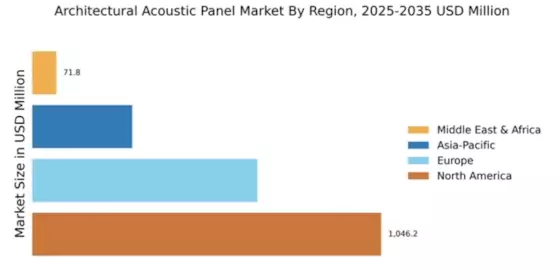
North America is poised to maintain its leadership in the Architectural Acoustic Panel Market, holding a significant market share of $1040.0M in 2024. The region's growth is driven by increasing urbanization, heightened awareness of sound quality in public spaces, and stringent building regulations promoting acoustic solutions. The demand for innovative designs and sustainable materials further fuels market expansion, supported by government initiatives aimed at enhancing building standards. The competitive landscape in North America is robust, featuring key players such as Armstrong World Industries and USG Corporation. These companies are at the forefront of technological advancements, offering a diverse range of products tailored to various applications. The U.S. remains the largest market, while Canada and Mexico are also witnessing growth, driven by infrastructure development and rising investments in commercial spaces.

Europe : Emerging Market with Strong Growth

Europe's Architectural Acoustic Panel Market is projected to reach $600.0M by 2025, driven by increasing demand for soundproofing solutions in urban environments. The region's growth is supported by regulatory frameworks emphasizing sustainability and energy efficiency in construction. Initiatives from the European Union to enhance building acoustics standards are also pivotal, fostering innovation and adoption of advanced acoustic technologies. Leading countries in this market include Germany, France, and the UK, where major players like Saint-Gobain and Ecophon are actively expanding their product offerings. The competitive landscape is characterized by a mix of established firms and emerging startups, all vying for market share. The focus on eco-friendly materials and designs is shaping product development, ensuring that Europe remains a key player in The Architectural Acoustic Panel.

Asia-Pacific : Rapid Growth in Emerging Markets

The Asia-Pacific region is witnessing significant growth in the Architectural Acoustic Panel Market, projected to reach $350.0M by 2025. This growth is driven by rapid urbanization, increasing construction activities, and a growing awareness of the importance of acoustics in residential and commercial spaces. Government initiatives promoting sustainable building practices and noise reduction are also contributing to market expansion, creating a favorable environment for acoustic solutions. Countries like China, Japan, and Australia are leading the charge, with key players such as Rockfon and Boral Limited making substantial investments in product innovation. The competitive landscape is evolving, with both local and international companies striving to capture market share. The increasing focus on modern architecture and interior design is further propelling the demand for high-quality acoustic panels in the region.

Middle East and Africa : Emerging Market with Unique Challenges

The Middle East and Africa (MEA) region is gradually emerging in the Architectural Acoustic Panel Market, with a projected size of $103.05M by 2025. The growth is primarily driven by urban development projects and a rising demand for soundproofing solutions in commercial and residential buildings. However, challenges such as economic fluctuations and varying regulatory standards across countries may impact market dynamics. Nevertheless, government initiatives aimed at improving infrastructure are expected to bolster market growth. Leading countries in the MEA region include the UAE and South Africa, where companies are increasingly focusing on innovative acoustic solutions. The competitive landscape is characterized by a mix of local manufacturers and international players, all striving to meet the growing demand. The presence of key players like Knauf Insulation is pivotal in shaping the market, as they introduce advanced products tailored to regional needs.

Key Players and Competitive Insights

The Architectural Acoustic Panel Market is currently characterized by a dynamic competitive landscape, driven by increasing demand for noise reduction solutions in various sectors, including commercial, residential, and industrial applications. Key players such as Armstrong World Industries (US), Ecophon (SE), and Saint-Gobain (FR) are strategically positioned to leverage innovation and sustainability in their product offerings. Armstrong World Industries (US) focuses on enhancing its product portfolio through technological advancements, while Ecophon (SE) emphasizes eco-friendly materials and designs. Saint-Gobain (FR) is actively pursuing regional expansion and partnerships to strengthen its market presence, collectively shaping a competitive environment that prioritizes quality and sustainability.

In terms of business tactics, companies are increasingly localizing manufacturing to reduce lead times and optimize supply chains. The market appears moderately fragmented, with several key players exerting influence over pricing and product development. This structure allows for a diverse range of offerings, catering to varying customer needs while fostering competition among established and emerging players.

In November 2025, Armstrong World Industries (US) announced the launch of a new line of acoustic panels designed specifically for high-traffic commercial spaces. This strategic move is significant as it addresses the growing demand for durable and aesthetically pleasing solutions in environments such as offices and schools, potentially enhancing the company's market share in these sectors. The introduction of this product line reflects a commitment to innovation and responsiveness to market trends.

In October 2025, Ecophon (SE) unveiled a partnership with a leading architectural firm to develop customized acoustic solutions for large-scale public projects. This collaboration is noteworthy as it not only showcases Ecophon’s dedication to tailored solutions but also positions the company as a key player in the architectural design space, likely enhancing its visibility and influence in upcoming projects.

In September 2025, Saint-Gobain (FR) completed the acquisition of a regional acoustic panel manufacturer, which is expected to bolster its production capabilities and expand its distribution network. This acquisition is indicative of a broader trend towards consolidation in the market, allowing Saint-Gobain to enhance its competitive edge through increased operational efficiency and a more extensive product range.

As of December 2025, current competitive trends in the Architectural Acoustic Panel Market are increasingly defined by digitalization, sustainability, and the integration of AI technologies. Strategic alliances are becoming more prevalent, enabling companies to pool resources and expertise to innovate more effectively. The competitive differentiation is likely to evolve from traditional price-based competition towards a focus on innovation, technology, and supply chain reliability, suggesting a transformative shift in how companies position themselves in the market.

Key Companies in the Architectural Acoustic Panel Market market include

Industry Developments

The Architectural Acoustic Panel Market is poised to reach $4.03 billion by 2034, driven by rising demand for noise reduction in commercial and residential buildings. Key market trends include increasing adoption of sustainable and eco-friendly materials, advancement in acoustic technology, and growing awareness of the importance of noise control. Recent developments include the launch of new products with improved sound absorption and fire resistance properties, as well as the expansion of manufacturing facilities by major players. Strategic partnerships, mergers and acquisitions are expected to shape the industry landscape in the coming years.

Future Outlook

Architectural Acoustic Panel Market Future Outlook

The Architectural Acoustic Panel Market is projected to grow at a 6.76% CAGR from 2024 to 2035, driven by urbanization, increased construction activities, and heightened awareness of sound management.

New opportunities lie in:

  • Expansion into smart building technologies integrating acoustic solutions
  • Development of eco-friendly acoustic panels using sustainable materials
  • Partnerships with architects for customized acoustic design solutions

By 2035, the market is expected to achieve robust growth, reflecting evolving architectural needs.

Market Segmentation

Architectural Acoustic Panel Market End Use Outlook

  • Commercial
  • Residential
  • Industrial
  • Institutional

Architectural Acoustic Panel Market Application Outlook

  • Sound Absorption
  • Noise Reduction
  • Aesthetic Enhancement
  • Thermal Insulation

Architectural Acoustic Panel Market Material Type Outlook

  • Wood
  • Fabric
  • Foam
  • Metal

Report Scope

MARKET SIZE 20242093.05(USD Million)
MARKET SIZE 20252234.58(USD Million)
MARKET SIZE 20354298.96(USD Million)
COMPOUND ANNUAL GROWTH RATE (CAGR)6.76% (2024 - 2035)
REPORT COVERAGERevenue Forecast, Competitive Landscape, Growth Factors, and Trends
BASE YEAR2024
Market Forecast Period2025 - 2035
Historical Data2019 - 2024
Market Forecast UnitsUSD Million
Key Companies ProfiledArmstrong World Industries (US), Ecophon (SE), Saint-Gobain (FR), Rockfon (DK), USG Corporation (US), Knauf Insulation (DE), Boral Limited (AU), GIKEN (JP), SAS International (GB)
Segments CoveredApplication, Material Type, End Use
Key Market OpportunitiesGrowing demand for sustainable materials in the Architectural Acoustic Panel Market presents significant opportunities.
Key Market DynamicsRising demand for sustainable building materials drives innovation in the Architectural Acoustic Panel Market.
Countries CoveredNorth America, Europe, APAC, South America, MEA

Leave a Comment

FAQs

What is the current market size of the Architectural Acoustic Panel Market?

The Architectural Acoustic Panel Market is currently valued at 2.23 Billion USD in 2025.

What is the expected market size of the Architectural Acoustic Panel Market in 2035?

Architectural Acoustic Panel Market is projected to register a CAGR of 6.76% from 2025-2035

Which region is expected to dominate the Architectural Acoustic Panel market?

North America is expected to dominate the Architectural Acoustic Panel Market throughout the forecast period, owing to the increasing construction activities and rising awareness about noise pollution in the region.

What are the key applications of Architectural Acoustic Panels?

Architectural Acoustic Panels are primarily used for sound absorption and noise control in various applications, including offices, auditoriums, schools, hospitals, and residential buildings.

Who are the key competitors in the Architectural Acoustic Panel Market?

Key competitors in the Architectural Acoustic Panel Market include Armstrong World Industries, CertainTeed, Knauf, USG Corporation, and Saint-Gobain Ecophon.

What are the major factors driving the growth of the Architectural Acoustic Panel Market?

Factors driving the growth of the Architectural Acoustic Panel Market include increasing demand for noise reduction solutions, rising awareness about the negative effects of noise pollution, and government regulations promoting the use of acoustic materials in buildings.

What are the challenges faced by the Architectural Acoustic Panel Market?

Challenges faced by the Architectural Acoustic Panel Market include intense competition, fluctuating raw material prices, and stringent environmental regulations.

What are the emerging trends in the Architectural Acoustic Panel Market?

Emerging trends in the Architectural Acoustic Panel Market include the integration of sustainable materials, the development of innovative acoustic designs, and the use of digital technologies for acoustic modeling and simulation.

What is the expected impact of COVID-19 on the Architectural Acoustic Panel Market?

The COVID-19 pandemic had a moderate impact on the Architectural Acoustic Panel Market, causing temporary disruptions in supply chains and construction activities. However, the market is expected to recover and continue its growth trajectory in the post-pandemic period.

What are the opportunities for growth in the Architectural Acoustic Panel Market?

Opportunities for growth in the Architectural Acoustic Panel Market include expanding into emerging markets, developing new and improved acoustic materials, and leveraging technological advancements for enhanced performance and functionality.

Download Free Sample

Kindly complete the form below to receive a free sample of this Report

Compare Licence

×
Features License Type
Single User Multiuser License Enterprise User
Price $4,950 $ $7,250
Maximum User Access Limit 1 User Upto 10 Users Unrestricted Access Throughout the Organization
Free Customization
Direct Access to Analyst
Deliverable Format
Platform Access
Discount on Next Purchase 10% 15% 15%
Printable Versions