Growing Data Volume
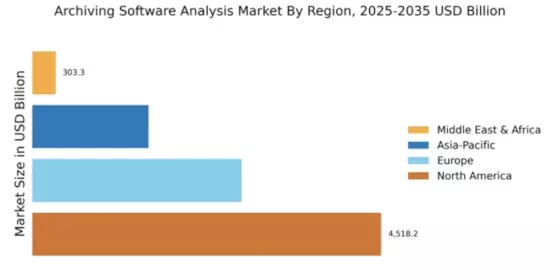
The exponential increase in data generation across various sectors drives the Global archiving software analysis Market Industry. Organizations are compelled to manage vast amounts of information, which necessitates robust archiving solutions. In 2024, the market is projected to reach 9036.3 USD Billion, reflecting the urgent need for efficient data storage and retrieval systems. As businesses continue to expand their digital footprint, the demand for archiving software that can handle this data surge is likely to grow. This trend indicates a significant opportunity for software providers to innovate and enhance their offerings to meet evolving customer needs.
Regulatory Compliance Requirements
The evolving landscape of regulatory compliance is a crucial factor influencing the Archiving Software Analysis Market Industry. Organizations across various sectors are mandated to adhere to stringent regulations regarding data retention and privacy. For instance, regulations such as GDPR and HIPAA impose strict guidelines on how data should be archived and managed. Failure to comply can result in severe penalties, prompting businesses to invest in archiving solutions that ensure compliance. The Archiving Software Analysis Market Industry is thus experiencing increased demand as companies prioritize solutions that not only meet regulatory standards but also enhance their overall data governance strategies. This trend indicates a growing recognition of the importance of compliance in driving archiving software adoption.
Cost Efficiency and Resource Optimization
Cost efficiency is a significant driver for the Archiving Software Analysis Market Industry, as organizations seek to optimize their resources. By implementing effective archiving solutions, companies can reduce storage costs and improve operational efficiency. Studies suggest that businesses can save up to 30% on storage costs by utilizing archiving software that automates data management processes. This financial incentive encourages organizations to adopt archiving solutions that streamline their data handling practices. Furthermore, as companies face increasing pressure to manage budgets effectively, the Archiving Software Analysis Market Industry is likely to see a rise in demand for cost-effective archiving solutions that deliver measurable ROI. This trend underscores the importance of financial considerations in the decision-making process for archiving software.
Technological Advancements
Technological advancements play a pivotal role in shaping the Archiving Software Analysis Market Industry. Innovations in artificial intelligence, machine learning, and cloud computing are transforming how data is archived and retrieved. These technologies enable organizations to automate archiving processes, enhance search capabilities, and improve data accessibility. As businesses increasingly adopt these advanced technologies, the demand for sophisticated archiving solutions is expected to rise. The Archiving Software Analysis Market Industry is thus witnessing a shift towards solutions that leverage cutting-edge technology to provide enhanced functionality and user experience. This trend suggests that organizations are not only looking for basic archiving capabilities but are also seeking solutions that can integrate seamlessly with their existing IT infrastructure.
Growing Awareness of Data Management
There is a growing awareness among organizations regarding the importance of effective data management, which is driving the Archiving Software Analysis Market Industry. As businesses recognize the value of their data as a strategic asset, they are increasingly investing in solutions that facilitate better data governance. This awareness is leading to a shift in mindset, where organizations prioritize data archiving as a critical component of their overall data strategy. The Archiving Software Analysis Market Industry is benefiting from this trend, as companies seek to implement comprehensive archiving solutions that not only preserve data but also enhance its usability. This shift indicates a broader recognition of the role of data management in achieving business objectives.