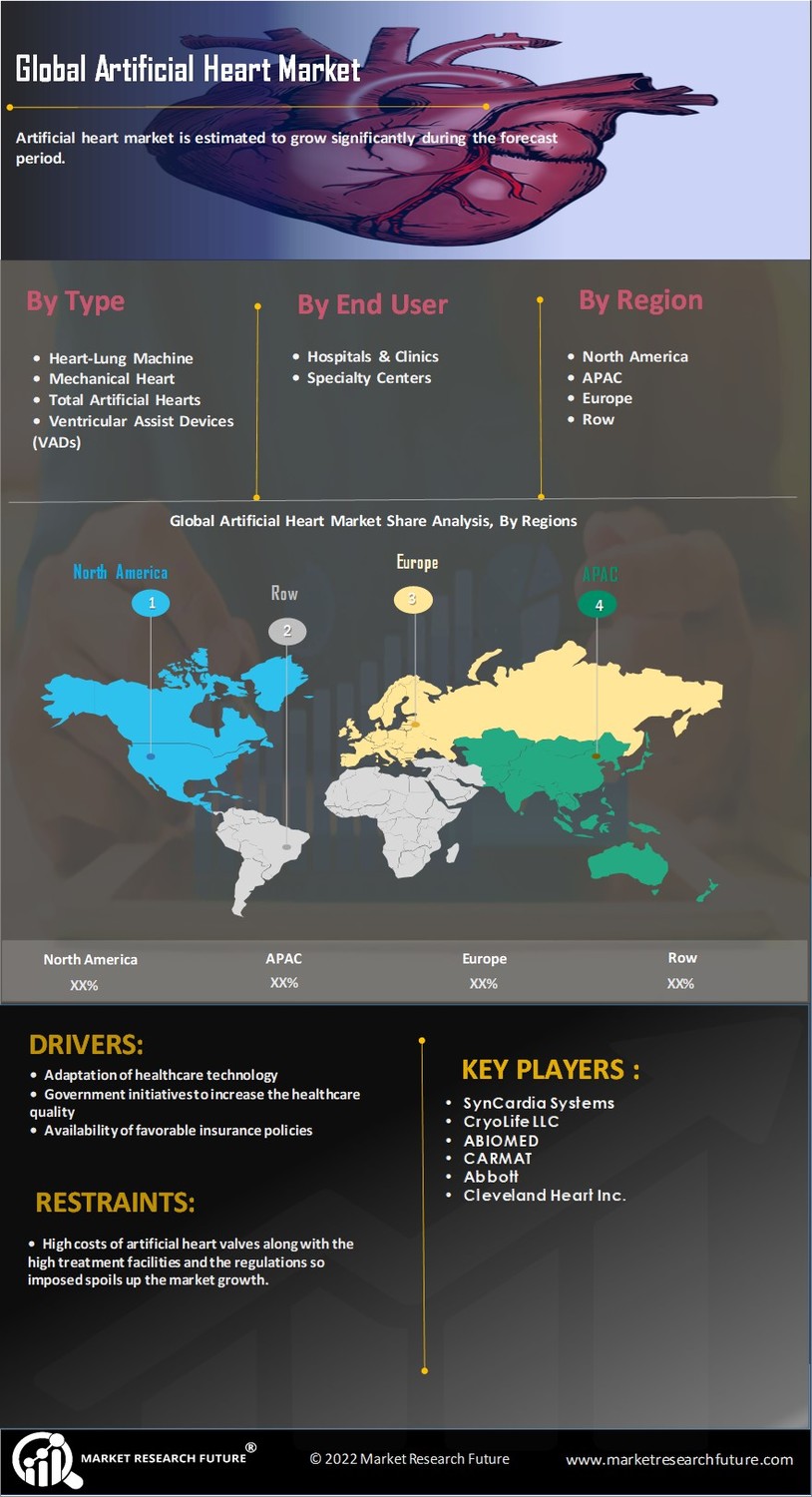
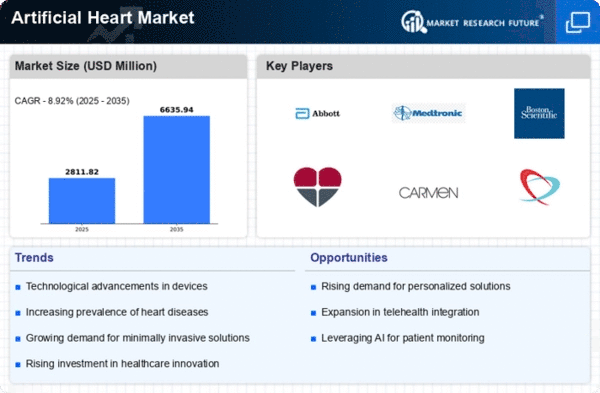
The Artificial Heart Market is currently characterized by a dynamic competitive landscape, driven by technological advancements and increasing patient demand for innovative cardiac solutions. Key players such as Abbott Laboratories (US), Medtronic (US), and SynCardia Systems (US) are at the forefront, each adopting distinct strategies to enhance their market positioning. Abbott Laboratories (US) focuses on innovation through continuous research and development, aiming to improve the efficacy and longevity of their heart devices. Medtronic (US) emphasizes strategic partnerships and acquisitions to expand its product portfolio and market reach, while SynCardia Systems (US) is dedicated to pioneering advancements in total artificial heart technology, thereby solidifying its niche in the market.
The business tactics employed by these companies include localizing manufacturing to reduce costs and optimize supply chains, which is particularly crucial in a moderately fragmented market. This competitive structure allows for a diverse range of products and solutions, fostering innovation while also presenting challenges in terms of market share distribution. The collective influence of these key players shapes the market dynamics, as they vie for leadership through differentiated offerings and strategic collaborations.
In November 2025, Medtronic (US) announced a groundbreaking partnership with a leading AI technology firm to integrate artificial intelligence into their heart monitoring systems. This strategic move is expected to enhance patient outcomes by providing real-time data analytics, thereby allowing for more personalized treatment plans. The integration of AI not only positions Medtronic as a leader in technological innovation but also reflects a broader trend towards digital transformation in the healthcare sector.
In October 2025, Abbott Laboratories (US) launched a new line of minimally invasive heart pumps designed to cater to a wider range of patients, including those with complex medical histories. This initiative underscores Abbott's commitment to expanding access to life-saving technologies, potentially increasing their market share in the artificial heart segment. The focus on minimally invasive solutions aligns with current healthcare trends that prioritize patient comfort and recovery times.
In September 2025, SynCardia Systems (US) received FDA approval for its latest total artificial heart model, which features enhanced biocompatibility and durability. This approval not only validates SynCardia's innovative approach but also positions the company to capture a larger segment of the market as demand for reliable artificial heart solutions continues to grow. The strategic importance of this approval lies in its potential to significantly improve patient quality of life and reduce long-term healthcare costs.
As of December 2025, the competitive trends in the Artificial Heart Market are increasingly defined by digitalization, sustainability, and the integration of advanced technologies such as AI. Strategic alliances are becoming more prevalent, as companies recognize the need to collaborate in order to leverage complementary strengths. Looking ahead, competitive differentiation is likely to evolve from traditional price-based competition towards a focus on innovation, technological advancements, and supply chain reliability. This shift suggests that companies that prioritize research and development, alongside strategic partnerships, will be better positioned to thrive in this rapidly changing market.





















Leave a Comment