×
Request Free Sample ×

Kindly complete the form below to receive a free sample of this Report

* Please use a valid business email

Leading companies partner with us for data-driven Insights

clients tt-cursor
Hero Background

Asset Reliability Software Market

ID: MRFR/ICT/3636-HCR
100 Pages
Aarti Dhapte
October 2025

Global Asset Reliability Software Market research report: by revenue source (software, services), deployment (on-premise, cloud), industry (aerospace & defense, chemical, food & beverages, mining) – Forecast till 2035

Share:
Download PDF ×

We do not share your information with anyone. However, we may send you emails based on your report interest from time to time. You may contact us at any time to opt-out.

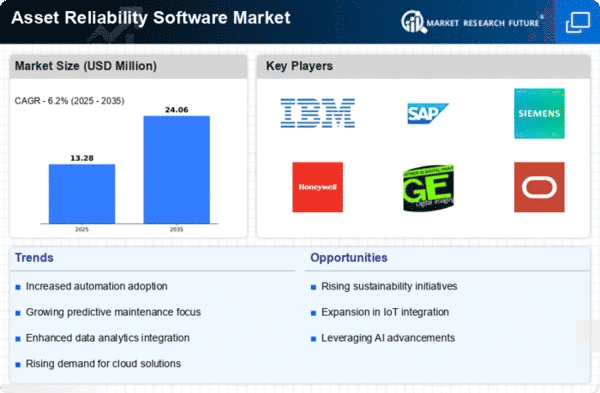
Asset Reliability Software Market Infographic
Purchase Options

Asset Reliability Software Market Summary

As per MRFR analysis, the Asset Reliability Software Market Size was estimated at 12.5 USD Million in 2024. The Asset Reliability Software industry is projected to grow from 13.18 USD Million in 2025 to 24.06 USD Million by 2035, exhibiting a compound annual growth rate (CAGR) of 6.2 during the forecast period 2025 - 2035.

Key Market Trends & Highlights

The Asset Reliability Software Market is poised for substantial growth driven by technological advancements and increasing operational efficiency demands.

  • The integration of IoT technologies is transforming asset reliability strategies across industries.
  • Predictive maintenance remains the largest segment, while condition monitoring is emerging as the fastest-growing area.
  • North America leads the market, whereas Asia-Pacific is recognized as the fastest-growing region.
  • The rising demand for operational efficiency and regulatory compliance are key drivers propelling market expansion.

Market Size & Forecast

2024 Market Size 12.5 (USD Million)
2035 Market Size 24.06 (USD Million)
CAGR (2025 - 2035) 6.2%

Major Players

IBM (US), SAP (DE), Siemens (DE), Honeywell (US), GE Digital (US), Oracle (US), Schneider Electric (FR), Rockwell Automation (US), Bentley Systems (US)

Asset Reliability Software Market Trends

The Asset Reliability Software Market is currently experiencing a transformative phase, driven by the increasing need for organizations to enhance operational efficiency and minimize downtime. Companies are increasingly recognizing the value of predictive maintenance and data analytics in optimizing asset performance. This shift towards proactive management strategies appears to be reshaping the landscape of asset management, as businesses seek to leverage technology to gain a competitive edge. Furthermore, the integration of Internet of Things (IoT) devices into asset reliability solutions is fostering real-time monitoring capabilities, which may lead to more informed decision-making processes. In addition, the growing emphasis on sustainability and regulatory compliance is influencing the Asset Reliability Software Market. Organizations are compelled to adopt solutions that not only improve reliability but also align with environmental standards. This trend suggests a potential shift towards software that incorporates sustainability metrics, enabling companies to track their environmental impact alongside asset performance. As the market evolves, it is likely that the demand for innovative, user-friendly software solutions will continue to rise, reflecting the dynamic needs of various industries.

Integration of IoT Technologies

The incorporation of Internet of Things (IoT) technologies into asset reliability software is becoming increasingly prevalent. This trend facilitates real-time data collection and analysis, allowing organizations to monitor asset conditions continuously. Such integration enhances predictive maintenance capabilities, potentially reducing unexpected failures and optimizing resource allocation.

Focus on Predictive Analytics

There is a growing emphasis on predictive analytics within the Asset Reliability Software Market. Organizations are leveraging advanced algorithms and machine learning techniques to forecast potential asset failures before they occur. This proactive approach not only minimizes downtime but also extends the lifespan of critical assets.

Sustainability and Compliance Considerations

The rising importance of sustainability and regulatory compliance is shaping the development of asset reliability solutions. Companies are increasingly seeking software that helps them meet environmental standards while improving asset performance. This trend indicates a shift towards solutions that incorporate sustainability metrics, aligning operational goals with environmental responsibilities.

Asset Reliability Software Market Drivers

Market Growth Projections

The Global Asset Reliability Software Market Industry is poised for substantial growth, with projections indicating a market size of 12.5 USD Billion in 2024 and an anticipated increase to 30 USD Billion by 2035. This growth trajectory suggests a compound annual growth rate of 8.28% from 2025 to 2035, reflecting the increasing importance of asset reliability in various sectors. The demand for advanced software solutions that enhance asset performance and reduce operational risks is likely to drive this expansion. As organizations prioritize reliability and efficiency, the market is expected to evolve, presenting new opportunities for innovation and investment.

Focus on Operational Efficiency

The relentless pursuit of operational efficiency is a key driver in the Global Asset Reliability Software Market Industry. Companies are increasingly recognizing that optimizing asset performance directly correlates with profitability. By implementing advanced reliability software, organizations can streamline processes, reduce waste, and enhance productivity. This focus on efficiency is particularly relevant in sectors such as manufacturing and transportation, where margins are often tight. As businesses strive to remain competitive, the market is projected to grow at a compound annual growth rate of 8.28% from 2025 to 2035, reflecting the ongoing commitment to operational excellence and cost reduction.

Integration of IoT Technologies

The integration of Internet of Things (IoT) technologies into asset reliability software is transforming the Global Asset Reliability Software Market Industry. IoT devices facilitate real-time monitoring and data collection from assets, enabling organizations to make informed decisions based on accurate information. This connectivity enhances the ability to track asset performance and health, leading to improved reliability and reduced operational risks. As industries increasingly adopt IoT solutions, the market is expected to expand significantly, with projections indicating a growth trajectory towards 30 USD Billion by 2035. This integration not only streamlines operations but also fosters a culture of continuous improvement.

Emergence of Cloud-Based Solutions

The emergence of cloud-based solutions is reshaping the Global Asset Reliability Software Market Industry. Cloud technology offers scalability, flexibility, and cost-effectiveness, making it an attractive option for organizations of all sizes. By migrating to cloud-based platforms, companies can access real-time data and analytics from anywhere, facilitating better decision-making and collaboration. This shift is particularly beneficial for organizations with distributed operations, as it enables centralized management of assets. As cloud adoption continues to rise, the market is expected to witness significant growth, driven by the demand for innovative and accessible asset management solutions.

Regulatory Compliance and Safety Standards

Regulatory compliance and adherence to safety standards are critical drivers in the Global Asset Reliability Software Market Industry. Organizations are compelled to implement robust asset management solutions to meet stringent regulations imposed by governmental bodies. Failure to comply can result in severe penalties and reputational damage. Consequently, companies are investing in asset reliability software to ensure compliance with safety protocols and environmental regulations. This trend is particularly pronounced in industries such as oil and gas, where regulatory frameworks are complex and constantly evolving. As a result, the market is likely to see sustained growth as organizations prioritize compliance and risk management.

Increasing Demand for Predictive Maintenance

The Global Asset Reliability Software Market Industry experiences a notable surge in demand for predictive maintenance solutions. Organizations are increasingly adopting these technologies to minimize downtime and enhance operational efficiency. By leveraging data analytics and machine learning, companies can predict equipment failures before they occur, thus reducing maintenance costs. This trend is particularly evident in sectors such as manufacturing and energy, where unplanned outages can lead to substantial financial losses. As a result, the market is projected to reach 12.5 USD Billion in 2024, reflecting a growing recognition of the value of proactive maintenance strategies.

Market Segment Insights

By Application: Predictive Maintenance (Largest) vs. Condition Monitoring (Fastest-Growing)

In the Asset Reliability Software Market, Predictive Maintenance leads with the largest share among applications. This segment significantly contributes to operational efficiency by enabling organizations to foresee equipment failures before they occur. On the other hand, Condition Monitoring is rapidly gaining traction and is noted for its robust growth potential. With real-time data collection and analysis, it allows organizations to make timely decisions regarding equipment health, thus enhancing performance and uptime. As industries increasingly adopt digital transformation, the demand for advanced analytics within Asset Performance Management and Risk Management is also on the rise. Predictive Maintenance leverages machine learning and AI to analyze data trends, driving substantial insights into asset reliability. Meanwhile, Condition Monitoring technology, as an emerging segment, is characterized by its ability to provide real-time monitoring capabilities that are pivotal for reducing downtime and extending asset longevity. This proliferation of technology signifies a shift towards smarter, data-driven maintenance strategies in the market.

Predictive Maintenance (Dominant) vs. Risk Management (Emerging)

Predictive Maintenance stands as a dominant force in the Asset Reliability Software Market, known for its proactive approach to maintenance that helps organizations prevent potential failures through data-driven insights. This segment utilizes advanced algorithms and IoT sensors to assess the condition of machinery and forecast issues before they arise, significantly reducing unplanned downtime and maintenance costs. Conversely, Risk Management is an emerging segment that plays a crucial role in safeguarding organizational assets. It provides frameworks for identifying, assessing, and mitigating risks associated with asset reliability. Risk Management tools complement Predictive Maintenance strategies, incorporating risk assessment methodologies to ensure that organizations not only optimize their assets but also minimize potential disruptions. As such, both segments are interconnected, with Predictive Maintenance leading the market while Risk Management grows in importance amidst evolving operational landscapes.

By Deployment Type: Cloud-Based (Largest) vs. Hybrid (Fastest-Growing)

The deployment type segment of the Asset Reliability Software Market is characterized by a diverse distribution among its values, namely On-Premises, Cloud-Based, and Hybrid solutions. Within this segment, Cloud-Based deployment stands out as the largest, capturing significant market share due to its ability to provide flexibility, scalability, and reduced upfront costs for users. The On-Premises deployment, while still relevant, has seen a gradual decline in favor of more agile cloud-based options, though it remains essential for industries with strict regulatory requirements that necessitate data control and security. As for growth trends, hybrid deployment models are emerging as the fastest-growing segment in this market. Organizations are increasingly recognizing the value of combining both on-premises and cloud solutions to achieve a balance between control and scalability. This trend is driven by the need for organizations to adapt to changing operational requirements while maintaining compliance and security in data management, which hybrid solutions facilitate effectively.

Cloud-Based (Dominant) vs. Hybrid (Emerging)

In the Asset Reliability Software Market, Cloud-Based deployment has established itself as the dominant model due to its inherent advantages, such as ease of access, cost-effectiveness, and seamless updates that cater to the dynamic needs of businesses. This model allows users to quickly scale resources in response to demand fluctuations, making it particularly attractive to organizations in fast-paced environments. Conversely, the Hybrid deployment model is emerging rapidly, offering businesses the flexibility to customize their infrastructure according to specific operational needs. While it incorporates elements of both on-premises and cloud solutions, it allows for the storage of sensitive data in-house while leveraging cloud capabilities for non-sensitive operations. This strategic approach is driving its popularity among organizations looking for optimal performance without compromising on data security.

By End User: Manufacturing (Largest) vs. Healthcare (Fastest-Growing)

In the Asset Reliability Software Market, the end user segment showcases significant distribution across various industries. Manufacturing holds the largest share, leveraging software solutions to enhance operational efficiency, reduce downtime, and manage predictive maintenance. Energy and Utilities also represent a considerable portion of the market, as these sectors prioritize reliability and compliance amid increasing regulatory standards. In contrast, the Transportation and Healthcare sectors exhibit smaller market shares but are vital for the implementation of asset reliability solutions in their operations.

Manufacturing (Dominant) vs. Healthcare (Emerging)

Manufacturing is recognized as the dominant segment in the Asset Reliability Software Market, characterized by extensive usage of reliability engineering practices, operational technology, and predictive analytics to maintain equipment and minimize disruptions. This segment emphasizes the importance of automated systems and data analysis for proactive maintenance. On the other hand, Healthcare is an emerging segment experiencing rapid growth, driven by the increasing need for reliable medical assets, technology advancements, and stringent regulatory requirements. Healthcare facilities are investing more in asset management software to ensure equipment reliability, patient safety, and compliance with health standards, signaling a rising trend in digital transformation.

By Industry: Oil and Gas (Largest) vs. Mining (Fastest-Growing)

In the Asset Reliability Software Market, the Oil and Gas segment continues to command the largest share, reflecting its critical role in ensuring asset management in harsh environments. The Mining segment, however, is emerging rapidly, driven by the increasing need for efficiency and safety in operations. This shift showcases the growing adoption of advanced software solutions tailored for asset reliability across these sectors.

Oil and Gas: Dominant vs. Mining: Emerging

The Oil and Gas sector remains a dominant force in the Asset Reliability Software Market due to its reliance on maintaining uptime in potentially hazardous environments. The integration of software solutions in predictive maintenance and real-time monitoring of assets plays a crucial role in minimizing downtime and operational risks. Conversely, the Mining sector is recognized as an emerging player, driven by technological advancements and greater emphasis on sustainable practices. This industry is increasingly adopting asset reliability software to optimize operations, comply with safety regulations, and enhance productivity in challenging terrains.

By Functionality: Data Analytics (Largest) vs. Reporting (Fastest-Growing)

In the Asset Reliability Software Market, Data Analytics holds the largest share amongst functionality segments, driven by increasing demand for actionable insights and predictive maintenance strategies. Reporting follows closely, demonstrating significant growth as organizations seek enhanced ways to visualize data and communicate findings effectively. As businesses emphasize data-driven decision-making, the importance of robust analytics capabilities continues to gain traction, making this segment critical in the evolving landscape.

Functionality: Data Analytics (Dominant) vs. Reporting (Emerging)

Data Analytics is the cornerstone of the Asset Reliability Software Market, enabling businesses to harness vast amounts of data for enhanced operational efficiency and predictive capabilities. This functionality is characterized by advanced algorithms and machine learning techniques that transform raw data into strategic insights. On the other hand, Reporting is emerging quickly due to the need for clear communication and regulatory compliance. It allows users to create intuitive visualizations and dashboards that make complex data easily understandable, fostering a culture of transparency and accountability across organizational levels.

Get more detailed insights about Asset Reliability Software Market

Regional Insights

North America : Innovation and Leadership Hub

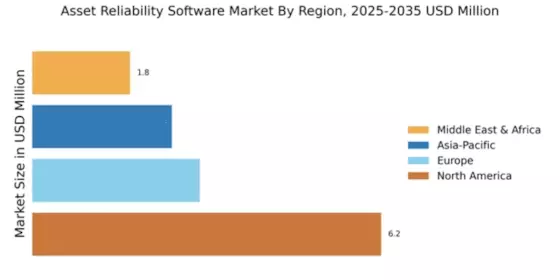
North America leads the Asset Reliability Software Market with a share of 6.25 in 2024, driven by rapid technological advancements and a strong focus on operational efficiency. The region's growth is fueled by increasing demand for predictive maintenance solutions and regulatory support for digital transformation initiatives. Companies are investing heavily in software solutions to enhance asset performance and reduce downtime, making this region a key player in the global market. The competitive landscape in North America is robust, featuring major players like IBM, Honeywell, and GE Digital. These companies are leveraging their technological expertise to innovate and expand their offerings. The presence of a well-established IT infrastructure and a skilled workforce further enhances the region's attractiveness for investment in asset reliability solutions. As organizations prioritize reliability and efficiency, North America is poised for continued growth in this sector.

Europe : Emerging Market with Strong Potential

Europe's Asset Reliability Software Market is valued at 3.0, reflecting a growing recognition of the importance of asset management in various industries. The region is witnessing a shift towards digitalization, driven by regulatory frameworks that encourage sustainable practices and operational efficiency. The European Union's initiatives to enhance industrial competitiveness are also acting as catalysts for market growth, promoting the adoption of advanced software solutions. Leading countries such as Germany, France, and the UK are at the forefront of this transformation, with key players like SAP and Siemens driving innovation. The competitive landscape is characterized by a mix of established firms and emerging startups, all vying for market share. As organizations increasingly focus on optimizing asset performance, Europe is expected to see significant advancements in asset reliability software, supported by a favorable regulatory environment.

Asia-Pacific : Rapidly Growing Market

The Asia-Pacific region, with a market size of 2.5, is rapidly emerging as a significant player in the Asset Reliability Software Market. The growth is driven by increasing industrialization, urbanization, and a rising focus on operational efficiency across various sectors. Governments in countries like China and India are implementing policies to support digital transformation, which is further propelling the demand for asset reliability solutions. The region's diverse industrial base is also contributing to the growing need for advanced software solutions. Key players such as Oracle and Rockwell Automation are expanding their presence in this region, capitalizing on the growing demand. The competitive landscape is becoming increasingly dynamic, with both The Asset Reliability Software share. As organizations prioritize reliability and efficiency, the Asia-Pacific market is expected to witness substantial growth in asset reliability software solutions, driven by technological advancements and supportive government initiatives.

Middle East and Africa : Emerging Market with Untapped Potential

The Middle East and Africa region, with a market size of 1.75, presents significant growth opportunities in the Asset Reliability Software Market. The region is experiencing a gradual shift towards digitalization, driven by increasing investments in infrastructure and industrial development. Governments are recognizing the importance of asset management in enhancing operational efficiency, leading to a growing demand for software solutions that can optimize asset performance and reduce costs. Countries like South Africa and the UAE are leading the charge, with key players such as Schneider Electric making strides in the market. The competitive landscape is evolving, with both local and international firms seeking to establish a foothold. As the region continues to invest in technology and infrastructure, the asset reliability software market is poised for growth, supported by a favorable regulatory environment and increasing awareness of the benefits of digital solutions.

Key Players and Competitive Insights

The Asset Reliability Software Market is currently characterized by a dynamic competitive landscape, driven by the increasing need for operational efficiency and predictive maintenance across various industries. Key players such as IBM (US), SAP (DE), and Siemens (DE) are strategically positioning themselves through innovation and partnerships. IBM (US) focuses on integrating AI and machine learning into its software solutions, enhancing predictive analytics capabilities. Meanwhile, SAP (DE) emphasizes cloud-based solutions, facilitating seamless integration with existing enterprise systems. Siemens (DE) is leveraging its extensive industrial expertise to develop tailored solutions that address specific sector needs, thereby shaping a competitive environment that prioritizes technological advancement and customer-centricity.

The market structure appears moderately fragmented, with several players vying for market share. Key business tactics include localizing manufacturing and optimizing supply chains to enhance responsiveness to customer demands. The collective influence of these major companies fosters a competitive atmosphere where innovation and strategic partnerships are paramount. As companies strive to differentiate themselves, the focus on enhancing operational reliability through advanced software solutions becomes increasingly critical.

In November 2025, Honeywell (US) announced a strategic partnership with a leading energy provider to develop a new asset management platform aimed at optimizing energy efficiency. This collaboration is significant as it not only expands Honeywell's footprint in the energy sector but also aligns with the growing emphasis on sustainability and energy management. By leveraging its expertise in automation and data analytics, Honeywell (US) is poised to enhance its competitive edge in the market.

In October 2025, GE Digital (US) launched a new suite of predictive maintenance tools designed specifically for the manufacturing sector. This initiative reflects GE Digital's commitment to innovation and its understanding of the critical need for reliability in manufacturing processes. The introduction of these tools is likely to strengthen GE Digital's position in the market, as manufacturers increasingly seek solutions that minimize downtime and enhance productivity.

In September 2025, Schneider Electric (FR) unveiled a comprehensive digital platform that integrates IoT capabilities with asset management software. This move underscores Schneider Electric's focus on digital transformation and its strategy to provide holistic solutions that cater to the evolving needs of its customers. By enhancing connectivity and data-driven insights, Schneider Electric (FR) is likely to attract a broader customer base, further intensifying competition in the market.

As of December 2025, current trends in the Asset Reliability Software Market are heavily influenced by digitalization, sustainability, and the integration of AI technologies. Strategic alliances are increasingly shaping the competitive landscape, enabling companies to pool resources and expertise to deliver innovative solutions. The shift from price-based competition to a focus on technological innovation and supply chain reliability is evident, suggesting that future differentiation will hinge on the ability to provide advanced, reliable, and sustainable asset management solutions.

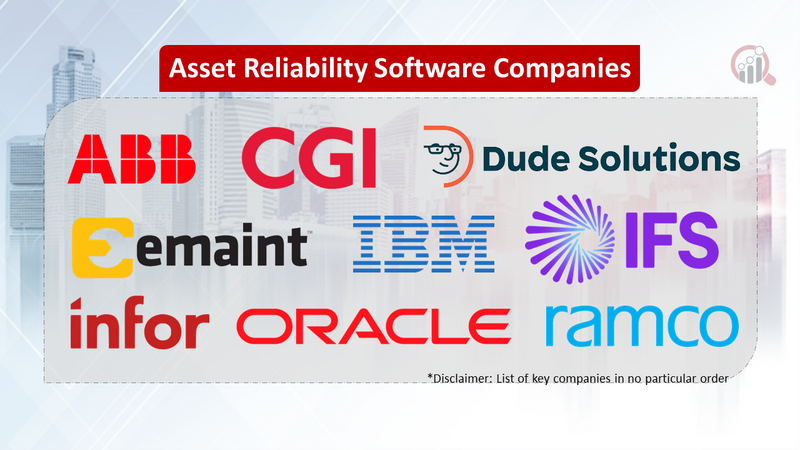
Key Companies in the Asset Reliability Software Market market include

Industry Developments

    • In October 2019, CASSANTEC an additional functionality was added to the portfolio of ABB by acquisition for enhancing the ability to sustain asset maintenance and replacement plans. The analytical insight of ABB to look into asset performance and making asset management solutions more suitable to customers.
    • In January 2020, a company named AVEVA that has its working in Europe, Middle East, Africa, and America extended its portfolio by adding condition-based software capabilities that in turn will enhance the workforce to complete its operation with safety and reliability. 

Intended Audience

    • Implementation service providers
    • EAM solution providers
    • Energy & utility companies
    • System design & development vendors

Future Outlook

Asset Reliability Software Market Future Outlook

The Asset Reliability Software Market is projected to grow at a 6.2% CAGR from 2024 to 2035, driven by advancements in IoT, predictive analytics, and increased demand for operational efficiency.

New opportunities lie in:

  • Integration of AI-driven predictive maintenance solutions
  • Development of mobile asset management applications
  • Expansion into emerging markets with tailored software solutions

By 2035, the market is expected to achieve robust growth, solidifying its role in operational excellence.

Market Segmentation

Asset Reliability Software Market End User Outlook

  • Manufacturing
  • Energy and Utilities
  • Transportation
  • Healthcare

Asset Reliability Software Market Industry Outlook

  • Oil and Gas
  • Mining
  • Aerospace
  • Telecommunications

Asset Reliability Software Market Application Outlook

  • Predictive Maintenance
  • Condition Monitoring
  • Asset Performance Management
  • Risk Management

Asset Reliability Software Market Functionality Outlook

  • Data Analytics
  • Reporting
  • Integration
  • User Interface

Asset Reliability Software Market Deployment Type Outlook

  • On-Premises
  • Cloud-Based
  • Hybrid

Report Scope

MARKET SIZE 202412.5(USD Million)
MARKET SIZE 202513.18(USD Million)
MARKET SIZE 203524.06(USD Million)
COMPOUND ANNUAL GROWTH RATE (CAGR)6.2% (2024 - 2035)
REPORT COVERAGERevenue Forecast, Competitive Landscape, Growth Factors, and Trends
BASE YEAR2024
Market Forecast Period2025 - 2035
Historical Data2019 - 2024
Market Forecast UnitsUSD Million
Key Companies ProfiledIBM (US), SAP (DE), Siemens (DE), Honeywell (US), GE Digital (US), Oracle (US), Schneider Electric (FR), Rockwell Automation (US), Bentley Systems (US)
Segments CoveredApplication, Deployment Type, End User, Industry, Functionality
Key Market OpportunitiesIntegration of artificial intelligence enhances predictive maintenance in the Asset Reliability Software Market.
Key Market DynamicsRising demand for predictive maintenance solutions drives innovation and competition in the Asset Reliability Software Market.
Countries CoveredNorth America, Europe, APAC, South America, MEA

Market Highlights

Author
Aarti Dhapte
Team Lead - Research

She holds an experience of about 6+ years in Market Research and Business Consulting, working under the spectrum of Information Communication Technology, Telecommunications and Semiconductor domains. Aarti conceptualizes and implements a scalable business strategy and provides strategic leadership to the clients. Her expertise lies in market estimation, competitive intelligence, pipeline analysis, customer assessment, etc.

Leave a Comment

FAQs

What factors are leading the market?

The factors like the better asset of life aging infrastructure, condensed maintenance and procurement costs, enlarged tracking ability of assets in an organization, and enhanced return on assets growing the asset reliability software market.

What are the segments included in the study of the market?

The revenue source, deployment, industry are the segments included in the market.

Which factor is influencing the market?

The adoption of cloud-based solutions in the Asia Pacific is leading the market.

What are the key players of the market?

CGI Group Inc. (U.S.), ABB Ltd. (Switzerland), eMaint (U.S.), International Business Machines (IBM) Corporation (U.S.), Dude Solutions, Inc. (U.S.) are the key players of the market.

How North America is leading the market?

North America leads the global asset management software market with enormous growth in the IT industries and budding awareness about the advantages of asset reliability software.

Download Free Sample

Kindly complete the form below to receive a free sample of this Report

Compare Licence

×
Features License Type
Single User Multiuser License Enterprise User
Price $4,950 $5,950 $7,250
Maximum User Access Limit 1 User Upto 10 Users Unrestricted Access Throughout the Organization
Free Customization
Direct Access to Analyst
Deliverable Format
Platform Access
Discount on Next Purchase 10% 15% 15%
Printable Versions