Asthma Device Market Research Report Information By Type (Inhalers, Nebulizers, Dry Powder Inhalers, Metered-Dose Inhalers, Mesh Nebulizers) By Technology (Manually Operated, Digitally Operated) By End Users (Hospital, Retail Pharmacies) -Forecast till 2035
Forecast Period
2025 - 2035
CAGR
6.71%
2024 Market Size
$ 4.27 Billion
2035 Market Size
$ 8.72 Billion
Medical Device● Updated July 8, 2026Report ID: MRFR/MED/1093-HCR|Pages: 90|Author: Nidhi Mandole, Rahul Gotadki
Asthma Devices Market Summary
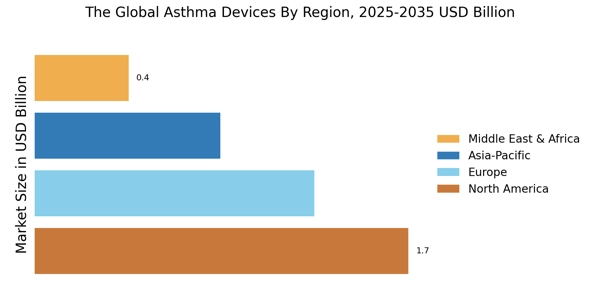
Asthma Devices Market size was valued at USD 4.268 Billion in 2024, and the market is projected to grow from USD 4.555 Billion in 2025 to USD 8.72 Billion by 2035, registering a CAGR of 6.71% during the forecast period 2025–2035. North America led the market in 2024 with over 39.83% share, generating around USD 1.7 Billion in revenue. The Asthma Devices Market is expanding due to the rising global burden of asthma and increasing demand for effective respiratory disease management. Growing adoption of advanced inhalers, early diagnosis initiatives, improved healthcare access, and patient awareness are accelerating the utilization of innovative asthma treatment devices worldwide. According to the World Health Organization (WHO), asthma affected an estimated 262 million people globally and caused approximately 455,000 deaths in the latest reported year. The substantial global disease burden continues to drive investments in early diagnosis, inhalation therapies, and advanced asthma management devices, supporting sustained market growth.
Key Market Trends & Highlights
The Global Asthma Devices Market is experiencing robust growth driven by technological advancements and increasing awareness.
North America generated over 39.83% of global market revenue in 2024, maintaining the leading regional position.
Europe reached USD 1.28 billion in 2024, accounting for 30% of the global market revenue.
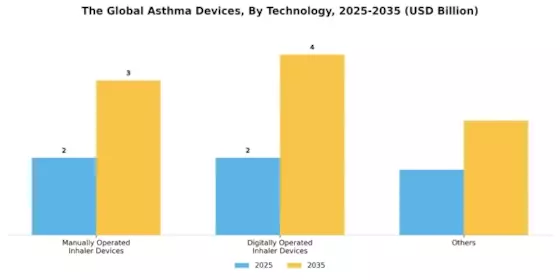
Manually operated inhaler devices represented 72% of the technology segment in 2024, reflecting their widespread clinical adoption and cost-effectiveness.
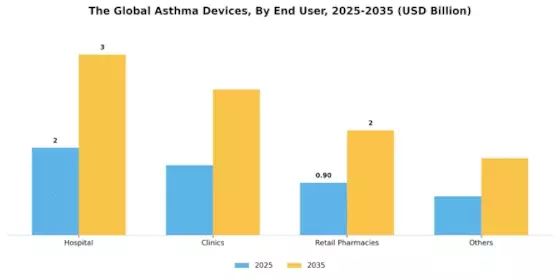
Clinics held a 46% share of the end-user segment in 2024, driven by increasing asthma diagnosis, treatment, and long-term patient monitoring.
Market Size & Forecast
2024 Market Size
4.268 (USD Billion)
2035 Market Size
8.72 (USD Billion)
CAGR (2025 - 2035)
6.71%
Major Players
Companies such as GlaxoSmithKline(GB), AstraZeneca (GB), Boehringer Ingelheim (DE), Novartis (CH), Teva Pharmaceutical Industries (IL), Merck & Co. (US), Sanofi (FR), Roche (CH), Philips (NL), Omron Healthcare (JP) are some of the major participants in the global market.
Our Impact
Enabled $4.3B Revenue Impact for Fortune 500 and Leading Multinationals
Partnering with 2000+ Global Organizations Each Year
30K+ Citations by Top-Tier Firms in the Industry
Asthma Devices Market Trends
The Global Asthma Devices Market is currently experiencing a notable transformation, driven by advancements in technology and a growing awareness of respiratory health. The increasing prevalence of asthma worldwide has prompted manufacturers to innovate and enhance their product offerings. This market encompasses a variety of devices, including inhalers, nebulizers, and peak flow meters, which are essential for effective asthma management. As healthcare systems evolve, there is a heightened focus on patient-centric solutions that prioritize ease of use and accessibility.
Furthermore, the integration of digital health technologies into asthma management is becoming more prevalent, allowing for better monitoring and adherence to treatment regimens. In addition to technological advancements, The global market is influenced by regulatory changes and the rising demand for personalized medicine. Stakeholders are increasingly recognizing the importance of tailored treatment approaches that cater to individual patient needs.
This shift is likely to foster collaboration between device manufacturers, healthcare providers, and patients, ultimately leading to improved health outcomes. As the global market continues to evolve, it appears poised for growth, with opportunities for innovation and expansion in various regions. The future landscape of asthma management may be characterized by enhanced connectivity, data-driven insights, and a more holistic approach to patient care.
Technological Advancements
The global market is witnessing rapid technological advancements, particularly in the development of smart inhalers and connected devices. These innovations facilitate real-time health monitoring of medication usage and asthma symptoms, enabling patients to manage their condition more effectively. The integration of mobile applications with these devices enhances user engagement and adherence to treatment plans.
GlaxoSmithKline continues advancing respiratory care through innovative inhalation technologies and strategic collaborations that strengthen asthma management. In 2024, GSK invested over £6 billion in R&D, supporting development of next-generation respiratory therapies and digital healthcare initiatives. These innovations improve medication adherence, patient monitoring, and treatment outcomes, accelerating adoption of advanced asthma devices globally.
Personalized Treatment Approaches
There is a growing trend towards personalized treatment approaches within The global market. This shift emphasizes the need for tailored solutions that consider individual patient characteristics and preferences. By focusing on personalized care, healthcare providers aim to improve patient outcomes and satisfaction, fostering a more effective management of asthma.
AstraZeneca continues expanding its respiratory portfolio through strategic acquisitions, regulatory approvals, and precision medicine initiatives. The company generated USD 54.1 billion in revenue in 2024, supported by strong respiratory product performance. Continued clinical advancements and personalized biologic therapies are enhancing asthma treatment options while driving demand for compatible inhalation and drug delivery devices.
Regulatory Changes and Compliance
Regulatory changes are significantly impacting The global market, as authorities implement stricter guidelines for device safety and efficacy. Manufacturers are adapting to these regulations by enhancing their quality control processes and ensuring compliance. This trend not only promotes patient safety but also encourages innovation in device design and functionality.
Boehringer Ingelheim continues strengthening respiratory innovation through regulatory-approved therapies and sustained investment in research and development. The company invested EUR 6.2 billion in R&D during 2024, supporting next-generation inhalation technologies and respiratory care solutions. Continuous regulatory compliance and product innovation improve device quality, patient safety, and global adoption of advanced asthma management technologies.
Asthma Devices Market Drivers
Rising Prevalence of Asthma
The increasing prevalence of asthma worldwide is a primary driver for The Global Asthma Devices Industry. According to recent estimates, approximately 300 million individuals are affected by asthma globally, with this number projected to rise. This growing patient population necessitates the development and distribution of effective asthma management devices, such as inhalers and nebulizers. The demand for these devices is further fueled by the need for improved patient outcomes and adherence to treatment regimens. As healthcare systems strive to manage this chronic condition more effectively, the global market for asthma devices is likely to expand significantly, reflecting the urgent need for innovative solutions to address the challenges faced by asthma patients.
According to the World Bank, global healthcare expenditure continues to increase as countries strengthen chronic disease management programs. Expanding investment in respiratory healthcare infrastructure and universal health coverage is improving patient access to asthma diagnosis and treatment, supporting growing adoption of inhalers, nebulizers, and other asthma management devices worldwide.
Increased Awareness and Education
Increased awareness and education regarding asthma management are pivotal drivers for The Global Asthma Devices Industry. Public health campaigns and educational initiatives have significantly improved understanding of asthma, its triggers, and the importance of proper device usage. This heightened awareness has led to a greater demand for asthma devices, as patients are more informed about their treatment options. Furthermore, healthcare professionals are increasingly emphasizing the need for effective asthma management, which includes the use of appropriate devices. As a result, the global market is witnessing a surge in demand for inhalers, spacers, and nebulizers, reflecting the positive impact of education on patient behavior and device utilization.
PubMed studies consistently demonstrate that structured asthma education programs significantly improve inhaler technique, medication adherence, and disease control. Clinical evidence shows that patients receiving regular asthma education experience fewer exacerbations and hospitalizations, encouraging healthcare providers to promote advanced asthma devices alongside patient-centered disease management strategies.
Regulatory Support for Innovative Devices
Regulatory support for innovative asthma devices is an essential driver for The Global Asthma Devices Industry. Regulatory bodies are increasingly recognizing the importance of facilitating the approval process for new and advanced asthma management devices. This support encourages manufacturers to invest in research and development, leading to the introduction of novel products that meet the evolving needs of patients. As regulatory frameworks become more conducive to innovation, the market is likely to see a surge in the availability of cutting-edge asthma devices. This trend not only enhances competition among manufacturers but also provides patients with a wider array of options for effective asthma management.
Technological Innovations in Device Design
Technological innovations play a crucial role in shaping The Global Asthma Devices Industry. The introduction of smart inhalers, which integrate digital health technologies, has transformed the way asthma is managed. These devices not only deliver medication but also track usage patterns and provide feedback to patients and healthcare providers. The global market for smart inhalers is expected to grow substantially, with projections indicating a compound annual growth rate of over 20% in the coming years. Such advancements enhance patient engagement and adherence, ultimately leading to better asthma control. As technology continues to evolve, the demand for sophisticated asthma devices is likely to increase, driving market growth.
Growing Investment in Healthcare Infrastructure
The growing investment in healthcare infrastructure across various regions is a notable driver for The Global Asthma Devices Industry. Governments and private entities are increasingly allocating resources to enhance healthcare facilities and improve access to asthma management solutions. This investment is particularly evident in developing countries, where the establishment of new healthcare centers and the procurement of medical devices are on the rise. As healthcare systems expand, the availability of asthma devices is likely to increase, facilitating better access for patients. This trend is expected to contribute to market growth, as more individuals gain access to essential asthma management tools.
Market Segment Insights
By Type: Inhalers (Largest) vs. Nebulizers (Fastest-Growing)
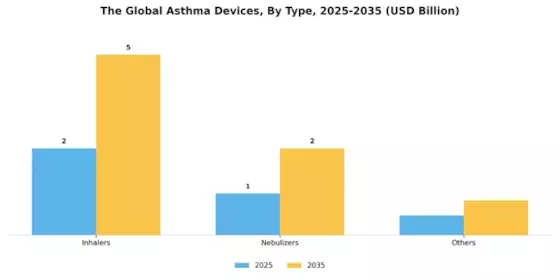
In the Global Asthma Devices Market, inhalers dominate the segment, representing the largest market share of 68% due to their widespread adoption and ease of use. Inhalers are the preferred choice for many patients managing asthma and chronic obstructive pulmonary disease (COPD), owing to their portability and convenience. Conversely, nebulizers, although smaller in market share, are emerging rapidly as a favored option, particularly among children and patients with severe asthma, leading to their recognition as the fastest-growing segment.
Novartis continues strengthening respiratory care through innovative inhalation therapies and strategic research initiatives. The company invested USD 9.3 billion in R&D during 2024, supporting the development of advanced respiratory medicines. Continued innovation in asthma treatment improves patient outcomes while reinforcing the widespread adoption of inhaler-based drug delivery systems globally.
By Technology: Manually Operated Inhaler Devices (Largest) vs. Digitally Operated Inhaler Devices (Fastest-Growing)
In the Global Asthma Devices Market, the technology segment is primarily dominated by Manually Operated Inhaler Devices, which account for the largest market share of 72%. These devices have been a staple in asthma management due to their simplicity and effectiveness, making them highly preferred among patients and healthcare providers. Conversely, Digitally Operated Inhaler Devices are emerging as a significant force in the market, with a growing share as awareness of digital health solutions increases among asthma sufferers.
Teva Pharmaceutical Industries continues expanding its respiratory portfolio through innovative inhalation technologies and generic respiratory medicines. Operating in more than 60 markets, the company supports broader patient access to affordable asthma therapies. Continuous investment in inhaler technologies enhances treatment accessibility and strengthens demand for manually operated inhaler devices worldwide.
By End User: Clinics (Largest) vs. Retail Pharmacies (Fastest-Growing)
In the Global Asthma Devices Market, the distribution of market share among end users reveals that clinics hold the largest segment, accounting for 46%, significantly influencing the overall utilization of asthma devices. Hospitals also represent a considerable share, leveraging their expansive facilities to cater to severe asthma cases. Meanwhile, retail pharmacies and other emerging end users are gradually claiming their space, indicating a diversification in purchasing avenues for asthma management solutions.
Merck & Co. continues supporting respiratory disease management through research-driven innovation and strategic healthcare collaborations. In 2024, the company invested approximately USD 17.9 billion in research and development, advancing respiratory therapies and improving clinical care. These investments strengthen clinics' role as the primary setting for asthma diagnosis, treatment, and long-term disease management.
North America is the largest market for asthma devices, holding approximately 40% of the global share. The region benefits from advanced healthcare infrastructure, high prevalence of asthma, and increasing awareness about respiratory diseases. Regulatory support from agencies like the FDA has accelerated the approval of innovative devices, driving market growth. The demand for smart inhalers and connected devices is also on the rise, reflecting a shift towards personalized healthcare solutions.
According to the CDC, approximately 24.9 million people in the United States are living with asthma, including about 4.7 million children. The substantial patient population continues to drive demand for advanced inhalers, nebulizers, and connected respiratory devices, reinforcing North America's leadership in the global market.
The United States is the leading country in this region, with significant contributions from Canada. Major players such as Merck & Co., GlaxoSmithKline, and AstraZeneca are heavily invested in research and development, enhancing their product offerings. The competitive landscape is characterized by strategic partnerships and collaborations aimed at improving patient outcomes. The presence of established healthcare systems further supports the growth of asthma devices in North America.
Merck & Co. continues expanding respiratory research through sustained innovation and strategic healthcare collaborations. The company invested approximately USD 17.9 billion in R&D during 2024, supporting the development of innovative respiratory therapies and digital healthcare solutions that strengthen North America's advanced asthma care ecosystem and accelerate adoption of next-generation asthma devices.
Europe : Regulatory Support and Growth
Europe is the second-largest market for asthma devices, accounting for approximately 30% of the global market share. The region is witnessing growth driven by increasing asthma prevalence, supportive regulatory frameworks, and rising healthcare expenditures. The European Medicines Agency (EMA) has been proactive in approving innovative asthma devices, which has catalyzed market expansion. Additionally, the focus on preventive healthcare and patient education is enhancing demand for effective asthma management solutions.
Leading countries in Europe include Germany, France, and the UK, where significant investments in healthcare technology are evident. Key players like Boehringer Ingelheim and Novartis are focusing on developing advanced inhalation therapies. The competitive landscape is marked by innovation and collaboration among pharmaceutical companies and healthcare providers, aiming to improve patient adherence and outcomes. The presence of robust healthcare systems further facilitates market growth in this region.
The European Medicines Agency (EMA) oversees the scientific evaluation of medicines across the 27 European Union Member States, supporting timely approval of innovative respiratory therapies and combination inhalation products. Its harmonized regulatory framework promotes patient safety, accelerates access to advanced asthma treatments, and strengthens the adoption of innovative asthma devices throughout Europe.
Asia-Pacific : Emerging Market with Potential
Asia-Pacific is an emerging powerhouse in the market, holding approximately 20% of the global share. The region is experiencing rapid urbanization, leading to increased air pollution and a higher prevalence of asthma. Governments are implementing initiatives to improve healthcare access and awareness, which are key drivers for market growth. Regulatory bodies are also beginning to streamline approval processes for new devices, fostering innovation in the sector.
Countries like China, India, and Japan are at the forefront of this growth, with significant investments in healthcare infrastructure. The competitive landscape features both global players and local manufacturers, with companies like Omron Healthcare and Philips leading the charge. The increasing adoption of digital health technologies and telemedicine is also shaping the market, as patients seek more convenient and effective asthma management solutions. This trend is expected to continue as healthcare systems evolve in the region.
Middle East and Africa : Untapped Market Opportunities
The Middle East and Africa (MEA) region represents a smaller segment of The global market, accounting for approximately 10% of the share. However, it is characterized by significant growth potential due to rising asthma prevalence and increasing healthcare investments. Governments are focusing on improving healthcare infrastructure and access, which is expected to drive demand for asthma devices. Regulatory bodies are also beginning to establish frameworks to facilitate the introduction of innovative products in the market.
Leading countries in this region include South Africa, Saudi Arabia, and the UAE, where healthcare reforms are underway. The competitive landscape is evolving, with both international and local companies vying for market share. Key players are increasingly focusing on partnerships and collaborations to enhance their product offerings and reach underserved populations. The growing awareness of respiratory diseases is also contributing to the market's expansion in MEA.
Key Players and Competitive Insights
The Global Asthma Devices is currently characterized by a dynamic competitive landscape, driven by increasing prevalence of asthma and a growing emphasis on innovative treatment solutions. Key players such as GlaxoSmithKline (GB), AstraZeneca (GB), and Boehringer Ingelheim (DE) are strategically positioning themselves through a combination of product innovation, partnerships, and regional expansion. These companies are not only focusing on enhancing their existing product lines but are also investing in research and development to introduce advanced devices that cater to the evolving needs of patients. This collective focus on innovation and strategic collaborations is shaping a competitive environment that is increasingly centered around patient-centric solutions and technological advancements. In terms of business tactics, companies are localizing manufacturing and optimizing their supply chains to enhance efficiency and reduce costs. The market structure appears moderately fragmented, with several players vying for market share. However, the influence of major companies like Novartis (CH) and Teva Pharmaceutical Industries (IL) is significant, as they leverage their extensive distribution networks and established brand reputations to maintain competitive advantages. This competitive structure suggests that while there is room for smaller players, the dominance of key players is likely to shape market dynamics in the foreseeable future. In August 2025, AstraZeneca (GB) announced a strategic partnership with a leading digital health company to integrate AI-driven analytics into their asthma management devices. This collaboration aims to enhance patient engagement and adherence to treatment protocols, indicating a shift towards more personalized healthcare solutions. The strategic importance of this move lies in its potential to improve patient outcomes and streamline the management of asthma, thereby reinforcing AstraZeneca's position as a leader in the market. In September 2025, GlaxoSmithKline (GB) launched a new line of smart inhalers equipped with IoT technology, designed to provide real-time data on medication usage. This innovation not only addresses the need for better adherence but also aligns with the growing trend of digital health solutions. The introduction of these devices is likely to enhance patient monitoring and support healthcare providers in delivering more effective asthma management.In October 2025, Boehringer Ingelheim (DE) expanded its product portfolio by acquiring a startup specializing in wearable asthma monitoring technology. This acquisition is expected to bolster Boehringer Ingelheim's capabilities in the digital health space, allowing the company to offer comprehensive solutions that integrate medication delivery with real-time health monitoring. Such strategic moves reflect a broader trend towards the convergence of pharmaceuticals and digital health, which is becoming increasingly vital in the asthma devices market. As of October 2025, current competitive trends indicate a strong emphasis on digitalization, sustainability, and the integration of artificial intelligence within asthma management solutions. Strategic alliances are playing a crucial role in shaping the landscape, as companies seek to leverage complementary strengths to enhance their offerings. Looking ahead, competitive differentiation is likely to evolve from traditional price-based competition towards a focus on innovation, technological advancements, and supply chain reliability, underscoring the importance of agility and responsiveness in meeting patient needs.
Key Companies in the Asthma Devices Market include
Future Outlook
Asthma Devices Market Future Outlook
The Asthma Devices Market size is projected to reach USD 8.72 Billion by 2035, growing at a CAGR of 6.71%, driven by technological advancements, increasing prevalence of asthma, and rising healthcare expenditure.
New opportunities lie in:
Development of smart inhalers with real-time monitoring capabilities. Expansion into emerging markets with tailored asthma management solutions. Partnerships with telehealth platforms for integrated patient care services.
By 2035, the market is expected to achieve substantial growth, reflecting evolving healthcare needs.
Market Segmentation
Asthma Devices Market Type Outlook
Inhalers
Nebulizers
Others
Asthma Devices Market End User Outlook
Hospital
Clinics
Retail Pharmacies
Others
Asthma Devices Market Technology Outlook
Manually Operated Inhaler Devices
Digitally Operated Inhaler Devices
Others
Report Scope
MARKET SIZE 2024
4.268(USD Billion)
MARKET SIZE 2025
4.555(USD Billion)
MARKET SIZE 2035
8.72(USD Billion)
COMPOUND ANNUAL GROWTH RATE (CAGR)
6.71% (2025 - 2035)
REPORT COVERAGE
Revenue Forecast, Competitive Landscape, Growth Factors, and Trends
What is the projected market valuation of The Global Asthma Devices by 2035?
The projected market valuation for The Global Asthma Devices is expected to reach 8.72 USD Billion by 2035.
What was the market valuation of The Global Asthma Devices in 2024?
The overall market valuation of The Global Asthma Devices was 4.268 USD Billion in 2024.
What is the expected CAGR for The Global Asthma Devices during the forecast period 2025 - 2035?
The expected CAGR for The Global Asthma Devices during the forecast period 2025 - 2035 is 6.71%.
Which companies are considered key players in The Global Asthma Devices?
Key players in The Global Asthma Devices include GlaxoSmithKline, AstraZeneca, Boehringer Ingelheim, Novartis, and Teva Pharmaceutical Industries.
What are the projected revenues for inhalers in The Global Asthma Devices by 2035?
The projected revenue for inhalers in The Global Asthma Devices is expected to increase from 2.5 USD Billion to 5.2 USD Billion by 2035.
How do digitally operated inhaler devices compare to manually operated ones in terms of market growth?
Digitally operated inhaler devices are projected to grow from 1.5 USD Billion to 3.5 USD Billion, whereas manually operated inhaler devices are expected to rise from 1.5 USD Billion to 3.0 USD Billion by 2035.
What is the expected revenue growth for nebulizers in The Global Asthma Devices?
The expected revenue for nebulizers is projected to grow from 1.2 USD Billion to 2.5 USD Billion by 2035.
Which end-user segment is anticipated to have the highest revenue growth in The Global Asthma Devices?
The hospital segment is anticipated to have the highest revenue growth, increasing from 1.5 USD Billion to 3.1 USD Billion by 2035.
What is the projected revenue for retail pharmacies in The Global Asthma Devices by 2035?
The projected revenue for retail pharmacies in The Global Asthma Devices is expected to rise from 0.9 USD Billion to 1.8 USD Billion by 2035.
What are the expected revenue figures for the 'Others' category in the technology segment by 2035?
The expected revenue for the 'Others' category in the technology segment is projected to increase from 1.268 USD Billion to 2.22 USD Billion by 2035.
Author
Author
Nidhi Mandole
Senior Research Analyst
She is an extremely curious individual currently working in Healthcare and Medical Devices Domain. Nidhi is comfortably versed in data centric research backed by healthcare educational background. She leverages extensive data mining and analytics tools such as Primary and Secondary Research, Statistical Analysis, Machine Learning, Data Modelling. Her key role also involves Technical Sales Support, Client Interaction and Project management within the Healthcare team. Lastly, she showcases extensive affinity towards learning new skills and remain fascinated in implementing them.
read more
Co-Author
Rahul Gotadki
Research Manager
He holds an experience of about 9+ years in Market Research and Business Consulting, working under the spectrum of Life Sciences and Healthcare domains. Rahul conceptualizes and implements a scalable business strategy and provides strategic leadership to the clients. His expertise lies in market estimation, competitive intelligence, pipeline analysis, customer assessment, etc.
The secondary research process involved comprehensive analysis of regulatory databases, peer-reviewed medical journals, respiratory medicine publications, and authoritative health organizations. Key sources included the US Food & Drug Administration (FDA) Center for Devices and Radiological Health, European Medicines Agency (EMA), European Commission Medical Device Coordination Group (MDCG), Health Canada Medical Devices Bureau, Therapeutic Goods Administration (TGA) Australia, Pharmaceuticals and Medical Devices Agency (PMDA) Japan, National Institutes of Health (NIH) National Heart, Lung, and Blood Institute (NHLBI), National Center for Biotechnology Information (NCBI/PubMed), Centers for Disease Control and Prevention (CDC) National Center for Health Statistics, World Health Organization (WHO) Global Health Observatory and Global Asthma Report, Global Initiative for Asthma (GINA), American Thoracic Society (ATS), European Respiratory Society (ERS), American Lung Association, Asthma and Allergy Foundation of America (AAFA), International Society for Aerosols in Medicine (ISAM), EU Eurostat Health Database, OECD Health Statistics, and national health ministry reports from key markets including NHS England, German Federal Ministry of Health, and China's National Health Commission. These sources were used to collect asthma prevalence statistics, device approval data, clinical efficacy studies, patient adherence trends, and market landscape analysis for metered-dose inhalers (MDIs), dry powder inhalers (DPIs), soft mist inhalers, jet nebulizers, ultrasonic nebulizers, mesh nebulizers, and connected/digital inhaler technologies.
Primary Research
Qualitative and quantitative insights were obtained by interviewing supply-side and demand-side stakeholders during the primary research process. The supply-side sources consisted of CEOs, VPs of Product Development, regulatory affairs chiefs, R&D directors, and commercial directors from asthma device manufacturers, pharmaceutical companies with device divisions, and medical device OEMs. Board-certified pulmonologists, allergists, respiratory therapists, hospital pharmacy directors, procurement leaders from hospital systems, retail pharmacy chains, and medical device distributors comprised demand-side sources. Primary research has confirmed the product pipeline timelines for connected inhalers and nebulizer innovations, and has gathered insights on clinical adoption patterns, pricing strategies, reimbursement dynamics, and patient adherence monitoring trends. Additionally, it has validated market segmentation across inhaler types (MDI, DPI, SMI), nebulizer technologies (jet, ultrasonic, mesh), operation modes (manual vs. digital/smart), and end-user categories (hospitals, clinics, retail pharmacies).
Primary Respondent Breakdown:
By Designation: C-level Primaries (32%), Director Level (30%), Others (38%)
By Region: North America (38%), Europe (25%), Asia-Pacific (28%), Rest of World (9%)
Market Size Estimation
Global market valuation was derived through revenue mapping and device unit shipment analysis. The methodology included:
Identification of 40+ key manufacturers across North America, Europe, Asia-Pacific, and Latin America including GlaxoSmithKline, AstraZeneca, Boehringer Ingelheim, Novartis, Teva Pharmaceutical Industries, Merck & Co., Sanofi, Roche, Philips, Omron Healthcare, PARI Medical, Aerogen, and others
Product mapping across inhaler categories (MDIs, DPIs, SMIs), nebulizer types (jet, ultrasonic, mesh), and connected/digital device technologies
Analysis of reported and modeled annual revenues specific to asthma device portfolios
Coverage of manufacturers representing 75-80% of global market share in 2024
Extrapolation using bottom-up (device unit volume × ASP by country/region) and top-down (manufacturer revenue validation) approaches to derive segment-specific valuations for manually operated vs. digitally operated devices, hospital vs. retail pharmacy distribution channels, and regional market breakdowns
“This is really good guys. Excellent work on a tight deadline. I will continue to use you going forward and recommend you to others. Nice job”
Noah MalgeriCo-Founder
“Thanks. It’s been a pleasure working with you, please use me as reference with any other Intel employees.”
Joseph AguayoSales Operations & Pricing Manager
“Thanks for sending the report it gives us a good global view of the Betaïne market.”
Peter Groot koerkampAccount and Business Manager
“Thank you, this will be very helpful for OQS.”
La Terria DoddProgram Support Specialist
“We found the report very insightful! we found your research firm very helpful. I'm sending this email to secure our future business.”
Younghwan ChoiSenior Retail Manager
“I am very pleased with how market segments have been defined in a relevant way for my purposes (such as "Portable Freezers & refrigerators" and "last-mile").
In general the report is well structured. Thanks very much for your efforts.”
Mark IrwinManagement Consultant
“I have been reading the first document or the study, ,the Global HVAC and FP market report 2021 till 2026. Must say, good info! I have not gone in depth at all parts, but got a good indication of the data inside!”
Rob KooikerGroup Product Manager HVAC & Fire Protection GMA
“We got the report in time, we really thank you for your support in this process. I also thank to all of your team as they did a great job.”
Akif MorogluStrategy & Business Development Director
“The Automotive 48V ECU Components Procurement Intelligence Study” was a complex project, but the Market Research Future (MRFR) team handled it with quality, agility, and customer-centricity. They delivered all requested data on time and within the agreed scope. The team, including Shubhendra Anand and Rahul Gotadki, was always readily available to clarify questions and swiftly implement necessary adjustments, driving the project to a successful conclusion within a very demanding timeframe.
I would also like to specifically commend Akshay Agarwal for his responsiveness and support at every stage—from our initial inquiry on May 6th through to final delivery on June 18th. His dedication made the entire process seamless.”
Guilherme Gomes MartinsProduct Management Director