×
Request Free Sample ×

Kindly complete the form below to receive a free sample of this Report

* Please use a valid business email

Leading companies partner with us for data-driven Insights

clients tt-cursor
Hero Background

Automated Cpr Device Market

ID: MRFR/HC/63866-HCR
128 Pages
Rahul Gotadki
October 2025

Automated CPR Device Market Research ReportBy Device Type (Automated External Defibrillators, Mechanical Chest Compression Devices, Integrated CPR Devices), By Application Area (Healthcare Facilities, Public Access, Home Care), By User Type (Healthcare Providers, Emergency Medical Technicians, Laypersons), By Technology (Mechanical Compression Technology, Electrode-based Systems, Software Integrated Solutions), By Certification (FDA Cleared, CE Marked, ISO Certified) and By Regional (North America, Europe, South America, Asia-Pacific, Middl... read more

Share:
Download PDF ×

We do not share your information with anyone. However, we may send you emails based on your report interest from time to time. You may contact us at any time to opt-out.

Automated Cpr Device Market Infographic
Purchase Options

Automated Cpr Device Market Summary

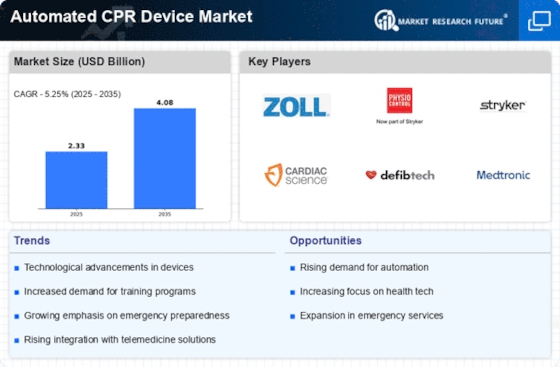
As per MRFR analysis, the Automated CPR Device Market Size was estimated at 2.326 USD Billion in 2024. The Automated CPR Device industry is projected to grow from 2.448 USD Billion in 2025 to 4.084 USD Billion by 2035, exhibiting a compound annual growth rate (CAGR) of 5.25 during the forecast period 2025 - 2035.

Key Market Trends & Highlights

The Automated CPR Device Market is poised for substantial growth driven by technological advancements and increasing awareness.

  • North America remains the largest market for automated CPR devices, reflecting a robust healthcare infrastructure.
  • Asia-Pacific is emerging as the fastest-growing region, fueled by rising healthcare investments and awareness initiatives.
  • Automated External Defibrillators dominate the market, while Mechanical Chest Compression Devices are witnessing rapid growth.
  • Key market drivers include technological advancements and an aging population, which are significantly influencing demand.

Market Size & Forecast

2024 Market Size 2.326 (USD Billion)
2035 Market Size 4.084 (USD Billion)
CAGR (2025 - 2035) 5.25%

Major Players

ZOLL Medical Corporation (US), Physio-Control, Inc. (US), Stryker Corporation (US), Cardiac Science Corporation (US), Defibtech, LLC (US), Medtronic plc (IE), Laerdal Medical Corporation (NO), HeartSine Technologies, Inc. (US)

Automated Cpr Device Market Trends

The Automated CPR Device Market is currently experiencing a notable evolution, driven by advancements in technology and an increasing emphasis on improving patient outcomes during cardiac emergencies. The integration of artificial intelligence and machine learning into these devices appears to enhance their effectiveness, allowing for more precise and timely interventions. Furthermore, the growing awareness of the importance of immediate response in cardiac arrest situations is likely to propel demand for automated solutions, as healthcare providers and emergency responders seek to optimize their life-saving capabilities. As a result, the market is witnessing a shift towards devices that not only automate chest compressions but also provide real-time feedback and data analytics to improve performance. In addition to technological advancements, regulatory support and funding initiatives from governmental bodies seem to play a crucial role in shaping the Automated CPR Device Market. These efforts may facilitate the development and distribution of innovative devices, ensuring that they meet safety and efficacy standards. Moreover, the increasing prevalence of cardiovascular diseases globally suggests a sustained need for effective resuscitation tools. As the market continues to evolve, stakeholders must remain vigilant to emerging trends and adapt their strategies accordingly, ensuring that they are well-positioned to meet the demands of a dynamic healthcare landscape.

Technological Advancements

The Automated CPR Device Market is witnessing rapid technological innovations, particularly in the integration of artificial intelligence and machine learning. These advancements enhance the precision and efficiency of automated devices, allowing for improved patient outcomes during critical situations.

Regulatory Support

Governmental bodies are increasingly providing regulatory support and funding for the development of automated resuscitation devices. This support is crucial for ensuring that new technologies meet safety standards and are effectively integrated into healthcare systems.

Growing Awareness

There is a rising awareness regarding the importance of immediate response in cardiac emergencies. This heightened consciousness is likely to drive demand for automated CPR devices, as healthcare providers seek to enhance their life-saving capabilities.

Automated Cpr Device Market Drivers

Aging Population

The aging population is a key driver of the Automated CPR Device Market. As the demographic landscape shifts, the prevalence of cardiovascular diseases is expected to rise, leading to an increased demand for effective resuscitation solutions. Older adults are more susceptible to cardiac events, which necessitates the availability of automated CPR devices in both public and private settings. Market analysts project that the demand for these devices will continue to grow as healthcare systems adapt to the needs of an aging population. This trend is likely to spur innovation and investment in the development of more user-friendly and efficient automated CPR devices.

Growing Awareness

Growing awareness about the importance of immediate CPR in saving lives is significantly impacting the Automated CPR Device Market. Educational campaigns and training programs are increasingly emphasizing the need for effective resuscitation techniques, leading to a higher demand for automated devices. This heightened awareness is reflected in the rising number of CPR training sessions conducted worldwide, which has increased public knowledge about the benefits of using automated CPR devices. Market data indicates that regions with robust public health initiatives are witnessing a surge in the adoption of these devices, as communities recognize their potential to improve survival rates during cardiac emergencies.

Regulatory Support

Regulatory support plays a crucial role in the growth of the Automated CPR Device Market. Various health authorities are establishing guidelines and standards that promote the use of automated devices in emergency situations. This regulatory framework not only ensures the safety and efficacy of these devices but also encourages manufacturers to innovate and improve their offerings. For instance, recent regulations have streamlined the approval process for new automated CPR devices, making it easier for companies to bring their products to market. As a result, the industry is witnessing an influx of new entrants, which is likely to enhance competition and drive further advancements in technology.

Technological Advancements

The Automated CPR Device Market is experiencing rapid technological advancements that enhance the efficacy and reliability of these devices. Innovations such as real-time feedback mechanisms and integration with mobile applications are becoming commonplace. These advancements not only improve the user experience but also increase the likelihood of successful resuscitation. According to recent data, the market for automated CPR devices is projected to grow at a compound annual growth rate of approximately 10% over the next five years. This growth is driven by the increasing adoption of advanced technologies in emergency medical services and hospitals, which are seeking to improve patient outcomes through more effective resuscitation techniques.

Increased Investment in Healthcare

Increased investment in healthcare infrastructure is significantly influencing the Automated CPR Device Market. Governments and private entities are allocating more resources to enhance emergency medical services, which includes the procurement of advanced medical equipment such as automated CPR devices. This investment is driven by the recognition of the critical role that timely and effective resuscitation plays in improving patient outcomes. Recent reports indicate that healthcare spending is expected to rise, particularly in regions with expanding healthcare systems. This trend is likely to create a favorable environment for the growth of the automated CPR device market, as more facilities seek to equip themselves with the latest technology.

Market Segment Insights

By Type: Automated External Defibrillators (Largest) vs. Mechanical Chest Compression Devices (Fastest-Growing)

The Automated CPR Device Market is primarily dominated by Automated External Defibrillators (AEDs), which hold the largest share due to their widespread use in public spaces and healthcare settings. These devices are essential for delivering quick defibrillation to patients experiencing cardiac arrest, thus driving their demand significantly. Meanwhile, Mechanical Chest Compression Devices have emerged as a strong contender, gaining traction in emergency medical services and hospitals as they offer consistent and effective chest compressions during resuscitation efforts.

Automated External Defibrillators (Dominant) vs. Integrated CPR Devices (Emerging)

Automated External Defibrillators (AEDs) are recognized as the dominant force in the Automated CPR Device Market, characterized by their ease of use and portability, making them ideal for both trained and untrained bystanders. Their design focuses on user-friendliness, featuring voice prompts and visual displays to guide users through the resuscitation process. In contrast, Integrated CPR Devices are emerging in the market, combining defibrillation and chest compression capabilities into a single unit. These devices cater to the need for comprehensive support in cardiac emergencies, appealing to healthcare facilities looking for integrated solutions that streamline the resuscitation process for enhanced patient outcomes.

By Application Area: Healthcare Facilities (Largest) vs. Public Access (Fastest-Growing)

In the Automated CPR Device Market, the distribution of application areas reveals that healthcare facilities dominate the landscape significantly, capturing the largest share. This segment benefits from the integration of advanced technologies in clinical settings, ensuring efficient patient care and timely intervention. Public access is emerging as a key player, although it currently holds a smaller share compared to healthcare facilities. The rise in awareness of cardiovascular emergencies is driving a greater demand for devices in public spaces, enhancing accessibility and response times. Growth trends indicate that while healthcare facilities maintain their stronghold, public access is positioned for rapid expansion. This surge is fueled by initiatives focusing on increasing the availability of Automated CPR devices in public venues, coupled with training programs aimed at the general population. The home care segment shows steady demand as well, driven by the aging population and an increasing emphasis on remote healthcare solutions that enable patients to have access to life-saving devices at home.

Healthcare Facilities (Dominant) vs. Home Care (Emerging)

Healthcare facilities are the dominant segment in the Automated CPR Device Market, primarily due to their critical role in emergency medical services and advanced healthcare environments. These devices are essential for responding to life-threatening situations, supporting quick and effective resuscitation efforts. Factors that enhance their market position include high standards for patient care, technological advancements, and integration into hospital protocols. Conversely, the home care segment is emerging as a vital area, responding to changing demographics and healthcare preferences. As the population ages and technology improves, more individuals are inclined to invest in Automated CPR devices for use at home. This trend is also supported by home healthcare initiatives, emphasizing safety and preparedness for emergencies, substantially influencing consumer choices in the market.

By User Type: Healthcare Providers (Largest) vs. Emergency Medical Technicians (Fastest-Growing)

In the Automated CPR Device Market, the user type segment is primarily dominated by Healthcare Providers, who hold a significant share due to their essential role in emergency care and patient management. These providers, including hospitals and clinics, rely on automated CPR devices to enhance the quality of care delivered during critical situations. Emergency Medical Technicians, while not as large a segment, are rapidly adopting these devices, driven by the need for efficient and effective life-saving tools in pre-hospital settings. The growth trend for Emergency Medical Technicians is particularly notable; their segment is expanding as more ambulance services integrate automated CPR devices into their protocols. This growth is fueled by increasing investments in emergency medical services (EMS) training and technology, a heightened focus on patient outcomes, and regulatory support for enhanced EMS capabilities. Additionally, Laypersons are gradually becoming more involved in automated CPR device usage as awareness and accessibility increase, contributing to the overall positive trajectory of the market.

Healthcare Providers: Dominant vs. Emergency Medical Technicians: Emerging

Healthcare Providers are the dominant segment in the Automated CPR Device Market, leveraging advanced technologies to improve patient survival rates and overall outcomes in emergency situations. Typically well-established in hospitals, these providers are equipped with the resources and training necessary to deploy automated CPR devices effectively. On the other hand, Emergency Medical Technicians represent an emerging segment, as their rapid adoption of these devices reflects a paradigm shift towards immediate and effective response tactics in pre-hospital care. While Healthcare Providers lead in market presence, Emergency Medical Technicians are quickly adapting to technological advancements, emphasizing the importance of automated CPR devices in their life-saving routines. This dynamic interplay between established and emerging segments continues to shape the landscape of the market.

By Technology: Mechanical Compression Technology (Largest) vs. Software Integrated Solutions (Fastest-Growing)

In the Automated CPR Device Market, Mechanical Compression Technology holds the largest market share, driven by its reliable and effective performance in providing consistent chest compressions during cardiac arrest situations. This segment has established a strong foothold owing to its advanced designs and proven efficacy in emergency medical services, hospitals, and other healthcare settings. On the other hand, Software Integrated Solutions, while smaller in terms of market share, are rapidly gaining traction due to advancements in technology and the increasing adoption of data-driven health monitoring systems in CPR devices. The growth trends indicate a clear shift toward integrated technologies in the Automated CPR Device Market. Software Integrated Solutions are characterized by their ability to integrate patient monitoring and real-time feedback capabilities, making them crucial for improving patient outcomes. This trend is driven by an increasing demand for smart, connected medical devices and the need for efficient emergency response systems, resulting in a robust growth trajectory for this segment in the coming years.

Technology: Mechanical Compression (Dominant) vs. Software Integration (Emerging)

Mechanical Compression Technology is considered the dominant player in the Automated CPR Device Market due to its well-established effectiveness and reliability. These devices utilize mechanical systems to deliver consistent chest compressions, thereby providing essential lifesaving support in emergencies. They are widely adopted in various healthcare settings due to their proven track record and ease of use. In contrast, Software Integrated Solutions represent the emerging segment within this market, leveraging technological advancements to provide real-time data and analytics during CPR. These solutions enhance the overall effectiveness of CPR by offering feedback and monitoring, thus supporting healthcare professionals in making informed decisions. The combination of mechanical efficiency and software intelligence is expected to shape the future of Automated CPR devices, leading to improved patient outcomes.

By Certification: FDA Cleared (Largest) vs. CE Marked (Fastest-Growing)

In the Automated CPR Device Market, the certification segment is led by FDA Cleared devices, dominating the market due to stringent compliance and trust among healthcare providers. CE Marked devices are gaining traction and are recognized for meeting European safety and performance standards, thus emerging as a significant player in the market. With increasing investments in healthcare technology, the demand for both types of certification is expected to rise, reflecting the ongoing evolution of medical device validation.

Certification: FDA Cleared (Dominant) vs. CE Marked (Emerging)

FDA Cleared devices hold a commanding position in the Automated CPR Device Market, as they ensure compliance with rigorous safety and effectiveness standards set by the U.S. Food and Drug Administration. This certification fosters confidence among healthcare professionals and institutions, contributing to its dominance. Conversely, CE Marked devices are rapidly emerging, particularly in Europe, where they adhere to EU regulations ensuring user safety and device reliability. This growth is spurred by an increasing focus on healthcare quality and the adoption of innovative medical technologies, positioning CE Marked devices as a vital part of the CPR device landscape.

Get more detailed insights about Automated Cpr Device Market

Regional Insights

North America : Market Leader in Innovation

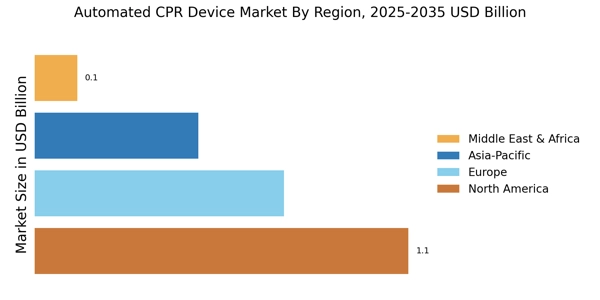
North America is the largest market for automated CPR devices, accounting for approximately 45% of the global market share. The region's growth is driven by increasing awareness of cardiac arrest, advancements in technology, and supportive regulatory frameworks. The demand for automated CPR devices is further fueled by rising incidences of cardiovascular diseases and the need for effective emergency response systems. The United States is the primary contributor to this market, with key players like ZOLL Medical Corporation and Physio-Control leading the charge. The competitive landscape is characterized by continuous innovation and strategic partnerships among manufacturers. The presence of advanced healthcare infrastructure and a strong emphasis on training and education in CPR techniques also bolster market growth.

Europe : Emerging Market with Regulations

Europe is the second-largest market for automated CPR devices, holding around 30% of the global market share. The region's growth is propelled by stringent regulations aimed at improving emergency medical services and increasing public access to life-saving devices. Countries like Germany and the UK are at the forefront, with initiatives promoting the installation of automated CPR devices in public spaces. Leading countries in Europe include Germany, the UK, and France, where the competitive landscape is marked by the presence of established players like Medtronic and Laerdal Medical Corporation. The market is witnessing a surge in demand due to rising awareness about cardiac emergencies and the importance of timely intervention. The European Union's commitment to enhancing healthcare standards further supports market expansion.

Asia-Pacific : Rapid Growth in Healthcare Sector

Asia-Pacific is rapidly emerging as a significant market for automated CPR devices, accounting for approximately 20% of the global market share. The region's growth is driven by increasing healthcare expenditure, rising awareness of cardiac health, and government initiatives aimed at improving emergency medical services. Countries like China and India are witnessing a surge in demand for these devices as healthcare infrastructure continues to develop. China is leading the market in this region, with a growing number of hospitals and public facilities adopting automated CPR devices. The competitive landscape is becoming increasingly dynamic, with both local and international players vying for market share. The presence of key manufacturers like HeartSine Technologies and Stryker Corporation is enhancing the availability of advanced life-saving technologies in the region.

Middle East and Africa : Untapped Potential in Healthcare

The Middle East and Africa region is gradually emerging in the automated CPR device market, holding about 5% of the global market share. The growth is primarily driven by increasing awareness of cardiac health and the need for improved emergency response systems. Countries like South Africa and the UAE are focusing on enhancing their healthcare infrastructure, which is expected to boost the adoption of automated CPR devices in the coming years. The competitive landscape is still developing, with a mix of local and international players entering the market. Key players are beginning to establish a presence in this region, recognizing the potential for growth. Government initiatives aimed at improving healthcare access and emergency response capabilities are likely to further stimulate market demand.

Automated Cpr Device Market Regional Image

Key Players and Competitive Insights

The Automated CPR Device Market is currently characterized by a dynamic competitive landscape, driven by technological advancements and an increasing emphasis on improving patient outcomes. Key players such as ZOLL Medical Corporation (US), Physio-Control, Inc. (US), and Stryker Corporation (US) are at the forefront, each adopting distinct strategies to enhance their market positioning. ZOLL Medical Corporation (US) focuses on innovation, particularly in integrating advanced monitoring technologies into their devices, which appears to resonate well with healthcare providers seeking to improve emergency response efficacy. Meanwhile, Physio-Control, Inc. (US) emphasizes partnerships with hospitals and emergency services to expand its reach, suggesting a strategy centered on collaboration and market penetration. Stryker Corporation (US) is actively pursuing mergers and acquisitions to bolster its product portfolio, indicating a strategy aimed at consolidating its market presence and enhancing its technological capabilities.

The business tactics employed by these companies reflect a moderately fragmented market structure, where localized manufacturing and supply chain optimization are becoming increasingly vital. Companies are likely to invest in regional production facilities to mitigate supply chain disruptions and enhance responsiveness to local market demands. This collective approach not only strengthens their operational efficiency but also fosters a competitive environment where agility and adaptability are paramount.

In August 2025, ZOLL Medical Corporation (US) announced the launch of its latest automated CPR device, which incorporates artificial intelligence to optimize compression depth and rate. This strategic move is significant as it positions ZOLL at the cutting edge of technology, potentially enhancing the effectiveness of CPR in emergency situations. The integration of AI could lead to improved patient outcomes, thereby reinforcing ZOLL's reputation as an innovator in the field.

In September 2025, Physio-Control, Inc. (US) entered into a strategic partnership with a leading telemedicine provider to enhance remote monitoring capabilities for its automated CPR devices. This collaboration is indicative of a broader trend towards digital health solutions, suggesting that Physio-Control is keen on leveraging technology to provide comprehensive care solutions. Such partnerships may not only expand their market reach but also align with the growing demand for integrated healthcare services.

In July 2025, Stryker Corporation (US) completed the acquisition of a startup specializing in robotic-assisted CPR devices. This acquisition is likely to enhance Stryker's technological capabilities and diversify its product offerings. By integrating robotic technology into its CPR devices, Stryker may set a new standard in emergency medical response, thereby positioning itself as a leader in innovation within the market.

As of October 2025, the competitive trends in the Automated CPR Device Market are increasingly defined by digitalization, sustainability, and the integration of artificial intelligence. Strategic alliances are shaping the landscape, enabling companies to pool resources and expertise to drive innovation. The shift from price-based competition to a focus on technological advancement and supply chain reliability is becoming evident. Moving forward, competitive differentiation will likely hinge on the ability to innovate and adapt to emerging technologies, ensuring that companies remain at the forefront of this critical market.


Key Companies in the Automated Cpr Device Market market include

Industry Developments

Recent developments in the Global Automated CPR Device Market underscore a growing emphasis on enhancing emergency response capabilities. Innovative firms are expanding their product lines to incorporate advanced features such as real-time feedback, Bluetooth connectivity, and integration with mobile health applications. Regulatory bodies continue to refine guidelines to ensure the safety and efficacy of these devices, stimulating further investment in research and development. Notably, collaborations between technology companies and healthcare providers are increasing, aimed at creating synergistic solutions that improve patient outcomes.

Additionally, rising awareness of sudden cardiac arrest, along with the installation of automated CPR devices in public spaces like airports and schools, is significantly contributing to market growth. In emerging markets, government initiatives and public awareness campaigns are creating new opportunities for expansion. Overall, the landscape is evolving rapidly, driven by technological advancements and an increasing focus on emergency preparedness.

Future Outlook

Automated Cpr Device Market Future Outlook

The Automated CPR Device Market is projected to grow at a 5.25% CAGR from 2024 to 2035, driven by technological advancements, increasing awareness, and rising demand for emergency medical services.

New opportunities lie in:

  • Integration of AI for real-time performance analytics
  • Expansion into emerging markets with tailored solutions
  • Partnerships with healthcare providers for training programs

By 2035, the market is expected to be robust, driven by innovation and strategic partnerships.

Market Segmentation

Automated Cpr Device Market Type Outlook

  • Automated External Defibrillators
  • Mechanical Chest Compression Devices
  • Integrated CPR Devices

Automated Cpr Device Market User Type Outlook

  • Healthcare Providers
  • Emergency Medical Technicians
  • Laypersons

Automated Cpr Device Market Technology Outlook

  • Mechanical Compression Technology
  • Electrode-based Systems
  • Software Integrated Solutions

Automated Cpr Device Market Certification Outlook

  • FDA Cleared
  • CE Marked
  • ISO Certified

Automated Cpr Device Market Application Area Outlook

  • Healthcare Facilities
  • Public Access
  • Home Care

Report Scope

MARKET SIZE 20242.326(USD Billion)
MARKET SIZE 20252.448(USD Billion)
MARKET SIZE 20354.084(USD Billion)
COMPOUND ANNUAL GROWTH RATE (CAGR)5.25% (2024 - 2035)
REPORT COVERAGERevenue Forecast, Competitive Landscape, Growth Factors, and Trends
BASE YEAR2024
Market Forecast Period2025 - 2035
Historical Data2019 - 2024
Market Forecast UnitsUSD Billion
Key Companies ProfiledMarket analysis in progress
Segments CoveredMarket segmentation analysis in progress
Key Market OpportunitiesIntegration of artificial intelligence in Automated CPR Device Market enhances efficiency and effectiveness in emergency response.
Key Market DynamicsTechnological advancements and regulatory changes drive growth in the Automated CPR Device market, enhancing emergency response capabilities.
Countries CoveredNorth America, Europe, APAC, South America, MEA

Leave a Comment

FAQs

What is the projected market valuation of the Automated CPR Device Market by 2035?

The Automated CPR Device Market is projected to reach a valuation of 4.084 USD Billion by 2035.

What was the market valuation of the Automated CPR Device Market in 2024?

In 2024, the market valuation of the Automated CPR Device Market was 2.326 USD Billion.

What is the expected CAGR for the Automated CPR Device Market during the forecast period 2025 - 2035?

The expected CAGR for the Automated CPR Device Market during the forecast period 2025 - 2035 is 5.25%.

Which segment of the Automated CPR Device Market had the highest valuation in 2024?

In 2024, the segment of Automated External Defibrillators had the highest valuation at 0.932 USD Billion.

What are the key applications of Automated CPR Devices?

The key applications of Automated CPR Devices include Healthcare Facilities, Public Access, and Home Care.

Which user type is projected to contribute significantly to the Automated CPR Device Market?

Healthcare Providers are projected to contribute significantly to the Automated CPR Device Market, with a valuation of 0.932 USD Billion in 2024.

What technologies are being utilized in the Automated CPR Device Market?

The technologies utilized in the Automated CPR Device Market include Mechanical Compression Technology, Electrode-based Systems, and Software Integrated Solutions.

Download Free Sample

Kindly complete the form below to receive a free sample of this Report

Compare Licence

×
Features License Type
Single User Multiuser License Enterprise User
Price $4,950 $7,250 $7,250
Maximum User Access Limit 1 User Upto 10 Users Unrestricted Access Throughout the Organization
Free Customization
Direct Access to Analyst
Deliverable Format
Platform Access
Discount on Next Purchase 10% 15% 15%
Printable Versions