Author

Snehal Singh

Bags Market Size, Share, Industry Trend & Analysis Research Report Information by Product Type (Backpacks [School Bags, Drawstring Bags, Others], Handbags, Wallets & Purses, Duffle & Gym Bags, Sling & Cross body Bags, Others), Material Type (Polyesters, Nylon, Leather, Cotton Canvas, Others),End User (5 to 12 Years, 13 to 19 Years, 20 Years & Above), Distribution Channel (Store-Based {Super markets & Hyper markets, Convenience Stores, Specialty Stores, Others} and Non-Store-Based), and Region (North America, Europe, Asia-Pacific, and Rest of the World)-Forecast till 2035
As per MRFR analysis, the Bags Market Size was estimated at 183.2 USD Billion in 2024. The Bags industry is projected to grow from 192.9 USD Billion in 2025 to 323.3 USD Billion by 2035, exhibiting a compound annual growth rate (CAGR) of 5.3% during the forecast period 2025 - 2035. North America holds the largest share of the global Bags Market at approximately 31% in 2025, driven by high consumer spending on fashion accessories, strong retail infrastructure, growing demand for luxury handbags, and well-established distribution channels across both online and offline platforms. The United States is the leading country within North America, capturing approximately 25% of the global Bags Market share, supported by the large fashion-conscious consumer base, robust e-commerce ecosystem, and strong market presence of leading luxury brands such as Coach, Kate Spade, and Michael Kors. Backpacks dominate the Bags Market as the largest product type segment, accounting for approximately 35% of the global market share in 2025, driven by their versatility for school, travel, and everyday use, broad consumer appeal across age groups, and strong sales through both retail and online channels globally.
The Bags Market is experiencing a transformative shift towards sustainability and versatility, driven by evolving consumer preferences.
| 2024 Market Size | 183.2 (USD Billion) |
| 2035 Market Size | 323.3 (USD Billion) |
| CAGR (2025 - 2035) | 5.3 % |
Louis Vuitton (FR), Gucci (IT), Chanel (FR), Hermes (FR), Prada (IT), Michael Kors (US), Coach (US), Tumi (US), Fendi (IT), Burberry (GB)
Our Impact
Enabled $4.3B Revenue Impact for Fortune 500 and Leading Multinationals
Partnering with 2000+ Global Organizations Each Year
30K+ Citations by Top-Tier Firms in the Industry
The Bags Market is currently experiencing a dynamic evolution, driven by shifting consumer preferences and increasing environmental awareness. As sustainability becomes a focal point for many buyers, brands are adapting their offerings to include eco-friendly materials and production methods. This shift reflects a growing concern for the planet and aligns with the values of a more conscious consumer base. Additionally, the rise of e-commerce has transformed how bags are marketed and sold, with online platforms providing greater accessibility and variety. This trend is reshaping traditional retail dynamics, as consumers increasingly seek convenience and diverse options in their purchasing decisions.
Moreover, the Bags Market is witnessing a surge in demand for multifunctional designs that cater to various lifestyles. Consumers favor products that offer versatility, allowing them to transition seamlessly between work, leisure, and travel. This inclination towards practicality is influencing design innovations, as brands strive to create bags that are not only stylish but also serve multiple purposes. As the market continues to evolve, these trends are expected to further define the landscape, pushing manufacturers to remain agile and responsive to changing consumer needs.
The Bags Market is increasingly prioritizing sustainable practices, with brands exploring eco-friendly materials and ethical production methods. This trend reflects a broader societal shift towards environmental responsibility, as consumers demand products that align with their values.
The rise of online shopping is reshaping the Bags Market, providing consumers with greater access to a diverse range of products. This trend is influencing how brands market their offerings, emphasizing convenience and variety in the purchasing process.
There is a growing preference for bags that serve multiple purposes, catering to the diverse lifestyles of consumers. This trend is driving innovation in design, as brands create versatile products that can transition between different activities.
The Bags Market is increasingly influenced by sustainability initiatives, as consumers become more environmentally conscious. Brands are adopting eco-friendly materials, such as recycled plastics and organic fabrics, to meet the demand for sustainable products. This shift is not merely a trend; it reflects a broader societal movement towards reducing carbon footprints. In 2025, it is estimated that the market for sustainable bags will account for a substantial portion of overall sales, potentially reaching 30 percent. Companies that prioritize sustainability may gain a competitive edge, as consumers are likely to favor brands that align with their values. This focus on sustainability is reshaping the Bags Market, encouraging innovation and responsible sourcing practices.
Technological advancements are playing a pivotal role in the Bags Market, particularly in the realm of manufacturing and design. Innovations such as 3D printing and smart textiles are enabling brands to create unique, customizable products that cater to individual consumer preferences. Furthermore, the integration of technology into bags, such as built-in charging ports and tracking devices, is becoming increasingly popular. This trend is expected to drive growth in the market, as consumers seek multifunctional products that enhance their daily lives. By 2025, the incorporation of technology in bag design could lead to a significant increase in sales, as consumers are drawn to innovative features that offer convenience and practicality.
The expansion of e-commerce is significantly impacting the Bags Market, as online shopping continues to gain traction among consumers. With the rise of digital platforms, brands are increasingly investing in their online presence to reach a broader audience. In 2025, it is projected that online sales of bags will constitute a considerable share of the market, driven by the convenience and accessibility of e-commerce. This shift is prompting traditional retailers to adapt their strategies, focusing on enhancing their online offerings and improving customer experience. As a result, the Bags Market is likely to witness a transformation in distribution channels, with a growing emphasis on direct-to-consumer sales and online marketing strategies.
Urbanization and lifestyle changes are reshaping the Bags Market, as more individuals move to urban areas and adopt fast-paced lifestyles. This demographic shift is leading to an increased demand for bags that cater to the needs of urban dwellers, such as backpacks, tote bags, and crossbody bags that offer functionality and style. In 2025, it is expected that the market will see a rise in demand for bags designed for commuting and travel, reflecting the changing habits of consumers. As urban populations grow, the Bags Market must adapt to these evolving needs, potentially leading to the development of new product lines that emphasize convenience and versatility.
The application segment of the Bags Market exhibits varied distribution, with Travel Bags holding the largest share, driven by an increase in travel and tourism activities worldwide. Fashion Bags, positioned as a significant player, are seeing growing popularity among consumers who are increasingly focused on style and brand recognition. Sports Bags and Laptop Bags follow closely, catering to specific user needs, while Backpacks continue to maintain a steady demand due to their functionality and versatility. Growth trends within this segment are being propelled by shifting consumer preferences towards personalized and multifunctional bags. The surge in e-commerce and social media influence is also exacerbating demand for Fashion Bags as they become essential accessories. Travel Bags remain robust, particularly with the resurgence of travel post-pandemic, while Backpacks are evolving with tech integrations, catering to on-the-go lifestyles and enhancing their appeal to younger audiences.
Travel Bags (Dominant) vs. Backpacks (Emerging)
Travel Bags are characterized by their spaciousness and durability, making them ideal for prolonged travel. They encompass a wide variety of categories including luggage, duffel bags, and carry-ons, designed for comfort and ease of transport. The travel industry’s recovery post-COVID-19 has bolstered their demand significantly. Conversely, Backpacks are emerging as versatile carriers that blend functionality with fashion. They are preferred by students, professionals, and travelers alike, doubling as style statements while accommodating modern needs like tech compatibility and ergonomic design. Both segments are indicative of shifting consumer behavior, where convenience and personal expression play crucial roles in purchasing decisions.
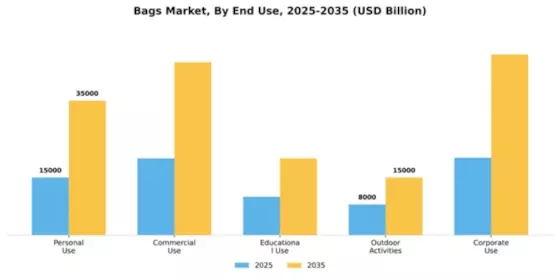
In the Bags Market, the Material segment showcases a diversified distribution among various options, notably Leather holding the largest share due to its premium quality and luxury appeal. Synthetic materials, on the other hand, are rapidly gaining traction among consumers who seek affordability and eco-friendliness. Canvas, Nylon, and Cotton provide additional alternatives, catering to different consumer preferences and functional needs, yet they remain secondary in terms of overall market share.
Leather (Dominant) vs. Synthetic (Emerging)
Leather bags are perceived as sophisticated and durable, making them a dominant choice among high-end consumers, often associated with luxury brands and long-lasting investment pieces. In contrast, synthetic bags are emerging as trendy and practical, appealing to environmentally-conscious buyers seeking sustainable options without compromising style. The lightweight nature of synthetic materials, combined with innovative designs, has led to increased popularity, particularly among younger demographics. This trend indicates a shift towards versatile and budget-friendly solutions while maintaining aesthetic appeal.
The Bags Market showcases a diverse range of end-use segments, prominently featuring Personal Use and Commercial Use. Personal Use remains the largest segment, catering to individual consumers with a variety of bag types designed for everyday activities, such as shopping, travel, and personal fashion. In contrast, Commercial Use, although smaller in share, is the fastest-growing segment as businesses increasingly adopt bags for branding and packaging, responding to the growing demand for eco-friendly and custom-molded packaging solutions. The dynamics of this segment are influenced by changing consumer behaviors and environmental consciousness. Personal Use is driven by fashion trends and consumer preferences for durable, stylish bags. Meanwhile, the growth in Commercial Use reflects the expansion of retail and e-commerce, where companies seek to enhance customer experience through personalized packaging. This dual growth is shaping innovations in materials and design across both segments.
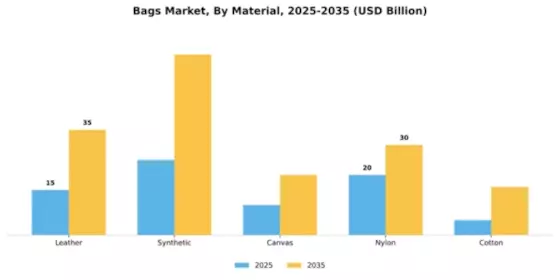
Personal Use: Dominant vs. Commercial Use: Emerging
In the Bags Market, Personal Use is recognized as the dominant segment, characterized by a wide array of products designed for individuality and daily convenience. This segment includes handbags, backpacks, and tote bags that consumers utilize for various personal activities. Personal Use bags prioritize aesthetics, functionality, and durability, making them essential for personal expression and everyday utility. On the other hand, Commercial Use is an emerging segment that is rapidly gaining attention. Businesses are increasingly incorporating bags into their marketing strategies, which has led to growth in custom-branded bags that serve both practical purposes and promotional needs. The demand for sustainable packaging solutions further elevates the status of the Commercial Use segment, as companies seek to appeal to environmentally-conscious consumers.
Get more detailed insights about Bags Market Request Free Sample
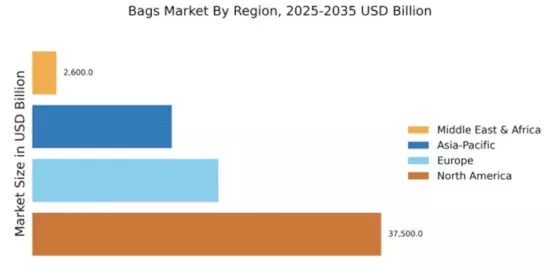
North America continues to lead The Bags, holding a significant share of 37500.0. The region's growth is driven by rising disposable incomes, a strong retail sector, and increasing consumer preference for luxury brands. Regulatory support for e-commerce and retail innovation further fuels demand, making it a vibrant market for both established and emerging brands. The competitive landscape is characterized by key players such as Michael Kors, Coach, and Tumi, alongside luxury giants like Louis Vuitton and Gucci. The U.S. remains the largest market, with Canada and Mexico also contributing to growth. The presence of these brands, coupled with a robust distribution network, positions North America as a pivotal hub in the bags market.
Europe, with a market size of 20000.0, is a powerhouse in the bags market, driven by a rich heritage of luxury brands and a growing demand for high-quality products. The region benefits from a strong tourism sector, which boosts retail sales, and increasing consumer awareness of sustainable fashion. Regulatory frameworks promoting eco-friendly practices are also gaining traction, enhancing market appeal. Leading countries include France, Italy, and the UK, home to iconic brands like Chanel, Prada, and Burberry. The competitive landscape is marked by a blend of luxury and contemporary brands, ensuring a diverse offering for consumers. The presence of fashion weeks and trade shows further solidifies Europe's status as a global fashion leader.
Asia-Pacific is witnessing rapid growth in the bags market, with a market size of 15000.0. The region's expansion is fueled by increasing urbanization, rising disposable incomes, and a growing middle class. Additionally, the demand for both luxury and affordable bags is on the rise, supported by a shift towards online shopping and digital retail platforms. Regulatory initiatives promoting e-commerce are also enhancing market accessibility. Countries like China, Japan, and India are leading the charge, with a mix of local and international brands competing for market share. The presence of key players such as Gucci and Michael Kors, along with emerging local brands, creates a dynamic competitive environment. This region's unique blend of tradition and modernity offers vast opportunities for growth in the bags market.
The Middle East and Africa region, with a market size of 2600.0, presents untapped opportunities in the bags market. The growth is driven by increasing urbanization, a young population, and rising disposable incomes. Additionally, the region is witnessing a shift towards luxury and branded products, supported by a growing retail sector and e-commerce platforms. Regulatory frameworks are evolving to support market growth and attract foreign investment. Leading countries include the UAE and South Africa, where luxury brands are gaining traction. The competitive landscape is characterized by a mix of international and local brands, with key players like Louis Vuitton and Coach establishing a presence. The region's unique cultural influences also play a significant role in shaping consumer preferences and trends.
The Bags Market is currently characterized by a dynamic competitive landscape, driven by evolving consumer preferences and a growing emphasis on sustainability. Major players such as Louis Vuitton (FR), Gucci (IT), and Chanel (FR) are strategically positioned to leverage their brand equity and heritage while innovating to meet contemporary demands. These companies are increasingly focusing on digital transformation and sustainability initiatives, which appear to be pivotal in shaping their operational strategies. The collective efforts of these brands not only enhance their market presence but also contribute to a more competitive environment, where innovation and brand loyalty play crucial roles. In terms of business tactics, companies are localizing manufacturing and optimizing supply chains to enhance efficiency and responsiveness to market changes. The competitive structure of the Bags Market is moderately fragmented, with a mix of established luxury brands and emerging players. This fragmentation allows for diverse consumer choices, while the influence of key players remains significant in setting market trends and standards. In November 2025, Gucci (IT) announced a partnership with a leading tech firm to integrate augmented reality (AR) into its retail experience. This strategic move aims to enhance customer engagement by allowing consumers to virtually try on bags before purchase. Such innovations are likely to redefine the shopping experience, positioning Gucci at the forefront of digital retailing in the luxury segment. In October 2025, Chanel (FR) unveiled its new sustainability initiative, committing to using 100% recycled materials in its bag production by 2027. This initiative not only aligns with global sustainability trends but also reinforces Chanel's commitment to environmental responsibility, potentially attracting eco-conscious consumers and enhancing brand loyalty. In September 2025, Louis Vuitton (FR) expanded its presence in Asia by opening a flagship store in Shanghai, which is part of a broader strategy to tap into the growing luxury market in the region. This expansion reflects the brand's focus on regional growth and its ability to adapt to local market dynamics, thereby strengthening its competitive position. As of December 2025, the Bags Market is witnessing trends such as digitalization, sustainability, and the integration of AI technologies. Strategic alliances among key players are increasingly shaping the competitive landscape, fostering innovation and collaboration. The shift from price-based competition to differentiation through technology and supply chain reliability is evident, suggesting that future competitive strategies will hinge on innovation and sustainability rather than mere cost advantages.
The Bags Market is projected to grow at a 5.3% CAGR from 2025 to 2035, driven by increasing consumer demand for sustainable materials and innovative designs.
New opportunities lie in:
By 2035, the Bags Market is expected to achieve robust growth, reflecting evolving consumer preferences and technological advancements.
| MARKET SIZE 2024 | 183.2 (USD Billion) |
| MARKET SIZE 2025 | 192.9 (USD Billion) |
| MARKET SIZE 2035 | 323.3 (USD Billion) |
| COMPOUND ANNUAL GROWTH RATE (CAGR) | 5.3% (2025 - 2035) |
| REPORT COVERAGE | Revenue Forecast, Competitive Landscape, Growth Factors, and Trends |
| BASE YEAR | 2024 |
| Market Forecast Period | 2025 - 2035 |
| Historical Data | 2019 - 2024 |
| Market Forecast Units | USD Billion |
| Key Companies Profiled | Louis Vuitton (FR), Gucci (IT), Chanel (FR), Hermes (FR), Prada (IT), Michael Kors (US), Coach (US), Tumi (US), Fendi (IT), Burberry (GB) |
| Segments Covered | Application, Material, End Use |
| Key Market Opportunities | Integration of sustainable materials and smart technology in the Bags Market presents a lucrative opportunity. |
| Key Market Dynamics | Shifting consumer preferences towards sustainable materials drive innovation and competition in the bags market. |
| Countries Covered | North America, Europe, APAC, South America, MEA |
The Bags Market was valued at 75140.0 USD Billion in 2024.
The Bags Market is projected to reach a valuation of 161590.39 USD Billion by 2035.
The expected CAGR for the Bags Market during the forecast period 2025 - 2035 is 7.22%.
The Bags Market includes segments such as Travel Bags, Fashion Bags, Sports Bags, Laptop Bags, and Backpacks.


The secondary research process involved comprehensive analysis of trade databases, industry associations, government trade statistics, and authoritative retail organizations. Key sources included the Travel Goods Association (TGA), American Apparel & Footwear Association (AAFA), Conseil National du Cuir (CNC - French National Leather Council), UNIC - Italian Tanners Association, USDA Foreign Agricultural Service (for leather and raw material trends), US International Trade Commission (USITC) for import/export data on luggage and travel goods, Eurostat International Trade Database, UN Comtrade Database, International Trade Centre (ITC) Market Analysis Tools, World Customs Organization (WCO) Harmonized System classifications for bags and luggage, National Retail Federation (NRF) Consumer Spending Surveys, Office for National Statistics (UK) Retail Sales Data, Leather Working Group (LWG) sustainability certifications, Textile Exchange Industry Reports, and Global Fashion Agenda Circular Fashion Reports. These sources were used to collect production volumes, trade flow data, material pricing trends, regulatory compliance standards (chemical safety, labeling requirements), consumer demographic shifts, and competitive landscape mapping across polyester, nylon, leather, and canvas segments.
During the primary research phase, both supply-side and demand-side stakeholders were interviewed to gather qualitative and quantitative data. Supply-side sources were CEOs, VPs of Manufacturing, heads of Product Design, supply chain directors, and sustainability officials from bag manufacturers, leather tanneries, textile suppliers, and OEM/ODM partners from fashion houses and sports equipment firms. Demand-side sources included procurement managers from multi-brand retailers, category managers from department stores, e-commerce merchandising directors, specialty store buyers, and inventory planning leads from supermarkets, hypermarkets, and online marketplaces. Primary research corroborated the patterns of material sourcing, the timetables for sustainable initiatives, and collected information on private label tactics, seasonal inventory cycles, and pricing elasticity in the travel, fashion, and sports bag markets.
Primary Respondent Breakdown:
By Designation: C-level Primaries (32%), Director Level (30%), Others (38%)
By Region: North America (32%), Europe (28%), Asia-Pacific (32%), Rest of World (8%)
Global market valuation was derived through revenue mapping and production volume analysis. The methodology included:
Identification of 50+ key manufacturers and luxury houses across North America, Europe, Asia-Pacific, and Latin America, spanning luxury leather goods, mass-market polyester backpacks, and technical nylon sports bags
Product mapping across backpacks, handbags, wallets/purses, duffle/gym bags, sling/cross-body bags, and specialty luggage categories
Material-specific analysis covering leather (full-grain, top-grain, genuine), synthetic (polyester, nylon, PU), and natural fibers (cotton canvas, jute, hemp)
Analysis of reported and modeled annual revenues specific to bag portfolios, including wholesale and direct-to-consumer channels
Coverage of manufacturers and retail conglomerates representing 72-78% of global market share in 2024
Extrapolation using bottom-up (production volume × ASP by country/segment) and top-down (manufacturer revenue validation) approaches, triangulated with retail sales data from store-based (specialty stores, department stores, hypermarkets) and non-store-based (e-commerce, direct-to-consumer) channels to derive segment-specific valuations for travel bags, fashion bags, sports bags, laptop bags, and daily-use backpacks
Kindly complete the form below to receive a free sample of this Report

“This is really good guys. Excellent work on a tight deadline. I will continue to use you going forward and recommend you to others. Nice job”


“Thanks. It’s been a pleasure working with you, please use me as reference with any other Intel employees.”


“Thanks for sending the report it gives us a good global view of the Betaïne market.”


“Thank you, this will be very helpful for OQS.”


“We found the report very insightful! we found your research firm very helpful. I'm sending this email to secure our future business.”


“I am very pleased with how market segments have been defined in a relevant way for my purposes (such as "Portable Freezers & refrigerators" and "last-mile"). In general the report is well structured. Thanks very much for your efforts.”


“I have been reading the first document or the study, ,the Global HVAC and FP market report 2021 till 2026. Must say, good info! I have not gone in depth at all parts, but got a good indication of the data inside!”


“We got the report in time, we really thank you for your support in this process. I also thank to all of your team as they did a great job.”


“The Automotive 48V ECU Components Procurement Intelligence Study” was a complex project, but the Market Research Future (MRFR) team handled it with quality, agility, and customer-centricity. They delivered all requested data on time and within the agreed scope. The team, including Shubhendra Anand and Rahul Gotadki, was always readily available to clarify questions and swiftly implement necessary adjustments, driving the project to a successful conclusion within a very demanding timeframe.
I would also like to specifically commend Akshay Agarwal for his responsiveness and support at every stage—from our initial inquiry on May 6th through to final delivery on June 18th. His dedication made the entire process seamless.”



