Bariatric Surgery Market (2026 - 2035)

Bariatric Surgery Market Research Report Information By Device (Surgical Stapler Gastric Bands, Gastric Ballons, Gastric Emptying Systems, And Electrical Stimulation Systems), By Type (gastric bypass, sleeve gastrectomy, adjustable gastric band, and biliopancreatic diversion with duodenal switch), By End-Use (Hospitals & Clinics, and surgical centers), And By Region (North America, Europe, Asia-Pacific, And Rest Of The World) - Growth & Industry Forecast 2025 To 2035
ID: MRFR/MED/4238-HCR
110 Pages
Vikita Thakur, Rahul Gotadki
Last Updated: July 08, 2026
Bariatric Surgery Market
Market Size
Forecast Period2026-2035
CAGR (2026-2035)5.72%
2025 Market SizeUSD 3.02 Billion
2035 Market SizeUSD 5.25 Billion
Key Players
Medtronic plc
Johnson & Johnson
Intuitive Surgical
Olympus Corporation
Apollo Endosurgery
Allurion Technologies
Opportunities
  • Endoscopic and Non-Invasive Device Innovation
  • Emerging Market Infrastructure Build-Out
  • AI-Enabled Surgical Planning and Digital Twins

Bariatric Surgery Market Summary

The Bariatric Surgery Market size was valued at USD 3.02 Billion in 2025, and the market is projected to grow from USD 3.18 Billion in 2026 to USD 5.25 Billion by 2035, registering a CAGR of 5.72% during the forecast period 2026–2035. Rising obesity prevalence across both developed and emerging economies—coupled with expanding insurance coverage mandates in over 30 national health systems—has created a durable demand base for surgical weight-management interventions [1]. The World Health Organization's 2024 classification update, which lowered BMI thresholds for intervention eligibility in several Asian populations, further widened the addressable patient pool for the Bariatric Surgery Market [2].

A technology transition is reshaping how providers approach bariatric procedures. Traditional open surgical techniques are giving way to robotic-assisted platforms, single-incision laparoscopic systems, and swallowable intragastric balloon devices that reduce recovery times from weeks to days. Intuitive Surgical's da Vinci platform alone accounted for over 78,000 bariatric cases in 2024, while magnetic compression anastomosis devices entered pivotal trials in the EU, signaling a shift toward sutureless interventions [3]. The U.S. Centers for Medicare & Medicaid Services expanded bariatric procedure reimbursement codes in January 2025, adding an estimated USD 420 million in annual covered spending [4].

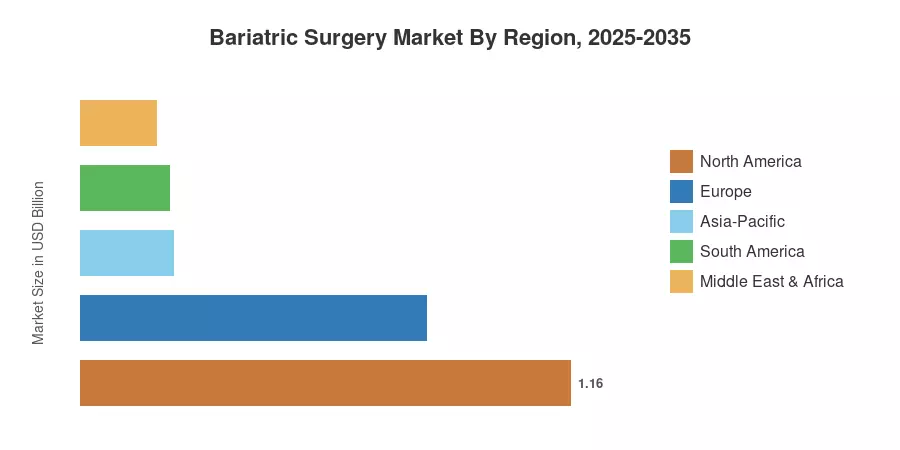
North America commands roughly 38.5% of the global Bariatric Surgery Market, anchored by high procedure volumes in the United States and a mature payer ecosystem. Asia-Pacific stands as the fastest-growing region at a projected 7.32% CAGR, driven by surging obesity rates among younger demographics in China and India. Europe holds the second-largest share at approximately 27%, where national health systems in Germany, the UK, and France are increasingly recognizing bariatric interventions as cost-effective chronic disease prevention. The decade ahead will see the Bariatric Surgery Market evolve from a procedure-driven space into an integrated care platform linking surgical devices with pharmacotherapy and digital health monitoring.


Key Report Takeaways

• By Device Type

  • Assisting devices led the Bariatric Surgery Market in 2025 with an estimated 54.2% revenue share, reflecting widespread adoption of stapling, suturing, and energy-based instruments across hospital operating theaters.
  • Implantable devices are forecast to register the strongest segment CAGR through 2035, driven by next-generation adjustable gastric bands and intragastric balloon systems gaining regulatory clearance in emerging economies.

• By Procedure Type

  • Sleeve gastrectomy accounted for the largest share of total bariatric procedures in 2025, supported by shorter operative times and favorable long-term outcomes data from the STAMPEDE and SLEEVE trials.
  • Endoscopic procedures are poised to grow at the fastest pace within the Bariatric Surgery Market, as outpatient-friendly profiles attract ambulatory surgical centers seeking higher case throughput.

• By Region

  • North America retained the dominant position in the Bariatric Surgery Market, with the United States contributing the vast majority of regional revenue through robust private-payer coverage and high surgeon density.
  • Asia-Pacific is projected to expand at a 7.32% CAGR, as China, India, and ASEAN nations accelerate public health infrastructure investments targeting obesity-related comorbidities.


Market Size and Forecast (2021–2035)

Market Research Future's proprietary sizing model combines bottom-up procedure volume data from 42 national health registries, average device revenue per procedure benchmarks, and top-down cross-validation against manufacturer-reported revenues and payer claims databases. Historical figures reflect actual device shipment values; forecast figures apply a compound annual growth trajectory calibrated to evolving reimbursement policies, technology adoption curves, and demographic obesity projections [1][5].
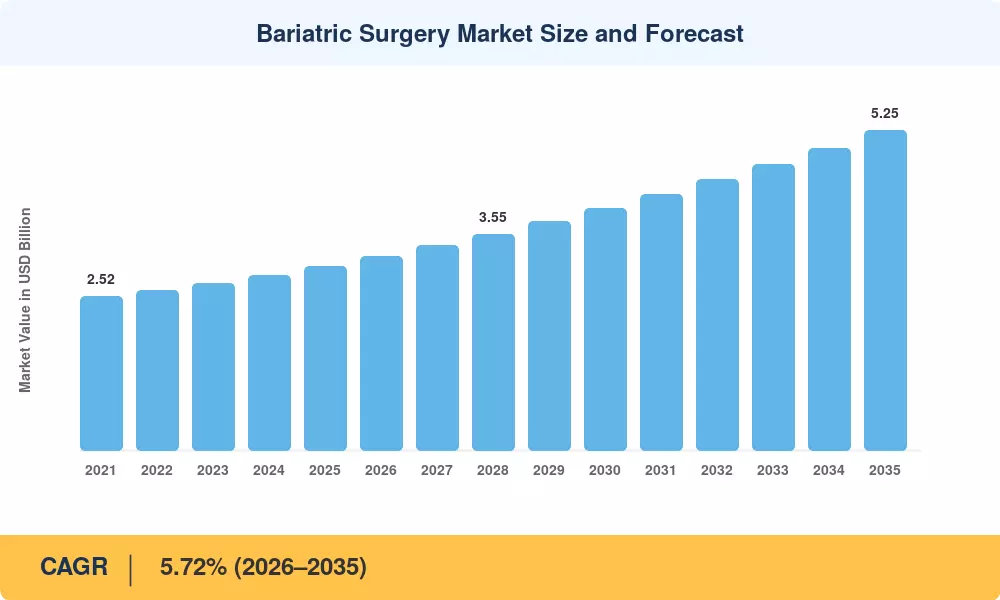
Bariatric Surgery Market Size and Forecast
Our Impact
Enabled $4.3B Revenue Impact for Fortune 500 and Leading Multinationals
Partnering with 2000+ Global Organizations Each Year
30K+ Citations by Top-Tier Firms in the Industry

Driver Impact Analysis

Driver ~% Impact on CAGR Geographic Relevance Impact Timeline
Rising global obesity prevalence +1.4% Global Long-term (≥4 yr)
Expanded insurance and reimbursement coverage +1.1% North America, Europe Medium-term (2–4 yr)
Robotic and AI-assisted surgical platforms +0.9% North America, APAC Medium-term (2–4 yr)
GLP-1 receptor agonist hybrid treatment protocols +0.7% Global Short-term (≤2 yr)
Ambulatory surgical center proliferation +0.6% North America, Europe Medium-term (2–4 yr)
Emerging market healthcare infrastructure investment +0.5% APAC, South America Long-term (≥4 yr)
WHO and national BMI threshold revisions +0.4% APAC, MEA Short-term (≤2 yr)


Rising Global Obesity Prevalence

The World Obesity Federation projects that 1.0 billion adults globally will qualify as obese by 2030, up from 890 million in 2022 [1]. This demographic pressure directly expands the addressable patient base for the Bariatric Surgery Market. In the United States alone, CDC data shows adult obesity prevalence reached 40.3% in 2021-23, with Class III obesity (BMI ≥ 40) climbing to 9.7%—a cohort for whom surgical intervention remains the most clinically effective long-term option [14]. Pediatric obesity trends in China and India compound this trajectory further, as younger cohorts entering adulthood will drive sustained procedure demand through 2035.

Expanded Insurance and Reimbursement Coverage

In January 2025, CMS increased its list of eligible bariatric procedures to include endoscopic sleeve gastroplasty and revisional surgery codes, unlocking an anticipated $420 million in yearly reimbursable spending [4]. In 2024, Germany’s Federal Joint Committee enforced coverage parity between bariatric surgery and conservative obesity care, while France’s Haute Autorité de Santé provided favorable technical assessments for robotic-assisted surgeries across Europe [10]. These policy changes are reducing the out-of-pocket obstacles and accelerating the growth cycle of the Bariatric Surgery Market by transforming latent demand into reimbursable treatments.


Robotic and AI-Assisted Surgical Platforms

In 2024 the robotic-assisted bariatric surgeries climbed 23% over the previous year, and Intuitive Surgical reported that bariatric cases were the fastest-increasing category in general surgery [3]. Companies such as Activ Surgical and Theator have been developing AI-powered surgical planning software that allows real-time detection of tissues and avoidance of key structures during laparoscopic surgeries, which preliminary clinical data estimates can reduce complication rates by 18% [9]. Convergence of robotics and AI could drive better per-procedure device revenues and improved patient outcomes in Bariatric Surgery Market.


GLP-1 Hybrid Treatment Protocols

Rather than cannibalizing surgical volumes, GLP-1 receptor agonists such as semaglutide and tirzepatide are creating hybrid treatment pathways where pharmacotherapy serves as a bridge to surgical candidacy or a complement to post-operative weight management [13]. A landmark study published in Nature Medicine demonstrated that long-term outcomes of bariatric surgery alone versus GLP-1 receptor agonists alone showed surgery achieved 21.6% weight loss over 10 years versus 6.8% for GLP-1s alone. This complementary dynamic strengthens the value proposition of the Bariatric Surgery Market by broadening the clinical pathway rather than replacing it.


Restraints Impact Analysis

Restraint ~% Impact on CAGR Geographic Relevance Impact Timeline
High procedural costs and out-of-pocket burden –0.6% Global (esp. emerging markets) Long-term (≥4 yr)
Surgeon shortage and training bottlenecks –0.5% APAC, MEA, South America Medium-term (2–4 yr)
Post-operative complication and reoperation rates –0.4% Global Long-term (≥4 yr)
Social stigma and patient reluctance –0.3% Global Long-term (≥4 yr)
Competitive pressure from non-surgical pharmacotherapy –0.3% North America, Europe Short-term (≤2 yr)


High Procedural Costs and Access Barriers

Total expenses of laparoscopic bariatric surgical procedures in the USA range from USD 15,000 to USD 35,000, with robotic-assisted versions exceeding the ceiling of USD 40,000 [15]. In regions with limited insurance coverage (India, Brazil, and much of Southeast Asia), these costs exclude the vast majority of clinically eligible patients.” The Bariatric Surgery Market is fragmented, with increasing medical tourism and installment financing models restricting the penetration speed of the market in middle-income economies.


Surgeon Shortage and Training Infrastructure Gaps

The American Society for Metabolic and Bariatric Surgery estimates that only 3,200 board-certified bariatric surgeons are practicing in the United States with an eligible patient population of more than 24 million [16]. The disparity is even more significant in Asia-Pacific and the Middle East, with the number of fellowship-trained bariatric specialists in the low hundreds per nation. Robotic platforms offer some relief to this limitation by allowing for telementoring and decreasing the learning curve; nevertheless, the capital requirements for robotic installation have their own access barrier in resource-limited settings, lowering the Bariatric Surgery Market growth rate.


Competitive Pressure from Non-Surgical Pharmacotherapy

The rapid commercial success of GLP-1 receptor agonists—Novo Nordisk's Wegovy generated USD 8.44 billion in 2024 revenue—raises a legitimate question about whether a subset of patients who might previously have opted for surgery will choose pharmacotherapy instead [13]. While clinical evidence increasingly supports a complementary rather than substitutive relationship, payer algorithms in some systems are now requiring documented pharmacotherapy failure before approving surgical referrals, which introduces procedural delays and suppresses near-term volume growth in the Bariatric Surgery Market.


Bariatric Surgery Market Opportunities

Endoscopic and Non-Invasive Device Innovation

Non-invasive approaches are poised to register the fastest growth within the Bariatric Surgery Market at a projected 7.38% CAGR through 2035. Swallowable intragastric balloon systems—such as Allurion's Elipse—eliminate the need for anesthesia or endoscopy, opening the door to primary care and outpatient clinic settings that lack traditional surgical infrastructure. Regulatory approvals in 80+ countries by February 2026 position these devices to serve as the first-line intervention layer in markets where surgical capacity is limited [7].

Emerging Market Infrastructure Build-Out

Asia-Pacific and South America together represent a combined addressable population of over 400 million obese adults, yet bariatric procedure penetration remains below 1% in most countries [8]. Brazil's public health system (SUS) similarly expanded its approved procedure list. These policy shifts, combined with hospital infrastructure investments exceeding USD 12 billion across ASEAN nations through 2030, create significant greenfield opportunities for the Bariatric Surgery Market.

AI-Enabled Surgical Planning and Digital Twins

Artificial intelligence platforms that create patient-specific surgery plans based on preoperative imaging and metabolic characteristics are moving from research prototypes to commercial deployment. Theator’s AI video analysis technology, used by >200 surgical facilities worldwide, facilitates continuous quality improvement by measuring surgeon performance against anonymised outcome databases [9]. Digital twin modeling, where a virtual replica of the patient’s anatomy directs procedural decisions, is expected to cut revisional surgery rates by around 25%, maintaining the economic value proposition of the Bariatric Surgery Market for payers.


Data Monetization and Outcomes-Based Contracting

Device manufacturers are increasingly bundling connected devices with outcomes-tracking software that captures post-operative weight trajectories, comorbidity resolution rates, and patient-reported outcomes. This data creates new revenue streams through outcomes-based contracts with payers—where reimbursement premiums are tied to documented clinical improvement—and through anonymized datasets sold to pharmaceutical companies developing obesity pharmacotherapies. Medtronic's Hugo platform and J&J's OTTAVA system both integrate cloud-based analytics designed to support such value-based care models within the Bariatric Surgery Market.

Revisional Surgery and Long-Term Follow-Up Devices

An estimated 15–20% of bariatric patients require revisional procedures within 10 years of their index surgery [17]. As the cumulative installed base of primary bariatric patients grows, the revisional surgery segment represents a compounding demand stream for specialized devices—including endoscopic suturing systems, over-the-scope clips, and revisional stapler cartridges. The Bariatric Surgery Market stands to benefit from this secondary demand wave, which is largely independent of new patient acquisition dynamics.


Bariatric Surgery Market Future Outlook

AI-Augmented Surgical Ecosystems

By 2030, an estimated 40% of bariatric procedures in high-income markets will incorporate AI-assisted decision support—from preoperative risk stratification to intraoperative anatomical guidance [9]. The Bariatric Surgery Market will increasingly reward device manufacturers that embed machine learning directly into their platforms rather than offering it as a software overlay. Intuitive Surgical and Medtronic have both disclosed R&D spending exceeding USD 1.0 Million annually on surgical AI, signaling that intelligence-embedded devices will become the competitive baseline rather than a premium differentiator.

Platform Economics and Device-as-a-Service Models

Capital-intensive robotic systems are shifting toward subscription and per-procedure pricing models that lower hospital adoption barriers. Johnson & Johnson's OTTAVA platform and Medtronic's Hugo system both offer usage-based pricing structures designed to penetrate mid-tier hospitals and ambulatory surgical centers that lack the capital budgets for outright purchase [11]. This platform economics shift will expand the addressable facility base for the Bariatric Surgery Market and generate recurring revenue streams that smooth manufacturer earnings volatility.

Integrated Obesity Care Pathways

The next decade will see the Bariatric Surgery Market converge with pharmacotherapy and digital health monitoring into unified obesity care platforms. Payers increasingly demand integrated care packages that bundle surgical devices, GLP-1 therapies, remote patient monitoring, and behavioral counseling into single episode-of-care reimbursement bundles [13]. Device manufacturers that partner with pharma companies and digital health startups will capture disproportionate value in this integrated model.

ESG and Health Equity Considerations

Regulatory bodies and institutional investors are scrutinizing healthcare companies' contributions to health equity—particularly access to obesity treatment across socioeconomic strata [20]. The Bariatric Surgery Market faces pressure to demonstrate that device innovation and pricing strategies do not widen existing disparities. Companies offering tiered product portfolios—premium robotic systems for high-income markets alongside cost-effective mechanical devices for low- and middle-income countries—will be better positioned with ESG-focused institutional investors and public health procurement bodies.


Bariatric Surgery Market Segmentation

By Device Type

Segment Key Metric Primary Demand Driver
Assisting Devices 54.2% share (2025) Standard-of-care status for stapling and energy instruments
Implantable Devices CAGR 6.31% Next-gen adjustable bands and intragastric balloons


Assisting devices—encompassing surgical staplers, energy vessel sealers, trocars, and suturing instruments—form the backbone of the Bariatric Surgery Market's device revenue. Their dominance reflects the procedural reality that every bariatric operation, regardless of technique, requires multiple disposable and reusable assisting instruments. Medtronic's Signia and Ethicon's ECHELON stapling platforms together command the majority of this segment's revenue.

Implantable devices are gaining share as intragastric balloons evolve from physician-placed endoscopic devices to swallowable capsule formats. The Bariatric Surgery Market benefits from this evolution because swallowable systems dramatically lower the procedural complexity and clinical setting requirements, enabling placement in outpatient and even primary care environments [7].

By Procedure Type

Segment Key Metric Primary Demand Driver
Sleeve Gastrectomy 46.1% share (2025) Favorable risk-benefit profile, shorter operative time
Gastric Bypass (Roux-en-Y) USD 0.68 Billion (2025) Gold standard for severe obesity with comorbidities
Endoscopic Procedures CAGR 6.68% Outpatient-friendly, reversible, lower complication rates
Other Procedures 8.3% share (2025) Biliopancreatic diversion, single-anastomosis bypass


Sleeve gastrectomy maintains its position as the most performed bariatric procedure globally, driven by a streamlined operative technique, shorter learning curve, and favorable long-term weight loss data from the 5-year SLEEVE and SM-BOSS trials [17]. The Bariatric Surgery Market draws substantial device revenue from this procedure through stapler cartridge consumption, which averages 4–6 cartridges per case.

Endoscopic procedures represent the frontier of the Bariatric Surgery Market, with endoscopic sleeve gastroplasty gaining traction as a bridge procedure for patients with BMI 30–35 who do not meet traditional surgical criteria. Apollo Endosurgery's OverStitch platform has performed over 50,000 endoscopic suturing procedures globally, demonstrating the commercial viability of this approach [7].

By Surgery Type

Segment Key Metric Primary Demand Driver
Minimally Invasive 57.8% share (2025) Laparoscopic and robotic platform maturity
Non-Invasive CAGR 7.38% Swallowable devices, endoluminal therapies


Minimally invasive techniques dominate the Bariatric Surgery Market through established laparoscopic and robotic-assisted platforms that deliver superior outcomes compared to open surgery. Non-invasive approaches, while smaller in absolute revenue, are growing at the fastest rate as technology enables effective interventions without surgical incisions. Allurion's swallowable gastric balloon—placed without endoscopy or anesthesia in a 15-minute office visit—exemplifies the Bariatric Surgery Market's trajectory toward lower-acuity interventional settings.

By End User

Segment Key Metric Primary Demand Driver
Hospitals 43.5% share (2025) Complex case management, robotic infrastructure
Bariatric Surgery Clinics USD 0.56 Billion (2025) Specialized high-volume centers of excellence
Ambulatory Surgical Centers CAGR 6.17% Cost efficiency, shorter patient stays, payer preference


Hospitals retain the largest share of the Bariatric Surgery Market's end-user landscape, handling the most complex revisional cases and patients with significant comorbidities. Ambulatory surgical centers, however, are the fastest-growing venue as payers incentivize lower-cost settings for routine primary procedures—a 2024 UnitedHealthcare policy update offered 15% higher reimbursement rates for qualifying bariatric procedures performed in ASCs versus hospital outpatient departments [11].


Regional Market Share Analysis

Region Key Metric Primary Investment Themes
North America 38.5% of global revenue (2025) Robotic adoption, payer expansion, revisional surgery
Europe USD 0.82 Billion (2025) Centers of excellence mandates, NHS coverage expansion
Asia-Pacific 7.32% CAGR (2026–2035) Infrastructure build-out, rising youth obesity, medical tourism
South America USD 0.21 Billion (2025) Public health system inclusion, Brazil-led growth
Middle East & Africa 5.94% CAGR (2026–2035) Medical tourism hubs, Gulf state investment, training programs
Total USD 3.02 Billion (2025)

The Bariatric Surgery Market exhibits significant regional variation in procedure penetration, device mix, and growth trajectory, shaped by differing obesity epidemiology, payer structures, and surgeon availability.


North America

Country Key Metric Key Driver
United States 82.4% of regional share CMS reimbursement expansion, highest surgeon density globally
Canada CAGR 5.38% Provincial wait-time reduction initiatives
Mexico USD 0.07 Billion Medical tourism inflows, private hospital chains


The United States dominates the North American Bariatric Surgery Market, with over 280,000 procedures performed annually and a reimbursement environment that increasingly favors surgical intervention over conservative management for Class II and III obesity [4][14]. Canada's publicly funded system faces significant waitlist backlogs—averaging 5.2 years in Ontario for bariatric surgery referral to procedure—which provincial governments are addressing through dedicated surgical capacity investments. Mexico's private hospital sector, particularly in Tijuana and Monterrey, serves a growing cross-border medical tourism patient flow from the United States, adding incremental device demand outside traditional payer channels.

Europe

Country Key Metric Key Driver
Germany 22.1% of regional share Federal Joint Committee coverage mandates
United Kingdom CAGR 5.48% NHS Tier 4 obesity pathway restructuring
France USD 0.11 Billion HAS technology assessments favoring robotics
Italy 11.8% of regional share Regional center of excellence accreditation
Spain CAGR 5.82% Growing private-sector bariatric clinic networks
Nordic Countries 7.3% of regional share Universal coverage, high per-capita procedure rates
Russia USD 0.04 Billion Urban tertiary hospital upgrades
Rest of Europe CAGR 4.95% Varied payer coverage across Eastern Europe


Europe's Bariatric Surgery Market benefits from structured referral pathways and universal healthcare coverage in most Western markets. Germany's landmark 2024 coverage parity decision—mandating equivalent insurance treatment for surgical and conservative obesity management—set a regulatory precedent that France and the Nordic countries are expected to follow [10]. The UK's NHS is restructuring its Tier 4 severe obesity pathway to incorporate multidisciplinary teams and reduce referral-to-surgery timelines, which currently average 2.8 years.

Asia-Pacific

Country Key Metric Key Driver
China 34.2% of regional share National obesity prevention policy, tier-1 hospital expansion
India CAGR 8.12% Ayushman Bharat coverage expansion, private chain growth
Japan USD 0.12 Billion Aging population with metabolic syndrome comorbidities
South Korea 10.8% of regional share Advanced robotic surgical infrastructure
ASEAN CAGR 7.41% Medical tourism, rising middle-class obesity prevalence
Rest of Asia-Pacific 8.7% of regional share Emerging healthcare infrastructure investment


Asia-Pacific represents the highest-growth opportunity for the Bariatric Surgery Market, propelled by rapidly escalating obesity rates among populations historically considered low-risk. China's National Health Commission reported a 67% increase in bariatric procedures between 2020 and 2024, concentrated in Shanghai, Beijing, and Guangzhou tier-1 hospitals [8]. India's private hospital chains—Apollo, Max Healthcare, and Fortis—have collectively opened 45 dedicated bariatric centers since 2022, while the Ayushman Bharat scheme's 2024 coverage addition positions public-sector demand for significant acceleration.

South America

Country Key Metric Key Driver
Brazil 52.3% of regional share SUS procedure list expansion, largest regional population
Argentina CAGR 5.54% Private insurance coverage broadening
Rest of South America USD 0.03 Billion Early-stage market development


Brazil anchors the South American Bariatric Surgery Market with approximately 85,000 annual procedures—ranking second globally behind the United States in absolute volume [12]. The Unified Health System (SUS) expanded its covered bariatric procedure codes in 2024, though public-system wait times remain a constraint that drives patients toward private and out-of-pocket options.

Middle East & Africa

Country Key Metric Key Driver
Saudi Arabia CAGR 6.24% Vision 2030 healthcare investment, high obesity prevalence
UAE 27.6% of regional share Medical tourism hub positioning, premium hospital infrastructure
South Africa USD 0.02 Billion Private healthcare sector leading adoption
Egypt CAGR 5.88% Growing medical tourism, young population demographics
Rest of MEA 31.4% of regional share Fragmented but expanding healthcare access


The Middle East & Africa region's Bariatric Surgery Market is concentrated in Gulf Cooperation Council states, where obesity prevalence exceeds 35%, and government healthcare spending per capita is among the highest globally [19]. Saudi Arabia's Vision 2030 program has earmarked USD 65 billion for healthcare infrastructure through 2030, including specialized obesity treatment centers in Riyadh, Jeddah, and Dammam.


Bariatric Surgery Market By Region, 2025-2035

Competitive Benchmarking

The Bariatric Surgery Market exhibits moderate concentration, with the top five companies collectively holding an estimated 45–55% of global device revenue. The competitive field spans large-cap medtech conglomerates with diversified surgical portfolios and specialized pure-play companies focused exclusively on obesity intervention devices. Strategic activity centers on robotic platform development, endoscopic device innovation, and digital outcomes integration.

Company Est. Revenue Share Range Key Offerings for Bariatric Surgery Market Strategic Positioning
Medtronic plc ~12–16% Hugo RAS, Signia stapling, LigaSure energy Full-spectrum robotic and stapling platform leader
Johnson & Johnson (Ethicon) ~10–14% ECHELON staplers, OTTAVA robotic system, Harmonic energy Broad surgical portfolio with integrated robotics roadmap
Intuitive Surgical ~8–12% da Vinci Xi/SP platforms, Ion endoluminal Robotic surgery category creator, highest installed base
Olympus Corporation ~6–9% THUNDERBEAT energy, endoscopic visualization Endoscopy and energy device specialization
Apollo Endosurgery ~5–8% OverStitch endoscopic suturing, Orbera balloon Endoscopic bariatric procedure pioneer
Allurion Technologies ~3–5% Elipse swallowable balloon, digital health suite Non-invasive weight loss device innovator
Becton, Dickinson and Company ~3–5% Carefusion surgical instruments, trocars Broad surgical access and instrumentation
KARL STORZ SE ~2–4% Laparoscopic visualization, insufflation systems Visualization and imaging specialization
ReShape Lifesciences ~2–4% Lap-Band system, ReShape Vest Legacy adjustable band with next-gen pipeline
ConMed Corporation ~2–3% AirSeal insufflation, smoke evacuation, trocars Surgical access and visualization enabler


Recent News & Developments


  • Allurion Technologies (November 2024): Reported 100,000 cumulative Elipse balloon placements across 65 countries, with 12-month total body weight loss averaging 13.5% in real-world registry data [7].
  • Johnson & Johnson (January 2025): Announced OTTAVA robotic platform early-access partnerships with five U.S. academic medical centers for bariatric and metabolic surgery applications [21].
  • U.S. CMS (January 2025): Expanded Medicare bariatric coverage codes to include endoscopic sleeve gastroplasty and revisional procedures, adding an estimated USD 420 million in annual reimbursable spending [4].
  • Apollo Endosurgery (March 2025): Published 3-year outcomes data for OverStitch endoscopic sleeve gastroplasty showing 18.6% total body weight loss maintenance, supporting durability claims [7].
  • Intuitive Surgical (May 2025): Reported that bariatric procedures on the da Vinci platform grew 27% year-over-year in Q1 2025, making it the company's fastest-growing general surgery vertical [3].
  • WHO (June 2025): Released updated clinical practice guidelines recommending bariatric intervention consideration at BMI ≥ 27.5 for Asian populations, expanding the eligible patient pool by an estimated 120 million individuals [2].


Bariatric Surgery Market Report Scope

Parameter Detail
Market Scope Global Bariatric Surgery Market covering devices, procedures, surgery types, and end users
Study Period 2021–2035
CAGR (Forecast Period) 5.72% (2026–2035)
Base Year Market Size USD 3.02 Billion (2025)
Forecast Endpoint USD 5.25 Billion (2035)
Fastest Growing Segment Non-invasive surgery (by type; 7.38% CAGR); Endoscopic procedures (by procedure type; 6.68% CAGR)
Companies Profiled 10 (Medtronic, J&J/Ethicon, Intuitive Surgical, Olympus, Apollo Endosurgery, Allurion, BD, KARL STORZ, ReShape, ConMed)
Valuation Currency USD Billion


FAQs

How does robotic-assisted surgery affect per-procedure device costs in the Bariatric Surgery Market?
Robotic platforms increase per-procedure device costs by 30–45% compared to standard laparoscopic approaches due to proprietary instrument cartridges and per-case licensing fees [3]. However, reduced complication rates and shorter hospital stays often offset this premium from a total-cost-of-care perspective.
What role do bariatric surgery registries play in shaping the Bariatric Surgery Market?
National registries like IFSO's global database and Sweden's SOReg provide long-term outcomes data that directly influence payer coverage decisions and clinical guideline updates [5]. Device manufacturers increasingly fund registry participation to generate real-world evidence supporting their products.
How are single-use versus reusable instrument economics shifting in the Bariatric Surgery Market?
Single-use instruments now represent roughly 60% of assisting device revenue, driven by infection control protocols and hospital sterilization cost avoidance [15]. Reusable platforms retain relevance in price-sensitive emerging markets where per-unit economics favor amortization.
What intellectual property barriers exist for new entrants in the Bariatric Surgery Market?
Major incumbents hold extensive patent portfolios covering stapler anvil geometry, energy sealing waveforms, and robotic instrument articulation [21]. New entrants typically pursue differentiation through endoscopic platforms or novel implantable devices rather than competing directly in the stapler category.
How do hospital value analysis committees evaluate bariatric device procurement for the Bariatric Surgery Market?
Committees weigh clinical outcomes data, total cost of ownership, surgeon preference, and contract bundling terms across the broader surgical portfolio [11]. Vendors offering integrated platforms spanning multiple surgical specialties hold negotiating leverage over single-category suppliers.
What training and credentialing requirements influence device adoption in the Bariatric Surgery Market?
Most robotic platforms require 15–20 proctored cases before independent credentialing, creating a 6–12-month adoption lag after system installation [16]. Manufacturers that invest in simulation labs and telementoring programs accelerate the credentialing cycle and capture faster revenue ramp.
How might value-based reimbursement reshape competitive dynamics in the Bariatric Surgery Market?
Outcome-linked contracts that tie device reimbursement to documented weight loss and comorbidity resolution metrics favor manufacturers with integrated digital tracking platforms [13]. Companies lacking connected-device capabilities face margin compression as payers shift from fee-for-service to bundled episode payments.    
Author
Author
Author Profile
Vikita Thakur LinkedIn
Senior Research Analyst
She holds an experience of about 5+ years in market research and business consulting projects for sectors such as life sciences, medical devices, and healthcare IT. She possesses a robust background in data analysis, market estimation, competitive intelligence, pipeline analysis market trend identification, and consumer behavior insights. Her expertise lies in technical Sales support, client interaction and project management, designing and implementing market research studies, conducting competitive analysis, and synthesizing complex data into actionable recommendations that drive business growth.
Co-Author
Co-Author Profile
Rahul Gotadki LinkedIn
Research Manager
He holds an experience of about 9+ years in Market Research and Business Consulting, working under the spectrum of Life Sciences and Healthcare domains. Rahul conceptualizes and implements a scalable business strategy and provides strategic leadership to the clients. His expertise lies in market estimation, competitive intelligence, pipeline analysis, customer assessment, etc.

Research Approach


Secondary Research

The secondary research process involved comprehensive analysis of regulatory databases, peer-reviewed surgical journals, clinical publications, and authoritative health organizations. Key sources included the US Food & Drug Administration (FDA), European Medicines Agency (EMA), American Society for Metabolic and Bariatric Surgery (ASMBS), International Federation for the Surgery of Obesity and Metabolic Disorders (IFSO), Society of American Gastrointestinal and Endoscopic Surgeons (SAGES), National Institutes of Health (NIH), National Center for Biotechnology Information (NCBI/PubMed), Centers for Disease Control and Prevention (CDC) National Center for Health Statistics, World Health Organization (WHO) Global Health Observatory, Organisation for Economic Co-operation and Development (OECD) Health Statistics, and national health ministry reports from key markets. These sources were used to collect bariatric procedure statistics, regulatory approval data for surgical staplers and gastric devices, clinical safety and efficacy studies, demographic obesity trends, and market landscape analysis for gastric bypass, sleeve gastrectomy, adjustable gastric banding, biliopancreatic diversion, intragastric balloon systems, and emerging endoscopic and robotic surgical technologies.


Primary Research

Qualitative and quantitative insights were obtained by interviewing supply-side and demand-side stakeholders during the primary research process. The supply-side sources consist of CEOs, VPs of Product Development, regulatory affairs chiefs, and commercial directors from bariatric surgical device manufacturers, OEMs, and robotic surgery platform developers. Demand-side sources included procurement leads from hospitals, ambulatory surgical centers, and specialty bariatric clinics, as well as board-certified bariatric surgeons, general surgeons, hospital surgical department leaders, and medical directors of surgical centers. Primary research has confirmed the product pipeline timelines for surgical staplers, gastric balloons, and gastric emptying systems, validated market segmentation across surgery types (gastric bypass, sleeve gastrectomy, adjustable gastric band, biliopancreatic diversion with duodenal switch), and captured insights on clinical adoption patterns, minimally invasive technique penetration, pricing strategies for surgical devices, and reimbursement dynamics across public and private payers.

Primary Respondent Breakdown:

By Designation: C-level Primaries (30%), Director Level (32%), Others (38%)

By Region: North America (32%), Europe (30%), Asia-Pacific (28%), Rest of World (10%)


Market Size Estimation

Global market valuation was derived through revenue mapping and procedure volume analysis. The methodology included:

Identification of 40+ key manufacturers across North America, Europe, Asia-Pacific, and Latin America specializing in surgical staplers, gastric bands, gastric balloons, gastric emptying systems, and electrical stimulation systems

Product mapping across surgery types including gastric bypass, sleeve gastrectomy, adjustable gastric band, and biliopancreatic diversion with duodenal switch

End-use analysis across hospitals & clinics and surgical centers

Analysis of reported and modeled annual revenues specific to bariatric surgery device portfolios

Coverage of manufacturers representing 70-75% of global market share in 2024

Extrapolation using bottom-up (procedure volume × ASP by country/region) and top-down (manufacturer revenue validation) approaches to derive segment-specific valuations for surgical devices, procedure types, and end-use settings

Download Free Sample

Kindly complete the form below to receive a free sample of this Report

Download PDF ×

We do not share your information with anyone. However, we may send you emails based on your report interest from time to time. You may contact us at any time to opt-out.
















