×
Request Free Sample ×

Kindly complete the form below to receive a free sample of this Report

* Please use a valid business email

Leading companies partner with us for data-driven Insights

clients tt-cursor
Hero Background

Base Chemical Market

ID: MRFR/CnM/0492-HCR
115 Pages
Anshula Mandaokar
October 2025

Basic Chemicals Market Research Report Information By Type (Organic- Ammonia, Chlorine, Sodium Hydroxide, and Inorganic- Benzene, Ethylene, Propylene), Application (Plastics, Fiber, Rubber, Fertilizers, Soaps & Detergents, Adhesives, And Building Materials) Region Forecast Till 2035

Share:
Download PDF ×

We do not share your information with anyone. However, we may send you emails based on your report interest from time to time. You may contact us at any time to opt-out.

Base Chemical Market Infographic
Purchase Options

Base Chemical Market Summary

As per MRFR analysis, the Base Chemical Market Size was estimated at 9.01 USD Billion in 2024. The Base Chemical industry is projected to grow from 9.42 USD Billion in 2025 to 14.77 USD Billion by 2035, exhibiting a compound annual growth rate (CAGR) of 4.6 during the forecast period 2025 - 2035.

Key Market Trends & Highlights

The Base Chemical Market is currently experiencing a transformative shift towards sustainability and technological innovation.

  • North America remains the largest market for base chemicals, driven by robust industrial activity and consumer demand.
  • Asia-Pacific is emerging as the fastest-growing region, propelled by rapid urbanization and economic development.
  • The agriculture segment dominates the market, while the automotive segment is witnessing the fastest growth due to increasing vehicle production.
  • Rising demand for consumer goods and regulatory compliance are key drivers influencing the market dynamics.

Market Size & Forecast

2024 Market Size 9.01 (USD Billion)
2035 Market Size 14.77 (USD Billion)
CAGR (2025 - 2035) 4.6%

Major Players

BASF SE (DE), Dow Inc. (US), SABIC (SA), LyondellBasell Industries N.V. (NL), ExxonMobil Chemical (US), Ineos Group Limited (GB), Mitsubishi Chemical Corporation (JP), Formosa Plastics Corporation (TW), Eastman Chemical Company (US)

Base Chemical Market Trends

The Base Chemical Market is currently experiencing a dynamic evolution, driven by various factors that influence production, consumption, and innovation. The increasing demand for sustainable practices is prompting manufacturers to explore eco-friendly alternatives and processes. This shift towards sustainability is not merely a trend but appears to be a fundamental change in how the industry operates. Additionally, advancements in technology are facilitating the development of new chemical formulations, which may enhance efficiency and reduce environmental impact. As a result, companies are likely to invest in research and development to stay competitive in this rapidly changing landscape. Moreover, the globalization of supply chains is reshaping the Base Chemical Market. Companies are increasingly looking beyond local markets to source raw materials and distribute products. This interconnectedness may lead to greater collaboration among international players, fostering innovation and efficiency. However, it also introduces complexities related to logistics and regulatory compliance. Overall, the Base Chemical Market seems poised for growth, with a focus on sustainability, technological advancement, and global collaboration shaping its future trajectory.

Sustainability Initiatives

The Base Chemical Market is witnessing a pronounced shift towards sustainability initiatives. Companies are increasingly adopting eco-friendly practices, which may include the use of renewable resources and the implementation of waste reduction strategies. This trend reflects a broader societal demand for environmentally responsible products and processes.

Technological Advancements

Technological advancements are playing a crucial role in the evolution of the Base Chemical Market. Innovations in production techniques and chemical formulations are enabling manufacturers to enhance efficiency and reduce costs. This trend suggests that ongoing investment in technology will be vital for companies aiming to maintain a competitive edge.

Global Supply Chain Integration

The integration of The Base Chemical. As companies seek to optimize operations, they are increasingly collaborating with international partners. This trend may lead to improved resource allocation and innovation, although it also presents challenges related to regulatory compliance and logistics.

Base Chemical Market Drivers

Rising Demand from End-User Industries

The Global Basic Chemicals Market Industry experiences a robust demand from various end-user sectors, including automotive, construction, and consumer goods. As industries expand, the need for basic chemicals such as ethylene, propylene, and ammonia increases. For instance, the automotive sector's growth is anticipated to drive the demand for plastics and synthetic fibers, which are derived from basic chemicals. This trend is expected to contribute to the market's valuation of 498.8 USD Billion in 2024, with projections indicating a potential rise to 799.1 USD Billion by 2035, reflecting a compound annual growth rate of 4.38% from 2025 to 2035.

Emerging Markets and Economic Development

Emerging markets are becoming increasingly significant in the Global Basic Chemicals Market Industry. Countries in Asia-Pacific, Latin America, and Africa are witnessing rapid industrialization and economic development, leading to heightened demand for basic chemicals. As these regions develop, they require essential chemicals for manufacturing, agriculture, and energy production. For instance, the rise of the middle class in these regions is driving consumption of consumer goods, which in turn fuels the demand for chemicals. This trend is expected to contribute to the overall growth of the market, with projections indicating a valuation of 799.1 USD Billion by 2035.

Global Population Growth and Urbanization

The continuous growth of the global population and urbanization trends are key drivers of the Global Basic Chemicals Market Industry. As urban areas expand, there is an escalating demand for infrastructure, housing, and consumer products, all of which rely heavily on basic chemicals. The increasing population is expected to drive consumption patterns that favor products derived from chemicals, such as plastics and fertilizers. This trend is likely to sustain the market's growth trajectory, with an anticipated valuation of 498.8 USD Billion in 2024 and a potential rise to 799.1 USD Billion by 2035, reflecting a CAGR of 4.38% from 2025 to 2035.

Regulatory Support for Sustainable Practices

Regulatory frameworks promoting sustainability are influencing the Global Basic Chemicals Market Industry significantly. Governments worldwide are implementing stringent regulations aimed at reducing carbon emissions and encouraging the adoption of eco-friendly practices. This regulatory support is likely to drive innovation in the production of bio-based chemicals and promote the use of renewable resources. For instance, policies incentivizing the reduction of greenhouse gas emissions may lead to increased investment in sustainable chemical production methods. Consequently, this shift could enhance market growth and align with the projected increase in market value to 799.1 USD Billion by 2035.

Technological Advancements in Production Processes

Technological innovations play a pivotal role in enhancing the efficiency of production processes within the Global Basic Chemicals Market Industry. Advancements such as automation, process optimization, and the adoption of green chemistry are increasingly prevalent. These innovations not only reduce production costs but also minimize environmental impact, aligning with global sustainability goals. For example, the integration of digital technologies in chemical manufacturing has shown to improve yield and reduce waste. As companies invest in these technologies, they are likely to enhance their competitive edge, thereby contributing to the overall growth of the market.
Market Segment Insights

By Application: Agriculture (Largest) vs. Automotive (Fastest-Growing)

In the Base Chemical Market, the application segment is notably diverse with agriculture leading significantly in terms of market share. This sector benefits from the extensive use of fertilizers and pesticides, which constitute a substantial part of the overall base chemical consumption. Driven by rising food demand and the increasing adoption of advanced agricultural practices, agriculture dominates the application landscape. Conversely, automotive applications hold a smaller yet rapidly expanding share due to the growing trend in automotive production technologies and the shift toward lightweight materials.

Agriculture (Dominant) vs. Automotive (Emerging)

The agriculture segment remains the dominant player in the Base Chemical Market due to its extensive reliance on chemical products for enhancing crop yields and protecting plants. This sector utilizes a broad range of base chemicals, including fertilizers, herbicides, and pesticides, which are vital for sustaining food production in an ever-growing global population. In contrast, the automotive sector is gaining traction as an emerging application area, driven by trends toward innovation in manufacturing processes, including the increased use of chemicals for coatings, adhesives, and composites that improve vehicle performance and sustainability.

By End Use: Fertilizers (Largest) vs. Plastics (Fastest-Growing)

The Base Chemical Market is significantly driven by its end-use applications, with Fertilizers commanding the largest share due to their essential role in agriculture and food production. Plastics, however, are rapidly gaining ground, fueled by their versatile applications across various industries including construction, automotive, and consumer goods. Together, these segments highlight the diverse utilization of base chemicals in everyday products and applications. As sustainability and innovation continue to evolve, the growth trends within the Base Chemical Market show that Fertilizers will maintain steady demand, primarily driven by population growth and food requirement expansion. On the other hand, the rapid adoption of eco-friendly plastic alternatives and biodegradable options positions Plastics as the fastest-growing segment, reflecting changing consumer preferences and regulatory influences aimed at reducing environmental impact.

Fertilizers: Dominant vs. Plastics: Emerging

Fertilizers are the dominant segment within the Base Chemical Market, benefiting from strong agricultural demand and increasing food production needs. They encompass various types including nitrogenous, phosphatic, and potassic fertilizers, each serving critical roles in enhancing crop yields. The segment is characterized by established players who maintain robust distribution networks and have adapted to integrate sustainable practices. In contrast, the Plastics segment, while emerging, is witnessing rapid advancements due to innovation in material development and eco-friendly alternatives. Plastics serve a wide array of industries, making them extremely versatile. The increasing focus on recycling and sustainability practices is expected to further boost their growth, creating opportunities for new players and technologies.

By Chemical Type: Alkalis (Largest) vs. Acids (Fastest-Growing)

In the Base Chemical Market, Alkalis dominate the chemical type segment, holding the largest market share due to their wide applications in industries such as soap manufacturing, glass production, and chemical processing. Salts and Hydrocarbons closely follow, providing essential inputs for various chemical reactions and products. However, Acids have emerged as a significant contributor, gaining traction in specialized applications like food processing and metal treatment, driving a dynamic distribution of market shares across these chemical types. As the market evolves, Acids are witnessing rapid growth, propelled by increasing demand in sectors like pharmaceuticals and agriculture. Regulatory changes favoring sustainable practices are also contributing to this trend. The ongoing innovations in acid formulations are enhancing their applications, making them attractive for various new market segments, thereby solidifying their position as the fastest-growing segment within the Base Chemical Market.

Alkalis (Dominant) vs. Hydrocarbons (Emerging)

Alkalis are a cornerstone of the Base Chemical Market, recognized for their versatility in industrial applications ranging from detergents to water treatment. As a dominant force, they benefit from established production processes and extensive distribution networks, securing their market position. In contrast, Hydrocarbons are gaining momentum as an emerging segment, driven by advancements in renewable energy and petrochemical derivatives. Their role in the development of biofuels and sustainable chemicals aligns with global trends towards decarbonization and environmental sustainability. The competition between these segments is characterized by innovation and adaptation to changing consumer preferences, with Hydrocarbons increasingly carving out their niche in a sector traditionally led by Alkalis.

By Production Process: Thermal Cracking (Largest) vs. Catalytic Reforming (Fastest-Growing)

In the Base Chemical Market, the production process segment is characterized by a diverse array of methods including Thermal Cracking, Catalytic Reforming, Hydrocracking, Electrolysis, and Fermentation. Among these, Thermal Cracking holds the largest market share, dominating the production of essential base chemicals by effectively breaking down larger hydrocarbons into valuable products. Catalytic Reforming, while not as dominant as Thermal Cracking, is quickly gaining attention due to its growing application in the production of high-octane gasoline and aromatics.

Thermal Cracking (Dominant) vs. Catalytic Reforming (Emerging)

Thermal cracking is a well-established method that focuses on breaking down heavy hydrocarbons into lighter fractions, making it fundamental in base chemical production. Its dominance is driven by its cost-effectiveness and ability to produce a variety of valuable chemicals. Conversely, Catalytic Reforming is an emerging process that enables the conversion of naphtha into higher-value products such as aromatic hydrocarbons. Its growing adoption is fueled by an increasing demand for high-octane fuels and the industry's push towards refining efficiency, positioning it as a significant trendsetter in the evolving landscape of base chemical production.

By Distribution Channel: Direct Sales (Largest) vs. E-commerce (Fastest-Growing)

The distribution channel segment of the base chemical market is characterized by varied channels such as direct sales, wholesale, retail, e-commerce, and distributors. Direct sales hold the largest market share, attributed to the preference of many manufacturers for direct engagement with customers to ensure tailored supply and services. In contrast, while traditional channels like wholesale and retail remain relevant, they do not match the growing influence of e-commerce, which is gaining traction among younger buyers accustomed to digital transformation in purchasing habits.

Direct Sales (Dominant) vs. E-commerce (Emerging)

Direct sales are dominant in the base chemical market due to their capacity for personalized service and relationship building with customers, which fosters loyalty and repeat purchasing. This channel is typically favored by large-scale manufacturers seeking to manage supply chains effectively. On the other hand, e-commerce represents an emerging trend, appealing particularly to small and medium-sized enterprises that benefit from the lower overhead costs associated with online transactions. E-commerce platforms enable instant access to a wider customer base, making it a crucial growth area as more consumers shift to online purchasing due to convenience and efficiency.

Get more detailed insights about Base Chemical Market

Regional Insights

North America : Innovation and Sustainability Focus

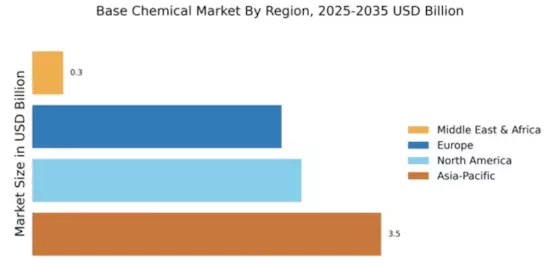
The North American base chemical market is projected to reach $2.7B by December 2025, driven by a strong emphasis on innovation and sustainability. Regulatory frameworks are increasingly supporting green chemistry initiatives, which are expected to enhance market growth. The demand for eco-friendly products is rising, influenced by consumer preferences and government policies aimed at reducing carbon footprints. This shift is expected to catalyze investments in research and development, further propelling market dynamics. Leading the market are the United States and Canada, with major players like Dow Inc. and ExxonMobil Chemical spearheading advancements. The competitive landscape is characterized by significant investments in technology and infrastructure, aimed at enhancing production efficiency. The presence of established companies, coupled with a robust supply chain, positions North America as a key player in The Base Chemical. However, challenges such as fluctuating raw material prices and regulatory compliance remain critical considerations.

Europe : Regulatory Frameworks and Innovation

Europe's base chemical market is anticipated to reach $2.5B by December 2025, driven by stringent regulatory frameworks and a strong push for sustainability. The European Union's Green Deal and REACH regulations are pivotal in shaping market dynamics, promoting the adoption of environmentally friendly practices. This regulatory environment is fostering innovation, encouraging companies to invest in sustainable technologies and processes, which is expected to enhance market growth significantly. Germany, France, and the Netherlands are leading the charge in the European market, with key players like BASF SE and LyondellBasell Industries N.V. at the forefront. The competitive landscape is marked by a focus on research and development, with companies striving to meet regulatory standards while also catering to evolving consumer demands. The presence of a well-established chemical industry, combined with a commitment to sustainability, positions Europe as a leader in The Base Chemical.

Asia-Pacific : Emerging Powerhouse in Chemicals

The Asia-Pacific region is projected to dominate the base chemical market with a size of $3.5B by December 2025, reflecting its status as an emerging powerhouse. Rapid industrialization, urbanization, and increasing demand for consumer goods are key drivers of this growth. Additionally, favorable government policies and investments in infrastructure are catalyzing market expansion. The region's focus on enhancing production capabilities and sustainability is expected to further boost market dynamics. China, Japan, and India are the leading countries in this region, with major players like SABIC and Mitsubishi Chemical Corporation driving innovation and competitiveness. The competitive landscape is characterized by a mix of established companies and emerging players, all vying for market share. The presence of a robust manufacturing base and a growing middle class are significant factors contributing to the region's dominance in The Base Chemical.

Middle East and Africa : Resource-Rich Frontier

The Middle East and Africa (MEA) base chemical market is expected to reach $0.31B by December 2025, presenting unique growth opportunities. The region's rich natural resources, particularly in oil and gas, provide a strong foundation for the chemical industry. Additionally, government initiatives aimed at diversifying economies and reducing dependency on oil are fostering growth in the chemical sector. Investments in infrastructure and technology are also expected to enhance production capabilities, driving market expansion. Leading countries in the MEA region include Saudi Arabia and South Africa, with key players like SABIC and Ineos Group Limited making significant contributions. The competitive landscape is evolving, with a focus on innovation and sustainability. As the region seeks to establish itself as a The Base Chemical, the combination of resource availability and strategic investments will be crucial for future growth.

Key Players and Competitive Insights

The Base Chemical Market is characterized by a dynamic competitive landscape, driven by factors such as increasing demand for sustainable products, technological advancements, and strategic mergers and acquisitions. Key players like BASF SE (DE), Dow Inc. (US), and SABIC (SA) are at the forefront, each adopting distinct strategies to enhance their market positioning. BASF SE (DE) emphasizes innovation through its commitment to sustainability, focusing on developing bio-based chemicals. In contrast, Dow Inc. (US) is heavily investing in digital transformation to optimize its operations and improve customer engagement. SABIC (SA) is pursuing regional expansion, particularly in Asia, to capitalize on the growing demand in emerging markets. Collectively, these strategies contribute to a competitive environment that is increasingly focused on sustainability and technological integration.

The business tactics employed by these companies include localizing manufacturing and optimizing supply chains to enhance efficiency and responsiveness to market demands. The market structure appears moderately fragmented, with several key players exerting considerable influence. This fragmentation allows for a variety of competitive strategies, as companies seek to differentiate themselves through innovation and operational excellence.

In November 2025, BASF SE (DE) announced a partnership with a leading biotechnology firm to develop sustainable bio-based chemicals. This strategic move is likely to enhance BASF's product portfolio and align with global sustainability goals, positioning the company favorably in a market that increasingly values eco-friendly solutions. The collaboration may also facilitate access to new technologies, further strengthening BASF's competitive edge.

In October 2025, Dow Inc. (US) launched a new digital platform aimed at streamlining its supply chain processes. This initiative is expected to improve operational efficiency and reduce costs, allowing Dow to respond more swiftly to customer needs. The integration of advanced analytics and AI into its operations could potentially transform Dow's approach to market responsiveness, setting a new standard in the industry.

In September 2025, SABIC (SA) expanded its production capacity in Asia by investing in a new facility in Saudi Arabia. This expansion is strategically significant as it positions SABIC to meet the rising demand for base chemicals in the region, particularly in the automotive and construction sectors. The move not only enhances SABIC's production capabilities but also reinforces its commitment to regional growth and market leadership.

As of December 2025, current competitive trends in the Base Chemical Market are increasingly defined by digitalization, sustainability, and the integration of AI technologies. Strategic alliances are becoming more prevalent, as companies recognize the need to collaborate to innovate and meet evolving customer expectations. Looking ahead, competitive differentiation is likely to shift from traditional price-based competition to a focus on innovation, technological advancements, and supply chain reliability. This evolution suggests that companies that prioritize these areas will be better positioned to thrive in an increasingly complex market.

Key Companies in the Base Chemical Market market include

Industry Developments

October 2021- Evonik, a specialty chemicals firm, disclosed that the company plans to deprive its basic chemicals production site in Lülsdorf, Germany. The company statement revealed that the search for the new owner of the complete facility is still going on. Still, the firm is also considering alternatives to sell parts of the business. Christian Kullmann's chairman of the firm's executive board said that Lülsdorf had been a great location choice for basic chemicals for decades. However, the company's focus is on greater-margin specialty chemicals. Further growth of the site doesn't make sense for the company.

Thus, Evonik has started looking for new owners who can best shape the site's future. Lülsdorf has a massive capacity as a site for chemical production. March 2021- IPO for Rs 600 crore by Laxmi Organic Industries Limited (LOIL) opens in Maharashtra. The ethyl-acetate manufacturer based in Maharashtra is strengthening its position in the cash flow-rich basic chemicals space and growing rapidly in a few specialty chemicals- especially in fluorochemicals. LOIL, Business brief Incorporated in 1989, is one of the largest producers of ethyl acetate across India, with a local market share of over 30 percent.

Basic Chemicals have advanced due to the various discoveries made about their many basic uses in the industry. These uses include the manufacturing of benzene in ammonia, calcium carbonate, sodium hydroxide, chlorine, and sulfuric acid. Basic Chemicals Market are also developing due to their use in products such as rubber plastic fiber soaps and detergents, ink solvents, and fertilizers. Basic Chemicals Market are advancing due to their end users' development such as transportation packaging agriculture textile electronics and electrical paints coatings.

And all these end users are developing mainly in the developed as well as developing countries.Other advancements include growing demand for packaged beverages and food products due to the convenience and improved lifestyle of the population. Also, there are developments made in the demand factor of Basic Chemicals Market due to increasing economies in countries such as India and China which results due to rising numbers of the working population.

Future Outlook

Base Chemical Market Future Outlook

The Base Chemical Market is projected to grow at a 4.6% CAGR from 2024 to 2035, driven by increasing demand for sustainable materials and technological advancements.

New opportunities lie in:

  • Expansion into bio-based chemical production facilities.
  • Investment in advanced recycling technologies for chemical feedstocks.
  • Development of digital supply chain solutions for enhanced efficiency.

By 2035, the market is expected to achieve robust growth, positioning itself as a leader in sustainable chemical solutions.

Market Segmentation

Base Chemical Market End Use Outlook

  • Fertilizers
  • Plastics
  • Detergents
  • Coatings
  • Adhesives

Base Chemical Market Application Outlook

  • Agriculture
  • Pharmaceuticals
  • Construction
  • Automotive
  • Textiles

Base Chemical Market Chemical Type Outlook

  • Alkalis
  • Acids
  • Salts
  • Oxides
  • Hydrocarbons

Base Chemical Market Production Process Outlook

  • Thermal Cracking
  • Catalytic Reforming
  • Hydrocracking
  • Electrolysis
  • Fermentation

Base Chemical Market Distribution Channel Outlook

  • Direct Sales
  • Wholesale
  • Retail
  • E-commerce
  • Distributors

Report Scope

MARKET SIZE 20249.01(USD Billion)
MARKET SIZE 20259.42(USD Billion)
MARKET SIZE 203514.77(USD Billion)
COMPOUND ANNUAL GROWTH RATE (CAGR)4.6% (2024 - 2035)
REPORT COVERAGERevenue Forecast, Competitive Landscape, Growth Factors, and Trends
BASE YEAR2024
Market Forecast Period2025 - 2035
Historical Data2019 - 2024
Market Forecast UnitsUSD Billion
Key Companies ProfiledBASF SE (DE), Dow Inc. (US), SABIC (SA), LyondellBasell Industries N.V. (NL), ExxonMobil Chemical (US), Ineos Group Limited (GB), Mitsubishi Chemical Corporation (JP), Formosa Plastics Corporation (TW), Eastman Chemical Company (US)
Segments CoveredApplication, End Use, Chemical Type, Production Process, Distribution Channel
Key Market OpportunitiesAdoption of sustainable production methods drives innovation in the Base Chemical Market.
Key Market DynamicsRising demand for sustainable chemicals drives innovation and regulatory shifts in the base chemical market.
Countries CoveredNorth America, Europe, APAC, South America, MEA

Market Highlights

Author
Anshula Mandaokar
Team Lead - Research

Anshula Mandaokar holds an academic degree in Chemical Engineering and has been contributing to the field for more than 5 years. She has expertise in Market Research and Business Consulting and serves as a Team Lead for a reputed Market Research firm under the Chemicals and Materials domain spectrum. She has worked on multiple projects, generating explicit results in a quick turnaround time. Her understanding of data interpretation justifies her role as a leader.

Leave a Comment

FAQs

What are some of the most commonly used Basic Chemicals?

Some of the most commonly used basic Chemicals include- Benzene, Ethylene, Formaldehyde, Ammonia, Calcium Carbonate, Sodium hydroxide, Chlorine, Sulfuric Acid and others

What are some commonly used products in the Basic Chemical Industry?

The products used in the Basic Chemical Industry are plastic, rubber, fiber, soaps & detergent, ink, solvents, and fertilizers.

What are the Major Causes that Drive the Basic Chemicals Market Demand?

The Major Causes that drive the Basic Chemical Market Demands are the establishment of major and use industries such as transportation packaging agriculture textile electricals and electronics pharmaceuticals paints and coatings in developing as well as developed regions.

What are the Basic Segmentations made into the Basic Chemical Market Outlook?

The Basic Segmentations made into the Basic Chemical Market Outlook are based on Type, based on Application, and based on Region.

What is the CAGR value for Basic Chemicals market ?

The Global Basic Chemicals Market is expected to reach over USD 650.5 Billion by 2035, with a CAGR of 4.20% from (2025-2035).

Download Free Sample

Kindly complete the form below to receive a free sample of this Report

Compare Licence

×
Features License Type
Single User Multiuser License Enterprise User
Price $4,950 $5,950 $7,250
Maximum User Access Limit 1 User Upto 10 Users Unrestricted Access Throughout the Organization
Free Customization
Direct Access to Analyst
Deliverable Format
Platform Access
Discount on Next Purchase 10% 15% 15%
Printable Versions