Body Contouring Market (2026 - 2035)

Body Contouring Market Research Report: Size, Share, Trend Analysis By Devices (Non-Invasive Devices (Radio Frequency Lipoplasty Devices and High Intensity Focused Ultrasound Lipoplasty Devices), Minimally Invasive Devices (Laser Assisted Lipolysis Devices and Radio Frequency Assisted Liposuction Devices) , Invasive Devices (Ultrasound Assisted Liposuction and Other), By End Users (Clinical Research Organizations, Hospitals, and Medical Spas), by Region (North America, Europe, Asia-Pacific, and Rest of the World)) - Growth Outlook & Industry Forecast Till 2035
ID: MRFR/MED/0835-HCR
115 Pages
Satyendra Maurya, Kinjoll Dey
Last Updated: July 12, 2026
Body Contouring Market
Market Size
Forecast Period2026-2035
CAGR (2026-2035)14.8%
2025 Market SizeUSD 1.71 Billion
2035 Market SizeUSD 6.79 Billion
Key Players
AbbVie
Cynosure
InMode
BTL Industries
Cutera
Syneron Candela
Opportunities
  • Emerging-Market Clinic Expansion
  • Data-Driven Outcome Monetization
  • Male-Demographic Penetration

Body Contouring Market Summary

The Body Contouring Market reached USD 1.71 billion in 2025 and is projected to grow from USD 1.96 billion in 2026 to USD 6.79 billion by 2035, advancing at a 14.8% CAGR through the forecast window. Rising disposable incomes across middle-income demographics and the normalization of aesthetic procedures among adults aged 25–40 are the twin catalysts behind this expansion. Regulatory bodies in the United States and European Union have accelerated clearance pathways for energy-based devices, trimming average approval timelines by roughly 15–20% since 2022 [1].

A technology shift is reshaping the Body Contouring Market from single-modality surgical tools toward multi-application, AI-calibrated platforms that combine fat reduction, tissue tightening, and muscle stimulation in one session. Legacy vacuum-assisted liposuction systems are steadily giving ground to cryolipolysis, radiofrequency, and high-intensity focused electromagnetic (HIFEM) combinations. Global aesthetic-device capital expenditure exceeded USD 8.4 billion in 2024, reflecting provider confidence in next-generation hardware.

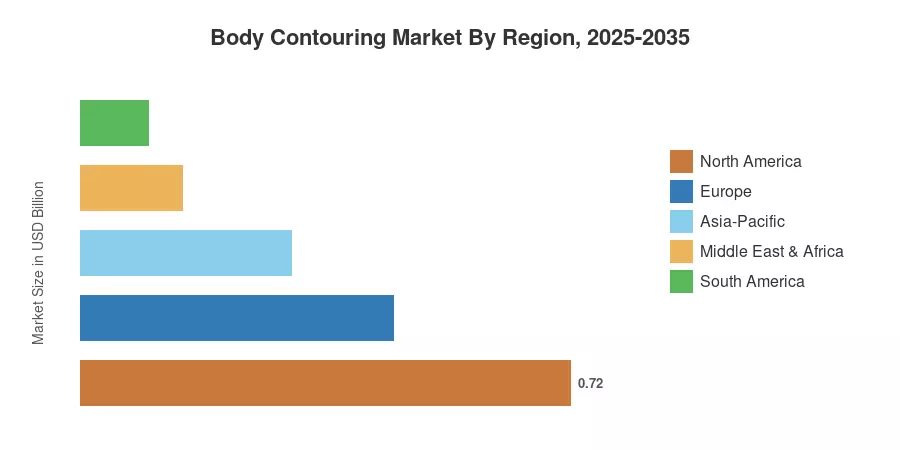
North America commanded roughly 42% of Body Contouring Market revenue in 2025, underpinned by mature medical-spa infrastructure and high consumer awareness. Asia-Pacific is the fastest-growing region at an 18.3% CAGR, fueled by expanding insurance-adjacent wellness spending in China, South Korea, and India. Europe held the second-largest share at approximately 27%, driven by strong demand in Germany, the UK, and France. The decade ahead will be defined by subscription-model adoption, AI-driven dose optimization, and deeper penetration into tier-2 and tier-3 cities worldwide.


Key Report Takeaways

• By Product Type

  • Non-invasive and minimally invasive devices captured roughly 62% of the Body Contouring Market in 2025, reflecting consumer preference for zero-downtime procedures.
  • Invasive devices — including laser-assisted liposuction platforms — are forecast to grow at a 12.4% CAGR through 2035, sustained by demand for high-volume fat extraction in clinical settings.

• By Application

  • Skin tightening and cellulite reduction accounted for approximately 45% of global Body Contouring Market revenue in 2025.
  • Muscle toning and definition represent the fastest-growing application segment, projected at a 19.7% CAGR to 2035 as HIFEM platforms gain regulatory clearances in new geographies.

• By End User

  • Hospitals retained roughly 69% of Body Contouring Market share in 2025 owing to procedural volume and reimbursement infrastructure.
  • Medical spas are expanding at an 18.2% CAGR, driven by subscription pricing models and consumer convenience expectations.

• By Region

  • North America led the Body Contouring Market with a 42% revenue share in 2025.
  • Asia-Pacific is set to register the highest regional CAGR of 18.3% through 2035, powered by rising aesthetic awareness in China, South Korea, and India.


Market Size and Forecast (2021–2035)

Data for 2021–2024 draws on historical shipment records, provider revenue filings, and validated third-party databases. Forecast estimates (2026–2035) apply a compound-growth model calibrated to regional demand trajectories, regulatory pipeline analysis, and technology adoption curves published by Market Research Future.
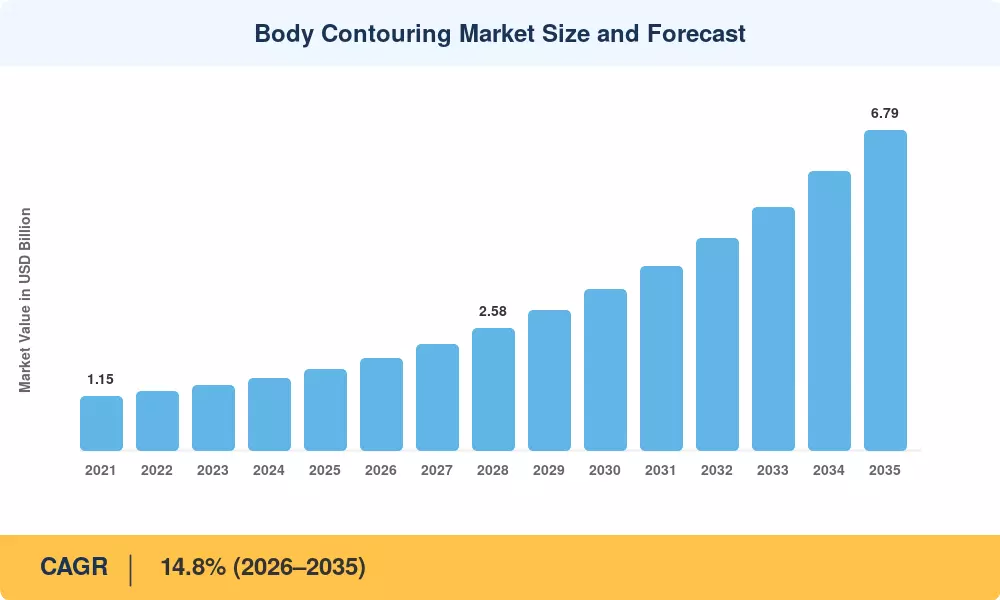
Body Contouring Market Size and Forecast
Our Impact
Enabled $4.3B Revenue Impact for Fortune 500 and Leading Multinationals
Partnering with 2000+ Global Organizations Each Year
30K+ Citations by Top-Tier Firms in the Industry

Driver Impact Analysis

Driver ~% Impact on CAGR Geographic Relevance Impact Timeline
Rising aesthetic awareness among younger demographics +2.8% Global Short-term
Multi-modal platform convergence (RF + cryo + HIFEM) +2.5% North America, Europe Medium-term
Medical-spa subscription models & recurring-revenue structures +2.2% North America, Asia-Pacific Short-term
AI-driven dose calibration and procedural automation +1.9% Global Medium-term
Regulatory pathway acceleration for energy-based devices +1.6% North America, Europe Medium-term
Expanding middle-class disposable income in Asia-Pacific +1.4% Asia-Pacific, South America Long-term
Social-media-driven demand and influencer-led awareness +1.1% Global Short-term


Rising Aesthetic Awareness Among Younger Adults

According to consumer surveys conducted by the International Society of Aesthetic Plastic Surgery (ISAPS), there was a 34% increase in the number of non-surgical body procedures performed on adults aged 25–34 between 2021 and 2024 [7]. This once-luxury purchase has been transformed into a routine wellness expenditure as a result of de-stigmatization and social media visibility. This demographic shift is the most significant near-term catalyst for the Body Contouring Market, expanding the addressable consumer base significantly beyond conventional cosmetic-surgery patients.


Multi-Modal Platform Convergence

Device manufacturers now bundle cryolipolysis, radiofrequency tissue heating, and HIFEM muscle stimulation into single platforms that complete a full-body session in under 60 minutes. The U.S. FDA cleared three such combined-modality systems in 2024 alone [8]. Providers benefit from higher per-visit revenue and shorter appointment slots, while patients experience consolidated recovery — a combination that drives repeat bookings and accelerates equipment ROI across the Body Contouring Market.

Subscription-Based Pricing at Medical Spas

Medical spas have begun offering monthly membership plans that bundle body-contouring sessions with skin-rejuvenation treatments. Industry data suggests subscription clients generate 2.4× the lifetime revenue of pay-per-visit patients [9]. These programmes stabilize provider cash flows and lower per-procedure costs for consumers, creating a self-reinforcing adoption loop that is especially pronounced in the Body Contouring Market across the United States and South Korea.

AI-Driven Dose Calibration

Artificial-intelligence modules embedded in newer platforms analyse tissue impedance and subcutaneous fat depth in real time, adjusting energy delivery to optimize efficacy and minimize adverse events. Clinical trials report a 22% improvement in procedural consistency when AI calibration is active [10]. As these systems achieve regulatory clearance in additional jurisdictions, they will lower the skill threshold for operators and expand the Body Contouring Market into smaller clinics that previously lacked specialized staff.


Restraints Impact Analysis

The restraint impacts below are directional estimates of drag on aggregate CAGR. They reflect structural headwinds rather than deterministic subtractions.

Restraint ~% Impact on CAGR Geographic Relevance Impact Timeline
High upfront capital costs for multi-modal platforms –1.5% Global Short-term
Fragmented and evolving device-safety regulations –1.2% Europe, Asia-Pacific Medium-term
Supply-chain disruptions for proprietary applicator tips –0.9% Global Short-term
Consumer expectations–outcomes gap and refund pressures –0.7% North America Medium-term
Reimbursement exclusion for cosmetic procedures –0.6% Global Long-term


High Capital Costs

Multi-modal body-contouring platforms typically range from USD 120,000 to USD 350,000, with proprietary consumable applicators adding USD 15,000–25,000 per year [13]. Smaller clinics and independent practitioners — particularly in price-sensitive geographies — struggle to justify such outlays without guaranteed patient volume. Leasing and device-as-a-service models are emerging to address this barrier, yet adoption remains uneven across the Body Contouring Market.

Regulatory Fragmentation

While the FDA has streamlined 510(k) pathways for energy-based aesthetic devices, the European Medical Device Regulation (EU MDR 2017/745) has tightened conformity-assessment requirements, extending approval timelines by 6–12 months for several manufacturers [6]. In Asia-Pacific, country-specific registration regimes — from Japan's PMDA to India's CDSCO — create additional cost layers. This patchwork slows global product launches and constrains Body Contouring Market growth in high-potential emerging territories.

Supply-Chain Vulnerabilities

Recurring consumable costs, such as proprietary applicator tips and cooling gel pads, are contingent upon single-source manufacturing. This vulnerability was exposed by the logistics disruptions of the pandemic, which resulted in lead times of up to 16 weeks for specific components in 2023 [14]. Suppliers have implemented production diversification strategies; however, intermittent risks to the Body Contouring Market persist due to persistent semiconductor constraints for embedded control boards.


Body Contouring Market Opportunities

Emerging-Market Clinic Expansion

Tier-2 and tier-3 cities in India, Brazil, and Southeast Asia represent largely untapped demand reservoirs. Urban middle-class populations in these regions are projected to grow by 180 million consumers between 2025 and 2032 [11]. Compact, lower-cost device variants tailored for smaller clinic footprints could unlock substantial Body Contouring Market share where premium multi-modal platforms remain cost-prohibitive.

Data-Driven Outcome Monetization

Manufacturers that aggregate anonymized procedural data across thousands of treatments can build predictive-outcome models and license them to providers as software-as-a-service layers. This creates a recurring revenue stream independent of hardware sales and strengthens vendor lock-in — a business-model evolution with direct parallels to the medtech platform-economics trend reshaping the broader Body Contouring Market.

Male-Demographic Penetration

According to ISAPS data, men accounted for only 14% of non-surgical body procedures in 2024. However, male-focused aesthetic spending is increasing at a rate of 21% annually, which is approximately twice the rate of growth for women [7]. A significant whitespace opportunity in the Body Contouring Market is represented by targeted marketing, male-specific treatment protocols for abdominal and pectoral contouring, and partnerships with men's health platforms.


Combination Wellness Packages

Wellness tourism destinations in Thailand, Turkey, and Mexico are increasingly bundling body-contouring sessions with recovery retreats, dental work, and regenerative medicine. Cross-selling within curated wellness packages elevates average transaction values by 35–50% according to medical-tourism trade data [17]. Providers that co-locate contouring suites within integrated wellness centres can capture demand that would otherwise remain fragmented.

Home-Use and Wearable Device Segment

Consumer interest in at-home aesthetic devices is accelerating, with the global personal beauty-device segment surpassing USD 12 billion in 2024. Scaled-down radiofrequency and microcurrent devices designed for home use can serve as entry points that drive consumers toward professional treatments, expanding the top of the Body Contouring Market funnel.


Body Contouring Market Future Outlook

AI-Powered Procedural Autonomy

By 2030, AI modules are expected to manage 40–50% of energy-delivery parameters autonomously, reducing operator dependency and standardizing outcomes across varying skill levels [10]. This shift will enable smaller clinics to offer premium treatments without extensive specialist training, democratizing access across the Body Contouring Market and driving volume growth in underserved regions.

Platform Economics and Recurring Revenue

The transition from capital-equipment sales to platform-as-a-service models will accelerate through 2035. Vendors that bundle hardware leases with software subscriptions, consumable deliveries, and outcome-analytics dashboards will capture 2–3× the lifetime customer value compared to traditional one-time sales [9]. This economics model is expected to reshape competitive dynamics across the Body Contouring Market, favouring vendors with integrated digital ecosystems.

Sustainability and Device Lifecycle Management

Environmental regulations and ESG reporting requirements are pushing manufacturers toward modular device architectures that extend platform lifespans through upgradeable components. The World Health Organization's 2024 guidance on medical-device lifecycle sustainability targets a 25% reduction in healthcare equipment e-waste by 2032 [19]. Body Contouring Market participants that adopt refurbishment and component-recycling programmes will gain procurement advantages with hospital systems subject to sustainability mandates.

Convergence with Regenerative Medicine

The premium treatment stratum is emerging at the intersection of regenerative medicine and body contouring, which involves the integration of energy-based devices, platelet-rich plasma, exosome therapies, and stem-cell-derived growth factors. Clinical studies have demonstrated that the use of biologic stimulants in conjunction with contouring procedures results in improved tissue-remodelling outcomes [20]. The addressable Body Contouring Market could be expanded by the introduction of medically supervised protocols that blur the line between aesthetic enhancement and therapeutic intervention as a result of this convergence.


Body Contouring Market Segmentation

By Product Type

Segment Key Metric Primary Demand Driver
Non-Invasive & Minimally Invasive Devices 62% share (2025) Zero-downtime consumer preference
Invasive Devices 12.4% CAGR (2026–2035) High-volume surgical fat extraction


Non-invasive and minimally invasive devices dominate the Body Contouring Market because patients increasingly prioritize treatments that require no anaesthesia, no incisions, and minimal recovery time. Cryolipolysis systems, radiofrequency platforms, and HIFEM devices together form the backbone of this segment, with multi-modal systems commanding the highest average selling prices. Provider adoption is driven by shorter procedure times that allow more appointments per day and lower liability profiles compared to surgical alternatives.

Invasive devices — laser-assisted liposuction, ultrasound-assisted liposuction, and power-assisted platforms — retain relevance in the Body Contouring Market for patients requiring larger-volume fat removal or body-lift procedures that non-invasive options cannot yet replicate. Surgical centres and hospitals represent the primary buyers, and procedural volumes remain stable in geographies where board-certified plastic surgeons are plentiful.

By Application

Segment Key Metric Primary Demand Driver
Skin Tightening & Cellulite Reduction 45% share (2025) Broad age-demographic appeal
Fat Reduction USD 0.49 Billion (2025) Core non-invasive treatment category
Muscle Toning & Definition 19.7% CAGR (2026–2035) HIFEM technology expansion


Skin tightening and cellulite reduction lead the Body Contouring Market application landscape because they serve the widest patient age range — from post-pregnancy women in their 30s to adults over 55 addressing age-related laxity. Radiofrequency and ultrasound platforms are the dominant modalities, and treatment protocols typically involve 3–6 sessions spaced two to four weeks apart.

Muscle toning and definition are the standout growth story. HIFEM platforms that induce supramaximal muscle contractions have created an entirely new treatment category that did not exist at commercial scale before 2018. Rapid regulatory clearances and strong social-media visibility have positioned this application as the fastest-expanding segment within the Body Contouring Market, appealing especially to fitness-oriented consumers who seek sculpted definition beyond what exercise alone delivers.

By End User

Segment Key Metric Primary Demand Driver
Hospitals 69% share (2025) Procedural volume, reimbursement structures
Medical Spas 18.2% CAGR (2026–2035) Subscription models, consumer convenience
Dermatology Clinics & Others USD 0.17 Billion (2025) Specialist referral pathways


Hospitals retain the largest Body Contouring Market share by end user because they perform both invasive and non-invasive procedures under one roof, leveraging existing surgical infrastructure and multi-specialty staffing. Capital-budget cycles in large hospital systems also allow for procurement of premium multi-modal platforms that smaller facilities cannot finance.

Medical spas are rapidly closing the gap. Their consumer-facing branding, extended operating hours, and membership-based pricing make them the preferred access point for first-time patients. The Body Contouring Market trajectory in this channel points toward a structural share shift as med-spa chains professionalise operations and invest in clinical governance frameworks.


Regional Market Share Analysis

Region Key Metric Primary Investment Themes
North America 42% share (2025) Med-spa franchising, AI device upgrades
Europe 27% share (2025) EU MDR compliance investments, cross-border wellness tourism
Asia-Pacific 18.3% CAGR (2026–2035) South Korea K-beauty convergence, China urban expansion
South America USD 0.10 Billion (2025) Brazil private-clinic growth, medical-tourism corridors
Middle East & Africa 8.7% CAGR (2026–2035) UAE luxury wellness, Saudi Vision 2030 healthcare spend
Total USD 1.71 Billion (2025)

The Body Contouring Market exhibits clear regional stratification, with North America leading on revenue intensity and Asia-Pacific accelerating on growth velocity.


North America

Country Key Metric Key Driver
United States 78% of regional share Med-spa density and consumer financing options
Canada 13.2% CAGR Provincial wellness-tax incentives
Mexico USD 0.04 Billion (2025) Medical-tourism inflows from the US


The United States anchors the Body Contouring Market in North America through its dense network of over 8,500 medical spas and strong consumer familiarity with branded device platforms. FDA 510(k) clearances for combined RF-HIFEM systems in 2024 broadened treatment menus, while patient-financing platforms like CareCredit and Cherry lower out-of-pocket barriers. Canada's market benefits from provincial programs that allow aesthetic clinics to claim equipment depreciation at accelerated rates, and Mexico's reputation as a medical-tourism hub continues to draw US patients seeking lower-cost contouring packages [17].

Europe

Country Key Metric Key Driver
Germany 24% of regional share Private-clinic infrastructure, high per-capita spending
United Kingdom 13.8% CAGR CQC-registered clinic expansion
France USD 0.06 Billion (2025) Dermatology-led adoption pathway
Italy 10.1% CAGR Aesthetic tourism in northern regions
Spain USD 0.03 Billion (2025) Coastal wellness destination positioning
Nordic Countries 9.8% CAGR High digital-health readiness
Russia USD 0.02 Billion (2025) Import-substitution policy effects
Rest of Europe 11.4% CAGR Poland, Czech Republic clinic build-outs


Germany's Body Contouring Market leadership in Europe rests on its high density of private dermatology and aesthetic-surgery practices, supported by above-average household spending on elective procedures. The EU MDR transition has increased compliance costs for device makers, but has simultaneously elevated quality standards that favour established multinational vendors over smaller entrants [6]. The UK's Care Quality Commission framework has driven professionalization of the med-spa segment, and France continues to see growth through dermatologist-prescribed treatment pathways.

Asia-Pacific

Country Key Metric Key Driver
China 31% of regional share Urban wellness consumption, medical-aesthetics chains
India 21.4% CAGR Rising middle-class spend, metro clinic expansion
Japan USD 0.04 Billion (2025) Aging-population skin-laxity treatments
South Korea 19.8% CAGR K-beauty ecosystem crossover demand
ASEAN USD 0.03 Billion (2025) Thailand and Singapore wellness tourism
Rest of Asia-Pacific 16.5% CAGR Emerging regulatory approvals


Asia-Pacific is the engine of future growth for the Body Contouring Market, with China's medical-aesthetics chains expanding aggressively beyond tier-1 cities and South Korea's K-beauty culture creating crossover demand for clinical contouring alongside skincare routines. India's expanding metropolitan middle class is driving clinic openings at an estimated rate of 450 new aesthetic centres per year [11]. Japan's ageing population generates sustained demand for skin-laxity and body-firming treatments that complement the region's existing dermatological infrastructure.

South America

Country Key Metric Key Driver
Brazil 67% of regional share Strong plastic-surgery culture, domestic manufacturers
Argentina 11.3% CAGR Economic stabilization driving elective-procedure recovery
Rest of South America USD 0.01 Billion (2025) Early-stage market development


Brazil dominates South America's Body Contouring Market thanks to a deeply rooted cosmetic-procedure culture — the country ranks among the top three globally for aesthetic procedures performed annually [7]. Domestic device assembly operations reduce import costs, and a large population of board-certified plastic surgeons ensures procedural expertise. Argentina's volatile macroeconomic environment has constrained growth, though recent currency stabilization is beginning to release pent-up elective-procedure demand.

Middle East & Africa

Country Key Metric Key Driver
Saudi Arabia 28% of regional share Vision 2030 wellness infrastructure
UAE 15.7% CAGR Dubai medical-tourism positioning
South Africa USD 0.01 Billion (2025) Private-healthcare segment adoption
Egypt 12.6% CAGR Growing affluent urban consumer base
Rest of MEA USD 0.01 Billion (2025) Nascent market formation


The Body Contouring Market in the Middle East and Africa is led by Saudi Arabia, where Vision 2030 healthcare investments include dedicated aesthetic-wellness zones in Riyadh and Jeddah. The UAE, particularly Dubai, leverages its medical-tourism brand to attract patients from across the Gulf Cooperation Council and South Asia. Sub-Saharan markets remain nascent but are beginning to register equipment imports through South Africa's private-healthcare distribution networks.


Body Contouring Market By Region, 2025-2035

Competitive Benchmarking

The Body Contouring Market exhibits medium concentration, with an estimated Herfindahl–Hirschman Index (HHI) below 1,500 and the top five players holding roughly 45–52% of global revenue. Competition centres on platform breadth, clinical-evidence depth, and provider-financing flexibility. Smaller challengers gain share through niche-modality innovation, while established players defend positions through portfolio bundling and training-academy networks.

Company Est. Revenue Share Range Key Offerings for Body Contouring Market Strategic Positioning
AbbVie (Allergan Aesthetics) ~10–14% CoolSculpting Elite cryolipolysis platform Market pioneer in non-invasive fat freezing; extensive brand equity
Cynosure (Hologic) ~8–11% SculpSure laser lipolysis, TempSure RF Broad portfolio spanning fat reduction and skin tightening
InMode ~7–10% BodyTite, EvolveX, Morpheus8 Body RF-assisted lipolysis and subdermal remodelling specialist
BTL Industries ~7–10% Emsculpt NEO, Exilis Ultra 360 HIFEM + RF dual-modality dominance
Cutera ~5–7% truSculpt iD, truSculpt fleX Monopolar RF platform with low-consumable cost model
Syneron Candela ~5–7% UltraShape Power, VelaShape III Focused ultrasound + IR/RF cellulite platform
Venus Concept ~3–5% Venus Bliss MAX, Venus Legacy Subscription and pay-per-treatment device model
Alma Lasers (Sisram Medical) ~3–5% Accent Prime, Opus Plasma Combined ultrasound + unipolar RF technology
Sciton ~2–4% SkinTyte II, JOULE platform Premium multi-application surgical-aesthetic laser
Solta Medical (Bausch Health) ~2–4% Thermage FLX, Liposonix Radiofrequency tissue tightening pioneer


Recent News & Developments


  • InMode (March 2024): Expanded its EvolveX platform distribution into Southeast Asia through partnerships with device distributors in Thailand and Vietnam, aiming to capture growing regional demand [23].


  • Alma Lasers (May 2023): Unveiled the Accent Prime Hybrid module at the European Academy of Dermatology and Venereology (EADV) congress, combining simultaneous unipolar and bipolar RF delivery [24].
  • Cutera (October 2024): Reported 22% year-over-year growth in truSculpt system placements across Asia-Pacific, driven by demand from franchised aesthetic-clinic chains in India and South Korea [25].


Body Contouring Market Report Scope

Parameter Detail
Market Scope Global Body Contouring Market across devices, applications, end users, and geographies
Study Period 2021–2035
CAGR (Forecast Period) 14.8% (2026–2035)
Market Size — Base Year (2025) USD 1.71 Billion
Market Size — Forecast Endpoint (2035) USD 6.79 Billion
Fastest Growing Segment Muscle Toning & Definition (by Application); Medical Spas (by End User)
Companies Profiled AbbVie, Cynosure, InMode, BTL Industries, Cutera, Syneron Candela, Venus Concept, Alma Lasers, Sciton, Solta Medical
Valuation Currency USD Billion


FAQs

How does cryolipolysis compare with radiofrequency for abdominal fat reduction in terms of per-session efficacy?
Cryolipolysis typically reduces subcutaneous fat by 20–25% per session, while radiofrequency averages 15–20% fat reduction with added skin-firming benefits [10]. Cryolipolysis suits patients focused on fat volume, whereas radiofrequency appeals to those wanting combined tightening.
What financing structures are medical spas using to lower patient acquisition costs in the Body Contouring Market?
Many med spas partner with third-party financing platforms offering 0% APR plans for 6–12 months, converting high upfront treatment costs into manageable instalments [9]. This approach increases conversion rates by 30–40% compared to full-payment models.
Which Body Contouring Market regulatory pathway — FDA 510(k) or EU MDR — presents greater commercialization risk for new entrants?
EU MDR imposes stricter clinical-evidence requirements and longer conformity-assessment timelines than the FDA 510(k) predicate-device pathway [6]. New entrants typically launch in the US first and treat European approval as a second-phase market entry.
How are providers managing patient expectations to reduce post-treatment dissatisfaction rates in the Body Contouring Market?
Leading clinics use standardized 3D body-scanning at intake and follow-up to set objective benchmarks [15]. Pre-treatment consultations now include realistic outcome ranges rather than idealized results.
What role does provider training certification play in competitive differentiation within the Body Contouring Market?
Manufacturers that operate branded training academies — such as BTL's education centres — create operator loyalty and referral networks [22]. Certified providers report 25% higher patient throughput due to optimized treatment protocols.
How are device leasing models affecting Body Contouring Market entry barriers for independent practitioners?
Pay-per-pulse and monthly-lease structures reduce upfront investment from USD 200,000+ to under USD 3,000 per month [9]. This shift opens the market to solo practitioners and small clinics previously priced out.
What insurance or reimbursement pathways, if any, exist for body-contouring procedures in the Body Contouring Market?
Most commercial insurers classify contouring as cosmetic and exclude coverage, though post-bariatric panniculectomy may qualify under reconstructive codes [16]. Flexible spending accounts (FSAs) in the US occasionally cover physician-prescribed treatments.    
Author
Author
Author Profile
Satyendra Maurya LinkedIn
Research Analyst
An accomplished research analyst with high proficiency in market forecasting, data visualization, competitive benchmarking, and others. He holds a pronounced track record in research and consulting projects for sectors such as life sciences, medical devices, and healthcare IT. His capabilities in qualitative and quantitative analysis have resulted in positive client outcomes. Working on niche market trends, opportunities, sales, and forecasted value is part of his skill set.
Co-Author
Co-Author Profile
Kinjoll Dey LinkedIn
Senior Research Analyst
He is an extremely curious individual currently working in Healthcare and Medical Devices Domain. Kinjoll is comfortably versed in data centric research backed by healthcare educational background. He leverages extensive data mining and analytics tools such as Primary and Secondary Research, Statistical Analysis, Machine Learning, Data Modelling. His key role also involves Technical Sales Support, Client Interaction and Project management within the Healthcare team. Lastly, he showcases extensive affinity towards learning new skills and remain fascinated in implementing them.

Research Approach


Secondary Research

The secondary research process involved comprehensive analysis of regulatory databases for medical devices, peer-reviewed aesthetic medicine journals, clinical publications, and authoritative health organizations. Key sources included the US Food & Drug Administration (FDA) Center for Devices and Radiological Health (CDRH), European Medicines Agency (EMA) Medical Device Coordination Group (MDCG), International Society of Aesthetic Plastic Surgery (ISAPS.org), American Society for Dermatologic Surgery (ASDS), American Society of Plastic Surgeons (ASPS), Centers for Disease Control and Prevention (CDC) National Center for Health Statistics, World Health Organization (WHO) Global Health Observatory, National Institutes of Health (NIH) National Center for Biotechnology Information (NCBI/PubMed), ClinicalTrials.gov, IEEE Standards Association (medical device technology standards), AdvaMed (Advanced Medical Technology Association), Japan Ministry of Health Labour and Welfare (MHLW) Medical Device Division, China National Medical Products Administration (NMPA), OECD Health Statistics, and national health ministry reports from key aesthetic medicine markets. These sources were utilized to collect procedural statistics, FDA 510(k) and PMA approval data, CE marking certifications, safety surveillance reports, obesity prevalence trends, and competitive landscape analysis for radio frequency lipoplasty devices, high intensity focused ultrasound systems, laser-assisted lipolysis devices, and ultrasound-assisted liposuction technologies.


Primary Research

To gather both qualitative and quantitative insights, supply-side and demand-side stakeholders were interviewed during the primary research process. CEOs, VPs of Product Development, heads of regulatory affairs, and commercial directors from companies that make body contouring devices, OEMs of cosmetic lasers, and suppliers of radio frequency components were examples of supply-side sources. Board-certified plastic surgeons, dermatologists, medical spa directors, hospital surgical device procurement leads, clinical research organization (CRO) managers in charge of aesthetic device trials, and proprietors of specialist aesthetic clinics were among the demand-side sources. Primary research confirmed product pipeline timelines for RF and laser technologies, validated market segmentation across device categories, and collected data on clinical adoption patterns, reimbursement dynamics for invasive versus non-invasive procedures, pricing strategies for capital equipment versus consumables, and utilization trends across CROs, hospitals, and medical spa facilities.

Primary Respondent Breakdown:

By Designation: C-level Primaries (32%), Director Level (38%), Others (30%)

By Region: North America (36%), Europe (29%), Asia-Pacific (26%), Rest of World (9%)


Market Size Estimation

Global market valuation was derived through revenue mapping of capital equipment and procedure volume analysis. The methodology included:

Identification of 35+ key manufacturers across North America, Europe, Asia-Pacific, and Latin America specializing in radio frequency, laser, ultrasound, and HIFU technologies

Product mapping across non-invasive devices (radio frequency lipoplasty, HIFU lipoplasty), minimally invasive devices (laser-assisted lipolysis, RF-assisted liposuction), and invasive devices (ultrasound-assisted liposuction)

Analysis of reported and modeled annual revenues specific to body contouring device portfolios including capital equipment sales and recurring consumables revenue

Coverage of tier-1 and tier-2 manufacturers representing 65-70% of global market share in 2024

Extrapolation using bottom-up (procedure volume × ASP by country/region differentiated by invasive vs. non-invasive modalities) and top-down (manufacturer revenue validation and installed base analysis) approaches to derive segment-specific valuations for CRO, hospital, and medical spa end-user channels

Download Free Sample

Kindly complete the form below to receive a free sample of this Report

Download PDF ×

We do not share your information with anyone. However, we may send you emails based on your report interest from time to time. You may contact us at any time to opt-out.
















