Bone Pain Treatment Market
Bone Pain Treatment Market Summary
As per Market Research Future analysis, the Bone Pain Treatment Market Size was estimated at 7.092 USD Billion in 2024. The Bone Pain Treatment industry is projected to grow from 7.553 USD Billion in 2025 to 14.16 USD Billion by 2035, exhibiting a compound annual growth rate (CAGR) of 6.49% during the forecast period 2025 - 2035
Key Market Trends & Highlights
The Bone Pain Treatment Market is experiencing a transformative shift towards personalized and non-opioid therapies.
- The rise of personalized medicine is reshaping treatment approaches in the Bone Pain Treatment Market.
- Integration of digital health solutions is enhancing patient engagement and monitoring in North America.
- Ibuprofen remains the largest segment, while morphine is emerging as the fastest-growing option for pain management.
- The increasing prevalence of bone disorders and advancements in pharmaceutical research are driving market growth.
Market Size & Forecast
| 2024 Market Size | 7.092 (USD Billion) |
| 2035 Market Size | 14.16 (USD Billion) |
| CAGR (2025 - 2035) | 6.49% |
Major Players
Pfizer (US), Johnson & Johnson (US), Novartis (CH), Bristol-Myers Squibb (US), Amgen (US), AbbVie (US), Eli Lilly and Company (US), Sanofi (FR), Roche (CH)
Bone Pain Treatment Market Trends
The Bone Pain Treatment Market is currently experiencing a notable evolution, driven by a combination of factors including an aging population and increasing prevalence of chronic conditions. As individuals age, the likelihood of developing bone-related ailments rises, leading to a heightened demand for effective treatment options. Furthermore, advancements in medical technology and pharmaceuticals are contributing to the development of innovative therapies, which may enhance patient outcomes and satisfaction. This dynamic landscape suggests that stakeholders in the Bone Pain Treatment Market must remain vigilant and adaptable to emerging trends and consumer needs. In addition to demographic shifts, there is a growing emphasis on personalized medicine within the Bone Pain Treatment Market. Tailoring treatments to individual patient profiles appears to be gaining traction, as healthcare providers seek to optimize therapeutic efficacy. Moreover, the integration of digital health solutions, such as telemedicine and mobile health applications, is likely to reshape how patients access care and manage their conditions. As the market continues to evolve, it is essential for industry participants to monitor these trends closely and consider their implications for future growth and development.
Rise of Personalized Medicine
The Bone Pain Treatment Market is witnessing a shift towards personalized medicine, where treatments are tailored to individual patient characteristics. This approach may enhance therapeutic effectiveness and improve patient adherence to treatment regimens.
Integration of Digital Health Solutions
Digital health technologies, including telemedicine and mobile applications, are becoming increasingly prevalent in the Bone Pain Treatment Market. These innovations could facilitate better patient engagement and streamline access to care.
Focus on Non-Opioid Pain Management
There is a growing trend towards non-opioid pain management strategies within the Bone Pain Treatment Market. This shift may be driven by concerns over opioid dependency and the search for safer alternatives to manage chronic pain.
Bone Pain Treatment Market Drivers
Government Initiatives and Funding
Government initiatives and funding aimed at addressing bone health issues are pivotal drivers of the Bone Pain Treatment Market. Various health organizations and governmental bodies are investing in research and public health campaigns to combat the rising burden of bone disorders. These initiatives often focus on prevention, early diagnosis, and effective treatment strategies, thereby fostering a supportive environment for market growth. Increased funding for research projects and clinical trials is likely to accelerate the development of new therapies and treatment modalities. Additionally, policy changes that promote access to care and reimbursement for innovative treatments may further stimulate market expansion. As a result, the Bone Pain Treatment Market stands to benefit from these proactive measures aimed at improving bone health outcomes.
Advancements in Pharmaceutical Research
Innovations in pharmaceutical research are significantly influencing the Bone Pain Treatment Market. The development of novel analgesics and anti-inflammatory medications is expected to enhance treatment efficacy and patient outcomes. Recent advancements in drug formulation and delivery systems, such as sustained-release formulations, are likely to improve patient compliance and satisfaction. Moreover, the introduction of biologics and targeted therapies may offer new avenues for pain management, particularly for patients with chronic conditions. The market is projected to witness substantial growth, driven by the increasing number of clinical trials and research initiatives aimed at discovering new therapeutic agents. As a result, the Bone Pain Treatment Market is anticipated to benefit from these advancements, leading to a broader range of treatment options for patients suffering from bone pain.
Increasing Prevalence of Bone Disorders
The rising incidence of bone disorders, such as osteoporosis and arthritis, is a primary driver of the Bone Pain Treatment Market. As populations age, the prevalence of these conditions is expected to escalate, leading to a greater demand for effective treatment options. According to recent estimates, osteoporosis affects approximately 200 million individuals worldwide, highlighting the urgent need for innovative therapies. This growing patient population is likely to propel the market forward, as healthcare providers seek to address the increasing burden of bone-related ailments. Furthermore, the economic impact of these disorders, including healthcare costs and loss of productivity, underscores the necessity for advancements in treatment modalities. Consequently, the Bone Pain Treatment Market is poised for growth as stakeholders respond to the challenges posed by the rising prevalence of bone disorders.
Technological Integration in Healthcare
The integration of technology in healthcare is transforming the Bone Pain Treatment Market. Digital health solutions, including telemedicine and mobile health applications, are enhancing patient access to care and facilitating remote monitoring of treatment outcomes. These technological advancements are likely to improve patient engagement and adherence to prescribed therapies. Furthermore, the use of artificial intelligence and data analytics in treatment planning may lead to more personalized approaches to pain management. As healthcare providers increasingly adopt these technologies, the Bone Pain Treatment Market is expected to experience growth driven by improved patient outcomes and operational efficiencies. The potential for technology to streamline care delivery and enhance the patient experience is a key factor influencing market dynamics.
Rising Awareness of Pain Management Options
The growing awareness of various pain management options is a crucial driver of the Bone Pain Treatment Market. Patients are increasingly informed about their treatment choices, leading to a demand for more effective and safer alternatives. Educational campaigns and healthcare provider initiatives are contributing to this heightened awareness, encouraging individuals to seek timely interventions for bone pain. As a result, there is a noticeable shift towards non-opioid pain management strategies, which are perceived as safer and more sustainable. This trend is likely to influence prescribing practices and patient preferences, ultimately shaping the market landscape. The Bone Pain Treatment Market is expected to expand as healthcare systems adapt to meet the evolving needs of patients seeking comprehensive pain management solutions.
Market Segment Insights
By Type of Drug: Ibuprofen (Largest) vs. Morphine (Fastest-Growing)
In the Bone Pain Treatment Market, the type of drug segment showcases a diverse range of pharmaceutical options. Ibuprofen (Advil) holds a substantial share in this market due to its recognized efficacy and wide availability, making it the most preferred choice for mild to moderate bone pain relief. Acetaminophen (Tylenol) and Paracetamol also play significant roles, particularly for patients seeking non-opioid alternatives. Morphine, while less commonly used due to its potent nature and potential for dependence, is gaining traction among those with severe bone pain, reflecting a shift in prescribing practices among healthcare providers.
Ibuprofen (Dominant) vs. Morphine (Emerging)
Ibuprofen is commonly used for managing pain and inflammation related to bone conditions, featuring a favorable safety profile and over-the-counter accessibility that realizes its dominant position in the treatment landscape. Meanwhile, Morphine is gaining attention in the Bone Pain Treatment Market, primarily due to its effectiveness in addressing severe pain that other medications fail to alleviate. Its emergence as a preferred option among clinicians is fueled by evolving treatment protocols and an increasing focus on patient comfort. The rise of personalized medicine is also paving the way for more patients to receive tailored pain management solutions, positioning Morphine as a significant player despite its existing challenges.
By Type of Antibiotics: Ciprofloxacin (Largest) vs. Vancomycin (Fastest-Growing)
In the Bone Pain Treatment Market, the distribution of the type of antibiotics reveals a significant presence of Ciprofloxacin, which holds the largest market share due to its broad-spectrum efficacy against various bacterial infections associated with bone pain. Clindamycin, while used, occupies a smaller segment as it is not as frequently prescribed for this specific condition, contributing a modest share. Vancomycin, although newer to the segment, is gaining traction due to its effectiveness against resistant strains, positioning it as a competitive alternative that is rapidly increasing its market presence.
Antibiotics: Ciprofloxacin (Dominant) vs. Vancomycin (Emerging)
Ciprofloxacin stands out as the dominant antibiotic in the Bone Pain Treatment Market, valued for its versatility in treating diverse infections linked to bone ailments. Its established efficacy and favorable safety profile make it a go-to option for healthcare providers. In contrast, Vancomycin is emerging as a critical player due to its potency against Methicillin-resistant Staphylococcus aureus (MRSA) infections. While it is typically reserved for more severe infections, its growing application in bone treatments is driving its adoption. With rising incidences of antibiotic resistance, the demand for effective alternatives like Vancomycin continues to gain momentum.
Regional Insights
North America : Market Leader in Treatments
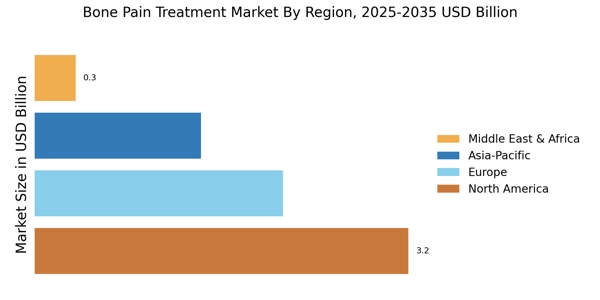
North America is the largest market for bone pain treatments, accounting for approximately 45% of the global market share. The region's growth is driven by an aging population, increasing prevalence of bone-related disorders, and advancements in treatment options. Regulatory support from agencies like the FDA has also catalyzed innovation and market entry for new therapies, enhancing patient access to effective treatments. The United States is the primary contributor to this market, with significant investments from key players such as Pfizer, Johnson & Johnson, and Amgen. The competitive landscape is characterized by a mix of established pharmaceutical giants and emerging biotech firms, all striving to develop novel therapies. The presence of robust healthcare infrastructure and high healthcare expenditure further solidifies North America's position as a leader in bone pain treatment.
Europe : Emerging Market Dynamics
Europe is witnessing significant growth in the bone pain treatment market, holding approximately 30% of the global share. The region benefits from a well-established healthcare system, increasing awareness of bone health, and a rise in the geriatric population. Regulatory frameworks, such as the European Medicines Agency's guidelines, are facilitating the approval of innovative therapies, thus driving market expansion. Leading countries in this region include Germany, France, and the UK, which are home to several key players like Novartis and Roche. The competitive landscape is marked by collaborations between pharmaceutical companies and research institutions, aimed at developing advanced treatment options. The focus on personalized medicine and biologics is also shaping the future of bone pain management in Europe.
Asia-Pacific : Rapidly Growing Market
The Asia-Pacific region is emerging as a significant player in the bone pain treatment market, accounting for about 20% of the global share. Factors such as increasing urbanization, rising disposable incomes, and a growing awareness of healthcare are driving demand. Additionally, government initiatives aimed at improving healthcare access and affordability are acting as catalysts for market growth in this region. Countries like China and India are leading the charge, with a growing number of pharmaceutical companies entering the market. The competitive landscape is evolving, with both local and international players vying for market share. Key companies, including AbbVie and Eli Lilly, are focusing on expanding their presence in this region, further intensifying competition and innovation in bone pain treatments.
Middle East and Africa : Untapped Market Potential
The Middle East and Africa region represents an untapped market for bone pain treatments, holding approximately 5% of the global share. The growth in this region is driven by increasing healthcare investments, rising awareness of bone health, and a growing prevalence of bone disorders. Regulatory bodies are beginning to establish frameworks that support the introduction of new therapies, which is expected to enhance market dynamics in the coming years. Countries like South Africa and the UAE are at the forefront of this market, with increasing healthcare expenditure and a focus on improving patient access to treatments. The competitive landscape is still developing, with both local and international companies exploring opportunities. Key players are beginning to invest in this region, recognizing its potential for growth in bone pain management.
Key Players and Competitive Insights
The Bone Pain Treatment Market is characterized by a dynamic competitive landscape, driven by increasing incidences of bone-related disorders and a growing aging population. Major players such as Pfizer (US), Johnson & Johnson (US), and Novartis (CH) are strategically positioned to leverage their extensive research and development capabilities. These companies focus on innovation and the introduction of novel therapies, which not only enhance their product portfolios but also cater to the evolving needs of patients. The competitive environment is further shaped by mergers and acquisitions, as companies seek to consolidate their market presence and expand their therapeutic offerings.
In terms of business tactics, companies are increasingly localizing manufacturing to reduce costs and improve supply chain efficiency. The Bone Pain Treatment Market appears moderately fragmented, with a mix of established pharmaceutical giants and emerging biotech firms. The collective influence of key players is significant, as they engage in strategic partnerships and collaborations to enhance their market reach and operational capabilities.
In August 2025, Pfizer (US) announced a collaboration with a leading biotechnology firm to develop a new class of pain management therapies targeting bone pain. This strategic move is likely to bolster Pfizer's position in the market by diversifying its product offerings and tapping into innovative treatment modalities. The partnership underscores the importance of collaboration in accelerating drug development and addressing unmet medical needs in bone pain management.
In September 2025, Johnson & Johnson (US) launched a digital health platform aimed at improving patient engagement and adherence to bone pain treatment regimens. This initiative reflects a growing trend towards digital transformation in healthcare, where technology is leveraged to enhance patient outcomes. By integrating digital solutions, Johnson & Johnson positions itself as a forward-thinking leader in the market, potentially increasing patient satisfaction and loyalty.
In July 2025, Novartis (CH) expanded its research efforts into gene therapy for bone pain conditions, signaling a shift towards more personalized treatment approaches. This strategic focus on innovative therapies may provide Novartis with a competitive edge, as the industry moves towards precision medicine. The investment in gene therapy aligns with broader trends in the pharmaceutical sector, where companies are increasingly exploring advanced therapeutic modalities to address complex health issues.
As of October 2025, the Bone Pain Treatment Market is witnessing trends such as digitalization, sustainability, and the integration of artificial intelligence in drug development. Strategic alliances are becoming pivotal in shaping the competitive landscape, as companies collaborate to enhance their technological capabilities and market presence. Looking ahead, competitive differentiation is likely to evolve from traditional price-based strategies to a focus on innovation, technological advancements, and supply chain reliability, reflecting the industry's response to changing patient needs and market dynamics.
Key Companies in the Bone Pain Treatment Market include
Industry Developments
Venus Remedies Limited has formed a consumer healthcare section that will sell a variety of pain-relieving goods.
The WaveWriter Alpha is a portfolio of Spinal Cord Stimulator (SCS) devices from Boston Scientific that combines therapy choices for tailored pain alleviation.
Future Outlook
Bone Pain Treatment Market Future Outlook
The Bone Pain Treatment Market is projected to grow at a 6.49% CAGR from 2025 to 2035, driven by increasing prevalence of bone disorders, advancements in treatment technologies, and rising healthcare expenditure.
New opportunities lie in:
- Development of personalized medicine approaches for bone pain management.
- Expansion of telehealth services for remote patient monitoring and consultations.
- Investment in regenerative medicine technologies to enhance treatment efficacy.
By 2035, the Bone Pain Treatment Market is expected to achieve substantial growth and innovation.
Market Segmentation
Bone Pain Treatment Market Type of Drug Outlook
- Ibuprofen (Advil)
- Acetaminophen (Tylenol)
- Paracetamol
- Morphine
Bone Pain Treatment Market Type of Antibiotics Outlook
- Ciprofloxacin
- Clindamycin
- Vancomycin
Report Scope
| MARKET SIZE 2024 | 7.092(USD Billion) |
| MARKET SIZE 2025 | 7.553(USD Billion) |
| MARKET SIZE 2035 | 14.16(USD Billion) |
| COMPOUND ANNUAL GROWTH RATE (CAGR) | 6.49% (2025 - 2035) |
| REPORT COVERAGE | Revenue Forecast, Competitive Landscape, Growth Factors, and Trends |
| BASE YEAR | 2024 |
| Market Forecast Period | 2025 - 2035 |
| Historical Data | 2019 - 2024 |
| Market Forecast Units | USD Billion |
| Key Companies Profiled | Pfizer (US), Johnson & Johnson (US), Novartis (CH), Bristol-Myers Squibb (US), Amgen (US), AbbVie (US), Eli Lilly and Company (US), Sanofi (FR), Roche (CH) |
| Segments Covered | Drugs, Antibiotics |
| Key Market Opportunities | Integration of advanced biologics and personalized medicine in the Bone Pain Treatment Market. |
| Key Market Dynamics | Rising demand for innovative therapies drives competition and regulatory scrutiny in the bone pain treatment market. |
| Countries Covered | North America, Europe, APAC, South America, MEA |
Market Highlights
FAQs
What is the current valuation of the Bone Pain Treatment Market as of 2024?
The Bone Pain Treatment Market was valued at 7.092 USD Billion in 2024.
What is the projected market size for the Bone Pain Treatment Market by 2035?
The market is projected to reach 14.16 USD Billion by 2035.
What is the expected CAGR for the Bone Pain Treatment Market during the forecast period 2025 - 2035?
The expected CAGR for the Bone Pain Treatment Market during 2025 - 2035 is 6.49%.
Which companies are considered key players in the Bone Pain Treatment Market?
Key players include Pfizer, Johnson & Johnson, Novartis, Bristol-Myers Squibb, Amgen, AbbVie, Eli Lilly and Company, Sanofi, and Roche.
What are the major segments within the Bone Pain Treatment Market?
Major segments include types of drugs and types of antibiotics, with specific products like Ibuprofen and Morphine.
How did Ibuprofen perform in the Bone Pain Treatment Market from 2024 to 2035?
What is the projected growth for Acetaminophen in the Bone Pain Treatment Market?
What is the expected market performance of Morphine in the coming years?
How do the antibiotic segments contribute to the Bone Pain Treatment Market?
What factors might influence the growth of the Bone Pain Treatment Market in the future?
Research Approach
Secondary Research
The secondary research process involved comprehensive analysis of regulatory databases, peer-reviewed medical journals, clinical publications, and authoritative health organizations. Key sources included the US Food & Drug Administration (FDA), European Medicines Agency (EMA), Centers for Disease Control and Prevention (CDC), National Institutes of Health (NIH), National Institute of Arthritis and Musculoskeletal and Skin Diseases (NIAMS), National Center for Biotechnology Information (NCBI/PubMed), Drug Enforcement Administration (DEA), World Health Organization (WHO) Global Health Observatory, International Osteoporosis Foundation (IOF), Arthritis Foundation, American Pain Society (APS), International Association for the Study of Pain (IASP), European Medicines Agency (EMA), Pharmaceuticals and Medical Devices Agency (PMDA) Japan, Health Canada, Therapeutic Goods Administration (TGA) Australia, EU Eurostat Health Database, OECD Health Statistics, and national health ministry reports from key markets. These sources were used to collect prescription data, regulatory approval data, clinical safety studies, epidemiology of bone disorders (osteoporosis, osteoarthritis, bone cancer), demographic trends, opioid prescription monitoring programs, antibiotic resistance patterns, and market landscape analysis for NSAIDs, opioids, and antibiotic therapies targeting bone infections and chronic bone pain conditions.
Primary Research
Qualitative and quantitative insights were obtained by interviewing supply-side and demand-side stakeholders during the primary research process. Pharmaceutical manufacturers, generic drug producers, and active pharmaceutical ingredient (API) suppliers were among the supply-side sources, which included CEOs, VPs of Product Development, regulatory affairs leaders, R&D heads, and commercial directors. The demand-side sources encompassed procurement leads from multi-specialty hospitals, specialty clinics, ambulatory surgical centers, and retail pharmacy chains, as well as board-certified orthopedic surgeons, rheumatologists, pain management specialists, infectious disease specialists, and hospital pharmacy directors. Drug pipeline timelines were confirmed, market segmentation was validated across analgesics and antibiotics, and insights on clinical adoption patterns, prescribing behaviors, pricing strategies, reimbursement dynamics, and formulary positioning were garnered through primary research.
Primary Respondent Breakdown:
By Designation: C-level Primaries (40%), Director Level (30%), Others (30%)
By Region: North America (40%), Europe (25%), Asia-Pacific (25%), Rest of World (10%)
Market Size Estimation
Global market valuation was derived through revenue mapping and prescription volume analysis. The methodology included:
Identification of 50+ key manufacturers across North America, Europe, Asia-Pacific, Latin America, and Middle East & Africa
Product mapping across NSAIDs (Ibuprofen, Acetaminophen, Paracetamol), opioids (Morphine), and antibiotics (Ciprofloxacin, Clindamycin, Vancomycin) for bone pain indications
Analysis of reported and modeled annual revenues specific to bone pain treatment portfolios
Coverage of manufacturers representing 75-80% of global market share in 2024
Extrapolation using bottom-up (prescription volume × ASP by country) and top-down (manufacturer revenue validation) approaches to derive segment-specific valuations, adjusted for hospital vs. retail pharmacy distribution channels
Kindly complete the form below to receive a free sample of this Report
Customer Stories
“This is really good guys. Excellent work on a tight deadline. I will continue to use you going forward and recommend you to others. Nice job”
“Thanks. It’s been a pleasure working with you, please use me as reference with any other Intel employees.”
“Thanks for sending the report it gives us a good global view of the Betaïne market.”
“Thank you, this will be very helpful for OQS.”
“We found the report very insightful! we found your research firm very helpful. I'm sending this email to secure our future business.”
“I am very pleased with how market segments have been defined in a relevant way for my purposes (such as "Portable Freezers & refrigerators" and "last-mile"). In general the report is well structured. Thanks very much for your efforts.”
“I have been reading the first document or the study, ,the Global HVAC and FP market report 2021 till 2026. Must say, good info! I have not gone in depth at all parts, but got a good indication of the data inside!”
“We got the report in time, we really thank you for your support in this process. I also thank to all of your team as they did a great job.”