Download Free Sample
Kindly complete the form below to receive a free sample of this Report
Brazil Cattle Feed Market Size, Share, Industry Trend & Analysis Research Report By Type (Protein Meals/Cakes, Cereals & Grains, Brans, Additives, others) and By Application (Beef Cattle, Dairy Cattle, Calves, Others) - Forecast to 2035
As per Market Research Future analysis, the Brazil Cattle Feed Market size was estimated at 7.1 USD Billion in 2024. The Cattle Feed market is projected to grow from 7.38 USD Billion in 2025 to 10.8 USD Billion by 2035, exhibiting a compound annual growth rate (CAGR) of 3.8% during the forecast period 2025 - 2035
The Brazil cattle feed market is experiencing a shift towards sustainability and technological innovation.
| 2024 Market Size | 7.1 (USD Billion) |
| 2035 Market Size | 10.8 (USD Billion) |
| CAGR (2025 - 2035) | 3.89% |
Cargill (US), Archer Daniels Midland (US), Nutreco (NL), Land O'Lakes (US), Alltech (US), BASF (DE), De Heus (NL), ForFarmers (NL)
Our Impact
Enabled $4.3B Revenue Impact for Fortune 500 and Leading Multinationals
Partnering with 2000+ Global Organizations Each Year
30K+ Citations by Top-Tier Firms in the Industry
The Brazil Cattle Feed Market is currently experiencing notable shifts driven by various factors, including changing consumer preferences and advancements in agricultural practices. In recent years, there has been a growing emphasis on sustainable and organic feed options, reflecting a broader trend towards environmentally friendly farming. This shift is likely influenced by increasing awareness of animal welfare and the environmental impact of traditional feed production methods. As a result, producers are exploring innovative formulations that incorporate alternative ingredients, such as by-products from food processing and plant-based proteins, which may enhance the nutritional profile of cattle feed while reducing reliance on conventional sources. Additionally, the cattle feed market is witnessing a rise in technological integration, with digital tools and data analytics playing a crucial role in optimizing feed efficiency and livestock health. Farmers are increasingly adopting precision feeding techniques, which allow for tailored nutrition based on individual animal needs. This approach not only improves productivity but also contributes to better resource management. Furthermore, the regulatory landscape is evolving, with stricter guidelines on feed safety and quality, prompting manufacturers to invest in research and development to meet these standards. Overall, the cattle feed market appears poised for growth, driven by innovation and a commitment to sustainability.
There is a noticeable trend towards the adoption of sustainable feed options within the cattle feed market. Producers are increasingly focusing on organic and environmentally friendly ingredients, which align with consumer demand for ethically sourced products. This shift may lead to the incorporation of alternative protein sources and by-products, enhancing the nutritional value of feed while minimizing environmental impact.
The integration of technology in the cattle feed market is becoming more prevalent. Farmers are utilizing digital tools and data analytics to optimize feed efficiency and monitor livestock health. Precision feeding techniques are gaining traction, allowing for customized nutrition plans that cater to the specific needs of individual animals, potentially improving overall productivity.
The regulatory environment surrounding the cattle feed market is evolving, with increased emphasis on safety and quality standards. Stricter guidelines are prompting manufacturers to invest in research and development to ensure compliance. This focus on regulatory adherence may drive innovation in feed formulations and production processes.
The increasing demand for beef in Brazil is a primary driver of the cattle feed market. As the population grows and consumer preferences shift towards higher protein diets, the need for efficient cattle production intensifies. In 2025, Brazil is projected to produce approximately 10 million tonnes of beef, necessitating a corresponding rise in cattle feed consumption. This demand influences feed formulation, leading to innovations in nutritional content to enhance growth rates and feed efficiency. The cattle feed market must adapt to these changing dynamics, ensuring that feed products meet the nutritional needs of livestock while also being cost-effective for producers. Furthermore, the export potential of Brazilian beef, particularly to markets in Asia and Europe, further amplifies the demand for quality cattle feed, driving growth in the industry.
Price volatility of feed ingredients significantly impacts the cattle feed market in Brazil. Fluctuations in the costs of key components such as corn, soybeans, and other grains can lead to unpredictable pricing for cattle feed. In recent years, Brazil has experienced a rise in corn prices, which increased by approximately 15% in 2025 compared to the previous year. This volatility compels cattle feed manufacturers to develop strategies for cost management and ingredient sourcing. The cattle feed market must navigate these challenges by exploring alternative ingredients and optimizing formulations to maintain profitability. Additionally, the reliance on imports for certain feed components can further exacerbate price fluctuations, making it essential for stakeholders to stay informed about global market trends and local agricultural conditions.
Government support and subsidies play a crucial role in shaping the cattle feed market in Brazil. The Brazilian government has implemented various programs aimed at enhancing livestock production, which includes financial assistance for feed purchases. In 2025, it is estimated that government subsidies could account for up to 20% of the total feed costs for cattle producers. This support not only alleviates financial burdens but also encourages the adoption of innovative feeding practices and technologies. The cattle feed market benefits from such initiatives, as they promote the use of high-quality feed and sustainable practices among farmers. Furthermore, government policies aimed at improving food security and boosting exports further stimulate demand for cattle feed, creating a favorable environment for market growth.
Advancements in nutritional science are reshaping the cattle feed market in Brazil. Research into animal nutrition has led to the development of specialized feed formulations that enhance growth rates, improve feed conversion ratios, and promote overall animal health. In 2025, the cattle feed market is witnessing a shift towards precision feeding, where nutritional requirements are tailored to specific breeds and production stages. This trend not only optimizes feed efficiency but also contributes to sustainable farming practices by reducing waste and environmental impact. The integration of probiotics and other feed additives is becoming increasingly common, as they are shown to improve gut health and productivity in cattle. As Brazilian producers seek to maximize output while adhering to sustainability goals, the role of nutritional advancements in the cattle feed market becomes increasingly critical.
Shifting consumer preferences towards high-quality beef products are influencing the cattle feed market in Brazil. As consumers become more health-conscious, there is a growing demand for beef that is not only nutritious but also produced sustainably. This trend is prompting cattle producers to invest in better feed options that enhance the quality of meat. In 2025, it is anticipated that the premium beef segment will grow by approximately 10%, driving the need for superior cattle feed formulations. The cattle feed market must respond to these evolving consumer demands by ensuring that feed products contribute to the desired meat quality attributes, such as marbling and tenderness. This focus on quality not only meets consumer expectations but also positions Brazilian beef favorably in international markets, further enhancing the industry's growth prospects.
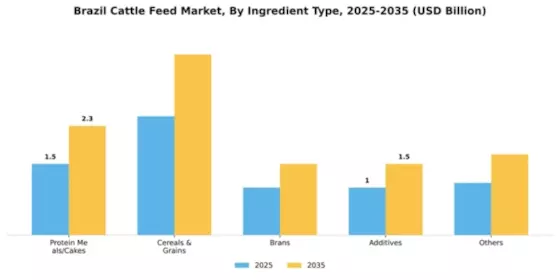
In the Brazil cattle feed market, the ingredient type segment includes several key players such as Protein Meals/Cakes, Cereals & Grains, Brans, Additives, and Others. Among these, Protein Meals/Cakes holds the largest market share, reflecting its essential role in fulfilling the protein requirements of cattle. However, Additives are observed to be the fastest-growing segment, driven by the rising demand for nutritional supplements that enhance feed efficiency and overall cattle health. The growth trends in this segment are influenced by factors such as changing dietary preferences, increased awareness about cattle nutrition, and advancements in feed technology. As cattle farmers increasingly seek high-quality feed solutions to improve yield and productivity, the demand for both Protein Meals/Cakes and Additives is expected to rise substantially. The interaction between traditional feed sources and innovative additives creates a dynamic market environment, promoting continuous growth for all ingredient types.
Protein Meals/Cakes (Dominant) vs. Additives (Emerging)
Protein Meals/Cakes are recognized as the dominant player in the ingredient type segment due to their rich protein content, which is crucial for cattle growth and milk production. These meals are derived from various oilseed and legume sources, ensuring a consistent supply of essential amino acids. The extensive use of Protein Meals/Cakes is driven by their economic viability and effectiveness in boosting cattle performance. In contrast, Additives represent an emerging category, gaining traction as farmers increasingly incorporate feed additives to optimize nutrition and enhance health. As the focus on cattle welfare and productivity intensifies, the role of Additives, including vitamins, minerals, and probiotics, is likely to expand, creating a balanced interplay between established and novel feeding strategies.
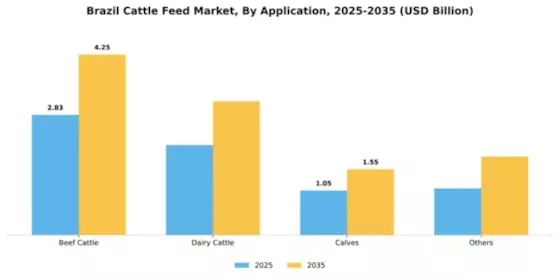
The Brazil cattle feed market exhibits a diverse application segment, with Beef Cattle holding the largest market share, driven by the high demand for beef products in the region. The Dairy Cattle segment follows, contributing significantly due to the increasing consumption of dairy products. Calves and Others represent smaller shares but play essential roles in the overall market dynamics. Growth trends in the application segment indicate a strong rise in Dairy Cattle as consumer preferences shift towards dairy-based diets, making it the fastest-growing segment. Moreover, innovations in feeding practices and nutritional formulations for Beef Cattle continue to bolster demand, ensuring a stable growth trajectory. The focus on sustainability and efficiency further enhances the attractiveness of these application areas.
Beef Cattle (Dominant) vs. Dairy Cattle (Emerging)
Beef Cattle has established itself as the dominant application in the Brazil cattle feed market, benefitting from extensive production systems and a well-established supply chain. This segment is characterized by a strong preference for feed that enhances growth rates and meat quality. In contrast, Dairy Cattle represents an emerging segment, with growing investments in premium feed formulations that support milk production and overall herd health. The increasing recognition of the nutritional value of dairy products is driving innovation in this space, leading to emerging feeding strategies designed to maximize yield while ensuring sustainability. Both segments are vital to the future of the market, balancing traditional practices with modern demands.
Get more detailed insights about Brazil Cattle Feed Market Request Free Sample
The cattle feed market in Brazil is characterized by a competitive landscape that is increasingly shaped by innovation, sustainability, and strategic partnerships. Key players such as Cargill (US), Archer Daniels Midland (US), and Nutreco (NL) are actively pursuing strategies that enhance their market positioning. Cargill (US) focuses on developing sustainable feed solutions, which aligns with the growing demand for environmentally friendly products. Meanwhile, Archer Daniels Midland (US) emphasizes digital transformation in its operations, leveraging technology to optimize supply chains and improve efficiency. Nutreco (NL) is investing in research and development to create specialized feed formulations that cater to the nutritional needs of livestock, thereby enhancing productivity and health outcomes. Collectively, these strategies contribute to a dynamic competitive environment where innovation and sustainability are paramount.In terms of business tactics, companies are increasingly localizing manufacturing to reduce costs and improve supply chain resilience. This approach is particularly relevant in Brazil, where logistical challenges can impact distribution. The market structure appears moderately fragmented, with several key players holding substantial market shares while also allowing for smaller, regional companies to thrive. The collective influence of these major players shapes pricing strategies and product offerings, creating a competitive atmosphere that encourages continuous improvement and adaptation.In October Cargill (US) announced a partnership with a Brazilian agricultural technology firm to develop precision feeding solutions that utilize data analytics to optimize livestock nutrition. This strategic move is significant as it not only enhances Cargill's product offerings but also positions the company at the forefront of technological innovation in the cattle feed sector. By integrating data-driven approaches, Cargill (US) aims to improve feed efficiency and reduce waste, aligning with sustainability goals.In September Archer Daniels Midland (US) launched a new line of organic cattle feed products aimed at meeting the rising consumer demand for organic meat. This initiative reflects a broader trend towards health-conscious and environmentally sustainable food production. By diversifying its product portfolio, Archer Daniels Midland (US) is likely to capture a larger market share and appeal to a growing segment of consumers who prioritize organic options.In August Nutreco (NL) expanded its operations in Brazil by acquiring a local feed manufacturer, thereby enhancing its distribution capabilities and market reach. This acquisition is strategically important as it allows Nutreco (NL) to leverage local expertise and better serve the Brazilian market. The move is indicative of a trend where larger companies seek to consolidate their presence through strategic acquisitions, thereby increasing their competitive edge.As of November current trends in the cattle feed market include a strong emphasis on digitalization, sustainability, and the integration of artificial intelligence in feed formulation and management. Strategic alliances are becoming increasingly common, as companies recognize the value of collaboration in driving innovation and efficiency. Looking ahead, competitive differentiation is likely to evolve from traditional price-based competition to a focus on technological advancements, sustainable practices, and reliable supply chains. This shift underscores the importance of innovation and adaptability in maintaining a competitive advantage in the ever-evolving cattle feed market.


Recent developments in the Brazil Cattle Feed Market reflect growth and transformation driven by significant investments and innovation. In early 2023, Cargill announced plans to expand its production facilities in Brazil, aiming to meet the increasing demand for high-quality cattle feed. Additionally, JBS and Marfrig have been investing in sustainable feed production practices to enhance their environmental footprint amidst growing consumer awareness and regulatory scrutiny. Notably, Purina Animal Nutrition and ADM have engaged in collaborative ventures focused on Research and Development, optimizing feed formulations to improve livestock health and productivity.
In terms of mergers and acquisitions, no recent large deals have been reported in 2023 involving the specific companies of interest. The market has seen fluctuating valuations due to varying commodity prices, particularly corn and soybean meal, crucial components in cattle feed. Historical events, such as UPL's acquisition of a regional feed company in September 2021, have influenced the competitive landscape, with an emphasis on sustainability and efficiency.
Overall, the Brazilian cattle feed market remains dynamic, adapting to market demands and trends, while companies are increasingly focusing on innovation and sustainability to drive growth in this sector.
The Cattle Feed Market is projected to grow at a 3.89% CAGR from 2025 to 2035, driven by rising livestock production and demand for high-quality feed.
New opportunities lie in:
By 2035, the cattle feed market is expected to achieve robust growth, driven by innovation and evolving consumer preferences.
| MARKET SIZE 2024 | 7.1(USD Billion) |
| MARKET SIZE 2025 | 7.38(USD Billion) |
| MARKET SIZE 2035 | 10.8(USD Billion) |
| COMPOUND ANNUAL GROWTH RATE (CAGR) | 3.89% (2025 - 2035) |
| REPORT COVERAGE | Revenue Forecast, Competitive Landscape, Growth Factors, and Trends |
| BASE YEAR | 2024 |
| Market Forecast Period | 2025 - 2035 |
| Historical Data | 2019 - 2024 |
| Market Forecast Units | USD Billion |
| Key Companies Profiled | Cargill (US), Archer Daniels Midland (US), Nutreco (NL), Land O'Lakes (US), Alltech (US), BASF (DE), De Heus (NL), ForFarmers (NL) |
| Segments Covered | Ingredient Type, Application |
| Key Market Opportunities | Adoption of precision nutrition technologies enhances feed efficiency and animal health in the cattle feed market. |
| Key Market Dynamics | Rising demand for sustainable cattle feed drives innovation and competition among local producers in Brazil. |
| Countries Covered | Brazil |
The overall market valuation was $7.1 Billion in 2024.
The projected valuation for 2035 is $10.8 Billion.
The expected CAGR for the cattle feed market during the forecast period 2025 - 2035 is 3.89%.
Cereals & Grains had the highest valuation at $2.5 Billion in 2024.
The projected valuation for Protein Meals/Cakes is $2.3 Billion by 2035.
The Beef Cattle application segment is expected to grow to $4.25 Billion by 2035.
Key players include Cargill, Archer Daniels Midland, Nutreco, Land O'Lakes, Alltech, BASF, De Heus, and ForFarmers.
The valuation of the Dairy Cattle segment was $2.12 Billion in 2024.
The Others segment is projected to grow to $1.85 Billion by 2035.
In 2024, Brans were valued at $1.0 Billion, while Additives were also valued at $1.0 Billion.





Kindly complete the form below to receive a free sample of this Report

“This is really good guys. Excellent work on a tight deadline. I will continue to use you going forward and recommend you to others. Nice job”


“Thanks. It’s been a pleasure working with you, please use me as reference with any other Intel employees.”


“Thanks for sending the report it gives us a good global view of the Betaïne market.”


“Thank you, this will be very helpful for OQS.”


“We found the report very insightful! we found your research firm very helpful. I'm sending this email to secure our future business.”


“I am very pleased with how market segments have been defined in a relevant way for my purposes (such as "Portable Freezers & refrigerators" and "last-mile"). In general the report is well structured. Thanks very much for your efforts.”


“I have been reading the first document or the study, ,the Global HVAC and FP market report 2021 till 2026. Must say, good info! I have not gone in depth at all parts, but got a good indication of the data inside!”


“We got the report in time, we really thank you for your support in this process. I also thank to all of your team as they did a great job.”


“The Automotive 48V ECU Components Procurement Intelligence Study” was a complex project, but the Market Research Future (MRFR) team handled it with quality, agility, and customer-centricity. They delivered all requested data on time and within the agreed scope. The team, including Shubhendra Anand and Rahul Gotadki, was always readily available to clarify questions and swiftly implement necessary adjustments, driving the project to a successful conclusion within a very demanding timeframe.
I would also like to specifically commend Akshay Agarwal for his responsiveness and support at every stage—from our initial inquiry on May 6th through to final delivery on June 18th. His dedication made the entire process seamless.”



