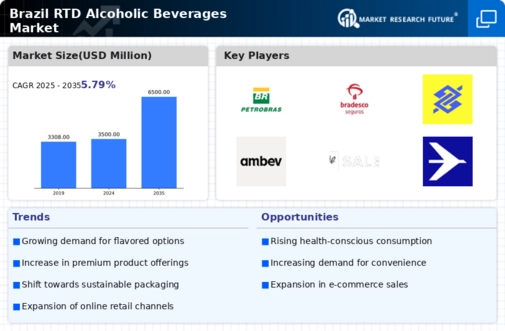
The rtd alcoholic-beverages market in Brazil is characterized by a dynamic competitive landscape, driven by evolving consumer preferences and a growing demand for convenience. Major players such as Anheuser-Busch InBev (BE), Diageo (GB), and Heineken (NL) are actively shaping the market through strategic initiatives focused on innovation and regional expansion. Anheuser-Busch InBev (BE) has been particularly aggressive in launching new flavors and limited-edition products, aiming to capture the attention of younger consumers seeking unique experiences. Meanwhile, Diageo (GB) emphasizes premiumization, introducing high-end rtd options that cater to affluent consumers, thereby enhancing its market positioning. Heineken (NL) continues to leverage its global brand recognition while investing in local partnerships to strengthen its distribution network, indicating a multifaceted approach to market penetration.
The business tactics employed by these companies reflect a keen understanding of local market dynamics. For instance, localizing manufacturing has become a prevalent strategy, allowing companies to reduce costs and improve supply chain efficiency. The market structure appears moderately fragmented, with several key players holding substantial market shares, yet leaving room for smaller brands to thrive. This competitive environment fosters innovation, as companies strive to differentiate their offerings in a crowded marketplace.
In October 2025, Anheuser-Busch InBev (BE) announced a partnership with a local Brazilian craft brewery, aiming to co-develop a new line of rtd beverages that blend traditional Brazilian flavors with modern brewing techniques. This strategic move not only enhances Anheuser-Busch InBev's product portfolio but also taps into the growing trend of craft beverages, appealing to consumers seeking authenticity and local flavor. The collaboration is expected to bolster brand loyalty and expand market reach.
In September 2025, Diageo (GB) launched a new digital marketing campaign targeting millennials, focusing on the sustainability of its rtd products. This initiative highlights the company's commitment to environmentally friendly practices, which resonates with the values of younger consumers. By integrating sustainability into its brand narrative, Diageo (GB) positions itself as a responsible choice in the rtd segment, potentially increasing its market share among eco-conscious consumers.
In August 2025, Heineken (NL) unveiled a new rtd product line that incorporates natural ingredients and lower alcohol content, catering to the health-conscious demographic. This strategic pivot reflects a broader trend towards wellness in the beverage industry, suggesting that Heineken (NL) is keenly aware of shifting consumer preferences. The introduction of this product line may enhance Heineken's competitive edge by attracting consumers who prioritize health without sacrificing taste.
As of November 2025, the competitive trends in the rtd alcoholic-beverages market are increasingly defined by digitalization, sustainability, and technological integration. Strategic alliances among key players are shaping the landscape, fostering innovation and enhancing supply chain reliability. The shift from price-based competition to a focus on innovation and technology is evident, as companies seek to differentiate themselves through unique offerings and sustainable practices. Looking ahead, competitive differentiation is likely to evolve further, with an emphasis on creating value through innovative product development and enhanced consumer engagement.


















Leave a Comment