Download Free Sample
Kindly complete the form below to receive a free sample of this Report
Car Subscription Services Market Size, Share and Trends Analysis Research Report Information By Vehicle Type (Internal Combustion Engine, Electric Vehicle, Hybrid Vehicle, and Luxury Vehicle), By Target Audience (Urban Professionals, Families, Students, and Retirees), By Service Features (Maintenance Services, Insurance Coverage, Flexible Mileage Options, and Roadside Assistance), By Subscription Model (Monthly Subscription, Annual Subscription, Pay-As-You-Go, and Corporate Subscription), And By Region (North America, Europe, Asia-Pacific, And Rest Of The World) – Market Forecast Till 2035.
As per MRFR analysis, the Car Subscription Services Market Size was estimated at 15.5 Billion USD in 2024. The Car Subscription Services industry is projected to grow from 16.69 USD Billion in 2025 to 35.0 USD Billion by 2035, exhibiting a compound annual growth rate (CAGR) of 7.69% during the forecast period 2025 - 2035.
The car subscription services market is experiencing a shift towards flexibility and sustainability, driven by evolving consumer preferences.
| 2024 Market Size | 15.5 (USD Billion) |
| 2035 Market Size | 35.0 (USD Billion) |
| CAGR (2025 - 2035) | 7.69% |
Care by Volvo (SE), Porsche Drive (DE), BMW Access (DE), Mercedes-Benz Collection (DE), Audi on Demand (DE), Hyundai Subscription (KR), Ford Subscription (US), Zipcar (US), Getaround (US)
Our Impact
Enabled $4.3B Revenue Impact for Fortune 500 and Leading Multinationals
Partnering with 2000+ Global Organizations Each Year
30K+ Citations by Top-Tier Firms in the Industry
The landscape of Car Subscription Services is evolving, reflecting a shift in consumer preferences towards flexibility and convenience. This model allows individuals to access vehicles without the long-term commitment associated with traditional ownership or leasing. As urbanization continues to rise, the demand for adaptable transportation solutions appears to be increasing. Consumers are increasingly seeking alternatives that align with their dynamic lifestyles, which may include short-term usage or the ability to switch vehicles based on their needs. This trend suggests a growing acceptance of subscription models as a viable option for personal mobility. Moreover, the integration of technology within Car Subscription Services is becoming more pronounced. Digital platforms facilitate seamless user experiences, enabling customers to manage subscriptions, select vehicles, and handle payments with ease. This technological advancement not only enhances customer satisfaction but also streamlines operational efficiencies for service providers. As the market matures, it seems likely that partnerships between automotive manufacturers and technology firms will become more prevalent, potentially leading to innovative offerings that cater to diverse consumer demands. The future of Car Subscription Services appears promising, with opportunities for growth and diversification on the horizon.
The trend towards flexibility in transportation options is becoming more pronounced. Consumers are increasingly favoring Car Subscription Services that allow them to adapt their vehicle choices based on changing needs, such as family size or travel requirements. This shift indicates a desire for convenience and the ability to avoid long-term commitments.
The incorporation of advanced technology into Car Subscription Services is enhancing user experiences. Digital platforms are streamlining processes, making it easier for customers to manage subscriptions and select vehicles. This trend suggests that technology will play a crucial role in shaping the future of the market.
There is a growing emphasis on sustainability within the Car Subscription Services market. Consumers are increasingly interested in eco-friendly vehicle options, such as electric or hybrid models. This trend indicates a shift towards environmentally conscious choices, reflecting broader societal concerns about climate change.
The Car Subscription Services Industry is witnessing a shift in consumer preferences, particularly among younger generations who prioritize experiences over ownership. This demographic is increasingly inclined towards services that offer flexibility and convenience, such as car subscriptions. Research indicates that millennials and Gen Z consumers are more likely to opt for subscription models rather than traditional car ownership, as they value the ability to switch vehicles based on their needs. This trend is further supported by the rise of digital platforms that facilitate easy access to subscription services, thereby enhancing user experience. As these preferences continue to evolve, the Car Subscription Services Industry is likely to adapt and expand to cater to this growing market segment.
Economic factors are a driving force behind the growth of the Car Subscription Services Industry. As consumers face fluctuating economic conditions, many are seeking cost-effective alternatives to traditional car ownership. Subscription services often provide a more predictable monthly expense, which can be appealing in uncertain economic times. Additionally, the elimination of maintenance costs and insurance responsibilities associated with ownership makes subscriptions an attractive option. Recent studies indicate that the subscription model can save consumers up to 30 percent compared to traditional ownership costs. This financial advantage is likely to encourage more individuals to consider car subscriptions as a viable transportation solution, further propelling the growth of the Car Subscription Services Industry.
The Car Subscription Services Industry appears to be significantly influenced by the trend of urbanization, which has led to a growing population in metropolitan areas. As cities expand, the demand for flexible transportation solutions increases. Many urban dwellers prefer car subscription services over traditional ownership due to the convenience and reduced commitment. According to recent data, urban populations are projected to reach 68 percent by 2050, which suggests a potential surge in demand for car subscription services. This shift in demographics indicates that consumers are seeking alternatives that align with their fast-paced lifestyles, making the Car Subscription Services Industry a viable option for meeting these evolving mobility needs.
The Car Subscription Services Industry is increasingly aligning itself with the growing emphasis on sustainability and environmental awareness. Consumers are becoming more conscious of their carbon footprints and are seeking eco-friendly transportation options. Subscription services that offer electric or hybrid vehicles are gaining traction as they appeal to environmentally conscious consumers. Data indicates that the electric vehicle market is expected to grow significantly, with projections suggesting that electric cars could account for 30 percent of total vehicle sales by 2030. This shift towards sustainable mobility solutions presents an opportunity for the Car Subscription Services Industry to attract a broader customer base that prioritizes environmental responsibility.
Technological advancements are playing a crucial role in shaping the Car Subscription Services Industry. Innovations such as mobile applications, telematics, and connected vehicles are enhancing the overall user experience. These technologies enable seamless booking, vehicle tracking, and personalized services, which are becoming increasingly important to consumers. Data suggests that the integration of technology in mobility solutions is expected to grow, with The Car Subscription Services projected to reach over 200 billion dollars by 2025. This technological evolution not only improves operational efficiency for service providers but also attracts tech-savvy consumers who seek modern and convenient transportation options. As a result, the Car Subscription Services Industry is likely to benefit from these advancements.
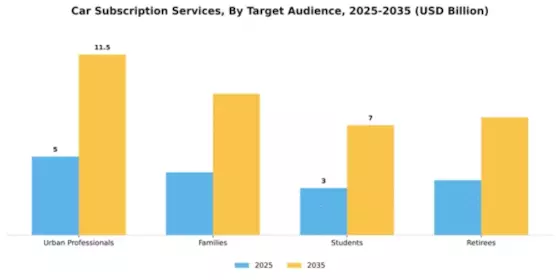
In the Car Subscription Services market, Urban Professionals represent the largest segment, dominating the overall consumer base due to their need for flexible transportation solutions in metropolitan areas. This demographic is characterized by professionals who prefer convenience and affordability, opting for subscription services to avoid the hassles of ownership such as maintenance and insurance. Families, on the other hand, have become the fastest-growing segment as they seek convenient, flexible, and car usage-oriented solutions amidst their busy lifestyles. They value the ability to choose vehicles that suit varying needs, from daily carpooling to weekend family trips, which aligns with their dynamic requirements.
Urban Professionals: (Dominant) vs. Families (Emerging)
Urban Professionals are well-established in the car subscription market due to their work-life balance needs, often requiring quick and flexible access to vehicles without the commitment of ownership. They favor subscription services that provide a variety of vehicle options, including sleek sedans and compact cars, suitable for city commuting. On the contrary, Families are emerging as a crucial segment, driven by the demand for convenience and flexibility. They prefer larger vehicles that accommodate multiple passengers and cargo, enhancing their travel experience. This growing segment values safety, space, and the ability to switch vehicles based on family size or travel plans, indicating a shift towards subscription services that can adapt to changing family dynamics.
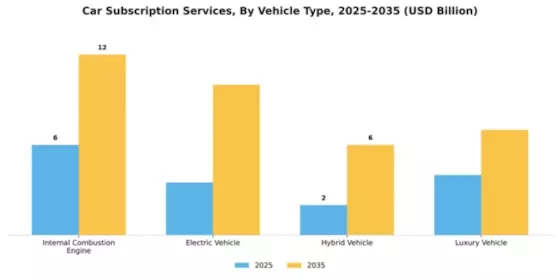
The car subscription services market exhibits diverse preferences among vehicle types, with the Internal Combustion Engine (ICE) vehicles maintaining the largest share. These vehicles benefit from established infrastructure, familiarity, and a robust supply chain, appealing to a broad consumer base. In contrast, Electric Vehicles (EVs), while currently a smaller segment, are rapidly gaining traction due to increasing environmental awareness and advancements in charging technologies. As consumers shift towards more sustainable options, this growing trend is reshaping the market landscape.
Internal Combustion Engine (Dominant) vs. Electric Vehicle (Emerging)
Internal Combustion Engine vehicles dominate the car subscription services market due to their long-standing presence and widespread acceptance. They cater to a wide audience, providing reliable performance and convenience. On the other hand, Electric Vehicles represent a burgeoning segment, driven by technological advancements and changing consumer preferences. The demand for EVs is fueled by incentives for sustainable living and a growing network of charging stations, making them a viable alternative. As the shift towards eco-friendliness continues, the market position of EVs is expected to improve significantly, challenging the traditional dominance of ICE vehicles.
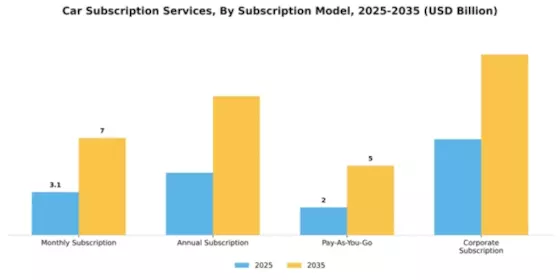
The Car Subscription Services market has seen a pronounced distribution in the subscription model segment. Monthly subscriptions hold the largest portion of the market, appealing to consumers seeking flexibility without long-term commitments. In contrast, Pay-As-You-Go has emerged as a rapidly growing option, catering to users who prefer only to pay for vehicles when necessary, reflecting a shift in consumer behavior towards ephemeral ownership models. Annual and corporate subscriptions occupy a smaller share, attracting specific user groups focused on long-term arrangements or business solutions.
Monthly Subscription (Dominant) vs. Pay-As-You-Go (Emerging)
Monthly subscriptions are considered the dominant force in the car subscription market, with offerings typically ranging from all-inclusive services to tailored packages that appeal to various consumer needs. They provide users with flexibility to change vehicles without the long-term commitment associated with traditional car ownership. On the other hand, Pay-As-You-Go options represent an emerging trend, driven primarily by younger consumers and those in urban environments. This subscription model stands out for its ability to adapt to consumer demands for temporary access to vehicles, thus not only enhancing affordability but also aligning with sustainable practices and preferences. The nimbleness of this model positions it strongly within the evolving automotive landscape.
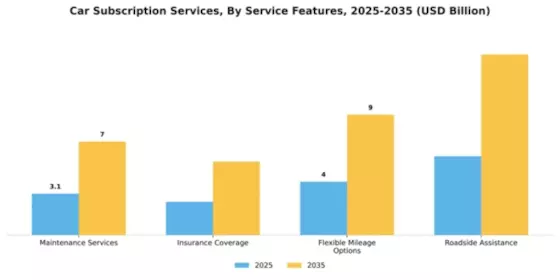
In the Car Subscription Services market, the service features segment showcases a diverse array of offerings, with Maintenance Services emerging as the largest component. This service not only ensures the vehicle's operational readiness but also appeals to consumers seeking hassle-free experiences. Roadside Assistance, on the other hand, is rapidly gaining traction, reflecting a growing consumer demand for comprehensive support during travel, which indicates a shift towards valuing reliability and peace of mind. The growth trends within this segment are driven by changing consumer preferences towards convenience and safety. As more individuals opt for flexible car ownership models, the importance of additional services like Insurance Coverage and Flexible Mileage Options becomes apparent. These features enhance the overall attractiveness of car subscription services, leading to potential expansion in service offerings to appeal to a broader customer base.
Maintenance Services (Dominant) vs. Insurance Coverage (Emerging)
Maintenance Services in the car subscription sector plays a dominant role, providing subscribers with peace of mind and eliminating the stress associated with unexpected repairs. This service is increasingly viewed as a standard expectation rather than an add-on, enhancing customer loyalty and satisfaction. In contrast, Insurance Coverage is emerging as a vital feature that is quickly gaining prominence. It caters to the consumer need for comprehensive protection during their subscription period. While Maintenance Services focuses on the vehicle's operational integrity, Insurance Coverage addresses financial security concerns, making the service offering more robust and appealing. The balance between these features is crucial, as they cater to different but complementary consumer needs, supporting the overall growth of the car subscription market.
Get more detailed insights about Car Subscription Services Market Request Free Sample
The Car Subscription Services market is currently characterized by a dynamic competitive landscape, driven by evolving consumer preferences and technological advancements. Major players such as Care by Volvo (SE), Porsche Drive (DE), and BMW Access (DE) are strategically positioning themselves through innovative offerings and enhanced customer experiences. Care by Volvo (SE) emphasizes a seamless digital interface, allowing users to manage subscriptions effortlessly, while Porsche Drive (DE) focuses on providing a premium experience with exclusive vehicle access. BMW Access (DE) aims to attract tech-savvy consumers by integrating advanced digital tools into its subscription model, thereby enhancing user engagement and satisfaction. Collectively, these strategies contribute to a competitive environment that prioritizes customer-centric solutions and technological integration.In terms of business tactics, companies are increasingly localizing their services to cater to regional demands, optimizing supply chains to ensure efficiency and reliability. The market appears moderately fragmented, with a mix of established automotive brands and emerging players vying for market share. This competitive structure allows for diverse offerings, yet the influence of key players remains substantial, shaping consumer expectations and industry standards.In November Care by Volvo (SE) announced a partnership with a leading tech firm to enhance its digital platform, aiming to integrate AI-driven features that personalize user experiences. This strategic move is likely to bolster customer retention and attract new subscribers by offering tailored services that align with individual preferences. The integration of AI not only enhances operational efficiency but also positions Care by Volvo as a forward-thinking leader in the subscription space.In October Porsche Drive (DE) expanded its fleet to include electric vehicles, reflecting a growing trend towards sustainability in the automotive sector. This decision underscores Porsche's commitment to environmental responsibility while appealing to a demographic increasingly concerned with eco-friendly options. By diversifying its offerings, Porsche Drive not only enhances its market appeal but also aligns with global sustainability goals, potentially attracting a broader customer base.In September BMW Access (DE) launched a new subscription tier that includes access to luxury vehicles for special occasions, catering to consumers seeking flexibility and exclusivity. This strategic initiative is indicative of a broader trend towards personalized services in the subscription model, allowing BMW to differentiate itself in a competitive market. By offering unique experiences, BMW Access enhances its value proposition, appealing to affluent consumers who prioritize exclusivity.As of December the competitive trends in the Car Subscription Services market are increasingly defined by digitalization, sustainability, and the integration of AI technologies. Strategic alliances among key players are shaping the landscape, fostering innovation and enhancing service offerings. The shift from price-based competition to a focus on technological advancement and supply chain reliability is evident, suggesting that future differentiation will hinge on the ability to innovate and adapt to changing consumer demands.






The Car Subscription Services market is projected to grow at a 7.69% CAGR from 2025 to 2035, driven by consumer demand for flexibility and technological advancements.
New opportunities lie in:
By 2035, the market is expected to be robust, reflecting evolving consumer preferences and innovative service offerings.
| MARKET SIZE 2024 | 15.5(USD Billion) |
| MARKET SIZE 2025 | 16.69(USD Billion) |
| MARKET SIZE 2035 | 35.0(USD Billion) |
| COMPOUND ANNUAL GROWTH RATE (CAGR) | 7.69% (2025 - 2035) |
| REPORT COVERAGE | Revenue Forecast, Competitive Landscape, Growth Factors, and Trends |
| BASE YEAR | 2024 |
| Market Forecast Period | 2025 - 2035 |
| Historical Data | 2019 - 2024 |
| Market Forecast Units | USD Billion |
| Key Companies Profiled | Care by Volvo (SE), Porsche Drive (DE), BMW Access (DE), Mercedes-Benz Collection (DE), Audi on Demand (DE), Hyundai Subscription (KR), Ford Subscription (US), Zipcar (US), Getaround (US) |
| Segments Covered | Target Audience, Vehicle Type, Subscription Model, Service Features |
| Key Market Opportunities | Growing consumer preference for flexible mobility solutions drives demand for Car Subscription Services. |
| Key Market Dynamics | Rising consumer preference for flexibility drives growth in car subscription services amid evolving mobility trends. |
| Countries Covered | North America, Europe, APAC, South America, MEA |
The market valuation of Car Subscription Services was 15.5 USD Billion in 2024.
The projected market size for Car Subscription Services is expected to reach 35.0 USD Billion by 2035.
The expected CAGR for Car Subscription Services during the forecast period 2025 - 2035 is 7.69%.
The key target audience segments include Urban Professionals, Families, Students, and Retirees, with valuations ranging from 3.0 to 11.5 USD Billion.
The most popular vehicle types include Internal Combustion Engine, Electric Vehicle, Hybrid Vehicle, and Luxury Vehicle, with valuations from 2.0 to 12.0 USD Billion.
Available subscription models include Monthly Subscription, Annual Subscription, Pay-As-You-Go, and Corporate Subscription, with valuations from 2.0 to 13.0 USD Billion.
Service features include Maintenance Services, Insurance Coverage, Flexible Mileage Options, and Roadside Assistance, with valuations from 2.5 to 13.5 USD Billion.
Key players in the market include Care by Volvo, Porsche Drive, BMW Access, Mercedes-Benz Collection, Audi on Demand, Hyundai Subscription, Ford Subscription, Zipcar, and Getaround.
Car Subscription Services offer flexibility and convenience, appealing to consumers who prefer alternatives to traditional car ownership, which may not provide the same level of adaptability.
Trends influencing growth include increasing urbanization, changing consumer preferences towards flexibility, and the rise of electric vehicles, which may reshape the market landscape.


Kindly complete the form below to receive a free sample of this Report

“This is really good guys. Excellent work on a tight deadline. I will continue to use you going forward and recommend you to others. Nice job”


“Thanks. It’s been a pleasure working with you, please use me as reference with any other Intel employees.”


“Thanks for sending the report it gives us a good global view of the Betaïne market.”


“Thank you, this will be very helpful for OQS.”


“We found the report very insightful! we found your research firm very helpful. I'm sending this email to secure our future business.”


“I am very pleased with how market segments have been defined in a relevant way for my purposes (such as "Portable Freezers & refrigerators" and "last-mile"). In general the report is well structured. Thanks very much for your efforts.”


“I have been reading the first document or the study, ,the Global HVAC and FP market report 2021 till 2026. Must say, good info! I have not gone in depth at all parts, but got a good indication of the data inside!”


“We got the report in time, we really thank you for your support in this process. I also thank to all of your team as they did a great job.”


“The Automotive 48V ECU Components Procurement Intelligence Study” was a complex project, but the Market Research Future (MRFR) team handled it with quality, agility, and customer-centricity. They delivered all requested data on time and within the agreed scope. The team, including Shubhendra Anand and Rahul Gotadki, was always readily available to clarify questions and swiftly implement necessary adjustments, driving the project to a successful conclusion within a very demanding timeframe.
I would also like to specifically commend Akshay Agarwal for his responsiveness and support at every stage—from our initial inquiry on May 6th through to final delivery on June 18th. His dedication made the entire process seamless.”



