Download Free Sample
Kindly complete the form below to receive a free sample of this Report
Snack Subscription Box Services Research Report Information Snack-Subscription-Box-Services Packaging Types (Eco-Friendly, Single-Serve, Bulk, Gift Boxes) Snack-Subscription-Box-Services Snack Preferences (Health-Conscious, Gourmet, Ethnic Snacks, Sweet Vs Savory) Snack-Subscription-Box-Services Subscription Models (Monthly, Quarterly, Annual, One-Time Purchase) Snack-Subscription-Box-Services Dietary Restrictions (Gluten-Free, Vegan, Nut-Free, Organic) Snack-Subscription-Box-Services Consumer Demographics (Age, Gender, Income Level, Family Size) And By Region (North America, Europe, Asia-Pacific, And Rest Of The World) – Market Forecast Till 2035.
As per MRFR analysis, the Snack Subscription Box Services Market Size was estimated at 3.5 billion USD in 2024. The Snack Subscription Box Services industry is projected to grow from 3.74 billion USD in 2025 to 7.2 billion USD by 2035, exhibiting a compound annual growth rate (CAGR) of 6.78% during the forecast period 2025 - 2035.
The Snack Subscription Box Services market is experiencing a dynamic shift towards health-conscious and personalized offerings.
| 2024 Market Size | 3.5 (USD Billion) |
| 2035 Market Size | 7.2 (USD Billion) |
| CAGR (2025 - 2035) | 6.78% |
SnackCrate (US), Universal Yums (US), Graze (GB), MunchPak (US), SnackNation (US), Treats (US), Bokksu (JP), Japan Crate (JP), SnackFever (KR)
Our Impact
Enabled $4.3B Revenue Impact for Fortune 500 and Leading Multinationals
Partnering with 2000+ Global Organizations Each Year
30K+ Citations by Top-Tier Firms in the Industry
The Snack Subscription Box Services market is currently experiencing a notable evolution, characterized by a growing consumer preference for convenience and variety in snacking options. As lifestyles become increasingly fast-paced, individuals are seeking solutions that cater to their on-the-go needs. This trend appears to be driving the demand for curated snack selections delivered directly to consumers' doorsteps. Furthermore, the emphasis on health and wellness is influencing purchasing decisions, with many consumers gravitating towards options that align with their dietary preferences, such as organic, gluten-free, or plant-based snacks. This shift suggests a potential for brands to innovate and diversify their offerings to meet these changing consumer expectations. In addition to health-conscious choices, the Snack Subscription Box Services market is witnessing a rise in personalization. Consumers seem to appreciate tailored experiences that reflect their unique tastes and preferences. This inclination towards customization may encourage companies to leverage data analytics and consumer feedback to refine their product selections. Moreover, sustainability is becoming an increasingly relevant factor, as consumers express a desire for eco-friendly packaging and ethically sourced ingredients. As these trends continue to unfold, the Snack Subscription Box Services market is likely to adapt, presenting opportunities for growth and differentiation in a competitive landscape.
Consumers are increasingly prioritizing health-conscious snack options, leading to a rise in demand for organic, gluten-free, and plant-based products. This trend indicates a shift towards healthier lifestyles, prompting brands to adapt their offerings accordingly.
There is a growing desire among consumers for personalized snack experiences. This trend suggests that companies may benefit from utilizing data analytics to tailor their product selections to individual preferences.
Sustainability is becoming a critical consideration for consumers, who are seeking eco-friendly packaging and ethically sourced ingredients. This trend highlights the importance of environmental responsibility in the Snack Subscription Box Services market.
The Snack Subscription Box Services Industry thrives on the principle of convenience, catering to consumers' increasingly busy lifestyles. As individuals seek quick and easy solutions for snacking, subscription boxes provide a seamless way to access a variety of snacks without the need for extensive shopping trips. This trend is underscored by data indicating that over 60 percent of consumers prefer online shopping for groceries and snacks, highlighting a shift towards digital purchasing. The Snack Subscription Box Services Industry capitalizes on this demand by offering curated selections delivered directly to consumers' doorsteps, thus enhancing accessibility. Furthermore, the subscription model fosters customer loyalty, as consumers are more likely to continue receiving boxes that align with their preferences and dietary needs. This convenience factor is likely to drive growth in the industry as more consumers prioritize time-saving solutions in their daily routines.
The Snack Subscription Box Services Industry is increasingly influenced by the rising trend of health-conscious snacking. As consumers become more aware of their dietary choices, there is a notable shift towards snacks that are perceived as healthier options, such as organic, gluten-free, and low-calorie products. Market Research Future indicates that approximately 50 percent of consumers actively seek out healthier snack alternatives, which has prompted subscription services to adapt their offerings accordingly. By providing curated boxes that focus on nutritious ingredients and transparent labeling, the Snack Subscription Box Services Industry can attract health-oriented consumers. This trend not only supports the industry's growth but also encourages brands to innovate and develop new products that align with health-conscious preferences, thereby expanding the market further.
The Snack Subscription Box Services Industry is significantly impacted by technological advancements in e-commerce. As online shopping continues to evolve, subscription services are leveraging technology to enhance customer experiences and streamline operations. Innovations such as personalized recommendations, user-friendly interfaces, and efficient logistics systems are becoming standard in the industry. Data suggests that e-commerce sales in the food sector have seen a steady increase, with many consumers preferring the convenience of online subscriptions over traditional retail. The Snack Subscription Box Services Industry benefits from these advancements by offering tailored experiences that cater to individual preferences, thus fostering customer retention. Furthermore, the integration of data analytics allows companies to better understand consumer behavior, enabling them to refine their offerings and marketing strategies effectively.
The Snack Subscription Box Services Industry is increasingly aligning itself with sustainability and eco-friendly practices, responding to consumer demand for environmentally responsible products. As awareness of environmental issues grows, consumers are more inclined to support brands that prioritize sustainable sourcing and packaging. Market data indicates that nearly 70 percent of consumers are willing to pay more for products that are environmentally friendly. Subscription services that incorporate eco-conscious practices, such as using biodegradable packaging and sourcing snacks from sustainable suppliers, are likely to resonate with this demographic. The Snack Subscription Box Services Industry can leverage this trend by promoting its commitment to sustainability, thereby attracting environmentally aware consumers and differentiating itself in a competitive market.
The Snack Subscription Box Services Industry is characterized by an increasing demand for diverse flavor profiles and international snack options. As consumers become more adventurous in their culinary choices, there is a growing interest in trying snacks from different cultures. This trend is reflected in market data showing that nearly 40 percent of consumers express a desire to explore global flavors through their snack choices. Subscription services that offer a variety of international snacks not only cater to this curiosity but also provide an educational experience, allowing consumers to learn about different cultures through food. The Snack Subscription Box Services Industry thus benefits from this trend by curating selections that highlight unique flavors and ingredients from around the world, appealing to a broad audience seeking novelty and excitement in their snacking habits.
The consumer demographics for Snack Subscription Box Services highlight age as the largest segment, with younger consumers aged 18-34 making up a significant portion of the market. This demographic's love for convenience and novelty drives many of their purchasing decisions, leading to a robust demand for subscription boxes that cater to their tastes and preferences. On the other hand, family size is emerging as a rapidly growing segment, particularly among families with children, who seek healthy snack options for their households.
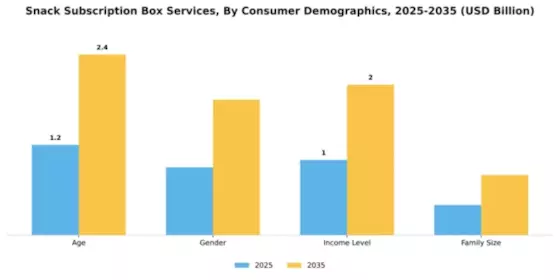
Family Size: Single-Parent (Dominant) vs. Multi-Child Households (Emerging)
In the Snack Subscription Box Services, single-parent households represent a dominant consumer segment, often seeking convenience and affordability in their snack choices. These households are likely to favor subscription services that provide quick, nutritious options tailored for busy lifestyles. Conversely, multi-child households are projected to be an emerging segment, motivated by the need for bulk snacks that satisfy diverse preferences among children. Providers tapping into this demographic are focusing on family-oriented boxes that offer a variety of snacks to cater to the entire family, making it an attractive market opportunity as the trend for healthy and convenient family snacks continues to rise.
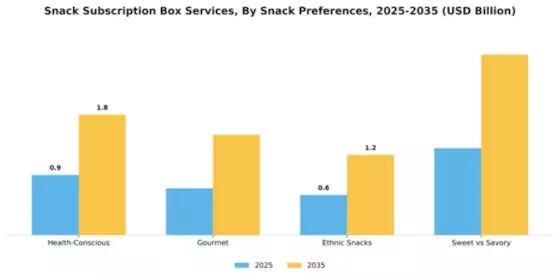
The Snack Subscription Box Services sector is increasingly witnessing a diversification in snack preferences, with the Health-Conscious segment leading the market share. This segment appeals to consumers seeking nutritious options, including organic and protein-packed snacks. In contrast, Ethnic Snacks are emerging rapidly, capturing the attention of consumers eager to explore global flavors, indicating a shift towards culinary diversity in snack options. Growth trends reveal that the Health-Conscious segment benefits from rising health awareness among consumers, driving brands to innovate in this category. On the other hand, the Ethnic Snacks segment's growth is heavily influenced by the increasing multicultural population and the popularity of adventurous eating, reflecting a demand for authentic global cuisines. These dynamics create opportunities for brands to cater to both existing preferences and emerging trends in the market.
Health-Conscious (Dominant) vs. Ethnic Snacks (Emerging)
Health-Conscious snacks are characterized by their focus on wholesome ingredients that promote a balanced diet, inclusive of low-calorie, protein-rich, and nutrient-dense options. This segment caters to a large base of consumers prioritizing health and wellness, leading to consistent demand. Brands in this space often emphasize transparency with clear labeling and ethically sourced ingredients. In contrast, Ethnic Snacks are gaining traction rapidly, appealing to a diverse demographic eager for unique taste experiences. This segment thrives on novelty and cultural authenticity, offering snacks that help consumers connect with different cultures through food. The growing interest in The Snack Subscription Box Services, attracting adventurous eaters.
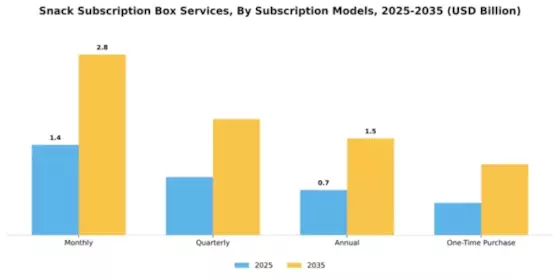
In the Snack Subscription Box Services market, the Monthly subscription model holds the most substantial share, appealing to consumers due to its flexibility, ongoing novelty, and convenience. Monthly plans allow customers to experience a diverse range of snacks regularly, fostering consumer loyalty and satisfaction. In contrast, the Quarterly subscription option is becoming increasingly popular, attracting those seeking variety without the commitment of a monthly plan. This model allows for themed boxes and seasonal offerings, appealing to both new and existing consumers seeking to explore different snack options. Growth trends indicate a shift toward convenience-driven purchasing behavior, with consumers preferring subscription services that offer them unique experiences. The rise of social media and unboxing trends has spurred interest in quarterly subscriptions as brands leverage exclusivity and anticipation in their marketing strategies. Factors such as lifestyle changes and the rise of online shopping continue to drive the expansion of both models within the market, reflecting evolving consumer preferences for snack options and personalized experiences.
Monthly: Dominant vs. Quarterly: Emerging
The Monthly subscription model stands out as the dominant offering in the Snack Subscription Box Services sector, catering to consumers who appreciate regular deliveries of snack boxes designed to introduce them to new and popular products. This model’s success is rooted in its ability to maintain customer engagement through monthly themes, special flavors, and promotions that keep the offering fresh and appealing. On the other hand, the Quarterly subscription is emerging as a competitive alternative, attracting cost-conscious consumers who prefer to receive larger quantities less frequently, particularly during seasonal changes. This model allows brands to create curated boxes that reflect seasonal trends and special occasions, tapping into the experience-driven market. Together, these models cater to a wide range of consumer preferences, ensuring continuous growth in this evolving market.
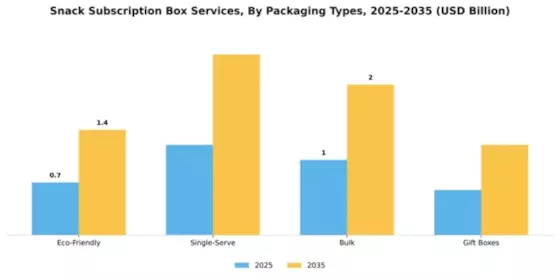
In the Snack Subscription Box Services market, the Eco-Friendly packaging type holds the largest share, attracting consumers who prioritize sustainability in their purchasing decisions. Single-Serve packaging is following closely, catering to the demand for convenience and portion control. As consumers become more aware of environmental issues, Eco-Friendly options are seeing steady momentum, while the convenience trend boosts Single-Serve packaging rapidly in growth.
Eco-Friendly (Dominant) vs. Single-Serve (Emerging)
Eco-Friendly packaging is currently the dominant choice among consumers in the Snack Subscription Box Services sector, appreciated for its minimal environmental impact and recyclable materials. This packaging appeals to a growing market segment focused on sustainability and corporate social responsibility. On the other hand, Single-Serve packaging is quickly emerging as a top trend, particularly fueled by busy lifestyles that prioritize convenience and on-the-go snacking. This format allows consumers to enjoy snacks without the need to open large packages, catering to individual tastes and preferences while providing efficient portion sizes.
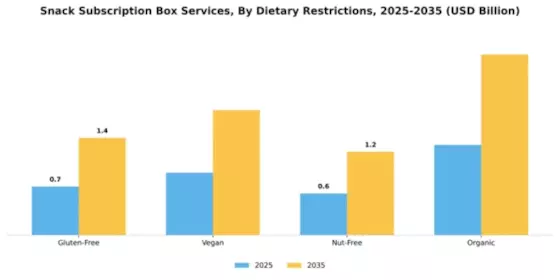
The Snack Subscription Box Services segment categorized by dietary restrictions showcases significant market share across various values such as Gluten-Free, Vegan, Nut-Free, and Organic options. Among these, the Gluten-Free segment holds the largest share, reflecting the rising consumer demand for gluten-free products driven by health-conscious individuals. Vegan options, on the other hand, are emerging rapidly as a favorite among consumers seeking plant-based alternatives, highlighting a shift towards more sustainable eating habits.
Gluten-Free: (Dominant) vs. Vegan (Emerging)
The Gluten-Free segment is characterized by its appeal to consumers with specific dietary needs, driving its dominant market position in Snack Subscription Box Services. These boxes cater to individuals who are gluten intolerant or prefer gluten-free diets, offering an array of snack options that meet strict gluten-free standards. In contrast, the Vegan segment is gaining traction as more consumers are adopting plant-based diets for health and ethical reasons. This segment includes snacks with no animal products, tapping into a growing trend of environmentally conscious eating. Both segments are crucial in shaping consumer preferences and driving innovation within the snack subscription market.
Get more detailed insights about Snack Subscription Box Services Market Request Free Sample
North America continues to lead the snack subscription box services market, holding a significant share of 1.75B in 2024. The growth is driven by increasing consumer demand for convenience and variety in snacking options. Regulatory support for e-commerce and food safety standards further catalyzes market expansion. The trend towards healthier snack options is also influencing consumer choices, pushing companies to innovate and diversify their offerings. The competitive landscape is robust, with key players like SnackCrate, Universal Yums, and MunchPak dominating the market. The U.S. is the primary market, accounting for the majority of the revenue, while Canada is also emerging as a significant player. The presence of diverse snack options from various cultures enhances the appeal of subscription services, making them a popular choice among consumers seeking unique culinary experiences.
Europe's snack subscription box market is gaining traction, with a market size of 1.0B in 2024. The growth is fueled by rising health consciousness among consumers and a shift towards online shopping. Regulatory frameworks supporting e-commerce and food safety are also pivotal in shaping the market landscape. The increasing demand for international snacks and gourmet options is driving subscription services to expand their offerings, catering to diverse consumer preferences. Leading countries in this region include the UK, Germany, and France, where companies like Graze and Treats are making significant inroads. The competitive environment is characterized by a mix of local and international players, enhancing the variety available to consumers. The presence of established brands alongside emerging startups creates a dynamic market, fostering innovation and customer engagement.
The Asia-Pacific region is witnessing a burgeoning interest in snack subscription box services, with a market size of 0.6B in 2024. Factors such as urbanization, increasing disposable incomes, and a growing appetite for international snacks are driving this growth. Regulatory support for e-commerce and food safety standards is also enhancing consumer confidence in subscription services. The trend towards convenience and variety in snacking is reshaping consumer behavior across the region. Key players like Bokksu and Japan Crate are leading the charge, particularly in Japan and South Korea, where the demand for unique and high-quality snacks is on the rise. The competitive landscape is becoming increasingly vibrant, with both local and international brands vying for market share. This dynamic environment is fostering innovation, as companies strive to meet the evolving tastes and preferences of consumers in this diverse region.
The Middle East and Africa (MEA) region is at the nascent stage of developing its snack subscription box services market, currently valued at 0.15B in 2024. The growth potential is significant, driven by increasing urbanization, a young population, and rising disposable incomes. Regulatory frameworks are gradually evolving to support e-commerce, which is crucial for the expansion of subscription services. The growing interest in diverse snack options is also contributing to market growth, as consumers seek new culinary experiences. Countries like South Africa and the UAE are leading the way in adopting snack subscription services, with local startups beginning to emerge. The competitive landscape is still developing, but the presence of international brands is starting to influence consumer preferences. As the market matures, there is a strong potential for innovation and growth, particularly in catering to local tastes and preferences.
The Snack Subscription Box Services market is characterized by a dynamic competitive landscape, driven by consumer demand for convenience, variety, and unique culinary experiences. Key players such as SnackCrate (US), Universal Yums (US), and Graze (GB) are strategically positioned to capitalize on these trends. SnackCrate (US) focuses on delivering international snacks, enhancing its appeal through cultural storytelling and themed boxes. Universal Yums (US) emphasizes a monthly exploration of global flavors, fostering customer engagement through interactive content. Graze (GB) adopts a health-centric approach, offering nutritious snack options, which aligns with the growing consumer preference for healthier choices. Collectively, these strategies contribute to a competitive environment that prioritizes innovation and customer experience.In terms of business tactics, companies are increasingly localizing their supply chains to enhance efficiency and reduce costs. This trend is particularly evident in the moderately fragmented market structure, where smaller players coexist alongside larger entities. The collective influence of these key players shapes market dynamics, as they compete not only on product offerings but also on service quality and customer engagement strategies.In November SnackNation (US) announced a partnership with a leading health and wellness brand to introduce a new line of organic snacks. This strategic move is significant as it aligns with the rising consumer demand for health-conscious products, potentially expanding SnackNation's market share and enhancing its brand image. The collaboration may also facilitate cross-promotion, leveraging both brands' customer bases to drive sales.In October Bokksu (JP) launched a subscription service that features seasonal Japanese snacks, highlighting regional specialties. This initiative is crucial as it not only diversifies Bokksu's offerings but also taps into the growing trend of experiential consumption, where customers seek authentic cultural experiences through food. By focusing on seasonal and regional products, Bokksu may strengthen its competitive edge in the niche market of Japanese snacks.In September MunchPak (US) expanded its international sourcing capabilities, allowing for a broader selection of snacks from various countries. This strategic enhancement is likely to attract a more diverse customer base, as it caters to the increasing consumer interest in global flavors. By optimizing its supply chain, MunchPak could improve delivery times and customer satisfaction, further solidifying its position in the market.As of December current competitive trends indicate a strong emphasis on digitalization, sustainability, and the integration of AI technologies within the Snack Subscription Box Services market. Strategic alliances are becoming increasingly prevalent, as companies seek to enhance their product offerings and operational efficiencies. Looking ahead, competitive differentiation is expected to evolve, shifting from price-based competition to a focus on innovation, technology, and supply chain reliability. This transition may redefine consumer expectations, compelling companies to prioritize unique value propositions and sustainable practices.
The Snack Subscription Box Services market is projected to grow at a 6.78% CAGR from 2025 to 2035, driven by consumer demand for convenience, variety, and health-conscious options.
New opportunities lie in:
By 2035, the market is expected to solidify its position as a key player in the global snack industry.
| MARKET SIZE 2024 | 3.5(USD Billion) |
| MARKET SIZE 2025 | 3.74(USD Billion) |
| MARKET SIZE 2035 | 7.2(USD Billion) |
| COMPOUND ANNUAL GROWTH RATE (CAGR) | 6.78% (2025 - 2035) |
| REPORT COVERAGE | Revenue Forecast, Competitive Landscape, Growth Factors, and Trends |
| BASE YEAR | 2024 |
| Market Forecast Period | 2025 - 2035 |
| Historical Data | 2019 - 2024 |
| Market Forecast Units | USD Billion |
| Key Companies Profiled | SnackCrate (US), Universal Yums (US), Graze (GB), MunchPak (US), SnackNation (US), Treats (US), Bokksu (JP), Japan Crate (JP), SnackFever (KR) |
| Segments Covered | Consumer Demographics, Snack Preferences, Subscription Models, Packaging Types, Dietary Restrictions |
| Key Market Opportunities | Growing consumer demand for personalized and health-conscious snack options in Snack Subscription Box Services. |
| Key Market Dynamics | Rising consumer demand for convenience drives innovation and competition in snack subscription box services. |
| Countries Covered | North America, Europe, APAC, South America, MEA |
The market valuation of Snack Subscription Box Services was 3.5 USD Billion in 2024.
The projected market size for Snack Subscription Box Services is 7.2 USD Billion by 2035.
The expected CAGR for Snack Subscription Box Services during the forecast period 2025 - 2035 is 6.78%.
Key players in the market include SnackCrate, Universal Yums, Graze, MunchPak, SnackNation, Treats, Bokksu, Japan Crate, and SnackFever.
Consumer demographics indicate that segments such as Age and Income Level contributed 1.2 to 2.4 USD Billion and 1.0 to 2.0 USD Billion, respectively.
Snack preferences show that Sweet vs Savory snacks generated 1.3 to 2.7 USD Billion, while Health-Conscious options accounted for 0.9 to 1.8 USD Billion.
The monthly subscription model appears to be the most popular, with a valuation of 1.4 to 2.8 USD Billion.
Packaging types such as Single-Serve and Eco-Friendly options generated 1.2 to 2.4 USD Billion and 0.7 to 1.4 USD Billion, respectively.
Dietary restrictions indicate that Organic snacks are projected to generate 1.3 to 2.6 USD Billion, while Vegan options are expected to reach 0.9 to 1.8 USD Billion.
Emerging trends suggest a growing interest in gourmet and ethnic snacks, with valuations of 0.7 to 1.5 USD Billion and 0.6 to 1.2 USD Billion, respectively.


Kindly complete the form below to receive a free sample of this Report

“This is really good guys. Excellent work on a tight deadline. I will continue to use you going forward and recommend you to others. Nice job”


“Thanks. It’s been a pleasure working with you, please use me as reference with any other Intel employees.”


“Thanks for sending the report it gives us a good global view of the Betaïne market.”


“Thank you, this will be very helpful for OQS.”


“We found the report very insightful! we found your research firm very helpful. I'm sending this email to secure our future business.”


“I am very pleased with how market segments have been defined in a relevant way for my purposes (such as "Portable Freezers & refrigerators" and "last-mile"). In general the report is well structured. Thanks very much for your efforts.”


“I have been reading the first document or the study, ,the Global HVAC and FP market report 2021 till 2026. Must say, good info! I have not gone in depth at all parts, but got a good indication of the data inside!”


“We got the report in time, we really thank you for your support in this process. I also thank to all of your team as they did a great job.”


“The Automotive 48V ECU Components Procurement Intelligence Study” was a complex project, but the Market Research Future (MRFR) team handled it with quality, agility, and customer-centricity. They delivered all requested data on time and within the agreed scope. The team, including Shubhendra Anand and Rahul Gotadki, was always readily available to clarify questions and swiftly implement necessary adjustments, driving the project to a successful conclusion within a very demanding timeframe.
I would also like to specifically commend Akshay Agarwal for his responsiveness and support at every stage—from our initial inquiry on May 6th through to final delivery on June 18th. His dedication made the entire process seamless.”



