Gourmet Food Subscription Services Market Research Report By Product Category (Artisanal Cheeses, Gourmet Snacks, Specialty Meats, Exotic Spices), By Subscription Type (Monthly Subscription, Quarterly Subscription, Annual Subscription, One-Time Purchase), By Delivery Frequency (Weekly Delivery, Bi-Weekly Delivery, Monthly Delivery, Seasonal Delivery), By Dietary Preferences (Vegan, Gluten-Free, Organic, Paleo), By Customer Demographics (Age, Income Level, Education Level, Occupation) And By Region (North America, Europe, Asia-Pacific, And Rest Of The World) – Market Forecast Till 2035.
Forecast Period
2025 - 2035
CAGR
7.59%
2024 Market Size
$ 5.5 Billion
2035 Market Size
$ 12.3 Billion
Professional Services● Updated March 28, 2026Report ID: MRFR/PS/65048-HCR|Pages: 200|Author: Rahul Gotadki, Garvit Vyas
Gourmet Food Subscription Services Market Summary
As per MRFR analysis, the Gourmet Food Subscription Services Market Size was estimated at 5.5 billion in 2024. The Gourmet Food Subscription Services industry is projected to grow from 5.92 billion in 2025 to 12.3 billion by 2035, exhibiting a compound annual growth rate (CAGR) of 7.59% during the forecast period 2025 - 2035.
Key Market Trends & Highlights
The Gourmet Food Subscription Services market is experiencing dynamic growth driven by evolving consumer preferences and innovative offerings.
Personalization and customization are becoming increasingly important as consumers seek tailored culinary experiences.
Sustainability and ethical sourcing practices are gaining traction, particularly among younger consumers in North America.
Culinary education and experiences are emerging as key components of subscription offerings, appealing to a diverse audience.
Rising demand for unique culinary experiences and health and wellness trends are driving growth, especially in the monthly subscription segment in North America and the quarterly subscription segment in Asia-Pacific.
Market Size & Forecast
2024 Market Size
5.5 (USD Billion)
2035 Market Size
12.3 (USD Billion)
CAGR (2025 - 2035)
7.59%
Major Players
Blue Apron (US), HelloFresh (DE), Sun Basket (US), Home Chef (US), Green Chef (US), Marley Spoon (DE), Snap Kitchen (US), Territory Foods (US)
Our Impact
Enabled $4.3B Revenue Impact for Fortune 500 and Leading Multinationals
Partnering with 2000+ Global Organizations Each Year
30K+ Citations by Top-Tier Firms in the Industry
Gourmet Food Subscription Services Market Trends
The Gourmet Food Subscription Services market is currently experiencing a notable evolution, characterized by a growing consumer appetite for unique culinary experiences. This sector appears to be thriving as individuals increasingly seek out high-quality, artisanal products delivered directly to their doorsteps. The convenience of subscription models, combined with the allure of gourmet offerings, seems to resonate well with a diverse demographic. As consumers become more adventurous in their food choices, the demand for curated selections of gourmet items is likely to expand, fostering innovation among service providers. Moreover, the emphasis on sustainability and ethical sourcing is becoming more pronounced within the Gourmet Food Subscription Services landscape. Many consumers are now prioritizing brands that align with their values, particularly those that emphasize organic ingredients and environmentally friendly practices. This shift suggests that companies may need to adapt their offerings to meet these evolving preferences, potentially leading to a more conscientious market overall. As the sector continues to develop, it is essential for businesses to remain attuned to these trends to maintain relevance and appeal in a competitive environment.
Personalization and Customization
Gourmet Food Subscription Services are increasingly offering personalized options to cater to individual tastes and dietary preferences. This trend indicates a shift towards more tailored experiences, allowing consumers to select items that align with their specific culinary interests.
Sustainability and Ethical Sourcing
There is a growing emphasis on sustainability within the Gourmet Food Subscription Services market. Consumers are gravitating towards brands that prioritize ethical sourcing and environmentally friendly practices, suggesting a potential shift in purchasing behavior.
Culinary Education and Experiences
Many Gourmet Food Subscription Services are incorporating educational elements into their offerings, such as cooking classes or recipe guides. This trend reflects a desire among consumers not only to enjoy gourmet foods but also to enhance their culinary skills and knowledge.
Gourmet Food Subscription Services Market Drivers
Health and Wellness Trends
The Gourmet Food Subscription Services Industry is significantly influenced by the growing health and wellness trends among consumers. As individuals become more health-conscious, there is an increasing preference for gourmet foods that are organic, gluten-free, and free from artificial additives. This shift in consumer behavior suggests that subscription services offering health-oriented gourmet options are likely to thrive. Market data indicates that the organic food sector has seen a substantial increase, with sales reaching over 50 billion in recent years. This trend highlights the potential for gourmet food subscriptions to cater to health-focused consumers, providing them with nutritious and gourmet options that align with their dietary preferences. As a result, the industry is adapting to these trends by incorporating healthier gourmet selections into their offerings.
Innovative Marketing Strategies
The Gourmet Food Subscription Services Industry is increasingly adopting innovative marketing strategies to attract and retain customers. With the rise of digital marketing and social media, companies are leveraging these platforms to showcase their unique offerings and engage with consumers. Strategies such as influencer partnerships, interactive content, and personalized marketing campaigns are becoming prevalent. Data suggests that brands utilizing social media effectively can see a significant increase in customer engagement and sales. This shift towards innovative marketing indicates that the industry is evolving to meet the expectations of modern consumers, who are looking for brands that resonate with their values and lifestyle. As a result, gourmet food subscription services are likely to enhance their marketing efforts to build brand loyalty and expand their customer base.
Convenience and Time-Saving Solutions
The Gourmet Food Subscription Services Industry is benefiting from the increasing demand for convenience and time-saving solutions in food procurement. Busy lifestyles have led consumers to seek out services that simplify meal preparation and grocery shopping. Subscription services that deliver gourmet ingredients directly to consumers' doorsteps are particularly appealing, as they save time while offering high-quality products. Recent studies indicate that a significant portion of consumers prefer meal kits and gourmet subscriptions over traditional grocery shopping due to the convenience factor. This trend suggests that the industry is well-positioned to capitalize on the growing need for hassle-free gourmet food options, allowing consumers to enjoy gourmet meals without the associated time commitment of sourcing ingredients themselves.
Expansion of E-commerce and Online Shopping
The Gourmet Food Subscription Services Industry is experiencing growth due to the expansion of e-commerce and online shopping. As consumers increasingly turn to online platforms for their shopping needs, gourmet food subscriptions are becoming more accessible. The convenience of online ordering, coupled with the ability to explore a wide range of gourmet products, is driving this trend. Recent statistics indicate that e-commerce sales in the food sector have surged, with a notable percentage of consumers preferring to purchase gourmet foods online. This shift towards digital shopping suggests that the industry is well-positioned to capitalize on the growing trend of online consumer behavior. As more consumers embrace e-commerce, gourmet food subscription services are likely to see an increase in subscriptions and customer engagement.
Rising Demand for Unique Culinary Experiences
The Gourmet Food Subscription Services Industry is witnessing a notable increase in consumer demand for unique culinary experiences. As individuals seek to explore diverse flavors and gourmet ingredients, subscription services that offer curated selections of artisanal products are becoming increasingly popular. According to recent data, the gourmet food market is projected to grow at a compound annual growth rate of approximately 5.5% over the next few years. This trend indicates that consumers are willing to invest in high-quality, unique food experiences, which positions gourmet subscription services as a key player in meeting this demand. Furthermore, the rise of social media platforms has amplified the visibility of gourmet foods, encouraging consumers to seek out subscription services that provide exclusive access to rare and high-end culinary products.
Market Segment Insights
By Customer Demographics: Age (Largest) vs. Income Level (Fastest-Growing)
In the Gourmet Food Subscription Services market, the age demographic distribution reveals that millennials and Generation X represent the largest customer segments, as they are more inclined to explore unique culinary experiences and indulge in gourmet offerings. These age groups contribute significantly to the market share, driven by their taste for convenience and quality in food delivery, while Baby Boomers also show a growing interest, albeit at a slower pace, in subscription services tailored to gourmet products. As for growth trends, the income level demographic is currently the fastest-growing segment in this market. Higher-income households are increasingly investing in gourmet subscription services, seeking premium quality and diverse flavors delivered to their homes. This interest is fueled by a rising trend in gourmet food culture and an inclination towards high-quality meals, catering to the sophistication of affluent consumers who are willing to spend more on culinary delights.
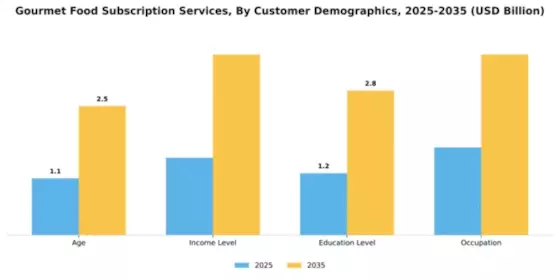
Age: Millennials (Dominant) vs. Income Level: High-Income Families (Emerging)
Millennials stand out as the dominant age group in the Gourmet Food Subscription Services market, characterized by their innate affinity for technology, convenience, and adventurous dining experiences. This demographic actively seeks unique, high-quality food items and enjoys exploring diverse culinary options. On the other hand, high-income families are an emerging segment that exhibits an increasing inclination toward gourmet subscriptions, primarily influenced by their desire for premium goods and convenience in meal preparation. These consumers prioritize the quality and exclusivity of products, substantially shaping the market dynamics as they seek gourmet offerings that match their lifestyle and food preferences.
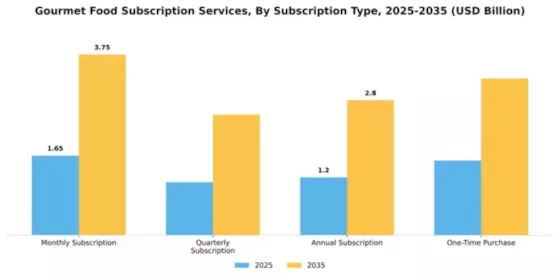
By Subscription Type: Monthly Subscription (Largest) vs. Quarterly Subscription (Fastest-Growing)
The Gourmet Food Subscription Services market showcases a varied landscape with Monthly Subscriptions taking the lion's share of the market. This model is preferred by customers due to its flexibility, convenience, and the ability to easily sample new products every month. In contrast, quarterly subscriptions are gaining traction as they offer consumers a more immersive experience with a more extensive selection of gourmet items, catering to those looking for variety without the frequency of monthly deliveries.
Monthly Subscription (Dominant) vs. Quarterly Subscription (Emerging)
Monthly subscriptions in the Gourmet Food Subscription Services market serve as the dominant force due to their appeal among consumers seeking regular gourmet food experiences. These subscriptions typically allow for frequent deliveries, ensuring that subscribers continually receive fresh and innovative products. On the other hand, quarterly subscriptions are emerging as a popular alternative, particularly among consumers looking for larger, curated selections of gourmet products that provide a unique experience every few months. This model is seen as ideal for customers who enjoy exploring diverse culinary trends without the commitment of a monthly delivery.
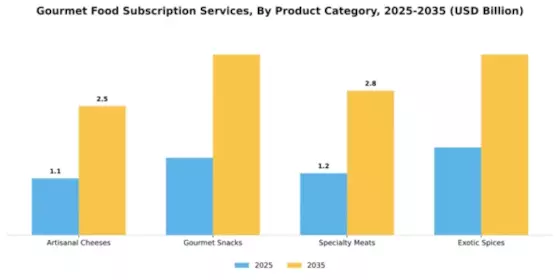
By Product Category: Artisanal Cheeses (Largest) vs. Gourmet Snacks (Fastest-Growing)
In the Gourmet Food Subscription Services market, 'Artisanal Cheeses' hold the largest market share, appealing to consumers seeking high-quality, unique cheese varieties that elevate culinary experiences. This segment benefits from the growing trend of specialty foods and artisanal products, attracting gourmet enthusiasts. Meanwhile, 'Gourmet Snacks' are rapidly gaining traction as the fastest-growing segment. With consumers increasingly looking for convenient but high-quality snack options, this category has seen a significant increase in demand, reflecting changes in consumer lifestyles and preferences towards premium snack foods.
Artisanal Cheeses (Dominant) vs. Gourmet Snacks (Emerging)
Artisanal Cheeses are dominating the Gourmet Food Subscription Services market due to their rich flavors sourced from local and organic dairy farms. These cheeses cater to discerning palates and are often paired with complementary gourmet items, enhancing the overall culinary experience. On the other hand, Gourmet Snacks represent an emerging segment, characterized by innovation and variety. They include premium chips, nuts, and other snackables made from quality ingredients. The rising trend of snacking on-the-go, coupled with increasing health consciousness, has led to the emergence of this segment. Together, these categories reflect a growing appreciation for quality gourmet food products in the digital marketplace.
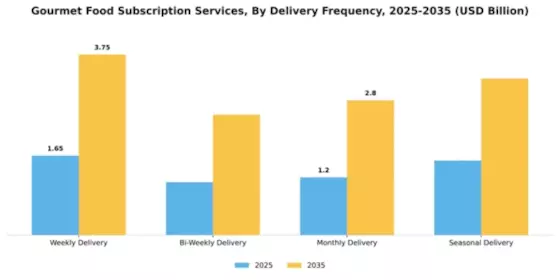
By Delivery Frequency: Weekly Delivery (Largest) vs. Monthly Delivery (Fastest-Growing)
In the Gourmet Food Subscription Services market, the delivery frequency segment exhibits diverse preferences among consumers. Weekly Delivery currently claims the largest market share, appealing to customers who seek regular and fresh gourmet selections. Bi-Weekly Delivery follows closely, offering a balanced approach for those who desire gourmet foods but do not need them as frequently. On the other hand, Monthly and Seasonal Delivery options hold smaller shares but cater to niche segments seeking curated experiences or special occasion treats.
Weekly Delivery: (Dominant) vs. Monthly Delivery (Emerging)
Weekly Delivery is the dominant player in the Gourmet Food Subscription market, thriving on the consumer demand for fresh produce and artisanal goods that are delivered regularly. It captures the attention of consumers looking for convenience and quality on a more frequent basis. Conversely, Monthly Delivery has emerged as a compelling option, appealing to those who prefer a less frequent but highly curated experience. This growing segment is bolstered by trends in consumer purchasing behavior, where individuals seek seasonal gourmet items or limited edition offerings, thus driving demand for more specialized subscription choices.
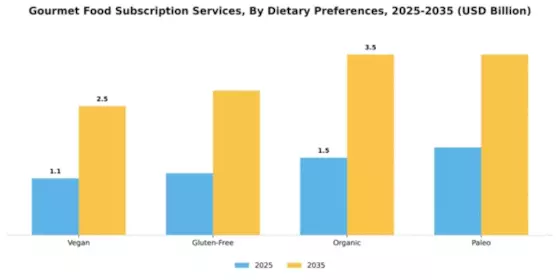
By Dietary Preferences: Vegan (Largest) vs. Gluten-Free (Fastest-Growing)
In the Gourmet Food Subscription Services market, Vegan options currently hold the largest market share, appealing significantly to health-conscious consumers and those with ethical dietary choices. This segment captures attention due to its broad appeal, leveraging the trend toward plant-based eating. In contrast, the Gluten-Free segment is the fastest-growing category as awareness regarding gluten sensitivities and celiac disease rises. This shift in consumer preferences highlights an evolving landscape in dietary needs and desires.
Vegan: Largest vs. Paleo: Emerging
Vegan subscription services lead the market by providing a diverse range of plant-based meals, snacks, and ingredients, catering to a wide audience of environmentally-conscious consumers, including both strict vegans and those seeking to incorporate more plant-based options into their diets. In contrast, Paleo products, while considered emerging, are increasingly appealing to health-focused individuals who prefer a diet that mimics ancestral eating patterns, emphasizing whole foods and lean proteins. The market positioning of Vegan options is strong due to their inclusivity and adaptability, while the Paleo segment is carving out its niche among consumers seeking alternative dietary lifestyles.
Get more detailed insights about Gourmet Food Subscription Services MarketRequest Free Sample
Regional Insights
North America : Market Leader in Gourmet Services
North America is the largest market for gourmet food subscription services, holding a significant share of 2.75 billion in 2024. The growth is driven by increasing consumer demand for convenience, health-conscious eating, and diverse culinary experiences. Regulatory support for food safety and quality standards further enhances market growth, encouraging innovation and competition among service providers. The competitive landscape is robust, with key players like Blue Apron, HelloFresh, and Sun Basket leading the charge. The U.S. market is particularly vibrant, characterized by a high penetration of subscription models and a growing trend towards organic and locally sourced ingredients. This region's focus on sustainability and quality positions it as a trendsetter in the gourmet food subscription space.
Europe : Emerging Market with Growth Potential
Europe's gourmet food subscription market is valued at €1.8 billion, reflecting a growing trend towards premium food experiences. The rise in disposable income and changing consumer preferences towards healthy and gourmet options are key growth drivers. Regulatory frameworks in the EU promote food safety and transparency, which are crucial for building consumer trust and expanding market reach. Germany and the UK are leading countries in this sector, with companies like HelloFresh and Marley Spoon making significant impacts. The competitive landscape is evolving, with a mix of established brands and new entrants focusing on niche markets. The emphasis on sustainability and ethical sourcing is shaping the offerings, making Europe a dynamic player in the gourmet subscription market.
Asia-Pacific : Emerging Powerhouse in Subscriptions
The Asia-Pacific region is witnessing a burgeoning market for gourmet food subscription services, valued at $0.9 billion. Factors such as urbanization, rising disposable incomes, and a growing interest in international cuisines are driving demand. Regulatory bodies are increasingly focusing on food safety and quality, which is essential for consumer confidence and market expansion. Countries like Australia and Japan are at the forefront, with local players emerging to cater to diverse tastes. The competitive landscape is characterized by a mix of international and regional brands, each vying for market share. The trend towards health and wellness is influencing product offerings, making this region a promising area for growth in gourmet subscriptions.
Middle East and Africa : Niche Market with Untapped Potential
The Middle East and Africa region represents a nascent market for gourmet food subscription services, valued at $0.05 billion. The growth potential is significant, driven by increasing urbanization and a shift towards online shopping. However, regulatory challenges and varying consumer preferences pose hurdles. Governments are beginning to recognize the importance of food quality and safety, which could catalyze market growth in the coming years. Countries like South Africa and the UAE are showing early signs of interest in gourmet subscriptions, with a few local players entering the market. The competitive landscape is still developing, with opportunities for innovation and differentiation. As consumer awareness grows, this region could become a key player in the gourmet food subscription space.
Key Players and Competitive Insights
The Gourmet Food Subscription Services market is characterized by a dynamic competitive landscape, driven by evolving consumer preferences for convenience, quality, and sustainability. Major players such as Blue Apron (US), HelloFresh (DE), and Sun Basket (US) are at the forefront, each adopting distinct strategies to enhance their market positioning. Blue Apron (US) has focused on innovation in meal variety and customization, while HelloFresh (DE) emphasizes its extensive global reach and operational efficiency. Sun Basket (US) differentiates itself through its commitment to organic and health-conscious ingredients, appealing to a niche market segment. Collectively, these strategies contribute to a competitive environment that is increasingly defined by differentiation rather than mere price competition.Key business tactics within this market include localized sourcing and supply chain optimization, which are essential for maintaining product freshness and quality. The competitive structure appears moderately fragmented, with several key players vying for market share. This fragmentation allows for a diverse range of offerings, catering to various consumer preferences. However, the influence of major companies remains substantial, as they set trends and standards that smaller entrants often follow.In November HelloFresh (DE) announced a strategic partnership with a leading organic farm network to enhance its supply chain sustainability. This move is significant as it not only strengthens HelloFresh's commitment to sourcing high-quality ingredients but also aligns with growing consumer demand for transparency and sustainability in food sourcing. Such partnerships are likely to bolster brand loyalty and attract environmentally conscious consumers.In October Blue Apron (US) launched a new line of gourmet meal kits featuring recipes from renowned chefs. This initiative is indicative of Blue Apron's strategy to elevate its brand perception and attract a more upscale clientele. By leveraging culinary expertise, Blue Apron aims to differentiate itself in a crowded market, potentially increasing its customer base and average order value.In September Sun Basket (US) expanded its offerings to include a new line of plant-based meal kits, responding to the rising trend of veganism and plant-based diets. This strategic expansion not only caters to a growing demographic but also positions Sun Basket as a leader in health-oriented meal solutions. The introduction of such products may enhance customer retention and attract new subscribers seeking healthier options.As of December the competitive trends within the Gourmet Food Subscription Services market are increasingly shaped by digitalization, sustainability, and the integration of AI technologies. Strategic alliances, such as those seen with HelloFresh (DE) and Blue Apron (US), are pivotal in enhancing operational efficiencies and expanding market reach. Looking ahead, competitive differentiation is likely to evolve, with a pronounced shift from price-based competition to a focus on innovation, technology integration, and supply chain reliability. This evolution suggests that companies that prioritize these aspects will be better positioned to thrive in an increasingly competitive landscape.

Key Companies in the Gourmet Food Subscription Services Market include
Future Outlook
Gourmet Food Subscription Services Market Future Outlook
The Gourmet Food Subscription Services market is projected to grow at a 7.59% CAGR from 2025 to 2035, driven by increasing consumer demand for premium products and convenience.
New opportunities lie in:
Expansion into plant-based gourmet offerings Partnerships with local artisans for exclusive products Development of personalized subscription plans based on consumer preferences
By 2035, the market is expected to be robust, reflecting evolving consumer tastes and preferences.
Market Segmentation
gourmet-food-subscription-services Product Category Outlook
Artisanal Cheeses
Gourmet Snacks
Specialty Meats
Exotic Spices
gourmet-food-subscription-services Subscription Type Outlook
Monthly Subscription
Quarterly Subscription
Annual Subscription
One-Time Purchase
gourmet-food-subscription-services Delivery Frequency Outlook
Weekly Delivery
Bi-Weekly Delivery
Monthly Delivery
Seasonal Delivery
gourmet-food-subscription-services Dietary Preferences Outlook
Vegan
Gluten-Free
Organic
Paleo
gourmet-food-subscription-services Customer Demographics Outlook
Age
Income Level
Education Level
Occupation
Report Scope
MARKET SIZE 2024
5.5 (USD Billion)
MARKET SIZE 2025
5.92 (USD Billion)
MARKET SIZE 2035
12.3 (USD Billion)
COMPOUND ANNUAL GROWTH RATE (CAGR)
7.59% (2025 - 2035)
REPORT COVERAGE
Revenue Forecast, Competitive Landscape, Growth Factors, and Trends
BASE YEAR
2024
Market Forecast Period
2025 - 2035
Historical Data
2019 - 2024
Market Forecast Units
USD Billion
Key Companies Profiled
Blue Apron (US), HelloFresh (DE), Sun Basket (US), Home Chef (US), Green Chef (US), Marley Spoon (DE), Snap Kitchen (US), Territory Foods (US)
Growing consumer demand for personalized and sustainable gourmet food experiences presents a unique market opportunity.
Key Market Dynamics
Rising consumer demand for unique culinary experiences drives innovation and competition in gourmet food subscription services.
Countries Covered
North America, Europe, APAC, South America, MEA
Table of Contents
1 SECTION I: EXECUTIVE SUMMARY AND KEY HIGHLIGHTS
1.1 EXECUTIVE SUMMARY
1.1.1 Market Overview
1.1.2 Key Findings
1.1.3 Market Segmentation
1.1.4 Competitive Landscape
1.1.5 Challenges and Opportunities
1.1.6 Future Outlook
2 SECTION II: SCOPING, METHODOLOGY AND MARKET STRUCTURE
2.1 MARKET INTRODUCTION
2.1.1 Definition
2.1.2 Scope of the study
2.1.2.1 Research Objective
2.1.2.2 Assumption
2.1.2.3 Limitations
2.2 RESEARCH METHODOLOGY
2.2.1 Overview
2.2.2 Data Mining
2.2.3 Secondary Research
2.2.4 Primary Research
2.2.4.1 Primary Interviews and Information Gathering Process
2.2.4.2 Breakdown of Primary Respondents
2.2.5 Forecasting Model
2.2.6 Market Size Estimation
2.2.6.1 Bottom-Up Approach
2.2.6.2 Top-Down Approach
2.2.7 Data Triangulation
2.2.8 Validation
3 SECTION III: QUALITATIVE ANALYSIS
3.1 MARKET DYNAMICS
3.1.1 Overview
3.1.2 Drivers
3.1.3 Restraints
3.1.4 Opportunities
3.2 MARKET FACTOR ANALYSIS
3.2.1 Value chain Analysis
3.2.2 Porter's Five Forces Analysis
3.2.2.1 Bargaining Power of Suppliers
3.2.2.2 Bargaining Power of Buyers
3.2.2.3 Threat of New Entrants
3.2.2.4 Threat of Substitutes
3.2.2.5 Intensity of Rivalry
3.2.3 COVID-19 Impact Analysis
3.2.3.1 Market Impact Analysis
3.2.3.2 Regional Impact
3.2.3.3 Opportunity and Threat Analysis
4 SECTION IV: QUANTITATIVE ANALYSIS
4.1 Medical Device, BY Customer Demographics (USD Billion)
4.1.1 Age
4.1.2 Income Level
4.1.3 Education Level
4.1.4 Occupation
4.2 Medical Device, BY Subscription Type (USD Billion)
4.2.1 Monthly Subscription
4.2.2 Quarterly Subscription
4.2.3 Annual Subscription
4.2.4 One-Time Purchase
4.3 Medical Device, BY Product Category (USD Billion)
4.3.1 Artisanal Cheeses
4.3.2 Gourmet Snacks
4.3.3 Specialty Meats
4.3.4 Exotic Spices
4.4 Medical Device, BY Delivery Frequency (USD Billion)
4.4.1 Weekly Delivery
4.4.2 Bi-Weekly Delivery
4.4.3 Monthly Delivery
4.4.4 Seasonal Delivery
4.5 Medical Device, BY Dietary Preferences (USD Billion)
4.5.1 Vegan
4.5.2 Gluten-Free
4.5.3 Organic
4.5.4 Paleo
4.6 Medical Device, BY Region (USD Billion)
4.6.1 North America
4.6.1.1 US
4.6.1.2 Canada
4.6.2 Europe
4.6.2.1 Germany
4.6.2.2 UK
4.6.2.3 France
4.6.2.4 Russia
4.6.2.5 Italy
4.6.2.6 Spain
4.6.2.7 Rest of Europe
4.6.3 APAC
4.6.3.1 China
4.6.3.2 India
4.6.3.3 Japan
4.6.3.4 South Korea
4.6.3.5 Malaysia
4.6.3.6 Thailand
4.6.3.7 Indonesia
4.6.3.8 Rest of APAC
4.6.4 South America
4.6.4.1 Brazil
4.6.4.2 Mexico
4.6.4.3 Argentina
4.6.4.4 Rest of South America
4.6.5 MEA
4.6.5.1 GCC Countries
4.6.5.2 South Africa
4.6.5.3 Rest of MEA
5 SECTION V: COMPETITIVE ANALYSIS
5.1 Competitive Landscape
5.1.1 Overview
5.1.2 Competitive Analysis
5.1.3 Market share Analysis
5.1.4 Major Growth Strategy in the Medical Device
5.1.5 Competitive Benchmarking
5.1.6 Leading Players in Terms of Number of Developments in the Medical Device
5.1.7 Key developments and growth strategies
5.1.7.1 New Product Launch/Service Deployment
5.1.7.2 Merger & Acquisitions
5.1.7.3 Joint Ventures
5.1.8 Major Players Financial Matrix
5.1.8.1 Sales and Operating Income
5.1.8.2 Major Players R&D Expenditure. 2023
5.2 Company Profiles
5.2.1 Blue Apron (US)
5.2.1.1 Financial Overview
5.2.1.2 Products Offered
5.2.1.3 Key Developments
5.2.1.4 SWOT Analysis
5.2.1.5 Key Strategies
5.2.2 HelloFresh (DE)
5.2.2.1 Financial Overview
5.2.2.2 Products Offered
5.2.2.3 Key Developments
5.2.2.4 SWOT Analysis
5.2.2.5 Key Strategies
5.2.3 Sun Basket (US)
5.2.3.1 Financial Overview
5.2.3.2 Products Offered
5.2.3.3 Key Developments
5.2.3.4 SWOT Analysis
5.2.3.5 Key Strategies
5.2.4 Home Chef (US)
5.2.4.1 Financial Overview
5.2.4.2 Products Offered
5.2.4.3 Key Developments
5.2.4.4 SWOT Analysis
5.2.4.5 Key Strategies
5.2.5 Green Chef (US)
5.2.5.1 Financial Overview
5.2.5.2 Products Offered
5.2.5.3 Key Developments
5.2.5.4 SWOT Analysis
5.2.5.5 Key Strategies
5.2.6 Marley Spoon (DE)
5.2.6.1 Financial Overview
5.2.6.2 Products Offered
5.2.6.3 Key Developments
5.2.6.4 SWOT Analysis
5.2.6.5 Key Strategies
5.2.7 Snap Kitchen (US)
5.2.7.1 Financial Overview
5.2.7.2 Products Offered
5.2.7.3 Key Developments
5.2.7.4 SWOT Analysis
5.2.7.5 Key Strategies
5.2.8 Territory Foods (US)
5.2.8.1 Financial Overview
5.2.8.2 Products Offered
5.2.8.3 Key Developments
5.2.8.4 SWOT Analysis
5.2.8.5 Key Strategies
5.3 Appendix
5.3.1 References
5.3.2 Related Reports
6 LIST OF FIGURES
6.1 MARKET SYNOPSIS
6.2 NORTH AMERICA MARKET ANALYSIS
6.3 US MARKET ANALYSIS BY CUSTOMER DEMOGRAPHICS
6.4 US MARKET ANALYSIS BY SUBSCRIPTION TYPE
6.5 US MARKET ANALYSIS BY PRODUCT CATEGORY
6.6 US MARKET ANALYSIS BY DELIVERY FREQUENCY
6.7 US MARKET ANALYSIS BY DIETARY PREFERENCES
6.8 CANADA MARKET ANALYSIS BY CUSTOMER DEMOGRAPHICS
6.9 CANADA MARKET ANALYSIS BY SUBSCRIPTION TYPE
6.10 CANADA MARKET ANALYSIS BY PRODUCT CATEGORY
6.11 CANADA MARKET ANALYSIS BY DELIVERY FREQUENCY
6.12 CANADA MARKET ANALYSIS BY DIETARY PREFERENCES
6.13 EUROPE MARKET ANALYSIS
6.14 GERMANY MARKET ANALYSIS BY CUSTOMER DEMOGRAPHICS
6.15 GERMANY MARKET ANALYSIS BY SUBSCRIPTION TYPE
6.16 GERMANY MARKET ANALYSIS BY PRODUCT CATEGORY
6.17 GERMANY MARKET ANALYSIS BY DELIVERY FREQUENCY
6.18 GERMANY MARKET ANALYSIS BY DIETARY PREFERENCES
6.19 UK MARKET ANALYSIS BY CUSTOMER DEMOGRAPHICS
6.20 UK MARKET ANALYSIS BY SUBSCRIPTION TYPE
6.21 UK MARKET ANALYSIS BY PRODUCT CATEGORY
6.22 UK MARKET ANALYSIS BY DELIVERY FREQUENCY
6.23 UK MARKET ANALYSIS BY DIETARY PREFERENCES
6.24 FRANCE MARKET ANALYSIS BY CUSTOMER DEMOGRAPHICS
6.25 FRANCE MARKET ANALYSIS BY SUBSCRIPTION TYPE
6.26 FRANCE MARKET ANALYSIS BY PRODUCT CATEGORY
6.27 FRANCE MARKET ANALYSIS BY DELIVERY FREQUENCY
6.28 FRANCE MARKET ANALYSIS BY DIETARY PREFERENCES
6.29 RUSSIA MARKET ANALYSIS BY CUSTOMER DEMOGRAPHICS
6.30 RUSSIA MARKET ANALYSIS BY SUBSCRIPTION TYPE
6.31 RUSSIA MARKET ANALYSIS BY PRODUCT CATEGORY
6.32 RUSSIA MARKET ANALYSIS BY DELIVERY FREQUENCY
6.33 RUSSIA MARKET ANALYSIS BY DIETARY PREFERENCES
6.34 ITALY MARKET ANALYSIS BY CUSTOMER DEMOGRAPHICS
6.35 ITALY MARKET ANALYSIS BY SUBSCRIPTION TYPE
6.36 ITALY MARKET ANALYSIS BY PRODUCT CATEGORY
6.37 ITALY MARKET ANALYSIS BY DELIVERY FREQUENCY
6.38 ITALY MARKET ANALYSIS BY DIETARY PREFERENCES
6.39 SPAIN MARKET ANALYSIS BY CUSTOMER DEMOGRAPHICS
6.40 SPAIN MARKET ANALYSIS BY SUBSCRIPTION TYPE
6.41 SPAIN MARKET ANALYSIS BY PRODUCT CATEGORY
6.42 SPAIN MARKET ANALYSIS BY DELIVERY FREQUENCY
6.43 SPAIN MARKET ANALYSIS BY DIETARY PREFERENCES
6.44 REST OF EUROPE MARKET ANALYSIS BY CUSTOMER DEMOGRAPHICS
6.45 REST OF EUROPE MARKET ANALYSIS BY SUBSCRIPTION TYPE
6.46 REST OF EUROPE MARKET ANALYSIS BY PRODUCT CATEGORY
6.47 REST OF EUROPE MARKET ANALYSIS BY DELIVERY FREQUENCY
6.48 REST OF EUROPE MARKET ANALYSIS BY DIETARY PREFERENCES
6.49 APAC MARKET ANALYSIS
6.50 CHINA MARKET ANALYSIS BY CUSTOMER DEMOGRAPHICS
6.51 CHINA MARKET ANALYSIS BY SUBSCRIPTION TYPE
6.52 CHINA MARKET ANALYSIS BY PRODUCT CATEGORY
6.53 CHINA MARKET ANALYSIS BY DELIVERY FREQUENCY
6.54 CHINA MARKET ANALYSIS BY DIETARY PREFERENCES
6.55 INDIA MARKET ANALYSIS BY CUSTOMER DEMOGRAPHICS
6.56 INDIA MARKET ANALYSIS BY SUBSCRIPTION TYPE
6.57 INDIA MARKET ANALYSIS BY PRODUCT CATEGORY
6.58 INDIA MARKET ANALYSIS BY DELIVERY FREQUENCY
6.59 INDIA MARKET ANALYSIS BY DIETARY PREFERENCES
6.60 JAPAN MARKET ANALYSIS BY CUSTOMER DEMOGRAPHICS
6.61 JAPAN MARKET ANALYSIS BY SUBSCRIPTION TYPE
6.62 JAPAN MARKET ANALYSIS BY PRODUCT CATEGORY
6.63 JAPAN MARKET ANALYSIS BY DELIVERY FREQUENCY
6.64 JAPAN MARKET ANALYSIS BY DIETARY PREFERENCES
6.65 SOUTH KOREA MARKET ANALYSIS BY CUSTOMER DEMOGRAPHICS
6.66 SOUTH KOREA MARKET ANALYSIS BY SUBSCRIPTION TYPE
6.67 SOUTH KOREA MARKET ANALYSIS BY PRODUCT CATEGORY
6.68 SOUTH KOREA MARKET ANALYSIS BY DELIVERY FREQUENCY
6.69 SOUTH KOREA MARKET ANALYSIS BY DIETARY PREFERENCES
6.70 MALAYSIA MARKET ANALYSIS BY CUSTOMER DEMOGRAPHICS
6.71 MALAYSIA MARKET ANALYSIS BY SUBSCRIPTION TYPE
6.72 MALAYSIA MARKET ANALYSIS BY PRODUCT CATEGORY
6.73 MALAYSIA MARKET ANALYSIS BY DELIVERY FREQUENCY
6.74 MALAYSIA MARKET ANALYSIS BY DIETARY PREFERENCES
6.75 THAILAND MARKET ANALYSIS BY CUSTOMER DEMOGRAPHICS
6.76 THAILAND MARKET ANALYSIS BY SUBSCRIPTION TYPE
6.77 THAILAND MARKET ANALYSIS BY PRODUCT CATEGORY
6.78 THAILAND MARKET ANALYSIS BY DELIVERY FREQUENCY
6.79 THAILAND MARKET ANALYSIS BY DIETARY PREFERENCES
6.80 INDONESIA MARKET ANALYSIS BY CUSTOMER DEMOGRAPHICS
6.81 INDONESIA MARKET ANALYSIS BY SUBSCRIPTION TYPE
6.82 INDONESIA MARKET ANALYSIS BY PRODUCT CATEGORY
6.83 INDONESIA MARKET ANALYSIS BY DELIVERY FREQUENCY
6.84 INDONESIA MARKET ANALYSIS BY DIETARY PREFERENCES
6.85 REST OF APAC MARKET ANALYSIS BY CUSTOMER DEMOGRAPHICS
6.86 REST OF APAC MARKET ANALYSIS BY SUBSCRIPTION TYPE
6.87 REST OF APAC MARKET ANALYSIS BY PRODUCT CATEGORY
6.88 REST OF APAC MARKET ANALYSIS BY DELIVERY FREQUENCY
6.89 REST OF APAC MARKET ANALYSIS BY DIETARY PREFERENCES
6.90 SOUTH AMERICA MARKET ANALYSIS
6.91 BRAZIL MARKET ANALYSIS BY CUSTOMER DEMOGRAPHICS
6.92 BRAZIL MARKET ANALYSIS BY SUBSCRIPTION TYPE
6.93 BRAZIL MARKET ANALYSIS BY PRODUCT CATEGORY
6.94 BRAZIL MARKET ANALYSIS BY DELIVERY FREQUENCY
6.95 BRAZIL MARKET ANALYSIS BY DIETARY PREFERENCES
6.96 MEXICO MARKET ANALYSIS BY CUSTOMER DEMOGRAPHICS
6.97 MEXICO MARKET ANALYSIS BY SUBSCRIPTION TYPE
6.98 MEXICO MARKET ANALYSIS BY PRODUCT CATEGORY
6.99 MEXICO MARKET ANALYSIS BY DELIVERY FREQUENCY
6.100 MEXICO MARKET ANALYSIS BY DIETARY PREFERENCES
6.101 ARGENTINA MARKET ANALYSIS BY CUSTOMER DEMOGRAPHICS
6.102 ARGENTINA MARKET ANALYSIS BY SUBSCRIPTION TYPE
6.103 ARGENTINA MARKET ANALYSIS BY PRODUCT CATEGORY
6.104 ARGENTINA MARKET ANALYSIS BY DELIVERY FREQUENCY
6.105 ARGENTINA MARKET ANALYSIS BY DIETARY PREFERENCES
6.106 REST OF SOUTH AMERICA MARKET ANALYSIS BY CUSTOMER DEMOGRAPHICS
6.107 REST OF SOUTH AMERICA MARKET ANALYSIS BY SUBSCRIPTION TYPE
6.108 REST OF SOUTH AMERICA MARKET ANALYSIS BY PRODUCT CATEGORY
6.109 REST OF SOUTH AMERICA MARKET ANALYSIS BY DELIVERY FREQUENCY
6.110 REST OF SOUTH AMERICA MARKET ANALYSIS BY DIETARY PREFERENCES
6.111 MEA MARKET ANALYSIS
6.112 GCC COUNTRIES MARKET ANALYSIS BY CUSTOMER DEMOGRAPHICS
6.113 GCC COUNTRIES MARKET ANALYSIS BY SUBSCRIPTION TYPE
6.114 GCC COUNTRIES MARKET ANALYSIS BY PRODUCT CATEGORY
6.115 GCC COUNTRIES MARKET ANALYSIS BY DELIVERY FREQUENCY
6.116 GCC COUNTRIES MARKET ANALYSIS BY DIETARY PREFERENCES
6.117 SOUTH AFRICA MARKET ANALYSIS BY CUSTOMER DEMOGRAPHICS
6.118 SOUTH AFRICA MARKET ANALYSIS BY SUBSCRIPTION TYPE
6.119 SOUTH AFRICA MARKET ANALYSIS BY PRODUCT CATEGORY
6.120 SOUTH AFRICA MARKET ANALYSIS BY DELIVERY FREQUENCY
6.121 SOUTH AFRICA MARKET ANALYSIS BY DIETARY PREFERENCES
6.122 REST OF MEA MARKET ANALYSIS BY CUSTOMER DEMOGRAPHICS
6.123 REST OF MEA MARKET ANALYSIS BY SUBSCRIPTION TYPE
6.124 REST OF MEA MARKET ANALYSIS BY PRODUCT CATEGORY
6.125 REST OF MEA MARKET ANALYSIS BY DELIVERY FREQUENCY
6.126 REST OF MEA MARKET ANALYSIS BY DIETARY PREFERENCES
6.127 KEY BUYING CRITERIA OF MEDICAL DEVICE
6.128 RESEARCH PROCESS OF MRFR
6.129 DRO ANALYSIS OF MEDICAL DEVICE
6.130 DRIVERS IMPACT ANALYSIS: MEDICAL DEVICE
6.131 RESTRAINTS IMPACT ANALYSIS: MEDICAL DEVICE
6.132 SUPPLY / VALUE CHAIN: MEDICAL DEVICE
6.133 MEDICAL DEVICE, BY CUSTOMER DEMOGRAPHICS, 2024 (% SHARE)
6.134 MEDICAL DEVICE, BY CUSTOMER DEMOGRAPHICS, 2024 TO 2035 (USD Billion)
6.135 MEDICAL DEVICE, BY SUBSCRIPTION TYPE, 2024 (% SHARE)
6.136 MEDICAL DEVICE, BY SUBSCRIPTION TYPE, 2024 TO 2035 (USD Billion)
6.137 MEDICAL DEVICE, BY PRODUCT CATEGORY, 2024 (% SHARE)
6.138 MEDICAL DEVICE, BY PRODUCT CATEGORY, 2024 TO 2035 (USD Billion)
6.139 MEDICAL DEVICE, BY DELIVERY FREQUENCY, 2024 (% SHARE)
6.140 MEDICAL DEVICE, BY DELIVERY FREQUENCY, 2024 TO 2035 (USD Billion)
6.141 MEDICAL DEVICE, BY DIETARY PREFERENCES, 2024 (% SHARE)
6.142 MEDICAL DEVICE, BY DIETARY PREFERENCES, 2024 TO 2035 (USD Billion)
6.143 BENCHMARKING OF MAJOR COMPETITORS
7 LIST OF TABLES
7.1 LIST OF ASSUMPTIONS
7.1.1
7.2 North America MARKET SIZE ESTIMATES; FORECAST
7.2.1 BY CUSTOMER DEMOGRAPHICS, 2025-2035 (USD Billion)
7.2.2 BY SUBSCRIPTION TYPE, 2025-2035 (USD Billion)
7.2.3 BY PRODUCT CATEGORY, 2025-2035 (USD Billion)
7.2.4 BY DELIVERY FREQUENCY, 2025-2035 (USD Billion)
7.2.5 BY DIETARY PREFERENCES, 2025-2035 (USD Billion)
7.3 US MARKET SIZE ESTIMATES; FORECAST
7.3.1 BY CUSTOMER DEMOGRAPHICS, 2025-2035 (USD Billion)
7.3.2 BY SUBSCRIPTION TYPE, 2025-2035 (USD Billion)
7.3.3 BY PRODUCT CATEGORY, 2025-2035 (USD Billion)
7.3.4 BY DELIVERY FREQUENCY, 2025-2035 (USD Billion)
7.3.5 BY DIETARY PREFERENCES, 2025-2035 (USD Billion)
7.4 Canada MARKET SIZE ESTIMATES; FORECAST
7.4.1 BY CUSTOMER DEMOGRAPHICS, 2025-2035 (USD Billion)
7.4.2 BY SUBSCRIPTION TYPE, 2025-2035 (USD Billion)
7.4.3 BY PRODUCT CATEGORY, 2025-2035 (USD Billion)
7.4.4 BY DELIVERY FREQUENCY, 2025-2035 (USD Billion)
7.4.5 BY DIETARY PREFERENCES, 2025-2035 (USD Billion)
7.5 Europe MARKET SIZE ESTIMATES; FORECAST
7.5.1 BY CUSTOMER DEMOGRAPHICS, 2025-2035 (USD Billion)
7.5.2 BY SUBSCRIPTION TYPE, 2025-2035 (USD Billion)
7.5.3 BY PRODUCT CATEGORY, 2025-2035 (USD Billion)
7.5.4 BY DELIVERY FREQUENCY, 2025-2035 (USD Billion)
7.5.5 BY DIETARY PREFERENCES, 2025-2035 (USD Billion)
7.6 Germany MARKET SIZE ESTIMATES; FORECAST
7.6.1 BY CUSTOMER DEMOGRAPHICS, 2025-2035 (USD Billion)
7.6.2 BY SUBSCRIPTION TYPE, 2025-2035 (USD Billion)
7.6.3 BY PRODUCT CATEGORY, 2025-2035 (USD Billion)
7.6.4 BY DELIVERY FREQUENCY, 2025-2035 (USD Billion)
7.6.5 BY DIETARY PREFERENCES, 2025-2035 (USD Billion)
7.7 UK MARKET SIZE ESTIMATES; FORECAST
7.7.1 BY CUSTOMER DEMOGRAPHICS, 2025-2035 (USD Billion)
7.7.2 BY SUBSCRIPTION TYPE, 2025-2035 (USD Billion)
7.7.3 BY PRODUCT CATEGORY, 2025-2035 (USD Billion)
7.7.4 BY DELIVERY FREQUENCY, 2025-2035 (USD Billion)
7.7.5 BY DIETARY PREFERENCES, 2025-2035 (USD Billion)
7.8 France MARKET SIZE ESTIMATES; FORECAST
7.8.1 BY CUSTOMER DEMOGRAPHICS, 2025-2035 (USD Billion)
7.8.2 BY SUBSCRIPTION TYPE, 2025-2035 (USD Billion)
7.8.3 BY PRODUCT CATEGORY, 2025-2035 (USD Billion)
7.8.4 BY DELIVERY FREQUENCY, 2025-2035 (USD Billion)
7.8.5 BY DIETARY PREFERENCES, 2025-2035 (USD Billion)
7.9 Russia MARKET SIZE ESTIMATES; FORECAST
7.9.1 BY CUSTOMER DEMOGRAPHICS, 2025-2035 (USD Billion)
7.9.2 BY SUBSCRIPTION TYPE, 2025-2035 (USD Billion)
7.9.3 BY PRODUCT CATEGORY, 2025-2035 (USD Billion)
7.9.4 BY DELIVERY FREQUENCY, 2025-2035 (USD Billion)
7.9.5 BY DIETARY PREFERENCES, 2025-2035 (USD Billion)
7.10 Italy MARKET SIZE ESTIMATES; FORECAST
7.10.1 BY CUSTOMER DEMOGRAPHICS, 2025-2035 (USD Billion)
7.10.2 BY SUBSCRIPTION TYPE, 2025-2035 (USD Billion)
7.10.3 BY PRODUCT CATEGORY, 2025-2035 (USD Billion)
7.10.4 BY DELIVERY FREQUENCY, 2025-2035 (USD Billion)
7.10.5 BY DIETARY PREFERENCES, 2025-2035 (USD Billion)
7.11 Spain MARKET SIZE ESTIMATES; FORECAST
7.11.1 BY CUSTOMER DEMOGRAPHICS, 2025-2035 (USD Billion)
7.11.2 BY SUBSCRIPTION TYPE, 2025-2035 (USD Billion)
7.11.3 BY PRODUCT CATEGORY, 2025-2035 (USD Billion)
7.11.4 BY DELIVERY FREQUENCY, 2025-2035 (USD Billion)
7.11.5 BY DIETARY PREFERENCES, 2025-2035 (USD Billion)
7.12 Rest of Europe MARKET SIZE ESTIMATES; FORECAST
7.12.1 BY CUSTOMER DEMOGRAPHICS, 2025-2035 (USD Billion)
7.12.2 BY SUBSCRIPTION TYPE, 2025-2035 (USD Billion)
7.12.3 BY PRODUCT CATEGORY, 2025-2035 (USD Billion)
7.12.4 BY DELIVERY FREQUENCY, 2025-2035 (USD Billion)
7.12.5 BY DIETARY PREFERENCES, 2025-2035 (USD Billion)
7.13 APAC MARKET SIZE ESTIMATES; FORECAST
7.13.1 BY CUSTOMER DEMOGRAPHICS, 2025-2035 (USD Billion)
7.13.2 BY SUBSCRIPTION TYPE, 2025-2035 (USD Billion)
7.13.3 BY PRODUCT CATEGORY, 2025-2035 (USD Billion)
7.13.4 BY DELIVERY FREQUENCY, 2025-2035 (USD Billion)
7.13.5 BY DIETARY PREFERENCES, 2025-2035 (USD Billion)
7.14 China MARKET SIZE ESTIMATES; FORECAST
7.14.1 BY CUSTOMER DEMOGRAPHICS, 2025-2035 (USD Billion)
7.14.2 BY SUBSCRIPTION TYPE, 2025-2035 (USD Billion)
7.14.3 BY PRODUCT CATEGORY, 2025-2035 (USD Billion)
7.14.4 BY DELIVERY FREQUENCY, 2025-2035 (USD Billion)
7.14.5 BY DIETARY PREFERENCES, 2025-2035 (USD Billion)
7.15 India MARKET SIZE ESTIMATES; FORECAST
7.15.1 BY CUSTOMER DEMOGRAPHICS, 2025-2035 (USD Billion)
7.15.2 BY SUBSCRIPTION TYPE, 2025-2035 (USD Billion)
7.15.3 BY PRODUCT CATEGORY, 2025-2035 (USD Billion)
7.15.4 BY DELIVERY FREQUENCY, 2025-2035 (USD Billion)
7.15.5 BY DIETARY PREFERENCES, 2025-2035 (USD Billion)
7.16 Japan MARKET SIZE ESTIMATES; FORECAST
7.16.1 BY CUSTOMER DEMOGRAPHICS, 2025-2035 (USD Billion)
7.16.2 BY SUBSCRIPTION TYPE, 2025-2035 (USD Billion)
7.16.3 BY PRODUCT CATEGORY, 2025-2035 (USD Billion)
7.16.4 BY DELIVERY FREQUENCY, 2025-2035 (USD Billion)
7.16.5 BY DIETARY PREFERENCES, 2025-2035 (USD Billion)
7.17 South Korea MARKET SIZE ESTIMATES; FORECAST
7.17.1 BY CUSTOMER DEMOGRAPHICS, 2025-2035 (USD Billion)
7.17.2 BY SUBSCRIPTION TYPE, 2025-2035 (USD Billion)
7.17.3 BY PRODUCT CATEGORY, 2025-2035 (USD Billion)
7.17.4 BY DELIVERY FREQUENCY, 2025-2035 (USD Billion)
7.17.5 BY DIETARY PREFERENCES, 2025-2035 (USD Billion)
7.18 Malaysia MARKET SIZE ESTIMATES; FORECAST
7.18.1 BY CUSTOMER DEMOGRAPHICS, 2025-2035 (USD Billion)
7.18.2 BY SUBSCRIPTION TYPE, 2025-2035 (USD Billion)
7.18.3 BY PRODUCT CATEGORY, 2025-2035 (USD Billion)
7.18.4 BY DELIVERY FREQUENCY, 2025-2035 (USD Billion)
7.18.5 BY DIETARY PREFERENCES, 2025-2035 (USD Billion)
7.19 Thailand MARKET SIZE ESTIMATES; FORECAST
7.19.1 BY CUSTOMER DEMOGRAPHICS, 2025-2035 (USD Billion)
7.19.2 BY SUBSCRIPTION TYPE, 2025-2035 (USD Billion)
7.19.3 BY PRODUCT CATEGORY, 2025-2035 (USD Billion)
7.19.4 BY DELIVERY FREQUENCY, 2025-2035 (USD Billion)
7.19.5 BY DIETARY PREFERENCES, 2025-2035 (USD Billion)
7.20 Indonesia MARKET SIZE ESTIMATES; FORECAST
7.20.1 BY CUSTOMER DEMOGRAPHICS, 2025-2035 (USD Billion)
7.20.2 BY SUBSCRIPTION TYPE, 2025-2035 (USD Billion)
7.20.3 BY PRODUCT CATEGORY, 2025-2035 (USD Billion)
7.20.4 BY DELIVERY FREQUENCY, 2025-2035 (USD Billion)
7.20.5 BY DIETARY PREFERENCES, 2025-2035 (USD Billion)
7.21 Rest of APAC MARKET SIZE ESTIMATES; FORECAST
7.21.1 BY CUSTOMER DEMOGRAPHICS, 2025-2035 (USD Billion)
7.21.2 BY SUBSCRIPTION TYPE, 2025-2035 (USD Billion)
7.21.3 BY PRODUCT CATEGORY, 2025-2035 (USD Billion)
7.21.4 BY DELIVERY FREQUENCY, 2025-2035 (USD Billion)
7.21.5 BY DIETARY PREFERENCES, 2025-2035 (USD Billion)
7.22 South America MARKET SIZE ESTIMATES; FORECAST
7.22.1 BY CUSTOMER DEMOGRAPHICS, 2025-2035 (USD Billion)
7.22.2 BY SUBSCRIPTION TYPE, 2025-2035 (USD Billion)
7.22.3 BY PRODUCT CATEGORY, 2025-2035 (USD Billion)
7.22.4 BY DELIVERY FREQUENCY, 2025-2035 (USD Billion)
7.22.5 BY DIETARY PREFERENCES, 2025-2035 (USD Billion)
7.23 Brazil MARKET SIZE ESTIMATES; FORECAST
7.23.1 BY CUSTOMER DEMOGRAPHICS, 2025-2035 (USD Billion)
7.23.2 BY SUBSCRIPTION TYPE, 2025-2035 (USD Billion)
7.23.3 BY PRODUCT CATEGORY, 2025-2035 (USD Billion)
7.23.4 BY DELIVERY FREQUENCY, 2025-2035 (USD Billion)
7.23.5 BY DIETARY PREFERENCES, 2025-2035 (USD Billion)
7.24 Mexico MARKET SIZE ESTIMATES; FORECAST
7.24.1 BY CUSTOMER DEMOGRAPHICS, 2025-2035 (USD Billion)
7.24.2 BY SUBSCRIPTION TYPE, 2025-2035 (USD Billion)
7.24.3 BY PRODUCT CATEGORY, 2025-2035 (USD Billion)
7.24.4 BY DELIVERY FREQUENCY, 2025-2035 (USD Billion)
7.24.5 BY DIETARY PREFERENCES, 2025-2035 (USD Billion)
7.25 Argentina MARKET SIZE ESTIMATES; FORECAST
7.25.1 BY CUSTOMER DEMOGRAPHICS, 2025-2035 (USD Billion)
7.25.2 BY SUBSCRIPTION TYPE, 2025-2035 (USD Billion)
7.25.3 BY PRODUCT CATEGORY, 2025-2035 (USD Billion)
7.25.4 BY DELIVERY FREQUENCY, 2025-2035 (USD Billion)
7.25.5 BY DIETARY PREFERENCES, 2025-2035 (USD Billion)
7.26 Rest of South America MARKET SIZE ESTIMATES; FORECAST
7.26.1 BY CUSTOMER DEMOGRAPHICS, 2025-2035 (USD Billion)
7.26.2 BY SUBSCRIPTION TYPE, 2025-2035 (USD Billion)
7.26.3 BY PRODUCT CATEGORY, 2025-2035 (USD Billion)
7.26.4 BY DELIVERY FREQUENCY, 2025-2035 (USD Billion)
7.26.5 BY DIETARY PREFERENCES, 2025-2035 (USD Billion)
7.27 MEA MARKET SIZE ESTIMATES; FORECAST
7.27.1 BY CUSTOMER DEMOGRAPHICS, 2025-2035 (USD Billion)
7.27.2 BY SUBSCRIPTION TYPE, 2025-2035 (USD Billion)
7.27.3 BY PRODUCT CATEGORY, 2025-2035 (USD Billion)
7.27.4 BY DELIVERY FREQUENCY, 2025-2035 (USD Billion)
7.27.5 BY DIETARY PREFERENCES, 2025-2035 (USD Billion)
7.28 GCC Countries MARKET SIZE ESTIMATES; FORECAST
7.28.1 BY CUSTOMER DEMOGRAPHICS, 2025-2035 (USD Billion)
7.28.2 BY SUBSCRIPTION TYPE, 2025-2035 (USD Billion)
7.28.3 BY PRODUCT CATEGORY, 2025-2035 (USD Billion)
7.28.4 BY DELIVERY FREQUENCY, 2025-2035 (USD Billion)
7.28.5 BY DIETARY PREFERENCES, 2025-2035 (USD Billion)
7.29 South Africa MARKET SIZE ESTIMATES; FORECAST
7.29.1 BY CUSTOMER DEMOGRAPHICS, 2025-2035 (USD Billion)
7.29.2 BY SUBSCRIPTION TYPE, 2025-2035 (USD Billion)
7.29.3 BY PRODUCT CATEGORY, 2025-2035 (USD Billion)
7.29.4 BY DELIVERY FREQUENCY, 2025-2035 (USD Billion)
7.29.5 BY DIETARY PREFERENCES, 2025-2035 (USD Billion)
7.30 Rest of MEA MARKET SIZE ESTIMATES; FORECAST
7.30.1 BY CUSTOMER DEMOGRAPHICS, 2025-2035 (USD Billion)
7.30.2 BY SUBSCRIPTION TYPE, 2025-2035 (USD Billion)
7.30.3 BY PRODUCT CATEGORY, 2025-2035 (USD Billion)
7.30.4 BY DELIVERY FREQUENCY, 2025-2035 (USD Billion)
7.30.5 BY DIETARY PREFERENCES, 2025-2035 (USD Billion)
7.31 PRODUCT LAUNCH/PRODUCT DEVELOPMENT/APPROVAL
7.31.1
7.32 ACQUISITION/PARTNERSHIP
7.32.1
FAQs
What is the current market valuation of Gourmet Food Subscription Services?
The market valuation of Gourmet Food Subscription Services was 5.5 USD Billion in 2024.
What is the projected market size for Gourmet Food Subscription Services by 2035?
The projected market size for Gourmet Food Subscription Services is expected to reach 12.3 USD Billion by 2035.
What is the expected CAGR for the Gourmet Food Subscription Services from 2025 to 2035?
The expected CAGR for the Gourmet Food Subscription Services during the forecast period 2025 - 2035 is 7.59%.
Which companies are the key players in the Gourmet Food Subscription Services market?
Key players in the market include Blue Apron, HelloFresh, Sun Basket, Home Chef, Green Chef, Marley Spoon, Snap Kitchen, and Territory Foods.
What are the primary customer demographics for Gourmet Food Subscription Services?
The primary customer demographics indicate that segments such as Age, Income Level, Education Level, and Occupation have valuations ranging from 1.1 to 3.5 USD Billion.
How do subscription types impact the market for Gourmet Food Subscription Services?
Subscription types show that Monthly Subscriptions have a valuation of 3.75 USD Billion, while Quarterly and Annual Subscriptions range from 1.1 to 2.8 USD Billion.
What product categories are included in the Gourmet Food Subscription Services market?
Product categories such as Artisanal Cheeses, Gourmet Snacks, Specialty Meats, and Exotic Spices have valuations between 1.1 and 3.5 USD Billion.
What delivery frequencies are offered in the Gourmet Food Subscription Services market?
Delivery frequencies indicate that Weekly Delivery is valued at 3.75 USD Billion, with other options like Bi-Weekly and Monthly Delivery ranging from 1.1 to 2.8 USD Billion.
How do dietary preferences influence the Gourmet Food Subscription Services market?
Dietary preferences show that segments like Vegan, Gluten-Free, Organic, and Paleo have valuations from 1.1 to 3.5 USD Billion.
What trends are emerging in the Gourmet Food Subscription Services market?
Emerging trends suggest a growing interest in diverse dietary options and subscription flexibility, reflecting changing consumer preferences.
Author
Author
Rahul Gotadki
Research Manager
He holds an experience of about 9+ years in Market Research and Business Consulting, working under the spectrum of Life Sciences and Healthcare domains. Rahul conceptualizes and implements a scalable business strategy and provides strategic leadership to the clients. His expertise lies in market estimation, competitive intelligence, pipeline analysis, customer assessment, etc.
read more
Co-Author
Garvit Vyas
Vice President - Operations
Garvit Vyas is a Research Analyst with experience in working across multiple industry domains in the market research sector. Over the past four years, he has been actively involved in analyzing diverse markets, gathering industry insights, and contributing to the development of comprehensive research reports. His work includes studying market trends, evaluating competitive landscapes, and supporting data-driven business insights.
In the early phase of his career, Garvit worked on cross-domain research projects, which helped him build a strong foundation in market analysis, data interpretation, and industry intelligence across various sectors.
Later, he transitioned into the Quality Control (QC) function, where he focuses on reviewing and refining research reports and marketing collaterals to ensure accuracy, consistency, and high editorial standards. His responsibilities include validating research data, improving report structure, and maintaining the overall quality of published content.
Garvit is committed to maintaining strong research integrity and delivering reliable insights that support informed business decision-making.
No country-specific reports available for this market.
Customer Stories
“This is really good guys. Excellent work on a tight deadline. I will continue to use you going forward and recommend you to others. Nice job”

Noah MalgeriCo-Founder
“Thanks. It’s been a pleasure working with you, please use me as reference with any other Intel employees.”
Joseph AguayoSales Operations & Pricing Manager
“Thanks for sending the report it gives us a good global view of the Betaïne market.”
Peter Groot koerkampAccount and Business Manager
“Thank you, this will be very helpful for OQS.”

La Terria DoddProgram Support Specialist
“We found the report very insightful! we found your research firm very helpful. I'm sending this email to secure our future business.”

Younghwan ChoiSenior Retail Manager
“I am very pleased with how market segments have been defined in a relevant way for my purposes (such as "Portable Freezers & refrigerators" and "last-mile").
In general the report is well structured. Thanks very much for your efforts.”

Mark IrwinManagement Consultant
“I have been reading the first document or the study, ,the Global HVAC and FP market report 2021 till 2026. Must say, good info! I have not gone in depth at all parts, but got a good indication of the data inside!”

Rob KooikerGroup Product Manager HVAC & Fire Protection GMA
“We got the report in time, we really thank you for your support in this process. I also thank to all of your team as they did a great job.”

Akif MorogluStrategy & Business Development Director
“The Automotive 48V ECU Components Procurement Intelligence Study” was a complex project, but the Market Research Future (MRFR) team handled it with quality, agility, and customer-centricity. They delivered all requested data on time and within the agreed scope. The team, including Shubhendra Anand and Rahul Gotadki, was always readily available to clarify questions and swiftly implement necessary adjustments, driving the project to a successful conclusion within a very demanding timeframe.
I would also like to specifically commend Akshay Agarwal for his responsiveness and support at every stage—from our initial inquiry on May 6th through to final delivery on June 18th. His dedication made the entire process seamless.”

Guilherme Gomes MartinsProduct Management Director