×
Request Free Sample ×

Kindly complete the form below to receive a free sample of this Report

* Please use a valid business email

Leading companies partner with us for data-driven Insights

clients tt-cursor
Hero Background

Cassava Market

ID: MRFR/FnB/3208-CR
110 Pages
Tejas Chaudhary
August 2022

Cassava Market Research Report Information By Category (Conventional and Organic), By Application (Food & Beverages, Animal Feed, and Others), By Form (Solid and Liquid) And By Region (North America, Europe, Asia-Pacific, And Rest Of The World) –Market Forecast Till 2035

Share:
Download PDF ×

We do not share your information with anyone. However, we may send you emails based on your report interest from time to time. You may contact us at any time to opt-out.

Cassava Market Infographic
Purchase Options

Cassava Market Summary

As per MRFR analysis, the Cassava Market Size was estimated at 198.9 USD Billion in 2024. The Cassava industry is projected to grow from 207.22 USD Billion in 2025 to 312.15 USD Billion by 2035, exhibiting a compound annual growth rate (CAGR) of 4.18 during the forecast period 2025 - 2035.

Key Market Trends & Highlights

The Cassava Market is experiencing robust growth driven by diverse applications and increasing health awareness.

  • The demand for gluten-free products is propelling the cassava market, particularly in North America, which remains the largest market.
  • Sustainable agricultural practices are gaining traction, especially in the Asia-Pacific region, which is the fastest-growing market.
  • Technological advancements in processing are enhancing efficiency and product quality across the food processing segment, the largest in the market.
  • Increasing health consciousness and government support for cassava cultivation are key drivers fueling growth in both food and animal feed segments.

Market Size & Forecast

2024 Market Size 198.9 (USD Billion)
2035 Market Size 312.15 (USD Billion)
CAGR (2025 - 2035) 4.18%

Major Players

Olam International (SG), Cargill (US), Bunge Limited (US), ADM (US), Tropical Foods (GH), Dufil Prima Foods (NG), Crown Flour Mills (NG), Suntory (JP), PepsiCo (US)

Cassava Market Trends

The Cassava Market is currently experiencing a dynamic evolution, driven by various factors that influence both production and consumption patterns. This root crop, known for its versatility and resilience, is increasingly recognized for its potential in food security and economic development. As global demand for cassava-based products rises, stakeholders are exploring innovative applications, ranging from traditional food items to industrial uses such as biofuels and starch production. The market appears to be adapting to changing consumer preferences, with a noticeable shift towards healthier and more sustainable food options. This trend suggests that cassava could play a pivotal role in addressing nutritional needs while supporting local economies. Moreover, the Cassava Market is witnessing advancements in agricultural practices and technology, which may enhance yield and quality. Research into disease-resistant varieties and improved farming techniques indicates a commitment to sustainable cultivation. Additionally, the growing interest in cassava as a gluten-free alternative in various food products could further stimulate market growth. As the global landscape evolves, the Cassava Market seems poised for continued expansion, with potential opportunities for innovation and investment in the coming years.

Rising Demand for Gluten-Free Products

The increasing prevalence of gluten intolerance and celiac disease has led to a surge in demand for gluten-free alternatives. Cassava, being naturally gluten-free, is gaining traction among health-conscious consumers. This trend is likely to drive the development of new cassava-based food products, catering to a broader audience seeking dietary options that align with their health needs.

Sustainable Agricultural Practices

There is a growing emphasis on sustainable farming methods within the Cassava Market. Innovations in cultivation techniques, such as intercropping and organic farming, are being adopted to enhance soil health and reduce environmental impact. This shift towards sustainability not only benefits the ecosystem but also appeals to consumers who prioritize environmentally friendly products.

Technological Advancements in Processing

The Cassava Market is experiencing a wave of technological advancements in processing methods. Enhanced techniques for extracting starch and producing cassava flour are emerging, which may improve efficiency and product quality. These innovations could potentially lower production costs and expand the range of applications for cassava in various industries.

Cassava Market Drivers

Market Growth Projections

The Global Cassava Industry is poised for substantial growth, with projections indicating a market value of 198.9 USD Billion in 2024 and an anticipated increase to 312.2 USD Billion by 2035. This growth trajectory suggests a compound annual growth rate of 4.18% from 2025 to 2035, reflecting the increasing global demand for cassava products. Factors contributing to this growth include rising consumer awareness of health benefits, technological advancements in processing, and supportive government policies. As the market evolves, stakeholders are likely to explore innovative applications for cassava, further enhancing its appeal and market presence.

Rising Demand for Cassava-Based Products

The Global Cassava Industry experiences a notable increase in demand for cassava-based products, driven by their versatility and nutritional benefits. Cassava Market is utilized in various forms, including flour, starch, and chips, appealing to both food and non-food sectors. The growing trend towards gluten-free diets further propels this demand, as cassava flour serves as a suitable alternative. In 2024, the market value is projected to reach 198.9 USD Billion, reflecting a robust consumer preference for healthier options. This trend is likely to continue, with projections indicating a market expansion to 312.2 USD Billion by 2035, highlighting the potential for sustained growth in the Global Cassava Industry.

Emerging Markets and Export Opportunities

Emerging markets present substantial opportunities for the Global Cassava Industry, as demand for cassava products continues to rise in regions such as Asia and Africa. These markets are increasingly recognizing the economic potential of cassava cultivation, leading to expanded production and export capabilities. Countries like Nigeria and Thailand are already significant players in the global cassava trade, exporting products to various international markets. As global consumption patterns shift, the potential for growth in these regions is considerable, with projections indicating a compound annual growth rate of 4.18% from 2025 to 2035. This growth underscores the importance of cassava as a strategic crop in global agricultural trade.

Government Support and Policy Initiatives

Government support plays a crucial role in the growth of the Global Cassava Industry. Various countries have implemented policies aimed at promoting cassava cultivation and processing, recognizing its potential as a staple food and cash crop. Initiatives such as subsidies for farmers, investment in research and development, and infrastructure improvements contribute to increased production capacity. For instance, in several African nations, government programs focus on enhancing agricultural practices and providing access to markets. These efforts not only bolster local economies but also position cassava as a key player in food security strategies, thereby fostering a favorable environment for market expansion.

Growing Awareness of Nutritional Benefits

The Global Cassava Industry benefits from an increasing awareness of the nutritional advantages associated with cassava consumption. Rich in carbohydrates and essential vitamins, cassava is recognized as a vital source of energy, particularly in developing regions. As consumers become more health-conscious, the demand for nutrient-dense foods rises, positioning cassava favorably in the market. This trend is particularly evident in regions where cassava serves as a staple food, contributing to dietary diversity. The emphasis on nutrition is likely to drive further interest in cassava-based products, thereby supporting the market's growth trajectory over the next decade.

Technological Advancements in Cassava Processing

Technological innovations in cassava processing significantly enhance efficiency and product quality within the Global Cassava Industry. Advanced processing techniques, such as improved drying and milling technologies, allow for better preservation of nutrients and extended shelf life of cassava products. These advancements not only increase yield but also reduce waste, making cassava processing more sustainable. As a result, producers can meet the growing global demand while maintaining profitability. The integration of automation and digital technologies in processing facilities is expected to further streamline operations, potentially leading to a more competitive market landscape in the coming years.

Market Segment Insights

By Application: Food (Largest) vs. Animal Feed (Fastest-Growing)

The The Cassava Market demonstrates a diverse application landscape, with food being the largest segment due to its traditional consumption globally. This segment includes various cassava-derived products such as flour, tapioca, and chips, which are staple foods in many regions. Animal feed stands out as a significant category as well, increasingly used to supplement livestock diets, thus showing a growing market presence compared to other applications. In addition, industrial uses and biofuels, while important, currently hold a smaller share relative to food and animal feed applications. Growth trends in the Cassava Market are driven by rising demand for gluten-free and healthy food options, boosting the food segment further. The increasing focus on sustainable agriculture practices has also propelled the growth of animal feed as an emerging segment. The versatility of cassava for biofuels and pharmaceuticals underlines its potential, but these categories are yet to match the momentum seen in food and animal feed.

Food (Dominant) vs. Industrial Uses (Emerging)

The food segment of the Cassava Market is characterized by its widespread acceptance and consumption, establishing itself as the dominant application. Cassava is favored for its nutritional profile, gluten-free properties, and role as a versatile ingredient, which includes the production of various snacks and staples. Conversely, the industrial uses of cassava, although classified as an emerging segment, encompass diverse applications such as bioplastics and starches. This segment is gradually gaining traction, driven by the increasing interest in sustainable materials and bio-based products. The growth of industrial uses is being supported by research and development efforts aiming to harness cassava's unique properties for innovative applications, distinguishing it from the entrenched food market.

By End Use: Food Processing (Largest) vs. Starch Production (Fastest-Growing)

In the The Cassava Market, the end use segment is primarily dominated by Food Processing, which has captured a significant share of the market due to its versatility in creating various food products. Additionally, Starch Production is rapidly gaining ground, leveraging cassava's properties for the production of high-quality starch utilized in various industrial applications. While Food Processing remains a key player, the shift towards alternative uses of cassava is noticeable, indicating the diversification of its applications. The growth in the Cassava Market, especially in the Starch Production segment, is driven by increasing demand from various industries, including food, beverage, and textiles. Consumers are becoming more health-conscious, leading to a rise in demand for starch-based products that serve as alternatives to conventional ingredients. Moreover, the expanding applications in the beverage and paper industries contribute significantly to this upward trend, highlighting the adaptability and importance of cassava in a changing market landscape.

Food Processing (Dominant) vs. Beverage Production (Emerging)

Food Processing remains the dominant application of cassava, accounting for a large portion of its use, primarily due to the high nutritional value and flexibility of cassava in culinary settings. This segment’s strength lies in its traditional use in staple foods and snacks, driving consistent demand. Conversely, the Beverage Production segment is emerging, fueled by innovative uses of cassava, such as in alcohol and non-alcoholic beverages. The ability of cassava to enhance flavor profiles and provide unique attributes appeals to beverage manufacturers looking to differentiate their products in an increasingly competitive market. This shift highlights the potential for growth in the beverage sector while maintaining the stronghold of food processing.

By Product Type: Cassava Flour (Largest) vs. Cassava Starch (Fastest-Growing)

The The Cassava Market is witnessing a diversified demand across various product types, with cassava flour holding the largest market share among them. Fresh cassava, while significant, is gradually being surpassed in popularity by processed products like cassava flour and cassava starch. Cassava chips and dried cassava also contribute to the market, but their shares remain relatively smaller. The preference for processed forms reflects changing consumer preferences for convenience and value-added products. In terms of growth trends, cassava starch is emerging as the fastest-growing segment, driven by its versatile applications in food, pharmaceuticals, and industrial sectors. The rise in health-conscious consumers is also pushing the demand for gluten-free alternatives, which boost cassava flour's market presence. As manufacturers innovate and optimize their product offerings, the cassava segment is anticipated to grow dynamically, adapting to evolving market needs.

Cassava Flour (Dominant) vs. Cassava Starch (Emerging)

Cassava flour stands out as the dominant player in the product type segment due to its versatility and adaptability in various food applications. It is favored within the health-conscious community as a gluten-free option, appealing to a growing demographic seeking alternative flours. On the other hand, cassava starch is emerging swiftly, recognized for its functional properties that make it suitable for both culinary and industrial uses. Its growing application in the production of biodegradable packaging and other environmentally friendly products showcases its evolving role in the marketplace. Both segments, while distinct, are interlinked through the common source of cassava and play pivotal roles in catering to consumer demand for natural and health-oriented products.

By Distribution Channel: Retail (Largest) vs. E-commerce (Fastest-Growing)

In the The Cassava Market, the distribution channel segment reveals a varied landscape. Retail is the largest distribution channel, capturing a significant share due to its widespread accessibility and consumer preference for purchasing cassava products through physical stores. On the other hand, the wholesale channel has a notable presence, facilitating bulk transactions between producers and larger buyers, while direct sales also contribute to the market through localized sales strategies.

Retail (Dominant) vs. E-commerce (Emerging)

Retail stands out as the dominant distribution channel for cassava, featuring extensive availability in supermarkets and local grocery stores, which cater to consumer preferences for immediate product access. This channel benefits from established customer loyalty and product visibility. In contrast, the E-commerce segment is emerging rapidly, driven by the increasing adoption of online shopping and digital platforms. Consumers are now more inclined to purchase cassava products online for convenience and variety. This growth is further supported by improved logistics and distribution networks, which are making it easier for suppliers to reach end consumers through digital platforms.

By Form: Whole Root (Largest) vs. Processed Products (Fastest-Growing)

In the The Cassava Market, the 'By Form' segment showcases a diverse range of options catering to various consumer preferences. Whole root cassava remains the most significant portion of the market, attracting consumers looking for traditional and natural ingredients. Meanwhile, processed products, including flour, granules, and powder are gaining popularity, highlighting the shift towards convenience and longer shelf life in food options. This distribution reflects an evolving market environment where traditional and modern forms are vying for consumer attention. The growth trends in the 'By Form' segment are primarily driven by the increasing demand for gluten-free alternatives and the surge in health-conscious diets. As processed products rise in popularity, consumers are actively seeking out cassava flour and granules for their versatility in cooking and baking. Additionally, the rising awareness of cassava's nutritional benefits plays a pivotal role in propelling this segment forward, making it a critical focus area for stakeholders aiming to capture the evolving tastes and preferences of the market.

Whole Root (Dominant) vs. Flour (Emerging)

Whole root cassava represents the dominant form in the Cassava Market, cherished for its versatility and cultural significance in various cuisines. This segment appeals to consumers looking for natural and traditional food options, driving consistent demand. In contrast, cassava flour is rapidly emerging as a popular alternative in the gluten-free market. This flour caters to health-conscious individuals and those with dietary restrictions, creating a growing niche. The characteristics of whole root cassava include its hearty texture and suitability for diverse culinary applications, while cassava flour is celebrated for its fine texture and adaptability in recipes, underscoring a shift towards innovation within this market.

Get more detailed insights about Cassava Market

Regional Insights

North America : Emerging Cassava Market

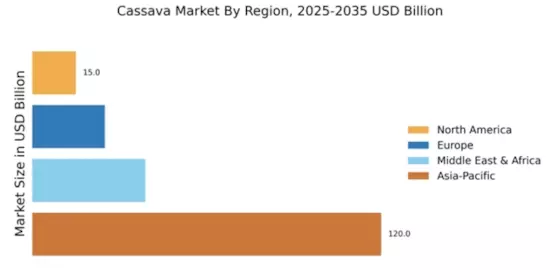
The North American cassava market is poised for growth, driven by increasing consumer interest in gluten-free and plant-based products. With a market size of $25.0 million, the region is witnessing a shift towards healthier food options, which is expected to boost demand for cassava-based products. Regulatory support for alternative crops and food innovations further catalyzes this growth, as consumers seek sustainable and nutritious food sources. Leading the market are key players such as Cargill and ADM, who are investing in cassava processing and product development. The U.S. is the primary market, with a growing trend towards cassava flour and snacks. The competitive landscape is characterized by partnerships and collaborations aimed at enhancing product offerings and expanding market reach, ensuring a robust presence in the North American food sector.

Europe : Innovative Food Solutions

Europe's cassava market, valued at €30.0 million, is experiencing significant growth due to rising health consciousness and demand for gluten-free alternatives. The region's regulatory frameworks are increasingly supportive of innovative food solutions, encouraging the use of cassava in various food applications. This trend is further fueled by consumer preferences for sustainable and ethically sourced ingredients, positioning cassava as a key player in the European food landscape. Countries like Germany and France are leading the charge, with a growing number of food manufacturers incorporating cassava into their products. Major players such as Olam International and Bunge Limited are actively involved in the market, focusing on product innovation and sustainability. The competitive landscape is marked by collaborations and investments aimed at enhancing the supply chain and product availability, ensuring that cassava meets the diverse needs of European consumers.

Asia-Pacific : Dominant Market Leader

The Asia-Pacific region dominates The Cassava with a staggering market size of $120.0 million, driven by high demand for cassava in food and industrial applications. The region's favorable climate and agricultural practices support extensive cassava cultivation, making it a staple in many countries. Regulatory initiatives promoting agricultural innovation and food security further enhance the market's growth potential, as cassava becomes integral to local diets and economies. Leading countries such as Thailand and Vietnam are at the forefront, with significant contributions from local producers and exporters. Key players like Tropical Foods and Suntory are investing in processing technologies to enhance product quality and expand market reach. The competitive landscape is characterized by a mix of large corporations and small-scale farmers, ensuring a diverse supply chain that meets both local and international demands.

Middle East and Africa : Emerging Market Potential

The Middle East and Africa region, with a market size of $23.89 million, is witnessing emerging opportunities in the cassava sector. The growing awareness of cassava's nutritional benefits and its versatility in food applications are driving demand. Regulatory support for agricultural development and food security initiatives is fostering a conducive environment for cassava cultivation and processing, making it an attractive option for local farmers and businesses. Nigeria and Ghana are leading the market, with companies like Dufil Prima Foods and Crown Flour Mills actively involved in cassava processing. The competitive landscape is evolving, with a focus on enhancing product quality and expanding distribution networks. As the region seeks to diversify its agricultural base, cassava is positioned as a key crop that can contribute to food security and economic growth.

Key Players and Competitive Insights

The Cassava is characterized by a dynamic competitive landscape, driven by increasing demand for cassava-based products in food, feed, and industrial applications. Key players such as Olam International (SG), Cargill (US), and ADM (US) are strategically positioned to leverage their extensive supply chains and innovative capabilities. Olam International (SG) focuses on sustainable sourcing and digital transformation, enhancing its operational efficiency and market reach. Cargill (US) emphasizes partnerships and regional expansion, particularly in Africa, to tap into the growing local demand for cassava derivatives. Meanwhile, ADM (US) is investing in technology to optimize its processing capabilities, thereby strengthening its competitive edge in the market. Collectively, these strategies indicate a shift towards more integrated and sustainable operations, shaping the competitive environment significantly.

In terms of business tactics, companies are increasingly localizing manufacturing and optimizing supply chains to enhance responsiveness to market demands. The competitive structure of the Cassava Market appears moderately fragmented, with several key players exerting influence while also allowing room for smaller entities to thrive. This fragmentation fosters innovation and competition, as companies strive to differentiate themselves through unique product offerings and operational efficiencies.

In November 2025, Olam International (SG) announced a partnership with local farmers in Nigeria to enhance cassava production through advanced agricultural techniques. This initiative not only aims to increase yield but also supports local economies, aligning with Olam's commitment to sustainability. The strategic importance of this move lies in its potential to secure a reliable supply chain while promoting community development, which could enhance Olam's brand reputation and market position.

In October 2025, Cargill (US) launched a new line of cassava-based snacks aimed at health-conscious consumers. This product introduction reflects Cargill's strategy to diversify its portfolio and cater to evolving consumer preferences. By tapping into the health and wellness trend, Cargill positions itself to capture a growing segment of the market, potentially increasing its market share and profitability.

In September 2025, ADM (US) completed the acquisition of a cassava processing facility in Brazil, enhancing its production capacity and geographic footprint. This acquisition is strategically significant as it allows ADM to better serve the South American market, which is witnessing rising demand for cassava products. The move underscores ADM's commitment to expanding its operational capabilities and responding to regional market dynamics effectively.

As of December 2025, current competitive trends in the Cassava Market are increasingly defined by digitalization, sustainability, and the integration of AI technologies. Strategic alliances among key players are shaping the landscape, fostering innovation and collaborative approaches to market challenges. Looking ahead, competitive differentiation is likely to evolve from traditional price-based competition towards a focus on innovation, technology adoption, and supply chain reliability. This shift suggests that companies that prioritize these aspects may gain a substantial advantage in the increasingly competitive environment.

Key Companies in the Cassava Market market include

Industry Developments

On March 15, 2024, Olam Group announced the launch of a new cassava processing unit in Nigeria. This facility aims to produce cassava starch, which is used in both food as well as industrial purposes, keeping in mind the increased demand for cassava products in the Western Africa region.

In January 2024, IITA made an announcement of partnering with agricultural ministries of sub-Saharan African regions to ensure wider usage of high yielding varieties of cassava. Options through such collaborations include improvement of food security as well as enhancing local economies through advancement of cassava farming.

In December 2023, CEAN announced 15% growth in cassava exports in 2024 via linking up with overseas dealers which will take advantage of the growing market for cassava flour and starch in Europe and North America. Such international marketing strategies are aimed at global reach.

In November 2023; an Indonesian company PT. JF Nusantara, one of the main cassava processors within the country, acquired a cassava starch processing facility located in central Java, thus furthering its expansion efforts. The aim is to supply the increasing needs of food and beverage industries for derivates of cassava.

In October 2023, Kasava farmers were empowered by the Philippine government under a national program. The program entails the provision of generic and high-quality planting materials to farmers to enhance their productivity and the socioeconomic standing of theirs and rural communities.

In September 2023, Cargill, Inc. engaged one of the top food manufactures in India to introduce cassava chips and snacks in the Indian market. This collaboration points out that there is enhanced interest in cassava as an ingredient in the food products.

On August 25, 2023, the European Union's Food Safety Authority (EFSA) approved cassava flour for regulatory use in food supplements which was a big milestone allowing EU based industries to start formulating cassava as a calcium free substitute of wheat flour.

Future Outlook

Cassava Market Future Outlook

The Cassava is projected to grow at a 4.18% CAGR from 2024 to 2035, driven by increasing demand for gluten-free products and biofuel applications.

New opportunities lie in:

  • Expansion into value-added cassava products like flour and snacks.
  • Investment in sustainable farming practices to enhance yield.
  • Development of cassava-based bioplastics for eco-friendly packaging solutions.

By 2035, the cassava market is expected to solidify its position as a key player in global agriculture.

Market Segmentation

Cassava Market Form Outlook

  • Whole Root
  • Processed Products
  • Flour
  • Granules
  • Powder

Cassava Market End Use Outlook

  • Food Processing
  • Beverage Production
  • Starch Production
  • Textile Industry
  • Paper Industry

Cassava Market Application Outlook

  • Food
  • Animal Feed
  • Industrial Uses
  • Biofuel
  • Pharmaceuticals

Cassava Market Product Type Outlook

  • Fresh Cassava
  • Dried Cassava
  • Cassava Flour
  • Cassava Chips
  • Cassava Starch

Cassava Market Distribution Channel Outlook

  • Direct Sales
  • Retail
  • Wholesale
  • E-commerce
  • Export

Report Scope

MARKET SIZE 2024198.9(USD Billion)
MARKET SIZE 2025207.22(USD Billion)
MARKET SIZE 2035312.15(USD Billion)
COMPOUND ANNUAL GROWTH RATE (CAGR)4.18% (2024 - 2035)
REPORT COVERAGERevenue Forecast, Competitive Landscape, Growth Factors, and Trends
BASE YEAR2024
Market Forecast Period2025 - 2035
Historical Data2019 - 2024
Market Forecast UnitsUSD Billion
Key Companies ProfiledOlam International (SG), Cargill (US), Bunge Limited (US), ADM (US), Tropical Foods (GH), Dufil Prima Foods (NG), Crown Flour Mills (NG), Suntory (JP), PepsiCo (US)
Segments CoveredApplication, End Use, Product Type, Distribution Channel, Form
Key Market OpportunitiesGrowing demand for gluten-free products drives innovation in the Cassava Market.
Key Market DynamicsRising demand for cassava-based products drives innovation and competition among producers and processors.
Countries CoveredNorth America, Europe, APAC, South America, MEA

Market Highlights

Author
Tejas Chaudhary
Research Analyst Level II

I have a degree in Engineering (Civil), with masters in Business Administration (Marketing). With more than 4 years of experience in market research and consulting, I am involved in end-to-end process of market research, proposals, project kickoffs and delivery. I have research knowledge and expertise in consumer goods/packaging domain. Also I have worked for various other domains like construction & equipment. Effectively managed and delivered more than 60 report studies for regional as well as global clientele.

Leave a Comment

FAQs

How much is the cassava market?

The cassava market size was valued at USD 190.92 Billion in 2023.

What is the growth rate of the cassava market?

The cassava market is projected to grow at a CAGR of 4.2% during the forecast period, 2025-2034.

Which region held the largest market share in the cassava market?

North America had the largest share of the cassava market.

Who are the key players in the cassava market?

The key players in the market are Archer Daniels Midland Company (US), Agrideco Vietnam Co., Ltd. (Vietnam), American Key Food Products Inc. (US), Psaltry International Limited (Nigeria), Dadtco Philafrica B.V. (Netherlands), Roquette Frères (France), Woodland Foods (US), Mhogo Foods Ltd. (Kenya), and Otto's Naturals (New Jersey)

Which category led the cassava market?

The organic category dominated the market in 2023.

Which application had the largest market share in the Cassava market?

Food & beverages had the largest share of the market.

Which firm had the largest market share in the Cassava market?

The liquid had the largest share in the market.

Download Free Sample

Kindly complete the form below to receive a free sample of this Report

Compare Licence

×
Features License Type
Single User Multiuser License Enterprise User
Price $4,950 $5,950 $7,250
Maximum User Access Limit 1 User Upto 10 Users Unrestricted Access Throughout the Organization
Free Customization
Direct Access to Analyst
Deliverable Format
Platform Access
Discount on Next Purchase 10% 15% 15%
Printable Versions