×
Request Free Sample ×

Kindly complete the form below to receive a free sample of this Report

* Please use a valid business email

Leading companies partner with us for data-driven Insights

clients tt-cursor
Hero Background

Cellular Health Screening Market

ID: MRFR/LS/7664-HCR
128 Pages
Rahul Gotadki
October 2025

Cellular Health Screening Market Research Report By Testing Technology (Genetic Testing, Molecular Diagnostic Testing, Biochemical Testing, Cellular Analysis), By Sample Type (Blood Samples, Tissue Samples, Saliva Samples, Urine Samples), By Application Area (Oncology, Cardiology, Infectious Diseases, Genetic Disorders), By End-user (Hospitals, Diagnostic Laboratories, Research Institutions, Home Healthcare), By Component Type (Reagents, Instruments, Software, Services) and By Regional (North America, Europe, South America, Asia Pacific, Mi... read more

Share:
Download PDF ×

We do not share your information with anyone. However, we may send you emails based on your report interest from time to time. You may contact us at any time to opt-out.

Cellular Health Screening Market Infographic
Purchase Options

Cellular Health Screening Market Summary

As per MRFR analysis, the Cellular Health Screening Market Size was estimated at 9.11 USD Billion in 2024. The Cellular Health Screening industry is projected to grow from 9.83 USD Billion in 2025 to 20.86 USD Billion by 2035, exhibiting a compound annual growth rate (CAGR) of 7.82 during the forecast period 2025 - 2035.

Key Market Trends & Highlights

The Cellular Health Screening Market is poised for substantial growth driven by technological advancements and a shift towards preventive healthcare.

  • Technological advancements in screening tools are enhancing the accuracy and efficiency of cellular health assessments.
  • The growing emphasis on preventive healthcare is leading to increased adoption of screening services, particularly in North America.
  • Integration of personalized medicine is becoming more prevalent, especially within the genetic testing segment, which is the fastest-growing area.
  • Rising incidence of chronic diseases and increased awareness of cellular health are key drivers propelling market expansion in both healthcare providers and home care settings.

Market Size & Forecast

2024 Market Size 9.11 (USD Billion)
2035 Market Size 20.86 (USD Billion)
CAGR (2025 - 2035) 7.82%

Major Players

Quest Diagnostics (US), LabCorp (US), Roche Diagnostics (CH), Abbott Laboratories (US), Siemens Healthineers (DE), Thermo Fisher Scientific (US), PerkinElmer (US), Bio-Rad Laboratories (US), Genomic Health (US)

Cellular Health Screening Market Trends

The Cellular Health Screening Market is currently experiencing a notable evolution, driven by an increasing awareness of the importance of cellular health in overall well-being. This market encompasses a range of diagnostic tools and technologies aimed at assessing cellular function and integrity. As individuals become more health-conscious, there is a growing demand for screenings that provide insights into cellular aging, metabolic health, and disease susceptibility. The integration of advanced technologies, such as artificial intelligence and machine learning, into screening processes appears to enhance the accuracy and efficiency of results, thereby fostering greater consumer trust and engagement. Moreover, the Cellular Health Screening Market is likely to benefit from the rising trend of personalized medicine. Tailored health solutions that consider individual cellular profiles may lead to more effective prevention and treatment strategies. This shift towards customization suggests a potential for increased collaboration between healthcare providers and technology developers. As the market continues to expand, it seems essential for stakeholders to remain attuned to emerging scientific research and consumer preferences, ensuring that offerings align with the evolving landscape of health and wellness.

Technological Advancements in Screening Tools

The Cellular Health Screening Market is witnessing a surge in technological innovations that enhance the precision and accessibility of screening tools. Developments in non-invasive testing methods and mobile health applications are making it easier for consumers to monitor their cellular health from the comfort of their homes. This trend indicates a shift towards more user-friendly solutions that empower individuals to take charge of their health.

Growing Emphasis on Preventive Healthcare

There is an increasing focus on preventive healthcare within the Cellular Health Screening Market, as consumers seek proactive measures to maintain their well-being. This trend reflects a broader societal shift towards health management rather than reactive treatment. As awareness of the benefits of early detection rises, the demand for cellular health screenings is expected to grow, potentially leading to improved health outcomes.

Integration of Personalized Medicine

The Cellular Health Screening Market is likely to see a rise in the integration of personalized medicine approaches. By tailoring health screenings to individual cellular profiles, healthcare providers can offer more effective prevention and treatment strategies. This trend suggests a move towards customized health solutions that resonate with consumers' desires for personalized care.

Cellular Health Screening Market Drivers

Growing Aging Population

The global aging population is a significant driver of the Global Cellular Health Screening Market Industry. As individuals age, the risk of developing chronic diseases and cellular abnormalities increases, necessitating regular health screenings. The United Nations projects that the number of people aged 60 years and older will reach 2.1 billion by 2050, highlighting the urgent need for effective screening solutions. This demographic shift is likely to drive demand for cellular health screenings, as older adults seek to manage their health proactively. Consequently, the market is expected to experience substantial growth in response to the needs of this expanding population segment.

Government Initiatives and Funding

Government initiatives aimed at improving public health are playing a crucial role in the expansion of the Global Cellular Health Screening Market Industry. Many governments are investing in healthcare infrastructure and promoting screening programs to enhance early disease detection. For example, national health policies are increasingly incorporating cellular health screenings as essential components of preventive healthcare strategies. Such initiatives not only increase accessibility but also encourage research and development in screening technologies. As a result, the market is poised for growth, supported by favorable government policies and funding aimed at improving population health outcomes.

Rising Prevalence of Chronic Diseases

The increasing prevalence of chronic diseases globally is a primary driver for the Global Cellular Health Screening Market Industry. Conditions such as diabetes, cardiovascular diseases, and cancer are on the rise, necessitating early detection and management. For instance, the World Health Organization indicates that chronic diseases account for approximately 71% of all deaths worldwide. This trend underscores the importance of cellular health screening as a preventive measure. As awareness grows, the market is projected to reach 8.45 USD Billion in 2024, reflecting a heightened demand for screening technologies that can identify cellular anomalies early.

Increased Health Awareness and Preventive Care

There is a notable increase in health awareness among populations globally, which is propelling the Global Cellular Health Screening Market Industry. Individuals are becoming more proactive about their health, seeking preventive care and regular screenings to detect potential health issues early. Public health campaigns and educational initiatives are contributing to this trend, encouraging people to prioritize their cellular health. This shift towards preventive care is likely to drive market growth, with projections indicating that the market could reach 19.3 USD Billion by 2035 as more individuals opt for cellular health screenings as part of their routine healthcare.

Technological Advancements in Screening Methods

Technological innovations in cellular health screening methods are significantly influencing the Global Cellular Health Screening Market Industry. Advanced techniques such as next-generation sequencing and high-throughput screening are enhancing the accuracy and efficiency of cellular assessments. These advancements not only improve diagnostic capabilities but also reduce the time required for results, thereby facilitating timely interventions. The integration of artificial intelligence in data analysis further optimizes screening processes. As a result, the market is expected to grow at a CAGR of 7.8% from 2025 to 2035, driven by the continuous evolution of technology in healthcare.

Market Segment Insights

By Application: Preventive Health Screening (Largest) vs. Genetic Testing (Fastest-Growing)

In the Cellular Health Screening Market, Preventive Health Screening holds the largest share, focusing on proactive measures to detect potential health issues before they manifest. This segment is essential for individuals and healthcare providers aiming to reduce the incidence of chronic conditions through early intervention. Meanwhile, Genetic Testing is quickly gaining traction, reflecting a growing public interest in personalized health insights, allowing individuals to understand their genetic predispositions to various health conditions.

Wellness Monitoring (Dominant) vs. Chronic Disease Management (Emerging)

Wellness Monitoring is currently positioned as a dominant force within the Cellular Health Screening Market, offering services that empower individuals to track and maintain their health proactively. This segment emphasizes holistic health tracking, integrating physical, mental, and emotional health metrics. In contrast, Chronic Disease Management is emerging rapidly, becoming crucial as the prevalence of chronic illnesses rises. This segment focuses on long-term health strategies, enabling better management of conditions like diabetes and hypertension through continuous monitoring and tailored health interventions.

By End Use: Healthcare Providers (Largest) vs. Home Care Settings (Fastest-Growing)

In the Cellular Health Screening Market, Healthcare Providers dominate the end-use segment, accounting for a significant portion of the total market share. These entities, which include hospitals, clinics, and wellness centers, leverage advanced cellular health screening technologies to provide comprehensive patient care and preventive health solutions. Alongside them, Home Care Settings are emerging rapidly, appealing to individuals seeking convenience and immediate health insights from the comfort of their homes. The growth trends in this segment are significantly influenced by the increasing demand for personalized healthcare services and preventive screenings. Healthcare Providers are becoming more technologically integrated, fostering better patient interaction and outcomes, while Home Care Settings benefit from advances in telehealth and at-home testing kits. As consumer preferences shift towards more accessible health monitoring solutions, the emphasis on convenience and personalized care continues to drive growth across both segments.

Healthcare Providers (Dominant) vs. Corporate Wellness Programs (Emerging)

Healthcare Providers maintain a dominant position in the Cellular Health Screening Market due to their established infrastructure, access to advanced technology, and patient management systems. They offer a wide range of services that integrate cellular health screenings, making them essential players in preventive medicine. On the other hand, Corporate Wellness Programs represent an emerging segment as organizations increasingly prioritize employee health and well-being. These programs often incorporate cellular health screenings as part of broader health initiatives, significantly improving employee engagement and productivity. Both segments play pivotal roles in shaping health outcomes, with Healthcare Providers focusing on direct patient care and Corporate Wellness Programs expanding access to health screening in the workplace.

By Technology: Flow Cytometry (Largest) vs. Mass Spectrometry (Fastest-Growing)

In the Cellular Health Screening Market, the technology segment is particularly vital, with Flow Cytometry holding the largest market share. This technique is widely utilized for cell counting, biomarker detection, and sorting, facilitating comprehensive cellular analysis. Mass Spectrometry is also gaining traction due to its precision and capability to analyze complex biological samples, becoming increasingly significant in cellular diagnostics. The growth trends emerge from the rising prevalence of chronic diseases and an increasing emphasis on personalized medicine, leading to greater adoption of advanced diagnostic techniques. Flow Cytometry remains prominent while Mass Spectrometry is rapidly enhancing its foothold. Factors such as technological advancements, favorable regulatory scenarios, and heightened research and development efforts are driving this segment's expansion.

Technology: Flow Cytometry (Dominant) vs. Mass Spectrometry (Emerging)

Flow Cytometry is recognized as the dominant technology in the Cellular Health Screening Market due to its ability to provide rapid, accurate analysis of thousands of cells in real-time. It is extensively employed for various applications, including immunophenotyping and cell sorting. The robustness and reliability of Flow Cytometry make it an essential tool in clinical laboratories. In contrast, Mass Spectrometry, though an emerging technology, is swiftly gaining recognition for its high sensitivity and specificity in identifying biomolecular compounds. Its application in metabolic profiling and disease marker discovery is propelling its growth, making it an attractive option for researchers and healthcare providers aiming for precision in cellular health assessments.

By Test Type: Blood Tests (Largest) vs. Urine Tests (Fastest-Growing)

In the Cellular Health Screening Market, Blood Tests continue to hold the largest market share, driven by their established reliability and comprehensive insights into cellular health. Urine Tests, while smaller in share, are emerging rapidly due to their non-invasive nature and ease of administration, catering to a growing preference for patient-friendly screening options. Companies are increasingly recognizing the importance of diversifying their test offerings to include both blood and urine tests, reflecting consumer demand for accessibility and variety in testing methods.

Blood Tests (Dominant) vs. Urine Tests (Emerging)

Blood Tests are the dominant player in the Cellular Health Screening Market, celebrated for their thoroughness and accuracy in detecting a wide range of cellular abnormalities. They cater to a diverse patient demographic, providing critical health insights that inform treatment decisions. In contrast, Urine Tests represent an emerging trend, appealing particularly to patients and healthcare providers seeking less intrusive testing methods. Their growth is further propelled by technological advancements that enhance detection capabilities, making them more appealing in preventive health screenings. As diagnostics evolve, both segments are expected to coexist, with blood tests exhibiting dominance and urine tests carving out a significant niche.

By Demographics: Age Groups (Largest) vs. Income Levels (Fastest-Growing)

In the Cellular Health Screening Market, the age group segment exhibits significant variation in market share, with older adults representing the largest demographic. Senior populations are increasingly engaging in health screenings to monitor age-related health issues, which drives market demand. Younger demographics, while smaller in share, show considerable interest in preventive health measures, leading to a nuanced market distribution across age brackets. On the other hand, income levels also play a critical role in shaping market dynamics. Higher-income groups are more likely to invest in advanced cellular health screenings, whereas lower-income groups are gradually becoming more health-conscious. This trend is attributed to increasing awareness and the introduction of affordable screening options that cater to varying financial capabilities.

Age Groups: 60+ (Dominant) vs. Income Levels: Middle-Income (Emerging)

The aging population, particularly those aged 60 and above, dominates the Cellular Health Screening Market due to heightened health concerns and an extensive focus on preventive care. This demographic is more inclined to undergo regular screenings, encouraging healthcare providers to tailor services that cater to their specific health needs. In contrast, the middle-income groups, while previously overlooked, are emerging as a significant market segment. They are increasingly prioritizing health screenings amidst rising health awareness and improved access to affordable services. This duality in demographic focus indicates a shift towards more inclusive healthcare strategies, where both age and income demographics are acknowledged as critical drivers of market growth.

Get more detailed insights about Cellular Health Screening Market

Regional Insights

North America : Market Leader in Cellular Health

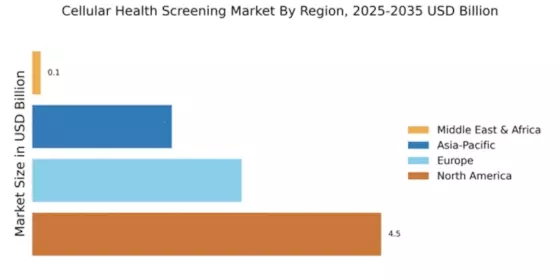
North America is poised to maintain its leadership in the Cellular Health Screening Market, holding a significant market share of 4.55 in 2024. The region's growth is driven by increasing health awareness, technological advancements, and supportive regulatory frameworks. The demand for early disease detection and personalized medicine is propelling market expansion, with a focus on innovative screening technologies and services. The competitive landscape in North America is robust, featuring key players such as Quest Diagnostics, LabCorp, and Abbott Laboratories. These companies are leveraging advanced technologies and strategic partnerships to enhance their service offerings. The presence of a well-established healthcare infrastructure and high healthcare expenditure further supports market growth, making North America a focal point for cellular health innovations.

Europe : Emerging Market with Potential

Europe is emerging as a significant player in the Cellular Health Screening Market, with a market size of 2.73. The region benefits from a growing emphasis on preventive healthcare and advancements in diagnostic technologies. Regulatory support, including initiatives aimed at improving healthcare access and quality, is driving demand for cellular health screenings across various European nations. Leading countries such as Germany, France, and the UK are at the forefront of this market, with a competitive landscape featuring major players like Roche Diagnostics and Siemens Healthineers. The European market is characterized by a mix of established companies and innovative startups, fostering a dynamic environment for growth and collaboration. The European Commission emphasizes the importance of health technology assessments in ensuring effective healthcare solutions.

Asia-Pacific : Rapidly Growing Market

The Asia-Pacific region is witnessing rapid growth in the Cellular Health Screening Market, with a market size of 1.83. Factors such as increasing disposable incomes, rising health awareness, and a growing aging population are driving demand for cellular health screenings. Additionally, government initiatives aimed at enhancing healthcare infrastructure and access are further propelling market growth in this region. Countries like China, India, and Japan are leading the charge, with a competitive landscape that includes both local and international players. Companies such as Thermo Fisher Scientific and PerkinElmer are expanding their presence in the region, capitalizing on the growing demand for advanced diagnostic solutions. The Asia-Pacific market is characterized by innovation and adaptability, making it a key area for future growth in cellular health screening.

Middle East and Africa : Untapped Market Potential

The Middle East and Africa region currently represents an untapped market in the Cellular Health Screening sector, with a market size of 0.0. Challenges such as limited healthcare infrastructure, lack of awareness, and regulatory hurdles hinder market growth. However, there is a growing recognition of the importance of preventive healthcare, which may drive future demand for cellular health screenings in the region. Countries like South Africa and the UAE are beginning to invest in healthcare improvements, but the competitive landscape remains underdeveloped. Key players are gradually entering the market, focusing on education and awareness initiatives to promote cellular health screening. As healthcare systems evolve, there is potential for significant growth in this region, provided that barriers to entry are addressed.

Key Players and Competitive Insights

The Cellular Health Screening Market is currently characterized by a dynamic competitive landscape, driven by advancements in technology, increasing consumer awareness regarding health, and a growing emphasis on preventive healthcare. Major players such as Quest Diagnostics (US), LabCorp (US), and Roche Diagnostics (CH) are strategically positioned to leverage these trends. Quest Diagnostics (US) focuses on innovation through the development of advanced diagnostic tests, while LabCorp (US) emphasizes partnerships with healthcare providers to enhance service delivery. Roche Diagnostics (CH) is heavily invested in digital transformation, integrating AI and data analytics into their screening processes, which collectively shapes a competitive environment that prioritizes technological advancement and customer-centric solutions.

Key business tactics within the market include localizing manufacturing and optimizing supply chains to enhance efficiency and reduce costs. The competitive structure appears moderately fragmented, with several key players exerting influence over market dynamics. This fragmentation allows for a diverse range of offerings, catering to various consumer needs while fostering innovation through competition.

In November 2025, Quest Diagnostics (US) announced a partnership with a leading telehealth provider to expand access to cellular health screenings. This strategic move is likely to enhance patient engagement and streamline the screening process, reflecting a growing trend towards integrated healthcare solutions. By leveraging telehealth, Quest Diagnostics (US) positions itself to capture a larger market share, particularly among consumers seeking convenient health management options.

In October 2025, LabCorp (US) launched a new suite of cellular health screening tests aimed at early disease detection. This initiative underscores LabCorp's commitment to innovation and preventive care, potentially setting a new standard in the industry. The introduction of these tests may not only enhance LabCorp's service offerings but also strengthen its competitive edge by addressing the increasing demand for proactive health monitoring.

In September 2025, Roche Diagnostics (CH) unveiled a cutting-edge AI-driven platform designed to analyze cellular health data more efficiently. This platform is expected to revolutionize the way health screenings are conducted, providing faster and more accurate results. The strategic importance of this development lies in Roche's ability to differentiate itself through technology, which could lead to improved patient outcomes and increased market share.

As of December 2025, current competitive trends in the Cellular Health Screening Market are heavily influenced by digitalization, sustainability, and the integration of AI technologies. Strategic alliances among key players are shaping the landscape, fostering innovation and enhancing service delivery. Looking ahead, competitive differentiation is likely to evolve from traditional price-based competition to a focus on innovation, technological advancements, and supply chain reliability. This shift indicates a future where companies that prioritize these elements may gain a substantial advantage in the market.

Key Companies in the Cellular Health Screening Market market include

Industry Developments

  • Q2 2024: Telomere Diagnostics Announces Launch of TeloYears 2.0, a Next-Generation Cellular Health Test Telomere Diagnostics launched TeloYears 2.0, an updated version of its cellular health screening test, featuring improved accuracy and expanded biomarker analysis for consumers and healthcare providers.
  • Q2 2024: Life Length Receives CE Mark for New Telomere Analysis Technology Life Length, a leader in telomere and cellular health diagnostics, received CE Mark approval for its new telomere analysis platform, enabling expanded use in European clinical laboratories.
  • Q3 2024: Cell Science Systems Partners with Mayo Clinic to Advance Cellular Health Screening Market Research Cell Science Systems announced a strategic partnership with Mayo Clinic to co-develop advanced cellular health screening protocols and integrate them into clinical research programs.
  • Q3 2024: Quest Diagnostics Acquires Cellular Health Startup CellInsight for $120 Million Quest Diagnostics completed the acquisition of CellInsight, a startup specializing in cellular health screening technologies, to expand its preventive health and wellness portfolio.
  • Q4 2024: SpectraCell Laboratories Opens New High-Throughput Cellular Health Testing Facility in Texas SpectraCell Laboratories inaugurated a new state-of-the-art facility in Houston, Texas, to increase capacity for its micronutrient and cellular health screening services.
  • Q4 2024: Genova Diagnostics Launches Cellular Health Assessment Panel for Clinical Use Genova Diagnostics introduced a comprehensive Cellular Health Assessment Panel, designed for clinical practitioners to evaluate oxidative stress, mitochondrial function, and cell membrane integrity.
  • Q1 2025: Viome Life Sciences Raises $86 Million in Series D Funding to Expand Cellular Health Screening Market Offerings Viome Life Sciences secured $86 million in Series D funding to accelerate the development and commercialization of its AI-driven cellular health screening tests.
  • Q1 2025: LabCorp Appoints Dr. Maria Chen as Chief Scientific Officer to Lead Cellular Health Initiatives LabCorp named Dr. Maria Chen as its new Chief Scientific Officer, tasking her with spearheading the company's expansion into advanced cellular health screening and diagnostics.
  • Q2 2025: OmegaQuant Receives FDA Clearance for Cellular Health Omega-3 Index Test OmegaQuant received FDA clearance for its Omega-3 Index Test, a cellular health screening tool that measures fatty acid levels in red blood cells to assess cardiovascular and cellular health.
  • Q2 2025: Everly Health Announces Direct-to-Consumer Cellular Health Test Launch Everly Health launched a new direct-to-consumer cellular health screening kit, allowing individuals to assess cellular aging and oxidative stress from home.
  • Q2 2025: BioReference Laboratories Wins Multi-Year Contract to Provide Cellular Health Screening Market for Major U.S. Insurer BioReference Laboratories secured a multi-year contract to deliver cellular health screening services to policyholders of a leading U.S. health insurance provider.
  • Q3 2025: Guardant Health Files for FDA Approval of Novel Liquid Biopsy Cellular Health Test Guardant Health submitted a premarket approval application to the FDA for its new liquid biopsy test designed to assess cellular health and early disease risk.

Future Outlook

Cellular Health Screening Market Future Outlook

The Cellular Health Screening Market is projected to grow at a 7.82% CAGR from 2024 to 2035, driven by technological advancements, increasing health awareness, and rising chronic diseases.

New opportunities lie in:

  • Development of AI-driven diagnostic tools for personalized health assessments.
  • Expansion of mobile health screening units in underserved regions.
  • Partnerships with corporate wellness programs for employee health screenings.

By 2035, the market is expected to be robust, reflecting substantial growth and innovation.

Market Segmentation

Cellular Health Screening Market End Use Outlook

  • Healthcare Providers
  • Diagnostic Laboratories
  • Home Care Settings
  • Corporate Wellness Programs

Cellular Health Screening Market Test Type Outlook

  • Blood Tests
  • Urine Tests
  • Saliva Tests
  • Tissue Biopsies

Cellular Health Screening Market Technology Outlook

  • Flow Cytometry
  • Mass Spectrometry
  • Polymerase Chain Reaction
  • Immunoassays

Cellular Health Screening Market Application Outlook

  • Preventive Health Screening
  • Chronic Disease Management
  • Wellness Monitoring
  • Genetic Testing

Cellular Health Screening Market Demographics Outlook

  • Age Groups
  • Gender
  • Income Levels
  • Health Status

Report Scope

MARKET SIZE 20249.11(USD Billion)
MARKET SIZE 20259.83(USD Billion)
MARKET SIZE 203520.86(USD Billion)
COMPOUND ANNUAL GROWTH RATE (CAGR)7.82% (2024 - 2035)
REPORT COVERAGERevenue Forecast, Competitive Landscape, Growth Factors, and Trends
BASE YEAR2024
Market Forecast Period2025 - 2035
Historical Data2019 - 2024
Market Forecast UnitsUSD Billion
Key Companies ProfiledQuest Diagnostics (US), LabCorp (US), Roche Diagnostics (CH), Abbott Laboratories (US), Siemens Healthineers (DE), Thermo Fisher Scientific (US), PerkinElmer (US), Bio-Rad Laboratories (US), Genomic Health (US)
Segments CoveredApplication, End Use, Technology, Test Type, Demographics
Key Market OpportunitiesIntegration of advanced biomarker technologies enhances precision in the Cellular Health Screening Market.
Key Market DynamicsRising consumer awareness drives demand for advanced cellular health screening technologies and personalized health solutions.
Countries CoveredNorth America, Europe, APAC, South America, MEA

Leave a Comment

FAQs

What is the projected growth of the Cellular Health Screening market?

The Cellular Health Screening market is the expected increase in total market value of 20.86 USD billion over a defined forecast period 2025–2035. It is driven by factors such as demand trends, technological advances, regulatory changes, and geographic expansion.

What is the size of the Cellular Health Screening market?

Cellular Health Screening market size was valued at approximately 9.11 billion USD in 2024. This figure will reach 20.86 billion USD covering all regions (America, Europe, Asia, MEA and ROW), focusing its segments / services / distribution channels till 2035.

What is the CAGR of the Cellular Health Screening market?

Cellular Health Screening market is expected to grow at a CAGR of 7.82% between 2025 and 2035.

How much will the Cellular Health Screening market be worth by 2035?

Cellular Health Screening market is expected to be worth of 20.86 billion USD, reflecting growth driven by usage, technology and global demands by the end of 2035.

How will the Cellular Health Screening market perform over the next 10 years?

Over the next 10 years the Cellular Health Screening market is expected to shift from usd billion 9.11 to 20.86 billion USD, led by adoption of advanced tech, demographic trends, regulatory approvals, with potential headwinds from 2025 to 2035.

Which region holds the largest market share in 2024 for the Cellular Health Screening Market?

North America holds the largest market share, valued at approximately 3.02 USD Billion in 2024.

What is the expected market value of the Genetic Testing segment by 2035?

The Genetic Testing segment is projected to reach a value of 4.5 USD Billion by 2035.

What is the growth forecast for the Molecular Diagnostic Testing segment until 2035?

The Molecular Diagnostic Testing segment is expected to grow to 4.0 USD Billion by 2035.

What was the market size of the Cellular Analysis segment in 2024?

The Cellular Analysis segment was valued at approximately 2.78 USD Billion in 2024.

How much is the market value for South America expected to grow by 2035?

The market value for South America is expected to reach 1.2 USD Billion by 2035.

Download Free Sample

Kindly complete the form below to receive a free sample of this Report

Compare Licence

×
Features License Type
Single User Multiuser License Enterprise User
Price $4,950 $5,950 $7,250
Maximum User Access Limit 1 User Upto 10 Users Unrestricted Access Throughout the Organization
Free Customization
Direct Access to Analyst
Deliverable Format
Platform Access
Discount on Next Purchase 10% 15% 15%
Printable Versions