×
Request Free Sample ×

Kindly complete the form below to receive a free sample of this Report

Leading companies partner with us for data-driven Insights

clients tt-cursor
Hero Background

Charles Bonnet Syndrome Market

ID: MRFR/HC/36937-HCR
100 Pages
Rahul Gotadki
October 2025

Charles Bonnet Syndrome Market Research Report By Symptom Type (Visual Hallucinations, Auditory Hallucinations, Tactile Hallucinations, Other Sensory Hallucinations), By Diagnosis Method (Clinical Evaluation, Neuroimaging, Psychiatric Assessment, Neuropsychological Testing), By Treatment Approach (Pharmacological, Psychological Counseling, Vision Rehabilitation, Supportive Therapies), By Patient Demographics (Elderly Patients, Adults, Children, Gender Differences) and By Regional (North America, Europe, South America, Asia Pacific, Middle Ea... read more

Share:
Download PDF ×

We do not share your information with anyone. However, we may send you emails based on your report interest from time to time. You may contact us at any time to opt-out.

Charles Bonnet Syndrome Market Infographic
Purchase Options

Charles Bonnet Syndrome Market Summary

As per MRFR analysis, the Charles Bonnet Syndrome Market Size was estimated at 0.8215 USD Billion in 2024. The Charles Bonnet Syndrome industry is projected to grow from 0.8666 in 2025 to 1.478 by 2035, exhibiting a compound annual growth rate (CAGR) of 5.48 during the forecast period 2025 - 2035.

Key Market Trends & Highlights

The Charles Bonnet Syndrome Market is experiencing notable growth driven by increased awareness and innovative therapeutic approaches.

  • North America remains the largest market for Charles Bonnet Syndrome Market, driven by heightened awareness and educational initiatives.
  • The Asia-Pacific region is emerging as the fastest-growing market, reflecting a surge in research funding and patient advocacy efforts.
  • Visual hallucinations represent the largest segment, while auditory hallucinations are witnessing rapid growth due to evolving therapeutic strategies.
  • Key market drivers include the rising prevalence of vision impairment and advancements in diagnostic techniques, which are fostering greater integration of mental health support.

Market Size & Forecast

2024 Market Size 0.8215 (USD Billion)
2035 Market Size 1.478 (USD Billion)
CAGR (2025 - 2035) 5.48%

Major Players

Novartis (CH), Roche (CH), Bristol-Myers Squibb (US), Pfizer (US), AstraZeneca (GB), Sanofi (FR), Johnson & Johnson (US), Merck & Co. (US), GSK (GB)

Charles Bonnet Syndrome Market Trends

The Charles Bonnet Syndrome Market is currently experiencing a notable evolution, driven by an increasing awareness of the condition among healthcare professionals and patients alike. This syndrome, characterized by visual hallucinations in individuals with significant vision loss, has garnered attention as more individuals seek understanding and treatment options. The growing recognition of the psychological impact of visual impairment has led to a more comprehensive approach to patient care, integrating both medical and psychological support. As a result, healthcare providers are more likely to address the needs of those affected, potentially improving their quality of life. Moreover, advancements in research and technology are contributing to the development of innovative therapeutic solutions. The exploration of pharmacological treatments, alongside behavioral therapies, indicates a shift towards a more holistic management of the syndrome. This trend suggests that the Charles Bonnet Syndrome Market may expand as new therapies emerge, offering hope to patients and caregivers. Additionally, the collaboration between researchers, healthcare providers, and patient advocacy groups appears to foster a more informed dialogue about the syndrome, which could lead to enhanced support systems and resources for those affected.

Increased Awareness and Education

There is a growing emphasis on educating both healthcare professionals and the public about Charles Bonnet Syndrome Market. This trend is likely to enhance early diagnosis and treatment, as more individuals become aware of the condition and its implications.

Innovative Therapeutic Approaches

The market is witnessing a surge in research focused on developing new therapeutic options. This includes both pharmacological treatments and psychological interventions, which may provide more effective management strategies for patients.

Collaborative Efforts in Research and Advocacy

Collaboration among researchers, healthcare providers, and advocacy groups is becoming more prevalent. This trend may lead to improved resources and support systems for individuals affected by Charles Bonnet Syndrome Market, fostering a more comprehensive understanding of the condition.

Charles Bonnet Syndrome Market Drivers

Integration of Mental Health Support

The integration of mental health support into the treatment of Charles Bonnet Syndrome Market is emerging as a critical driver for the Charles Bonnet Syndrome Market. Patients often experience anxiety and distress due to their hallucinations, necessitating a holistic approach that includes psychological support. Mental health professionals are increasingly collaborating with ophthalmologists and neurologists to provide comprehensive care. This multidisciplinary approach not only enhances patient satisfaction but also encourages the development of combined therapeutic strategies that address both visual and psychological aspects of the syndrome. As this trend continues, the Charles Bonnet Syndrome Market may witness a rise in demand for integrated care models.

Advancements in Diagnostic Techniques

Advancements in diagnostic techniques for Charles Bonnet Syndrome Market are likely to enhance the understanding and identification of this condition, thereby driving the Charles Bonnet Syndrome Market. Improved imaging technologies and neuropsychological assessments enable clinicians to differentiate between Charles Bonnet Syndrome Market and other psychiatric disorders, ensuring accurate diagnosis. This precision in diagnosis is crucial, as it allows for tailored treatment plans that can significantly improve patient outcomes. As awareness of these advancements spreads among healthcare professionals, the demand for diagnostic services and related therapeutic options within the Charles Bonnet Syndrome Market is expected to increase, potentially leading to a more informed patient population.

Rising Prevalence of Vision Impairment

The increasing prevalence of vision impairment among the aging population appears to be a significant driver for the Charles Bonnet Syndrome Market. As individuals age, the likelihood of developing conditions such as macular degeneration and cataracts rises, leading to a higher incidence of visual hallucinations associated with Charles Bonnet Syndrome Market. Recent estimates suggest that approximately 10 to 40% of individuals with severe vision loss may experience these hallucinations. This growing demographic is likely to fuel demand for effective management strategies and therapeutic interventions within the Charles Bonnet Syndrome Market, as healthcare providers seek to address the psychological and emotional impacts of these visual disturbances.

Growing Research Funding and Initiatives

The increase in research funding and initiatives focused on Charles Bonnet Syndrome Market is a notable driver for the Charles Bonnet Syndrome Market. Various organizations and governmental bodies are recognizing the need for more comprehensive studies on the syndrome, which could lead to the development of innovative treatment options. For instance, funding for clinical trials and research projects has seen a marked increase, with several studies currently underway to explore the underlying mechanisms and potential therapies for this condition. This influx of resources is likely to stimulate advancements in the Charles Bonnet Syndrome Market, fostering a more robust pipeline of therapeutic solutions.

Increased Patient Advocacy and Awareness Campaigns

Increased patient advocacy and awareness campaigns are playing a pivotal role in shaping the Charles Bonnet Syndrome Market. Advocacy groups are actively working to educate both the public and healthcare professionals about the syndrome, its symptoms, and the importance of seeking treatment. These campaigns are crucial in reducing stigma and encouraging individuals experiencing visual hallucinations to seek help. As awareness grows, it is anticipated that more patients will be diagnosed and treated, thereby expanding the market for therapeutic options. The proactive efforts of these organizations are likely to create a more informed patient base, which could lead to increased demand for services and products within the Charles Bonnet Syndrome Market.

Market Segment Insights

By Symptom Type: Visual Hallucinations (Largest) vs. Auditory Hallucinations (Fastest-Growing)

In the Charles Bonnet Syndrome Market, symptom types play a crucial role in understanding patient experiences and treatment needs. Among these, visual hallucinations account for the largest share, impacting a significant portion of patients. This is attributed to the nature of Charles Bonnet Syndrome Market, where visual impairments commonly lead to vivid and elaborate hallucinations. Auditory hallucinations, on the other hand, are gaining attention due to their growing prevalence, fueled by an increased awareness of the syndrome and its associated symptoms.

Visual Hallucinations (Dominant) vs. Auditory Hallucinations (Emerging)

Visual hallucinations represent the dominant symptom type within the Charles Bonnet Syndrome Market, characterized by patients experiencing detailed visual images without external stimuli. This prevalence is largely driven by underlying visual impairments, such as macular degeneration or glaucoma, which heighten the likelihood of vivid hallucinations. In contrast, auditory hallucinations are emerging as a significant symptom type, with increasing recognition of their impact on patient well-being. While less common than visual manifestations, auditory hallucinations are becoming more apparent in clinical settings, highlighting the need for tailored interventions and support for affected individuals.

By Diagnosis Method: Clinical Evaluation (Largest) vs. Neuroimaging (Fastest-Growing)

In the Charles Bonnet Syndrome Market, the diagnosis methods are varied, with Clinical Evaluation being the most widely utilized. This method holds the largest share as it directly involves assessing patient history and conducting visual tests to determine the presence of visual hallucinations characteristic of the syndrome. Neuroimaging, although currently less prevalent, is rapidly gaining traction as a supplementary method to rule out other neurological disorders affecting vision. Its technological advancements and increasing accessibility are contributing to its growing role in diagnosis. The growth trends in the diagnosis methods segment for Charles Bonnet Syndrome Market are primarily driven by advancements in neuroimaging technologies and an enhanced understanding of the syndrome itself. With new imaging techniques such as functional MRI, the speed and accuracy of diagnosis are improving, leading to more timely intervention. Furthermore, there is a growing emphasis on comprehensive diagnostic approaches that combine Clinical Evaluation with Neuroimaging, reinforcing the market's shift towards a multi-faceted diagnostic strategy. This integration not only enriches patient outcomes but also signifies a proactive approach in managing the syndrome effectively.

Clinical Evaluation: Dominant vs. Neuroimaging: Emerging

Clinical Evaluation remains the dominant diagnosis method in the Charles Bonnet Syndrome Market due to its direct approach in assessing the patient's symptoms and history without the need for complex equipment. This method is favored in clinical settings for its accessibility and cost-effectiveness, allowing healthcare professionals to make informed decisions based on patient interactions. In contrast, Neuroimaging is an emerging technique that is becoming increasingly relevant as it offers detailed insights into the brain's health and functionality. The growing availability of advanced imaging technologies, like MRI and CT scans, supports its adoption in clinical practices. As awareness of Charles Bonnet Syndrome Market expands among healthcare providers, the integration of Neuroimaging into standard diagnostic protocols is anticipated to enhance diagnostic accuracy and patient care.

By Treatment Approach: Pharmacological (Largest) vs. Psychological Counseling (Fastest-Growing)

In the Charles Bonnet Syndrome Market, treatment approaches are diversely categorized into Pharmacological, Psychological Counseling, Vision Rehabilitation, and Supportive Therapies. Among these, Pharmacological treatments have emerged as the largest segment, commanding significant market share due to their ability to alleviate visual hallucinations effectively. Psychological Counseling, while smaller in comparison, is rapidly gaining traction as patients increasingly seek comprehensive care that addresses the psychological aspects of the syndrome.

Pharmacological (Dominant) vs. Psychological Counseling (Emerging)

Pharmacological treatments for Charles Bonnet Syndrome Market primarily involve the use of antipsychotic medications which have shown substantial efficacy in reducing the frequency and intensity of visual hallucinations. This segment plays a dominant role in the market due to its established protocols and the growing acceptance among healthcare providers. On the other hand, Psychological Counseling represents an emerging approach that focuses on providing emotional support and coping strategies for patients. As awareness about the psychological impacts of the syndrome increases, more practitioners are advocating for integrative treatment plans that combine pharmacological interventions with counseling, thus enhancing overall treatment outcomes.

By Patient Demographics: Elderly Patients (Largest) vs. Adults (Fastest-Growing)

In the Charles Bonnet Syndrome Market, the patient demographics reveal a significant concentration among elderly patients, who constitute the largest segment due to the higher prevalence of visual impairment and related health issues in this age group. This demographic often faces increased risks of experiencing hallucinations associated with visual defects, making them a primary focus for treatment and management. Meanwhile, adults represent the fastest-growing segment, reflecting a wider recognition of this condition beyond just the elderly, with increasing diagnoses that highlight the need for tailored management approaches.

Elderly Patients (Dominant) vs. Adults (Emerging)

Elderly patients are considered the dominant demographic in the Charles Bonnet Syndrome Market, largely due to their higher susceptibility to age-related visual impairments such as macular degeneration and cataracts. This group not only experiences a higher incidence of symptoms but also has a profound need for supportive care and interventions that can enhance their quality of life. In contrast, adults are emerging as a significant segment due to a growing understanding of Charles Bonnet Syndrome Market. This demographic is often more proactive about seeking medical help and is being increasingly recognized in research and clinical settings, indicating a need for education about the condition and its management.

Get more detailed insights about Charles Bonnet Syndrome Market

Regional Insights

North America : Leading Market for Innovation

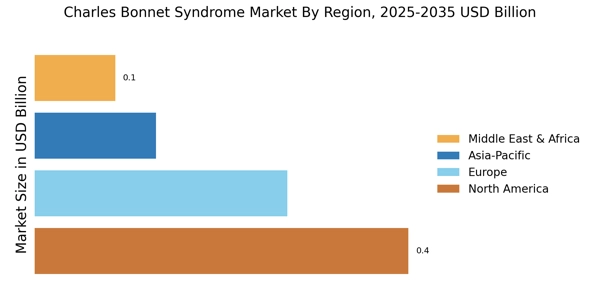
North America is the largest market for Charles Bonnet Syndrome Market, holding approximately 45% of the global market share. The region benefits from advanced healthcare infrastructure, increasing awareness of the syndrome, and a growing elderly population. Regulatory support from agencies like the FDA facilitates the introduction of innovative therapies, driving demand for effective treatment options. The United States is the primary contributor, with significant investments from key players such as Novartis, Pfizer, and Johnson & Johnson. Canada also plays a vital role, focusing on research and development initiatives. The competitive landscape is characterized by collaborations among pharmaceutical companies and research institutions, enhancing the availability of treatment options.

Europe : Emerging Market with Potential

Europe is the second-largest market for Charles Bonnet Syndrome Market, accounting for around 30% of the global market share. The region is witnessing a rise in awareness and diagnosis rates, driven by initiatives from health organizations and government bodies. Regulatory frameworks in countries like Germany and France are evolving to support innovative therapies, enhancing market growth. Leading countries include Germany, France, and the UK, where key players like Roche and AstraZeneca are actively involved. The competitive landscape is marked by strategic partnerships and collaborations aimed at developing new treatment modalities. The presence of robust healthcare systems further supports the demand for effective therapies, making Europe a significant player in the market.

Asia-Pacific : Rapidly Expanding Market

Asia-Pacific is an emerging powerhouse in the Charles Bonnet Syndrome Market, holding approximately 15% of the global market share. The region is experiencing rapid growth due to increasing healthcare expenditure, rising awareness of mental health issues, and a growing elderly population. Countries like Japan and Australia are leading the way in adopting new treatment protocols, supported by favorable regulatory environments. Japan is a key player, with significant contributions from local pharmaceutical companies and international firms. The competitive landscape is evolving, with a focus on research and development to address unmet medical needs. Collaborative efforts among stakeholders are enhancing the availability of therapies, positioning Asia-Pacific as a vital market for future growth.

Middle East and Africa : Untapped Market Potential

The Middle East and Africa region represents an untapped market for Charles Bonnet Syndrome Market, holding about 10% of the global market share. The growth is driven by increasing healthcare investments, rising awareness of mental health conditions, and initiatives aimed at improving healthcare access. Countries like South Africa and the UAE are making strides in enhancing healthcare infrastructure, which is crucial for market development. South Africa is emerging as a key player, with local and international pharmaceutical companies exploring opportunities in the region. The competitive landscape is characterized by a focus on education and awareness campaigns to promote diagnosis and treatment. As healthcare systems improve, the potential for growth in this region is significant, making it an area of interest for stakeholders.

Charles Bonnet Syndrome Market Regional Image

Key Players and Competitive Insights

The Charles Bonnet Syndrome Market is characterized by a unique array of challenges and opportunities, reflecting the complexities of this condition, which affects individuals who experience visual hallucinations due to vision loss. The competitive landscape is marked by varying levels of commitment from pharmaceutical companies to develop effective treatments, engage in research, and address the unmet needs of patients suffering from this syndromic phenomenon. Market players are increasingly focusing on innovative therapeutic approaches, collaborations with academic institutions, and patient-centric initiatives.

The integration of advanced technologies in drug discovery and delivery systems further enriches the competitive dynamics, indicating a shift towards more personalized medicine strategies. Market growth is also propelled by increasing awareness of Charles Bonnet Syndrome Market among healthcare professionals and caregivers, leading to better diagnosis and treatment options.

Pfizer is establishing a formidable presence in the Charles Bonnet Syndrome Market. The company's extensive research capabilities and commitment to developing innovative treatment solutions have positioned it as a key player. Pfizer's strengths lie in its robust pipeline of therapies aimed at alleviating symptoms associated with visual impairment and hallucinations, which are central to Charles Bonnet Syndrome Market. The company is leveraging its global footprint and strong distribution networks to ensure that effective treatments reach a wide demographic of affected patients.

Pfizer also invests in educational initiatives to enhance the understanding of this condition, thereby improving the quality of life for those impacted. Its dedication to patient advocacy and partnerships with healthcare providers further reinforces its competitive position in a market that requires nuanced understanding and targeted therapies.

Amgen's involvement in the Charles Bonnet Syndrome Market signifies its commitment to addressing unmet medical needs associated with this condition. Known for its innovative biologics and therapies, Amgen boasts a wealth of expertise in developing solutions that target neurological and visual-related disorders. The company's strengths include a focus on research and development, driving the advancement of new treatment options tailored for patients experiencing visual hallucinations. Amgen's established reputation in the biopharmaceutical industry, backed by a wide range of clinical trials and collaborations, enhances its credibility in the eyes of healthcare professionals and patients alike.

Furthermore, Amgen's investment in patient outreach and support programs highlights its dedication to improving patient outcomes in the niche yet important segment of the Charles Bonnet Syndrome Market.

Key Companies in the Charles Bonnet Syndrome Market market include

Industry Developments

The Charles Bonnet Syndrome Market has recently seen a surge in interest due to increased awareness of the syndrome and its impact on patients. Companies like Pfizer, Roche, and Amgen have been actively involved in research and advocacy efforts aimed at improving treatment options for this condition, which primarily affects individuals with visual impairments. Current affairs indicate a growing trend among pharmaceutical companies to explore novel therapies, with discussions around potential collaborations to enhance drug development processes. There have been notable market movements, including significant investments aimed at expanding clinical trials and gaining regulatory approvals for innovative treatments.

Noteworthy, firms like Regeneron Pharmaceuticals and Santen Pharmaceutical are reported to be increasing efforts towards developing effective therapies, reflecting a thriving innovation ecosystem. Additionally, there have been discussions around potential mergers and acquisitions that could strengthen market positions for companies, although nothing definitive has been publicly reported recently. The ongoing growth in the market valuation of these companies is indicative of a collective optimism regarding the future of treatment options within the Global Charles Bonnet Syndrome Market space. Companies are increasingly recognizing the necessity of addressing this often-overlooked syndrome, resulting in heightened focus and resource allocation.

Future Outlook

Charles Bonnet Syndrome Market Future Outlook

The Charles Bonnet Syndrome Market is projected to grow at a 5.48% CAGR from 2024 to 2035, driven by increasing awareness and advancements in treatment options.

New opportunities lie in:

  • Development of telehealth platforms for remote patient monitoring
  • Investment in targeted therapies for symptom management
  • Partnerships with vision rehabilitation centers for integrated care solutions

By 2035, the market is expected to achieve substantial growth, reflecting enhanced treatment accessibility and patient support.

Market Segmentation

Charles Bonnet Syndrome Market Symptom Type Outlook

  • Visual Hallucinations
  • Auditory Hallucinations
  • Tactile Hallucinations
  • Other Sensory Hallucinations

Charles Bonnet Syndrome Market Diagnosis Method Outlook

  • Clinical Evaluation
  • Neuroimaging
  • Psychiatric Assessment
  • Neuropsychological Testing

Charles Bonnet Syndrome Market Treatment Approach Outlook

  • Pharmacological
  • Psychological Counseling
  • Vision Rehabilitation
  • Supportive Therapies

Charles Bonnet Syndrome Market Patient Demographics Outlook

  • Elderly Patients
  • Adults
  • Children
  • Gender Differences

Report Scope

MARKET SIZE 20240.8215(USD Billion)
MARKET SIZE 20250.8666(USD Billion)
MARKET SIZE 20351.478(USD Billion)
COMPOUND ANNUAL GROWTH RATE (CAGR)5.48% (2024 - 2035)
REPORT COVERAGERevenue Forecast, Competitive Landscape, Growth Factors, and Trends
BASE YEAR2024
Market Forecast Period2025 - 2035
Historical Data2019 - 2024
Market Forecast UnitsUSD Billion
Key Companies ProfiledMarket analysis in progress
Segments CoveredMarket segmentation analysis in progress
Key Market OpportunitiesAdvancements in digital therapeutics offer innovative solutions for managing Charles Bonnet Syndrome symptoms.
Key Market DynamicsRising awareness and diagnosis of Charles Bonnet Syndrome drive demand for innovative treatment options and patient support services.
Countries CoveredNorth America, Europe, APAC, South America, MEA

Leave a Comment

FAQs

What is the current market valuation of the Charles Bonnet Syndrome market?

The market valuation of the Charles Bonnet Syndrome market was 0.8215 USD Billion in 2024.

What is the projected market size for the Charles Bonnet Syndrome market by 2035?

The projected market size for the Charles Bonnet Syndrome market is 1.478 USD Billion by 2035.

What is the expected CAGR for the Charles Bonnet Syndrome market during the forecast period?

The expected CAGR for the Charles Bonnet Syndrome market from 2025 to 2035 is 5.48%.

Which companies are the key players in the Charles Bonnet Syndrome market?

Key players in the Charles Bonnet Syndrome market include Novartis, Roche, Bristol-Myers Squibb, Pfizer, AstraZeneca, Sanofi, Johnson & Johnson, Merck & Co., and GSK.

What are the primary symptom types contributing to the market valuation?

The primary symptom types include Visual Hallucinations, Auditory Hallucinations, Tactile Hallucinations, and Other Sensory Hallucinations, with valuations ranging from 0.122 to 0.5901 USD Billion.

What diagnosis methods are utilized in the Charles Bonnet Syndrome market?

Diagnosis methods include Clinical Evaluation, Neuroimaging, Psychiatric Assessment, and Neuropsychological Testing, with valuations from 0.0821 to 0.5901 USD Billion.

What treatment approaches are available for Charles Bonnet Syndrome?

Treatment approaches encompass Pharmacological, Psychological Counseling, Vision Rehabilitation, and Supportive Therapies, with valuations between 0.1505 and 0.550 USD Billion.

How do patient demographics affect the Charles Bonnet Syndrome market?

Patient demographics indicate that Elderly Patients represent the largest segment, with a valuation of 0.75 USD Billion, followed by Adults and Children.

What is the significance of the projected growth in the Charles Bonnet Syndrome market?

The projected growth suggests a rising awareness and demand for effective treatments, potentially enhancing market dynamics from 2025 to 2035.

How do the valuations of different treatment approaches compare?

Valuations for treatment approaches range from 0.1705 USD Billion for Supportive Therapies to 0.550 USD Billion for Pharmacological treatments.

Download Free Sample

Kindly complete the form below to receive a free sample of this Report

Compare Licence

×
Features License Type
Single User Multiuser License Enterprise User
Price $4,950 $5,950 $7,250
Maximum User Access Limit 1 User Upto 10 Users Unrestricted Access Throughout the Organization
Free Customization
Direct Access to Analyst
Deliverable Format
Platform Access
Discount on Next Purchase 10% 15% 15%
Printable Versions