×
Request Free Sample ×

Kindly complete the form below to receive a free sample of this Report

* Please use a valid business email

Leading companies partner with us for data-driven Insights

clients tt-cursor
Hero Background

Serotonin Syndrome Market

ID: MRFR/Pharma/2743-HCR
90 Pages
Kinjoll Dey
October 2025

Serotonin Syndrome Market information: by drug treatment (serotonin antagonists, supportive care (Muscle relaxants, sedatives, anti-hyperthermics, antihypertensive, others), gastrointestinal decontamination, others) by end users (hospitals, point of care, others) - Forecast till 2035

Share:
Download PDF ×

We do not share your information with anyone. However, we may send you emails based on your report interest from time to time. You may contact us at any time to opt-out.

Serotonin Syndrome Market Infographic
Purchase Options

Serotonin Syndrome Market Summary

As per MRFR analysis, the Serotonin Syndrome Market Size was estimated at 1940.68 USD Million in 2024. The Serotonin Syndrome industry is projected to grow from 2086.54 in 2025 to 3844.54 by 2035, exhibiting a compound annual growth rate (CAGR) of 6.37 during the forecast period 2025 - 2035.

Key Market Trends & Highlights

The Serotonin Syndrome Market is experiencing notable growth driven by increased awareness and advancements in treatment options.

  • Rising awareness and education about serotonin syndrome are enhancing patient outcomes in North America.
  • Advancements in treatment options are fostering innovation in the Asia-Pacific region, contributing to market expansion.
  • Cognitive dysfunction remains the largest segment, while autonomic instability is emerging as the fastest-growing segment in the market.
  • The increasing incidence of serotonin syndrome and the development of novel therapeutics are key drivers propelling market growth.

Market Size & Forecast

2024 Market Size 1940.68 (USD Million)
2035 Market Size 3844.54 (USD Million)
CAGR (2025 - 2035) 6.37%

Major Players

Johnson & Johnson (US), Pfizer (US), Bristol-Myers Squibb (US), Eli Lilly and Company (US), Novartis (CH), AstraZeneca (GB), Sanofi (FR), Merck & Co. (US), GSK (GB)

Serotonin Syndrome Market Trends

The Serotonin Syndrome Market is currently experiencing a notable evolution, driven by an increasing awareness of the condition and its implications. As healthcare professionals become more educated about the symptoms and risks associated with serotonin syndrome, there is a growing emphasis on early diagnosis and intervention. This heightened awareness is likely to lead to an uptick in reported cases, thereby influencing treatment protocols and healthcare strategies. Furthermore, the market appears to be shaped by advancements in pharmacological research, which may yield new therapeutic options aimed at managing serotonin syndrome more effectively. In addition to the medical community's growing understanding, patient advocacy groups are playing a pivotal role in raising awareness about serotonin syndrome. These organizations are instrumental in disseminating information regarding the condition, which could potentially lead to increased patient engagement and proactive health management. As a result, the Serotonin Syndrome Market is poised for growth, with a focus on innovative treatment solutions and enhanced patient education initiatives. The interplay between healthcare providers, researchers, and advocacy groups suggests a collaborative approach to addressing this complex condition, which may ultimately improve patient outcomes and quality of life.

Rising Awareness and Education

The Serotonin Syndrome Market is witnessing a surge in awareness among healthcare professionals and patients alike. This trend is characterized by increased educational initiatives aimed at recognizing symptoms and understanding the risks associated with serotonin syndrome. As knowledge expands, early diagnosis and timely intervention are becoming more prevalent, potentially leading to improved patient outcomes.

Advancements in Treatment Options

Innovations in pharmacological research are likely to influence the Serotonin Syndrome Market significantly. New therapeutic agents and treatment protocols are emerging, focusing on more effective management of serotonin syndrome. These advancements may provide healthcare providers with a broader array of options to address the condition, enhancing the overall treatment landscape.

Role of Patient Advocacy

Patient advocacy groups are increasingly contributing to the Serotonin Syndrome Market by raising awareness and providing resources for affected individuals. Their efforts in educating the public and healthcare professionals about serotonin syndrome may lead to greater patient engagement and proactive health management, ultimately fostering a more informed community.

Serotonin Syndrome Market Drivers

Regulatory Changes and Guidelines

Regulatory changes and updated clinical guidelines regarding the use of serotonergic medications are likely to impact the Global Serotonin Syndrome Market Industry. Authorities are increasingly emphasizing the importance of monitoring patients on these medications to prevent serotonin syndrome. This shift may lead to enhanced training for healthcare providers and improved patient education, ultimately resulting in better management of serotonin syndrome cases. As guidelines evolve, the market may experience growth driven by the need for compliance and improved patient outcomes.

Advancements in Pharmacological Treatments

Innovations in pharmacological treatments for mental health conditions are anticipated to influence the Global Serotonin Syndrome Market Industry positively. Newer medications that target serotonin pathways may provide effective alternatives for patients, but they also carry the risk of serotonin syndrome. As pharmaceutical companies continue to develop and market these drugs, the incidence of serotonin syndrome may rise, thereby increasing the need for awareness and treatment options. This dynamic could lead to a significant market growth trajectory, particularly as new therapies emerge.

Increasing Awareness of Serotonin Syndrome

The rising awareness of serotonin syndrome among healthcare professionals and the general public is a crucial driver for the Global Serotonin Syndrome Market Industry. Educational initiatives and campaigns by health organizations have led to better recognition of the symptoms and risks associated with this condition. As a result, more patients are seeking medical attention, which may contribute to an increase in diagnosis rates. This heightened awareness is expected to drive market growth, as healthcare providers become more vigilant in identifying and managing serotonin syndrome cases.

Growing Incidence of Mental Health Disorders

The increasing prevalence of mental health disorders globally is likely to propel the Global Serotonin Syndrome Market Industry. Conditions such as depression and anxiety are often treated with serotonergic medications, which can inadvertently lead to serotonin syndrome. With mental health issues on the rise, the demand for these medications is expected to grow, consequently increasing the risk of serotonin syndrome cases. This trend suggests a potential market expansion, as healthcare systems adapt to manage both mental health and the associated risks of serotonin syndrome.

Projected Market Growth and Financial Metrics

The Global Serotonin Syndrome Market Industry is projected to experience substantial growth, with estimates indicating a market value of 0.16 USD Billion in 2024 and a significant increase to 0.83 USD Billion by 2035. This growth corresponds to a compound annual growth rate (CAGR) of 16.17% from 2025 to 2035. Such financial metrics suggest a robust expansion driven by various factors, including increased awareness, advancements in treatment options, and a growing patient population. Stakeholders in the healthcare sector may find this market increasingly attractive as it evolves.

Market Segment Insights

By Symptoms: Cognitive Dysfunction (Largest) vs. Autonomic Instability (Fastest-Growing)

In the Serotonin Syndrome Market, the symptoms segment exhibits a varied distribution of shares among its key values. Cognitive Dysfunction currently holds the largest share, reflecting the significant impact that altered mental states have on patients suffering from serotonin syndrome. This symptom is a major concern for healthcare providers due to its profound effects on patients' daily lives, positioning it as a key focal point in treatment options. In contrast, Autonomic Instability is emerging as the fastest-growing segment, driven by an increasing awareness of its connection to serotonin syndrome and a growing body of research underscoring its clinical importance in the management of this condition.

Cognitive Dysfunction (Dominant) vs. Autonomic Instability (Emerging)

Cognitive Dysfunction is characterized by symptoms such as confusion, agitation, and impaired decision-making, which significantly disrupt the patient's ability to function normally. As the most dominant symptom in the Serotonin Syndrome Market, it is often prioritized for treatment. Its prominence underscores the cognitive impact of serotonin dysregulation and the necessity for effective management strategies. Conversely, Autonomic Instability presents itself through symptoms like fluctuating blood pressure, heart rate variations, and gastrointestinal distress, making it an emerging area of focus. The recognition of Autonomic Instability as a critical concern is fast gaining traction, driven by advances in understanding the autonomic nervous system's role in serotonin syndrome, marking it as a vital area for future research and treatment.

By Treatment Approaches: Pharmacological Interventions (Largest) vs. Supportive Care (Fastest-Growing)

The treatment approaches for serotonin syndrome are primarily divided into pharmacological interventions, supportive care, psychiatric management, and preventive strategies. Among these, pharmacological interventions hold the largest market share due to their critical role in immediate symptom management and the effectiveness of specific medications. Supportive care is emerging as a fast-growing segment, driven by the recognition of the importance of holistic patient management and symptom relief to enhance recovery and reduce morbidity. Growth trends in the serotonin syndrome treatment market showcase an increasing preference for pharmacological methods, which are vital in acute settings, alongside a surge in the adoption of supportive care practices. Enhanced awareness of serotonin syndrome and its complexities has fueled the demand for specialized interventions. Furthermore, advancements in psychiatric management and preventive strategies are also contributing to a more comprehensive treatment paradigm focusing on overall patient outcomes.

Pharmacological Interventions (Dominant) vs. Supportive Care (Emerging)

Pharmacological interventions are the dominant approach in the treatment of serotonin syndrome, focusing on the use of specific medications like serotonin antagonists and benzodiazepines to rapidly alleviate symptoms. This dominant position is due to the urgent need for effective crisis management in patients presenting with severe manifestations of serotonin toxicity. In contrast, supportive care is emerging as a critical element of treatment that encompasses monitoring and providing symptomatic relief, hydration, and stabilization, contributing significantly to improved patient recovery outcomes. The increasing recognition of supportive measures alongside pharmacological treatments is reshaping the treatment landscape, emphasizing the necessity for a multifaceted approach in managing serotonin syndrome cases effectively.

By Patient Demographics: Age Group (Largest) vs. Comorbid Conditions (Fastest-Growing)

In the Serotonin Syndrome Market, the distribution of patient demographics shows that age groups, particularly those aged 30-50, form the largest segment. This demographic accounts for the majority of serotonin syndrome cases, largely due to the prevalence of prescribed medications in this age range. Additionally, individuals over 50, though smaller in number, are experiencing an uptick in diagnoses as awareness of serotonin syndrome increases among healthcare professionals. Conversely, comorbid conditions are becoming more recognized in patients with serotonin syndrome, signaling a shift in demographic insight for treatment approaches.

Age Group: 30-50 (Dominant) vs. Comorbid Conditions (Emerging)

The 30-50 age group stands as the dominant segment in the serotonin syndrome market, where the complexity of treatment options and medication management plays a critical role. This group often presents with diverse symptoms and challenges, requiring tailored therapeutic interventions, drawing greater focus from healthcare providers. On the other hand, the emerging presence of comorbid conditions such as anxiety, depression, and chronic pain in patients diagnosed with serotonin syndrome is increasingly influencing treatment paradigms. As healthcare professionals recognize these emerging trends, there is a growing emphasis on integrated treatment strategies that address both serotonin syndrome and its associated comorbidities, offering a more holistic approach to patient care.

By Severity Levels: Moderate (Largest) vs. Severe (Fastest-Growing)

In the Serotonin Syndrome Market, the severity levels play a critical role in understanding patient demographics and treatment requirements. The Mild category, though important, holds a smaller market share compared to Moderate, which is currently the largest segment. The Moderate severity level represents the majority of cases, as it often requires immediate medical intervention, resulting in higher engagement from healthcare providers. In contrast, the Severe and Life-Threatening categories are less common, but they are crucial for developing targeted therapies and management protocols that cater to the most critical cases. Growth trends in the Serotonin Syndrome Market indicate a rising awareness and diagnosis of Moderate and Severe levels, driven by increasing neurological disorders and medication interactions. As more patients are identified at these levels, healthcare systems are adjusting to provide rapid response solutions, contributing to the significant growth of Severe cases, which are now emerging as the fastest-growing segment. This growth is largely attributed to advancements in treatment protocols and increased training among healthcare professionals regarding recognition and management of serotonin syndrome severity levels.

Moderate (Dominant) vs. Severe (Emerging)

The Moderate severity level in the Serotonin Syndrome Market stands out as a dominant force, characterized by a higher frequency of cases that require urgent but not critical intervention. This segment garners significant attention from clinicians, leading to the development of standardized treatment approaches that enhance patient outcomes. On the other hand, the Severe category is emerging rapidly due to heightened recognition of its implications, necessitating intensive management and monitoring. Increased research and technological innovations are propelling the growth of this segment, as healthcare providers aim to streamline care protocols and improve survival rates. Consequently, the analysis of both Moderate and Severe severity levels is essential for effective treatment planning and resource allocation in addressing serotonin syndrome.

Get more detailed insights about Serotonin Syndrome Market

Regional Insights

North America : Market Leader in Innovation

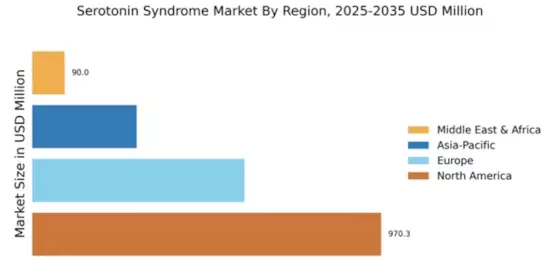
North America is poised to maintain its leadership in the Serotonin Syndrome market, holding a significant market share of $970.34M in 2024. The region's growth is driven by increasing awareness of mental health issues, advancements in pharmacological treatments, and supportive regulatory frameworks. The FDA's proactive stance on drug approvals and guidelines for serotonin-related disorders further catalyzes market expansion. The competitive landscape is robust, with key players like Johnson & Johnson, Pfizer, and Eli Lilly leading the charge. The U.S. remains the largest market, supported by a strong healthcare infrastructure and high R&D investments. Canada and Mexico are also emerging as important players, contributing to the overall growth. The presence of major pharmaceutical companies ensures a steady supply of innovative treatments, enhancing patient outcomes.

Europe : Emerging Market with Growth Potential

Europe's Serotonin Syndrome market is projected to grow significantly, with a market size of €590.2M in 2024. The region benefits from increasing healthcare expenditure, a growing elderly population, and rising incidences of mental health disorders. Regulatory bodies like the European Medicines Agency (EMA) are actively working to streamline drug approval processes, which is expected to boost market growth further. Leading countries such as Germany, France, and the UK are at the forefront of this market, with a strong presence of pharmaceutical giants like Novartis and AstraZeneca. The competitive landscape is characterized by a mix of established players and emerging biotech firms, fostering innovation. Collaborative efforts between governments and private sectors are enhancing research initiatives, ensuring a steady pipeline of new therapies.

Asia-Pacific : Rapidly Growing Healthcare Sector

The Asia-Pacific region is witnessing a burgeoning Serotonin Syndrome market, valued at $290.14M in 2024. Factors such as increasing healthcare access, rising awareness of mental health issues, and government initiatives to improve mental health services are driving this growth. Countries like India and China are investing heavily in healthcare infrastructure, which is expected to enhance treatment availability and patient outcomes. The competitive landscape is evolving, with both local and international players vying for market share. Companies like GSK and Merck & Co. are expanding their presence in the region, capitalizing on the growing demand for effective treatments. The collaboration between governments and private sectors is fostering innovation, ensuring that the market remains dynamic and responsive to patient needs.

Middle East and Africa : Emerging Market with Challenges

The Middle East and Africa (MEA) region is gradually developing its Serotonin Syndrome market, currently valued at $90.0M in 2024. The growth is driven by increasing awareness of mental health issues and the need for effective treatment options. However, challenges such as limited healthcare infrastructure and regulatory hurdles can impede market expansion. Governments are beginning to recognize the importance of mental health, leading to gradual improvements in policies and funding. Countries like South Africa and the UAE are leading the charge in this region, with a growing number of healthcare facilities and initiatives aimed at improving mental health services. The presence of key players is still limited, but international companies are beginning to explore opportunities in this emerging market, indicating potential for future growth.

Key Players and Competitive Insights

The Serotonin Syndrome Market is characterized by a complex interplay of competitive dynamics, driven by increasing awareness of the condition and advancements in treatment options. Key players such as Johnson & Johnson (US), Pfizer (US), and Eli Lilly and Company (US) are strategically positioned to leverage their extensive research capabilities and established market presence. Johnson & Johnson (US) focuses on innovation through its robust pipeline of psychiatric medications, while Pfizer (US) emphasizes partnerships with healthcare providers to enhance patient access to treatments. Eli Lilly and Company (US) is actively pursuing digital transformation initiatives to improve patient engagement and adherence, collectively shaping a competitive environment that prioritizes patient-centric solutions.

The market structure appears moderately fragmented, with several players vying for market share. Key business tactics include localizing manufacturing to reduce costs and optimize supply chains, which is crucial in maintaining competitive pricing. The influence of major companies is significant, as they not only drive innovation but also set industry standards that smaller players often follow.

In November 2025, Pfizer (US) announced a strategic collaboration with a leading telehealth provider to enhance remote monitoring of patients at risk for Serotonin Syndrome. This partnership is likely to improve patient outcomes by facilitating timely interventions and expanding access to care, thereby reinforcing Pfizer's commitment to integrated healthcare solutions. Such initiatives may also position Pfizer favorably in a market increasingly focused on digital health.

In October 2025, Eli Lilly and Company (US) launched a new digital platform aimed at educating healthcare professionals about the risks and management of Serotonin Syndrome. This initiative underscores the company's dedication to enhancing clinical knowledge and improving treatment protocols, which could lead to better patient outcomes and a stronger market position. By investing in educational resources, Eli Lilly is likely to foster trust and loyalty among healthcare providers.

In September 2025, Johnson & Johnson (US) expanded its clinical trial program for a novel treatment targeting Serotonin Syndrome, indicating a strong commitment to research and development. This expansion not only enhances the company's product portfolio but also demonstrates its proactive approach to addressing unmet medical needs. The potential introduction of new therapies could significantly alter the competitive landscape, as it may provide Johnson & Johnson with a first-mover advantage in a niche segment.

As of December 2025, current competitive trends in the Serotonin Syndrome Market are increasingly defined by digitalization, sustainability, and the integration of artificial intelligence (AI) in treatment protocols. Strategic alliances are becoming more prevalent, as companies recognize the value of collaboration in enhancing innovation and market reach. Looking ahead, competitive differentiation is likely to evolve from traditional price-based strategies to a focus on technological advancements, innovative treatment options, and reliable supply chains. This shift may ultimately redefine how companies compete, emphasizing the importance of quality and efficacy over cost alone.

Key Companies in the Serotonin Syndrome Market market include

Industry Developments

The sudden outbreak of the covid-19 pandemic across the world had led to the implementation of strict lockdown regulations across various nations ensuring a disruption in import and export activities of serotonin syndrome. The global economy has been affected by the covid-19 in three primary ways, by directly affecting ultimatum and production, by making market disruption and supply chain, and its financial impact on firms and financial markets. Our researchers observing the situation across the world explains that the market will create remunerative views for producers post covid-19 pandemic.

The reports projects to give an additional illustration of the recent scenario, economic declination, and covid-19 impact on the overall industry. Serotonin syndrome market 2021 research report gives an important analysis of the market status of the serotonin syndrome manufacturers with the best facts and meaning, figures, definitions, SWOT analysis, expert opinions, and the recent developments across the world.

Future Outlook

Serotonin Syndrome Market Future Outlook

The Serotonin Syndrome Market is projected to grow at a 6.37% CAGR from 2024 to 2035, driven by increased awareness, improved diagnostics, and rising antidepressant usage.

New opportunities lie in:

  • Development of targeted educational programs for healthcare professionals
  • Investment in telehealth platforms for remote patient monitoring
  • Creation of rapid diagnostic kits for early detection of serotonin syndrome

By 2035, the market is expected to achieve substantial growth, reflecting enhanced treatment options and awareness.

Market Segmentation

Serotonin Syndrome Market Symptoms Outlook

  • Cognitive Dysfunction
  • Autonomic Instability
  • Neuromuscular Abnormalities
  • Gastrointestinal Disturbances

Serotonin Syndrome Market Severity Levels Outlook

  • Mild
  • Moderate
  • Severe
  • Life-Threatening

Serotonin Syndrome Market Patient Demographics Outlook

  • Age Groups
  • Gender
  • Comorbid Conditions
  • Socioeconomic Status

Serotonin Syndrome Market Treatment Approaches Outlook

  • Pharmacological Interventions
  • Supportive Care
  • Psychiatric Management
  • Preventive Strategies

Report Scope

MARKET SIZE 20241940.68(USD Million)
MARKET SIZE 20252086.54(USD Million)
MARKET SIZE 20353844.54(USD Million)
COMPOUND ANNUAL GROWTH RATE (CAGR)6.37% (2024 - 2035)
REPORT COVERAGERevenue Forecast, Competitive Landscape, Growth Factors, and Trends
BASE YEAR2024
Market Forecast Period2025 - 2035
Historical Data2019 - 2024
Market Forecast UnitsUSD Million
Key Companies ProfiledJohnson & Johnson (US), Pfizer (US), Bristol-Myers Squibb (US), Eli Lilly and Company (US), Novartis (CH), AstraZeneca (GB), Sanofi (FR), Merck & Co. (US), GSK (GB)
Segments CoveredSymptoms, Treatment Approaches, Patient Demographics, Severity Levels
Key Market OpportunitiesAdvancements in diagnostic tools enhance early detection and treatment options in the Serotonin Syndrome Market.
Key Market DynamicsRising awareness of serotonin syndrome drives demand for effective treatment options and regulatory scrutiny in pharmaceuticals.
Countries CoveredNorth America, Europe, APAC, South America, MEA

Market Highlights

Author
Kinjoll Dey
Research Analyst Level I

He is an extremely curious individual currently working in Healthcare and Medical Devices Domain. Kinjoll is comfortably versed in data centric research backed by healthcare educational background. He leverages extensive data mining and analytics tools such as Primary and Secondary Research, Statistical Analysis, Machine Learning, Data Modelling. His key role also involves Technical Sales Support, Client Interaction and Project management within the Healthcare team. Lastly, he showcases extensive affinity towards learning new skills and remain fascinated in implementing them.

Leave a Comment

FAQs

What is the projected growth rate of the global serotonin syndrome market?

Serotonin syndrome market is expected to exhibit a CAGR of 4.9% from 2023 to 2032.

What is the expected size of the global serotonin syndrome market?

Serotonin syndrome market size can reach USD 0.72 Billionby 2032.

Which region dominated in the global serotonin syndrome market?

North America can dominate the global serotonin syndrome market till 2032.

Which region has the biggest latent potential?

Asia Pacific (APAC) has the highest potential for growth in the global serotonin syndrome market.

Name the notable players of the global serotonin syndrome market?

AstraZeneca Plc., Johnson & Johnson, Merck & Co., Inc., Forest Laboratories Inc., Pfizer, Inc., Sanofi S., Eli Lilly and Company, Ciron Drugs & Pharmaceuticals Pvt. Ltd., and GlaxoSmithKline plc are notable players of the global serotonin syndrome market.

Download Free Sample

Kindly complete the form below to receive a free sample of this Report

Compare Licence

×
Features License Type
Single User Multiuser License Enterprise User
Price $4,950 $5,950 $7,250
Maximum User Access Limit 1 User Upto 10 Users Unrestricted Access Throughout the Organization
Free Customization
Direct Access to Analyst
Deliverable Format
Platform Access
Discount on Next Purchase 10% 15% 15%
Printable Versions