×
Request Free Sample ×

Kindly complete the form below to receive a free sample of this Report

* Please use a valid business email

Leading companies partner with us for data-driven Insights

clients tt-cursor
Hero Background

China Automotive Logistics Market

ID: MRFR/PCM/54160-HCR
200 Pages
Snehal Singh
October 2025

China Automotive Logistics Market Research Report: By Service Type (Transportation, Warehousing, Inventory Management, Freight Forwarding), By Logistics Mode (Road, Rail, Air, Sea), By Vehicle Type (Passenger Cars, Commercial Vehicles, Electric Vehicles, Hybrid Vehicles) andBy Supply Chain Type (Inbound Logistics, Outbound Logistics, Third Party Logistics)- Forecast to 2035

Share:
Download PDF ×

We do not share your information with anyone. However, we may send you emails based on your report interest from time to time. You may contact us at any time to opt-out.

China Automotive Logistics Market Infographic
Purchase Options

China Automotive Logistics Market Summary

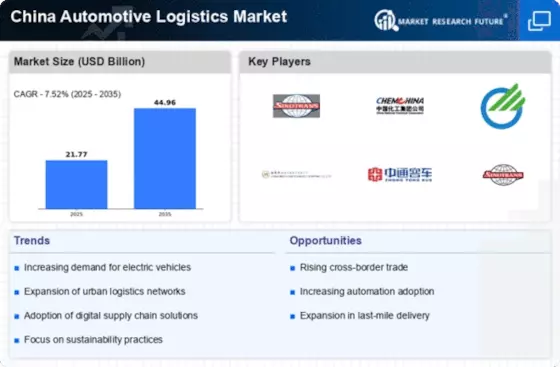
As per analysis, the China automotive logistics market is projected to grow from USD 20.25 Billion in 2024 to USD 21.94 Billion in 2025, exhibiting a compound annual growth rate (CAGR) of 8.3% during the forecast period (2025 - 2035).

Key Market Trends & Highlights

The China automotive logistics market is experiencing a transformative shift driven by technological advancements and evolving consumer demands.

  • Road transportation remains the largest segment, catering to the majority of automotive logistics needs.
  • Rail transportation is emerging as the fastest-growing segment, offering rapid delivery solutions for automotive parts.
  • Outbound logistics continues to dominate the market, while third party logistics is witnessing the most significant growth.
  • Government policies and the rising demand for electric vehicles are key drivers shaping the market landscape.

Market Size & Forecast

2024 Market Size 20.25 (USD Billion)
2035 Market Size 48.7 (USD Billion)
CAGR (2025 - 2035) 8.3%

Major Players

Sinotrans Limited (CN), China National Chemical Corporation (CN), China Logistics Group (CN), China Merchants Energy Shipping Company (CN), Zhongtong Logistics (CN), SinoTrans Holding Co., Ltd. (CN), YTO Express Group Co., Ltd. (CN), JD Logistics, Inc. (CN)

China Automotive Logistics Market Trends

The China automotive logistics market is currently experiencing a transformative phase, driven by rapid advancements in technology and evolving consumer preferences. The integration of digital solutions, such as artificial intelligence and big data analytics, is reshaping logistics operations, enhancing efficiency, and optimizing supply chain management. Furthermore, the increasing demand for electric vehicles is prompting logistics providers to adapt their services to accommodate new transportation methods and infrastructure requirements. This shift not only influences the movement of goods but also necessitates a reevaluation of existing logistics frameworks to ensure sustainability and compliance with environmental regulations. In addition, the rise of e-commerce in China is significantly impacting the automotive logistics landscape. As online sales of vehicles and automotive parts continue to grow, logistics companies are compelled to develop innovative delivery solutions that cater to consumer expectations for speed and reliability. The emphasis on last-mile delivery solutions is becoming more pronounced, as companies seek to enhance customer satisfaction while managing costs. Overall, the China automotive logistics market appears poised for continued growth, with a focus on technological integration and responsiveness to changing market dynamics.

Technological Integration

The China automotive logistics market is witnessing a surge in the adoption of advanced technologies. Digital tools, including artificial intelligence and blockchain, are being utilized to streamline operations and enhance transparency. This trend indicates a shift towards more efficient supply chain management, allowing logistics providers to respond swiftly to market demands.

Sustainability Initiatives

There is a growing emphasis on sustainability within the China automotive logistics market. Companies are increasingly adopting eco-friendly practices, such as optimizing transportation routes and utilizing electric vehicles for deliveries. This trend reflects a broader commitment to reducing carbon footprints and aligning with national environmental goals.

E-commerce Influence

The rise of e-commerce is reshaping the logistics landscape in China. As online vehicle sales increase, logistics providers are adapting their services to meet consumer expectations for rapid delivery. This trend highlights the need for innovative last-mile solutions, ensuring that customers receive their purchases efficiently and reliably.

Market Segment Insights

By Transportation Mode: Road Transportation (Largest) vs. Rail Transportation (Fastest-Growing)

In the China automotive logistics market, the distribution of transportation modes reveals that road transportation remains the largest segment. It holds a significant percentage of the logistics operations due to its extensive network and flexibility. In contrast, rail transportation is emerging as the fastest-growing mode, propelled by increasing investments in rail infrastructure and government initiatives aimed at enhancing logistics efficiency.

Road Transportation (Dominant) vs. Rail Transportation (Emerging)

Road transportation has established itself as the dominant mode in the China automotive logistics market due to its extensive reach and ability to deliver goods quickly. The convenience of door-to-door service and varied logistical solutions contribute to its popularity among automakers. On the other hand, rail transportation is gaining traction as an emerging solution, favored for its cost-effectiveness and the ability to transport large volumes efficiently. The government’s focus on expanding rail networks and promoting intermodal solutions is expected to enhance its market position further, positioning it as a viable competitor to road transport in the coming years.

By Logistics Type: Outbound Logistics (Largest) vs. Third Party Logistics (Fastest-Growing)

In the China automotive logistics market, the distribution of market share among logistics types reveals that Outbound Logistics holds a significant portion, reflecting its principal role in efficiently delivering finished vehicles to dealerships and customers. On the other hand, Third Party Logistics, though a smaller segment presently, is rapidly gaining traction as automakers seek to outsource their logistics operations to specialized experts, thus maximizing operational efficiency. Growth trends within the logistics type segment indicate a booming reliance on technology and data analytics to streamline operations, with Outbound Logistics benefiting from advancements in transportation and warehousing processes. Meanwhile, Third Party Logistics is being driven by increasing demand for flexibility and scalability in logistics solutions, particularly as manufacturers seek to adapt to dynamic market conditions and consumer preferences.

Outbound Logistics (Dominant) vs. Third Party Logistics (Emerging)

Outbound Logistics is characterized by its ability to manage the movement of finished goods from manufacturers to customers, making it a dominant force in the China automotive logistics market. This segment ensures timely delivery and plays a crucial role in customer satisfaction, leveraging advanced tracking technologies and optimized routing solutions. Conversely, Third Party Logistics is emerging as a critical player, especially among automotive manufacturers aiming to enhance their supply chain efficiencies. This segment offers comprehensive solutions that integrate multiple logistics functions, allowing for improved operational flexibility. As consumer expectations shift and the automotive market evolves, Third Party Logistics providers are positioning themselves to meet the growing demands through innovative service offerings that cater to diverse logistic needs.

By Vehicle Type: Passenger Vehicle (Largest) vs. Electric Vehicle (Fastest-Growing)

In the China automotive logistics market, the distribution of market share among vehicle types indicates that passenger vehicles hold a significant portion of the market, primarily due to the high demand for personal transportation and the expansion of urban infrastructure. Commercial vehicles also contribute notably, driven by the logistics and transportation needs of businesses. However, electric and hybrid vehicles are beginning to carve out their share as consumer preferences shift towards sustainable options, reflecting the government's push for greener technologies.

Passenger Vehicle (Dominant) vs. Electric Vehicle (Emerging)

Passenger vehicles remain the dominant segment in the China automotive logistics market, catering to a vast consumer base seeking convenience and comfort. This segment benefits from a well-established supply chain and distribution network, crucial for timely deliveries. Conversely, electric vehicles represent an emerging segment, rapidly gaining traction due to advancements in technology and favorable government policies promoting green transport. The growth of electric vehicles is further supported by an increasing consumer awareness of environmental issues and the expanding infrastructure for electric charging stations, positioning them as a vital component of future logistics in China.

By Service Type: Freight Forwarding (Largest) vs. Customs Brokerage (Fastest-Growing)

In the China automotive logistics market, the service type segment is experiencing varied distributions. Freight Forwarding holds the largest share, being integral to the transportation of automotive parts and finished vehicles, reflecting the robust demand for logistics solutions as automotive production continues to rise. On the other hand, Customs Brokerage, while currently smaller in share, is quickly emerging, driven by increasing import and export complexities in the automotive industry. This necessitates more sophisticated customs handling and compliance services.

Freight Forwarding: Dominant vs. Customs Brokerage: Emerging

Freight Forwarding is a dominant force in the China automotive logistics market, characterized by its extensive networks and experience in handling intricate supply chain dynamics. This segment plays a crucial role in reducing transit times and ensuring timely delivery of components to automotive manufacturers. On the other hand, Customs Brokerage is touted as an emerging trend, primarily influenced by the growing need for regulatory compliance and efficient clearance processes in international trade. As automotive imports and exports grow, the demand for specialized customs brokerage services is expected to rise, facilitating smoother transactions and reducing delays.

Get more detailed insights about China Automotive Logistics Market

Key Players and Competitive Insights

The automotive logistics market in China is characterized by a dynamic competitive landscape, driven by rapid technological advancements and increasing demand for efficient supply chain solutions. Key players such as Sinotrans Limited (CN), JD Logistics, Inc. (CN), and China Merchants Energy Shipping Company (CN) are actively shaping the market through strategic initiatives. Sinotrans Limited (CN) focuses on enhancing its digital capabilities, aiming to streamline operations and improve customer service. Meanwhile, JD Logistics, Inc. (CN) emphasizes its commitment to automation and AI integration, which positions it favorably in a market that increasingly values efficiency and speed. China Merchants Energy Shipping Company (CN) is also expanding its logistics network, particularly in the automotive sector, to capitalize on the growing demand for electric vehicles (EVs) and related components.

The business tactics employed by these companies reflect a broader trend towards localization and supply chain optimization. The market appears moderately fragmented, with several players vying for dominance. However, the collective influence of major companies is significant, as they leverage their resources to enhance operational efficiencies and customer satisfaction. This competitive structure fosters innovation, as companies are compelled to differentiate themselves through advanced logistics solutions and strategic partnerships.

In November 2025, JD Logistics, Inc. (CN) announced a partnership with a leading EV manufacturer to develop a specialized logistics network tailored for electric vehicle components. This strategic move is likely to enhance JD Logistics' position in the burgeoning EV market, allowing it to offer more targeted services and improve delivery times. The collaboration underscores the importance of aligning logistics capabilities with industry trends, particularly as the demand for EVs continues to rise.

In October 2025, Sinotrans Limited (CN) launched a new digital platform aimed at optimizing its supply chain processes. This initiative is expected to significantly reduce operational costs and improve service delivery, reflecting the company's commitment to leveraging technology for competitive advantage. By enhancing its digital infrastructure, Sinotrans Limited is likely to attract more clients seeking efficient logistics solutions in a rapidly evolving market.

In September 2025, China Merchants Energy Shipping Company (CN) expanded its logistics services to include temperature-controlled transportation for automotive parts. This strategic expansion is indicative of the company's responsiveness to the specific needs of the automotive sector, particularly as manufacturers increasingly require specialized logistics solutions for sensitive components. Such adaptability may enhance the company's market share and strengthen its competitive positioning.

As of December 2025, the automotive logistics market is witnessing a pronounced shift towards digitalization, sustainability, and AI integration. These trends are reshaping competitive dynamics, as companies increasingly form strategic alliances to enhance their service offerings and operational efficiencies. The focus appears to be shifting from price-based competition to a more nuanced approach that prioritizes innovation, technology, and supply chain reliability. This evolution suggests that future competitive differentiation will hinge on the ability to adapt to changing market demands and leverage technological advancements.

Key Companies in the China Automotive Logistics Market market include

Industry Developments

Recent developments in the China Automotive Logistics Market indicate a dynamic landscape shaped by strategic partnerships and advancements in logistics technology. In September 2023, SAIC Motor launched an integrated supply chain platform that aims to enhance efficiency and streamline operations across its logistics network. Additionally, in October 2023, China COSCO Shipping Corporation announced its collaboration with DHL Supply Chain to optimize automotive parts distribution, reflecting a growing trend of partnerships aimed at enhancing operational efficiencies.

Growth in market valuations has been evident, as seen by a reported 12% increase in MHL Logistics Group's market valuation, attributed to its investments in automated logistics solutions. Furthermore, in April 2022, XCMG Group expanded its logistics capabilities by acquiring Anhui Hualing Logistics Group, fortifying its position in the automotive sector. The market has seen emerging trends focusing on sustainability and digital logistics, spurred by the rising demand for electric vehicles and efficient supply chain practices. Cooperation among major players like Sinotrans Limited and Zhongtong Bus Holding emphasizes the importance of integrated logistics solutions in responding to evolving market demands.

Future Outlook

China Automotive Logistics Market Future Outlook

The China automotive logistics market is projected to grow at an 8.3% CAGR from 2024 to 2035, driven by technological advancements, increasing vehicle production, and rising e-commerce demand.

New opportunities lie in:

  • Implementation of AI-driven inventory management systems
  • Expansion of last-mile delivery networks for electric vehicles
  • Development of integrated logistics platforms for real-time tracking

By 2035, the market is expected to be robust, driven by innovation and increased efficiency.

Market Segmentation

China Automotive Logistics Market Service Type Outlook

  • Freight Forwarding
  • Warehousing
  • Inventory Management
  • Customs Brokerage

China Automotive Logistics Market Vehicle Type Outlook

  • Passenger Vehicle
  • Commercial Vehicle
  • Electric Vehicle
  • Hybrid Vehicle

China Automotive Logistics Market Logistics Type Outlook

  • Inbound Logistics
  • Outbound Logistics
  • Third Party Logistics
  • Fourth Party Logistics

China Automotive Logistics Market Transportation Mode Outlook

  • Road Transportation
  • Rail Transportation
  • Air Transportation
  • Water Transportation

Report Scope

MARKET SIZE 202420.25(USD Billion)
MARKET SIZE 202521.94(USD Billion)
MARKET SIZE 203548.7(USD Billion)
COMPOUND ANNUAL GROWTH RATE (CAGR)8.3% (2024 - 2035)
REPORT COVERAGERevenue Forecast, Competitive Landscape, Growth Factors, and Trends
BASE YEAR2024
Market Forecast Period2025 - 2035
Historical Data2019 - 2024
Market Forecast UnitsUSD Billion
Key Companies ProfiledSinotrans Limited (CN), China National Chemical Corporation (CN), China Logistics Group (CN), China Merchants Energy Shipping Company (CN), Zhongtong Logistics (CN), SinoTrans Holding Co., Ltd. (CN), YTO Express Group Co., Ltd. (CN), JD Logistics, Inc. (CN)
Segments CoveredTransportation Mode, Logistics Type, Vehicle Type, Service Type
Key Market OpportunitiesIntegration of advanced technologies enhances efficiency in the China automotive logistics market.
Key Market DynamicsRapid technological advancements and regulatory shifts are reshaping China's automotive logistics landscape.
Countries CoveredChina

Leave a Comment

FAQs

What is the expected market size of the China Automotive Logistics Market in 2024?

The China Automotive Logistics Market is expected to be valued at 8.5 billion USD in 2024.

What is the projected market size for the China Automotive Logistics Market by 2035?

By 2035, the market is anticipated to reach a value of 12.0 billion USD.

What is the expected compound annual growth rate (CAGR) for the China Automotive Logistics Market from 2025 to 2035?

The market is expected to grow at a CAGR of 3.185% during the forecast period from 2025 to 2035.

Which segment of the China Automotive Logistics Market is the largest in terms of transportation value in 2024?

Transportation is valued at 3.5 billion USD in 2024, making it the largest segment in the market.

What are the expected transportation and warehousing values in the China Automotive Logistics Market by 2035?

Transportation is projected to be valued at 5.0 billion USD and warehousing at 3.0 billion USD by 2035.

Who are the key players in the China Automotive Logistics Market?

Major players include SAIC Motor, China COSCO Shipping Corporation, Feidiao Express, and DHL Supply Chain among others.

What is the value of the freight forwarding segment of the China Automotive Logistics Market in 2024?

The value of the freight forwarding segment is 1.8 billion USD in 2024.

What challenges and opportunities are present in the China Automotive Logistics Market?

The market faces challenges such as increasing competition and infrastructure limitations while presenting opportunities in technology integration and efficiency improvements.

What is the expected value of inventory management in 2035 within the China Automotive Logistics Market?

Inventory management is expected to reach a value of 1.5 billion USD by 2035.

How does the overall growth of the China Automotive Logistics Market reflect current economic trends?

The anticipated growth is in line with the evolving automotive sector and enhances logistical efficiencies influenced by technological advancements.

Download Free Sample

Kindly complete the form below to receive a free sample of this Report

Compare Licence

×
Features License Type
Single User Multiuser License Enterprise User
Price $4,950 $5,950 $7,250
Maximum User Access Limit 1 User Upto 10 Users Unrestricted Access Throughout the Organization
Free Customization
Direct Access to Analyst
Deliverable Format
Platform Access
Discount on Next Purchase 10% 15% 15%
Printable Versions