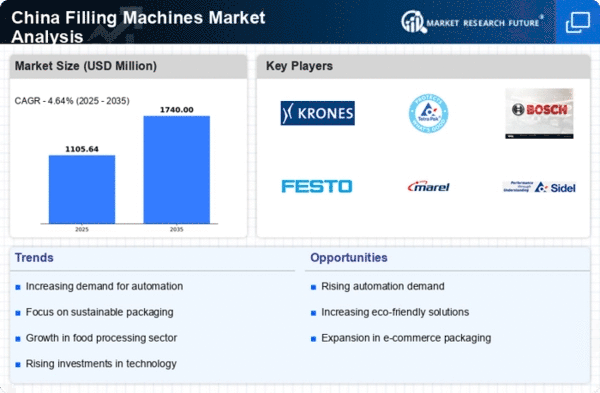
The filling machines market in China is characterized by a dynamic competitive landscape, driven by increasing demand for automation and efficiency in production processes. Key players such as Krones AG (DE), Tetra Pak International S.A. (CH), and Bosch Packaging Technology (DE) are at the forefront, each adopting distinct strategies to enhance their market presence. Krones AG (DE) focuses on innovation through the development of advanced filling technologies, while Tetra Pak International S.A. (CH) emphasizes sustainability in its operations, aiming to reduce environmental impact. Bosch Packaging Technology (DE) is leveraging digital transformation to optimize its manufacturing processes, thereby improving operational efficiency. Collectively, these strategies contribute to a competitive environment that is increasingly centered around technological advancement and sustainability.
In terms of business tactics, companies are localizing manufacturing to better serve the Chinese market, which appears to be a response to the growing demand for customized solutions. Supply chain optimization is also a critical focus, as firms seek to enhance their responsiveness to market fluctuations. The market structure is moderately fragmented, with several key players exerting influence, yet the presence of numerous smaller firms adds to the competitive dynamics, fostering innovation and diversity in offerings.
In October 2025, Krones AG (DE) announced the launch of a new line of high-speed filling machines designed specifically for the beverage industry. This strategic move is significant as it positions Krones to capture a larger share of the rapidly growing beverage sector in China, which is increasingly leaning towards automation and efficiency. The introduction of these machines is expected to enhance production capabilities for manufacturers, thereby solidifying Krones' competitive edge.
In September 2025, Tetra Pak International S.A. (CH) unveiled its latest sustainability initiative aimed at reducing carbon emissions in its production processes by 30% by 2030. This initiative not only aligns with global sustainability trends but also enhances Tetra Pak's brand reputation in a market that is becoming increasingly environmentally conscious. The strategic importance of this move lies in its potential to attract clients who prioritize sustainability in their supply chains, thereby expanding Tetra Pak's market reach.
In August 2025, Bosch Packaging Technology (DE) entered into a strategic partnership with a leading Chinese technology firm to integrate AI into its filling machines. This collaboration is poised to revolutionize the operational capabilities of Bosch's products, allowing for real-time monitoring and predictive maintenance. The strategic importance of this partnership cannot be overstated, as it positions Bosch at the cutting edge of technological innovation in the filling machines market, potentially leading to increased market share and customer loyalty.
As of November 2025, current trends in the filling machines market are heavily influenced by digitalization, sustainability, and the integration of AI technologies. Strategic alliances are becoming increasingly prevalent, as companies recognize the need to collaborate to enhance their technological capabilities and market offerings. Looking ahead, competitive differentiation is likely to evolve from traditional price-based competition to a focus on innovation, technology integration, and supply chain reliability. This shift underscores the importance of adaptability and forward-thinking strategies in maintaining a competitive advantage in the filling machines market.



















Leave a Comment