×
Request Free Sample ×

Kindly complete the form below to receive a free sample of this Report

* Please use a valid business email

Leading companies partner with us for data-driven Insights

clients tt-cursor
Hero Background

China Pain Patch Market

ID: MRFR/MED/49547-HCR
200 Pages
Rahul Gotadki
October 2025

China Pain Patch Market Research Report By Application (Chronic Pain Relief, Acute Pain Relief, Muscle Pain Relief, Joint Pain Relief, Post-operative Pain Relief), By Product Type (Heat Patch, Cold Patch, Medicated Patch, Herbal Patch, Transdermal Patch), By End User (Hospitals, Clinics, Home Care, Pharmacies, Sports Facilities) and By Distribution Channel (Online, Offline, Pharmacies, Supermarkets, Specialty Stores)- Forecast to 2035

Share:
Download PDF ×

We do not share your information with anyone. However, we may send you emails based on your report interest from time to time. You may contact us at any time to opt-out.

China Pain Patch Market Infographic
Purchase Options

China Pain Patch Market Summary

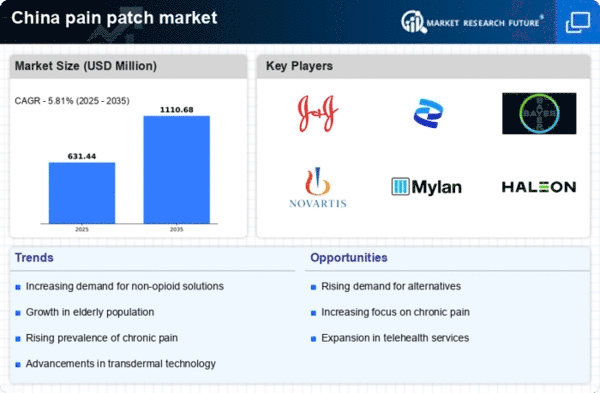
As per MRFR analysis, the China pain patch market size was estimated at 596.77 USD Million in 2024. The China pain patch market is projected to grow from 631.44 USD Million in 2025 to 1110.68 USD Million by 2035, exhibiting a compound annual growth rate (CAGR) of 5.81% during the forecast period 2025 - 2035.

Key Market Trends & Highlights

The China pain patch market is experiencing robust growth driven by technological advancements and increasing demand for non-invasive solutions.

  • Technological advancements are enhancing the efficacy and user experience of pain patches.
  • The largest segment in the market is the chronic pain segment, while the fastest-growing segment is the sports injury segment.
  • There is a rising demand for non-invasive solutions, reflecting a shift in consumer preferences towards safer alternatives.
  • Key market drivers include the increasing prevalence of chronic pain and a growing aging population.

Market Size & Forecast

2024 Market Size 596.77 (USD Million)
2035 Market Size 1110.68 (USD Million)
CAGR (2025 - 2035) 5.81%

Major Players

Johnson & Johnson (US), Pfizer Inc. (US), Bayer AG (DE), Novartis AG (CH), Mylan N.V. (US), Haleon plc (GB), Teva Pharmaceutical Industries Ltd. (IL), GSK plc (GB), AstraZeneca plc (GB)

China Pain Patch Market Trends

The pain patch market is experiencing notable growth, driven by increasing consumer awareness regarding pain management solutions. The rise in chronic pain conditions, coupled with a growing preference for non-invasive treatment options, appears to be influencing market dynamics. Additionally, advancements in technology are leading to the development of innovative products that offer enhanced efficacy and user convenience. As a result, the market is likely to witness a surge in demand, particularly among the aging population who are more susceptible to pain-related ailments. Moreover, regulatory support and favorable policies from government bodies are fostering a conducive environment for market expansion. The emphasis on research and development is also contributing to the introduction of new formulations and delivery systems. This trend suggests that the pain patch market may continue to evolve, adapting to the changing needs of consumers. Overall, the combination of technological advancements, demographic shifts, and supportive regulations indicates a promising outlook for the pain patch market in the near future.

Technological Advancements

Innovations in formulation and delivery systems are enhancing the effectiveness of pain patches. New technologies are being developed to improve absorption rates and prolong the duration of pain relief, making these products more appealing to consumers.

Rising Demand for Non-Invasive Solutions

There is a growing preference for non-invasive pain management options among consumers. This trend is likely driven by an increasing awareness of the side effects associated with traditional pain medications, leading to a shift towards alternatives like pain patches.

Regulatory Support and Market Growth

Government initiatives aimed at promoting health and wellness are positively impacting the pain patch market. Supportive regulations are facilitating product approvals and encouraging manufacturers to invest in research and development.

China Pain Patch Market Drivers

Growing Aging Population

China's rapidly aging population is a crucial factor influencing the pain patch market. As the demographic of individuals aged 65 and older continues to expand, the prevalence of age-related ailments, including chronic pain, is expected to rise. This demographic shift creates a substantial market opportunity for pain management solutions, particularly pain patches, which offer a user-friendly and effective means of alleviating discomfort. The pain patch market is likely to benefit from targeted marketing strategies aimed at older adults, who may prefer non-invasive treatments. Current estimates suggest that by 2030, nearly 25% of China's population will be over 60, indicating a growing need for accessible pain relief options. This trend underscores the importance of adapting product offerings to meet the specific needs of this demographic.

Increasing Prevalence of Chronic Pain

The rising incidence of chronic pain conditions in China is a pivotal driver for the pain patch market. According to recent health statistics, approximately 20% of the adult population experiences chronic pain, which significantly influences the demand for effective pain management solutions. This growing prevalence necessitates innovative and accessible treatment options, thereby propelling the pain patch market forward. As healthcare providers seek to address this issue, the pain patch market is likely to see an uptick in product development and marketing efforts aimed at this demographic. Furthermore, the increasing awareness of chronic pain management among patients and healthcare professionals is expected to enhance the adoption of pain patches as a viable alternative to traditional pain relief methods.

Shift Towards Home Healthcare Solutions

The trend towards home healthcare in China is reshaping the pain patch market. With an increasing number of patients preferring to manage their health conditions at home, the demand for convenient and effective pain relief options is surging. Pain patches, known for their ease of use and non-invasive nature, align well with this shift. The pain patch market is witnessing a significant transformation as more consumers opt for self-administered treatments. Market data indicates that the home healthcare segment is projected to grow at a CAGR of 15% over the next five years, further emphasizing the potential for pain patches. This shift not only enhances patient comfort but also reduces the burden on healthcare facilities, making pain patches an attractive option for both patients and providers.

Increased Focus on Preventive Healthcare

The emphasis on preventive healthcare in China is driving changes in the pain patch market. As healthcare systems evolve, there is a growing recognition of the importance of managing pain before it escalates into more severe conditions. Pain patches, which can be used proactively to alleviate discomfort, are gaining traction among consumers and healthcare providers alike. The pain patch market is likely to see increased investment in research and development to create advanced formulations that cater to preventive care. Market analysis indicates that the preventive healthcare sector is expected to grow by 12% annually, highlighting the potential for pain patches to play a significant role in this paradigm shift. This focus on prevention not only benefits patients but also aligns with broader healthcare goals of reducing long-term treatment costs.

Rising Awareness of Alternative Therapies

The growing awareness and acceptance of alternative therapies in China are influencing the pain patch market. As consumers become more informed about various pain management options, there is a noticeable shift towards non-pharmaceutical solutions, including pain patches. This trend is supported by an increasing number of healthcare professionals advocating for integrative approaches to pain management. The pain patch market is likely to experience growth as more individuals seek out these alternatives, driven by a desire for fewer side effects and a more holistic approach to health. Recent surveys indicate that nearly 40% of patients are open to trying alternative therapies, suggesting a robust market potential for pain patches. This shift in consumer attitudes may lead to greater innovation and diversification within the pain patch market.


Market Segment Insights

By Application: Chronic Pain Relief (Largest) vs. Acute Pain Relief (Fastest-Growing)

The China pain patch market showcases a diverse distribution of applications, with Chronic Pain Relief holding the largest share due to its extensive use among patients suffering from long-term ailments. Muscle Pain Relief and Joint Pain Relief follow closely, catering to specific user needs. Post-operative Pain Relief has also gained traction, indicating a slow but steady adoption rate in clinical environments. The growth in this segment is largely driven by the increasing prevalence of chronic diseases, coupled with a growing aging population seeking effective pain management solutions. Acute Pain Relief is emerging rapidly as patients look for immediate relief options. Increased awareness and acceptance of topical pain relief methods contribute significantly to this expanding market landscape.

Chronic Pain Relief (Dominant) vs. Acute Pain Relief (Emerging)

Chronic Pain Relief represents a dominant force within the application landscape of the China pain patch market, characterized by a wide array of formulations designed to provide sustained relief for long-duration pain conditions. It caters significantly to the elderly demographic, frequently requiring long-term management solutions. In contrast, Acute Pain Relief is categorized as an emerging segment, rapidly gaining attention for its effectiveness in addressing short-term pain issues, such as those arising from injuries or surgeries. With a focused marketing approach and strong endorsements from healthcare professionals, Acute Pain Relief is becoming increasingly popular among younger patients and athletes alike, marking a significant shift in consumer preferences.

By Product Type: Medicated Patch (Largest) vs. Herbal Patch (Fastest-Growing)

In the China pain patch market, the product type segment is strongly dominated by the Medicated Patch, which holds the largest market share due to its effective pain relief capabilities and widespread acceptance. Following closely are the Heat and Cold Patches, which cater to specific pain relief needs, while the Herbal Patch and Transdermal Patch are emerging segments that represent a growing interest in alternative remedies and therapies. Growth trends in this segment are primarily driven by increasing consumer awareness of pain management solutions and the rising popularity of natural and herbal options. The demand for effective, convenient, and easy-to-use pain relief solutions continues to surge, spurring innovation and development within the Herbal Patch segment, which is attracting attention due to its perceived benefits. Healthcare professionals are also increasingly recommending patches as part of comprehensive pain management plans, further enhancing their market potential.

Medicated Patch (Dominant) vs. Herbal Patch (Emerging)

The Medicated Patch is recognized as the dominant segment in the China pain patch market due to its proven efficacy in delivering pain relief through localized medication. It typically contains active ingredients like NSAIDs or opioids, making it a preferred choice for individuals with chronic pain conditions. Conversely, the Herbal Patch represents an emerging trend that taps into the growing consumer demand for natural and holistic treatment options. Often made from botanical extracts and marketed as a safer alternative, these patches cater to individuals seeking pain relief without synthetic drugs. The Herbal Patch is gaining traction among younger demographics who prioritize wellness and holistic living, thus opening new avenues for market growth and diversification in product offerings.

By End User: Hospitals (Largest) vs. Home Care (Fastest-Growing)

In the China pain patch market, the segment distribution reveals that hospitals hold the largest market share, attributed to their extensive use of pain management solutions in patient care. Following hospitals, clinics and pharmacies account for notable portions, offering patients accessibility to pain relief options. The home care segment, although smaller, is rapidly gaining traction as consumers increasingly seek convenient pain management solutions.

Hospitals: (Dominant) vs. Home Care (Emerging)

Hospitals remain the dominant players in the China pain patch market due to their established infrastructure and the high volume of patients requiring effective pain management. Conversely, home care is emerging as a significant and fast-growing segment, driven by a shift towards self-management of pain conditions among patients. This trend is accelerated by advancements in product development that focus on easy-to-use, effective pain patches suitable for at-home application. As chronic pain issues rise among the population, the home care segment is expected to expand rapidly, appealing to a demographic seeking convenience and autonomy.

By Distribution Channel: Online (Largest) vs. Pharmacies (Fastest-Growing)

The distribution of the channels in the China pain patch market reveals a significant preference for online purchasing, which has become the largest segment due to the increasing penetration of e-commerce and mobile shopping platforms. Offline channels such as pharmacies, supermarkets, and specialty stores still hold considerable market shares, especially among traditional consumers who prefer in-person consultations and purchases. Pharmacies, in particular, contribute significantly to the overall distribution landscape, appealing to those seeking professional advice and assurances when purchasing pain relief solutions. As trends shift towards convenience and immediate access to healthcare products, the growth trajectory of online sales continues to outpace traditional retail channels. The surge in digital literacy, along with the rising popularity of health and wellness apps, drives consumers to online platforms, where they can find a wide range of products at competitive prices. Furthermore, pharmacies are rapidly adapting to this digital change, enhancing their online presence and expanding delivery options, making them the fastest-growing segment in the market. This dual trend signifies a transformative period for distribution channels in the China pain patch market.

Online (Dominant) vs. Supermarkets (Emerging)

Online distribution has emerged as the dominant force in the China pain patch market, leveraging the vast reach of e-commerce and changing consumer behaviors that favor online shopping for convenience and variety. Consumers are increasingly drawn to platforms that offer easy access to product information, customer reviews, and competitive pricing. In contrast, supermarkets are seen as an emerging segment in this landscape, often appealing to shoppers who prefer to buy pain patches while grocery shopping. With their established presence in local communities, supermarkets can capitalize on foot traffic and promote pain relief products alongside everyday essentials, although they face challenges from the growing dominance of online channels that provide a more tailored shopping experience.

Get more detailed insights about China Pain Patch Market

Key Players and Competitive Insights

The pain patch market in China is characterized by a dynamic competitive landscape, driven by increasing consumer demand for non-invasive pain management solutions. Key players such as Johnson & Johnson (US), Pfizer Inc. (US), and Bayer AG (DE) are actively shaping the market through strategic initiatives focused on innovation and regional expansion. Johnson & Johnson (US) emphasizes product development in transdermal delivery systems, while Pfizer Inc. (US) is enhancing its portfolio through strategic partnerships aimed at integrating advanced technologies into pain management solutions. Bayer AG (DE) appears to be concentrating on sustainability, aligning its product offerings with eco-friendly practices, which may resonate well with the growing consumer preference for sustainable healthcare products.

The competitive structure of the market is moderately fragmented, with several players vying for market share. Companies are increasingly localizing manufacturing to optimize supply chains and reduce costs, which may enhance their competitive positioning. This localization strategy, coupled with supply chain optimization, allows these companies to respond swiftly to market demands and consumer preferences, thereby strengthening their foothold in the market.

In October 2025, Johnson & Johnson (US) announced the launch of a new line of pain relief patches that utilize a novel drug delivery technology, which could potentially enhance the efficacy of pain management. This strategic move not only reinforces Johnson & Johnson's commitment to innovation but also positions the company to capture a larger share of the market by addressing unmet consumer needs for effective pain relief solutions. The introduction of this technology may set a new standard in the industry, compelling competitors to accelerate their own R&D efforts.

In September 2025, Pfizer Inc. (US) entered into a collaboration with a leading technology firm to develop AI-driven pain management solutions. This partnership is likely to enhance Pfizer's capabilities in delivering personalized pain management therapies, thereby improving patient outcomes. The integration of AI into their product development process may provide Pfizer with a competitive edge, as it aligns with the growing trend towards personalized medicine in the healthcare sector.

In August 2025, Bayer AG (DE) launched a sustainability initiative aimed at reducing the environmental impact of its pain patch production. This initiative includes the use of biodegradable materials and eco-friendly manufacturing processes. By prioritizing sustainability, Bayer AG not only addresses regulatory pressures but also appeals to environmentally conscious consumers, potentially enhancing brand loyalty and market share.

As of November 2025, the competitive trends in the pain patch market are increasingly influenced by digitalization, sustainability, and the integration of AI technologies. Strategic alliances are becoming more prevalent, as companies recognize the need to collaborate to enhance their technological capabilities and market reach. The shift from price-based competition to a focus on innovation, technology, and supply chain reliability is evident, suggesting that future competitive differentiation will hinge on the ability to deliver superior products and services that meet evolving consumer expectations.

Key Companies in the China Pain Patch Market market include

Industry Developments

The China Pain Patch Market has recently experienced significant developments, with various companies making strides in both product innovation and market expansion. In October 2023, Zhejiang Jianfeng Pharmaceutical launched a new pain relief patch specifically designed for chronic pain management, gaining attention for its advanced formulation and effectiveness. Additionally, Sihuan Pharmaceutical reported a notable increase in revenue attributed to their pain patch sales, which have become increasingly popular among consumers seeking non-invasive pain relief solutions.

In terms of mergers and acquisitions, Hunan Kelun Pharmaceutical announced in September 2023 its acquisition of a smaller pain management firm to enhance its product portfolio and expand its market reach. 

Yunnan Baiyao has been focusing on Research and Development initiatives to create a more comprehensive range of pain management products, further driving competition in the market. The overall market valuation for the China Pain Patch Market sector is projected to grow, fueled by rising awareness regarding alternative pain relief methods. Over the past two years, there has been a steady increase in demand, with significant advancements in technology and materials used in pain patches, which continues to shape the landscape of this market in China.

Future Outlook

China Pain Patch Market Future Outlook

The Pain Patch Market in China is projected to grow at a 5.81% CAGR from 2024 to 2035, driven by increasing demand for non-invasive pain management solutions and technological advancements.

New opportunities lie in:

  • Development of smart pain patches with IoT integration for real-time monitoring.
  • Expansion into telehealth platforms for remote pain management solutions.
  • Partnerships with pharmacies for enhanced distribution of pain relief products.

By 2035, the pain patch market is expected to achieve substantial growth and innovation.

Market Segmentation

China Pain Patch Market End User Outlook

  • Hospitals
  • Clinics
  • Home Care
  • Pharmacies
  • Sports Facilities

China Pain Patch Market Application Outlook

  • Chronic Pain Relief
  • Acute Pain Relief
  • Muscle Pain Relief
  • Joint Pain Relief
  • Post-operative Pain Relief

China Pain Patch Market Product Type Outlook

  • Heat Patch
  • Cold Patch
  • Medicated Patch
  • Herbal Patch
  • Transdermal Patch

China Pain Patch Market Distribution Channel Outlook

  • Online
  • Offline
  • Pharmacies
  • Supermarkets
  • Specialty Stores

Report Scope

MARKET SIZE 2024 596.77(USD Million)
MARKET SIZE 2025 631.44(USD Million)
MARKET SIZE 2035 1110.68(USD Million)
COMPOUND ANNUAL GROWTH RATE (CAGR) 5.81% (2024 - 2035)
REPORT COVERAGE Revenue Forecast, Competitive Landscape, Growth Factors, and Trends
BASE YEAR 2024
Market Forecast Period 2025 - 2035
Historical Data 2019 - 2024
Market Forecast Units USD Million
Key Companies Profiled Johnson & Johnson (US), Pfizer Inc. (US), Bayer AG (DE), Novartis AG (CH), Mylan N.V. (US), Haleon plc (GB), Teva Pharmaceutical Industries Ltd. (IL), GSK plc (GB), AstraZeneca plc (GB)
Segments Covered Application, Product Type, End User, Distribution Channel
Key Market Opportunities Emerging technologies in transdermal delivery systems enhance efficacy in the pain patch market.
Key Market Dynamics Rising demand for pain management solutions drives innovation and competition in the pain patch market.

Countries Covered China

Leave a Comment

FAQs

What is the expected market size of the China Pain Patch Market in 2024?

The China Pain Patch Market is expected to be valued at 475.2 million USD in 2024.

What is the projected market value of the China Pain Patch Market by 2035?

By 2035, the China Pain Patch Market is projected to reach a valuation of 1421.0 million USD.

What is the expected CAGR for the China Pain Patch Market from 2025 to 2035?

The expected compound annual growth rate (CAGR) for the China Pain Patch Market from 2025 to 2035 is 10.471%.

Which application holds the largest market value in the China Pain Patch Market for 2024?

The Chronic Pain Relief application holds the largest market value, projected at 150.0 million USD in 2024.

What is the market value of Acute Pain Relief in the China Pain Patch Market for 2035?

The market value for Acute Pain Relief in the China Pain Patch Market is anticipated to be 300.0 million USD by 2035.

Who are the key players in the China Pain Patch Market?

Major players in the China Pain Patch Market include Zhejiang Jianfeng Pharmaceutical, Sihuan Pharmaceutical, and Yunnan Baiyao among others.

What will be the value of Muscle Pain Relief in the China Pain Patch Market by 2035?

By 2035, the Muscle Pain Relief segment is expected to reach a market value of 240.0 million USD.

How much is the Joint Pain Relief segment valued at in 2024 within the China Pain Patch Market?

The Joint Pain Relief segment is valued at 70.0 million USD in 2024.

What challenges and opportunities exist in the China Pain Patch Market?

The China Pain Patch Market is experiencing challenges related to competition and regulatory hurdles while presenting opportunities in innovation and product development.

What impact does the current global scenario have on the China Pain Patch Market growth?

The current global scenario influences the China Pain Patch Market by affecting supply chains and consumer behaviors, which may impact growth rates.

Download Free Sample

Kindly complete the form below to receive a free sample of this Report

Compare Licence

×
Features License Type
Single User Multiuser License Enterprise User
Price $4,950 $5,950 $7,250
Maximum User Access Limit 1 User Upto 10 Users Unrestricted Access Throughout the Organization
Free Customization
Direct Access to Analyst
Deliverable Format
Platform Access
Discount on Next Purchase 10% 15% 15%
Printable Versions