Cloud Infrastructure MRO Services Market Research Report By End User (Small And Medium Enterprises, Large Enterprises, Government Organizations, Educational Institutions, Healthcare Providers), By Technology (Virtualization, Containerization, Serverless Computing, Microservices, Edge Computing), By Application (Data Backup, Disaster Recovery, Cloud Storage, Application Hosting, Development And Testing), By Service Type (Infrastructure Management, Network Management, Security Management, Data Management, Compliance Management), By Deployment Model (Public Cloud, Private Cloud, Hybrid Cloud, Multi-Cloud) And By Region (North America, Europe, Asia-Pacific, And Rest Of The World) – Market Forecast Till 2035.
Forecast Period
2025 - 2035
CAGR
8.01%
2024 Market Size
$ 15 Billion
2035 Market Size
$ 35 Billion
MRO● Updated July 26, 2026Report ID: MRFR/MRO/64419-HCR|Pages: 200|Author: Shubham Munde
Cloud Infrastructure MRO Services Market Summary
As per MRFR analysis, the Cloud Infrastructure MRO Services Market was estimated at 15.0 USD Billion in 2024. The Cloud Infrastructure MRO Services industry is projected to grow from 16.2 USD Billion in 2025 to 35.0 USD Billion by 2035, exhibiting a compound annual growth rate (CAGR) of 8.01% during the forecast period 2025 - 2035.
Key Market Trends & Highlights
The Cloud Infrastructure MRO Services Market is experiencing robust growth driven by technological advancements and evolving business needs.
The market witnesses increased adoption of cloud solutions, particularly in North America, which remains the largest market.
A growing emphasis on cybersecurity is evident, especially in the Asia-Pacific region, which is the fastest-growing market.
Integration of advanced technologies, such as artificial intelligence and automation, is reshaping service offerings across segments.
Rising demand for cost efficiency and scalability serves as a major driver, particularly in the Data Backup and Security Management segments.
Market Size & Forecast
2024 Market Size
15.0 (USD Billion)
2035 Market Size
35.0 (USD Billion)
CAGR (2025 - 2035)
8.01%
Major Players
Amazon Web Services (US), Microsoft Corporation (US), Google Cloud (US), IBM Corporation (US), Oracle Corporation (US), Alibaba Cloud (CN), Salesforce.com (US), Rackspace Technology (US), DigitalOcean (US)
Our Impact
Enabled $4.3B Revenue Impact for Fortune 500 and Leading Multinationals
Partnering with 2000+ Global Organizations Each Year
30K+ Citations by Top-Tier Firms in the Industry
Cloud Infrastructure MRO Services Market Trends
The Cloud Infrastructure MRO Services Market is currently experiencing a transformative phase, driven by the increasing reliance on cloud technologies across various sectors. Organizations are progressively adopting cloud solutions to enhance operational efficiency and reduce costs. This shift is prompting a growing demand for Maintenance, Repair, and Overhaul (MRO) services tailored to cloud infrastructure. As businesses seek to optimize their cloud environments, the need for specialized MRO services becomes more pronounced, indicating a potential for substantial growth in this sector. Furthermore, the integration of advanced technologies such as artificial intelligence and machine learning into MRO processes is likely to enhance service delivery and operational effectiveness.
In addition, the Cloud Infrastructure MRO Services Market appears to be influenced by the rising emphasis on cybersecurity and data protection. As organizations migrate to cloud platforms, they face increasing threats to their data integrity and security. Consequently, MRO service providers are expected to prioritize the implementation of robust security measures within their offerings. This trend suggests that the market will not only focus on traditional maintenance and repair services but also on ensuring the resilience and security of cloud infrastructures. Overall, the Cloud Infrastructure MRO Services Market is poised for growth, driven by technological advancements and evolving customer needs.
Increased Adoption of Cloud Solutions
Organizations are increasingly migrating to cloud platforms, necessitating specialized MRO services to maintain and optimize these environments.
Focus on Cybersecurity
As data security concerns rise, MRO service providers are likely to enhance their offerings with robust security measures to protect cloud infrastructures.
Integration of Advanced Technologies
The incorporation of AI and machine learning into MRO processes may improve service efficiency and effectiveness, shaping the future of the market.
Cloud Infrastructure MRO Services Market Drivers
Growing Need for Scalability
In the current landscape, the Cloud Infrastructure MRO Services Market Industry is witnessing a growing need for scalability. Organizations are increasingly recognizing the importance of flexible infrastructure that can adapt to changing demands. This need is particularly pronounced in sectors such as e-commerce and technology, where traffic can fluctuate dramatically. The ability to scale resources up or down in real-time is becoming a critical factor for businesses. As a result, the Cloud Infrastructure MRO Services Market Industry is poised for growth, with companies seeking solutions that provide the agility necessary to respond to market dynamics.
Rising Demand for Cost Efficiency
The Cloud Infrastructure MRO Services Market Industry is experiencing a notable surge in demand for cost efficiency among enterprises. Organizations are increasingly seeking to optimize their operational expenditures by leveraging cloud-based solutions. This shift is driven by the potential for reduced capital expenditures associated with traditional infrastructure. According to recent data, companies that adopt cloud infrastructure can save up to 30% on IT costs. As businesses strive to enhance their financial performance, the Cloud Infrastructure MRO Services Market Industry is likely to benefit from this trend, as firms prioritize solutions that offer both scalability and cost-effectiveness.
Emphasis on Data Security and Compliance
Data security and compliance have emerged as paramount concerns within the Cloud Infrastructure MRO Services Market Industry. As organizations migrate to cloud environments, they face heightened scrutiny regarding data protection regulations. The increasing number of data breaches has prompted businesses to prioritize security measures. According to industry reports, over 60% of organizations cite compliance with regulations as a key driver for adopting cloud services. This trend indicates that the Cloud Infrastructure MRO Services Market Industry must evolve to meet the stringent security requirements of clients, thereby fostering trust and reliability in cloud solutions.
Shift Towards Remote Work and Collaboration
The shift towards remote work and collaboration is reshaping the Cloud Infrastructure MRO Services Market Industry. As organizations adapt to new work paradigms, there is a growing reliance on cloud-based solutions to facilitate communication and collaboration among distributed teams. This trend has accelerated the adoption of cloud infrastructure, as businesses seek to ensure seamless connectivity and productivity. Data suggests that companies utilizing cloud services for remote work experience a 25% increase in employee efficiency. Consequently, the Cloud Infrastructure MRO Services Market Industry is likely to expand as firms invest in solutions that support remote operations.
Integration of Artificial Intelligence and Automation
The integration of artificial intelligence and automation technologies is transforming the Cloud Infrastructure MRO Services Market Industry. Organizations are increasingly leveraging AI-driven tools to enhance operational efficiency and streamline maintenance, repair, and operations processes. This trend is indicative of a broader movement towards intelligent infrastructure management. By automating routine tasks, companies can reduce downtime and improve service delivery. The Cloud Infrastructure MRO Services Market Industry is likely to see significant advancements as businesses adopt these technologies, which can lead to improved decision-making and resource allocation.
Market Segment Insights
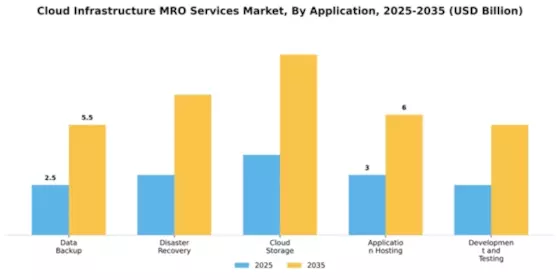
By Application: Data Backup (Largest) vs. Disaster Recovery (Fastest-Growing)
In the Cloud Infrastructure MRO Services Market, the application segment showcases a diverse range of services with varying market shares. Data Backup currently holds the largest share due to the rising demand for secure and reliable data management solutions, appealing to businesses of all sizes. On the other hand, Disaster Recovery is gaining momentum rapidly; organizations increasingly recognize its critical importance in maintaining business continuity, especially amid unpredictable circumstances such as cyber threats and natural disasters.
Data Backup (Dominant) vs. Disaster Recovery (Emerging)
Data Backup solutions are characterized by their reliability, scalability, and ease of integration with existing IT frameworks, making them the dominant force in the Cloud Infrastructure MRO Services Market. With a broad spectrum of backup options available, companies prioritize these services to ensure data integrity and security. Conversely, Disaster Recovery solutions are emerging rapidly, driven by evolving regulatory requirements and an expanding focus on risk management. As organizations seek to bolster their resilience against potential disruptions, Disaster Recovery increasingly adopts advanced technologies, propelling its growth and positioning it as a crucial component of comprehensive IT strategy.
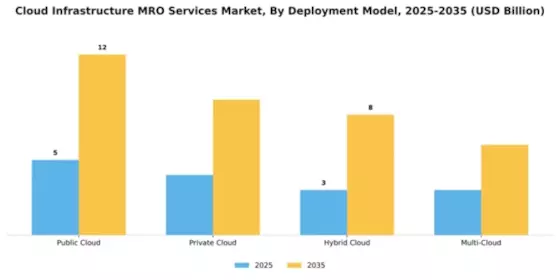
By Service Type: Infrastructure Management (Largest) vs. Security Management (Fastest-Growing)
In the Cloud Infrastructure MRO Services Market, the distribution of market share among various service types highlights Infrastructure Management as the largest segment, driven by its critical role in maintaining overall system performance and reliability. Following closely, Security Management has emerged as a vital area, gaining traction due to increasing cybersecurity threats and regulatory compliance needs. The other segments, including Network Management, Data Management, and Compliance Management, contribute to the diverse needs of businesses but play relatively smaller roles in terms of market share.
Infrastructure Management (Dominant) vs. Security Management (Emerging)
Infrastructure Management stands out as a dominant service type within the Cloud Infrastructure MRO Services Market, characterized by its essential functions in optimizing systems and ensuring seamless operations. Organizations prioritize infrastructure management to enhance performance and minimize downtime. Conversely, Security Management represents an emerging segment, marked by the rapid adoption of advanced security technologies and solutions, addressing the growing concerns over data breaches and cyber threats. This service type is witnessing robust growth as firms recognize the necessity of safeguarding their infrastructure against evolving security challenges. Together, these segments reflect the diverse needs businesses encounter as they navigate the complexities of modern cloud environments.
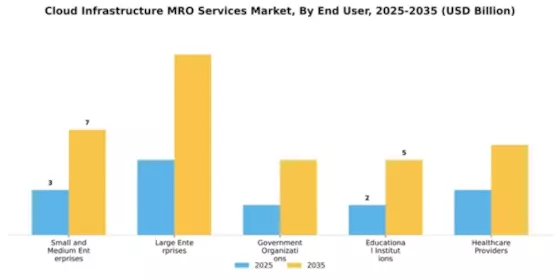
By End User: Large Enterprises (Largest) vs. Small and Medium Enterprises (Fastest-Growing)
In the Cloud Infrastructure MRO Services Market, the distribution of market share among various end users is delineated with large enterprises commanding a substantial share due to their extensive infrastructure needs and higher budgets for maintenance and optimization services. In contrast, small and medium enterprises are rapidly gaining traction, leveraging flexible cloud solutions that cater specifically to their unique operational requirements, effectively increasing their stake in the market.
End User Comparison: Large Enterprises (Dominant) vs. Small and Medium Enterprises (Emerging)
Large enterprises are characterized by their expansive infrastructure and complex operational requirements, making them the dominant users of Cloud Infrastructure MRO Services. They typically demand high-capacity solutions that can scale with their needs, while investing significantly in system optimization and maintenance. Conversely, small and medium enterprises represent the emerging segment within this market. They are increasingly adopting cloud solutions as a means to enhance operational efficiency and reduce costs. This segment values scalability and agility, often seeking MRO services that offer competitive pricing models and tailored support to align with their growth trajectories.
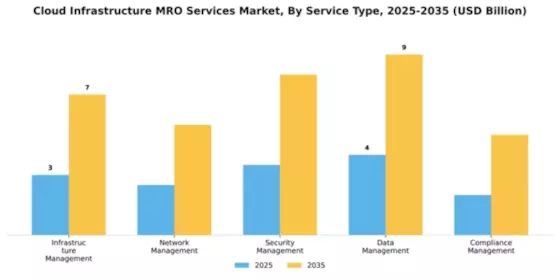
By Deployment Model: Public Cloud (Largest) vs. Hybrid Cloud (Fastest-Growing)
The Cloud Infrastructure MRO Services Market has shown a diverse distribution among its deployment models. The Public Cloud continues to dominate the market share, leveraging its scalability and cost-effectiveness. Businesses favor public cloud models for their ease of use and lower capital expenditure, making them accessible for a wide range of organizations. Meanwhile, the Hybrid Cloud model is rapidly gaining traction due to its flexibility, allowing organizations to manage sensitive data in private settings while taking advantage of public resources for less-critical workloads.
Growth trends in this segment are significantly influenced by the rising demand for cloud-based solutions among enterprises aiming for hybrid architectures. Factors such as increasing digital transformation efforts, the need for flexible resource allocation, and the growing emphasis on data security are driving enterprises toward hybrid models. Moreover, the complexity of managing mixed environments is pushing organizations to seek solutions that simplify their cloud strategies, contributing to the hybrid cloud's status as the fastest-growing segment.
Deployment Models: Public Cloud (Dominant) vs. Hybrid Cloud (Emerging)
The Public Cloud represents the dominant force in the Cloud Infrastructure MRO Services Market, known for its scalability, accessibility, and cost-effectiveness. By leveraging shared resources, public cloud services enable businesses to rapidly scale operations while minimizing upfront costs. In contrast, the Hybrid Cloud model is emerging as a significant player, combining the benefits of both public and private environments. This model allows organizations to improve compliance and security by keeping sensitive workloads on private servers while capitalizing on the flexibility and scalability of public clouds for less critical tasks. The growing trend of integrating both models caters to a diverse range of business needs, providing organizations with significant leverage in optimizing their IT strategies.
By Technology: Containerization (Largest) vs. Virtualization (Fastest-Growing)
The Cloud Infrastructure MRO Services Market is characterized by a diverse array of technologies, with Containerization holding the largest market share. This segment has rapidly gained traction among enterprises due to its ability to provide lightweight, efficient deployment and management of applications across various environments. Virtualization, though significant, is experiencing rising competition with emerging technologies, making it essential to understand the nuances between these advancements.
As cloud infrastructures evolve, growth trends are largely driven by the increasing need for flexibility, scalability, and resource optimization in IT operations. Real-time responsiveness to business needs, coupled with the demand for microservices architecture, is propelling Containerization as the go-to choice for organizations. Meanwhile, Virtualization continues to enhance its capabilities, but its growth rate is overshadowed by the dynamic rise of new technologies like Serverless Computing and Edge Computing that promise even greater agility and efficiency in service delivery.
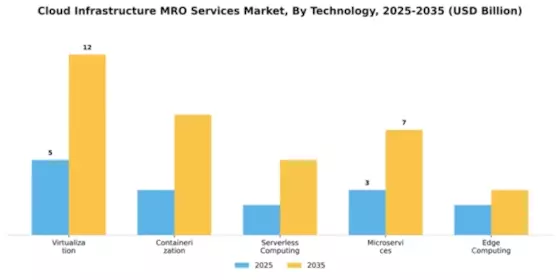
Technology: Containerization (Dominant) vs. Virtualization (Emerging)
Containerization has established itself as the dominant technology in the Cloud Infrastructure MRO Services Market, primarily due to its ability to facilitate rapid deployment and scaling of applications across various cloud environments. Its lightweight nature allows for efficient resource utilization, making it ideal for modern agile development practices. In contrast, Virtualization, while still relevant, is evolving to meet contemporary demands, incorporating features that offer enhanced optimization and management of virtual machines. As enterprises pursue digital transformation strategies, they increasingly look to integrate emerging technologies like microservices and serverless computing, positioning Virtualization as an emerging, albeit essential, player in this competitive landscape.
Get more detailed insights about Cloud Infrastructure MRO Services MarketRequest Free Sample
Key Players and Competitive Insights
The Cloud Infrastructure MRO Services Market is currently characterized by a dynamic competitive landscape, driven by rapid technological advancements and increasing demand for efficient maintenance, repair, and operations solutions. Key players such as Amazon Web Services (US), Microsoft Corporation (US), and Google Cloud (US) are at the forefront, leveraging their extensive resources to innovate and expand their service offerings. These companies are strategically positioned to capitalize on the growing trend of digital transformation, with a focus on enhancing operational efficiency and customer satisfaction. Their collective strategies, including partnerships and regional expansions, are shaping a competitive environment that is increasingly focused on delivering integrated solutions.In terms of business tactics, companies are increasingly localizing their operations to better serve regional markets, optimizing supply chains to enhance responsiveness and reduce costs. The market structure appears moderately fragmented, with several key players exerting significant influence. This fragmentation allows for a diverse range of service offerings, yet the presence of major players like IBM Corporation (US) and Oracle Corporation (US) suggests a competitive concentration that could lead to further consolidation in the future.
In November Amazon Web Services (US) announced a strategic partnership with a leading telecommunications provider to enhance its cloud infrastructure capabilities. This collaboration is expected to improve network reliability and expand service availability, thereby positioning AWS as a more formidable competitor in the MRO services space. The strategic importance of this partnership lies in its potential to enhance AWS's service delivery and customer engagement, ultimately driving growth in a competitive market.Similarly, in October 2025, Microsoft Corporation (US) unveiled a new suite of AI-driven tools aimed at optimizing cloud operations for MRO services. This initiative reflects Microsoft's commitment to integrating advanced technologies into its offerings, which may significantly enhance operational efficiencies for clients. The introduction of these tools is likely to strengthen Microsoft's competitive edge by providing clients with innovative solutions that address their evolving needs.
In September Google Cloud (US) expanded its global footprint by launching new data centers in emerging markets. This strategic move is indicative of Google Cloud's focus on regional expansion and its intent to capture a larger share of the MRO services market. By enhancing its infrastructure, Google Cloud is poised to offer improved service levels and responsiveness, which could attract new clients and retain existing ones.
As of December the competitive trends in the Cloud Infrastructure MRO Services Market are increasingly defined by digitalization, sustainability, and AI integration. Strategic alliances are becoming more prevalent, as companies recognize the value of collaboration in enhancing service offerings and operational capabilities. Looking ahead, competitive differentiation is likely to evolve from traditional price-based competition to a focus on innovation, technology integration, and supply chain reliability. This shift underscores the importance of adaptability and forward-thinking strategies in maintaining a competitive advantage in a rapidly changing market.

Key Companies in the Cloud Infrastructure MRO Services Market include
Future Outlook
Cloud Infrastructure MRO Services Market Future Outlook
The Cloud Infrastructure MRO Services Market is projected to grow at 8.01% CAGR from 2025 to 2035, driven by increasing demand for efficient maintenance and operational reliability.
New opportunities lie in:
Integration of AI-driven predictive maintenance tools
Expansion of remote monitoring and diagnostics services
Development of customized cloud-based MRO management platforms
By 2035, the market is expected to achieve substantial growth, reflecting evolving technological advancements and customer needs.
Market Segmentation
cloud-infrastructure-mro-services-market End User Outlook
Small and Medium Enterprises
Large Enterprises
Government Organizations
Educational Institutions
Healthcare Providers
cloud-infrastructure-mro-services-market Technology Outlook
Virtualization
Containerization
Serverless Computing
Microservices
Edge Computing
cloud-infrastructure-mro-services-market Application Outlook
Data Backup
Disaster Recovery
Cloud Storage
Application Hosting
Development and Testing
cloud-infrastructure-mro-services-market Service Type Outlook
Infrastructure Management
Network Management
Security Management
Data Management
Compliance Management
cloud-infrastructure-mro-services-market Deployment Model Outlook
Public Cloud
Private Cloud
Hybrid Cloud
Multi-Cloud
Report Scope
MARKET SIZE 2024
15.0(USD Billion)
MARKET SIZE 2025
16.2(USD Billion)
MARKET SIZE 2035
35.0(USD Billion)
COMPOUND ANNUAL GROWTH RATE (CAGR)
8.01% (2025 - 2035)
REPORT COVERAGE
Revenue Forecast, Competitive Landscape, Growth Factors, and Trends
BASE YEAR
2024
Market Forecast Period
2025 - 2035
Historical Data
2019 - 2024
Market Forecast Units
USD Billion
Key Companies Profiled
Amazon Web Services (US), Microsoft Corporation (US), Google Cloud (US), IBM Corporation (US), Oracle Corporation (US), Alibaba Cloud (CN), Salesforce.com (US), Rackspace Technology (US), DigitalOcean (US)
Segments Covered
Application, Service Type, End User, Deployment Model, Technology
Key Market Opportunities
Integration of artificial intelligence in Cloud Infrastructure MRO Services enhances operational efficiency and predictive maintenance.
Key Market Dynamics
Rising demand for efficient maintenance, repair, and operations services drives innovation in cloud infrastructure solutions.
Countries Covered
North America, Europe, APAC, South America, MEA
Table of Contents
1 SECTION I: EXECUTIVE SUMMARY AND KEY HIGHLIGHTS
1.1 EXECUTIVE SUMMARY
1.1.1 Market Overview
1.1.2 Key Findings
1.1.3 Market Segmentation
1.1.4 Competitive Landscape
1.1.5 Challenges and Opportunities
1.1.6 Future Outlook
2 SECTION II: SCOPING, METHODOLOGY AND MARKET STRUCTURE
2.1 MARKET INTRODUCTION
2.1.1 Definition
2.1.2 Scope of the study
2.1.2.1 Research Objective
2.1.2.2 Assumption
2.1.2.3 Limitations
2.2 RESEARCH METHODOLOGY
2.2.1 Overview
2.2.2 Data Mining
2.2.3 Secondary Research
2.2.4 Primary Research
2.2.4.1 Primary Interviews and Information Gathering Process
2.2.4.2 Breakdown of Primary Respondents
2.2.5 Forecasting Model
2.2.6 Market Size Estimation
2.2.6.1 Bottom-Up Approach
2.2.6.2 Top-Down Approach
2.2.7 Data Triangulation
2.2.8 Validation
3 SECTION III: QUALITATIVE ANALYSIS
3.1 MARKET DYNAMICS
3.1.1 Overview
3.1.2 Drivers
3.1.3 Restraints
3.1.4 Opportunities
3.2 MARKET FACTOR ANALYSIS
3.2.1 Value chain Analysis
3.2.2 Porter's Five Forces Analysis
3.2.2.1 Bargaining Power of Suppliers
3.2.2.2 Bargaining Power of Buyers
3.2.2.3 Threat of New Entrants
3.2.2.4 Threat of Substitutes
3.2.2.5 Intensity of Rivalry
3.2.3 COVID-19 Impact Analysis
3.2.3.1 Market Impact Analysis
3.2.3.2 Regional Impact
3.2.3.3 Opportunity and Threat Analysis
4 SECTION IV: QUANTITATIVE ANALYSIS
4.1 Industrial Automation & Equipment, BY Application (USD Billion)
4.1.1 Data Backup
4.1.2 Disaster Recovery
4.1.3 Cloud Storage
4.1.4 Application Hosting
4.1.5 Development and Testing
4.2 Industrial Automation & Equipment, BY Service Type (USD Billion)
4.2.1 Infrastructure Management
4.2.2 Network Management
4.2.3 Security Management
4.2.4 Data Management
4.2.5 Compliance Management
4.3 Industrial Automation & Equipment, BY End User (USD Billion)
4.3.1 Small and Medium Enterprises
4.3.2 Large Enterprises
4.3.3 Government Organizations
4.3.4 Educational Institutions
4.3.5 Healthcare Providers
4.4 Industrial Automation & Equipment, BY Deployment Model (USD Billion)
4.4.1 Public Cloud
4.4.2 Private Cloud
4.4.3 Hybrid Cloud
4.4.4 Multi-Cloud
4.5 Industrial Automation & Equipment, BY Technology (USD Billion)
4.5.1 Virtualization
4.5.2 Containerization
4.5.3 Serverless Computing
4.5.4 Microservices
4.5.5 Edge Computing
4.6 Industrial Automation & Equipment, BY Region (USD Billion)
4.6.1 North America
4.6.1.1 US
4.6.1.2 Canada
4.6.2 Europe
4.6.2.1 Germany
4.6.2.2 UK
4.6.2.3 France
4.6.2.4 Russia
4.6.2.5 Italy
4.6.2.6 Spain
4.6.2.7 Rest of Europe
4.6.3 APAC
4.6.3.1 China
4.6.3.2 India
4.6.3.3 Japan
4.6.3.4 South Korea
4.6.3.5 Malaysia
4.6.3.6 Thailand
4.6.3.7 Indonesia
4.6.3.8 Rest of APAC
4.6.4 South America
4.6.4.1 Brazil
4.6.4.2 Mexico
4.6.4.3 Argentina
4.6.4.4 Rest of South America
4.6.5 MEA
4.6.5.1 GCC Countries
4.6.5.2 South Africa
4.6.5.3 Rest of MEA
5 SECTION V: COMPETITIVE ANALYSIS
5.1 Competitive Landscape
5.1.1 Overview
5.1.2 Competitive Analysis
5.1.3 Market share Analysis
5.1.4 Major Growth Strategy in the Industrial Automation & Equipment
5.1.5 Competitive Benchmarking
5.1.6 Leading Players in Terms of Number of Developments in the Industrial Automation & Equipment
5.1.7 Key developments and growth strategies
5.1.7.1 New Product Launch/Service Deployment
5.1.7.2 Merger & Acquisitions
5.1.7.3 Joint Ventures
5.1.8 Major Players Financial Matrix
5.1.8.1 Sales and Operating Income
5.1.8.2 Major Players R&D Expenditure. 2023
5.2 Company Profiles
5.2.1 Amazon Web Services (US)
5.2.1.1 Financial Overview
5.2.1.2 Products Offered
5.2.1.3 Key Developments
5.2.1.4 SWOT Analysis
5.2.1.5 Key Strategies
5.2.2 Microsoft Corporation (US)
5.2.2.1 Financial Overview
5.2.2.2 Products Offered
5.2.2.3 Key Developments
5.2.2.4 SWOT Analysis
5.2.2.5 Key Strategies
5.2.3 Google Cloud (US)
5.2.3.1 Financial Overview
5.2.3.2 Products Offered
5.2.3.3 Key Developments
5.2.3.4 SWOT Analysis
5.2.3.5 Key Strategies
5.2.4 IBM Corporation (US)
5.2.4.1 Financial Overview
5.2.4.2 Products Offered
5.2.4.3 Key Developments
5.2.4.4 SWOT Analysis
5.2.4.5 Key Strategies
5.2.5 Oracle Corporation (US)
5.2.5.1 Financial Overview
5.2.5.2 Products Offered
5.2.5.3 Key Developments
5.2.5.4 SWOT Analysis
5.2.5.5 Key Strategies
5.2.6 Alibaba Cloud (CN)
5.2.6.1 Financial Overview
5.2.6.2 Products Offered
5.2.6.3 Key Developments
5.2.6.4 SWOT Analysis
5.2.6.5 Key Strategies
5.2.7 Salesforce.com (US)
5.2.7.1 Financial Overview
5.2.7.2 Products Offered
5.2.7.3 Key Developments
5.2.7.4 SWOT Analysis
5.2.7.5 Key Strategies
5.2.8 Rackspace Technology (US)
5.2.8.1 Financial Overview
5.2.8.2 Products Offered
5.2.8.3 Key Developments
5.2.8.4 SWOT Analysis
5.2.8.5 Key Strategies
5.2.9 DigitalOcean (US)
5.2.9.1 Financial Overview
5.2.9.2 Products Offered
5.2.9.3 Key Developments
5.2.9.4 SWOT Analysis
5.2.9.5 Key Strategies
5.3 Appendix
5.3.1 References
5.3.2 Related Reports
6 LIST OF FIGURES
6.1 MARKET SYNOPSIS
6.2 NORTH AMERICA MARKET ANALYSIS
6.3 US MARKET ANALYSIS BY APPLICATION
6.4 US MARKET ANALYSIS BY SERVICE TYPE
6.5 US MARKET ANALYSIS BY END USER
6.6 US MARKET ANALYSIS BY DEPLOYMENT MODEL
6.7 US MARKET ANALYSIS BY TECHNOLOGY
6.8 CANADA MARKET ANALYSIS BY APPLICATION
6.9 CANADA MARKET ANALYSIS BY SERVICE TYPE
6.10 CANADA MARKET ANALYSIS BY END USER
6.11 CANADA MARKET ANALYSIS BY DEPLOYMENT MODEL
6.12 CANADA MARKET ANALYSIS BY TECHNOLOGY
6.13 EUROPE MARKET ANALYSIS
6.14 GERMANY MARKET ANALYSIS BY APPLICATION
6.15 GERMANY MARKET ANALYSIS BY SERVICE TYPE
6.16 GERMANY MARKET ANALYSIS BY END USER
6.17 GERMANY MARKET ANALYSIS BY DEPLOYMENT MODEL
6.18 GERMANY MARKET ANALYSIS BY TECHNOLOGY
6.19 UK MARKET ANALYSIS BY APPLICATION
6.20 UK MARKET ANALYSIS BY SERVICE TYPE
6.21 UK MARKET ANALYSIS BY END USER
6.22 UK MARKET ANALYSIS BY DEPLOYMENT MODEL
6.23 UK MARKET ANALYSIS BY TECHNOLOGY
6.24 FRANCE MARKET ANALYSIS BY APPLICATION
6.25 FRANCE MARKET ANALYSIS BY SERVICE TYPE
6.26 FRANCE MARKET ANALYSIS BY END USER
6.27 FRANCE MARKET ANALYSIS BY DEPLOYMENT MODEL
6.28 FRANCE MARKET ANALYSIS BY TECHNOLOGY
6.29 RUSSIA MARKET ANALYSIS BY APPLICATION
6.30 RUSSIA MARKET ANALYSIS BY SERVICE TYPE
6.31 RUSSIA MARKET ANALYSIS BY END USER
6.32 RUSSIA MARKET ANALYSIS BY DEPLOYMENT MODEL
6.33 RUSSIA MARKET ANALYSIS BY TECHNOLOGY
6.34 ITALY MARKET ANALYSIS BY APPLICATION
6.35 ITALY MARKET ANALYSIS BY SERVICE TYPE
6.36 ITALY MARKET ANALYSIS BY END USER
6.37 ITALY MARKET ANALYSIS BY DEPLOYMENT MODEL
6.38 ITALY MARKET ANALYSIS BY TECHNOLOGY
6.39 SPAIN MARKET ANALYSIS BY APPLICATION
6.40 SPAIN MARKET ANALYSIS BY SERVICE TYPE
6.41 SPAIN MARKET ANALYSIS BY END USER
6.42 SPAIN MARKET ANALYSIS BY DEPLOYMENT MODEL
6.43 SPAIN MARKET ANALYSIS BY TECHNOLOGY
6.44 REST OF EUROPE MARKET ANALYSIS BY APPLICATION
6.45 REST OF EUROPE MARKET ANALYSIS BY SERVICE TYPE
6.46 REST OF EUROPE MARKET ANALYSIS BY END USER
6.47 REST OF EUROPE MARKET ANALYSIS BY DEPLOYMENT MODEL
6.48 REST OF EUROPE MARKET ANALYSIS BY TECHNOLOGY
6.49 APAC MARKET ANALYSIS
6.50 CHINA MARKET ANALYSIS BY APPLICATION
6.51 CHINA MARKET ANALYSIS BY SERVICE TYPE
6.52 CHINA MARKET ANALYSIS BY END USER
6.53 CHINA MARKET ANALYSIS BY DEPLOYMENT MODEL
6.54 CHINA MARKET ANALYSIS BY TECHNOLOGY
6.55 INDIA MARKET ANALYSIS BY APPLICATION
6.56 INDIA MARKET ANALYSIS BY SERVICE TYPE
6.57 INDIA MARKET ANALYSIS BY END USER
6.58 INDIA MARKET ANALYSIS BY DEPLOYMENT MODEL
6.59 INDIA MARKET ANALYSIS BY TECHNOLOGY
6.60 JAPAN MARKET ANALYSIS BY APPLICATION
6.61 JAPAN MARKET ANALYSIS BY SERVICE TYPE
6.62 JAPAN MARKET ANALYSIS BY END USER
6.63 JAPAN MARKET ANALYSIS BY DEPLOYMENT MODEL
6.64 JAPAN MARKET ANALYSIS BY TECHNOLOGY
6.65 SOUTH KOREA MARKET ANALYSIS BY APPLICATION
6.66 SOUTH KOREA MARKET ANALYSIS BY SERVICE TYPE
6.67 SOUTH KOREA MARKET ANALYSIS BY END USER
6.68 SOUTH KOREA MARKET ANALYSIS BY DEPLOYMENT MODEL
6.69 SOUTH KOREA MARKET ANALYSIS BY TECHNOLOGY
6.70 MALAYSIA MARKET ANALYSIS BY APPLICATION
6.71 MALAYSIA MARKET ANALYSIS BY SERVICE TYPE
6.72 MALAYSIA MARKET ANALYSIS BY END USER
6.73 MALAYSIA MARKET ANALYSIS BY DEPLOYMENT MODEL
6.74 MALAYSIA MARKET ANALYSIS BY TECHNOLOGY
6.75 THAILAND MARKET ANALYSIS BY APPLICATION
6.76 THAILAND MARKET ANALYSIS BY SERVICE TYPE
6.77 THAILAND MARKET ANALYSIS BY END USER
6.78 THAILAND MARKET ANALYSIS BY DEPLOYMENT MODEL
6.79 THAILAND MARKET ANALYSIS BY TECHNOLOGY
6.80 INDONESIA MARKET ANALYSIS BY APPLICATION
6.81 INDONESIA MARKET ANALYSIS BY SERVICE TYPE
6.82 INDONESIA MARKET ANALYSIS BY END USER
6.83 INDONESIA MARKET ANALYSIS BY DEPLOYMENT MODEL
6.84 INDONESIA MARKET ANALYSIS BY TECHNOLOGY
6.85 REST OF APAC MARKET ANALYSIS BY APPLICATION
6.86 REST OF APAC MARKET ANALYSIS BY SERVICE TYPE
6.87 REST OF APAC MARKET ANALYSIS BY END USER
6.88 REST OF APAC MARKET ANALYSIS BY DEPLOYMENT MODEL
6.89 REST OF APAC MARKET ANALYSIS BY TECHNOLOGY
6.90 SOUTH AMERICA MARKET ANALYSIS
6.91 BRAZIL MARKET ANALYSIS BY APPLICATION
6.92 BRAZIL MARKET ANALYSIS BY SERVICE TYPE
6.93 BRAZIL MARKET ANALYSIS BY END USER
6.94 BRAZIL MARKET ANALYSIS BY DEPLOYMENT MODEL
6.95 BRAZIL MARKET ANALYSIS BY TECHNOLOGY
6.96 MEXICO MARKET ANALYSIS BY APPLICATION
6.97 MEXICO MARKET ANALYSIS BY SERVICE TYPE
6.98 MEXICO MARKET ANALYSIS BY END USER
6.99 MEXICO MARKET ANALYSIS BY DEPLOYMENT MODEL
6.100 MEXICO MARKET ANALYSIS BY TECHNOLOGY
6.101 ARGENTINA MARKET ANALYSIS BY APPLICATION
6.102 ARGENTINA MARKET ANALYSIS BY SERVICE TYPE
6.103 ARGENTINA MARKET ANALYSIS BY END USER
6.104 ARGENTINA MARKET ANALYSIS BY DEPLOYMENT MODEL
6.105 ARGENTINA MARKET ANALYSIS BY TECHNOLOGY
6.106 REST OF SOUTH AMERICA MARKET ANALYSIS BY APPLICATION
6.107 REST OF SOUTH AMERICA MARKET ANALYSIS BY SERVICE TYPE
6.108 REST OF SOUTH AMERICA MARKET ANALYSIS BY END USER
6.109 REST OF SOUTH AMERICA MARKET ANALYSIS BY DEPLOYMENT MODEL
6.110 REST OF SOUTH AMERICA MARKET ANALYSIS BY TECHNOLOGY
6.111 MEA MARKET ANALYSIS
6.112 GCC COUNTRIES MARKET ANALYSIS BY APPLICATION
6.113 GCC COUNTRIES MARKET ANALYSIS BY SERVICE TYPE
6.114 GCC COUNTRIES MARKET ANALYSIS BY END USER
6.115 GCC COUNTRIES MARKET ANALYSIS BY DEPLOYMENT MODEL
6.116 GCC COUNTRIES MARKET ANALYSIS BY TECHNOLOGY
6.117 SOUTH AFRICA MARKET ANALYSIS BY APPLICATION
6.118 SOUTH AFRICA MARKET ANALYSIS BY SERVICE TYPE
6.119 SOUTH AFRICA MARKET ANALYSIS BY END USER
6.120 SOUTH AFRICA MARKET ANALYSIS BY DEPLOYMENT MODEL
6.121 SOUTH AFRICA MARKET ANALYSIS BY TECHNOLOGY
6.122 REST OF MEA MARKET ANALYSIS BY APPLICATION
6.123 REST OF MEA MARKET ANALYSIS BY SERVICE TYPE
6.124 REST OF MEA MARKET ANALYSIS BY END USER
6.125 REST OF MEA MARKET ANALYSIS BY DEPLOYMENT MODEL
6.126 REST OF MEA MARKET ANALYSIS BY TECHNOLOGY
6.127 KEY BUYING CRITERIA OF INDUSTRIAL AUTOMATION & EQUIPMENT
6.128 RESEARCH PROCESS OF MRFR
6.129 DRO ANALYSIS OF INDUSTRIAL AUTOMATION & EQUIPMENT
6.140 INDUSTRIAL AUTOMATION & EQUIPMENT, BY DEPLOYMENT MODEL, 2024 TO 2035 (USD Billion)
6.141 INDUSTRIAL AUTOMATION & EQUIPMENT, BY TECHNOLOGY, 2024 (% SHARE)
6.142 INDUSTRIAL AUTOMATION & EQUIPMENT, BY TECHNOLOGY, 2024 TO 2035 (USD Billion)
6.143 BENCHMARKING OF MAJOR COMPETITORS
7 LIST OF TABLES
7.1 LIST OF ASSUMPTIONS
7.1.1
7.2 North America MARKET SIZE ESTIMATES; FORECAST
7.2.1 BY APPLICATION, 2025-2035 (USD Billion)
7.2.2 BY SERVICE TYPE, 2025-2035 (USD Billion)
7.2.3 BY END USER, 2025-2035 (USD Billion)
7.2.4 BY DEPLOYMENT MODEL, 2025-2035 (USD Billion)
7.2.5 BY TECHNOLOGY, 2025-2035 (USD Billion)
7.3 US MARKET SIZE ESTIMATES; FORECAST
7.3.1 BY APPLICATION, 2025-2035 (USD Billion)
7.3.2 BY SERVICE TYPE, 2025-2035 (USD Billion)
7.3.3 BY END USER, 2025-2035 (USD Billion)
7.3.4 BY DEPLOYMENT MODEL, 2025-2035 (USD Billion)
7.3.5 BY TECHNOLOGY, 2025-2035 (USD Billion)
7.4 Canada MARKET SIZE ESTIMATES; FORECAST
7.4.1 BY APPLICATION, 2025-2035 (USD Billion)
7.4.2 BY SERVICE TYPE, 2025-2035 (USD Billion)
7.4.3 BY END USER, 2025-2035 (USD Billion)
7.4.4 BY DEPLOYMENT MODEL, 2025-2035 (USD Billion)
7.4.5 BY TECHNOLOGY, 2025-2035 (USD Billion)
7.5 Europe MARKET SIZE ESTIMATES; FORECAST
7.5.1 BY APPLICATION, 2025-2035 (USD Billion)
7.5.2 BY SERVICE TYPE, 2025-2035 (USD Billion)
7.5.3 BY END USER, 2025-2035 (USD Billion)
7.5.4 BY DEPLOYMENT MODEL, 2025-2035 (USD Billion)
7.5.5 BY TECHNOLOGY, 2025-2035 (USD Billion)
7.6 Germany MARKET SIZE ESTIMATES; FORECAST
7.6.1 BY APPLICATION, 2025-2035 (USD Billion)
7.6.2 BY SERVICE TYPE, 2025-2035 (USD Billion)
7.6.3 BY END USER, 2025-2035 (USD Billion)
7.6.4 BY DEPLOYMENT MODEL, 2025-2035 (USD Billion)
7.6.5 BY TECHNOLOGY, 2025-2035 (USD Billion)
7.7 UK MARKET SIZE ESTIMATES; FORECAST
7.7.1 BY APPLICATION, 2025-2035 (USD Billion)
7.7.2 BY SERVICE TYPE, 2025-2035 (USD Billion)
7.7.3 BY END USER, 2025-2035 (USD Billion)
7.7.4 BY DEPLOYMENT MODEL, 2025-2035 (USD Billion)
7.7.5 BY TECHNOLOGY, 2025-2035 (USD Billion)
7.8 France MARKET SIZE ESTIMATES; FORECAST
7.8.1 BY APPLICATION, 2025-2035 (USD Billion)
7.8.2 BY SERVICE TYPE, 2025-2035 (USD Billion)
7.8.3 BY END USER, 2025-2035 (USD Billion)
7.8.4 BY DEPLOYMENT MODEL, 2025-2035 (USD Billion)
7.8.5 BY TECHNOLOGY, 2025-2035 (USD Billion)
7.9 Russia MARKET SIZE ESTIMATES; FORECAST
7.9.1 BY APPLICATION, 2025-2035 (USD Billion)
7.9.2 BY SERVICE TYPE, 2025-2035 (USD Billion)
7.9.3 BY END USER, 2025-2035 (USD Billion)
7.9.4 BY DEPLOYMENT MODEL, 2025-2035 (USD Billion)
7.9.5 BY TECHNOLOGY, 2025-2035 (USD Billion)
7.10 Italy MARKET SIZE ESTIMATES; FORECAST
7.10.1 BY APPLICATION, 2025-2035 (USD Billion)
7.10.2 BY SERVICE TYPE, 2025-2035 (USD Billion)
7.10.3 BY END USER, 2025-2035 (USD Billion)
7.10.4 BY DEPLOYMENT MODEL, 2025-2035 (USD Billion)
7.10.5 BY TECHNOLOGY, 2025-2035 (USD Billion)
7.11 Spain MARKET SIZE ESTIMATES; FORECAST
7.11.1 BY APPLICATION, 2025-2035 (USD Billion)
7.11.2 BY SERVICE TYPE, 2025-2035 (USD Billion)
7.11.3 BY END USER, 2025-2035 (USD Billion)
7.11.4 BY DEPLOYMENT MODEL, 2025-2035 (USD Billion)
7.11.5 BY TECHNOLOGY, 2025-2035 (USD Billion)
7.12 Rest of Europe MARKET SIZE ESTIMATES; FORECAST
7.12.1 BY APPLICATION, 2025-2035 (USD Billion)
7.12.2 BY SERVICE TYPE, 2025-2035 (USD Billion)
7.12.3 BY END USER, 2025-2035 (USD Billion)
7.12.4 BY DEPLOYMENT MODEL, 2025-2035 (USD Billion)
7.12.5 BY TECHNOLOGY, 2025-2035 (USD Billion)
7.13 APAC MARKET SIZE ESTIMATES; FORECAST
7.13.1 BY APPLICATION, 2025-2035 (USD Billion)
7.13.2 BY SERVICE TYPE, 2025-2035 (USD Billion)
7.13.3 BY END USER, 2025-2035 (USD Billion)
7.13.4 BY DEPLOYMENT MODEL, 2025-2035 (USD Billion)
7.13.5 BY TECHNOLOGY, 2025-2035 (USD Billion)
7.14 China MARKET SIZE ESTIMATES; FORECAST
7.14.1 BY APPLICATION, 2025-2035 (USD Billion)
7.14.2 BY SERVICE TYPE, 2025-2035 (USD Billion)
7.14.3 BY END USER, 2025-2035 (USD Billion)
7.14.4 BY DEPLOYMENT MODEL, 2025-2035 (USD Billion)
7.14.5 BY TECHNOLOGY, 2025-2035 (USD Billion)
7.15 India MARKET SIZE ESTIMATES; FORECAST
7.15.1 BY APPLICATION, 2025-2035 (USD Billion)
7.15.2 BY SERVICE TYPE, 2025-2035 (USD Billion)
7.15.3 BY END USER, 2025-2035 (USD Billion)
7.15.4 BY DEPLOYMENT MODEL, 2025-2035 (USD Billion)
7.15.5 BY TECHNOLOGY, 2025-2035 (USD Billion)
7.16 Japan MARKET SIZE ESTIMATES; FORECAST
7.16.1 BY APPLICATION, 2025-2035 (USD Billion)
7.16.2 BY SERVICE TYPE, 2025-2035 (USD Billion)
7.16.3 BY END USER, 2025-2035 (USD Billion)
7.16.4 BY DEPLOYMENT MODEL, 2025-2035 (USD Billion)
7.16.5 BY TECHNOLOGY, 2025-2035 (USD Billion)
7.17 South Korea MARKET SIZE ESTIMATES; FORECAST
7.17.1 BY APPLICATION, 2025-2035 (USD Billion)
7.17.2 BY SERVICE TYPE, 2025-2035 (USD Billion)
7.17.3 BY END USER, 2025-2035 (USD Billion)
7.17.4 BY DEPLOYMENT MODEL, 2025-2035 (USD Billion)
7.17.5 BY TECHNOLOGY, 2025-2035 (USD Billion)
7.18 Malaysia MARKET SIZE ESTIMATES; FORECAST
7.18.1 BY APPLICATION, 2025-2035 (USD Billion)
7.18.2 BY SERVICE TYPE, 2025-2035 (USD Billion)
7.18.3 BY END USER, 2025-2035 (USD Billion)
7.18.4 BY DEPLOYMENT MODEL, 2025-2035 (USD Billion)
7.18.5 BY TECHNOLOGY, 2025-2035 (USD Billion)
7.19 Thailand MARKET SIZE ESTIMATES; FORECAST
7.19.1 BY APPLICATION, 2025-2035 (USD Billion)
7.19.2 BY SERVICE TYPE, 2025-2035 (USD Billion)
7.19.3 BY END USER, 2025-2035 (USD Billion)
7.19.4 BY DEPLOYMENT MODEL, 2025-2035 (USD Billion)
7.19.5 BY TECHNOLOGY, 2025-2035 (USD Billion)
7.20 Indonesia MARKET SIZE ESTIMATES; FORECAST
7.20.1 BY APPLICATION, 2025-2035 (USD Billion)
7.20.2 BY SERVICE TYPE, 2025-2035 (USD Billion)
7.20.3 BY END USER, 2025-2035 (USD Billion)
7.20.4 BY DEPLOYMENT MODEL, 2025-2035 (USD Billion)
7.20.5 BY TECHNOLOGY, 2025-2035 (USD Billion)
7.21 Rest of APAC MARKET SIZE ESTIMATES; FORECAST
7.21.1 BY APPLICATION, 2025-2035 (USD Billion)
7.21.2 BY SERVICE TYPE, 2025-2035 (USD Billion)
7.21.3 BY END USER, 2025-2035 (USD Billion)
7.21.4 BY DEPLOYMENT MODEL, 2025-2035 (USD Billion)
7.21.5 BY TECHNOLOGY, 2025-2035 (USD Billion)
7.22 South America MARKET SIZE ESTIMATES; FORECAST
7.22.1 BY APPLICATION, 2025-2035 (USD Billion)
7.22.2 BY SERVICE TYPE, 2025-2035 (USD Billion)
7.22.3 BY END USER, 2025-2035 (USD Billion)
7.22.4 BY DEPLOYMENT MODEL, 2025-2035 (USD Billion)
7.22.5 BY TECHNOLOGY, 2025-2035 (USD Billion)
7.23 Brazil MARKET SIZE ESTIMATES; FORECAST
7.23.1 BY APPLICATION, 2025-2035 (USD Billion)
7.23.2 BY SERVICE TYPE, 2025-2035 (USD Billion)
7.23.3 BY END USER, 2025-2035 (USD Billion)
7.23.4 BY DEPLOYMENT MODEL, 2025-2035 (USD Billion)
7.23.5 BY TECHNOLOGY, 2025-2035 (USD Billion)
7.24 Mexico MARKET SIZE ESTIMATES; FORECAST
7.24.1 BY APPLICATION, 2025-2035 (USD Billion)
7.24.2 BY SERVICE TYPE, 2025-2035 (USD Billion)
7.24.3 BY END USER, 2025-2035 (USD Billion)
7.24.4 BY DEPLOYMENT MODEL, 2025-2035 (USD Billion)
7.24.5 BY TECHNOLOGY, 2025-2035 (USD Billion)
7.25 Argentina MARKET SIZE ESTIMATES; FORECAST
7.25.1 BY APPLICATION, 2025-2035 (USD Billion)
7.25.2 BY SERVICE TYPE, 2025-2035 (USD Billion)
7.25.3 BY END USER, 2025-2035 (USD Billion)
7.25.4 BY DEPLOYMENT MODEL, 2025-2035 (USD Billion)
7.25.5 BY TECHNOLOGY, 2025-2035 (USD Billion)
7.26 Rest of South America MARKET SIZE ESTIMATES; FORECAST
7.26.1 BY APPLICATION, 2025-2035 (USD Billion)
7.26.2 BY SERVICE TYPE, 2025-2035 (USD Billion)
7.26.3 BY END USER, 2025-2035 (USD Billion)
7.26.4 BY DEPLOYMENT MODEL, 2025-2035 (USD Billion)
7.26.5 BY TECHNOLOGY, 2025-2035 (USD Billion)
7.27 MEA MARKET SIZE ESTIMATES; FORECAST
7.27.1 BY APPLICATION, 2025-2035 (USD Billion)
7.27.2 BY SERVICE TYPE, 2025-2035 (USD Billion)
7.27.3 BY END USER, 2025-2035 (USD Billion)
7.27.4 BY DEPLOYMENT MODEL, 2025-2035 (USD Billion)
7.27.5 BY TECHNOLOGY, 2025-2035 (USD Billion)
7.28 GCC Countries MARKET SIZE ESTIMATES; FORECAST
7.28.1 BY APPLICATION, 2025-2035 (USD Billion)
7.28.2 BY SERVICE TYPE, 2025-2035 (USD Billion)
7.28.3 BY END USER, 2025-2035 (USD Billion)
7.28.4 BY DEPLOYMENT MODEL, 2025-2035 (USD Billion)
7.28.5 BY TECHNOLOGY, 2025-2035 (USD Billion)
7.29 South Africa MARKET SIZE ESTIMATES; FORECAST
7.29.1 BY APPLICATION, 2025-2035 (USD Billion)
7.29.2 BY SERVICE TYPE, 2025-2035 (USD Billion)
7.29.3 BY END USER, 2025-2035 (USD Billion)
7.29.4 BY DEPLOYMENT MODEL, 2025-2035 (USD Billion)
7.29.5 BY TECHNOLOGY, 2025-2035 (USD Billion)
7.30 Rest of MEA MARKET SIZE ESTIMATES; FORECAST
7.30.1 BY APPLICATION, 2025-2035 (USD Billion)
7.30.2 BY SERVICE TYPE, 2025-2035 (USD Billion)
7.30.3 BY END USER, 2025-2035 (USD Billion)
7.30.4 BY DEPLOYMENT MODEL, 2025-2035 (USD Billion)
7.30.5 BY TECHNOLOGY, 2025-2035 (USD Billion)
7.31 PRODUCT LAUNCH/PRODUCT DEVELOPMENT/APPROVAL
7.31.1
7.32 ACQUISITION/PARTNERSHIP
7.32.1
FAQs
What is the projected market valuation of the Cloud Infrastructure MRO Services Market by 2035?
The projected market valuation for the Cloud Infrastructure MRO Services Market is expected to reach 35.0 USD Billion by 2035.
What was the market valuation of the Cloud Infrastructure MRO Services Market in 2024?
The overall market valuation of the Cloud Infrastructure MRO Services Market was 15.0 USD Billion in 2024.
What is the expected CAGR for the Cloud Infrastructure MRO Services Market during the forecast period 2025 - 2035?
The expected CAGR for the Cloud Infrastructure MRO Services Market during the forecast period 2025 - 2035 is 8.01%.
Which companies are considered key players in the Cloud Infrastructure MRO Services Market?
Key players in the Cloud Infrastructure MRO Services Market include Amazon Web Services, Microsoft Corporation, Google Cloud, IBM Corporation, and Oracle Corporation.
What are the projected valuations for the Data Backup segment by 2035?
The projected valuation for the Data Backup segment is expected to reach 5.5 USD Billion by 2035.
How does the projected valuation for Cloud Storage compare to other segments by 2035?
The projected valuation for Cloud Storage is anticipated to be 9.0 USD Billion by 2035, making it one of the higher-valued segments.
What is the expected valuation for Security Management by 2035?
The expected valuation for Security Management is projected to reach 8.0 USD Billion by 2035.
What is the anticipated market size for Large Enterprises in the Cloud Infrastructure MRO Services Market by 2035?
The anticipated market size for Large Enterprises is expected to reach 12.0 USD Billion by 2035.
What is the projected valuation for the Private Cloud segment by 2035?
The projected valuation for the Private Cloud segment is expected to reach 9.0 USD Billion by 2035.
What are the expected valuations for the Edge Computing technology segment by 2035?
The expected valuation for the Edge Computing technology segment is projected to reach 3.0 USD Billion by 2035.

Author
Author
Shubham Munde
Team Lead - Research
Shubham brings over 7 years of expertise in Market Intelligence and Strategic Consulting, with a strong focus on the Automotive, Aerospace, and Defense sectors. Backed by a solid foundation in semiconductors, electronics, and software, he has successfully delivered high-impact syndicated and custom research on a global scale. His core strengths include market sizing, forecasting, competitive intelligence, consumer insights, and supply chain mapping. Widely recognized for developing scalable growth strategies, Shubham empowers clients to navigate complex markets and achieve a lasting competitive edge. Trusted by start-ups and Fortune 500 companies alike, he consistently converts challenges into strategic opportunities that drive sustainable growth.
No country-specific reports available for this market.
Customer Stories
“This is really good guys. Excellent work on a tight deadline. I will continue to use you going forward and recommend you to others. Nice job”

Noah MalgeriCo-Founder
“Thanks. It’s been a pleasure working with you, please use me as reference with any other Intel employees.”
Joseph AguayoSales Operations & Pricing Manager
“Thanks for sending the report it gives us a good global view of the Betaïne market.”
Peter Groot koerkampAccount and Business Manager
“Thank you, this will be very helpful for OQS.”

La Terria DoddProgram Support Specialist
“We found the report very insightful! we found your research firm very helpful. I'm sending this email to secure our future business.”

Younghwan ChoiSenior Retail Manager
“I am very pleased with how market segments have been defined in a relevant way for my purposes (such as "Portable Freezers & refrigerators" and "last-mile").
In general the report is well structured. Thanks very much for your efforts.”

Mark IrwinManagement Consultant
“I have been reading the first document or the study, ,the Global HVAC and FP market report 2021 till 2026. Must say, good info! I have not gone in depth at all parts, but got a good indication of the data inside!”

Rob KooikerGroup Product Manager HVAC & Fire Protection GMA
“We got the report in time, we really thank you for your support in this process. I also thank to all of your team as they did a great job.”

Akif MorogluStrategy & Business Development Director
“The Automotive 48V ECU Components Procurement Intelligence Study” was a complex project, but the Market Research Future (MRFR) team handled it with quality, agility, and customer-centricity. They delivered all requested data on time and within the agreed scope. The team, including Shubhendra Anand and Rahul Gotadki, was always readily available to clarify questions and swiftly implement necessary adjustments, driving the project to a successful conclusion within a very demanding timeframe.
I would also like to specifically commend Akshay Agarwal for his responsiveness and support at every stage—from our initial inquiry on May 6th through to final delivery on June 18th. His dedication made the entire process seamless.”

Guilherme Gomes MartinsProduct Management Director