Download Free Sample
Kindly complete the form below to receive a free sample of this Report
Consumer Electronics and Home Appliances Market Size, Share, Industry Trend & Analysis Research Report: By Product Category (Televisions, Audio Devices, Home Appliances, Smart Devices), By Consumer Type (Residential, Commercial, Industrial), By Technology (Smart Technology, Energy Efficient, Traditional Technology), By End Use (Entertainment, Daily Living, Cooking, Cleaning) and By Regional (North America, Europe, South America, Asia Pacific, Middle East and Africa) - Forecast to 2035
As per Market Research Future analysis, the Consumer Electronics and Home Appliances Market was estimated at 1250.42 USD Billion in 2024. The Consumer Electronics and Home Appliances industry is projected to grow from 1283.33 USD Billion in 2025 to 1664.05 USD Billion by 2035, exhibiting a compound annual growth rate (CAGR) of 2.63% during the forecast period 2025 - 2035
The Consumer Electronics and Home Appliances Market is experiencing a transformative shift towards smart, sustainable, and personalized solutions.
| 2024 Market Size | 1250.42 (USD Billion) |
| 2035 Market Size | 1664.05 (USD Billion) |
| CAGR (2025 - 2035) | 2.63% |
Samsung Electronics (KR), LG Electronics (KR), Whirlpool Corporation (US), Sony Corporation (JP), Panasonic Corporation (JP), Bosch (DE), TCL Technology (CN), Haier Group (CN), Miele (DE)
Our Impact
Enabled $4.3B Revenue Impact for Fortune 500 and Leading Multinationals
Partnering with 2000+ Global Organizations Each Year
30K+ Citations by Top-Tier Firms in the Industry
The Consumer Electronics and Home Appliances Market is currently experiencing a dynamic transformation, driven by rapid technological advancements and evolving consumer preferences. Innovations in smart technology, such as the integration of artificial intelligence and the Internet of Things, are reshaping how consumers interact with their devices. This shift towards smart appliances not only enhances convenience but also promotes energy efficiency, aligning with the growing emphasis on sustainability. As consumers increasingly seek products that offer both functionality and eco-friendliness, manufacturers are compelled to adapt their offerings accordingly. Moreover, the market is witnessing a notable trend towards personalization and customization. Consumers are no longer satisfied with one-size-fits-all solutions; they desire products that cater to their unique lifestyles and preferences. This demand for tailored experiences is prompting companies to invest in research and development, aiming to create innovative solutions that resonate with individual needs. As the Consumer Electronics and Home Appliances Market continues to evolve, it appears poised for further growth, driven by these emerging trends and the ongoing quest for enhanced user experiences.
The integration of smart technology into home appliances is becoming increasingly prevalent. Consumers are gravitating towards devices that offer connectivity and automation, allowing for remote control and monitoring. This trend not only enhances convenience but also supports energy management, appealing to environmentally conscious buyers.
Sustainability is emerging as a critical factor influencing purchasing decisions. Consumers are actively seeking energy-efficient appliances that minimize environmental impact. Manufacturers are responding by developing products that utilize eco-friendly materials and technologies, thereby aligning with consumer values.
There is a growing demand for personalized consumer electronics and home appliances. Shoppers are looking for products that reflect their individual tastes and lifestyles. This trend is prompting brands to offer customizable options, enhancing customer satisfaction and loyalty.
The rise of e-commerce has significantly impacted the Consumer Electronics and Home Appliances Market. With more consumers opting to shop online, the convenience and accessibility of purchasing electronics and appliances have increased. Data suggests that online sales in this sector have surged, with e-commerce platforms accounting for a substantial portion of total sales. This shift not only allows consumers to compare products easily but also provides access to a wider range of options. Retailers are adapting by enhancing their online presence and offering exclusive online deals, which is likely to further stimulate growth in the Consumer Electronics and Home Appliances Market.
Consumer preferences are evolving, leading to increased demand for advanced consumer electronics and home appliances. The Consumer Electronics and Home Appliances Market is witnessing a shift towards products that offer enhanced functionality and energy efficiency. Recent surveys indicate that over 60% of consumers prioritize energy-efficient appliances, reflecting a growing awareness of sustainability. This heightened demand is further fueled by the rise of remote work and home entertainment, as consumers seek to enhance their living environments. As a result, manufacturers are focusing on developing innovative products that cater to these changing preferences, thereby driving growth in the Consumer Electronics and Home Appliances Market.
Sustainability initiatives are becoming a central theme in the Consumer Electronics and Home Appliances Market. As environmental concerns rise, consumers are increasingly seeking products that are eco-friendly and energy-efficient. Manufacturers are responding by developing appliances that minimize energy consumption and utilize sustainable materials. Recent statistics show that energy-efficient appliances can reduce energy usage by up to 30%, appealing to environmentally conscious consumers. This shift towards sustainability not only meets consumer demand but also aligns with regulatory pressures for greener products, thereby driving growth in the Consumer Electronics and Home Appliances Market.
The Consumer Electronics and Home Appliances Market is currently experiencing rapid technological advancements that are reshaping product offerings. Innovations such as artificial intelligence, machine learning, and the Internet of Things are becoming increasingly integrated into consumer electronics and home appliances. For instance, smart refrigerators now offer features like inventory management and recipe suggestions, enhancing user convenience. According to recent data, the market for smart home devices is projected to grow at a compound annual growth rate of over 25% in the coming years. This trend indicates a strong consumer preference for technologically advanced products, which is likely to drive growth in the Consumer Electronics and Home Appliances Market.
The Consumer Electronics and Home Appliances Market is increasingly aligning with the growing focus on health and wellness. Consumers are becoming more health-conscious, leading to a demand for appliances that promote healthier lifestyles. Products such as air purifiers, water filtration systems, and smart kitchen appliances that facilitate healthy cooking are gaining traction. Industry expert's indicates that the health and wellness segment is expected to grow significantly, as consumers prioritize products that contribute to their well-being. This trend is likely to drive innovation and product development within the Consumer Electronics and Home Appliances Market.
In the Consumer Electronics and Home Appliances Market, the Product Category segment showcases a diverse distribution with televisions leading in market share. Televisions continue to be a preferred choice for consumers, contributing significantly to the overall revenue in the market. Following behind, audio devices and home appliances maintain steady shares, while smart devices are rapidly gaining traction amongst tech-savvy consumers. This shift indicates a trend towards increased integration and connectivity in the product offerings, emphasizing consumer demand for multifunctional devices. The growth of the segment is propelled by several factors, primarily the rise in disposable incomes and changing lifestyles. The increasing interest in smart home technology is particularly driving the rapid growth of smart devices, as they offer convenience and efficiency. Furthermore, the proliferation of streaming services and enhanced viewing experiences have fueled the demand for televisions, solidifying their position as the largest segment in the market.
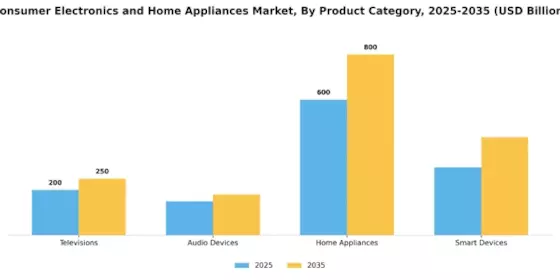
Televisions (Dominant) vs. Smart Devices (Emerging)
Televisions have established themselves as a dominant force within the Consumer Electronics and Home Appliances Market, characterized by advancements in display technology and a broad range of features that cater to various consumer preferences. From high-definition capabilities to smart functionality, televisions have evolved, ensuring consistent consumer engagement. Meanwhile, smart devices, identified as the emerging segment, are rapidly capturing market attention through their innovative applications and interoperability with other technologies. These devices reflect consumer trends favoring seamless integration into everyday life, offering enhanced convenience and efficiency. With a robust future outlook, smart devices are on a trajectory for significant growth, driven by technological advancements and the increasing demand for connected solutions.
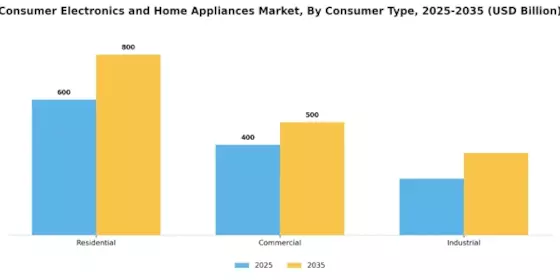
In the Consumer Electronics and Home Appliances Market, the Residential segment continues to dominate, catering to a vast array of consumer needs from smart appliances to entertainment technologies. Trends indicate that this segment holds the largest market share due to increased disposable income and a growing preference for technology-integrated homes. On the other hand, the Commercial segment is rapidly gaining traction, fueled by the surge in demand for advanced technology in various workplaces, extending from offices to restaurants. As companies invest in modernization to enhance productivity, the Commercial segment is experiencing notable growth rates.
Residential: Dominant vs. Commercial: Emerging
The Residential segment remains the backbone of the Consumer Electronics and Home Appliances Market, characterized by a diverse range of products that include refrigeration, cooking appliances, and personal electronics. This segment thrives on consumer preferences for innovative features and energy efficiency, attracting a broad demographic. Conversely, the Commercial segment is emerging with a focus on specialized appliances and technologies designed for business use. This segment is marked by rapid advancements, as businesses seek efficiency and integration, driving demand for smart systems that cater to specific operational needs. As both segments evolve, the interplay between consumer innovation and commercial utility continues to shape market dynamics.
In the Consumer Electronics and Home Appliances Market, Smart Technology holds the largest market share, reflecting a significant consumer shift towards integrated, connected devices that enhance convenience and user experience. Following closely, Energy Efficient technologies are gaining substantial traction, driven by increasing consumer awareness and regulatory pressures focused on sustainability. Traditional Technology continues to play a vital role, especially among consumers valuing reliability and simplicity over advanced features, though its share may be declining as preferences evolve.
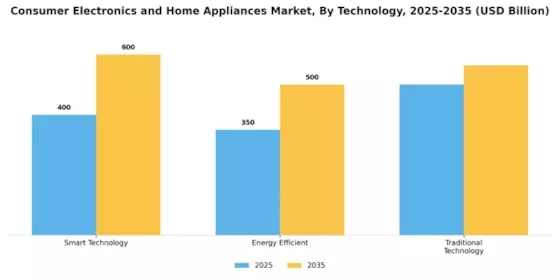
Technology: Smart Technology (Dominant) vs. Energy Efficient (Emerging)
Smart Technology is characterized by its ability to connect to the internet, offering functionality through features such as automation and remote control. This segment appeals to tech-savvy consumers looking for innovative solutions that integrate seamlessly into their daily lives. In contrast, Energy Efficient technology is emerging rapidly due to rising energy costs and environmental considerations, capturing consumer interest in products that reduce energy consumption without compromising performance. While Smart Technology remains dominant, the growth of Energy Efficient appliances signifies a shift towards a more conscious consumer base that prioritizes sustainability.
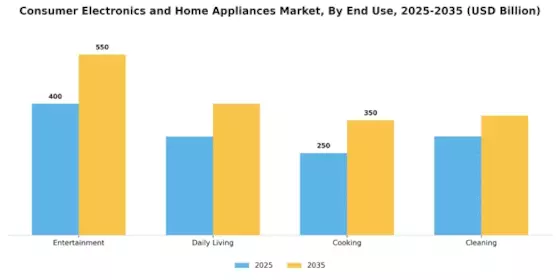
The Consumer Electronics and Home Appliances Market shows significant diversity in its 'End Use' segment, with Entertainment holding the largest share. This segment encompasses a broad range of products such as televisions, audio devices, and gaming consoles that cater to the consumer's desire for immersive experiences. Daily Living follows closely, characterized by essential appliances designed to improve convenience in daily tasks, indicating a strong consumer preference for smart home technologies.
As the market evolves, emerging trends indicate that the Daily Living segment is poised for rapid growth, driven by increasing consumer interest in automation and energy-efficient solutions. The integration of smart technology into everyday appliances is making them more attractive for consumers seeking convenience and sustainability. As lifestyles change, the demand for innovative solutions in Daily Living continues to expand, fostering growth opportunities in this segment.
Entertainment: TVs (Dominant) vs. Cleaning: Robotic Vacuums (Emerging)
In the realm of Consumer Electronics, the Entertainment segment, particularly televisions, remains dominant due to their central role in modern home life. Products such as 4K and OLED TVs offer enhanced viewing experiences, catering to the ever-growing demand for high-quality content consumption. In contrast, robotic vacuums within the Cleaning segment represent an emerging trend that is reshaping household chores. Gaining popularity for their convenience, these devices appeal to time-pressed consumers seeking efficient cleaning solutions. The technological advancements in AI and robotics bolster their appeal, ensuring they attract a substantial market share as smart home adoption rises. As a result, while TVs dominate the market, robotic vacuums are quickly carving out a significant niche.
Get more detailed insights about Consumer Electronics Home Appliances Market Request Free Sample
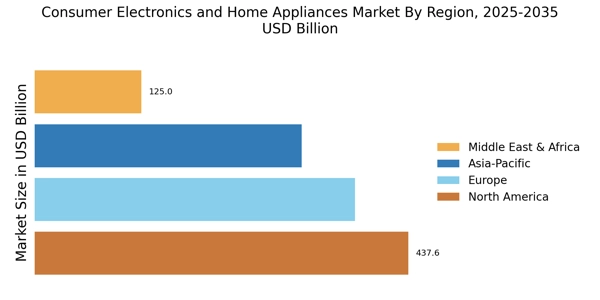
In 2023, the Consumer Electronics and Home Appliances Market revenue reached 1187.08 USD Billion, showcasing substantial growth across various regions. North America emerged as a dominant force with a valuation of 450.0 USD Billion, accounting for a majority holding within the overall market, attributed to advanced technology adoption and strong consumer spending. Europe followed, with a significant market value of 320.0 USD Billion, driven by rising demand for smart home devices amid increasing awareness about energy efficiency.
The APAC region recorded a valuation of 300.0 USD Billion, supported by a burgeoning middle class and escalating urbanization rates, making it a critical area for future growth.South America and MEA, with valuations of 60.0 USD Billion and 57.08 USD Billion, respectively, represent niche markets with potential but currently contribute the least to the overall market. The Consumer Electronics and Home Appliances Market statistics reflect these regional dynamics, emphasizing growth drivers such as technological advancements and consumer preferences. Despite challenges like supply chain disruptions, opportunities persist in addressing consumer demands for innovative and energy-efficient products across all regions.
The Consumer Electronics and Home Appliances Market is characterized by rapid technological advancements, evolving consumer preferences, and increasing competition among established and emerging players. Companies are focusing on innovation and sustainability to attract environmentally conscious consumers, which has led to the development of energy-efficient and smart products. The integration of the Internet of Things (IoT) and artificial intelligence in home appliances is becoming prevalent, driving the demand for interconnected devices that enhance convenience and functionality. Additionally, effective marketing strategies and brand loyalty play a crucial role in consumer decision-making, further intensifying competition within the market. As e-commerce continues to grow, businesses are adapting their distribution channels to meet the changing shopping behaviors of consumers, making it essential for companies to stay agile and responsive to market trends.Haier has established a strong presence in the Consumer Electronics and Home Appliances Market, primarily due to its extensive range of innovative products that cater to diverse consumer needs. The company focuses on high-quality manufacturing and research and development to ensure that its offerings incorporate the latest technology and design trends. Haier's commitment to sustainability is reflected in its energy-efficient appliances and environmentally friendly practices, which resonate well with a growing base of eco-conscious consumers. Furthermore, Haier's robust supply chain management and global distribution network allow it to effectively penetrate various international markets, amplifying its competitive advantage. The company's emphasis on intelligent manufacturing and digital transformation is likely to further enhance its market position as consumers increasingly seek connected and smart home solutions.Panasonic holds a significant position in the Consumer Electronics and Home Appliances Market, fortifying its presence with a diversified product portfolio that includes home entertainment systems, kitchen appliances, and energy solutions. The brand is well-known for its commitment to quality and innovation, consistently delivering products that feature advanced technologies, such as energy efficiency and user-friendly interfaces. Panasonic's focus on sustainability and corporate responsibility is evident in its development of eco-friendly appliances, making it a reliable choice for consumers concerned about their environmental impact. The company's extensive research and development capabilities enable it to stay ahead of market trends, ensuring that its products meet evolving consumer demands. Additionally, Panasonic's strong global brand recognition and customer service support further enhance its competitive positioning within the marketplace, allowing it to maintain a loyal customer base whilst exploring new opportunities for growth.

In the Consumer Electronics and Home Appliances Market, recent developments have showcased significant growth and innovations. Companies like Samsung Electronics and LG Electronics are advancing their smart home technologies, focusing on energy-efficient appliances that integrate with IoT, resonating with consumers' sustainability goals. Panasonic continues to expand its offerings in the kitchen appliance segment, particularly emphasizing health-oriented products. The surge in demand for home entertainment solutions has seen TCL and Sony enhancing their TV technologies with 8K resolution capabilities.
Notable mergers and acquisitions have been shaping the landscape as well, with Haier reportedly acquiring several smaller appliance brands to strengthen its market position. Meanwhile, Midea Group has been engaging in strategic partnerships to enhance its smart appliance portfolio. In terms of market valuation, companies like Apple and Microsoft have continuously innovated around personal electronics, significantly impacting consumer preferences. Recognition of high-quality products is leading to increased consolidation within the sector as companies strive to enhance operational efficiency and broaden their market reach, therefore influencing competitive dynamics across the market segments.
The Consumer Electronics and Home Appliances Market is projected to grow at 2.63% CAGR from 2025 to 2035, driven by technological advancements, sustainability trends, and increasing consumer demand.
New opportunities lie in:
By 2035, the market is expected to be robust, reflecting evolving consumer preferences and technological innovations.
| MARKET SIZE 2024 | 1250.42(USD Billion) |
| MARKET SIZE 2025 | 1283.33(USD Billion) |
| MARKET SIZE 2035 | 1664.05(USD Billion) |
| COMPOUND ANNUAL GROWTH RATE (CAGR) | 2.63% (2025 - 2035) |
| REPORT COVERAGE | Revenue Forecast, Competitive Landscape, Growth Factors, and Trends |
| BASE YEAR | 2024 |
| Market Forecast Period | 2025 - 2035 |
| Historical Data | 2019 - 2024 |
| Market Forecast Units | USD Billion |
| Key Companies Profiled | Samsung Electronics (KR), LG Electronics (KR), Whirlpool Corporation (US), Sony Corporation (JP), Panasonic Corporation (JP), Bosch (DE), TCL Technology (CN), Haier Group (CN), Miele (DE) |
| Segments Covered | Product Category, Consumer Type, Technology, End Use, Regional |
| Key Market Opportunities | Integration of smart home technology enhances consumer engagement in the Consumer Electronics and Home Appliances Market. |
| Key Market Dynamics | Technological advancements drive innovation in consumer electronics and home appliances, reshaping consumer preferences and market competition. |
| Countries Covered | North America, Europe, APAC, South America, MEA |
The market valuation reached 1250.42 USD Billion in 2024.
The market is expected to grow to 1664.05 USD Billion by 2035.
The anticipated CAGR during the forecast period is 2.63%.
Home Appliances, valued at 600.0 to 800.0 USD Billion, appears to dominate the market.
Smart Devices are projected to generate revenues between 300.42 and 434.05 USD Billion.
The market segments into Residential, Commercial, and Industrial consumers, with Residential leading at 600.25 to 800.0 USD Billion.
Key players include Samsung Electronics, LG Electronics, Whirlpool Corporation, and Sony Corporation.
Energy Efficient technology is projected to generate revenues between 350.0 and 500.0 USD Billion.
The Entertainment segment is anticipated to grow, with revenues projected between 400.0 and 550.0 USD Billion.
Traditional Technology is expected to generate revenues between 500.42 and 564.05 USD Billion, while Smart Technology is projected at 400.0 to 600.0 USD Billion.



Kindly complete the form below to receive a free sample of this Report

“This is really good guys. Excellent work on a tight deadline. I will continue to use you going forward and recommend you to others. Nice job”


“Thanks. It’s been a pleasure working with you, please use me as reference with any other Intel employees.”


“Thanks for sending the report it gives us a good global view of the Betaïne market.”


“Thank you, this will be very helpful for OQS.”


“We found the report very insightful! we found your research firm very helpful. I'm sending this email to secure our future business.”


“I am very pleased with how market segments have been defined in a relevant way for my purposes (such as "Portable Freezers & refrigerators" and "last-mile"). In general the report is well structured. Thanks very much for your efforts.”


“I have been reading the first document or the study, ,the Global HVAC and FP market report 2021 till 2026. Must say, good info! I have not gone in depth at all parts, but got a good indication of the data inside!”


“We got the report in time, we really thank you for your support in this process. I also thank to all of your team as they did a great job.”


“The Automotive 48V ECU Components Procurement Intelligence Study” was a complex project, but the Market Research Future (MRFR) team handled it with quality, agility, and customer-centricity. They delivered all requested data on time and within the agreed scope. The team, including Shubhendra Anand and Rahul Gotadki, was always readily available to clarify questions and swiftly implement necessary adjustments, driving the project to a successful conclusion within a very demanding timeframe.
I would also like to specifically commend Akshay Agarwal for his responsiveness and support at every stage—from our initial inquiry on May 6th through to final delivery on June 18th. His dedication made the entire process seamless.”



