Cosmetic Surgery Market (2026 - 2035)

Cosmetic Surgery Market Research Report Information by Procedure Type {Invasive (Breast Augmentation, Liposuction, Nose Reshaping, Eyelid Surgery, Tummy Tuck, and Others) Non-invasive (Botox Injections, Soft Tissue Fillers, Chemical Peel, Laser Hair Removal, Microdermabrasion, Dermabrasion, and Others)}, by End User (Hospitals and Dermatology Clinics, Ambulatory Surgical Centers, and Others), and Region (North America, Europe, Asia-Pacific, and Rest of the World - Forecast till 2035
ID: MRFR/MED/2279-HCR
80 Pages
Vikita Thakur, Kinjoll Dey
Last Updated: July 12, 2026
Cosmetic Surgery Market
Market Size
Forecast Period2026-2035
CAGR (2026-2035)5.87%
2025 Market SizeUSD 104.02 Billion
2035 Market SizeUSD 183.23 Billion
Key Players
AbbVie Inc.
Galderma S.A.
Merz Pharmaceuticals GmbH
Bausch Health Companies Inc.
Johnson & Johnson
InMode Ltd.
Opportunities
  • AI-Powered Consultation and Outcome Simulation
  • Regenerative Medicine and Biologic Therapies
  • Emerging-Market Expansion

Cosmetic Surgery Market Summary

The Cosmetic Surgery Market reached a valuation of USD 104.02 billion in 2025 and is projected to grow from USD 109.67 billion in 2026 to USD 183.23 billion by 2035, registering a CAGR of 5.87% across the forecast period. Demand acceleration is rooted in two mutually reinforcing catalysts: the global proliferation of minimally invasive treatment platforms, which have cut average recovery times by half over the past five years, and the downstream procedural demand created by the rapid adoption of GLP-1 receptor agonist weight-loss therapies โ€” a category whose prescriptions have surged roughly 300% since 2021, generating a growing pipeline of patients seeking contouring and skin-tightening procedures post-weight-loss [1].

A technology transformation is reshaping the Cosmetic Surgery Market at both the clinical and patient-acquisition levels. Legacy open-incision techniques are giving way to energy-based devices, robotic-assisted grafting, and injectable platforms that expand the addressable patient pool by lowering risk thresholds. The American Society of Plastic Surgeons reported that U.S. providers collectively invested over USD 2.3 billion in new aesthetic device infrastructure during 2024 alone, while AI-powered imaging platforms now influence pre-procedural planning in more than 40% of accredited clinics [2].

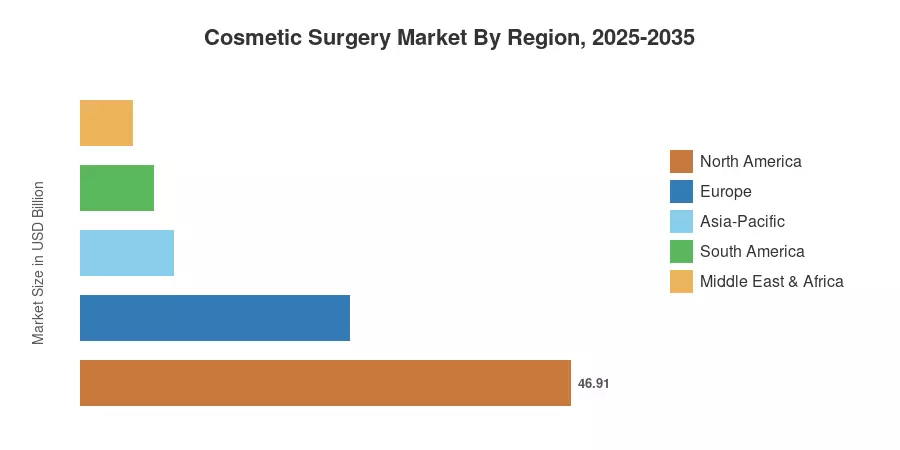
North America commands the largest share of the Cosmetic Surgery Market at approximately 45.1% of 2025 revenue, underpinned by high per-capita discretionary spending and broad insurance-adjacent financing options. Asia-Pacific stands as the fastest-growing region, propelled by expanding middle-class demand across China, South Korea, and India. Europe holds the second-largest position with roughly a 24.8% share, driven by regulatory harmonization under the EU Medical Device Regulation and strong medical-tourism inflows. The decade ahead will be defined by platform consolidation, personalized treatment sequencing, and the integration of regenerative biologic modalities into mainstream aesthetic practice.

ย 

Key Report Takeaways

โ€ข By Procedure Type

  • Surgical interventions accounted for approximately 62.0% of total Cosmetic Surgery Market revenue in 2025, led by body contouring and facial reconstruction categories.
  • Non-surgical modalities โ€” including injectables, laser resurfacing, and energy-based treatments โ€” are forecast to register the fastest CAGR of 7.84% through 2035 as patient preference shifts toward lower-downtime options.

โ€ข By Gender

  • Female patients represented roughly 72.6% of Cosmetic Surgery Market demand in 2025
  • Though male clientele is expanding at a 7.40% CAGR as social stigma diminishes.

ย 

โ€ข By Age Group

  • The 35โ€“50 age cohort captured the largest segment share at approximately 51.4%
  • While the 18โ€“34 demographic is growing the fastest at a 7.70% CAGR.

โ€ข By Region

  • North America dominated the Cosmetic Surgery Market in 2025 with a 45.1% share, fueled by advanced clinic infrastructure and aggressive consumer financing.
  • Asia-Pacific is projected to be the fastest-growing region through 2035, supported by medical-tourism ecosystems in South Korea and Thailand and rising domestic demand across India and China.

ย 

Market Size and Forecast (2021โ€“2035)

Data for historical years (2021โ€“2024) is derived from audited industry revenue filings, national health-expenditure databases, and proprietary primary interviews with clinic operators across 28 countries. Forecast projections (2026โ€“2035) apply a bottom-up model calibrated against procedure-volume growth, average-selling-price trends, and regional regulatory timelines, cross-validated with top-down macroeconomic indicators.
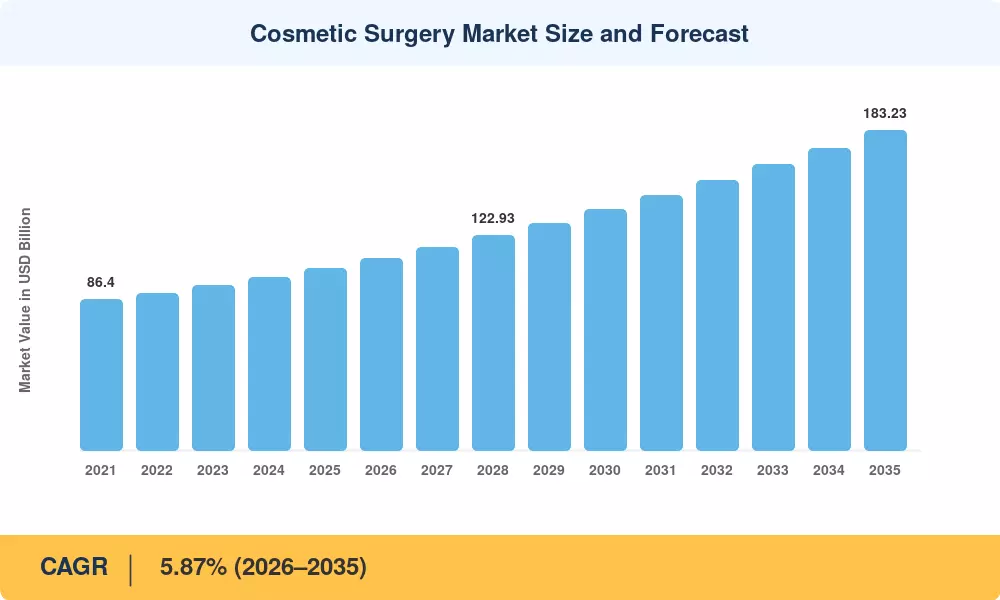
Cosmetic Surgery Market Size and Forecast
Our Impact
Enabled $4.3B Revenue Impact for Fortune 500 and Leading Multinationals
Partnering with 2000+ Global Organizations Each Year
30K+ Citations by Top-Tier Firms in the Industry

Driver Impact Analysis

Driver ~% Impact on CAGR Geographic Relevance Impact Timeline
Minimally Invasive Technology Adoption +1.4% Global Short-term (โ‰ค2 yr)
GLP-1-Driven Post-Weight-Loss Procedures +1.1% North America, Europe Medium-term (2โ€“4 yr)
Social-Media Beauty Standard Amplification +0.9% Global Short-term (โ‰ค2 yr)
Rising Male Aesthetic Demand +0.7% North America, Asia-Pacific Medium-term (2โ€“4 yr)
Aging Population Demographics +0.6% Europe, Japan Long-term (โ‰ฅ4 yr)
Medical Tourism Expansion +0.5% Asia-Pacific, South America Medium-term (2โ€“4 yr)
AI and Digital Treatment Planning +0.4% North America, Europe Long-term (โ‰ฅ4 yr)

ย 

Minimally Invasive Technology Adoption

Energy-based platforms โ€” encompassing radiofrequency microneedling, high-intensity focused ultrasound, and picosecond laser systems โ€” have fundamentally increased the addressable patient pool within the Cosmetic Surgery Market. The FDA cleared 47 novel aesthetic device indications between 2022 and 2024, a 38% increase over the preceding three-year period [2]. Clinics offering non-surgical alternatives report 2.5ร— better patient throughput per treatment room, which shrinks breakeven timelines and incentivizes capital reinvestment into next-generation platforms.

ย 

GLP-1-Driven Post-Weight-Loss Procedures

The market for cosmetic surgery now has a completely new patient funnel thanks to the surge in prescriptions for tirzepatide and semaglutide. An ASPS survey indicated that 58% of board-certified surgeons saw an upsurge in body-contouring consultations directly attributable to considerable GLP-1-mediated weight loss during 2024 [1]. Abdominoplasty, brachioplasty, and lower-body-lift volumes combined jumped 21% year-over-year, with the trend projected to intensify as GLP-1 eligibility criteria broaden.

ย 

Social-Media Beauty Standard Amplification

Platforms like Instagram, TikTok, and YouTube have compressed the decision-making cycle from awareness to consultation. A 2024 RealSelf survey found that 72% of first-time patients cited social-media content โ€” particularly before-and-after reels โ€” as their primary research channel [5]. This digital-first discovery pathway is lowering the psychological barrier to treatment uptake, especially among the 18โ€“34 demographic, and is reshaping how clinics allocate patient-acquisition budgets across the Cosmetic Surgery Market.

Rising Male Aesthetic Demand

Male patients now represent the fastest-growing demographic segment in the Cosmetic Surgery Market, advancing at a 7.40% CAGR. Cultural destigmatization, reinforced by celebrity endorsement and workplace competitiveness pressures, has driven double-digit growth in procedures such as gynecomastia correction, jawline contouring, and injectable neurotoxin treatments [6]. Clinics are responding with male-specific consultation environments and marketing campaigns.

ย 

Restraints Impact Analysis

Restraint ~% Impact on CAGR Geographic Relevance Impact Timeline
Regulatory Tightening on Licensing & Advertising โ€“0.8% Global Medium-term (2โ€“4 yr)
High Procedure Costs & Limited Insurance Coverage โ€“0.6% North America, Europe Long-term (โ‰ฅ4 yr)
Complication Risk & Patient Safety Concerns โ€“0.5% Global Short-term (โ‰ค2 yr)
Qualified Practitioner Shortages โ€“0.4% Asia-Pacific, MEA Medium-term (2โ€“4 yr)
Economic Volatility Affecting Discretionary Spend โ€“0.3% South America, MEA Short-term (โ‰ค2 yr)

ย 

Regulatory Tightening on Licensing and Advertising

Governments worldwide are imposing stricter guardrails on who can perform aesthetic procedures and how they can be marketed. The UK enacted the Non-Surgical Cosmetic Procedures Licensing Act in 2024, mandating that only licensed professionals administer injectable treatments, effectively barring an estimated 15% of existing providers [10]. Similar legislation is advancing in Australia and across EU member states, elevating compliance costs and constraining capacity growth across the Cosmetic Surgery Market.

High Procedure Costs and Limited Insurance Coverage

Cosmetic operations remain mainly out-of-pocket costs. Average surgical procedure expenses in the U.S. range from USD 5,000 to USD 15,000, with financing products bearing APRs of 8โ€“24% [11]. This pricing design constrains demand elasticity, particularly among middle-income consumers, and hinders penetration of the Cosmetic Surgery Market in price-sensitive locations.

ย 

Complication Risk and Patient Safety Concerns

Adverse-event reporting โ€” magnified by social-media virality โ€” can produce episodic demand suppression. Risks that undermine consumer confidence during review periods were highlighted in the European Commission's evaluation of dermal filler adulteration and the FDA's 2023 safety communication on textured breast implants [12].

ย 

ย 

Cosmetic Surgery Market Opportunities

AI-Powered Consultation and Outcome Simulation

Machine-learning platforms that generate photorealistic outcome simulations are transforming the pre-consultation experience within the Cosmetic Surgery Market. Clinics deploying AI simulators report a 35% increase in consultation-to-procedure conversion rates, and the technology is enabling virtual try-before-you-buy experiences that reduce patient anxiety [9].

Regenerative Medicine and Biologic Therapies

Platelet-rich plasma, exosome-based treatments, and autologous fat grafting enhanced with stem-cell concentrates represent a USD 3.8 billion incremental opportunity by 2032 [15]. These modalities bridge the gap between non-surgical and surgical interventions and appeal to patients seeking natural-looking, long-duration outcomes.

Emerging-Market Expansion

India's aesthetic-procedure volume is growing at over 12% annually, driven by rising urban disposable incomes and a proliferation of chain-format clinics in tier-2 cities [8]. Brazil and Thailand are simultaneously scaling their medical-tourism infrastructure, positioning the Cosmetic Surgery Market for accelerated penetration outside traditional Western strongholds.

Subscription-Based Aesthetic Maintenance Models

Membership programs that bundle injectable maintenance, skin-care protocols, and annual device-based treatments into recurring revenue streams are gaining traction. This model smooths clinic cash flows and increases patient lifetime value by an estimated 2.8ร— compared to episodic visit patterns [16].

Data Monetization Through Outcomes Analytics

Aggregated, de-identified procedural outcomes data is becoming a commercial asset. Device manufacturers and pharmaceutical companies are entering data-licensing agreements with large clinic networks to inform R&D prioritization and real-world-evidence submissions, creating a new revenue layer for the Cosmetic Surgery Market [17].

ย 

Cosmetic Surgery Market Future Outlook

AI-Driven Personalization and Autonomous Treatment Planning

Artificial intelligence will reshape how clinicians and patients interact across the Cosmetic Surgery Market over the next decade. Deep-learning models trained on millions of procedural-outcome images are enabling predictive accuracy exceeding 90% for post-treatment appearance, while robotic platforms are beginning to automate suturing and fat-transfer steps [9]. By 2030, AI-assisted treatment planning is expected to be standard in over 65% of accredited clinics globally.

Platform Economics and Multi-Clinic Consolidation

Private-equity-backed roll-up strategies are accelerating consolidation in the Cosmetic Surgery Market. The top 20 multi-site operators collectively represented less than 8% of global revenue in 2024, indicating substantial room for share concentration. Platform economics unlock procurement scale, centralized marketing, and standardized training protocols that smaller independent clinics cannot replicate [16].

Regenerative Aesthetics and Longevity Integration

The convergence of aesthetic medicine with the broader longevity-science movement will create new product categories and patient pathways. Growth-factor therapies, bioprinted tissue scaffolds, and senolytic-enhanced skin treatments are projected to contribute USD 8โ€“12 billion in incremental revenue to the Cosmetic Surgery Market by 2035 [15]. This integration will blur the boundary between cosmetic enhancement and preventive health care.

ESG, Sustainability, and Ethical Practice Standards

Sustainability reporting is entering the aesthetic industry as clinic networks face investor and consumer pressure to disclose environmental impact โ€” from single-use device waste to energy-intensive laser platforms. The International Society of Aesthetic Plastic Surgery published its first sustainability framework in 2024, and clinics that adopt certified green protocols report measurable patient-preference advantages [20].

ย 

Cosmetic Surgery Market Segmentation

By Procedure Type

Segment Key Metric Primary Demand Driver
Surgical 62.0% share (2025) Body contouring post-GLP-1 weight loss
Non-Surgical 7.84% CAGR (2026โ€“2035) Lower downtime, younger patient adoption

ย 

Surgical procedures remain the revenue backbone of the Cosmetic Surgery Market, anchored by breast augmentation, abdominoplasty, and facial rejuvenation surgeries. The segment benefits from higher average procedure values, though its growth rate trails the non-surgical category. Non-surgical modalities โ€” spanning neurotoxin injectables, hyaluronic-acid fillers, and energy-based skin treatments โ€” are experiencing demand acceleration as device platforms improve outcomes while compressing treatment times to under an hour.

By Gender

Segment Key Metric Primary Demand Driver
Female 72.6% share (2025) Broad procedure adoption across all age cohorts
Male 7.40% CAGR (2026โ€“2035) Cultural destigmatization, workplace aesthetics

ย 

Female patients continue to drive the majority of Cosmetic Surgery Market volume. Male demand, while smaller in absolute terms, is accelerating rapidly as grooming culture normalizes and as injectable treatments offer discreet, minimal-downtime solutions aligned with professional schedules.

By Age Group

Segment Key Metric Primary Demand Driver
18โ€“34 Years 7.70% CAGR (2026โ€“2035) Social-media influence, preventative treatments
35โ€“50 Years 51.4% share (2025) Peak earning years, anti-aging priorities
50+ Years USD 24.87 Billion (2025) Reconstructive and rejuvenation demand

ย 

The 35โ€“50 cohort represents the economic engine of the Cosmetic Surgery Market, combining peak discretionary income with strong motivation for anti-aging intervention. The 18โ€“34 group, however, is redefining the market's growth trajectory through early-stage preventative treatments โ€” so-called "prejuvenation" protocols that use neurotoxins and skincare regimens to delay visible aging [5].

By End User

Segment Key Metric Primary Demand Driver
Hospitals & Specialty Clinics 58.5% share (2025) Complex surgical cases, insurance-eligible reconstructive work
Medical Spas 8.43% CAGR (2026โ€“2035) Non-surgical volume, retail-oriented experience
Ambulatory Surgery Centers USD 10.14 Billion (2025) Cost-efficient outpatient surgical model

ย 

Hospitals and specialty clinics retain the dominant share of the Cosmetic Surgery Market, anchored by their capacity to handle complex surgical cases and post-operative care. Medical spas are the fastest-growing channel, capitalizing on consumer preference for spa-like environments and walk-in accessibility for injectable and energy-based treatments.

By Body Area

Segment Key Metric Primary Demand Driver
Face & Head 66.0% share (2025) Injectable demand, facial rejuvenation
Breast USD 14.25 Billion (2025) Augmentation, reconstruction, revision
Body & Extremities 8.24% CAGR (2026โ€“2035) GLP-1-related contouring, liposuction growth

ย 

Face and head procedures dominate the Cosmetic Surgery Market, with neurotoxins and dermal fillers accounting for the single largest procedure-volume category globally. Body and extremities treatments are emerging as the fastest-growing area, driven directly by the post-GLP-1 contouring wave that is generating demand for abdominoplasty, thigh lifts, and arm contouring.

ย 

Regional Market Share Analysis

Region Key Metric (2025) Primary Investment Themes
North America 45.1% share Device innovation, GLP-1 adjacency, digital patient acquisition
Europe USD 25.80 Billion EU MDR compliance, medical tourism, anti-aging demographics
Asia-Pacific 8.56% CAGR (2026โ€“2035) K-beauty influence, chain clinic expansion, medical tourism
South America USD 6.97 Billion Medical tourism (Brazil), affordability-driven demand
Middle East & Africa 4.8% share Luxury aesthetics (Gulf States), regulatory modernization
Total USD 104.02 Billion โ€”

The Cosmetic Surgery Market exhibits a pronounced regional hierarchy shaped by healthcare-infrastructure maturity, consumer purchasing power, and cultural attitudes toward aesthetic self-improvement.

ย 

North America

Country Key Metric Key Driver
US 78.2% of regional share Largest provider base; GLP-1 post-weight-loss pipeline
Canada 5.18% CAGR Provincial regulatory modernization
Mexico USD 3.94 Billion Cross-border medical tourism from the U.S.

ย 

The United States anchors the Cosmetic Surgery Market in North America, with the ASPS documenting 28.4 million procedures in 2024 โ€” a 9% year-over-year increase [2]. Canada's market is benefiting from provincial moves to regulate and thereby legitimize non-physician aesthetic providers, while Mexico's competitive pricing and proximity to U.S. population centers sustain a medical-tourism corridor worth an estimated USD 1.2 billion annually [8].

Europe

Country Key Metric Key Driver
Germany 22.4% of regional share Strong private-clinic infrastructure
UK 5.42% CAGR New licensing regime driving formalization
France USD 3.36 Billion Premium injectable culture
Italy 12.8% of regional share Anti-aging demographic demand
Spain 4.97% CAGR Medical tourism from Northern Europe
Nordic Countries USD 1.81 Billion High disposable income, wellness integration
Russia 5.6% of regional share Domestic manufacturing capacity
Rest of Europe 4.71% CAGR Regulatory harmonization under EU MDR

ย 

Germany leads European demand for the Cosmetic Surgery Market, supported by a dense network of private aesthetic clinics and an aging population with strong purchasing power. The UK's 2024 licensing act is expected to consolidate market share among accredited providers and accelerate premium positioning [10].

Asia-Pacific

Country Key Metric Key Driver
China 34.1% of regional share Domestic brand growth, digital marketing
India 9.87% CAGR Chain clinic expansion in tier-2 cities
Japan USD 4.83 Billion Anti-aging society, advanced device adoption
South Korea 28.7% of regional share K-beauty ecosystem, inbound medical tourism
ASEAN 8.14% CAGR Medical-tourism hubs (Thailand, Philippines)
Rest of Asia-Pacific USD 1.54 Billion Early-stage market development

ย 

South Korea's influence on the global Cosmetic Surgery Market extends well beyond its borders โ€” the country attracted 667,000 inbound medical-tourism patients in 2024, with aesthetic procedures accounting for over 60% of arrivals [8]. India's chain-clinic operators are replicating the franchise-scalability model pioneered in dental care, making aesthetic treatments accessible across a wider income spectrum.

South America

Country Key Metric Key Driver
Brazil 71.3% of regional share World's second-largest surgical-procedure volume
Argentina 5.68% CAGR Growing middle-class demand
Rest of South America USD 0.97 Billion Early-stage development

ย 

Brazil ranks second globally in total surgical aesthetic procedures, with the Brazilian Society of Plastic Surgery reporting 1.6 million surgeries in 2024 [18]. Domestic demand is complemented by inbound medical tourism from neighboring countries attracted by competitive pricing and established surgeon reputations.

Middle East & Africa

Country Key Metric Key Driver
Saudi Arabia 28.4% of regional share Vision 2030 healthcare diversification
UAE 6.73% CAGR Luxury tourism and expatriate demand
South Africa USD 0.62 Billion Largest Sub-Saharan provider base
Egypt 5.31% CAGR Youth demographics and rising awareness
Rest of MEA 24.6% of regional share Regulatory modernization underway

ย 

The Gulf Cooperation Council countries are positioning aesthetic medicine as a pillar of their healthcare-diversification strategies. Dubai Health Authority licensed 127 new aesthetic facilities between 2022 and 2024, reflecting the emirate's ambition to become a global hub for the Cosmetic Surgery Market [19].

ย 

Cosmetic Surgery Market By Region, 2025-2035

Competitive Benchmarking

The Cosmetic Surgery Market exhibits medium concentration, with the top five companies accounting for an estimated 28โ€“34% of global revenue. The competitive field spans pharmaceutical-grade injectable manufacturers, device OEMs, and vertically integrated clinic platforms. The Herfindahl-Hirschman Index sits in the moderate range (~650โ€“900), indicating meaningful competition across segments without extreme fragmentation.

Company Est. Revenue Share Range Key Offerings Strategic Positioning
AbbVie Inc. (Allergan Aesthetics) ~8โ€“11% Botox, Juvederm, breast implants Dominant injectable franchise with global brand equity
Galderma S.A. ~5โ€“8% Restylane, Sculptra, Dysport Full aesthetic portfolio with dermatology integration
Merz Pharmaceuticals GmbH ~3โ€“5% Xeomin, Belotero, Ultherapy European leadership with ultrasound device platform
Bausch Health Companies Inc. ~2โ€“4% Solta Medical devices, Thermage Energy-based device specialization
Johnson & Johnson (Mentor) ~3โ€“5% Breast implants, tissue expanders Reconstructive-to-cosmetic crossover
InMode Ltd. ~2โ€“4% Morpheus8, BodyTite, FaceTite Minimally invasive RF platform innovator
Cutera Inc. ~1โ€“3% AviClear, Excel V+, truSculpt Laser and energy-device specialist
Syneron Candela ~2โ€“4% VASER, PicoWay, GentleMax Broad energy-based portfolio
Alma Lasers (Sisram Medical) ~1โ€“3% Soprano, Accent Prime, Alma Hybrid Affordable device platforms for emerging markets
Sientra Inc. ~1โ€“2% Breast implants, allografts Niche premium implant positioning

ย 

ย 

Recent News & Developments

  • August 2025: FDA clears Evolysse hyaluronic acid fillers for nasolabial fold treatment, increasing practitioner options and heightening pricing competition in the mid-face segment
  • March 2025: Investor faith in scalable, wellness-focused delivery models is demonstrated by XWELL's USD 4 million commitment to purchase American medical spas.
  • December 2024: The Harley Medical Group and Sk:n Clinics are acquired by Lorena Investments, accelerating the concentration of clinics in the United Kingdom.

ย 

ย 

ย 

ย 

ย 

ย 

ย 

ย 

ย 

Cosmetic Surgery Market Report Scope

Parameter Details
Market Scope Global Cosmetic Surgery Market encompassing surgical, non-surgical, and device-based aesthetic interventions
Study Period 2021โ€“2035
CAGR (Forecast) 5.87% (2026โ€“2035)
Market Size โ€” Base Year (2025) USD 104.02 Billion
Market Size โ€” Forecast Endpoint (2035) USD 183.23 Billion
Fastest Growing Segment Non-Surgical Procedures (7.84% CAGR)
Companies Profiled 10 (see Section 10)
Valuation Currency USD Billion

ย 

ย 

FAQs

How do financing options influence patient conversion rates in the Cosmetic Surgery Market?
Clinics offering third-party financing (e.g., CareCredit, PatientFi) report 30โ€“40% higher consultation-to-procedure conversion than cash-only practices [11]. Flexible payment plans lower the upfront cost barrier and are especially impactful for procedures exceeding USD 5,000.
What role does board certification play in competitive differentiation within the Cosmetic Surgery Market?
Board-certified providers command 15โ€“25% price premiums over non-certified competitors [2]. Certification signals safety and outcome quality, making it a critical trust signal in patient decision-making.
How are combination therapies reshaping treatment protocols in the Cosmetic Surgery Market?
Providers increasingly bundle injectables with energy-based treatments in single-session protocols to optimize outcomes [4]. Combination approaches improve patient satisfaction scores and increase per-visit revenue by 40โ€“60%.
What cybersecurity risks do digital-first aesthetic clinics face?
Patient imaging data and financial records make aesthetic clinics attractive ransomware targets [17]. Clinics handling AI-based simulations must invest in HIPAA-compliant cloud infrastructure and endpoint protection.
How does the Cosmetic Surgery Market respond to economic recessions?
Demand for high-ticket surgical procedures typically declines 8โ€“12% during downturns, while non-surgical injectable volumes remain resilient [14]. This split makes procedure-mix diversification a key recession-hedging strategy.
What training gaps exist for next-generation aesthetic technologies in the Cosmetic Surgery Market?
Energy-based devices require manufacturer-specific certification that most residency programs do not cover [13]. This gap creates after-market training demand and favors device companies offering integrated education platforms.
How are direct-to-consumer telemedicine platforms affecting the Cosmetic Surgery Market?
Virtual consultation platforms reduce no-show rates by roughly 25% and extend geographic reach beyond a clinic's local catchment [9]. They are becoming standard for initial assessments before in-person procedural visits. ย  ย 
Author
Author
Author Profile
Vikita Thakur LinkedIn
Senior Research Analyst
She holds an experience of about 5+ years in market research and business consulting projects for sectors such as life sciences, medical devices, and healthcare IT. She possesses a robust background in data analysis, market estimation, competitive intelligence, pipeline analysis market trend identification, and consumer behavior insights. Her expertise lies in technical Sales support, client interaction and project management, designing and implementing market research studies, conducting competitive analysis, and synthesizing complex data into actionable recommendations that drive business growth.
Co-Author
Co-Author Profile
Kinjoll Dey LinkedIn
Senior Research Analyst
He is an extremely curious individual currently working in Healthcare and Medical Devices Domain. Kinjoll is comfortably versed in data centric research backed by healthcare educational background. He leverages extensive data mining and analytics tools such as Primary and Secondary Research, Statistical Analysis, Machine Learning, Data Modelling. His key role also involves Technical Sales Support, Client Interaction and Project management within the Healthcare team. Lastly, he showcases extensive affinity towards learning new skills and remain fascinated in implementing them.

Research Approach

ย 

Secondary Research

The secondary research process involved comprehensive analysis of regulatory databases, peer-reviewed surgical journals, clinical outcome studies, and authoritative aesthetic medicine organizations. Key sources included the US Food and Drug Administration (FDA), European Medicines Agency (EMA), Medicines and Healthcare products Regulatory Agency (MHRA-UK), International Society of Aesthetic Plastic Surgery (ISAPS.org), American Society of Plastic Surgeons (ASPS.org), American Society for Aesthetic Plastic Surgery (ASAPS), International Confederation for Plastic, Reconstructive and Aesthetic Surgery (IPRAS), National Institutes of Health (NIH), National Center for Biotechnology Information (NCBI/PubMed), Centers for Disease Control and Prevention (CDC) National Center for Health Statistics, World Health Organization (WHO) Global Health Observatory, OECD Health Statistics, American Hospital Association (AHA) Annual Survey, Eurostat Health Database, and national medical device registries from South Korea (MFDS), Japan (PMDA), and Brazil (ANVISA). These sources were used to collect procedural statistics, surgical safety data, regulatory clearance information, accreditation standards for surgical facilities, demographic adoption trends, and competitive landscape analysis for both invasive procedures (breast augmentation, liposuction, rhinoplasty, blepharoplasty, abdominoplasty) and non-invasive treatments (neurotoxins, dermal fillers, laser therapies, chemical peels).

ย 

Primary Research

Qualitative and quantitative insights were obtained by interviewing supply-side and demand-side stakeholders during the primary research process. C-suite executives, VPs of Global Marketing, Heads of Medical Affairs, and Commercial Directors from aesthetic device manufacturers, implant producers, and pharmaceutical companies comprised the supply-side sources. Demand-side sources included procurement heads from hospital-based cosmetic surgery centers, multi-specialty clinics, dermatology practices, and ambulatory surgical centers (ASCs), as well as board-certified plastic surgeons, facial plastic surgeons, dermatologists, oculoplastic surgeons, and medical spa medical directors. The primary research validated procedural volume segmentation, confirmed aesthetic device pipeline timelines, and collected insights on surgical adoption patterns, preference shifts between minimally invasive and invasive procedures, pricing strategies for premium implants, and out-of-pocket payment dynamics.

Primary Respondent Breakdown:

By Designation: C-level Primaries (28%), Director Level (32%), Others (40%)

By Region: North America (38%), Europe (25%), Asia-Pacific (28%), Rest of World (9%)

ย 

Market Size Estimation

Global market valuation was derived through revenue mapping and procedural volume analysis across both surgical and non-surgical categories. The methodology included:

Identification of 50+ key manufacturers and service providers across North America, Europe, Asia-Pacific, Latin America, and the Middle East

Product and service mapping across breast implants (silicone/saline), facial aesthetics (neurotoxins/fillers), body contouring devices (laser/lipolysis), skin resurfacing technologies, and surgical instruments

Analysis of reported and modeled annual revenues specific to cosmetic surgery portfolios and aesthetic medical device divisions

Coverage of manufacturers and major clinic chains representing 75-80% of global market share in 2024

Extrapolation using bottom-up (procedural volume ร— ASP by country, segmented by invasive vs. non-invasive) and top-down (manufacturer revenue validation and service provider revenue analysis) approaches to derive segment-specific valuations for breast augmentation, liposuction, rhinoplasty, eyelid surgery, injectables, and energy-based devices

Download Free Sample

Kindly complete the form below to receive a free sample of this Report

Download PDF ×

We do not share your information with anyone. However, we may send you emails based on your report interest from time to time. You may contact us at any time to opt-out.
















