×
Request Free Sample ×

Kindly complete the form below to receive a free sample of this Report

* Please use a valid business email

Leading companies partner with us for data-driven Insights

clients tt-cursor
Hero Background

Cream Cheese Market

ID: MRFR/FnB/8541-HCR
90 Pages
Snehal Singh
October 2025

Cream Cheese Market Research Report Information By Source (Milk, Soy, Almond, Coconut and Others), By Category (Plain, Flavored), By Distribution Channel (Store-Based And Non-Store-Based) And By Region (North America, Europe, Asia-Pacific, And Rest Of The World) –Market Forecast Till 2035

Share:
Download PDF ×

We do not share your information with anyone. However, we may send you emails based on your report interest from time to time. You may contact us at any time to opt-out.

Cream Cheese Market Infographic
Purchase Options

Cream Cheese Market Summary

As per MRFR analysis, the Cream Cheese Market Size was estimated at 7.23 USD Billion in 2024. The Cream Cheese industry is projected to grow from 7.57 USD Billion in 2025 to 11.99 USD Billion by 2035, exhibiting a compound annual growth rate (CAGR) of 4.7 during the forecast period 2025 - 2035.

Key Market Trends & Highlights

The cream cheese market is experiencing a dynamic shift towards health-conscious and innovative product offerings.

  • North America remains the largest market for cream cheese, driven by a strong demand for dairy products.
  • The Asia-Pacific region is emerging as the fastest-growing market, fueled by increasing urbanization and changing dietary preferences.
  • The spreading segment continues to dominate the market, while flavored cream cheese is witnessing rapid growth due to consumer interest in diverse flavors.
  • Key market drivers include the rising demand for dairy products and the expansion of e-commerce channels, which enhance product accessibility.

Market Size & Forecast

2024 Market Size 7.23 (USD Billion)
2035 Market Size 11.99 (USD Billion)
CAGR (2025 - 2035) 4.7%

Major Players

Kraft Heinz (US), Philadelphia (US), BelGioioso Cheese (US), Lactalis (FR), Arla Foods (DK), Murray Goulburn (AU), Breyers (US), Almarai (SA), Sargento Foods (US)

Cream Cheese Market Trends

The Cream Cheese Market is currently experiencing a dynamic evolution, characterized by shifting consumer preferences and innovative product offerings. As health consciousness rises, there is a noticeable inclination towards lower-fat and organic variants, which suggests that manufacturers are adapting to meet these emerging demands. Additionally, the market appears to be influenced by the growing trend of plant-based diets, leading to an increase in dairy-free cream cheese alternatives. This diversification not only caters to a broader audience but also enhances the competitive landscape, prompting traditional brands to rethink their strategies. Moreover, the Cream Cheese Market is witnessing a surge in gourmet and artisanal products, reflecting a consumer desire for premium quality and unique flavors. This trend indicates a potential shift towards more sophisticated culinary experiences, as consumers seek out distinctive taste profiles. Furthermore, the rise of online retail channels is reshaping distribution methods, allowing for greater accessibility and convenience. As the market continues to evolve, it seems poised for further growth, driven by innovation and changing consumer dynamics.

Health-Conscious Options

The Cream Cheese Market is increasingly focusing on health-oriented products, including low-fat and organic varieties. This trend reflects a broader consumer shift towards healthier eating habits, prompting brands to innovate and reformulate their offerings.

Plant-Based Alternatives

With the rise of plant-based diets, the Cream Cheese Market is seeing a growing demand for dairy-free options. This shift not only caters to vegan consumers but also appeals to those seeking to reduce dairy intake for health or ethical reasons.

Gourmet and Artisanal Products

There is a notable trend towards gourmet and artisanal cream cheese products, as consumers seek unique flavors and high-quality ingredients. This movement indicates a desire for premium culinary experiences, influencing product development and marketing strategies.

Cream Cheese Market Drivers

Market Growth Projections

The Global Cream Cheese Industry is projected to experience substantial growth over the coming years. With a market value of 7.23 USD Billion in 2024, the industry is expected to reach 12.0 USD Billion by 2035. This growth trajectory suggests a compound annual growth rate of 4.7% from 2025 to 2035. Such projections indicate a robust demand for cream cheese across various applications, including culinary uses and as a key ingredient in numerous recipes. The anticipated growth reflects not only changing consumer preferences but also the industry's ability to adapt and innovate in response to market trends.

Health and Wellness Trends

The Global Cream Cheese Industry is also shaped by the growing health and wellness trends among consumers. There is a rising interest in products that offer lower fat and reduced-calorie options without compromising taste. This trend encourages manufacturers to develop cream cheese variants that cater to health-conscious consumers, such as organic and plant-based options. As a result, the market is likely to witness a compound annual growth rate of 4.7% from 2025 to 2035. By aligning product offerings with consumer preferences for healthier alternatives, companies can enhance their competitive edge and capture a larger share of the market.

Innovative Product Development

Innovation plays a crucial role in the Global Cream Cheese Industry, as manufacturers continuously seek to differentiate their products. The introduction of flavored cream cheeses, such as herb-infused or fruit-flavored varieties, caters to diverse consumer tastes and culinary applications. This innovation not only attracts new customers but also encourages existing consumers to experiment with cream cheese in various recipes. The focus on product development is likely to drive market growth, as companies invest in research and development to create unique offerings. By staying ahead of trends and consumer preferences, manufacturers can maintain relevance in a competitive landscape.

Growth of the Foodservice Sector

The expansion of the foodservice sector significantly influences the Global Cream Cheese Industry. As restaurants, cafes, and catering services increasingly incorporate cream cheese into their menus, the demand for this versatile ingredient rises. The foodservice industry is projected to continue its growth, contributing to the anticipated market value of 12.0 USD Billion by 2035. This growth is likely attributed to the rising trend of gourmet dining and the popularity of cream cheese-based dishes, such as bagels and cheesecakes. Additionally, the increasing number of food establishments globally creates opportunities for cream cheese manufacturers to establish partnerships and expand their distribution channels.

Rising Demand for Dairy Products

The Global Cream Cheese Industry experiences a notable surge in demand for dairy products, driven by increasing consumer preferences for rich and creamy textures in culinary applications. As consumers become more health-conscious, they seek out products that offer both indulgence and nutritional benefits. This trend is reflected in the projected market value of 7.23 USD Billion in 2024, indicating a robust growth trajectory. The shift towards using cream cheese in various recipes, including spreads, dips, and desserts, further fuels this demand. Consequently, manufacturers are innovating to meet consumer expectations, thereby enhancing their market presence.

E-commerce and Online Retail Growth

The rise of e-commerce and online retail platforms significantly impacts the Global Cream Cheese Industry. As consumers increasingly turn to online shopping for convenience, the availability of cream cheese products through various digital channels expands. This trend is particularly relevant in urban areas, where busy lifestyles drive the demand for easy access to grocery items. The growth of online grocery shopping is expected to facilitate market expansion, allowing consumers to explore a wider range of cream cheese options. Consequently, manufacturers and retailers are likely to enhance their online presence, ensuring that they meet the evolving preferences of consumers.
Market Segment Insights

By Application: Spreading (Largest) vs. Dips (Fastest-Growing)

The Cream Cheese Market presents a diverse array of applications where cream cheese is utilized, notably in the culinary, baking, spreading, dips, and sauces segments. Among these, spreading retains the largest market share due to its widespread use as a versatile topping or base for various savory and sweet dishes. Dips, on the other hand, have gained significant traction and are rapidly capturing market interest, bolstering overall engagement in the cream cheese category.

Spreading: Dominant vs. Dips: Emerging

Spreading has established itself as the dominant application in the Cream Cheese Market, appealing to consumers' desire for convenience and taste. Its versatility makes it ideal for both breakfasts and snacks, leading to robust demand across demographics. In contrast, dips are emerging as a significant player, driven by trends emphasizing sharing and snacking. As consumers seek innovative flavors and fresh experiences, dips incorporating cream cheese are becoming increasingly popular in social gatherings and events. This growth can be attributed to the rise of entertaining occasions and the demand for easy-to-prepare, flavorful appetizers.

By Product Type: Regular Cream Cheese (Largest) vs. Flavored Cream Cheese (Fastest-Growing)

In the Cream Cheese Market, Regular Cream Cheese holds the largest market share, favored for its classic taste and versatility. This segment is widely used in both culinary and baking applications, supported by consumer preference for traditional dairy products. Meanwhile, Flavored Cream Cheese is emerging rapidly, capturing the attention of consumers seeking unique and diverse taste experiences, thus expanding its market presence significantly over recent years. The growth trends within this segment indicate a rising consumer demand for innovative flavors and varieties, driving manufacturers to diversify their product offerings. Enhanced marketing strategies and growing popularity in health-conscious communities have bolstered the growth of Low-Fat and Organic Cream Cheese options, further contributing to the dynamism observed in the flavored variants of cream cheese.

Regular Cream Cheese (Dominant) vs. Flavored Cream Cheese (Emerging)

Regular Cream Cheese remains the dominant player in the product type segment, characterized by its rich texture and well-established market presence. Often associated with traditional baking and spreads, it enjoys widespread acceptance among consumers. On the other hand, Flavored Cream Cheese is quickly emerging as a popular alternative, appealing to adventurous eaters looking for new taste experiences. This segment includes varieties such as herb-infused, savory, and sweet options, which cater to evolving consumer preferences. As health trends lead consumers towards personalized nutrition, flavored variants are adapting to introduce innovative ingredients, thus securing a foothold in the market. Together, these segments are defining the overall landscape of the cream cheese market.

By Distribution Channel: Supermarkets (Largest) vs. Online Retail (Fastest-Growing)

The cream cheese market is primarily dominated by the supermarket distribution channel, which captures a significant portion of overall sales. Supermarkets offer consumers a wide variety of cream cheese products, making them a primary destination for customers seeking convenience and accessibility. In contrast, online retail is experiencing a surge in popularity, attracting tech-savvy consumers who prefer the convenience of shopping from home. The growing trend towards e-commerce has enabled online platforms to optimize delivery services and cater to diverse customer preferences, contributing to a notable increase in market share.

Retail Channels: Supermarkets (Dominant) vs. Online Retail (Emerging)

Supermarkets remain the dominant channel in cream cheese distribution due to their extensive reach and ability to showcase a wide array of products. These retail giants leverage bulk purchasing and strong supplier relationships, allowing them to offer competitive pricing while ensuring product availability. Conversely, online retail emerges as a growing player in the cream cheese market, driven by the convenience of home delivery and curated options that appeal to niche consumer preferences. As more consumers turn to digital shopping experiences, online platforms enhance their strategies with personalized recommendations and promotional offers, positioning themselves as a significant force in the market.

By End Use: Household (Largest) vs. Food Service (Fastest-Growing)

In the Cream Cheese Market, the 'End Use' segment showcases a varied distribution among its key values: Household, Food Service, Catering, and Food Processing. The Household segment commands the largest share, benefiting from consistent consumer demand and the growing trend of home cooking and snacking. Meanwhile, the Food Service segment is rapidly gaining ground due to the increasing number of dining establishments and a shift towards diverse, cream cheese-infused menu offerings that appeal to a wide array of customers.

Household (Dominant) vs. Food Service (Emerging)

The Household segment remains the dominant player in the Cream Cheese Market, with its strong presence driven by consumer trends towards home-prepared meals and convenience. Cream cheese is favored for spreads, dips, and culinary versatility, making it essential in numerous households. On the other hand, the Food Service segment is emerging swiftly, fueled by its significance in restaurants, cafes, and catering services. The rising culinary creativity and innovative recipes that use cream cheese are set against a backdrop of increased dining out. This growing segment is characterized by higher volume demand and customization opportunities, positioning it as a significant force in the market.

Get more detailed insights about Cream Cheese Market

Regional Insights

North America : Market Leader in Cream Cheese

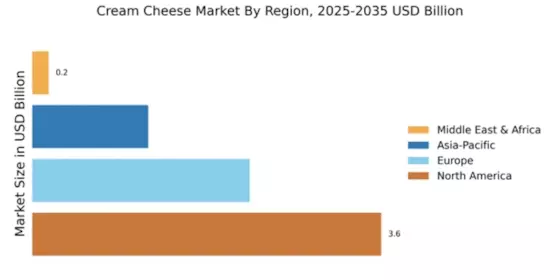
North America continues to lead the cream cheese market, holding a significant share of 3.61 billion. The growth is driven by increasing consumer demand for versatile dairy products, health-conscious trends, and innovative flavors. Regulatory support for dairy production and quality standards further enhances market stability. The region's robust distribution networks and marketing strategies also play a crucial role in meeting consumer preferences. The United States is the primary market, with key players like Kraft Heinz, Philadelphia, and Sargento Foods dominating the landscape. The competitive environment is characterized by product innovation and strategic partnerships. The presence of established brands ensures a steady supply of high-quality cream cheese, catering to both retail and food service sectors. This competitive edge positions North America as a formidable player in The Cream Cheese.

Europe : Growing Demand and Innovation

Europe's cream cheese market is valued at 2.15 billion, driven by rising consumer interest in gourmet and artisanal products. The demand for cream cheese is bolstered by health trends favoring low-fat and organic options. Regulatory frameworks in the EU promote food safety and quality, encouraging innovation in product offerings. The region's diverse culinary traditions also contribute to the growing popularity of cream cheese in various dishes. Leading countries include France, Germany, and the UK, where brands like Lactalis and Arla Foods are prominent. The competitive landscape is marked by a mix of local artisans and large-scale producers, fostering a dynamic market environment. The presence of established brands and new entrants enhances product variety, catering to evolving consumer tastes. This competitive diversity positions Europe as a key player in the cream cheese market.

Asia-Pacific : Emerging Market Potential

The Asia-Pacific cream cheese market, valued at 1.2 billion, is witnessing rapid growth due to increasing urbanization and changing dietary habits. The rising popularity of Western cuisine and the growing trend of snacking are significant drivers of demand. Regulatory bodies are also focusing on food safety standards, which support market growth. The region's young population is increasingly seeking convenient and versatile food options, further propelling the cream cheese market. Countries like Australia and Japan are leading the market, with local brands and international players like Murray Goulburn making significant inroads. The competitive landscape is evolving, with a mix of traditional dairy producers and new entrants focusing on innovative flavors and packaging. This dynamic environment is expected to enhance the market's growth trajectory in the coming years.

Middle East and Africa : Untapped Market Opportunities

The Middle East and Africa cream cheese market, valued at 0.27 billion, is still in its nascent stages but shows promising growth potential. Factors such as increasing disposable incomes and changing consumer preferences towards dairy products are driving demand. Regulatory frameworks are gradually evolving to support food safety and quality, which is essential for market expansion. The region's diverse culinary landscape presents opportunities for cream cheese to be integrated into traditional dishes. Countries like South Africa and the UAE are emerging as key markets, with local brands and international players like Almarai beginning to establish a foothold. The competitive landscape is characterized by a mix of established dairy producers and new entrants focusing on product innovation. This evolving market environment is expected to attract investment and drive growth in the cream cheese sector.

Key Players and Competitive Insights

The Cream Cheese Market is currently characterized by a dynamic competitive landscape, driven by evolving consumer preferences and a growing demand for diverse product offerings. Key players such as Kraft Heinz (US), Philadelphia (US), and Lactalis (FR) are strategically positioning themselves through innovation and regional expansion. Kraft Heinz (US) has focused on enhancing its product portfolio with organic and low-fat options, appealing to health-conscious consumers. Meanwhile, Philadelphia (US) has emphasized brand loyalty through targeted marketing campaigns, reinforcing its status as a household name. Lactalis (FR) is leveraging its extensive distribution network to penetrate emerging markets, thereby shaping the competitive environment through increased accessibility and product variety.

In terms of business tactics, companies are increasingly localizing manufacturing to reduce costs and optimize supply chains. The market appears moderately fragmented, with several players vying for market share. This fragmentation allows for niche brands to thrive alongside established giants, creating a competitive structure that fosters innovation and responsiveness to consumer trends. The collective influence of these key players is significant, as they drive market dynamics through strategic collaborations and product differentiation.

In November 2025, Kraft Heinz (US) announced a partnership with a leading plant-based ingredient supplier to develop a new line of cream cheese alternatives. This strategic move is indicative of the growing trend towards plant-based diets and reflects Kraft Heinz's commitment to sustainability and innovation. By diversifying its product range, the company aims to capture a broader consumer base, particularly among younger demographics seeking healthier options.

In October 2025, Philadelphia (US) launched a new marketing campaign centered around its cream cheese products, highlighting their versatility in various culinary applications. This initiative not only reinforces brand loyalty but also positions Philadelphia as a thought leader in the cream cheese segment. The campaign's focus on user-generated content and social media engagement suggests a strategic pivot towards digital marketing, which is increasingly vital in reaching contemporary consumers.

In September 2025, Lactalis (FR) expanded its production capabilities by investing €10 million in a new facility dedicated to cream cheese production in Eastern Europe. This expansion is strategically important as it enhances the company's ability to meet rising demand in the region while also reducing logistical costs. Such investments reflect Lactalis's long-term vision of strengthening its market presence and operational efficiency.

As of December 2025, the Cream Cheese Market is witnessing trends that emphasize digitalization, sustainability, and the integration of AI technologies. Strategic alliances among key players are shaping the competitive landscape, fostering innovation and collaboration. The shift from price-based competition to a focus on technological advancements and supply chain reliability is becoming increasingly evident. Companies that prioritize innovation and sustainability are likely to differentiate themselves in this evolving market, suggesting a future where consumer preferences dictate competitive strategies.

Key Companies in the Cream Cheese Market market include

Industry Developments

  • Q2 2024: Kraft Heinz Launches Philadelphia Plant-Based Cream Cheese Market Nationwide Kraft Heinz expanded its Philadelphia brand by launching a plant-based cream cheese alternative across the U.S. in April 2024, following successful regional pilots. The product targets consumers seeking dairy-free options.
  • Q2 2024: Bel Group Announces New Cream Cheese Market Production Facility in Kentucky Bel Group, owner of Boursin and The Laughing Cow, announced in May 2024 the opening of a new cream cheese production facility in Kentucky to meet growing U.S. demand and expand its product portfolio.
  • Q3 2024: Arla Foods Appoints New Head of Cream Cheese Market Division In July 2024, Arla Foods named Maria Jensen as the new executive vice president overseeing its global cream cheese business, aiming to accelerate innovation and international expansion.
  • Q2 2024: Danone Acquires Minority Stake in Vegan Cream Cheese Market Startup Danone announced in June 2024 that it acquired a 20% stake in a U.S.-based vegan cream cheese startup, strengthening its position in the plant-based dairy alternatives market.
  • Q1 2025: Lactalis Signs Supply Agreement with Major U.S. Retailer for Private Label Cream Cheese Market Lactalis Group secured a multi-year contract in February 2025 to supply private label cream cheese to a leading U.S. supermarket chain, expanding its North American footprint.
  • Q2 2025: Kraft Heinz Unveils Limited-Edition Flavored Cream Cheese Market Line In May 2025, Kraft Heinz introduced a limited-edition line of flavored Philadelphia cream cheese spreads, including unique varieties such as honey sriracha and matcha, targeting younger consumers.

  • Q1 2024: Daiya Foods Launches First Oat-Based Cream Cheese Market in North America Daiya Foods debuted its oat-based cream cheese alternative in March 2024, marking the first such product in the North American market and expanding its plant-based offerings.
  • Q3 2024: Miyoko’s Creamery Receives USDA Organic Certification for Cream Cheese Market Facility Miyoko’s Creamery announced in August 2024 that its California facility received USDA organic certification, enabling the company to market its cream cheese products as fully organic.
  • Q2 2025: Fonterra Opens New Cream Cheese Market Manufacturing Plant in New Zealand Fonterra opened a new state-of-the-art cream cheese manufacturing plant in Waikato, New Zealand, in April 2025 to boost exports to Asia and meet rising global demand.
  • Q1 2025: Danone Launches Alpro Cream Cheese Market in European Markets Danone launched its Alpro-branded plant-based cream cheese in several European countries in January 2025, expanding its dairy alternatives portfolio.
  • Q4 2024: Saputo Acquires U.K. Cream Cheese Market Producer for $150 Million Saputo Inc. completed the acquisition of a leading U.K. cream cheese manufacturer in November 2024, strengthening its presence in the European specialty cheese market.
  • Q2 2024: Nestlé Launches Vegan Cream Cheese Market Under Garden Gourmet Brand in Germany Nestlé introduced a vegan cream cheese spread under its Garden Gourmet brand in Germany in May 2024, targeting flexitarian and vegan consumers.

Future Outlook

Cream Cheese Market Future Outlook

The Cream Cheese Market is projected to grow at a 4.7% CAGR from 2024 to 2035, driven by increasing consumer demand for versatile dairy products and innovative flavor offerings.

New opportunities lie in:

  • Expansion into plant-based cream cheese alternatives
  • Development of premium, artisanal cream cheese lines
  • Implementation of direct-to-consumer online sales platforms

By 2035, the Cream Cheese Market is expected to achieve robust growth, reflecting evolving consumer preferences and innovative product strategies.

Market Segmentation

Cream Cheese Market End Use Outlook

  • Household
  • Food Service
  • Catering
  • Food Processing

Cream Cheese Market Application Outlook

  • Culinary
  • Baking
  • Spreading
  • Dips
  • Sauces

Cream Cheese Market Product Type Outlook

  • Regular Cream Cheese
  • Low-Fat Cream Cheese
  • Flavored Cream Cheese
  • Organic Cream Cheese

Cream Cheese Market Distribution Channel Outlook

  • Supermarkets
  • Online Retail
  • Specialty Stores
  • Convenience Stores

Report Scope

MARKET SIZE 20247.23(USD Billion)
MARKET SIZE 20257.57(USD Billion)
MARKET SIZE 203511.99(USD Billion)
COMPOUND ANNUAL GROWTH RATE (CAGR)4.7% (2024 - 2035)
REPORT COVERAGERevenue Forecast, Competitive Landscape, Growth Factors, and Trends
BASE YEAR2024
Market Forecast Period2025 - 2035
Historical Data2019 - 2024
Market Forecast UnitsUSD Billion
Key Companies ProfiledKraft Heinz (US), Philadelphia (US), BelGioioso Cheese (US), Lactalis (FR), Arla Foods (DK), Murray Goulburn (AU), Breyers (US), Almarai (SA), Sargento Foods (US)
Segments CoveredApplication, Product Type, Distribution Channel, End Use
Key Market OpportunitiesGrowing demand for plant-based cream cheese alternatives presents a significant opportunity in the Cream Cheese Market.
Key Market DynamicsRising consumer preference for plant-based alternatives drives innovation and competition in the cream cheese market.
Countries CoveredNorth America, Europe, APAC, South America, MEA

Market Highlights

Author
Snehal Singh
Assistant Manager - Research

High acumen in analyzing complex macro & micro markets with more than 6 years of work experience in the field of market research. By implementing her analytical skills in forecasting and estimation into market research reports, she has expertise in Packaging, Construction, and Equipment domains. She handles a team size of 20-25 resources and ensures smooth running of the projects, associated marketing activities, and client servicing.

Leave a Comment

FAQs

How much is the Cream Cheese market?

The Cream Cheese market size was valued at USD 6.91 Billion in 2023.

What is the growth rate of the Cream Cheese market?

The market is projected to grow at a CAGR of 4.7% during the forecast period, 2025-2034.

Which region held the largest market share in the Cream Cheese market?

Asia Pacific had the largest share in the market

Who are the key players in the Cream Cheese market?

The key players in the market are Daiya Foods Inc. (Canada), Follow Your Heart (US), Kite Hill (US), Tofutti Brands, Inc. (US), WayFare Health Foods (US), Miyoko’s Creamery (US), Arla Foods amba (Germany),.

Which source led the Cream Cheese market?

The coconut category dominated the market in 2023.

Which distribution channel had the largest market share in the Cream Cheese market?

The store based had the largest share in the market.

Download Free Sample

Kindly complete the form below to receive a free sample of this Report

Compare Licence

×
Features License Type
Single User Multiuser License Enterprise User
Price $4,950 $5,950 $7,250
Maximum User Access Limit 1 User Upto 10 Users Unrestricted Access Throughout the Organization
Free Customization
Direct Access to Analyst
Deliverable Format
Platform Access
Discount on Next Purchase 10% 15% 15%
Printable Versions