×
Request Free Sample ×

Kindly complete the form below to receive a free sample of this Report

* Please use a valid business email

Leading companies partner with us for data-driven Insights

clients tt-cursor
Hero Background

Cruelty-Free Cosmetics Market

ID: MRFR/CG/2537-HCR
128 Pages
Snehal Singh
October 2025

Cruelty-Free Cosmetics Market Research Report Information by Product Type (Skincare Products, Haircare Products, Makeup & Colour Cosmetics, Perfume & Fragrance, and Others), Form (Cream, Gel, Liquid, Powder, and Others), Distribution Channel [Store-Based (Hypermarkets and Supermarkets, Specialty Stores, Convenience Store, and Others) and Non-Store-Based], and Region (North America, Europe, Asia-Pacific, and the Rest of the World)- Forecast till 2035

Share:
Download PDF ×

We do not share your information with anyone. However, we may send you emails based on your report interest from time to time. You may contact us at any time to opt-out.

Cruelty-Free Cosmetics Market Infographic
Purchase Options

Cruelty-Free Cosmetics Market Summary

As per MRFR analysis, the Cruelty-Free Cosmetics Market was estimated at 7.37 USD Billion in 2024. The cruelty-free cosmetics industry is projected to grow from 7.83 USD Billion in 2025 to 14.3 USD Billion by 2035, exhibiting a compound annual growth rate (CAGR) of 6.21 during the forecast period 2025 - 2035.

Key Market Trends & Highlights

The Cruelty-Free Cosmetics Market is experiencing robust growth driven by ethical consumerism and innovation.

  • The market is witnessing a notable rise in ethical consumerism, particularly in North America, which remains the largest market.
  • Innovation in product development is becoming increasingly prevalent, especially within the skincare segment, which is the fastest-growing.
  • Social media continues to exert a significant influence on consumer purchasing decisions, particularly among younger demographics.
  • The increasing demand for ethical products and regulatory changes favoring cruelty-free practices are major drivers propelling market growth.

Market Size & Forecast

2024 Market Size 7.37 (USD Billion)
2035 Market Size 14.3 (USD Billion)
CAGR (2025 - 2035) 6.21%

Major Players

L'Oreal (FR), Estée Lauder (US), Unilever (GB), Procter & Gamble (US), Revlon (US), Avon (GB), BareMinerals (US), Too Faced (US), Tarte Cosmetics (US)

Cruelty-Free Cosmetics Market Trends

The Cruelty-Free Cosmetics Market is currently experiencing a notable shift in consumer preferences, driven by an increasing awareness of ethical considerations surrounding animal testing. This market segment appears to be gaining traction as more individuals seek products that align with their values, particularly in terms of sustainability and humane practices. The rise of social media and influencer culture has further amplified this trend, as consumers are more informed and engaged than ever before. Brands that prioritize cruelty-free formulations are likely to attract a dedicated customer base, which may lead to enhanced brand loyalty and trust. Moreover, the Cruelty-Free Cosmetics Market seems to be evolving with the introduction of innovative products that not only meet ethical standards but also deliver high performance. Companies are increasingly investing in research and development to create formulations that are both effective and environmentally friendly. This dual focus on efficacy and ethics could potentially reshape the competitive landscape, as brands that successfully merge these elements may stand out in a crowded marketplace. As the demand for cruelty-free options continues to grow, it is plausible that more companies will adopt cruelty-free practices, further expanding the market and its influence on the broader cosmetics industry.

Rise of Ethical Consumerism

The Cruelty-Free Cosmetics Market is witnessing a surge in ethical consumerism, where buyers prioritize products that reflect their moral values. This trend indicates a shift towards more conscious purchasing decisions, as consumers increasingly seek brands that demonstrate a commitment to animal welfare.

Innovation in Product Development

Innovation plays a crucial role in the Cruelty-Free Cosmetics Market, with brands focusing on developing new formulations that are both effective and cruelty-free. This trend suggests that companies are investing in research to create high-quality products that meet the demands of discerning consumers.

Influence of Social Media

Social media platforms are significantly impacting the Cruelty-Free Cosmetics Market by facilitating the spread of information regarding ethical practices. This influence appears to drive consumer awareness and engagement, encouraging brands to adopt cruelty-free policies to remain relevant in a competitive landscape.

Cruelty-Free Cosmetics Market Drivers

Rising Consumer Awareness

The Global Cruelty-Free Cosmetics Market Industry is experiencing a notable surge in consumer awareness regarding ethical beauty products. As consumers become increasingly informed about animal welfare issues, the demand for cruelty-free cosmetics is expected to rise. This shift in consumer behavior is reflected in the projected market value of 7.01 USD Billion in 2024. Brands that align with these values are likely to capture a larger share of the market, as consumers actively seek products that do not involve animal testing. This trend suggests a growing preference for transparency and ethical practices in the cosmetics sector.

Market Segment Insights

By Product Type: Makeup (Largest) vs. Skincare (Fastest-Growing)

The product type segment of the cruelty-free cosmetics market exhibits a diverse distribution with makeup appearing as the largest segment. As consumer preferences shift towards ethical and sustainable beauty, the makeup category, which includes products like foundations, eye shadows, and lipsticks, has captured significant attention. Skincare follows closely, gaining traction as consumers increasingly seek out products that reflect cruelty-free values, thereby creating a ripple effect across various subcategories. In recent years, the skincare segment has emerged as the fastest-growing area within the cruelty-free market, driven by heightened awareness and demand for natural ingredients and ethical practices. Factors such as the rise of social media influencers advocating for cruelty-free beauty, the impact of veganism, and a growing emphasis on health and wellness add to the momentum. This trend indicates a sustainable future for skincare products as brands innovate in formulation to cater to conscious consumers.

Makeup: Dominant vs. Skincare: Emerging

The makeup segment dominates the cruelty-free cosmetics market, characterized by a wide array of products that appeal to ethically-minded consumers who value performance as much as conscience. This segment is known for its ability to promptly adapt to fashion trends and consumer needs, thereby fostering brand loyalty and repeat purchases. On the other hand, the skincare segment is emerging with rapid growth potential, capturing the interest of buyers looking for effective, ethical skincare solutions. This segment often incorporates active botanicals and natural ingredients, appealing to health-conscious individuals. The emerging popularity of skincare reflects a shift in consumer behavior, with many investing more in self-care and ethical products that support their lifestyle choices.

By Distribution Channel: Online Retail (Largest) vs. Specialty Stores (Fastest-Growing)

The distribution channels in the cruelty-free cosmetics market reflect a diverse array of preferences among consumers. Online retail has emerged as the largest channel due to the convenience it offers and the growing trend of e-commerce globally. It allows easy access to a vast range of cruelty-free products, catering to the increasing demand for ethical beauty. Specialty stores follow closely, presenting an engaging shopping experience tailored for cruelty-free enthusiasts, although they represent a smaller market share compared to online platforms. Growth trends within this market segment are significantly influenced by rising consumer awareness and the increasing demand for ethically sourced products. Online retail is expected to continue dominating as brands increasingly focus on direct-to-consumer strategies, coupled with effective online marketing. Conversely, specialty stores are emerging rapidly as they create curated experiences that resonate with niche consumers, fostering loyalty and passion for cruelty-free brands.

Online Retail: Dominant vs. Specialty Stores: Emerging

Online retail stands out in the cruelty-free cosmetics market as the dominant distribution channel, characterized by its convenience and broad accessibility. Consumers favor the extensive range of cruelty-free products available online, often paired with detailed product information and customer reviews that enhance purchasing confidence. Meanwhile, specialty stores are emerging swiftly, offering personalized shopping experiences that connect ethically conscious brands with their target audience. These stores curate select products, focusing on education and engagement that align with the values of cruelty-free consumers. This growth is fueled by a rising trend of conscious consumerism, where customers actively seek out specialty outlets to support brands committed to ethical practices.

By Consumer Demographics: Age Group (Largest) vs. Ethical Awareness (Fastest-Growing)

In the Cruelty-Free Cosmetics Market, a significant portion of consumers is concentrated within the 18-34 age group, making it the largest demographic segment. This age group is increasingly drawn to cruelty-free products due to their alignment with ethical consumerism and growing concerns about animal welfare. Conversely, ethical awareness is gaining momentum across all demographics, leading to a shift in consumer preferences towards cruelty-free options as a reflection of broader ethical values, further expanding the customer base for these products.

Age Group: 18-34 (Dominant) vs. Ethical Awareness (Emerging)

Consumers aged 18-34 are driving the Cruelty-Free Cosmetics Market, characterized by their preference for products that align with their values of sustainability and ethical responsibility. This dominant age group actively seeks brands that not only promote cruelty-free practices but also engage in eco-friendly formulations. In contrast, ethical awareness is an emerging trend, with more consumers across various age brackets becoming more socially conscious. This growing awareness accelerates the demand for cruelty-free products, as consumers increasingly seek transparency and corporate responsibility in the brands they support. The synergy of these two values indicates a progressive shift towards a more ethically-minded marketplace.

By Formulation Type: Vegan (Largest) vs. Organic (Fastest-Growing)

In the Cruelty-Free Cosmetics Market, the formulation type segment is witnessing significant dynamism, with Vegan products taking the lead in market share. Their appeal to ethically-minded consumers positions them as the dominant choice for many brands aiming to capitalize on growing consumer awareness of cruelty-free and ethical sourcing. Meanwhile, Organic formulation types are rapidly gaining traction, stemming from a consumer shift towards natural ingredients and sustainability. This interest reflects a broader trend towards environmental consciousness and personal health, indicating a vibrant market landscape. As consumer preferences shift, the growth of Vegan formulations is partly fueled by an increase in plant-based lifestyles, catalyzing the market's expansion. On the other hand, the Organic segment benefits from innovative marketing strategies emphasizing purity and ingredient sourcing. The intersection of environmental concerns and health consciousness drives investment and development in these formulations, helping brands to connect deeply with informed customers. These trends signal a robust trajectory for the Cruelty-Free Cosmetics Market in the coming years.

Vegan: (Dominant) vs. Organic (Emerging)

The Vegan formulation type is currently the dominant player within the Cruelty-Free Cosmetics Market, characterized by its commitment to using no animal-derived ingredients or by-products. This approach not only resonates with ethical consumers but also attracts those seeking to avoid irritants commonly found in traditional cosmetics. On the other hand, the Organic formulation type represents an emerging trend that emphasizes naturally sourced ingredients, appealing to the growing segment of health-conscious consumers. The Organic segment markets itself on the premise of purity and environmental sustainability, providing a strong alternative to conventional formulations. Both segments cater to distinct consumer needs; Vegan products offer ethical assurance, while Organic ones promise health benefits, together driving the overall growth of the cruelty-free sector.

By Packaging Type: Recyclable (Largest) vs. Biodegradable (Fastest-Growing)

Recyclable packaging currently represents the largest segment in the packaging type of the cruelty-free cosmetics market. This preference reflects consumers' growing awareness and concern for sustainability and environmental impact. Brands utilizing recyclable materials benefit from enhanced brand loyalty and trust, particularly among eco-conscious consumers. Following closely is biodegradable packaging, which is rapidly gaining traction due to its ability to minimize waste and environmental footprint, resonating with the ethical values held by the cruelty-free cosmetics consumer base.

Packaging: Recyclable (Dominant) vs. Biodegradable (Emerging)

Recyclable packaging is dominating the cruelty-free cosmetics market, offering brands a significant competitive advantage. Its prevalence is driven by consumer demand for sustainable practices and the government's push for environmental policies. In contrast, biodegradable packaging is emerging as a popular choice, appealing to consumers who prioritize reducing their carbon footprint. While recyclable materials can often be reused multiple times, biodegradable options decompose naturally, making them a preferred choice for eco-conscious consumers. This shift is reflected in various brands adopting innovative biodegradable designs and seeking certifications to validate their sustainability claims, contributing to their market growth.

Get more detailed insights about Cruelty-Free Cosmetics Market

Regional Insights

North America : Market Leader in Cruelty-Free

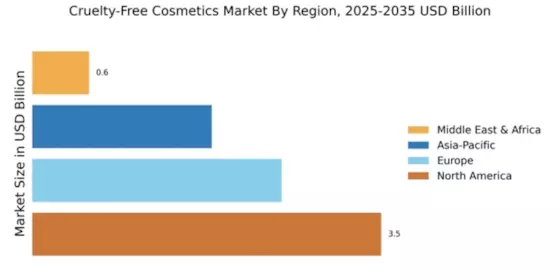
North America leads the cruelty-free cosmetics market, holding a significant share of 3.5 billion. The region's growth is driven by increasing consumer awareness regarding animal welfare and a rising demand for ethical beauty products. Regulatory support, including stringent guidelines on animal testing, further catalyzes market expansion. The trend towards vegan and cruelty-free products is reshaping consumer preferences, making this market a focal point for innovation and investment. The competitive landscape in North America is robust, featuring key players such as Estée Lauder, Procter & Gamble, and L'Oreal. These companies are actively expanding their cruelty-free product lines to meet the growing demand. The U.S. remains the largest market, with Canada also showing significant growth. The presence of established brands alongside emerging players fosters a dynamic environment, encouraging continuous product development and marketing strategies that resonate with ethically conscious consumers.

Europe : Ethical Beauty Movement

Europe's cruelty-free cosmetics market is valued at 2.5 billion, reflecting a strong commitment to ethical beauty. The region benefits from stringent regulations against animal testing, which have been pivotal in shaping consumer preferences. Increasing awareness of sustainability and ethical sourcing is driving demand for cruelty-free products. The European market is characterized by a diverse range of brands catering to eco-conscious consumers, further enhancing its growth potential. Leading countries in this market include the UK, Germany, and France, where brands like Unilever and Avon are making significant strides. The competitive landscape is marked by a mix of established companies and innovative startups, all vying for a share of the growing market. The presence of regulatory bodies ensures compliance and fosters trust among consumers, making Europe a key player in the global cruelty-free cosmetics arena.

Asia-Pacific : Emerging Market Potential

The Asia-Pacific cruelty-free cosmetics market is valued at 1.8 billion, showcasing significant growth potential. Rising disposable incomes and increasing awareness of animal rights are driving demand for cruelty-free products in countries like Japan, Australia, and South Korea. Regulatory changes are also encouraging brands to adopt cruelty-free practices, aligning with global trends towards ethical consumption. The market is expected to expand as consumers increasingly seek transparency in product sourcing and manufacturing processes. Key players in this region include local brands and international giants like L'Oreal and Estée Lauder, which are adapting their offerings to meet local preferences. The competitive landscape is evolving, with a growing number of startups entering the market, focusing on natural and cruelty-free formulations. As consumer awareness continues to rise, the Asia-Pacific region is poised for substantial growth in the cruelty-free cosmetics sector.

Middle East and Africa : Emerging Ethical Market

The Middle East and Africa (MEA) cruelty-free cosmetics market is valued at 0.57 billion, reflecting a nascent but growing interest in ethical beauty products. Factors such as increasing urbanization, rising disposable incomes, and a shift towards sustainable living are driving demand for cruelty-free cosmetics. Regulatory frameworks are gradually evolving, promoting animal welfare and encouraging brands to adopt cruelty-free practices, which is essential for market growth in this region. Countries like South Africa and the UAE are leading the charge, with local and international brands expanding their cruelty-free offerings. The competitive landscape is characterized by a mix of established players and emerging brands, all striving to capture the attention of ethically conscious consumers. As awareness of cruelty-free products continues to grow, the MEA region is expected to see a significant increase in market activity and consumer engagement.

Key Players and Competitive Insights

The Cruelty-Free Cosmetics Market is currently characterized by a dynamic competitive landscape, driven by increasing consumer demand for ethical and sustainable beauty products. Major players are actively positioning themselves to capitalize on this trend through various strategic initiatives. For instance, L'Oreal (FR) has been focusing on innovation in product formulations that emphasize natural ingredients, which aligns with the growing consumer preference for transparency and sustainability. Similarly, Estée Lauder (US) has been enhancing its digital presence, leveraging e-commerce platforms to reach a broader audience while promoting its cruelty-free product lines. These strategies collectively contribute to a competitive environment that is increasingly centered around ethical considerations and consumer engagement.

In terms of business tactics, companies are localizing manufacturing to reduce carbon footprints and optimize supply chains, which is particularly relevant in the context of sustainability. The market structure appears moderately fragmented, with a mix of established brands and emerging players vying for market share. The collective influence of key players, such as Unilever (GB) and Procter & Gamble (US), is significant, as they not only set industry standards but also drive innovation through substantial R&D investments.

In November 2025, Unilever (GB) announced a partnership with a leading technology firm to develop AI-driven solutions for product development, aiming to enhance the efficiency of its cruelty-free cosmetics line. This strategic move is likely to streamline operations and accelerate the introduction of new products, thereby reinforcing Unilever's commitment to sustainability and innovation. The integration of AI into product development processes may also provide insights into consumer preferences, allowing for more targeted marketing strategies.

In October 2025, Procter & Gamble (US) launched a new campaign promoting its cruelty-free certification across its beauty brands, which is expected to resonate well with ethically conscious consumers. This initiative not only strengthens brand loyalty but also positions Procter & Gamble as a leader in the ethical beauty space. The campaign's emphasis on transparency and ethical sourcing could potentially enhance consumer trust and drive sales growth in a competitive market.

In September 2025, Tarte Cosmetics (US) expanded its product line to include a range of vegan and cruelty-free skincare products, reflecting a broader trend towards holistic beauty solutions. This expansion is strategically important as it allows Tarte to tap into the growing market segment that prioritizes both skincare and makeup, thereby broadening its consumer base. The move may also enhance Tarte's brand image as a pioneer in cruelty-free cosmetics, appealing to a demographic that values ethical consumption.

As of December 2025, the competitive trends in the Cruelty-Free Cosmetics Market are increasingly defined by digitalization, sustainability, and the integration of advanced technologies such as AI. Strategic alliances are becoming more prevalent, as companies recognize the need to collaborate to enhance their product offerings and market reach. Looking ahead, competitive differentiation is likely to evolve from traditional price-based competition to a focus on innovation, technology, and supply chain reliability. This shift underscores the importance of aligning business strategies with consumer values, particularly in the realm of ethical and sustainable beauty.

Key Companies in the Cruelty-Free Cosmetics Market market include

Industry Developments

  • According to the recent updates, the Cruelty-Free Cosmetics Market will spotlight consumers advocating organic and clean labeled ingredients.
  • Many keep competitors coming up with their best and most innovative products to drive the market's growth rate and reach the estimated CAGR during the forecast period.

Report Overview

The Cruelty-Free Cosmetics Market Trend is significantly going well at the global level. The key players are setting different marketing strategies to develop their marketing operations and procedure. The key players are focusing on the major factors of the market to develop the growth rate. The different segments of the market are studied well to account for the Cruelty-Free Cosmetics Market Share of each segment and its growth in the different regions across the globe. The Cruelty-Free Cosmetics Market is expected to reach the CAGR during the assessment period.

Cruelty-Free Cosmetics Market Industrial Segments

By Product Type

  • Skincare Products
  • Haircare Products
  • Makeup &Color Cosmetics
  • Perfume & Fragrance
  • Others

By Form

  • Cream
  • Gel
  • Liquid
  • Powder
  • Others

By Distribution Channel

  • Store-Based
  • Supermarkets & Hypermarkets
  • Specialty Stores
  • Convenience Stores
  • Others
  • Non-Store Based

Future Outlook

Cruelty-Free Cosmetics Market Future Outlook

The Cruelty-Free Cosmetics Market is projected to grow at a 6.21% CAGR from 2024 to 2035, driven by increasing consumer awareness and demand for ethical products.

New opportunities lie in:

  • Expansion of online retail platforms for cruelty-free brands.
  • Development of innovative packaging solutions to enhance sustainability.
  • Collaboration with influencers to promote cruelty-free product lines.

By 2035, the market is expected to solidify its position as a leader in ethical beauty.

Market Segmentation

Cruelty-Free Cosmetics Market Product Type Outlook

  • Makeup
  • Skincare
  • Haircare
  • Fragrance
  • Personal Care

Cruelty-Free Cosmetics Market Packaging Type Outlook

  • Recyclable
  • Biodegradable
  • Refillable
  • Glass
  • Plastic

Cruelty-Free Cosmetics Market Formulation Type Outlook

  • Vegan
  • Organic
  • Natural
  • Synthetic-Free
  • Hypoallergenic

Cruelty-Free Cosmetics Market Distribution Channel Outlook

  • Online Retail
  • Specialty Stores
  • Supermarkets
  • Pharmacies
  • Direct Sales

Cruelty-Free Cosmetics Market Consumer Demographics Outlook

  • Age Group
  • Gender
  • Income Level
  • Lifestyle
  • Ethical Awareness

Report Scope

MARKET SIZE 20247.37(USD Billion)
MARKET SIZE 20257.83(USD Billion)
MARKET SIZE 203514.3(USD Billion)
COMPOUND ANNUAL GROWTH RATE (CAGR)6.21% (2024 - 2035)
REPORT COVERAGERevenue Forecast, Competitive Landscape, Growth Factors, and Trends
BASE YEAR2024
Market Forecast Period2025 - 2035
Historical Data2019 - 2024
Market Forecast UnitsUSD Billion
Key Companies ProfiledL'Oreal (FR), Estée Lauder (US), Unilever (GB), Procter & Gamble (US), Revlon (US), Avon (GB), BareMinerals (US), Too Faced (US), Tarte Cosmetics (US)

Segments CoveredProduct Type, Distribution Channel, Consumer Demographics, Formulation Type, Packaging Type
Key Market OpportunitiesGrowing consumer demand for ethical products drives innovation in the Cruelty-Free Cosmetics Market.
Key Market DynamicsRising consumer demand for ethical products drives innovation and competition in the cruelty-free cosmetics market.
Countries CoveredNorth America, Europe, APAC, South America, MEA

Market Highlights

Author
Snehal Singh
Assistant Manager - Research

High acumen in analyzing complex macro & micro markets with more than 6 years of work experience in the field of market research. By implementing her analytical skills in forecasting and estimation into market research reports, she has expertise in Packaging, Construction, and Equipment domains. She handles a team size of 20-25 resources and ensures smooth running of the projects, associated marketing activities, and client servicing.

Leave a Comment

FAQs

At what CAGR is the global cruelty-free cosmetics market projected to grow in the forecast period (2024-2030)?

Cruelty-Free Cosmetics Market 14.3 Billion and Grow at a CAGR of6.21% by 2025 -2035

Download Free Sample

Kindly complete the form below to receive a free sample of this Report

Compare Licence

×
Features License Type
Single User Multiuser License Enterprise User
Price $4,950 $5,950 $7,250
Maximum User Access Limit 1 User Upto 10 Users Unrestricted Access Throughout the Organization
Free Customization
Direct Access to Analyst
Deliverable Format
Platform Access
Discount on Next Purchase 10% 15% 15%
Printable Versions