Download Free Sample
Kindly complete the form below to receive a free sample of this Report
Culinary Training and Workshops Market Research Report By Duration (Short Courses, Weekend Workshops, Weeklong Intensives, Semester Programs, Customizable Sessions), By Skill Level (Beginner, Intermediate, Advanced, Specialized Techniques, Certification Programs), By Delivery Method (In-Person Workshops, Online Courses, Hybrid Programs, Corporate Training, Private Classes), By Target Audience (Aspiring Chefs, Home Cooks, Food Enthusiasts, Culinary Students, Corporate Teams), By Culinary Training Type (Professional Culinary Arts, Baking and Pastry, Culinary Nutrition, Ethnic Cuisine, Food Safety and Sanitation) And By Region (North America, Europe, Asia-Pacific, And Rest Of The World) – Market Forecast Till 2035.
As per MRFR analysis, the Culinary Training and Workshops Market Size was estimated at 2.5 billion USD in 2024. The Culinary Training and Workshops industry is projected to grow from 2.64 in 2025 to 4.5 by 2035, exhibiting a compound annual growth rate (CAGR) of 5.49% during the forecast period 2025 - 2035.
The culinary training and workshops market is evolving towards personalized and technology-driven educational experiences.
| 2024 Market Size | 2.5 (USD Billion) |
| 2035 Market Size | 4.5 (USD Billion) |
| CAGR (2025 - 2035) | 5.49% |
Le Cordon Bleu (FR), The Culinary Institute of America (US), Apicius (IT), Johnson & Wales University (US), Kendall College (US), International Culinary Center (US), Culinary Arts Academy (CH), Escoffier School of Culinary Arts (US), L'Academie de Cuisine (US)
Our Impact
Enabled $4.3B Revenue Impact for Fortune 500 and Leading Multinationals
Partnering with 2000+ Global Organizations Each Year
30K+ Citations by Top-Tier Firms in the Industry
Culinary Training and Workshops are experiencing a notable evolution, driven by a growing interest in culinary arts and the desire for hands-on learning experiences. This sector appears to be expanding as individuals seek to enhance their cooking skills, explore diverse cuisines, and engage in immersive culinary experiences. The rise of social media platforms has further fueled this trend, as aspiring chefs and home cooks share their culinary journeys, thereby inspiring others to participate in workshops and training programs. Additionally, the increasing popularity of food culture and gastronomy has led to a surge in demand for specialized training, catering to both amateurs and professionals alike. Moreover, Culinary Training and Workshops are adapting to the changing preferences of consumers. There seems to be a shift towards more personalized and flexible learning options, with many institutions offering online courses and hybrid models that combine virtual and in-person instruction. This flexibility allows participants to learn at their own pace while still benefiting from expert guidance. Furthermore, the emphasis on sustainability and local sourcing in culinary practices is influencing the curriculum of many training programs, as chefs and instructors aim to educate students about responsible cooking practices and the importance of seasonal ingredients. Overall, the Culinary Training and Workshops market is poised for continued growth, reflecting the evolving landscape of culinary education and consumer interests.
Culinary Training and Workshops are increasingly focusing on tailored learning experiences. Participants now seek programs that cater to their individual skill levels and culinary interests. This trend suggests a move away from one-size-fits-all approaches, allowing for more engagement and satisfaction among learners.
The incorporation of technology into Culinary Training and Workshops is becoming more prevalent. Online platforms and virtual classes are gaining traction, enabling broader access to culinary education. This shift indicates a response to the demand for convenience and flexibility in learning.
There is a growing emphasis on sustainability within Culinary Training and Workshops. Programs are increasingly incorporating lessons on local sourcing, seasonal ingredients, and eco-friendly practices. This trend reflects a broader societal shift towards environmental consciousness in food preparation and consumption.
Culinary tourism is emerging as a significant driver for the Culinary Training and Workshops. Travelers increasingly seek authentic culinary experiences as part of their journeys, leading to a rise in demand for cooking classes and workshops in various destinations. This trend is particularly evident in regions known for their unique culinary traditions, where tourists are eager to learn local cooking techniques. Recent statistics indicate that culinary tourism has seen a growth rate of approximately 30 percent over the last few years, highlighting the potential for culinary workshops to attract visitors. As culinary tourism continues to flourish, the Culinary Training and Workshops Industry stands to benefit from this influx of participants eager to immerse themselves in local cuisines.
Sustainability is becoming a central theme within the Culinary Training and Workshops. As consumers grow more aware of environmental issues, there is an increasing demand for culinary education that focuses on sustainable practices. Workshops that teach participants about farm-to-table concepts, seasonal cooking, and waste reduction are gaining popularity. Recent surveys indicate that approximately 40 percent of consumers prefer culinary classes that incorporate sustainability into their curriculum. This emphasis on eco-friendly practices not only attracts environmentally conscious individuals but also aligns with broader societal trends towards sustainability. As the Culinary Training and Workshops Industry embraces these principles, it is likely to foster a new generation of chefs and home cooks committed to responsible cooking.
The Culinary Training and Workshops is significantly influenced by the increasing focus on health and wellness. As consumers become more health-conscious, there is a growing demand for culinary education that emphasizes nutritious cooking techniques and healthy meal preparation. Workshops that teach participants how to create balanced meals using fresh, whole ingredients are gaining traction. Data suggests that the market for healthy cooking classes has grown by 15 percent in recent years, reflecting a shift in consumer preferences towards healthier lifestyles. This trend not only promotes better eating habits but also encourages individuals to engage with food in a more meaningful way, thereby driving growth in the Culinary Training and Workshops Industry.
The Culinary Training and Workshops experiences a notable surge in interest as individuals increasingly seek to enhance their culinary skills. This trend is driven by a growing appreciation for gastronomy and the desire to create gourmet meals at home. According to recent data, the number of culinary schools and workshops has increased by approximately 20 percent over the past five years, indicating a robust demand for culinary education. This rising interest is not limited to professional chefs; home cooks and food enthusiasts are also participating in workshops to refine their skills. As culinary arts gain popularity, the Culinary Training and Workshops Industry is likely to expand, catering to a diverse audience eager to learn and experiment in the kitchen.
The integration of technology into culinary education is reshaping the Culinary Training and Workshops. Online platforms and virtual workshops are becoming increasingly popular, allowing participants to learn from the comfort of their homes. This shift has expanded the reach of culinary training, making it accessible to a broader audience. Data shows that online culinary courses have experienced a growth of over 25 percent in enrollment, indicating a strong preference for flexible learning options. Additionally, the use of interactive tools and multimedia resources enhances the learning experience, making it more engaging. As technology continues to evolve, the Culinary Training and Workshops Industry is likely to adapt, offering innovative solutions to meet the needs of aspiring chefs and home cooks alike.
The Culinary Training and Workshops segment is characterized by a diverse range of training types, with Professional Culinary Arts holding the largest market share. This segment encompasses formal culinary degrees and certifications, catering to aspiring chefs and culinary professionals. Following closely, Culinary Nutrition has emerged as a significant player, appealing to those interested in the intersection of health and cuisine. It educates chefs on nutrition and healthy cooking, thereby garnering considerable attention in recent years. Recent trends point towards a notable increase in interest in Culinary Nutrition, driven by rising consumer awareness regarding health and wellness. As consumers prioritize nutritious meal options, culinary workshops focusing on nutritional cooking techniques are gaining traction. Similarly, Professional Culinary Arts continues to thrive as the foundation for culinary training, with traditional culinary schools adapted to modern trends, ensuring sustained demand in the coming years.
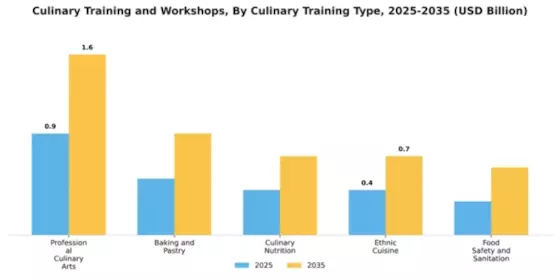
Culinary Nutrition: Fastest-Growing vs. Professional Culinary Arts: Dominant
The Professional Culinary Arts segment is characterized by its established reputation and comprehensive curriculum that equips chefs with fundamental skills and techniques. This segment remains dominant due to its broad appeal, encompassing culinary degrees, certifications, and practical training in various cuisines. On the other hand, Culinary Nutrition represents an emerging segment that focuses on healthy cooking practices and the nutritional aspects of food preparation. With the increasing emphasis on health, Culinary Nutrition training is becoming crucial for chefs aiming to meet changing consumer preferences. These two segments complement each other, as trained chefs in Professional Culinary Arts increasingly incorporate the principles of Culinary Nutrition, making them highly relevant in today's health-conscious culinary landscape.
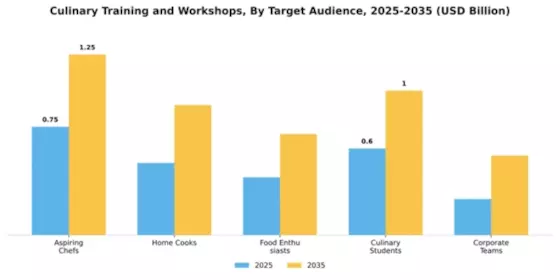
The Culinary Training and Workshops market is notably influenced by diverse target audiences, with Aspiring Chefs holding the largest share. Their passion for professional cooking drives significant participation in training programs. Meanwhile, Culinary Students represent a rapidly growing demographic, drawn to structured learning environments that foster skill acquisition and creativity in the culinary arts. The balance of these segments illustrates the varied motivations behind culinary education, catering to both professional aspirations and academic pursuits. As the culinary landscape evolves, emerging trends indicate a notable increase in participation from Culinary Students, who seek formal education to enhance their career prospects. The rise of online courses has also contributed to this surge, providing flexible access to aspiring chefs and culinary enthusiasts alike. The integration of innovative teaching methods, such as virtual workshops, is expected to further stimulate growth by appealing to a broader audience eager for culinary knowledge.
Aspiring Chefs (Dominant) vs. Culinary Students (Emerging)
Aspiring Chefs represent the dominant force within the Culinary Training and Workshops segment, characterized by their commitment to turning their culinary passions into professional careers. This group often seeks intensive cooking courses and workshops that emphasize skill development and hands-on experience. Their motivation is fueled by the desire to work in restaurants, catering, or their own culinary enterprises. In contrast, Culinary Students are an emerging demographic, increasingly enrolling in formal culinary education programs to gain credibility and structured learning. Their focus is not only on mastering basic cooking skills but also on exploring contemporary culinary trends and techniques. The educational journey for this group is often supported by culinary institutions, providing a blend of practical experience and academic knowledge to prepare them for successful careers in the culinary field.
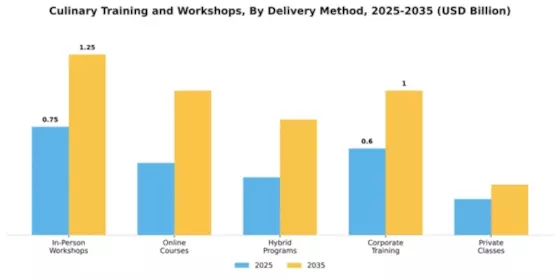
The Culinary Training and Workshops market displays a diverse distribution of delivery methods, with In-Person Workshops commanding the largest share. This traditional method offers hands-on experience and immediate feedback, appealing to participants who prioritize practical learning. Online Courses have emerged as a competitive force, gaining substantial traction by offering convenience and accessibility, particularly in recent years. Hybrid Programs blend both approaches, attracting learners who seek flexibility while retaining some in-person experiences. Corporate Training and Private Classes represent specialized niches catering to specific audiences, further diversifying the market landscape. Online Courses are currently positioned as the fastest-growing delivery method, driven by increasing demand for remote learning options and evolving digital educational technologies. As more culinary professionals and enthusiasts seek to enhance their skills from various locations, the flexibility of online platforms appeals to a broader audience. In contrast, In-Person Workshops continue to thrive, particularly during periods of post-pandemic recovery, as consumers seek the experiential aspects of cooking in a hands-on environment. Accordingly, the segment is anticipated to evolve, balancing traditional experiences with modern technological advancements.
In-Person Workshops (Dominant) vs. Online Courses (Emerging)
In-Person Workshops remain the dominant delivery method in the culinary training market, characterized by immersive experiences that facilitate hands-on learning. These workshops often foster a sense of community among participants and provide direct interaction with instructors, which is invaluable for mastering culinary techniques. Participants benefit from real-time feedback and collaborative cooking experiences, making it particularly appealing to those serious about refining their culinary skills. In contrast, Online Courses represent an emerging segment, quickly adapting to the needs of a tech-savvy audience. These courses are designed for flexibility and accessibility, allowing learners to progress at their own pace. As more individuals seek culinary training from the comfort of their homes, this delivery method is gaining momentum, promising innovative approaches to remote culinary education.
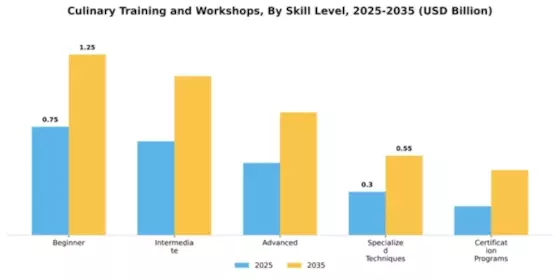
The culinary training and workshops market is diverse, with various skill levels catering to different learners. The 'Beginner' segment holds the largest market share, attracting a wide audience seeking foundational cooking skills. In contrast, 'Specialized Techniques' has emerged as a significant contender, tapping into the growing demand for niche culinary skills and unique food preparations. This indicates a trend towards personalized and specialized culinary education. Recent years have shown increased interest in culinary education driven by factors such as the rise of cooking shows, social media influence, and a growing culture of gastronomy. As cooking becomes more accessible, beginners are flocking to workshops, while enthusiasts are increasingly seeking specialized training. This dual growth showcases the evolving culinary landscape, where both novice and expert segments thrive together.
Beginner (Dominant) vs. Specialized Techniques (Emerging)
The 'Beginner' segment is characterized by its broad appeal, catering primarily to those who have little to no prior culinary experience. This segment tends to include classes focused on basic cooking skills, safe food handling, and introductory recipes designed to build confidence. These workshops provide a supportive environment, enabling participants to discover their passion for cooking. In contrast, 'Specialized Techniques' represents an emerging segment aimed at more experienced cooks looking to refine specific skills. These workshops offer advanced instruction in areas such as pastry arts, molecular gastronomy, or international cuisines, catering to culinary enthusiasts eager to elevate their skills. Both segments reflect a growing desire for experiential learning within the culinary education landscape.
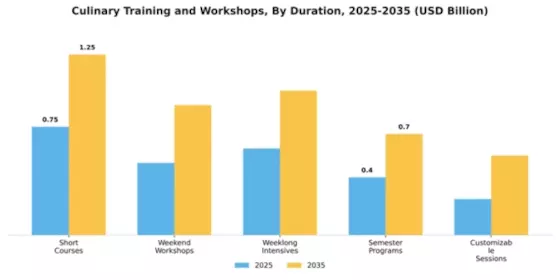
In the Culinary Training and Workshops market, the duration of courses significantly impacts their popularity and market share. Weekend Workshops currently dominate the segments, attracting culinary enthusiasts looking for short-term commitments yet immersive experiences. Following closely, Weeklong Intensives and Semester Programs have established steady audiences among dedicated culinary students and professionals. On the other hand, Short Courses and Customizable Sessions are emerging segments, offering flexible options that cater to diverse learning paces and specific culinary interests. Growth trends in this segment indicate a notable shift towards convenience and tailored experiences. Short Courses have gained traction rapidly, appealing to busy individuals seeking quick skill acquisition without long-term commitments. The flexibility in Customizable Sessions also aligns with modern consumers' expectations, allowing for specialized training. As culinary passions rise globally, the demand for varied duration offerings is expected to grow, reflecting a dynamic shift in how culinary skills are learned and taught.
Weekend Workshops (Dominant) vs. Short Courses (Emerging)
Weekend Workshops stand as the dominant offering in the culinary training sector, perfectly suited for hobbyists and food enthusiasts. These workshops provide an engaging environment for hands-on learning within a condensed timeframe, making them ideal for individuals with busy schedules. The appeal lies in their social aspect, fostering a community of food lovers. In contrast, Short Courses are emerging as a flexible alternative, targeting individuals eager to learn specific cooking techniques or cuisines quickly. They cater to the desire for on-demand knowledge, with a focus on practicality and efficiency. Both segments reflect the growing trend toward accessible, high-quality culinary education, appealing to diverse demographics from all culinary backgrounds.
Get more detailed insights about Culinary Training and Workshops Market Request Free Sample
North America leads the culinary training and workshops market, holding a significant share of 1.25 in 2024. The region's growth is driven by a rising interest in culinary arts, increased investment in educational institutions, and a growing demand for skilled chefs. Regulatory support from local governments further enhances the market, promoting culinary education as a vital component of the hospitality industry. The United States is the primary player in this region, home to renowned institutions like The Culinary Institute of America and Johnson & Wales University. The competitive landscape is robust, with numerous culinary schools and workshops catering to diverse culinary interests. This vibrant ecosystem fosters innovation and excellence, ensuring that North America remains at the forefront of culinary education.
Europe, with a market size of 0.75, is experiencing a renaissance in culinary training and workshops. The region's rich culinary heritage, combined with modern educational approaches, drives demand for professional training. Regulatory frameworks across countries support culinary education, emphasizing quality standards and skill development, which are crucial for maintaining Europe's culinary reputation. Leading countries like France, Italy, and the UK are pivotal in this sector, hosting prestigious institutions such as Le Cordon Bleu and Apicius. The competitive landscape is characterized by a blend of traditional and contemporary culinary schools, fostering a diverse range of culinary skills. This dynamic environment ensures that Europe remains a hub for culinary excellence and innovation.
Asia-Pacific is emerging as a significant player in the culinary training market, with a market size of 0.4. The region's growth is fueled by increasing interest in culinary arts, driven by a burgeoning middle class and a growing food culture. Governments are recognizing the importance of culinary education, implementing policies to enhance skill development and promote culinary tourism, which further stimulates demand for training programs. Countries like Japan, China, and Australia are leading the charge, with a mix of traditional culinary schools and modern training centers. The competitive landscape is evolving, with both local and international institutions vying for market share. This growth is supported by key players establishing a presence in the region, ensuring a diverse range of culinary training options for aspiring chefs.
The Middle East and Africa region, with a market size of 0.1, is witnessing a gradual increase in culinary training and workshops. The growth is driven by a rising interest in gastronomy and culinary arts, particularly in urban areas. Governments are beginning to recognize the potential of culinary education in boosting tourism and local economies, leading to supportive policies and initiatives aimed at enhancing culinary skills. Countries like South Africa and the UAE are at the forefront, with emerging culinary schools and workshops catering to a growing audience. The competitive landscape is still developing, with a mix of local and international players entering the market. This evolving sector presents opportunities for innovation and collaboration, positioning the region for future growth in culinary education.
The Culinary Training and Workshops market is characterized by a dynamic competitive landscape, driven by increasing consumer interest in culinary arts and the growing demand for professional chefs. Key players such as Le Cordon Bleu (FR), The Culinary Institute of America (US), and Apicius (IT) are strategically positioned to capitalize on these trends. Le Cordon Bleu (FR) emphasizes innovation in its curriculum, integrating modern culinary techniques with traditional practices, while The Culinary Institute of America (US) focuses on expanding its global footprint through partnerships with international culinary schools. Apicius (IT) leverages its location in Florence to attract students interested in Italian cuisine, thus enhancing its appeal in the global market. Collectively, these strategies contribute to a competitive environment that is increasingly focused on quality education and unique culinary experiences.In terms of business tactics, companies are localizing their offerings to cater to regional tastes and preferences, which appears to be a crucial strategy in enhancing student engagement. The market structure is moderately fragmented, with a mix of established institutions and emerging culinary schools. This fragmentation allows for diverse educational offerings, yet the influence of key players remains significant, as they set benchmarks for quality and innovation in culinary training.In November Le Cordon Bleu (FR) announced the launch of a new online culinary program aimed at reaching a broader audience. This strategic move is likely to enhance accessibility to culinary education, particularly for those unable to attend in-person classes. By embracing digital transformation, Le Cordon Bleu (FR) positions itself as a leader in adapting to changing educational demands, potentially attracting a new demographic of students.In October The Culinary Institute of America (US) entered into a partnership with a leading technology firm to integrate AI-driven culinary training tools into its curriculum. This collaboration is indicative of a broader trend towards technology integration in culinary education, suggesting that the institute is keen on equipping its students with cutting-edge skills that align with industry advancements. Such initiatives may enhance the employability of graduates, thereby strengthening the institution's reputation.In September Apicius (IT) launched a sustainability initiative aimed at reducing food waste in its training kitchens. This initiative not only reflects a growing emphasis on sustainability within the culinary sector but also positions Apicius (IT) as a forward-thinking institution that prioritizes environmental responsibility. By incorporating sustainable practices into its training, Apicius (IT) may attract environmentally conscious students and enhance its competitive edge.As of December current trends in the Culinary Training and Workshops market include a pronounced shift towards digitalization, sustainability, and the integration of AI technologies. Strategic alliances among institutions and technology providers are shaping the competitive landscape, fostering innovation and enhancing educational offerings. Looking ahead, it appears that competitive differentiation will increasingly hinge on innovation and technology rather than price, as institutions strive to provide unique, high-quality culinary experiences that resonate with the evolving preferences of aspiring chefs.





The Culinary Training and Workshops market is projected to grow at a 5.49% CAGR from 2025 to 2035, driven by increasing consumer interest in culinary skills and health-conscious eating.
New opportunities lie in:
By 2035, the market is expected to be robust, reflecting evolving consumer preferences and innovative training methods.
| MARKET SIZE 2024 | 2.5(USD Billion) |
| MARKET SIZE 2025 | 2.64(USD Billion) |
| MARKET SIZE 2035 | 4.5(USD Billion) |
| COMPOUND ANNUAL GROWTH RATE (CAGR) | 5.49% (2025 - 2035) |
| REPORT COVERAGE | Revenue Forecast, Competitive Landscape, Growth Factors, and Trends |
| BASE YEAR | 2024 |
| Market Forecast Period | 2025 - 2035 |
| Historical Data | 2019 - 2024 |
| Market Forecast Units | USD Billion |
| Key Companies Profiled | Le Cordon Bleu (FR), The Culinary Institute of America (US), Apicius (IT), Johnson & Wales University (US), Kendall College (US), International Culinary Center (US), Culinary Arts Academy (CH), Escoffier School of Culinary Arts (US), L'Academie de Cuisine (US) |
| Segments Covered | Culinary Training Type, Target Audience, Delivery Method, Skill Level, Duration |
| Key Market Opportunities | Integration of digital platforms enhances accessibility and engagement in Culinary Training and Workshops. |
| Key Market Dynamics | Rising consumer interest in culinary skills drives demand for innovative training and workshop formats across diverse demographics. |
| Countries Covered | North America, Europe, APAC, South America, MEA |
The market valuation of Culinary Training and Workshops was 2.5 USD Billion in 2024.
The projected market size for Culinary Training and Workshops is expected to reach 4.5 USD Billion by 2035.
The expected CAGR for the Culinary Training and Workshops market during the forecast period 2025 - 2035 is 5.49%.
Key players in the market include Le Cordon Bleu, The Culinary Institute of America, and Johnson & Wales University.
Main segments by training type include Professional Culinary Arts, Baking and Pastry, and Culinary Nutrition, with valuations ranging from 0.3 to 1.6 USD Billion.
Prominent target audience segments include Aspiring Chefs and Culinary Students, with market valuations between 0.25 and 1.25 USD Billion.
Delivery methods include In-Person Workshops and Online Courses, with valuations from 0.25 to 1.25 USD Billion.
Culinary Training and Workshops cater to various skill levels, including Beginner and Intermediate, with valuations between 0.3 and 1.25 USD Billion.
Available course durations include Short Courses and Weekend Workshops, with market valuations ranging from 0.25 to 1.25 USD Billion.
The Culinary Training and Workshops market appears to be growing steadily, with a projected increase in valuation from 2.5 USD Billion in 2024 to 4.5 USD Billion by 2035.


Kindly complete the form below to receive a free sample of this Report

“This is really good guys. Excellent work on a tight deadline. I will continue to use you going forward and recommend you to others. Nice job”


“Thanks. It’s been a pleasure working with you, please use me as reference with any other Intel employees.”


“Thanks for sending the report it gives us a good global view of the Betaïne market.”


“Thank you, this will be very helpful for OQS.”


“We found the report very insightful! we found your research firm very helpful. I'm sending this email to secure our future business.”


“I am very pleased with how market segments have been defined in a relevant way for my purposes (such as "Portable Freezers & refrigerators" and "last-mile"). In general the report is well structured. Thanks very much for your efforts.”


“I have been reading the first document or the study, ,the Global HVAC and FP market report 2021 till 2026. Must say, good info! I have not gone in depth at all parts, but got a good indication of the data inside!”


“We got the report in time, we really thank you for your support in this process. I also thank to all of your team as they did a great job.”


“The Automotive 48V ECU Components Procurement Intelligence Study” was a complex project, but the Market Research Future (MRFR) team handled it with quality, agility, and customer-centricity. They delivered all requested data on time and within the agreed scope. The team, including Shubhendra Anand and Rahul Gotadki, was always readily available to clarify questions and swiftly implement necessary adjustments, driving the project to a successful conclusion within a very demanding timeframe.
I would also like to specifically commend Akshay Agarwal for his responsiveness and support at every stage—from our initial inquiry on May 6th through to final delivery on June 18th. His dedication made the entire process seamless.”



