Download Free Sample
Kindly complete the form below to receive a free sample of this Report
Dermocosmetics Skin Care Product Market Size, Share, Industry Trend & Analysis Research Report By Product Type (Cleansers, Moisturizers, Sunscreens, Anti-aging Products, Acne Treatments), By Skin Type (Dry Skin, Oily Skin, Combination Skin, Sensitive Skin, Mature Skin), By Distribution Channel (Pharmacies, Drugstores, Department Stores, Online Retailers, Dermatologist Offices), By Ingredient (Hyaluronic Acid, Ceramides, Peptides, Antioxidants, Retinoids), By Target Group (Men, Women, Children, Teenagers, Baby Care) andBy Regional (North America, Europe, South America, Asia Pacific, Middle East and Africa)- Forecast to 2035
As per Market Research Future analysis, the Dermocosmetics Skin Care Product Market was estimated at 15.12 USD Billion in 2024. The Dermocosmetics industry is projected to grow from 15.76 USD Billion in 2025 to 23.84 USD Billion by 2035, exhibiting a compound annual growth rate (CAGR) of 4.22% during the forecast period 2025 - 2035
The Dermocosmetics Skin Care Product Market is experiencing a dynamic shift towards personalized and sustainable solutions.
| 2024 Market Size | 15.12 (USD Billion) |
| 2035 Market Size | 23.84 (USD Billion) |
| CAGR (2025 - 2035) | 4.22% |
L'Oreal (FR), Estée Lauder (US), Procter & Gamble (US), Beiersdorf (DE), Johnson & Johnson (US), Shiseido (JP), CeraVe (US), La Roche-Posay (FR), Bioderma (FR)
Our Impact
Enabled $4.3B Revenue Impact for Fortune 500 and Leading Multinationals
Partnering with 2000+ Global Organizations Each Year
30K+ Citations by Top-Tier Firms in the Industry
The Dermocosmetics Skin Care Product Market is currently experiencing a notable evolution, driven by increasing consumer awareness regarding skin health and the efficacy of specialized formulations. This market segment, which bridges the gap between cosmetics and pharmaceuticals, appears to be gaining traction as individuals seek products that not only enhance appearance but also address specific skin concerns. The rise in demand for products that cater to sensitive skin, acne, and aging reflects a broader trend towards personalized skincare solutions. Furthermore, the influence of social media and digital marketing strategies seems to play a pivotal role in shaping consumer preferences, as brands leverage these platforms to educate and engage potential customers. In addition, the Dermocosmetics Skin Care Product Market is witnessing a shift towards sustainability and clean beauty. Consumers are increasingly inclined to choose products that are environmentally friendly and free from harmful ingredients. This trend suggests a growing consciousness about the impact of personal care products on both health and the environment. As a result, brands are likely to innovate and reformulate their offerings to align with these values, potentially leading to a more responsible and transparent market landscape. Overall, the Dermocosmetics Skin Care Product Market appears poised for continued growth, driven by evolving consumer expectations and a commitment to quality and sustainability.
The demand for tailored skincare products is on the rise, as consumers increasingly seek solutions that address their unique skin concerns. This trend indicates a shift towards customization, where brands are developing formulations that cater to specific needs such as sensitivity, acne, or aging.
There is a growing emphasis on environmentally friendly and clean formulations within the Dermocosmetics Skin Care Product Market. Consumers are becoming more discerning, favoring products that are free from harmful ingredients and packaged sustainably, reflecting a broader commitment to health and environmental responsibility.
The role of digital platforms in shaping consumer behavior is becoming more pronounced. Brands are utilizing social media and online marketing to educate consumers about product benefits and ingredients, fostering a more informed customer base that values transparency and efficacy.
There is a growing awareness regarding skin health, which is significantly influencing the Dermocosmetics Skin Care Product Market. Consumers are becoming more educated about the importance of skincare routines and the role of dermocosmetics in maintaining skin integrity. This heightened awareness is leading to an increase in the adoption of products that are clinically tested and dermatologically approved. Market data indicates that consumers are increasingly prioritizing products that offer therapeutic benefits, such as hydration, protection from environmental stressors, and treatment for specific skin conditions. As a result, brands are responding by developing targeted solutions that cater to diverse skin types and concerns. This trend is expected to continue, further driving the growth of the Dermocosmetics Skin Care Product Market.
The Dermocosmetics Skin Care Product Market is witnessing a notable increase in demand for anti-aging products. As consumers become more aware of skin health and the effects of aging, they are seeking solutions that promise to reduce wrinkles, fine lines, and other signs of aging. This trend is particularly pronounced among the aging population, which is projected to grow significantly in the coming years. According to recent data, the anti-aging segment is expected to account for a substantial share of the dermocosmetics market, driven by innovations in formulations and active ingredients. Brands are increasingly focusing on research and development to create effective anti-aging solutions, thereby enhancing their market presence. This growing consumer interest in maintaining youthful skin is likely to propel the Dermocosmetics Skin Care Product Market forward.
The expansion of e-commerce and digital marketing strategies is transforming the Dermocosmetics Skin Care Product Market. With the increasing penetration of the internet and mobile devices, consumers are more inclined to purchase skincare products online. This shift is facilitating access to a wider range of dermocosmetic products, allowing consumers to explore various brands and formulations from the comfort of their homes. Additionally, digital marketing campaigns are effectively educating consumers about product benefits and usage, further driving sales. Industry expert's indicates that online sales channels are expected to grow at a faster rate compared to traditional retail, as brands invest in enhancing their online presence. This trend is likely to reshape the competitive landscape of the Dermocosmetics Skin Care Product Market, as companies adapt to the evolving shopping behaviors of consumers.
Technological advancements in product formulation are playing a crucial role in shaping the Dermocosmetics Skin Care Product Market. Innovations in biotechnology and ingredient sourcing are enabling brands to create more effective and safer products. For instance, the incorporation of peptides, antioxidants, and other active ingredients has been shown to enhance the efficacy of dermocosmetic products. Furthermore, advancements in delivery systems, such as microencapsulation, are improving the absorption and stability of these ingredients. Market analysis suggests that these technological innovations are not only attracting consumers but also fostering brand loyalty, as customers seek products that deliver visible results. As the industry continues to evolve, the integration of cutting-edge technology is likely to remain a key driver of growth in the Dermocosmetics Skin Care Product Market.
The trend towards natural and organic ingredients is significantly impacting the Dermocosmetics Skin Care Product Market. Consumers are increasingly seeking products that are free from harmful chemicals and synthetic additives, favoring formulations that utilize natural extracts and organic components. This shift is driven by a desire for safer, more sustainable skincare options that align with personal values regarding health and the environment. Market data indicates that products labeled as 'natural' or 'organic' are experiencing higher sales growth compared to conventional products. Brands are responding to this demand by reformulating existing products and launching new lines that emphasize clean beauty. This growing preference for natural ingredients is expected to continue influencing consumer purchasing decisions, thereby propelling the Dermocosmetics Skin Care Product Market.
The Dermocosmetics Skin Care Product Market exhibits diverse segment values, with cleansers holding the largest market share due to their essential role in daily skincare routines. Consumers increasingly prioritize products that combine cleansing and treatment benefits, leading to a substantial focus on effective formulations and innovative delivery systems. Anti-aging products are witnessing remarkable growth as a result of shifting consumer preferences towards youthful skin, generating significant interest in ingredients that combat signs of aging, thus driving their rapid market expansion.
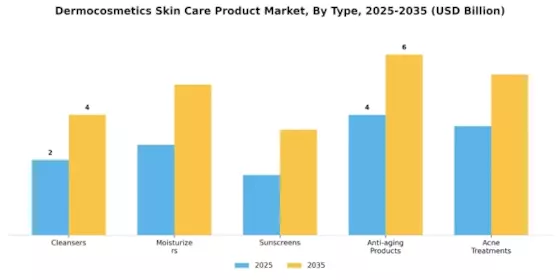
Cleansers: Dominant vs. Anti-aging Products: Emerging
Cleansers dominate the Dermocosmetics Skin Care Product Market, driven by increasing consumer awareness of skincare routines and the importance of skin cleansing. They often serve dual purposes, such as hydration and gentle exfoliation, appealing to a broad audience seeking multifunctional products. In contrast, anti-aging products represent an emerging segment, attracting consumers who are proactive about skincare. With advancements in formulations that incorporate potent active ingredients, these products are rapidly gaining traction, especially among aging populations keen on maintaining a youthful appearance. The demand for efficacy and specialized solutions in this area positions anti-aging products as a significant growth driver in the future.
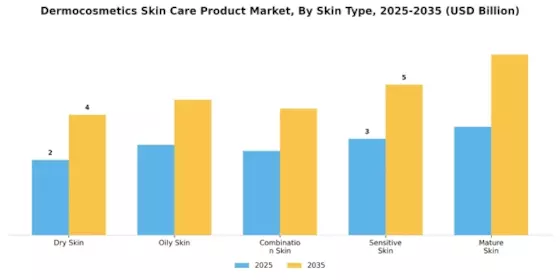
In the Dermocosmetics Skin Care Product Market, the distribution of market share among various skin types highlights Oily Skin as the largest segment, capturing the highest percentage of consumer preference. Following closely, Sensitive Skin and Combination Skin segments are also significant contributors to the market, catering specifically to targeted skincare needs. Meanwhile, Dry Skin is gaining traction, with its market share steadily increasing as awareness of specific skincare needs grows among consumers.
Oily Skin (Dominant) vs. Dry Skin (Emerging)
Oily Skin products dominate the Dermocosmetics market due to a large customer base searching for solutions to control excess oil and prevent acne. Brands focus on formulations that balance oil production while maintaining skin hydration, which appeals to a wide demographic. In contrast, Dry Skin products are emerging as consumers become more aware of the need for intense hydration and nourishment. These products are increasingly favored for their efficacy in addressing dryness and are often enriched with vitamins and hydrating ingredients, catering to a growing segment of individuals seeking relief from skin discomfort.
In the Dermocosmetics Skin Care Product Market, the distribution of sales across various channels demonstrates distinct preferences among consumers. Pharmacies hold the largest market share, benefiting from established trust and accessibility to customers seeking skin care solutions. Meanwhile, online retailers have gained traction, presenting convenience and a wider selection that appeals to the digital-savvy consumer. The growth trends in this segment are influenced by the rise of e-commerce and changing consumer behaviors. The online retail channel has experienced rapid expansion, driven by factors such as the increasing popularity of home delivery and the accessibility of product information. This shift indicates a significant transition in purchasing habits, with online platforms expected to further carve out their presence in the market.
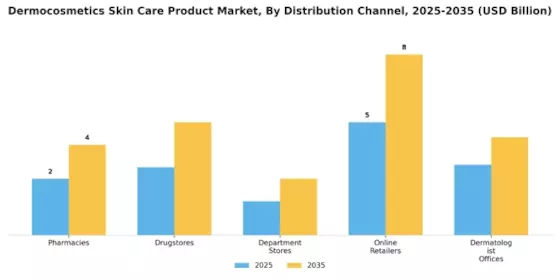
Pharmacies (Dominant) vs. Online Retailers (Emerging)
Pharmacies play a dominant role in the Dermocosmetics Skin Care Product Market, primarily due to their established credibility and personal interaction with consumers. They offer a curated selection of products, often providing consultations that enhance customer experience and satisfaction. This channel thrives on creating relationships and trust with customers, allowing for loyal consumer bases. On the other hand, online retailers are emerging rapidly as a vital channel, attracting tech-savvy consumers who seek the convenience of shopping from home. They offer a wider variety of products, competitive pricing, and ease of access to consumer reviews, creating a unique shopping experience. This fast growth reflects a broader trend towards e-commerce and the demand for immediate access to product information and availability.
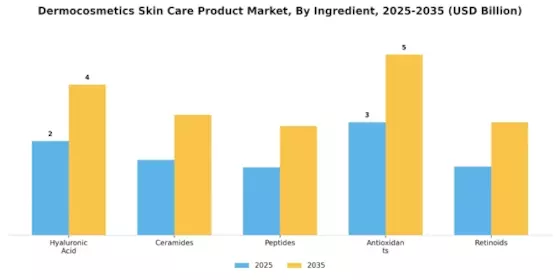
The Dermocosmetics Skin Care Product Market is heavily influenced by the ingredient preferences of consumers. At present, Hyaluronic Acid leads the segment with a substantial market share, revered for its exceptional hydrating properties. Ceramides and Antioxidants follow closely, appealing to consumers seeking barrier repair and protection against environmental damage. Retinoids, once dominantly associated with aging treatments, are also gaining traction in this segment, catering to an audience looking for proven anti-aging benefits. Peptides, while occupying a smaller share currently, are rapidly gaining attention due to their promising results in skin rejuvenation and elasticity improvement, signaling a shift in consumer demand. As the market evolves, the trend shows a massive inclination towards science-backed ingredients. The rise of social media influencers further amplifies the demand for innovative ingredients like Peptides. Consumers are increasingly educated about skin care, with a focus on personalized solutions that cater to specific skin concerns. This shift in buyer preferences is poised to reshape product formulations, compelling manufacturers to invest in research and development for new combinations of these ingredients, elevating their overall market presence and boosting competition among industry players.
Hyaluronic Acid (Dominant) vs. Ceramides (Emerging)
Hyaluronic Acid stands out as the dominant ingredient in the Dermocosmetics Skin Care Product Market, known for its ability to retain moisture and plump the skin, making it a crucial component in various formulations. Brands heavily exploit its properties, integrating it into serums, creams, and masks to target hydration needs across different skin types. On the other hand, Ceramides are emerging as a significant player, touted for their power to restore skin barrier function and maintain moisture retention. They are particularly popular among consumers with sensitive skin or conditions like eczema. As awareness about skin health rises, the integration of Ceramides in products is expected to increase, as consumers seek solutions that promise both immediate effects and long-term benefits.
The Dermocosmetics Skin Care Product Market shows a clear dominance of women's products, accounting for the largest share among target groups. This sector benefits from the increasing focus on specialized skin solutions catering to various concerns, such as anti-aging, hydration, and sensitivity. Moreover, the awareness and acceptance regarding skin health among women are significantly propelling this segment forward. Conversely, the men's segment is emerging as the fastest-growing category, driven by a cultural shift towards greater grooming and maintenance among men. Factors such as increased marketing efforts targeted at men, along with the rise of social media influencers advocating skin care for men, are contributing to this segment's rapid expansion. The appeal of products that enhance appearance and promote self-care is rapidly gaining traction in this marketplace.
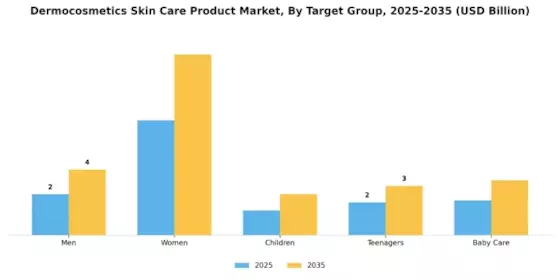
Women: Dominant vs. Men: Emerging
In the Dermocosmetics Skin Care Product Market, women represent a dominant segment due to their long-standing engagement with skin care routines and products. Brands are increasingly focusing on developing women-centric formulations that address specific skin issues, such as acne, pigmentation, and dryness. The appeal of sophisticated marketing strategies, including endorsed brands and natural ingredient lines, has solidified this position. On the other hand, the men's segment is considered an emerging powerhouse within the industry. Men's skin care is shifting from basic grooming to more specialized solutions, with products like moisturizing creams, serums, and exfoliating scrubs gaining popularity. This transition is fueled by social norms evolving around male grooming and an increase in product availability across various platforms.
Get more detailed insights about Dermocosmetics Skin Care Product Market Request Free Sample
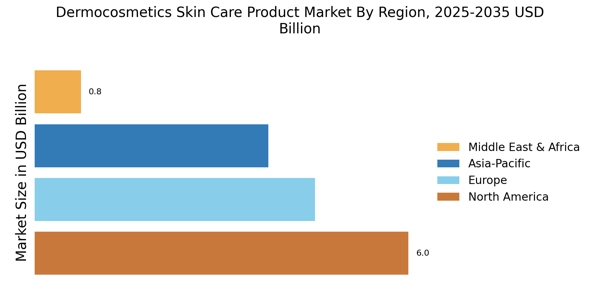
North America is the largest market for dermocosmetics, holding approximately 40% of the global share. The growth is driven by increasing consumer awareness regarding skin health, coupled with a rise in skin-related issues. Regulatory support from agencies like the FDA ensures product safety and efficacy, further boosting market confidence. The demand for natural and organic ingredients is also on the rise, reflecting a shift towards cleaner beauty products. The United States is the leading country in this region, with major players like Estée Lauder, Procter & Gamble, and Johnson & Johnson dominating the landscape. Canada follows as the second-largest market, contributing significantly to the overall growth. The competitive environment is characterized by continuous innovation and the introduction of new products tailored to specific skin concerns, ensuring a robust market presence for key players.
Europe is the second-largest market for dermocosmetics, accounting for approximately 30% of the global share. The region benefits from stringent regulatory frameworks that ensure high product standards, fostering consumer trust. The demand for dermocosmetics is driven by an aging population and increasing skin sensitivity issues. Countries like France and Germany are at the forefront, with a growing trend towards sustainable and eco-friendly products, aligning with EU regulations on cosmetic safety. France is a key player in the dermocosmetics market, home to renowned brands like L'Oreal and La Roche-Posay. Germany follows closely, with a strong emphasis on research and development in skincare. The competitive landscape is marked by a mix of established brands and emerging players, all striving to meet the evolving consumer preferences for efficacy and sustainability. The European market is characterized by innovation, with continuous advancements in formulations and packaging.
Asia-Pacific is an emerging powerhouse in the dermocosmetics market, holding approximately 25% of the global share. The region's growth is fueled by rising disposable incomes, increasing awareness of skincare, and a growing middle class. Countries like China and Japan are leading the charge, with a significant demand for products that address specific skin concerns. Regulatory bodies are increasingly focusing on safety standards, which is expected to further enhance market growth. China is the largest market in the region, with a booming e-commerce sector driving product accessibility. Japan follows closely, known for its innovative skincare solutions. The competitive landscape is vibrant, with both international brands and local players vying for market share. Key players like Shiseido and CeraVe are expanding their offerings to cater to diverse consumer needs, ensuring a dynamic market environment.
The Middle East and Africa region is witnessing a growing demand for dermocosmetics, accounting for approximately 5% of the global market share. The growth is driven by increasing awareness of skincare, rising disposable incomes, and a shift towards premium products. Regulatory frameworks are evolving, with governments focusing on consumer safety and product efficacy, which is expected to enhance market growth in the coming years. Countries like South Africa and the UAE are leading the market, with a growing interest in both local and international brands. The competitive landscape is characterized by a mix of established players and new entrants, all aiming to capture the attention of a discerning consumer base. Key players are increasingly focusing on product innovation and marketing strategies tailored to local preferences, ensuring a robust presence in this emerging market.
The Dermocosmetics Skin Care Product Market is characterized by a dynamic competitive landscape, driven by increasing consumer awareness regarding skin health and the efficacy of dermocosmetic products. Major players such as L'Oreal (FR), Estée Lauder (US), and Johnson & Johnson (US) are strategically positioned to leverage innovation and digital transformation to enhance their market presence. L'Oreal (FR) has been focusing on expanding its product lines that cater to specific skin concerns, while Estée Lauder (US) emphasizes premium offerings and personalized skincare solutions. Johnson & Johnson (US) appears to be concentrating on sustainability initiatives, which resonate well with environmentally conscious consumers. Collectively, these strategies contribute to a competitive environment that is increasingly focused on differentiation through innovation and consumer engagement.Key business tactics within the Dermocosmetics Skin Care Product Market include localizing manufacturing and optimizing supply chains to enhance responsiveness to consumer demands. The market structure is moderately fragmented, with a mix of established brands and emerging players. The influence of key players is substantial, as they not only set trends but also dictate pricing strategies and product availability, thereby shaping consumer preferences and market dynamics.In August L'Oreal (FR) announced the launch of a new line of personalized skincare products utilizing AI technology to analyze individual skin types and recommend tailored solutions. This strategic move underscores L'Oreal's commitment to innovation and positions the company at the forefront of the growing trend towards personalized skincare, potentially enhancing customer loyalty and market share.In September Estée Lauder (US) unveiled a partnership with a leading tech firm to develop augmented reality (AR) tools for virtual skincare consultations. This initiative not only enhances the consumer shopping experience but also aligns with the increasing demand for digital solutions in the beauty industry. By integrating AR technology, Estée Lauder (US) aims to create a more engaging and interactive platform for consumers, thereby driving sales and brand loyalty.In July Johnson & Johnson (US) launched a new sustainability initiative aimed at reducing plastic waste in its packaging. This initiative reflects the company's strategic focus on environmental responsibility, which is becoming a critical factor for consumers when choosing skincare products. By prioritizing sustainability, Johnson & Johnson (US) is likely to strengthen its brand image and appeal to a broader audience concerned about environmental issues.As of October current competitive trends in the Dermocosmetics Skin Care Product Market are heavily influenced by digitalization, sustainability, and the integration of advanced technologies such as AI. Strategic alliances are increasingly shaping the landscape, allowing companies to pool resources and expertise to innovate more effectively. Looking ahead, competitive differentiation is expected to evolve from traditional price-based competition to a focus on innovation, technology integration, and supply chain reliability, as companies strive to meet the sophisticated demands of modern consumers.
The Dermocosmetics Skin Care Product Market is projected to grow at a 4.22% CAGR from 2025 to 2035, driven by increasing consumer awareness and demand for skin health solutions.
New opportunities lie in:
By 2035, the market is expected to solidify its position as a leader in skin health innovation.
| MARKET SIZE 2024 | 15.12(USD Billion) |
| MARKET SIZE 2025 | 15.76(USD Billion) |
| MARKET SIZE 2035 | 23.84(USD Billion) |
| COMPOUND ANNUAL GROWTH RATE (CAGR) | 4.22% (2025 - 2035) |
| REPORT COVERAGE | Revenue Forecast, Competitive Landscape, Growth Factors, and Trends |
| BASE YEAR | 2024 |
| Market Forecast Period | 2025 - 2035 |
| Historical Data | 2019 - 2024 |
| Market Forecast Units | USD Billion |
| Key Companies Profiled | L'Oreal (FR), Estée Lauder (US), Procter & Gamble (US), Beiersdorf (DE), Johnson & Johnson (US), Shiseido (JP), CeraVe (US), La Roche-Posay (FR), Bioderma (FR) |
| Segments Covered | Product Type, Skin Type, Distribution Channel, Ingredient, Target Group, Care, Regional |
| Key Market Opportunities | Growing demand for personalized formulations in the Dermocosmetics Skin Care Product Market presents significant opportunities. |
| Key Market Dynamics | Rising consumer demand for skin health solutions drives innovation and competition in the Dermocosmetics Skin Care Product Market. |
| Countries Covered | North America, Europe, APAC, South America, MEA |
The Dermocosmetics Skin Care Product Market was valued at 15.12 USD Billion in 2024.



Kindly complete the form below to receive a free sample of this Report

“This is really good guys. Excellent work on a tight deadline. I will continue to use you going forward and recommend you to others. Nice job”


“Thanks. It’s been a pleasure working with you, please use me as reference with any other Intel employees.”


“Thanks for sending the report it gives us a good global view of the Betaïne market.”


“Thank you, this will be very helpful for OQS.”


“We found the report very insightful! we found your research firm very helpful. I'm sending this email to secure our future business.”


“I am very pleased with how market segments have been defined in a relevant way for my purposes (such as "Portable Freezers & refrigerators" and "last-mile"). In general the report is well structured. Thanks very much for your efforts.”


“I have been reading the first document or the study, ,the Global HVAC and FP market report 2021 till 2026. Must say, good info! I have not gone in depth at all parts, but got a good indication of the data inside!”


“We got the report in time, we really thank you for your support in this process. I also thank to all of your team as they did a great job.”


“The Automotive 48V ECU Components Procurement Intelligence Study” was a complex project, but the Market Research Future (MRFR) team handled it with quality, agility, and customer-centricity. They delivered all requested data on time and within the agreed scope. The team, including Shubhendra Anand and Rahul Gotadki, was always readily available to clarify questions and swiftly implement necessary adjustments, driving the project to a successful conclusion within a very demanding timeframe.
I would also like to specifically commend Akshay Agarwal for his responsiveness and support at every stage—from our initial inquiry on May 6th through to final delivery on June 18th. His dedication made the entire process seamless.”



