Download Free Sample
Kindly complete the form below to receive a free sample of this Report
Diabetes Care Drugs and Devices Market Research Report By Product Type (Insulin Devices, Glucose Monitoring Devices, Diabetes Care Medications, Therapeutic Devices, Pen Injectors), By End User (Hospitals, Clinics, Home Healthcare, Pharmacies), By Distribution Channel (Online Pharmacies, Retail Pharmacies, Hospitals, Diabetes Clinics), By Application (Type 1 Diabetes, Type 2 Diabetes, Gestational Diabetes) and By Regional (North America, Europe, South America, Asia - Pacific, Middle East and Africa) - Growth & Industry Forecast 2025 To 2035
As per Market Research Future analysis, the Diabetes Care Drugs and Devices Market was estimated at 61.19 USD Billion in 2024. The diabetes care industry is projected to grow from 64.1 USD Billion in 2025 to 102.05 USD Billion by 2035, exhibiting a compound annual growth rate (CAGR) of 4.76% during the forecast period 2025 - 2035
The Diabetes Care Drugs and Devices Market is experiencing robust growth driven by technological advancements and increasing demand for personalized healthcare solutions.
| 2024 Market Size | 61.19 (USD Billion) |
| 2035 Market Size | 102.05 (USD Billion) |
| CAGR (2025 - 2035) | 4.76% |
The Diabetes Care Drugs and Devices Market is currently experiencing a transformative phase, driven by advancements in technology and a growing awareness of diabetes management. Innovations in drug formulations and delivery systems are emerging, enhancing patient adherence and improving overall health outcomes. The integration of digital health solutions, such as mobile applications and telehealth services, appears to be reshaping the landscape, providing patients with real-time data and personalized care options. Furthermore, the increasing prevalence of diabetes globally necessitates a robust response from pharmaceutical companies and device manufacturers, who are likely to invest in research and development to meet the rising demand for effective treatments. In addition, the market is witnessing a shift towards more patient-centric approaches, with an emphasis on individualized therapy and lifestyle management. This trend suggests that healthcare providers are recognizing the importance of tailoring treatment plans to meet the unique needs of each patient. As a result, collaboration between various stakeholders, including healthcare professionals, technology developers, and patients, is becoming increasingly vital. The Diabetes Care Drugs and Devices Market is poised for continued growth, as it adapts to the evolving needs of individuals living with diabetes, ultimately aiming to enhance their quality of life and health outcomes.
The Diabetes Care Drugs and Devices Market is seeing rapid technological advancements in monitoring and treatment devices. Innovations such as continuous glucose monitors and insulin delivery systems are becoming more sophisticated, allowing for better management of blood sugar levels. These devices often feature connectivity options, enabling data sharing with healthcare providers, which may enhance patient outcomes.
There is a noticeable trend towards personalized medicine within the Diabetes Care Drugs and Devices Market. This approach focuses on tailoring treatments based on individual patient profiles, including genetic, environmental, and lifestyle factors. Such customization could lead to more effective management strategies and improved adherence to treatment regimens.
The integration of digital health solutions is transforming the Diabetes Care Drugs and Devices Market. Mobile applications and telehealth platforms are increasingly utilized to support diabetes management, offering patients tools for tracking their health metrics and communicating with healthcare professionals. This trend suggests a shift towards more proactive and engaged patient care.
The increasing prevalence of diabetes worldwide is a primary driver for the Diabetes Care Drugs and Devices Market. According to the World Health Organization, the number of individuals diagnosed with diabetes has surged significantly, with estimates suggesting that over 400 million people are currently living with the condition. This alarming trend necessitates a robust demand for effective diabetes care solutions, including medications and monitoring devices. As the population ages and lifestyle-related factors contribute to the rise in diabetes cases, the market for diabetes care products is expected to expand. The growing awareness of diabetes management and the importance of early intervention further fuels this demand, indicating a sustained growth trajectory for the Diabetes Care Drugs and Devices Market.
Innovations in drug development are transforming the Diabetes Care Drugs and Devices Market. Recent advancements in pharmacotherapy, including the introduction of novel classes of medications such as GLP-1 receptor agonists and SGLT2 inhibitors, have shown promising results in managing blood glucose levels and reducing cardiovascular risks. These innovations not only enhance treatment efficacy but also improve patient adherence to therapy. The market is witnessing a shift towards combination therapies that offer multifaceted benefits, thereby expanding treatment options for patients. Furthermore, the increasing investment in research and development by pharmaceutical companies is likely to yield new therapies, which could significantly impact the Diabetes Care Drugs and Devices Market in the coming years.
An increased focus on preventive healthcare is significantly influencing the Diabetes Care Drugs and Devices Market. Governments and health organizations are prioritizing diabetes prevention strategies, recognizing the long-term benefits of early intervention. This shift towards preventive measures includes promoting healthy lifestyles, regular screenings, and access to diabetes education. As a result, there is a growing emphasis on products that facilitate early detection and management of diabetes. The market is likely to see an uptick in demand for devices that support preventive care, such as blood glucose monitors and educational tools. This trend not only enhances patient outcomes but also reduces the overall healthcare burden associated with diabetes, thereby driving growth in the Diabetes Care Drugs and Devices Market.
The growing demand for continuous glucose monitoring (CGM) systems is reshaping the Diabetes Care Drugs and Devices Market. These advanced devices provide real-time glucose readings, enabling patients to manage their diabetes more effectively. The market for CGM systems is projected to grow at a compound annual growth rate of over 20% in the next few years, driven by technological advancements and increasing awareness of diabetes management. Patients and healthcare providers are increasingly recognizing the benefits of CGM, including improved glycemic control and reduced risk of hypoglycemia. As more individuals seek personalized and proactive diabetes management solutions, the CGM segment is expected to play a pivotal role in the overall growth of the Diabetes Care Drugs and Devices Market.
The integration of artificial intelligence (AI) in diabetes management is emerging as a transformative driver for the Diabetes Care Drugs and Devices Market. AI technologies are being utilized to analyze patient data, predict glucose fluctuations, and personalize treatment plans. This innovative approach enhances the accuracy of diabetes management and empowers patients to make informed decisions regarding their health. The market is witnessing the development of AI-driven applications and devices that offer tailored recommendations, thereby improving patient engagement and adherence to treatment. As healthcare providers increasingly adopt AI solutions, the Diabetes Care Drugs and Devices Market is poised for substantial growth, reflecting the potential of technology to revolutionize diabetes care.
In the Diabetes Care Drugs and Devices Market, the distribution of market share across various product types indicates the prominence of glucose monitoring devices, which account for the largest share. Insulin devices, while slightly lower in market share, are witnessing heightened adoption due to the increasing prevalence of diabetes and advancements in technology. Other segments, including diabetes care medications and therapeutic devices, also contribute to the landscape, although to a lesser extent.
Glucose Monitoring Devices (Dominant) vs. Insulin Devices (Emerging)
Glucose monitoring devices have established themselves as the dominant segment within the Diabetes Care Drugs and Devices Market, favored by both patients and healthcare providers for their ability to provide real-time data on blood glucose levels. This preferred status is complemented by innovations such as continuous glucose monitors (CGMs), which enhance user experience and compliance. In contrast, insulin devices, particularly pen injectors, are emerging as a rapidly growing segment, driven by an increase in diabetes diagnoses and the need for more efficient and user-friendly administration methods. The demand for these devices reflects a shift towards personalized care approaches in diabetes management.
The Diabetes Care Drugs and Devices Market shows a varied distribution across its end-user categories. Hospitals remain the largest segment, benefiting from advanced medical facilities, comprehensive care, and access to a larger patient population. Clinics and pharmacies also play pivotal roles, contributing significantly to the distribution of diabetes care solutions, while home healthcare emerges as a competitive segment, catering to the growing need for at-home treatment options.
Hospitals (Dominant) vs. Home Healthcare (Emerging)
Hospitals serve as the dominant end user in the Diabetes Care Drugs and Devices Market due to their integration of state-of-the-art technology and a broader range of diabetes management solutions. They have established protocols for patient treatment and often invest in advanced devices and drugs, providing wide access to patients requiring urgent care. In contrast, the home healthcare segment is emerging rapidly as consumers seek convenience and personalized care solutions in familiar settings. This trend is driven by the increasing prevalence of diabetes and a growing preference for at-home management, aided by technological advances that facilitate remote monitoring and telehealth consultations.
Within the Diabetes Care Drugs and Devices Market, Retail Pharmacies currently hold the largest market share, providing easy access and a wide variety of products for consumers. Following closely, Online Pharmacies have emerged as a competitive force in this sector, accounting for a rapidly growing share as more patients opt for the convenience and accessibility of purchasing diabetes care products online. Similarly, Hospitals and Diabetes Clinics play significant roles but with a more niche demand. The growth trends in this segment are chiefly driven by the increasing prevalence of diabetes and the growing preference for telehealth services. Online Pharmacies are capitalizing on the trend of digital health engagement, offering patients seamless options to purchase medications and devices while Retail Pharmacies continue to thrive due to their established trust and accessibility. In contrast, Hospitals and Diabetes Clinics remain vital, focusing on specialized care but face challenges from the shift towards outpatient care and convenience-driven purchasing behaviors.
Retail Pharmacies (Dominant) vs. Online Pharmacies (Emerging)
Retail Pharmacies serve as the backbone of Diabetes Care Drugs and Devices distribution, offering immediate access to essential medications and devices, which builds trust with customers. Their wide range of products, coupled with patient counseling and education, positions them as a dominant player in the market. They benefit from established relationships with manufacturers and strong distribution networks across urban and rural areas. Conversely, Online Pharmacies represent an emerging segment, rapidly gaining traction among tech-savvy consumers who seek convenience and cost savings. These platforms often offer competitive pricing and home delivery, appealing to a growing demographic of patients comfortable with online transactions. As digital health capabilities expand, Online Pharmacies are poised to capture a larger share of the market, continuously innovating to enhance customer experience and service delivery.
In the Diabetes Care Drugs and Devices Market, Type 2 Diabetes holds the largest market share, dominating the landscape due to its higher prevalence compared to Type 1 Diabetes and Gestational Diabetes. As more individuals are diagnosed with Type 2 Diabetes each year, a growing array of drug and device solutions are being developed to manage this condition effectively, further enhancing its market presence. Conversely, Type 1 Diabetes, while a smaller segment, is witnessing rapid growth owing to advancements in technology and increased awareness of insulin therapies and emerging devices like continuous glucose monitors.
Type 2 Diabetes (Dominant) vs. Type 1 Diabetes (Emerging)
Type 2 Diabetes currently dominates the Diabetes Care Drugs and Devices Market, benefitting from a substantial patient base and robust treatment options including oral medications and insulin therapies. The market's strong focus on lifestyle management and preventive care has fueled the adoption of innovative treatment solutions, solidifying its dominant position. On the other hand, Type 1 Diabetes is an emerging segment characterized by a growing demand for advanced insulin delivery systems and automated management devices. The increasing emphasis on personalized treatment options and technology integration in patient care highlights Type 1's potential for growth, as healthcare providers strive to enhance outcomes for this patient population.
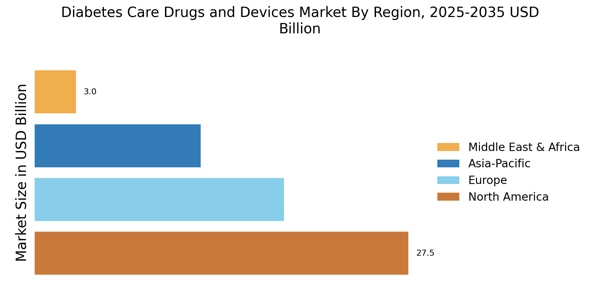
The Global Diabetes Care Drugs and Devices Market revenue is significantly influenced by regional dynamics, with North America leading at a market value of 25.0 USD Billion in 2024, which is projected to grow to 40.0 USD Billion by 2035, indicating its dominant position in the market. Europe follows with a considerable valuation of 15.0 USD Billion in 2024, expected to reach 25.0 USD Billion by 2035, showcasing significant growth potential due to an aging population and increasing diabetes prevalence.
The APAC region, valued at 12.0 USD Billion in 2024 and rising to 20.0 USD Billion in 2035, is becoming vital due to rapid urbanization, changing lifestyles, and escalating healthcare demand.
In South America, the market was valued at 5.0 USD Billion in 2024 and is anticipated to increase to 8.0 USD Billion by 2035, reflecting emerging market trends and healthcare investments. Meanwhile, the MEA region holds a smaller share with a valuation of 4.2 USD Billion in 2024, projected to grow to 9.0 USD Billion by 2035, driven by increasing awareness and government initiatives in diabetes care. Overall, these regions reveal a comprehensive Global Diabetes Care Drugs and Devices Market segmentation that highlights key opportunities and growth drivers.
The Global Diabetes Care Drugs and Devices Market is characterized by a dynamic landscape driven by the increasing prevalence of diabetes and a growing awareness of the importance of effective diabetes management. Competitive insights reveal a market teeming with innovation and advancements, where pharmaceutical companies and medical device manufacturers constantly strive to enhance product offerings. Innovations in drug formulation, delivery systems, glucose monitoring devices, and insulin therapies are pivotal in shaping market trends. Manufacturers are also focusing on research and development to meet diverse patient needs and improve the overall quality of life for individuals with diabetes.
Strategic partnerships and collaborations within the industry further fuel competitive dynamics, leading to the introduction of novel therapies and integrated care solutions that align with the broader healthcare ecosystem.
Boehringer Ingelheim has established a strong foothold within the Global Diabetes Care Drugs and Devices Market, primarily through its comprehensive portfolio of diabetes medications. The company is renowned for its commitment to research and development, which has enabled it to launch effective drugs that not only control blood glucose levels but also address the underlying aspects of diabetes management. Boehringer Ingelheim's strategies often revolve around patient-centric approaches, focusing on optimizing therapeutic outcomes and improving adherence to treatment regimens.
Its robust presence is bolstered by a well-established distribution network and collaborations with healthcare providers, ensuring that its innovative therapies reach a wide patient population. The company's dedication to advancing diabetes care is further reflected in its investment in digital healthinitiatives that empower patients to take an active role in managing their condition.
Amgen, while primarily recognized for its contributions to various therapeutic areas, has made significant inroads into the Global Diabetes Care Drugs and Devices Market with its focus on biologic therapies. The company leverages its expertise in biotechnology to develop cutting-edge treatments aimed at addressing the complexities of diabetes, particularly for individuals with varying levels of disease severity. Amgen's innovation-driven mindset has led to the introduction of novel therapies that enhance glycemic control and target specific patient populations.
Moreover, Amgen's strategic collaborations and partnerships with other entities in the healthcare sector facilitate the incorporation of technology and data analytics into diabetes management solutions, allowing for personalized treatment strategies. This capability positions Amgen as a key player in the evolving landscape of diabetes care, aligning its objectives with the broader initiatives aimed at improving patient outcomes and achieving effective disease management.


Recent developments in the Global Diabetes Care Drugs and Devices Market have seen an increased focus on innovative therapies and advanced technologies. Boehringer Ingelheim and Eli Lilly recently expanded their collaboration to enhance diabetes treatment options, leveraging their combined research capabilities. AstraZeneca is witnessing significant growth in its
diabetes portfolio, driven by strong sales of its SGLT2 inhibitors. Johnson and Johnson continues to innovate in diabetes devices, focusing on integrated care solutions that merge diagnostics with treatment. Roche is advancing its personalized diabetes management systems, enhancing patient engagement through smart technology. In the realm of mergers and acquisitions, Merck & Co. announced a strategic acquisition of a diabetes-focused biotech firm, aiming to bolster its pipeline for insulin products. Similarly, Abbott Laboratories is exploring partnerships to enhance its continuous glucose monitoring offerings.
The combined market valuation of these companies reflects robust growth, underscoring an increased investment in diabetes management solutions and the demand for more effective and user-friendly healthcare products. The ongoing advancements are positively impacting market dynamics, driving competition and fostering innovation across the sector.
The Diabetes Care Drugs and Devices Market is projected to grow at a 4.76% CAGR from 2025 to 2035, driven by technological advancements, increasing diabetes prevalence, and rising healthcare expenditure.
New opportunities lie in:
By 2035, the market is expected to be robust, driven by innovation and increased demand.
| MARKET SIZE 2024 | 61.19(USD Billion) |
| MARKET SIZE 2025 | 64.1(USD Billion) |
| MARKET SIZE 2035 | 102.05(USD Billion) |
| COMPOUND ANNUAL GROWTH RATE (CAGR) | 4.76% (2025 - 2035) |
| REPORT COVERAGE | Revenue Forecast, Competitive Landscape, Growth Factors, and Trends |
| BASE YEAR | 2024 |
| Market Forecast Period | 2025 - 2035 |
| Historical Data | 2019 - 2024 |
| Market Forecast Units | USD Billion |
| Key Companies Profiled | Abbott (US), Novo Nordisk (DK), Sanofi (FR), Boehringer Ingelheim (DE), Medtronic (US), Roche (CH), Johnson & Johnson (US), Eli Lilly (US), Dexcom (US) |
| Segments Covered | Product Type, End User, Distribution Channel, Application, Regional |
| Key Market Opportunities | Integration of digital health technologies enhances patient engagement in the Diabetes Care Drugs and Devices Market. |
| Key Market Dynamics | Technological advancements in diabetes management devices drive competitive dynamics and reshape consumer preferences in the market. |
| Countries Covered | North America, Europe, APAC, South America, MEA |
The projected market valuation for the Diabetes Care Drugs and Devices Market in 2035 is 102.05 USD Billion.
The overall market valuation for the Diabetes Care Drugs and Devices Market in 2024 was 61.19 USD Billion.
The expected CAGR for the Diabetes Care Drugs and Devices Market during the forecast period 2025 - 2035 is 4.76%.
Key players in the Diabetes Care Drugs and Devices Market include Abbott, Novo Nordisk, Sanofi, Boehringer Ingelheim, Medtronic, Roche, Johnson & Johnson, Eli Lilly, and Dexcom.
The projected revenues for Insulin Devices are expected to reach between 20.0 and 30.0 USD Billion by 2035.
Glucose Monitoring Devices are anticipated to generate revenues between 25.0 and 35.0 USD Billion by 2035.
Diabetes Care Medications are expected to generate revenues between 30.0 and 40.0 USD Billion by 2035.
Therapeutic Devices are projected to generate revenues between 15.0 and 25.0 USD Billion by 2035.
Type 2 Diabetes treatments are anticipated to generate revenues between 55.0 and 75.0 USD Billion by 2035.
Online pharmacies are expected to generate revenues between 13.0 and 18.0 USD Billion by 2035.


Kindly complete the form below to receive a free sample of this Report

“This is really good guys. Excellent work on a tight deadline. I will continue to use you going forward and recommend you to others. Nice job”


“Thanks. It’s been a pleasure working with you, please use me as reference with any other Intel employees.”


“Thanks for sending the report it gives us a good global view of the Betaïne market.”


“Thank you, this will be very helpful for OQS.”


“We found the report very insightful! we found your research firm very helpful. I'm sending this email to secure our future business.”


“I am very pleased with how market segments have been defined in a relevant way for my purposes (such as "Portable Freezers & refrigerators" and "last-mile"). In general the report is well structured. Thanks very much for your efforts.”


“I have been reading the first document or the study, ,the Global HVAC and FP market report 2021 till 2026. Must say, good info! I have not gone in depth at all parts, but got a good indication of the data inside!”


“We got the report in time, we really thank you for your support in this process. I also thank to all of your team as they did a great job.”


“The Automotive 48V ECU Components Procurement Intelligence Study” was a complex project, but the Market Research Future (MRFR) team handled it with quality, agility, and customer-centricity. They delivered all requested data on time and within the agreed scope. The team, including Shubhendra Anand and Rahul Gotadki, was always readily available to clarify questions and swiftly implement necessary adjustments, driving the project to a successful conclusion within a very demanding timeframe.
I would also like to specifically commend Akshay Agarwal for his responsiveness and support at every stage—from our initial inquiry on May 6th through to final delivery on June 18th. His dedication made the entire process seamless.”



