Download Free Sample
Kindly complete the form below to receive a free sample of this Report
Diabetes Market information, by Type (Type 1, Type 2, and Gestational diabetes), by Test (Random blood sugar test, Fasting blood sugar test, Oral glucose tolerance test, Initial glucose challenge test and others), by Devices (Blood glucose monitoring devices, Diabetes management devices, and others) by Treatment (Medications, Insulin therapy, Transplantation, Bariatric surgery and others) - Growth & Industry Forecast 2025 To 2035
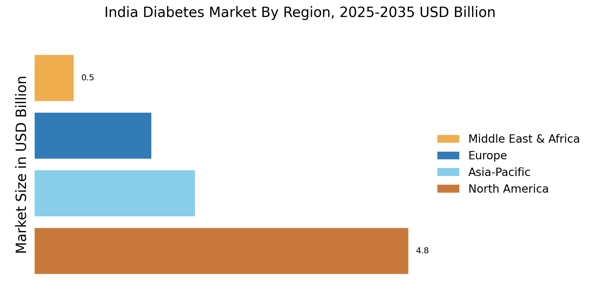
The Global Diabetes Market size was valued at USD 6.86 Billion in 2024, and the market is projected to grow from USD 7.31 Billion in 2025 to USD 13.77 Billion by 2035, registering a CAGR of 6.54% during the forecast period 2025–2035. North America led the market in 2024 with over 69.97% share, generating around USD 4.8 Billion in revenue. The increasing prevalence of diabetes worldwide is a major factor driving market growth. Growing patient populations, expanding screening programs, and greater awareness of early diagnosis are accelerating demand for advanced therapies, monitoring technologies, and long-term diabetes management solutions across healthcare systems. According to the WHO, approximately 830 million people worldwide were living with diabetes in 2024, highlighting a substantial and expanding patient population that continues to drive demand for innovative diabetes treatments, monitoring devices, and preventive healthcare solutions.
The Diabetes Market is experiencing transformative growth driven by technological advancements and increasing awareness.
| 2024 Market Size | 6.86 (USD Billion) |
| 2035 Market Size | 13.77 (USD Billion) |
| CAGR (2025 - 2035) | 6.54% |
Companies such as Novo Nordisk (DK), Sanofi (FR), Boehringer Ingelheim (DE), Bristol-Myers Squibb (US), Merck & Co. (US), Johnson & Johnson (US), Abbott Laboratories (US), Eli Lilly and Company (US), AstraZeneca (GB) are some of the major participants in the global market.
Our Impact
Enabled $4.3B Revenue Impact for Fortune 500 and Leading Multinationals
Partnering with 2000+ Global Organizations Each Year
30K+ Citations by Top-Tier Firms in the Industry
The Diabetes Market is currently experiencing a notable transformation, driven by a combination of rising prevalence of diabetes and increasing awareness regarding the condition. The growing population, coupled with changing lifestyles and dietary habits, appears to contribute significantly to the surge in diabetes cases. As a result, there is a heightened demand for innovative treatment options, including advanced medications and technologies.
Healthcare providers are increasingly focusing on personalized care, which may enhance patient outcomes and improve overall management of diabetes. Furthermore, the integration of digital health solutions, such as mobile applications and telemedicine, seems to be reshaping the landscape of diabetes care in India. In addition to treatment advancements, the global market is witnessing a shift towards preventive measures.
Public health initiatives aimed at educating the population about diabetes risk factors and promoting healthier lifestyles are gaining traction. This proactive approach may lead to a reduction in the incidence of diabetes over time. Moreover, collaborations between government bodies and private organizations are likely to foster innovation and improve access to diabetes care.
Overall, the global market is poised for growth, with a focus on comprehensive management strategies that encompass both treatment and prevention.
The increasing incidence of diabetes in India is a critical factor influencing the global market. As more individuals are diagnosed, the demand for effective management solutions is likely to escalate.
Innovations in diabetes management technologies, such as continuous glucose monitoring systems and insulin delivery devices, are emerging trends. These advancements may enhance patient adherence and improve health outcomes.
There is a growing emphasis on preventive measures within the global market. Public health campaigns aimed at educating the population about lifestyle changes could potentially reduce the future burden of diabetes.
The demographic shift towards an aging population in India is a crucial driver for the Diabetes Industry. As individuals age, the risk of developing diabetes increases, leading to a higher prevalence of the disease among the elderly. Current statistics indicate that approximately 70 million people in India are living with diabetes, with a significant portion being senior citizens. This trend is expected to continue, as the geriatric population is projected to reach 300 million by 2050. Consequently, there is a rising demand for specialized diabetes care products and services tailored to the needs of older adults. This demographic shift presents both challenges and opportunities for healthcare providers and the global market.
Technological advancements in diabetes management are transforming the Diabetes Industry. Innovations such as continuous glucose monitoring systems, insulin pumps, and mobile health applications are enhancing the way diabetes is managed. These technologies provide patients with real-time data, enabling better decision-making regarding their health. The global industry for diabetes technology is expected to witness substantial growth, with projections indicating a compound annual growth rate (CAGR) of over 15% in the coming years. This growth is driven by the increasing adoption of digital health solutions and the demand for personalized diabetes care. As technology continues to evolve, it is likely to improve patient outcomes and streamline diabetes management processes.
Government initiatives aimed at combating diabetes are significantly influencing the Diabetes Industry. Various health policies and programs have been implemented to address the rising diabetes prevalence. For instance, the National Programme for Prevention and Control of Diabetes, Cardiovascular Diseases, and Stroke (NPCDCS) aims to reduce the burden of non-communicable diseases through awareness and screening. Such initiatives are likely to enhance access to healthcare services and promote preventive measures. Furthermore, the government is investing in healthcare infrastructure, which is expected to facilitate better diabetes management. This proactive approach may lead to an increase in the availability of diabetes medications and devices, thereby driving market growth.
The rise in lifestyle-related diseases, particularly obesity, is a notable driver in the Diabetes Industry. Sedentary lifestyles, unhealthy dietary habits, and increased stress levels have contributed to a surge in obesity rates, which is closely linked to the development of type 2 diabetes. Recent data suggests that the prevalence of obesity in India has doubled over the past two decades, leading to a corresponding increase in diabetes cases. This alarming trend has prompted healthcare professionals to advocate for lifestyle modifications and preventive measures. As a result, there is a growing market for weight management solutions, dietary supplements, and fitness programs aimed at reducing the risk of diabetes, thereby driving market growth.
The increasing awareness regarding diabetes management is a pivotal driver in the Diabetes Industry. Educational campaigns and health initiatives have led to a heightened understanding of diabetes, its complications, and the importance of regular monitoring. As a result, more individuals are seeking medical advice and treatment options. This trend is reflected in the growing demand for glucose monitoring devices and insulin products. According to recent estimates, the global industry for diabetes care devices in India is projected to reach approximately USD 1.5 billion by 2025. This surge in awareness not only encourages early diagnosis but also promotes adherence to treatment regimens, thereby enhancing the overall management of diabetes in the population.
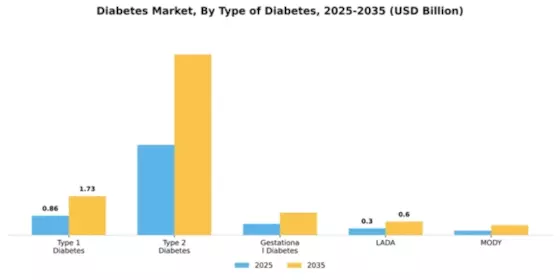
The diabetes market is predominantly led by Type 2 Diabetes, which accounts for a significant share of 74% of overall cases globally. Type 2 Diabetes is not just more prevalent but also manifests in a larger number of patient demographics. In contrast, Type 1 Diabetes, while less common, is rapidly gaining attention as healthcare advancements make diagnosis and management more robust. Gestational diabetes, LADA, and MODY contribute to a smaller, yet crucial part of the market, each with unique treatment protocols.
Bristol Myers Squibb continues supporting cardiometabolic research initiatives addressing Type 2 diabetes and related complications. Since approximately 90–95% of diabetes cases globally are Type 2 diabetes, the segment maintains dominant market positioning and continues generating substantial demand for treatment and disease management solutions.
The diabetes market's treatment methods exhibit diverse strategies, with Insulin Therapy leading the market with a 43% share, driven by its established efficacy and widespread adoption among patients. Oral Medications closely follow, leveraging their convenience and growing trust. Dietary Management and Physical Activity remain essential fundamentals in diabetes care, while Continuous Glucose Monitoring is rapidly gaining traction among tech-savvy consumers, reflecting an evolving approach to diabetes management. The overall distribution shows a preference for both traditional and innovative methods, catering to varied patient needs. Growth trends in the diabetes treatment segment are influenced by increasing diabetes prevalence and rising awareness of personalized treatment approaches. Insulin Therapy remains prominent due to ongoing advancements in formulation and delivery. Additionally, the demand for Continuous Glucose Monitoring is accelerating, driven by technological innovations and the integration of digital health solutions, enabling better lifestyle management for those living with diabetes.
Merck & Co. supports innovative diabetes care initiatives alongside broader metabolic disease research. Insulin therapy remains a cornerstone of diabetes treatment, particularly for Type 1 diabetes and advanced Type 2 diabetes management, reinforcing its leading position within the treatment segment through widespread adoption and clinical effectiveness.
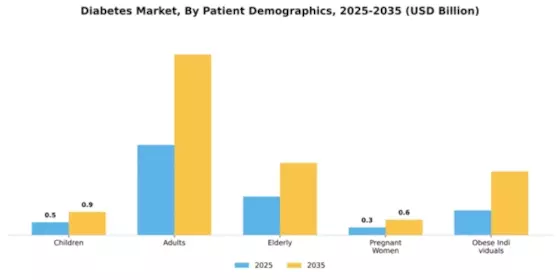
In the diabetes market, the distribution of patient demographics shows that adults represent the largest segment, accounting for 68%, reflecting their prevalent lifestyle and health concerns associated with type 2 diabetes. They significantly outnumber other demographics, driven by lifestyle choices such as diet, exercise, and health awareness. Meanwhile, the elderly population is increasingly affected, making this group a notable segment to watch due to their growing need for diabetes management solutions. Growth trends point to a surge in diabetes cases among the elderly, largely attributed to aging populations and enhanced diagnosis rates. Additionally, technological advancements in diabetes care and increased awareness around health management among older adults are driving this market to evolve. Healthcare providers are focusing on tailored solutions for this demographic, thus creating opportunities for targeted products and services.
Johnson & Johnson has historically contributed to diabetes management innovation through monitoring technologies and patient care solutions. Adults represent the largest diabetes population globally, with working-age individuals accounting for the majority of diagnosed cases, supporting strong demand for long-term diabetes treatment and monitoring products.
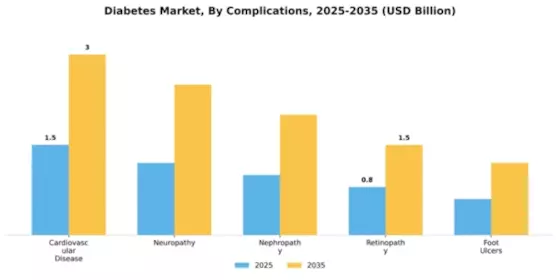
In the diabetes market, the complications associated with the disease present a significant challenge, with cardiovascular disease holding the largest share of 39%. This condition affects a substantial number of diabetic patients, leading to increased healthcare costs and a need for effective management strategies. Neuropathy, while not as prevalent, is recognized as the fastest-growing complication, driven by the rising number of diabetes cases and an aging population. As awareness about diabetes-related complications increases, more patients are seeking preventative care, further emphasizing the importance of addressing these health issues. Growth trends in the diabetes complications segment are influenced by various factors, including advancements in treatment options and greater emphasis on patient education. Healthcare providers are increasingly focused on early detection and intervention, which boosts the awareness and diagnosis of complications like neuropathy and retinopathy. Additionally, the integration of digital health technologies, such as telemedicine and remote monitoring, enhances patient engagement and promotes timely care, thus contributing to the growth trajectory of this segment.
Eli Lilly and Company continues advancing diabetes therapies focused on reducing cardiovascular risks. Studies indicate that adults with diabetes face approximately two times greater risk of cardiovascular disease, making cardiovascular complications the most significant clinical concern and a major contributor to healthcare utilization.
In the diabetes market, Retail Pharmacies hold the largest market share, accounting for 57% among the various market channels. They provide essential diabetes management products ranging from insulin to glucose monitoring devices, offering a wide selection and immediacy that customers value. In contrast, Online Pharmacies are quickly capturing market share, driven by the convenience of home delivery and the growing trend of e-commerce. This shift is particularly relevant in urban areas where access to physical stores may be limited. Growth trends within the market channel segment are propelled by increased awareness of diabetes management options and technological advancements. The rise of telehealth services and digital wellness platforms is making it easier for patients to obtain their medications and support. Online Pharmacies, in particular, are benefiting from this change, with consumers seeking more convenient purchasing options, making them the fastest-growing segment in the diabetes market.
AstraZeneca continues expanding access to chronic disease treatments through established healthcare distribution networks. Retail pharmacies remain the primary channel for diabetes medications and monitoring products, benefiting from immediate accessibility, prescription fulfillment services, and strong patient trust across global healthcare markets.
Get more detailed insights about Diabetes Market Request Free Sample
The North American market is driven by advanced healthcare infrastructure, increasing prevalence of diabetes, and innovative treatment options. The U.S. holds the largest market share at approximately 70%, followed by Canada at around 15%. Regulatory support for new drug approvals and reimbursement policies further catalyze market growth. The rising awareness of diabetes management and preventive care is also a significant demand driver.
Leading countries in this region include the United States and Canada, with major players like Novo Nordisk, Sanofi, and Merck & Co. dominating the landscape. The competitive environment is characterized by continuous innovation and partnerships among pharmaceutical companies. The presence of advanced research facilities and a focus on personalized medicine are key factors enhancing market dynamics.
The European market is characterized by diverse healthcare systems and varying regulatory frameworks across countries. Germany and France are the largest markets, holding approximately 25% and 20% market shares, respectively. The European Medicines Agency (EMA) plays a crucial role in facilitating drug approvals, which supports market expansion. Increasing healthcare expenditure and a growing aging population are significant growth drivers in this region.
Key players such as AstraZeneca, Sanofi, and Boehringer Ingelheim are actively involved in the European market. The competitive landscape is marked by a focus on innovative therapies and biosimilars. Countries like the UK and Italy are also emerging as important markets, driven by rising diabetes prevalence and enhanced patient access to treatment options.
The Asia-Pacific market is witnessing rapid growth due to increasing urbanization, lifestyle changes, and rising obesity rates. India and China are the largest markets, accounting for approximately 30% and 25% of the market share, respectively. Government initiatives aimed at improving healthcare access and diabetes awareness are significant catalysts for market growth. The region's diverse population and varying healthcare systems present both challenges and opportunities for market players.
India is emerging as a key player in the market, with major companies like Abbott Laboratories and Johnson & Johnson expanding their presence. The competitive landscape is evolving, with a focus on affordable treatment options and innovative technologies. The increasing prevalence of diabetes in urban areas is driving demand for effective management solutions, making this region a focal point for future investments.
The Middle East and Africa market is characterized by a growing prevalence of diabetes, driven by lifestyle changes and urbanization. Countries like South Africa and the UAE are leading the market, holding approximately 20% and 15% market shares, respectively. Government initiatives aimed at improving healthcare infrastructure and diabetes awareness are crucial for market growth. The region's diverse economic landscape presents both challenges and opportunities for market players.
Key players such as Merck & Co. and Lilly are increasingly focusing on this region, recognizing the potential for growth. The competitive landscape is marked by a mix of multinational corporations and local companies. The rising demand for diabetes management solutions is prompting investments in healthcare facilities and innovative treatment options, making this region an emerging market for diabetes care.
The Diabetes Market is characterized by a rapidly evolving competitive landscape, driven by increasing prevalence rates and a growing demand for innovative treatment solutions. Major players such as Novo Nordisk (DK), Sanofi (FR), and Abbott Laboratories (US) are strategically positioned to leverage their extensive portfolios and research capabilities. Novo Nordisk (DK) focuses on innovation in insulin delivery systems, while Sanofi (FR) emphasizes partnerships with local healthcare providers to enhance patient access. Abbott Laboratories (US) is investing heavily in digital health solutions, indicating a shift towards integrated care models. Collectively, these strategies not only enhance their market presence but also contribute to a more competitive environment that prioritizes patient-centric solutions. Key business tactics employed by these companies include localizing manufacturing and optimizing supply chains to meet the unique demands of the Indian market. The competitive structure of the global industry in India appears moderately fragmented, with several players vying for market share. However, the influence of key players is substantial, as they set benchmarks for quality and innovation, thereby shaping the overall market dynamics.In August 2025, Sanofi (FR) announced a strategic partnership with a leading Indian telehealth platform to enhance diabetes management through remote monitoring. This collaboration is significant as it aligns with the growing trend of digital health solutions, enabling better patient engagement and adherence to treatment protocols. Such initiatives are likely to improve health outcomes and solidify Sanofi's position in the market. In September 2025, Abbott Laboratories (US) launched a new continuous glucose monitoring system tailored for the Indian population, which is expected to revolutionize diabetes management. This product introduction not only showcases Abbott's commitment to innovation but also addresses the specific needs of Indian patients, potentially increasing their market share. The strategic importance of this launch lies in its ability to provide real-time data, thereby empowering patients and healthcare providers alike. In October 2025, Novo Nordisk (DK) expanded its manufacturing capabilities in India by investing in a new facility aimed at producing biosimilars. This move is indicative of the company's long-term strategy to enhance local production and reduce dependency on imports. The establishment of this facility is likely to improve supply chain reliability and reduce costs, positioning Novo Nordisk favorably against competitors. As of October 2025, current competitive trends in the market are increasingly defined by digitalization, sustainability, and the integration of artificial intelligence in treatment protocols. Strategic alliances, such as those between pharmaceutical companies and technology firms, are shaping the landscape by fostering innovation and improving patient outcomes. Looking ahead, competitive differentiation is expected to evolve from traditional price-based competition to a focus on innovation, technological advancements, and supply chain reliability, thereby enhancing the overall quality of care in diabetes management.



February 2024:In February 2024, Roche Diabetes Market Care Launched a new continuous glucose monitoring (CGM) system in India, aiming to improve diabetes management and glycemic control.
The Diabetes Market size is projected to reach USD 13.77 Billion by 2035, growing at a CAGR of 6.54%, driven by increasing prevalence, technological advancements, and rising healthcare expenditure.
New opportunities lie in:
By 2035, the Diabetes Market is expected to be robust, driven by innovation and increased healthcare access.
| MARKET SIZE 2024 | 6.86(USD Billion) |
| MARKET SIZE 2025 | 7.309(USD Billion) |
| MARKET SIZE 2035 | 13.77(USD Billion) |
| COMPOUND ANNUAL GROWTH RATE (CAGR) | 6.54% (2024 - 2035) |
| REPORT COVERAGE | Revenue Forecast, Competitive Landscape, Growth Factors, and Trends |
| BASE YEAR | 2024 |
| Market Forecast Period | 2025 - 2035 |
| Historical Data | 2019 - 2024 |
| Market Forecast Units | USD Billion |
| Key Companies Profiled | Market analysis in progress |
| Segments Covered | Market segmentation analysis in progress |
| Key Market Opportunities | Integration of digital health solutions enhances diabetes management in the Diabetes Market. |
| Key Market Dynamics | Rising prevalence of diabetes drives demand for innovative treatment solutions and enhanced patient care in India. |
| Countries Covered | North America, Europe, APAC, South America, MEA |
The diabetes market valuation is approximately 100.0 USD Billion in 2024, and it is expected to grow significantly by 2035.
The diabetes market is projected to reach 150.0 USD Billion by 2035, indicating substantial growth.
The expected CAGR for the diabetes market during the forecast period 2025 - 2035 is 3.75%.
The market segments by type of diabetes include Type 1 Diabetes valued at 10.0 to 15.0 USD Billion, Type 2 Diabetes at 60.0 to 90.0 USD Billion, and others.
Primary treatment methods include Insulin Therapy valued at 30.0 to 45.0 USD Billion and Oral Medications at 25.0 to 35.0 USD Billion.
The market segments by patient demographics include Adults valued at 50.0 to 75.0 USD Billion and Elderly at 20.0 to 30.0 USD Billion.
Complications include Cardiovascular Disease valued at 30.0 to 45.0 USD Billion and Kidney Disease at 25.0 to 35.0 USD Billion.
Market channels include Retail Pharmacies valued at 30.0 to 45.0 USD Billion and Hospitals at 25.0 to 35.0 USD Billion.
The diabetes market is anticipated to experience steady growth, reaching 150.0 USD Billion by 2035, driven by increasing prevalence and treatment advancements.





Kindly complete the form below to receive a free sample of this Report

“This is really good guys. Excellent work on a tight deadline. I will continue to use you going forward and recommend you to others. Nice job”


“Thanks. It’s been a pleasure working with you, please use me as reference with any other Intel employees.”


“Thanks for sending the report it gives us a good global view of the Betaïne market.”


“Thank you, this will be very helpful for OQS.”


“We found the report very insightful! we found your research firm very helpful. I'm sending this email to secure our future business.”


“I am very pleased with how market segments have been defined in a relevant way for my purposes (such as "Portable Freezers & refrigerators" and "last-mile"). In general the report is well structured. Thanks very much for your efforts.”


“I have been reading the first document or the study, ,the Global HVAC and FP market report 2021 till 2026. Must say, good info! I have not gone in depth at all parts, but got a good indication of the data inside!”


“We got the report in time, we really thank you for your support in this process. I also thank to all of your team as they did a great job.”


“The Automotive 48V ECU Components Procurement Intelligence Study” was a complex project, but the Market Research Future (MRFR) team handled it with quality, agility, and customer-centricity. They delivered all requested data on time and within the agreed scope. The team, including Shubhendra Anand and Rahul Gotadki, was always readily available to clarify questions and swiftly implement necessary adjustments, driving the project to a successful conclusion within a very demanding timeframe.
I would also like to specifically commend Akshay Agarwal for his responsiveness and support at every stage—from our initial inquiry on May 6th through to final delivery on June 18th. His dedication made the entire process seamless.”



