Expansion of E-commerce Platforms
The expansion of e-commerce platforms is transforming the purchasing landscape for the Digitally Printed Wallpaper Market. As online shopping becomes increasingly prevalent, consumers are more inclined to explore and purchase wallpapers through digital channels. This shift is facilitated by the convenience of online shopping, which allows consumers to browse a vast array of designs and compare prices from the comfort of their homes. Additionally, e-commerce platforms often provide detailed product descriptions and customer reviews, enhancing the decision-making process for buyers. Market data indicates that online sales of home decor products, including digitally printed wallpapers, are on the rise, suggesting a shift in consumer behavior. This trend is likely to bolster the Digitally Printed Wallpaper Market, as manufacturers and retailers adapt their strategies to capitalize on the growing online consumer base.
Growing Interest in DIY Home Decor
The rise of the do-it-yourself (DIY) home decor movement is a significant driver for the Digitally Printed Wallpaper Market. As more consumers engage in home improvement projects, the accessibility of digitally printed wallpapers has become increasingly appealing. DIY enthusiasts appreciate the ease of application and removal of these wallpapers, which allows for frequent updates to their living spaces without extensive renovations. Market data indicates that the DIY segment is expanding, with a notable increase in sales of wallpaper products designed for easy installation. This trend not only empowers consumers to express their creativity but also stimulates growth within the Digitally Printed Wallpaper Market, as manufacturers cater to this burgeoning demographic by offering user-friendly products and a variety of design options.
Rising Demand for Aesthetic Interiors
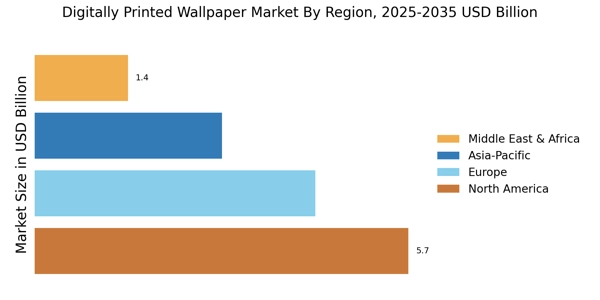
The Digitally Printed Wallpaper Market is experiencing a notable surge in demand driven by the increasing consumer preference for aesthetically pleasing interiors. As individuals seek to create unique and personalized living spaces, the appeal of digitally printed wallpapers, which offer a wide array of designs and textures, becomes evident. According to recent data, the market is projected to grow at a compound annual growth rate of approximately 5.5% over the next few years. This growth is largely attributed to the rising disposable incomes and the growing trend of home renovation, which encourages consumers to invest in decorative elements that enhance the visual appeal of their homes. Consequently, the Digitally Printed Wallpaper Market is poised to benefit from this trend as more consumers opt for customized wall solutions that reflect their personal style.
Increased Focus on Sustainable Practices
Sustainability is becoming a pivotal concern within the Digitally Printed Wallpaper Market. As consumers become more environmentally conscious, there is a growing demand for wallpapers made from eco-friendly materials and processes. Manufacturers are responding by developing products that utilize sustainable inks and recyclable substrates, which appeal to the eco-aware consumer base. This shift towards sustainability is not merely a trend; it reflects a broader societal movement towards responsible consumption. Market analysis suggests that the demand for sustainable wallpaper solutions is likely to increase, as consumers prioritize products that align with their values. Consequently, the Digitally Printed Wallpaper Market is expected to evolve, with a greater emphasis on environmentally friendly practices that resonate with modern consumers.
Technological Innovations in Printing Techniques
Technological advancements in printing techniques are significantly influencing the Digitally Printed Wallpaper Market. Innovations such as high-definition printing and eco-solvent inks have enhanced the quality and durability of wallpapers, making them more appealing to consumers. The introduction of advanced printing technologies allows for intricate designs and vibrant colors, which cater to the diverse tastes of consumers. Furthermore, the ability to produce wallpapers on demand reduces waste and inventory costs, thereby attracting environmentally conscious buyers. As a result, the Digitally Printed Wallpaper Market is likely to witness an increase in adoption rates, as manufacturers leverage these technologies to meet the evolving demands of the market. This trend suggests a promising future for the industry, as it aligns with consumer expectations for quality and sustainability.