Wallpaper Market
Wallpaper Market Summary
As per Market Research Future analysis, the Wallpaper Market Size was estimated at 2.37 USD Billion in 2024. The Wallpaper industry is projected to grow from 2.482 USD Billion in 2025 to 3.936 USD Billion by 2035, exhibiting a compound annual growth rate (CAGR) of 4.7% during the forecast period 2025 - 2035
Key Market Trends & Highlights
The Wallpaper Market is experiencing a dynamic shift towards sustainability and customization, driven by evolving consumer preferences.
- Sustainability in wallpaper production is becoming a pivotal trend, particularly in North America, where eco-conscious consumers are driving demand.
- Customization and personalization are increasingly sought after, allowing consumers to create unique spaces that reflect their individual styles.
- Technological integration in retail is enhancing the shopping experience, particularly in the Asia-Pacific region, where digital solutions are rapidly evolving.
- Rising home renovation activities and the influence of interior design trends are major drivers, particularly in the residential construction segment, which remains the largest.
Market Size & Forecast
| 2024 Market Size | 2.37 (USD Billion) |
| 2035 Market Size | 3.936 (USD Billion) |
| CAGR (2025 - 2035) | 4.72% |
Major Players
Brewster Home Fashions (US), York Wallcoverings (US), Graham & Brown (GB), A.S. Création (DE), Farrow & Ball (GB), Cole & Son (GB), Morris & Co. (GB), Wall & Deco (IT), Duro (SE)
Wallpaper Market Trends
The Wallpaper Market is currently experiencing a dynamic transformation, driven by evolving consumer preferences and technological advancements. As individuals increasingly seek personalized and unique interior designs, the demand for diverse wallpaper options appears to be on the rise. This shift is likely influenced by a growing awareness of interior aesthetics and the desire to create distinctive living spaces. Furthermore, the integration of eco-friendly materials into wallpaper production suggests a potential alignment with sustainability trends, appealing to environmentally conscious consumers. The market seems to be adapting to these changes, with manufacturers exploring innovative designs and materials to cater to a broader audience. In addition, the Wallpaper Market is witnessing a surge in online retail channels, which may enhance accessibility for consumers. The convenience of purchasing wallpaper online, coupled with the ability to visualize products in various settings, could significantly influence buying behavior. As technology continues to evolve, augmented reality tools may further facilitate the selection process, allowing consumers to envision how different wallpapers will look in their homes. Overall, the Wallpaper Market appears poised for growth, driven by a combination of aesthetic desires, sustainability considerations, and technological advancements.
Sustainability in Wallpaper Market Production
The trend towards sustainability is becoming increasingly prominent within the Wallpaper Market. Manufacturers are exploring eco-friendly materials and production processes, which may resonate with consumers who prioritize environmental responsibility. This shift could lead to a broader acceptance of wallpapers made from recycled or organic materials, potentially transforming consumer choices.
Customization and Personalization
Customization is emerging as a key trend in the Wallpaper Market, as consumers seek unique designs that reflect their individual tastes. This desire for personalization may drive manufacturers to offer bespoke wallpaper solutions, allowing customers to select patterns, colors, and textures that align with their specific preferences.
Technological Integration in Retail
The integration of technology into the retail experience is reshaping the Wallpaper Market. Online platforms are becoming increasingly popular, providing consumers with the convenience of browsing and purchasing wallpapers from home. Additionally, advancements in augmented reality may enhance the shopping experience, enabling customers to visualize how different wallpapers will look in their spaces.
Wallpaper Market Drivers
Customization and Personalization
Customization and personalization are becoming pivotal drivers in the Wallpaper Market. Consumers increasingly seek unique designs that reflect their individual tastes and preferences. This trend is evidenced by the rise of online platforms that allow customers to create bespoke wallpaper designs, catering to specific aesthetic desires. In 2025, the market for customized wallpaper is projected to grow substantially, as more consumers opt for personalized home decor solutions. This shift not only enhances customer satisfaction but also fosters brand loyalty, as consumers are more likely to return to brands that offer tailored products. The ability to personalize wallpaper can significantly differentiate brands in a competitive market, making it a crucial strategy for success in the Wallpaper Market.
Rising Home Renovation Activities
The Wallpaper Market is experiencing a surge in demand driven by increased home renovation activities. As homeowners invest in upgrading their living spaces, wallpaper has emerged as a popular choice for adding character and style. In 2025, the home renovation market is projected to grow, with wallpaper being a favored option due to its versatility and aesthetic appeal. This trend is particularly pronounced among millennials and younger generations, who prioritize home personalization. The rise in renovation activities not only boosts wallpaper sales but also encourages innovation in design and materials, as consumers seek modern and trendy options. Consequently, the Wallpaper Market is likely to benefit from this ongoing trend, as more individuals turn to wallpaper as a key element in their home improvement projects.
Influence of Interior Design Trends
The Wallpaper Market is significantly impacted by evolving interior design trends. As design aesthetics shift, wallpaper styles and patterns must adapt to meet consumer preferences. In 2025, trends such as minimalism, biophilic design, and bold colors are expected to dominate, influencing wallpaper design and production. Designers and consumers alike are increasingly drawn to wallpapers that complement contemporary interior styles, which may lead to a rise in demand for specific patterns and textures. This dynamic interplay between interior design trends and wallpaper offerings suggests that manufacturers must remain agile and responsive to changing tastes. The ability to align product lines with current design trends could prove essential for success in the Wallpaper Market.
Technological Integration in Retail
Technological advancements are reshaping the retail landscape of the Wallpaper Market. The integration of augmented reality (AR) and virtual reality (VR) technologies allows consumers to visualize wallpaper designs in their own spaces before making a purchase. This innovative approach enhances the shopping experience, potentially increasing conversion rates and reducing return rates. In 2025, it is anticipated that retailers who adopt these technologies will see a marked improvement in customer engagement and satisfaction. Furthermore, e-commerce platforms are increasingly incorporating these technologies, making it easier for consumers to explore a wide range of options from the comfort of their homes. As technology continues to evolve, its role in the Wallpaper Market is likely to expand, offering new opportunities for both consumers and retailers.
Sustainability in Wallpaper Production
The Wallpaper Market is increasingly influenced by the growing consumer demand for sustainable and eco-friendly products. As environmental awareness rises, manufacturers are adopting sustainable practices in production, such as using recycled materials and non-toxic inks. This shift not only caters to eco-conscious consumers but also aligns with regulatory pressures aimed at reducing environmental impact. In 2025, it is estimated that the market for sustainable wallpaper could account for a significant portion of overall sales, reflecting a broader trend towards sustainability across various sectors. Companies that prioritize eco-friendly practices may gain a competitive edge, appealing to a demographic that values environmental responsibility. This trend is likely to shape product offerings and marketing strategies within the Wallpaper Market.
Market Segment Insights
By Type: Vinyl (Largest) vs. Nonwoven (Fastest-Growing)
The wallpaper market showcases a diverse range of product types. Among these, vinyl wallpaper holds the largest market share, attributed to its durability, ease of maintenance, and wide availability. Nonwoven wallpaper, on the other hand, is rapidly gaining traction due to its eco-friendliness and ease of installation, appealing significantly to modern consumers. Traditional paper and fabric wallpapers still have their niches but tend to lag behind these two leading materials in terms of overall market presence and sales volume. Growth trends in the wallpaper segment highlight an increasing consumer preference for sustainable and innovative materials. Vinyl, while still dominant, faces competition from nonwoven options that are viewed as more stylish and greener. The rise in DIY home improvement projects and the desire for personalized interior aesthetics further drive the demand for both vinyl and nonwoven wallpapers, influencing market dynamics toward these preferred types.
Vinyl (Dominant) vs. Nonwoven (Emerging)
Vinyl wallpaper reigns as the dominant choice within the wallpaper market, known for its versatility and practicality. It is water-resistant and suitable for high-traffic areas, making it a favorite among homeowners and decorators alike. Vinyl's ability to mimic various textures and patterns further enhances its appeal. In contrast, nonwoven wallpaper represents an emerging segment that caters to the eco-conscious consumer. With properties that allow for easy hanging and removal, nonwoven options are increasingly favored for their modern aesthetic and user-friendly installation process. As design preferences shift towards sustainability, the adoption of nonwoven wallpaper is expected to accelerate, allowing it to carve out a significant position in the market.
By End-user: Residential Construction (Largest) vs. Non-Residential Construction (Fastest-Growing)
In the Wallpaper Market, the end-user segment is primarily divided into two categories: residential and non-residential construction. Residential construction holds the largest share, driven by increasing consumer investments in home interior decor and remodeling projects. This preference for personalized living spaces has bolstered demand for a variety of wallpapers among homeowners. Non-residential construction, though smaller in market share compared to residential, is experiencing rapid growth as commercial spaces restart renovations and new constructions post-pandemic, reflecting a burgeoning demand in this sector.
End-User: Residential Construction (Dominant) vs. Non-Residential Construction (Emerging)
Residential construction is the dominant force in the wallpaper market, appealing to homeowners seeking aesthetic improvements in their living spaces. This sector thrives on trends such as eco-friendly materials and customizable designs, making it a primary target for manufacturers. In contrast, non-residential construction is emerging as a significant player, fueled by corporate investments in branding and design for offices, hotels, and retail spaces. Businesses are increasingly opting for wallpapers that reflect brand identity and create inviting environments, thus contributing to the growth of this segment.
Regional Insights
North America : Market Leader in Innovation
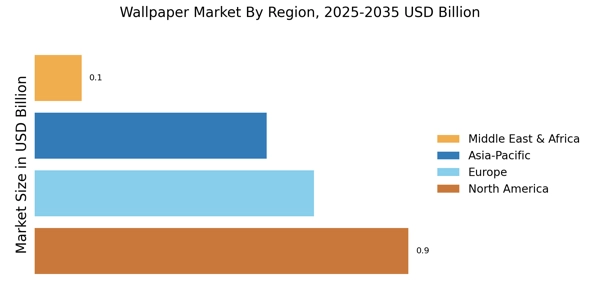
North America is the largest market for wallpaper, holding approximately 40% of the global share, driven by a strong demand for home renovation and interior design. The region benefits from a growing trend towards eco-friendly materials and innovative designs, supported by regulations promoting sustainable practices. The U.S. leads this market, followed closely by Canada, which accounts for about 15% of the market share. The competitive landscape is characterized by key players such as Brewster Home Fashions and York Wallcoverings, which are known for their diverse product offerings. The presence of established brands and a robust distribution network further enhance market growth. Additionally, consumer preferences are shifting towards customizable and high-quality wallpaper options, creating opportunities for innovation and expansion in the sector.
Europe : Cultural Hub for Design
Europe is a significant player in the wallpaper market, accounting for approximately 30% of the global share, with Germany and the UK being the largest contributors. The region's growth is fueled by a rich cultural heritage in design and a rising demand for luxury and bespoke wallpaper solutions. Regulatory frameworks in the EU promote sustainable production methods, enhancing market appeal. Leading countries like Germany, the UK, and Italy are home to renowned brands such as A.S. Création and Graham & Brown. The competitive landscape is vibrant, with a mix of traditional craftsmanship and modern design innovations. The presence of various trade fairs and exhibitions in Europe further stimulates market growth, allowing brands to showcase their latest offerings and trends.
Asia-Pacific : Emerging Market Potential
Asia-Pacific is rapidly emerging as a key player in the wallpaper market, holding about 25% of the global share, with China and Japan leading the way. The region's growth is driven by urbanization, rising disposable incomes, and a growing interest in home decor. Regulatory support for eco-friendly products is also a significant catalyst for market expansion. China is the largest market in the region, followed by Japan, where traditional and modern designs coexist. The competitive landscape features both local and international brands, with companies like Duro gaining traction. The increasing influence of social media on consumer preferences is driving demand for unique and stylish wallpaper designs, further propelling market growth.
Middle East and Africa : Untapped Market Opportunities
The Middle East and Africa represent an emerging market for wallpaper, accounting for approximately 5% of the global share. The growth is primarily driven by urban development and a rising middle class seeking aesthetic home solutions. Countries like the UAE and South Africa are at the forefront, with increasing investments in real estate and interior design. Regulatory initiatives aimed at promoting local manufacturing are also contributing to market growth. The competitive landscape is still developing, with a mix of local and international players. Key brands are beginning to establish a presence, focusing on unique designs that cater to regional tastes. The growing trend of luxury living and home improvement projects is expected to further boost demand for wallpaper in this region.
Key Players and Competitive Insights
Key Companies in the Wallpaper Market include
Industry Developments
May 2022: Sanderson Design Group PLC, a luxury interior design and furniture group announced that it signed a sponsorship deal with the Emery Walker Trust. Under the terms of the agreement, the company's Morris & Co. brand will present a collection of fabrics, wallpapers, bedding, and homewares based on the moving objects at Emery Walker's House, a museum of the Arts and Crafts movement.
March 2022: AS Creation launched its Hygge collection, Hygge is patterned wallpapers with pampas grass flowers, and reed grasses with gloss effects to support the naturalness of the color palette. Fine plain wallpapers complement the collection. The color scheme ranges from cream tones to grey, beige and green to brown, red, and warm ochre.
Future Outlook
Wallpaper Market Future Outlook
The Wallpaper MarketS is projected to grow at a 4.72% CAGR from 2025 to 2035, driven by rising consumer preferences for aesthetic home decor and innovative design technologies.
New opportunities lie in:
- Expansion into eco-friendly wallpaper materials to capture sustainability-focused consumers. Development of customizable wallpaper solutions leveraging digital printing technologies. Strategic partnerships with interior designers to enhance market reach and brand visibility.
By 2035, the Wallpaper Market is expected to achieve robust growth, reflecting evolving consumer trends and innovative product offerings.
Market Segmentation
Wallpaper Market Type Outlook
- Vinyl
- Nonwoven
- Paper
- Fabric
Wallpaper Market End-user Outlook
- Residential construction
- Non-residential construction
Report Scope
| MARKET SIZE 2024 | 2.37(USD Billion) |
| MARKET SIZE 2025 | 2.482(USD Billion) |
| MARKET SIZE 2035 | 3.936(USD Billion) |
| COMPOUND ANNUAL GROWTH RATE (CAGR) | 4.72% (2025 - 2035) |
| REPORT COVERAGE | Revenue Forecast, Competitive Landscape, Growth Factors, and Trends |
| BASE YEAR | 2024 |
| Market Forecast Period | 2025 - 2035 |
| Historical Data | 2019 - 2024 |
| Market Forecast Units | USD Billion |
| Key Companies Profiled | Brewster Home Fashions (US), York Wallcoverings (US), Graham & Brown (GB), A.S. Création (DE), Farrow & Ball (GB), Cole & Son (GB), Morris & Co. (GB), Wall & Deco (IT), Duro (SE) |
| Segments Covered | Type, End-user, Region |
| Key Market Opportunities | Integration of sustainable materials and digital printing technologies in the Wallpaper Market. |

| Key Market Dynamics | Rising consumer preference for eco-friendly materials drives innovation and competition in the wallpaper market. |
| Countries Covered | North America, Europe, APAC, South America, MEA |
Market Highlights
FAQs
What is the current valuation of the Wallpaper Market as of 2024?
The Wallpaper Market was valued at 2.37 USD Billion in 2024.
What is the projected market valuation for the Wallpaper Market in 2035?
The Wallpaper Market is projected to reach a valuation of 3.936 USD Billion by 2035.
What is the expected CAGR for the Wallpaper Market during the forecast period 2025 - 2035?
The expected CAGR for the Wallpaper Market during the forecast period 2025 - 2035 is 4.72%.
Which segment of the Wallpaper Market had the highest valuation in 2024?
In 2024, the Vinyl segment had the highest valuation at 0.95 USD Billion.
How does the Non-residential construction segment perform in the Wallpaper Market?
The Non-residential construction segment was valued at 1.18 USD Billion in 2024 and is expected to grow further.
Who are the key players in the Wallpaper Market?
Key players in the Wallpaper Market include Brewster Home Fashions, York Wallcoverings, and Graham & Brown, among others.
What is the valuation of the Fabric segment in the Wallpaper Market as of 2024?
What is the projected growth for the Residential construction segment in the Wallpaper Market?
How does the Paper segment compare to other segments in the Wallpaper Market?
What trends are influencing the Wallpaper Market's growth from 2025 to 2035?
Research Approach
Secondary Research
The secondary research process involved comprehensive analysis of regulatory databases, industry publications, construction statistics, interior design journals, and authoritative trade organizations. Key sources included the US Environmental Protection Agency (EPA), Consumer Product Safety Commission (CPSC), US Census Bureau Construction Spending Reports, Eurostat Construction Statistics, European Committee for Standardization (CEN), International Organization for Standardization (ISO), American Society of Interior Designers (ASID), International Interior Design Association (IIDA), National Kitchen & Bath Association (NKBA), American Institute of Architects (AIA), National Association of Home Builders (NAHB), US Bureau of Labor Statistics (BLS), Organisation for Economic Co-operation and Development (OECD) Building Construction Data, World Bank Development Indicators, UN-Habitat Housing Statistics, China National Bureau of Statistics, India Ministry of Housing and Urban Affairs, and national construction ministry reports from key markets. These sources were used to collect building permit data, renovation spending trends, regulatory compliance standards, demographic housing patterns, and market landscape analysis for vinyl-based, non-woven, paper-based, and fabric wallpaper categories.
Primary Research
Qualitative and quantitative insights were obtained by interviewing supply-side and demand-side stakeholders during the primary research process. Wallpaper manufacturers, printing equipment suppliers, and raw material providers were among the supply-side sources, which included CEOs, VPs of Manufacturing, product development leaders, and commercial directors. demand-side sources included procurement managers from commercial real estate developers, interior designers, architects, retail purchasers from home improvement chains, and facilities managers from the hospitality and healthcare sectors. Market segmentation was verified, digital printing technology adoption timelines were verified, and insights regarding material preference shifts, pricing strategies, and distribution channel dynamics were obtained through primary research.
Primary Respondent Breakdown:
By Designation: C-level Primaries (32%), Director Level (30%), Others (38%)
By Region: North America (32%), Europe (30%), Asia-Pacific (28%), Rest of World (10%)
Market Size Estimation
Global market valuation was derived through revenue mapping and installation volume analysis. The methodology included:
Identification of 50+ key manufacturers across North America, Europe, Asia-Pacific, and Latin America
Product mapping across vinyl-based, non-woven, paper-based, fabric, and other specialty wallpaper categories
Analysis of reported and modeled annual revenues specific to wallpaper portfolios
Coverage of manufacturers representing 65-70% of global market share in 2024
Extrapolation using bottom-up (installation volume × ASP by country/region) and top-down (manufacturer revenue validation) approaches to derive segment-specific valuations across residential and commercial end-use segments, as well as offline and online distribution channels
Kindly complete the form below to receive a free sample of this Report
Customer Stories
“This is really good guys. Excellent work on a tight deadline. I will continue to use you going forward and recommend you to others. Nice job”
“Thanks. It’s been a pleasure working with you, please use me as reference with any other Intel employees.”
“Thanks for sending the report it gives us a good global view of the Betaïne market.”
“Thank you, this will be very helpful for OQS.”
“We found the report very insightful! we found your research firm very helpful. I'm sending this email to secure our future business.”
“I am very pleased with how market segments have been defined in a relevant way for my purposes (such as "Portable Freezers & refrigerators" and "last-mile"). In general the report is well structured. Thanks very much for your efforts.”
“I have been reading the first document or the study, ,the Global HVAC and FP market report 2021 till 2026. Must say, good info! I have not gone in depth at all parts, but got a good indication of the data inside!”
“We got the report in time, we really thank you for your support in this process. I also thank to all of your team as they did a great job.”