×
Request Free Sample ×

Kindly complete the form below to receive a free sample of this Report

* Please use a valid business email

Leading companies partner with us for data-driven Insights

clients tt-cursor
Hero Background

Drone Payload Market

ID: MRFR/AD/4822-CR
110 Pages
Sejal Akre
February 2026

Drone Payload Market Research Report Information by Type (EO/IR, Cameras, SAR (Synthetic Aperture Radar), SIGINT (Signals Intelligence), ELINT (Electronic Intelligence), COMINT (Communications Intelligence), MPR (Maritime Patrol Radar), Laser Sensors, CBRN Sensors (Chemical, Biological, Radiological, and Nuclear Sensors), EW (Electronic Warfare), Optronics, Others), By Application (Defense, Homeland Security, Aerospace, Energy, Mining, Infrastructure and Urban Development, Oil and Gas, Agriculture, Environmental Monitoring, Others) By Region (North America, Europe, Asia Pacific, South America, Middle East & Africa) - Forecast to 2035

Share:
Download PDF ×

We do not share your information with anyone. However, we may send you emails based on your report interest from time to time. You may contact us at any time to opt-out.

Drone Payload Market Infographic
Purchase Options

Drone Payload Market Summary

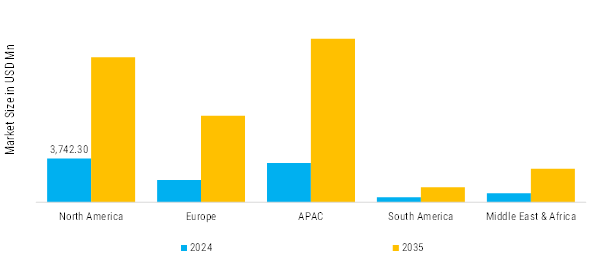
As per MRFR analysis, Drone Payload Market Size was valued at USD 10,235.9 Million in 2024. The Drone Payload Industry is projected to grow from USD 12,494.5 Million in 2025 to USD 38,030.2 Million by 2035, exhibiting a compound annual growth rate (CAGR) of 11.8% during the forecast period (2025 - 2035).

Key Market Trends & Highlights

The Drone Payload Market is rapidly evolving, driven by advancements in UAV technology, AI integration, and expanding applications across defense, commercial, and industrial sectors.

  • AI-powered payloads are transforming drones into intelligent systems capable of real-time decision-making.
  • Edge computing within payloads processes data onboard, reducing latency for applications like object detection in surveillance or crop health analysis in agriculture.
  • Drone delivery payloads are a high-growth segment, fueled by e-commerce giants investing in autonomous logistics. Specialized compartments with secure release mechanisms handle medical supplies, groceries, and parcels, addressing urban congestion challenges.
  • Military payloads remain the largest share, focusing on electro-optical/infrared (EO/IR) sensors, radars, and electronic warfare suites for ISR missions.

Market Size & Forecast

2024 Market Size 10,235.9 (USD Million)
2035 Market Size 38,030.2 (USD Million)
CAGR (2025 - 2035) 11.8%

Major Players

AeroVironment Inc, Draganfly Inc, Elbit Systems Ltd, Northrop Grumman Corporation, Parrot SA, Israel Aerospace Industries Ltd, DJI Technology, AeroVironment Inc, Autel Robotics, Teledyne FLIR LLC.
Our Impact
Enabled $4.3B Revenue Impact for Fortune 500 and Leading Multinationals
Partnering with 2000+ Global Organizations Each Year
30K+ Citations by Top-Tier Firms in the Industry

Drone Payload Market Trends

The Drone Payload Market is experiencing an era of rapid change, influenced by changing geopolitical priorities, microelectronic developments and the increased role of secure and high-performance technologies in the contemporary military. The growing defense expenditure of the leading economies is generating interest in the development of new electronics and semiconductors products, because the countries emphasize the next generation radar, communication, and electronic warfare systems. Similarly, increased investment in R&D is driving faster innovation in wide band-gap semiconductors, radiation-hardened electronics, and AI-optimized processors, and sovereign fabrication approaches are underway to achieve reliable and trusted supply chains. The increasing adoption of artificial intelligence into battlefield systems is also generating a need to design specific, military-grade semiconductors with the ability to process and predict real-time data and analytics in harsh environments.


Nevertheless, the market has significant threats that dampen its growth patterns. The cost of research and development is still a significant obstacle, especially to new entrants trying to achieve defense-grade levels. Strict compliance to robust regulatory measures like ITAR, EAR and MIL-STD standards also restrict speed-to-market besides restricting technology transfer to other parts of the world. Both supply chain integrity and long-term technological advantages are threatened by cybersecurity risks and intellectual property (IP) vulnerability. In addition, more complex packaging and thermal management considerations complicate the creation of small but powerful semiconductors that meet defense requirements.

Drone Payload Market Drivers

Improvement In Drone Payload Technologies

The gradual increase in payload technologies is driving the growth of the drone payload market all over the world because it allows drones to perform much more powerful, precise, and versatile operations than they could previously. Miniaturization is one of the key areas to be improved: Lighter and smaller sensors and imaging systems will allow drones to have multiple payloads at once with a significant trade-off in flight time and power requirements. The other major technological advancement is in the sensors and imaging payloads themselves: high-resolution EO/IR cameras, LiDAR, multispectral and hyperspectral imaging are becoming more widespread and more powerful. Such payloads are now able to capture finer details, identify anomalies in low-light or obstructed conditions, and give more detailed information in various spectral bands. This allows new applications in agriculture, infrastructure surveillance, environmental surveillance, and defense.

Expansion of E-commerce and Logistics Applications

The fast development of e-commerce on the international level has become a significant stimulus in the demand of specific drone payloads. With the growth of online shopping, consumers are becoming more demanding in terms of quicker delivery time, in many cases, same-day, or within hours, particularly with smaller goods, groceries, food, and necessities. This has pressured the logistics providers to become more innovative in last-mile delivery, whereby traditional transport means tend to be slower, pricier, or unrealistic in congested or rural regions. Drones are a promising solution, avoiding traffic, decreasing the time of transit, and delivering the products to the door of the customers. To facilitate this, payloads should be made to manage lightweight cargo that is safe and mechanisms of secure placement, release, and protection of the goods.

Increased Demand for Surveillance and Reconnaissance

The increasing interest in surveillance and reconnaissance is one of the most powerful forces that influence the global market of drone payloads. Defense agencies all over the globe are laying stress on the intelligence, surveillance and reconnaissance (ISR) capabilities in order to deal with the contemporary issues of border security, counter terrorism and strategic military activities. UAVs with sophisticated payloads such as electro-optical/infrared (EO/IR) cameras, synthetic aperture radar (SAR) and electronic intelligence (ELINT) systems offer consistency of real-time tracking and reduce risks to human personnel. Drones are a better choice compared to manned aircraft or satellites due to their high-cost effectiveness, fast deployability, flexibility, and safety of operation, which is a major advantage to both the military and security forces. With countries still increasing their military expenditures, the need to have advanced ISR payloads is likely to be very high

Market Segment Insights

By Application: Defense (largest market) vs Agriculture (fastest-growing)

Based on Application, the Drone Payload Market has been segmented into: Defense, Homeland Security, Aerospace, Energy, Mining, Infrastructure and Urban Development, Oil and Gas, Agriculture, Environmental Monitoring, Others. In the defense sector, drone payloads are extensively used for reconnaissance, surveillance, target tracking, and tactical operations. Advanced sensors such as high-resolution cameras, thermal imaging devices, LiDAR, and signal intelligence modules allow military forces to operate in hostile or inaccessible environments while minimizing human risk. These payloads provide real-time data for strategic decision-making, mission planning, and threat assessment. Drones equipped with specialized payloads can also assist in border surveillance, combat support, and electronic warfare. With increasing demand for autonomous operations and precision in modern warfare, defense applications are one of the largest and most technologically advanced markets for drone payloads. In agriculture, drone payloads enable precision farming through crop monitoring, soil analysis, irrigation management, and pest detection. Sensors such as multispectral and hyperspectral cameras, thermal imaging devices, and spraying systems provide data-driven insights that help farmers optimize yield and resource use. Drones can detect early signs of crop stress, identify water scarcity, and target chemical application precisely, reducing costs and environmental impact. Agricultural payloads also allow for large-area coverage in a short time, improving efficiency and enabling data collection in real time, which is increasingly critical for modern, technology-driven farming practices. The infrastructure segment is a major application area for drones which focuses on the inspection, monitoring and maintenance of critical assets such as bridges, roads, railways, airports and public buildings.

By Type: Cameras (largest market) vs EO/IR (fastest growing)

Based on Type, the Drone Payload Market has been segmented into: - EO/IR, Cameras, SAR (Synthetic Aperture Radar), SIGINT (Signals Intelligence), ELINT (Electronic Intelligence), COMINT (Communications Intelligence), MPR (Maritime Patrol Radar), Laser Sensors, CBRN Sensors (Chemical, Biological, Radiological, and Nuclear Sensors), EW (Electronic Warfare), Optronics, Others. The cameras are the largest and most widely used payload type in the Drone Payload Market. Whether in defense or commercial use almost every drone carries some form of imaging system from simple HD cameras to the advanced electro-optical/infrared (EO/IR) sensors and thermal imagers. The cameras are the largest and most widely used payload type in the Drone Payload Market. Whether in defense or commercial use almost every drone carries some form of imaging system from simple HD cameras to the advanced electro-optical/infrared (EO/IR) sensors and thermal imagers. For example, the U.S. Department of Defense roadmaps identify EO/IR cameras as a core UAV payload class and many drones from small quadcopters to large systems like the Global Hawk which are equipped with them. This makes cameras the backbone of the Drone Payload Market which consistently increases the adoption of drones across military and civilian applications. The EO/IR (Electro-Optical/Infrared) segment is one of the most widely adopted payload types in the drone payload market which serves both defense and commercial applications. These systems combine high-resolution electro-optical cameras with infrared sensors this allows drones to capture the detailed imagery in daylight as well as in low-light or night-time conditions.

Get more detailed insights about Drone Payload Market

Regional Insights

North America: Expanding Technological growth

The North American drone market is experiencing a significant growth which is driven by technological advancements, regulatory support and widespread adoption across the industries.  Domestic manufacturers such as Skydio and Autel Robotics are developing autonomous drones compliant with the National Defense Authorization Act (NDAA) which supports the commercial and governmental operations across the infrastructure inspections, agriculture and environmental monitoring. The drones are widely used across sectors. In infrastructure the UAVs are equipped with the cameras and sensors which inspect the bridges, power lines and wind turbines by improving the safety and efficiency. In agriculture the drones support crop monitoring and precision spraying, and pest management which boosts the productivity and sustainability. For public safety and emergency response that the drones provide the real-time situational awareness for law enforcement, firefighting and disaster relief. These factors collectively positions the North America as a global leader in drone innovation and adoption with the strong government support ensuring the continued growth across commercial, civil and defense sectors.

Drone Payload Market Regional Insights

Europe: Advance Technological support

The European drone market is experiencing steady growth, which is driven by technological advancements, regulatory support and expanding the applications across the multiple sectors. Governments across the EU are actively promoting the adoption of the drone for infrastructure inspection, public safety, agriculture and monitoring of the environment. The domestic drone manufacturers and research institutions are focusing on developing autonomous and secure the UAVs that they comply with the EU safety regulations by helping integrate drones into civil, commercial and defense operations. Regulatory frameworks have been an important factor in facilitating drone operations across Europe. The European Union Aviation Safety Agency (EASA) has standardized the regulations which include the Specific Category and Standard Scenarios (STS) and allows for more complex missions under controlled conditions. Several EU member states have actively adopted the Beyond Visual Line of Sight (BVLOS) operations. For example, the Ireland issued the first Light UAS Operator Certificate in 2021 which enables BVLOS flights without further approvals and countries like Belgium and Germany are implementing drone package delivery programs by showcasing the practical advanced drone operations.

Asia-Pacific: Development of electric vehicles

The Asia-Pacific is experiencing rapid development in smart EV charging, facilitated by favorable government policies, mass-scale public–private investments, and accelerated consumer uptake of electric vehicles. Regional governments are strongly incentivizing EV infrastructure development. In Thailand, the BEV 3.5 incentive program for the period of 2024–2027 aligns import and excise tax discounts with subsidies tied to battery capacity, with a aim of reaching more than 2,200 public fast chargers by 2025 and 12,000 by 2030. Vietnam is lining up electricity subsidies for charging companies and is concluding unified technologies standards to promote citywide and intercity network deployment.

Middle Eat & Africa: Emerging Infrastructures & Logistics

The Middle East and Africa (MEA) drone market is seeing rapid adoption, which is driven by the initiatives of the government, regulatory support, and increasing applications across the defense, agriculture, infrastructure and logistics. Governments are actively promoting the UAV integration to increase the efficiency of the operation, safety of public, and disaster management. For example, the United Arab Emirates (UAE) has implemented the regulations to streamline the operations of drone approvals by decreasing the time needed for permits and encouraging the commercial and civil drone use. Similarly, Saudi Arabia is also revising its civil aviation regulations to balance the safety and innovation by providing the clear guidelines for commercial drone operations.

South America: Emerging Agriculture and environmental

The drone market in South America is increasing steadily, which is driven by the rising adoption across agriculture, infrastructure, public safety and environmental monitoring. Governments in the South America are promoting the UAV integration to increase the efficiency of the operation and safety. For instance, the Brazil’s National Civil Aviation Agency has implemented the regulations for civil drone operations which includes BVLOS flights and commercial drone applications by facilitating the wider adoption in sectors like monitoring of crop, forestry management and urban planning. Regulatory frameworks play an important role in supporting this growth. Several countries like Chile, Colombia and Argentina have established the clear operational guidelines for commercial and civil drones to cover the safety standards, certification processes and remote pilot requirements. These frameworks are designed to accelerate the adoption of the drone while ensuring the safe integration into national airspace systems. In Brazil, the ANAC has approved the BVLOS operations for agriculture and infrastructure inspections which reflects the rising confidence in the advanced drone missions.

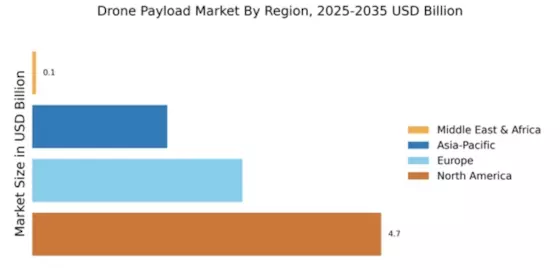
Drone Payload Market Regional Image

Key Players and Competitive Insights

Many global, regional, and local vendors characterize the Drone Payload Market. The market is highly competitive, with all the players competing to gain market share. Intense competition, rapid advances in technology, frequent changes in government policies, and environmental regulations are key factors that confront market growth. The vendors compete based on cost, product quality, reliability, and government regulations. Vendors must provide cost-efficient, high-quality products to survive and succeed in an intensely competitive market. The major players in the market Include AeroVironment Inc, Draganfly Inc, Elbit Systems Ltd, Northrop Grumman Corporation, Parrot SA, Israel Aerospace Industries Ltd, DJI Technology, AeroVironment Inc, Autel Robotics, Teledyne FLIR LLC strategic market developments and decisions to improve operational effectiveness.

Key Companies in the Drone Payload Market include

Industry Developments

June 2025: Parrot introduced the ANAFI UKR micro-UAV at Paris Air Show 2025 - a variant tuned for Ukrainian operational needs with improved communications, sensors and hardened navigation for contested environments. The ANAFI UKR emphasizes payload flexibility for EO/IR modules and GPS-denied navigation, reflecting demand for micro-UAVs that can carry mission-relevant payloads into degraded environments.

May 2025: AeroVironment, Inc. has announced the launch of Red Dragon, a fully autonomous, software-defined unmanned aircraft system (UAS) developed for one-way attack missions in high-threat, GPS-denied, and communications-degraded environments. The system is designed to operate independently of satellite navigation and continuous operator input, enabling mission execution in denied, disrupted, intermittent, and low-bandwidth (DDIL) conditions.

June 2025: DJI launched the Matrice 400 platform for enterprise, described as a flagship enterprise drone with up to 6 kg payload capacity, flight time around 59-minutes, with versatile compatibility for payloads including LiDAR, mmWave radar, visible/thermal imaging sensors, etc. DJI is reaffirming its focus on high-end enterprise missions: infrastructure inspection, emergency response, mapping, remote operations. This platform allows heavier and more varied payloads, supporting more complex sensor types.

Future Outlook

Drone Payload Market Future Outlook

The Drone Payload Market is projected to grow at a 11.8% CAGR from 2025 to 2035, driven by increasing demand for high-performance computing and enhanced security features.

New opportunities lie in:

  • Emergence of Autonomous Drone Systems
  • Increased Use in Agriculture for Crop Monitoring

By 2035, the market is expected to be robust, driven by innovation and diverse applications.

Market Segmentation

Drone Payload Market by Type Outlook

  • EO/IR

  • Cameras

  • SAR (Synthetic Aperture Radar)

  • SIGINT (Signals Intelligence)

  • ELINT (Electronic Intelligence)

  • COMINT (Communications Intelligence)

  • MPR (Maritime Patrol Radar)

  • Laser Sensors

  • CBRN Sensors (Chemical

  • Biological

  • Radiological

  • and Nuclear Sensors)

  • EW (Electronic Warfare)

  • Optronics

  • Others

Drone Payload Market by Application Outlook

  • Defense

  • Homeland Security

  • Aerospace

  • Energy

  • Mining

  • Infrastructure and Urban Development

  • Oil and Gas

  • Agriculture

  • Environmental Monitoring

  • Others

Report Scope

Market Size 2024

10,235.9 (USD Million)

Market Size 2025

12,494.5 (USD Million)

Market Size 2035

38,030.2 (USD Million)

Compound Annual Growth Rate (CAGR)

11.8% (2025 - 2035)

Report Coverage

Revenue Forecast, Competitive Landscape, Growth Factors, and Trends

Base Year

2024

Market Forecast Period

2025 - 2035

Historical Data

2019 - 2023

Market Forecast Units

USD Million

Key Companies Profiled

AeroVironment Inc, Draganfly Inc, Elbit Systems Ltd, Northrop Grumman Corporation, Parrot SA, Israel Aerospace Industries Ltd, DJI Technology, Autel Robotics, Teledyne FLIR LLC

Segments Covered

By Product, By Application

Key Market Opportunities

Emergence of Autonomous Drone Systems.

Increased Use in Agriculture for Crop Monitoring.

Key Market Dynamics

Increased Demand for Surveillance and Reconnaissance.

Expansion of E-commerce and Logistics Applications.

Improvement in Drone Payload Technologies.

Region Covered

North America, Europe, APAC, South America, MEA


Market Highlights

Author
Sejal Akre
Senior Research Analyst

She has over 5 years of rich experience, in market research and consulting providing valuable market insights to client. Hands on expertise in management consulting, and extensive knowledge in domain including ICT, Automotive & Transportation and Aerospace & Defense. She is skilled in Go-to market strategy, industry analysis, market sizing, in depth company profiling, competitive intelligence & benchmarking and value chain amongst others.

Leave a Comment

FAQs

How much is the Drone Payload Market?

USD 38,030.29 Million (2035)

What is the growth rate of the Drone Payload Market?

11.8%

Which region held the largest market share in the Drone Payload Market?

Asia Pacific

Who are the key players in the Drone Payload Market?

 AeroVironment Inc, Draganfly Inc, Elbit Systems Ltd, Northrop Grumman Corporation, Parrot SA, Israel Aerospace Industries Ltd, DJI Technology, AeroVironment Inc, Autel Robotics, Teledyne FLIR LLC

Which Application had the largest market share in the Drone Payload Market?

Defense

Research Approach

Drone Payload Market

To give a detailed review and forecast of the Drone Payload market, Market Research Future (MRFR) follows a comprehensive research methodology. The data collected through primary and secondary research was analysed and validated with the help of various industrial experts. The entire market was studied using approaches such as the bottom-up approach, the top-down approach, and factor analysis to provide definite insights. Both primary and secondary data triangulation were used to validate the results.

Primary Research

In the primary research, the analyst used a personal interviewing approach to interact with the experts from the Drone Payload industry. The interviews are conducted in person and by phone/email. These interviews include a series of open-ended questions to elicit direct information from the respondents.

Secondary Research

The secondary research is conducted to get information from the databases of magazines, journals, industry associations, government sources, and trade websites. It also involves the reviews of industry professionals to get the facts. This enhances the accuracy and clarity of the report.

Factor Analysis

In the factor analysis, the analyst considers five factors such as market attractiveness, market seasonality, market size, market share, and market trajectory. These five factors are analysed by different factors such as product portfolio, competitive landscape, pricing and distribution analysis, technology analysis, and regulatory policies among others.

Time Series Analysis

The Time Series Analysis is conducted on the data collated from 2012 to 2022. This analysis helps the analyst to determine the current market size and the growth rate of the market during the forecast period 2023 to 2030.

Demand and Supply Side Data Triangulation

The Demand Side Data Triangulation is conducted to determine the demand for the Drone Payload products. This analysis is conducted by analyzing the primary research from the suppliers and customers of the Drone Payload industry.

The Supply Side Data Triangulation is conducted to determine the supply of the Drone Payload products. This analysis is conducted by analyzing the secondary research from the suppliers and competitors in the market.

By using these approaches in combination, the analyst was able to arrive at accurate market predictions, current market estimates, and growth rates for the forecast period. This has helped to create a comprehensive and detailed report of the Drone Payload market.

Finally, the report was validated by a comprehensive research report containing interviews with industry experts. The research report was also validated by a panel of industry experts who examined the results. This helps in the validation of the results and provides reliable data and estimates.

The comprehensive research methodology adopted by MRFR is a result of its vast experience in this industry and its extensive research capabilities. The results achieved through this research methodology have helped MRFR provide accurate market estimates and forecasts for the Drone Payload market.

Download Free Sample

Kindly complete the form below to receive a free sample of this Report

Compare Licence

×
Features License Type
Single User Multiuser License Enterprise User
Price $4,950 $5,950 $7,250
Maximum User Access Limit 1 User Upto 10 Users Unrestricted Access Throughout the Organization
Free Customization
Direct Access to Analyst
Deliverable Format
Platform Access
Discount on Next Purchase 10% 15% 15%
Printable Versions