Dyslexia Treatment Market Research Report Information by Type (Phonological Dyslexia, Surface Dyslexia, Others), Treatment & Diagnosis (Treatment {Medications [Antihistamines, Central Nervous Stimulant, Anti-Myoclonic, Attention-Deficit Hyperactivity Disorder (ADHD) Drug, and Others], Tools [E-Readers and Tablets, Apps, Smartpens, and Others]}, DIAGNOSIS {Paper-Based and Digital-Based}), By End Users (Specialty Center, Home Care, Hospitals & Clinics, and Others), And By Region (North America, Europe, Asia-Pacific, And Rest Of The World) - Forecast Till 2035
As per MRFR analysis, the Dyslexia Treatment Market Size was estimated at 31.35 USD Billion in 2024. The Dyslexia Treatment industry is projected to grow from 33.58 USD Billion in 2025 to 66.68 USD Billion by 2035, exhibiting a compound annual growth rate (CAGR) of 7.1% during the forecast period 2025 - 2035.
Key Market Trends & Highlights
The Dyslexia Treatment Market is experiencing a transformative shift towards integrated and personalized approaches.
Technological integration in treatment is becoming increasingly prevalent, enhancing the effectiveness of interventions.
There is a growing emphasis on early intervention strategies, particularly in North America, to address dyslexia in children.
Holistic support systems are gaining traction, reflecting a broader understanding of dyslexia's impact on individuals.
Increased awareness of dyslexia and advancements in educational technology are driving demand for personalized learning solutions, especially in the behavioral therapy segment.
Enabled $4.3B Revenue Impact for Fortune 500 and Leading Multinationals
Partnering with 2000+ Global Organizations Each Year
30K+ Citations by Top-Tier Firms in the Industry
Dyslexia Treatment Market Trends
The Dyslexia Treatment Market is currently experiencing a notable evolution, driven by an increasing awareness of learning disabilities and the necessity for effective interventions. As educational institutions and parents become more informed about dyslexia, there is a growing demand for tailored treatment options that cater to individual needs. This shift is fostering innovation in therapeutic approaches, including the integration of technology and personalized learning strategies. Furthermore, the collaboration between educators, healthcare professionals, and technology developers appears to be enhancing the overall efficacy of dyslexia treatments, thereby improving outcomes for affected individuals.
In addition, the market is witnessing a rise in the availability of resources aimed at supporting both children and adults with dyslexia. This includes the development of specialized training programs for educators and the creation of user-friendly applications designed to assist in reading and comprehension. Such advancements suggest a holistic approach to dyslexia treatment, emphasizing not only remediation but also empowerment through education and support. As the Dyslexia Treatment Market continues to evolve, it is likely to reflect broader societal changes in the understanding and management of learning disabilities, ultimately leading to more inclusive educational environments and improved quality of life for those affected.
Technological Integration in Treatment
The incorporation of technology into dyslexia treatment is becoming increasingly prevalent. Digital tools, such as apps and software, are designed to enhance reading skills and provide interactive learning experiences. This trend suggests a shift towards more engaging and personalized methods of intervention, which may lead to better retention and understanding for individuals with dyslexia.
Focus on Early Intervention
There is a growing emphasis on early diagnosis and intervention in the Dyslexia Treatment Market. Early identification of dyslexia allows for timely support, which can significantly improve educational outcomes. This trend indicates a proactive approach, where educational systems are increasingly prioritizing screening and tailored support for young learners.
Holistic Support Systems
The market is moving towards a more comprehensive support system for individuals with dyslexia. This includes not only educational interventions but also psychological support and family involvement. Such a holistic approach recognizes the multifaceted nature of dyslexia and aims to address the emotional and social aspects of the condition, thereby fostering a more supportive environment.
Dyslexia Treatment Market Drivers
Increasing Awareness of Dyslexia
The growing awareness surrounding dyslexia and its impact on learning is a primary driver of the Global Dyslexia Treatment Market Industry. Educational institutions and parents are increasingly recognizing the need for early diagnosis and intervention. This heightened awareness leads to a greater demand for specialized treatment programs and resources. As a result, the market is projected to reach 31.4 USD Billion in 2024, reflecting a significant shift towards prioritizing dyslexia support. Furthermore, initiatives by governments and educational bodies to promote understanding of dyslexia contribute to this trend, fostering an environment where effective treatments can flourish.
Government Initiatives and Funding
Government initiatives aimed at improving educational outcomes for individuals with dyslexia significantly influence the Global Dyslexia Treatment Market Industry. Various countries are implementing policies that allocate funding for dyslexia research and treatment programs. For example, the establishment of national guidelines for dyslexia screening and intervention has led to increased investment in specialized training for educators. This proactive approach not only enhances the quality of treatment available but also raises public awareness about dyslexia. As a result, the market is expected to grow at a CAGR of 7.1% from 2025 to 2035, reflecting the positive impact of these initiatives on treatment accessibility.
Technological Advancements in Treatment
Technological innovations play a crucial role in shaping the Global Dyslexia Treatment Market Industry. The integration of digital tools, such as mobile applications and online platforms, enhances the accessibility and effectiveness of dyslexia interventions. For instance, software that utilizes artificial intelligence to tailor learning experiences to individual needs is gaining traction. This trend is likely to drive market growth, as more families and educators adopt these technologies. The anticipated growth from 31.4 USD Billion in 2024 to 66.7 USD Billion by 2035 indicates a robust demand for tech-driven solutions in dyslexia treatment, suggesting a paradigm shift in how dyslexia is approached.
Focus on Personalized Learning Approaches
The shift towards personalized learning approaches in education is reshaping the Global Dyslexia Treatment Market Industry. Tailoring educational strategies to meet the unique needs of individuals with dyslexia enhances engagement and improves learning outcomes. This trend is supported by research indicating that personalized interventions can significantly reduce the challenges faced by dyslexic learners. As educational systems worldwide adopt these methodologies, the demand for specialized dyslexia treatments is expected to rise. The market's growth trajectory, projected at a CAGR of 7.1% from 2025 to 2035, reflects the increasing recognition of the importance of personalized learning in addressing dyslexia.
Rising Prevalence of Learning Disabilities
The increasing prevalence of learning disabilities, including dyslexia, is a significant driver of the Global Dyslexia Treatment Market Industry. Recent statistics indicate that approximately 5-10% of the global population is affected by dyslexia, necessitating effective treatment solutions. This rising incidence prompts educational institutions and healthcare providers to seek comprehensive treatment options, thereby expanding the market. The projected growth from 31.4 USD Billion in 2024 to 66.7 USD Billion by 2035 underscores the urgency for targeted interventions. As awareness of learning disabilities continues to grow, the demand for specialized dyslexia treatments is likely to increase, further propelling market expansion.
Market Segment Insights
By Treatment Type: Educational Interventions (Largest) vs. Assistive Technology (Fastest-Growing)
In the Dyslexia Treatment Market, the distribution of market share among various treatment types reveals that Educational Interventions hold the largest share. This segment encompasses structured programs and tailored learning plans which are foundational for students with dyslexia. Behavioral Therapy and Medication also constitute crucial elements in treatment approaches, but they do not match the extensive reach of Educational Interventions. Assistive Technology is gaining ground rapidly, reflecting a shift towards digital solutions that aid reading and comprehension, showcasing a growing acceptance of innovative tools in supporting individuals with dyslexia.
Growth trends within the Dyslexia Treatment Market indicate that while Educational Interventions continue to dominate, Assistive Technology is emerging as a game-changer. Factors such as increased awareness of dyslexia, advocacy for better educational strategies, and technological advancements are driving this change. Parents and educators are increasingly seeking effective resources proven to support diverse learning styles, leading to a robust demand for both traditional education methods and modern technological aids, enhancing the overall treatment landscape for dyslexia.
Educational Interventions (Dominant) vs. Assistive Technology (Emerging)
Educational Interventions are characterized by structured programs designed to enhance reading and learning skills, specifically tailored for those with dyslexia. This approach often includes specialized tutoring, classroom accommodations, and individualized education plans (IEPs). These methods have long been recognized for their effectiveness in addressing dyslexia, making Educational Interventions a dominant force in the market. On the other hand, Assistive Technology represents an emerging trend, incorporating tools such as apps, software, and digital devices that facilitate learning through interactive and engaging mediums. This segment appeals to a tech-savvy generation and offers flexible solutions that cater to individual needs. The synergy between these two treatment types highlights a balanced approach toward dyslexia, merging time-tested strategies with innovative technologies to foster comprehensive support.
By Age Group: Children (Largest) vs. Adolescents (Fastest-Growing)
In the Dyslexia Treatment Market, children represent the largest age group, commanding a significant share due to the early diagnosis and intervention strategies that are increasingly adopted globally. This segment benefits from various educational and therapeutic practices tailored to young learners, ensuring they receive the necessary support from an early age. In contrast, the adolescent segment, while smaller, is recognized as the fastest-growing segment. Increased awareness of dyslexia and the importance of addressing learning disabilities during this transitional phase has led to more adolescents receiving targeted treatments.
Children (Dominant) vs. Adolescents (Emerging)
The children's segment is deemed dominant in the dyslexia treatment market, largely due to a higher prevalence of diagnoses and the proactive measures taken by parents and educators to support children's learning needs. Schools are increasingly implementing screening measures, which helps identify dyslexia at a younger age, facilitating timely interventions. On the other hand, the adolescent segment is emerging, fueled by rising awareness about mental health and learning disabilities, as well as access to resources and treatment options that cater to this age group. As adolescents transition into higher education or the workforce, the demand for effective treatment options has grown, highlighting the need for tailored approaches that consider the unique challenges faced by this demographic.
By Severity Level: Moderate Dyslexia (Largest) vs. Severe Dyslexia (Fastest-Growing)
In the Dyslexia Treatment Market, the segment of Mild Dyslexia tends to have a smaller share compared to Moderate and Severe Dyslexia. Moderate Dyslexia represents the largest segment, capturing a significant portion due to increased awareness and diagnosis. Severe Dyslexia also holds substantial market significance, driven by targeted interventions and specialized therapies. As awareness grows, the market distribution reflects the varying need for treatments tailored to different severity levels, with moderate cases being the most commonly identified.
Growth trends in the Dyslexia Treatment Market indicate that the severe dyslexia segment is emerging as the fastest-growing area. This growth can be attributed to advancements in therapeutic approaches and educational tools aimed at severe cases, coupled with heightened advocacy and support for individuals experiencing the impacts of dyslexia. Additionally, as more individuals receive accurate diagnoses, the demand for effective treatments for severe dyslexia is expected to rise, driving this segment's expansion further.
Moderate Dyslexia (Dominant) vs. Severe Dyslexia (Emerging)
Moderate Dyslexia, classified as a dominant segment in the Dyslexia Treatment Market, is characterized by its broad range of intervention strategies. This includes specialized learning programs and tutoring services tailored to address the specific needs of affected individuals. The segment benefits from enhanced educational resources and a growing base of practitioners skilled in handling such cases. Conversely, Severe Dyslexia is recognized as the emerging segment, reflecting a shift in market focus towards more intensive therapies and support. This segment faces a higher degree of complexity due to its pronounced challenges in reading and learning, resulting in an increased emphasis on personalized educational plans and therapies that cater to unique learning styles and needs.
By Treatment Setting: School-Based Treatment (Largest) vs. Home-Based Treatment (Fastest-Growing)
In the Dyslexia Treatment Market, the distribution of market share among treatment settings reveals that School-Based Treatment holds the largest share. This approach leverages structured learning environments and trained professionals to support students with dyslexia. Home-Based Treatment, while currently smaller in market share, is rapidly gaining traction among parents and educators seeking personalized learning strategies in a familiar environment.
The growth trends in this segment reflect a shift toward recognizing the importance of tailored interventions. Home-Based Treatments are emerging as the fastest-growing segment due to increasing demand for at-home learning support tools and resources, driven by rising awareness of dyslexia and advancements in technology. This trend showcases a movement toward more flexible and individualized treatment modalities, aiming to complement traditional educational settings.
School-Based Treatment (Dominant) vs. Home-Based Treatment (Emerging)
School-Based Treatment stands out as the dominant approach in the Dyslexia Treatment Market, primarily due to its integration into the educational framework. Utilizing trained specialists and comprehensive resources, it provides structured support tailored to individual learning needs within a classroom setting. This method not only benefits students academically but also socially, handling the emotional aspects of dyslexia through peer interaction.
Conversely, Home-Based Treatment is positioned as an emerging segment, appealing to families who seek personalized attention outside the constraints of a school environment. This approach allows for customized learning experiences and the integration of innovative tools, such as educational software and reading aids. The increasing popularity of remote and online learning has further propelled its growth, indicating a strong future presence in the market.
Get more detailed insights about Dyslexia Treatment MarketRequest Free Sample
Regional Insights
North America : Leading Market for Dyslexia Treatment
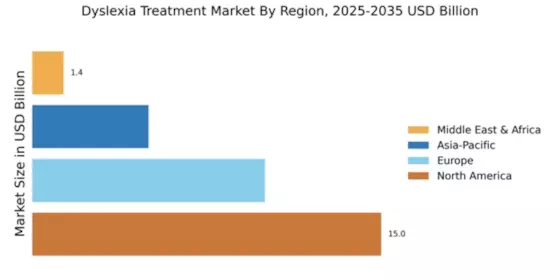
North America is the largest market for dyslexia treatment, holding a significant share of 15.0 in 2024. The region's growth is driven by increasing awareness of dyslexia, advancements in educational technology, and supportive government policies. Regulatory frameworks are evolving to enhance access to treatment and educational resources, fostering a conducive environment for market expansion. The demand for innovative solutions is further propelled by rising investments in research and development.
The competitive landscape in North America is robust, featuring key players such as Bristol-Myers Squibb, Houghton Mifflin Harcourt, and Lexia Learning. The U.S. leads the market, supported by a strong educational infrastructure and a focus on personalized learning approaches. Companies are increasingly collaborating with educational institutions to develop tailored solutions, ensuring that dyslexic individuals receive the necessary support. This collaborative effort is crucial for maintaining the region's leadership in the dyslexia treatment market.
Europe : Emerging Market with Growth Potential
Europe represents a significant market for dyslexia treatment, with a market size of 10.0 in 2024. The region is witnessing a surge in demand for effective dyslexia interventions, driven by increasing recognition of learning disabilities and the implementation of inclusive education policies. Regulatory bodies are actively promoting awareness and access to treatment, which is essential for fostering a supportive environment for affected individuals. The European market is characterized by a growing emphasis on digital learning tools and personalized educational resources.
Leading countries in Europe include the UK, Germany, and France, where key players like Pearson and Dyslexia Gold are making substantial contributions. The competitive landscape is evolving, with a focus on innovative solutions that cater to diverse learning needs. Collaboration between educational institutions and treatment providers is enhancing the availability of resources, ensuring that dyslexic individuals receive comprehensive support. This collaborative approach is vital for the region's growth in the dyslexia treatment market.
Asia-Pacific : Growing Awareness and Demand
The Asia-Pacific region is emerging as a growing market for dyslexia treatment, with a market size of 5.0 in 2024. Increasing awareness of learning disabilities and the importance of early intervention are driving demand for effective treatment solutions. Governments in countries like Australia and Japan are implementing policies to support educational inclusivity, which is crucial for fostering a conducive environment for dyslexia treatment. The rise of digital learning platforms is also contributing to the market's growth by providing accessible resources for educators and parents.
Key players in the Asia-Pacific market include local and international companies, with a focus on developing tailored solutions for diverse educational settings. Countries such as Australia and India are leading the way in adopting innovative approaches to dyslexia treatment. The competitive landscape is characterized by collaborations between educational institutions and treatment providers, enhancing the availability of resources and support for dyslexic individuals. This collaborative effort is essential for the region's development in the dyslexia treatment market.
Middle East and Africa : Untapped Market with Potential
The Middle East and Africa region represents an untapped market for dyslexia treatment, with a market size of 1.35 in 2024. The growth in this region is primarily driven by increasing awareness of learning disabilities and the need for effective educational interventions. Governments are beginning to recognize the importance of inclusive education, leading to the development of policies aimed at improving access to treatment and resources for dyslexic individuals. The rising demand for educational support services is also contributing to market growth.
Countries such as South Africa and the UAE are at the forefront of this emerging market, with key players starting to establish a presence. The competitive landscape is evolving, with a focus on developing localized solutions that cater to the unique needs of learners in the region. Collaborations between educational institutions and treatment providers are essential for enhancing the availability of resources and support for dyslexic individuals. This collaborative approach is crucial for unlocking the region's potential in the dyslexia treatment market.
Key Players and Competitive Insights
The Dyslexia Treatment Market is characterized by a dynamic competitive landscape, driven by increasing awareness of dyslexia and the growing demand for effective treatment solutions. Key players are focusing on innovation, digital transformation, and strategic partnerships to enhance their offerings. Companies such as Pearson (GB) and Houghton Mifflin Harcourt (US) are particularly notable for their commitment to developing comprehensive educational resources and technologies tailored for individuals with dyslexia. Their strategies not only aim to improve learning outcomes but also to establish a strong foothold in the market by leveraging their extensive distribution networks and educational expertise.The market structure appears moderately fragmented, with a mix of established players and emerging companies. Key tactics such as localizing manufacturing and optimizing supply chains are becoming increasingly important as companies seek to enhance their operational efficiency and responsiveness to market demands. The collective influence of major players like Scholastic (US) and Lexia Learning (US) is shaping the competitive environment, as they invest in research and development to create innovative solutions that cater to diverse learning needs.
In November Pearson (GB) announced a partnership with a leading technology firm to integrate AI-driven analytics into their dyslexia treatment programs. This strategic move is expected to enhance personalized learning experiences, allowing educators to tailor interventions based on individual student needs. The integration of AI not only positions Pearson as a frontrunner in educational technology but also reflects a broader trend towards data-driven decision-making in the treatment of dyslexia.
In October Houghton Mifflin Harcourt (US) launched a new digital platform designed specifically for dyslexic learners, featuring interactive content and adaptive learning pathways. This initiative underscores the company's commitment to leveraging technology to improve accessibility and engagement for students with dyslexia. By focusing on digital solutions, Houghton Mifflin Harcourt aims to capture a larger share of the market and respond to the increasing demand for online educational resources.
In September Scholastic (US) expanded its product line to include a series of dyslexia-friendly reading materials, which are designed to support early literacy development. This expansion not only enhances Scholastic's portfolio but also demonstrates the company's proactive approach to addressing the needs of dyslexic learners. By providing tailored resources, Scholastic is likely to strengthen its market position and foster brand loyalty among educators and parents alike.
As of December current trends in the Dyslexia Treatment Market indicate a significant shift towards digitalization and the integration of advanced technologies such as AI. Strategic alliances are increasingly shaping the competitive landscape, enabling companies to pool resources and expertise to develop innovative solutions. The focus appears to be shifting from price-based competition to differentiation through technology, innovation, and supply chain reliability. This evolution suggests that companies that prioritize these aspects will likely emerge as leaders in the market, driving forward the future of dyslexia treatment.
Key Companies in the Dyslexia Treatment Market include
Industry Developments
Q2 2024: Lexplore Launches AI-Powered Dyslexia Screening Platform in U.S. Schools Lexplore announced the launch of its AI-based dyslexia screening tool in several U.S. school districts, aiming to provide early detection and intervention for students with reading difficulties.
Q2 2024: Dyslexia Gold Secures $10 Million Series A Funding to Expand Digital Therapy Solutions Dyslexia Gold, a UK-based edtech company, raised $10 million in Series A funding to accelerate the development and global rollout of its digital therapy programs for dyslexia.
Q3 2024: Microsoft Partners with British Dyslexia Association to Integrate Assistive Tech in Schools Microsoft announced a partnership with the British Dyslexia Association to deploy its assistive reading technologies in UK schools, supporting students with dyslexia through tailored digital tools.
Q3 2024: Neurotech Solutions Receives FDA Clearance for Brain-Based Dyslexia Diagnostic Device Neurotech Solutions received FDA clearance for its non-invasive neuroimaging device designed to aid in the diagnosis of dyslexia in children, marking a regulatory milestone for brain-based screening.
Q4 2024: Glean Education Acquires Reading Success Lab to Expand Dyslexia Intervention Portfolio Glean Education announced the acquisition of Reading Success Lab, a provider of evidence-based dyslexia interventions, to broaden its suite of digital learning solutions.
Q4 2024: Dyslexia Institute Opens New Research Facility Focused on AI-Driven Treatment The Dyslexia Institute inaugurated a new research center in London dedicated to developing AI-powered therapies and diagnostic tools for dyslexia.
Q1 2025: EdTech Startup MindSpark Wins $5 Million Government Contract for Dyslexia Screening in Public Schools MindSpark secured a $5 million contract from the U.S. Department of Education to implement its dyslexia screening software across multiple public school districts.
Q1 2025: OrCam Technologies Launches New Wearable Device for Dyslexia Support OrCam Technologies introduced a wearable device designed to assist individuals with dyslexia by converting text to speech in real time, expanding its accessibility product line.
Q2 2025: Pearson Appoints New Chief Medical Officer to Lead Dyslexia Product Development Pearson named Dr. Emily Carter as Chief Medical Officer to oversee the development of new dyslexia assessment and intervention products.
Q2 2025: Dyslexia Awareness Foundation Receives $8 Million Grant for National Screening Initiative The Dyslexia Awareness Foundation was awarded an $8 million grant to launch a nationwide dyslexia screening and awareness campaign in partnership with public schools.
Q3 2025: CogniLearn Announces Partnership with Apple to Integrate Dyslexia Tools into iOS CogniLearn partnered with Apple to integrate its dyslexia screening and intervention tools directly into iOS devices, aiming to improve accessibility for students and educators.
Q3 2025: Reading Horizons Expands to Germany with Launch of Multilingual Dyslexia Intervention Platform Reading Horizons launched its multilingual dyslexia intervention platform in Germany, marking its first major expansion into the European market.
Future Outlook
Dyslexia Treatment Market Future Outlook
The Dyslexia Treatment Market is projected to grow at a 7.1% CAGR from 2025 to 2035, driven by increasing awareness, technological advancements, and enhanced educational strategies.
New opportunities lie in:
Development of AI-driven personalized learning platforms
Expansion of teletherapy services for remote access
Creation of specialized training programs for educators
By 2035, the Dyslexia Treatment Market is expected to be robust, reflecting substantial growth and innovation.
Market Segmentation
Dyslexia Treatment Market Age Group Outlook
Children
Adolescents
Adults
Dyslexia Treatment Market Severity Level Outlook
Mild Dyslexia
Moderate Dyslexia
Severe Dyslexia
Dyslexia Treatment Market Treatment Type Outlook
Behavioral Therapy
Educational Interventions
Medication
Assistive Technology
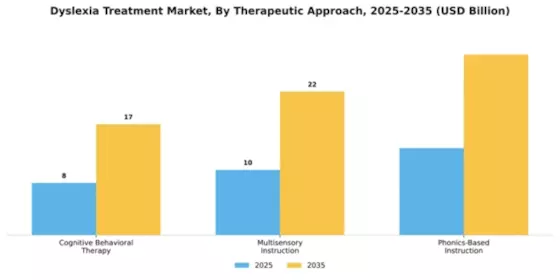
Dyslexia Treatment Market Therapeutic Approach Outlook
Cognitive Behavioral Therapy
Multisensory Instruction
Phonics-Based Instruction
Report Scope
MARKET SIZE 2024
31.35(USD Billion)
MARKET SIZE 2025
33.58(USD Billion)
MARKET SIZE 2035
66.68(USD Billion)
COMPOUND ANNUAL GROWTH RATE (CAGR)
7.1% (2025 - 2035)
REPORT COVERAGE
Revenue Forecast, Competitive Landscape, Growth Factors, and Trends
What is the current valuation of the Dyslexia Treatment Market?
The Dyslexia Treatment Market was valued at 31.35 USD Billion in 2024.
What is the projected market size for the Dyslexia Treatment Market by 2035?
The market is projected to reach 66.68 USD Billion by 2035.
What is the expected CAGR for the Dyslexia Treatment Market during the forecast period 2025 - 2035?
The expected CAGR for the Dyslexia Treatment Market is 7.1% during the forecast period 2025 - 2035.
Which treatment type segment is anticipated to have the highest valuation in 2035?
The Assistive Technology segment is expected to grow from 13.35 USD Billion to 30.68 USD Billion by 2035.
How does the market valuation for Educational Interventions change from 2024 to 2035?
The Educational Interventions segment is projected to increase from 10.0 USD Billion to 20.0 USD Billion by 2035.
What age group is expected to contribute the most to the Dyslexia Treatment Market by 2035?
The Adults age group is anticipated to grow from 13.35 USD Billion to 28.68 USD Billion by 2035.
Which key players are leading the Dyslexia Treatment Market?
Key players include Bristol-Myers Squibb, Pearson, Houghton Mifflin Harcourt, and Scholastic Corporation.
What is the projected market size for Mild Dyslexia treatment by 2035?
The Mild Dyslexia segment is expected to grow from 10.0 USD Billion to 21.0 USD Billion by 2035.
How is the Clinical Treatment segment expected to perform by 2035?
The Clinical Treatment segment is projected to increase from 13.35 USD Billion to 27.68 USD Billion by 2035.
What trends are observed in the Dyslexia Treatment Market regarding treatment settings?
The School-Based Treatment segment is expected to grow from 10.0 USD Billion to 22.0 USD Billion by 2035.
Author
Author
Nidhi Mandole
Senior Research Analyst
She is an extremely curious individual currently working in Healthcare and Medical Devices Domain. Nidhi is comfortably versed in data centric research backed by healthcare educational background. She leverages extensive data mining and analytics tools such as Primary and Secondary Research, Statistical Analysis, Machine Learning, Data Modelling. Her key role also involves Technical Sales Support, Client Interaction and Project management within the Healthcare team. Lastly, she showcases extensive affinity towards learning new skills and remain fascinated in implementing them.
read more
Co-Author
Rahul Gotadki
Research Manager
He holds an experience of about 9+ years in Market Research and Business Consulting, working under the spectrum of Life Sciences and Healthcare domains. Rahul conceptualizes and implements a scalable business strategy and provides strategic leadership to the clients. His expertise lies in market estimation, competitive intelligence, pipeline analysis, customer assessment, etc.
The secondary research process involved comprehensive analysis of regulatory databases, peer-reviewed medical and educational journals, clinical publications, and authoritative health and education organizations. Key sources included the US Food & Drug Administration (FDA), European Medicines Agency (EMA), National Institutes of Health (NIH) – specifically the National Institute of Neurological Disorders and Stroke (NINDS) and National Institute of Child Health and Human Development (NICHD), National Center for Biotechnology Information (NCBI/PubMed), Centers for Disease Control and Prevention (CDC) – Division of Human Development and Disability, World Health Organization (WHO) – Department of Mental Health and Substance Use, International Dyslexia Association (IDA), British Dyslexia Association (BDA), European Dyslexia Association (EDA), Learning Disabilities Association of America (LDA), Council for Exceptional Children (CEC), National Center for Learning Disabilities (NCLD), Understood.org, What Works Clearinghouse (WWC) – Institute of Education Sciences, OECD Education Database, UNESCO Institute for Statistics, EU Eurostat Education and Training Database, US Department of Education – Office of Special Education Programs (OSEP), UK Department for Education – Special Educational Needs and Disabilities (SEND), Australian Institute of Health and Welfare (AIHW), Health Canada – Medical Devices Bureau, Pharmaceutical Research and Manufacturers of America (PhRMA), Educational Technology Industry Network (ETIN), and national health ministry reports and education department statistics from key markets including the United States, United Kingdom, Germany, France, Australia, Japan, China, and India. These sources were used to collect dyslexia prevalence statistics, treatment adoption rates, regulatory approval data for dyslexia-related medications and medical devices, clinical efficacy studies, demographic trends, educational intervention outcomes, assistive technology adoption metrics, and market landscape analysis for pharmaceutical treatments, educational interventions, behavioral therapies, and assistive technology solutions.
Primary Research
In order to gather both qualitative and quantitative insights, supply-side and demand-side stakeholders were interviewed during the primary research process. CEOs, Chief Medical Officers, VPs of Product Development, Heads of Educational Publishing, regulatory affairs directors, and commercial directors from pharmaceutical companies (creating CNS stimulants and ADHD medications used to treat dyslexia), educational technology developers, assistive technology manufacturers, educational publishing houses, providers of digital therapy platforms, and OEMs of neurodiagnostic devices were examples of supply-side sources. Board-certified pediatric neurologists, developmental-behavioral pediatricians, clinical psychologists with expertise in learning disabilities, speech-language pathologists, curriculum specialists, assistive technology specialists, educational therapists, dyslexia interventionists, reading specialists, and procurement leads from K–12 school districts, specialty learning centers, university disability services offices, pediatric clinics, children's hospitals, and private educational therapy practices were among the demand-side sources.
Primary research validated market segmentation across treatment types (educational interventions, behavioral therapy, medication, assistive technology), confirmed product pipeline timelines for AI-driven diagnostic tools and digital therapeutic platforms, and gathered insights on clinical adoption patterns, educational policy implementation, school district procurement cycles, insurance reimbursement dynamics for dyslexia interventions, and pricing strategies for assistive technologies and educational software.
Primary Respondent Breakdown:
By Designation: C-level Primaries (32%), Director Level (30%), Others (38%)
By Region: North America (38%), Europe (25%), Asia-Pacific (28%), Rest of World (9%)
Market Size Estimation
Global market valuation was derived through revenue mapping, procedure volume analysis, and educational intervention adoption metrics. The methodology included:
Identification of 50+ key manufacturers and service providers across North America, Europe, Asia-Pacific, and Latin America, spanning pharmaceutical companies (Bristol-Myers Squibb, etc.), educational publishers (Pearson, Houghton Mifflin Harcourt, Scholastic), edtech providers (Lexia Learning, Learning Ally, Dyslexia Gold, Nessy, MindPlay, Read Naturally), and assistive technology developers
Product mapping across medication categories (antihistamines, CNS stimulants, anti-myoclonic agents, ADHD drugs), educational intervention tools (E-readers, tablets, specialized apps, smartpens, multisensory learning platforms), diagnostic solutions (paper-based assessments, AI-driven digital screening tools, neuroimaging devices), and end-user settings (specialty centers, home care, hospitals & clinics, school-based programs)
Analysis of reported and modeled annual revenues specific to dyslexia treatment portfolios, including pharmaceutical sales for off-label and indicated uses, educational software licensing, assistive technology hardware and subscription revenues, and professional therapy services
Coverage of manufacturers and service providers representing 72-78% of global market share in 2024
Extrapolation using bottom-up (treatment adoption rates × average spend per patient by country/region, segmented by age group and severity level) and top-down (manufacturer revenue validation, edtech market sizing, pharmaceutical therapeutic area allocation) approaches to derive segment-specific valuations for educational interventions, behavioral therapy, medication, and assistive technology verticals
“This is really good guys. Excellent work on a tight deadline. I will continue to use you going forward and recommend you to others. Nice job”
Noah MalgeriCo-Founder
“Thanks. It’s been a pleasure working with you, please use me as reference with any other Intel employees.”
Joseph AguayoSales Operations & Pricing Manager
“Thanks for sending the report it gives us a good global view of the Betaïne market.”
Peter Groot koerkampAccount and Business Manager
“Thank you, this will be very helpful for OQS.”
La Terria DoddProgram Support Specialist
“We found the report very insightful! we found your research firm very helpful. I'm sending this email to secure our future business.”
Younghwan ChoiSenior Retail Manager
“I am very pleased with how market segments have been defined in a relevant way for my purposes (such as "Portable Freezers & refrigerators" and "last-mile").
In general the report is well structured. Thanks very much for your efforts.”
Mark IrwinManagement Consultant
“I have been reading the first document or the study, ,the Global HVAC and FP market report 2021 till 2026. Must say, good info! I have not gone in depth at all parts, but got a good indication of the data inside!”
Rob KooikerGroup Product Manager HVAC & Fire Protection GMA
“We got the report in time, we really thank you for your support in this process. I also thank to all of your team as they did a great job.”
Akif MorogluStrategy & Business Development Director
“The Automotive 48V ECU Components Procurement Intelligence Study” was a complex project, but the Market Research Future (MRFR) team handled it with quality, agility, and customer-centricity. They delivered all requested data on time and within the agreed scope. The team, including Shubhendra Anand and Rahul Gotadki, was always readily available to clarify questions and swiftly implement necessary adjustments, driving the project to a successful conclusion within a very demanding timeframe.
I would also like to specifically commend Akshay Agarwal for his responsiveness and support at every stage—from our initial inquiry on May 6th through to final delivery on June 18th. His dedication made the entire process seamless.”
Guilherme Gomes MartinsProduct Management Director