×
Request Free Sample ×

Kindly complete the form below to receive a free sample of this Report

* Please use a valid business email

Leading companies partner with us for data-driven Insights

clients tt-cursor
Hero Background

Electric two-wheeler Market

ID: MRFR/AT/4010-CR
128 Pages
Swapnil Palwe
August 2023

Electric Two-Wheeler Market Research Report By Type (Scooters, Motorcycles, Mopeds, E-Bikes), By Battery Type (Lithium-Ion Batteries, Lead-Acid Batteries, Nickel-Metal Hydride Batteries), By Voltage Capacity (Below 48V, 48V to 72V, Above 72V), By End Use (Personal Transportation, Commercial Delivery, Shared Mobility) and By Regional (North America, Europe, South America, Asia Pacific, Middle East and Africa) - Forecast to 2035

Share:
Download PDF ×

We do not share your information with anyone. However, we may send you emails based on your report interest from time to time. You may contact us at any time to opt-out.

Electric two-wheeler Market Infographic
Purchase Options

Electric two-wheeler Market Summary

As per Market Research Future analysis, the Electric two-wheeler market size was estimated at 7260.13 USD Billion in 2024. The Electric two-wheeler industry is projected to grow from 9105.08 in 2025 to 87634.55 by 2035, exhibiting a compound annual growth rate (CAGR) of 25.41% during the forecast period 2025 - 2035.

Key Market Trends & Highlights

The electric two-wheeler market is experiencing robust growth driven by technological advancements and supportive government policies.

  • North America remains the largest market for electric two-wheelers, showcasing a steady increase in adoption rates.
  • The Asia-Pacific region is recognized as the fastest-growing market, propelled by rising urbanization and changing consumer preferences.
  • The personal transportation segment dominates the market, while the delivery services segment is rapidly expanding due to increased demand for efficient logistics.
  • Key market drivers include technological advancements and rising fuel prices, which are influencing consumer choices towards electric two-wheelers.

Market Size & Forecast

2024 Market Size 7260.13 (USD Billion)
2035 Market Size 87634.55 (USD Billion)
CAGR (2025 - 2035) 25.41%

Major Players

Hero Electric (IN), Bajaj Auto (IN), Ather Energy (IN), TVS Motor Company (IN), Ola Electric (IN), Niu Technologies (CN), Yamaha Motor (JP), Honda Motor (JP), Gogoro (TW)

Electric two-wheeler Market Trends

The Electric two-wheeler Market is currently experiencing a transformative phase characterized by rapid advancements in technology and increasing consumer awareness regarding environmental sustainability. As urban areas become more congested, the demand for efficient and eco-friendly transportation options is on the rise. This shift is further fueled by government initiatives promoting electric mobility, which aim to reduce carbon emissions and enhance air quality. Consequently, manufacturers are investing heavily in research and development to produce innovative models that cater to diverse consumer preferences, thereby expanding their market reach. In addition to technological advancements, the Electric two-wheeler Market is witnessing a notable shift in consumer behavior. More individuals are opting for electric scooters and motorcycles as viable alternatives to traditional gasoline-powered vehicles. This trend is likely influenced by the growing availability of charging infrastructure and the decreasing costs associated with electric vehicle ownership. Furthermore, the integration of smart technologies, such as connectivity features and advanced battery management systems, appears to enhance the overall user experience, making electric two-wheelers increasingly appealing to a broader audience. As the market continues to evolve, it is poised for substantial growth in the coming years, driven by both innovation and changing consumer preferences.

Technological Advancements

The Electric two-wheeler Market is witnessing significant technological innovations, particularly in battery technology and electric drivetrains. These advancements are enhancing the performance, range, and efficiency of electric two-wheelers, making them more competitive with traditional vehicles. Manufacturers are focusing on developing lighter, more efficient batteries that can be charged quickly, thereby addressing one of the primary concerns of potential users.

Government Initiatives

Various governments around the world are implementing policies and incentives to promote the adoption of electric two-wheelers. These initiatives may include subsidies, tax rebates, and the establishment of charging infrastructure. Such measures are likely to encourage consumers to transition from conventional vehicles to electric alternatives, thereby fostering market growth.

Changing Consumer Preferences

There is a noticeable shift in consumer attitudes towards electric two-wheelers, driven by increased awareness of environmental issues and the benefits of sustainable transportation. As more individuals seek eco-friendly options, the demand for electric scooters and motorcycles is expected to rise. This trend suggests a growing acceptance of electric mobility as a practical and desirable choice for urban commuting.

Electric two-wheeler Market Drivers

Rising Fuel Prices

The volatility of fuel prices is a notable driver of the Global Electric Two-Wheeler Market Industry. As gasoline prices fluctuate, consumers are increasingly looking for cost-effective alternatives to traditional vehicles. Electric two-wheelers present a viable solution, offering lower operating costs and reduced dependence on fossil fuels. The long-term savings associated with electric vehicles, combined with the rising cost of gasoline, are likely to encourage more consumers to transition to electric two-wheelers. This shift is expected to contribute to the market's expansion, aligning with the broader trend towards sustainable transportation.

Market Growth Projections

The Global Electric Two-Wheeler Market Industry is poised for substantial growth, with projections indicating a market value of 30.1 USD Billion in 2024 and an anticipated increase to 100 USD Billion by 2035. The compound annual growth rate of 11.55% from 2025 to 2035 underscores the robust demand for electric two-wheelers. This growth trajectory reflects the convergence of various factors, including technological advancements, government support, and changing consumer preferences. As the market evolves, it is likely to attract new entrants and foster innovation, further enhancing the competitive landscape.

Technological Advancements

Technological innovations play a pivotal role in shaping the Global Electric Two-Wheeler Market Industry. Advances in battery technology, such as lithium-ion batteries, have significantly improved the range and efficiency of electric two-wheelers. Enhanced charging infrastructure, including fast-charging stations, is also emerging, making electric two-wheelers more convenient for consumers. Furthermore, the integration of smart technologies, such as connectivity features and advanced safety systems, is likely to attract a broader customer base. These developments not only enhance user experience but also contribute to the overall growth of the market, which is anticipated to reach 100 USD Billion by 2035.

Growing Environmental Concerns

The increasing awareness of environmental issues drives the Global Electric Two-Wheeler Market Industry. As urban areas grapple with pollution and climate change, consumers are more inclined to adopt electric two-wheelers as a sustainable alternative to traditional gasoline-powered vehicles. Governments worldwide are implementing stricter emissions regulations, which further incentivizes the shift towards electric mobility. For instance, many countries are setting ambitious targets for reducing carbon emissions, thereby creating a favorable environment for electric two-wheelers. This trend is expected to contribute to the market's growth, with projections indicating a market value of 30.1 USD Billion in 2024.

Government Incentives and Policies

Government incentives and supportive policies are crucial drivers of the Global Electric Two-Wheeler Market Industry. Many governments are offering subsidies, tax rebates, and grants to encourage the adoption of electric vehicles. These financial incentives reduce the initial purchase cost for consumers, making electric two-wheelers more accessible. Additionally, various countries are investing in charging infrastructure to alleviate range anxiety among potential buyers. As a result, the market is likely to witness a surge in demand, with a projected compound annual growth rate of 11.55% from 2025 to 2035, reflecting the positive impact of these initiatives.

Urbanization and Traffic Congestion

Rapid urbanization and increasing traffic congestion are significant factors influencing the Global Electric Two-Wheeler Market Industry. As cities expand and populations grow, the demand for efficient and sustainable transportation solutions rises. Electric two-wheelers offer a practical alternative for navigating congested urban environments, providing flexibility and ease of use. Their compact size allows for maneuverability in heavy traffic, making them an attractive option for commuters. This trend is expected to drive market growth, as more individuals seek eco-friendly transportation methods to address urban mobility challenges.

Market Segment Insights

By Application: Personal Transportation (Largest) vs. Delivery Services (Fastest-Growing)

The electric two-wheeler market is primarily segmented into Personal Transportation, Commercial Use, Delivery Services, and Shared Mobility. Among these segments, Personal Transportation holds the largest market share, owing to the increasing demand for energy-efficient and environmentally friendly commuting options. This segment is characterized by individual consumers seeking sustainable alternatives to traditional gasoline-powered vehicles. In contrast, Delivery Services is gaining traction as e-commerce and food delivery applications expand and adopt electric solutions to meet logistical needs.

Personal Transportation (Dominant) vs. Delivery Services (Emerging)

The Personal Transportation segment remains dominant in the electric two-wheeler market due to consumer preferences for eco-friendly commuting and zero-emission travel options. This segment consists of individuals utilizing electric scooters and bikes for daily commuting, contributing significantly to reducing urban congestion and pollution. Conversely, the Delivery Services segment is emerging rapidly, driven by the exponential growth of online shopping and last-mile delivery demand. Businesses are increasingly adopting electric two-wheelers to optimize logistics and reduce operational costs, showcasing a broader societal shift towards sustainability.

By Battery Type: Lithium-ion Battery (Largest) vs. Lead-acid Battery (Fastest-Growing)

The electric two-wheeler market showcases a diverse range of battery types, with Lithium-ion batteries taking the lead in market share, attributable to their lightweight, high energy density, and longer lifecycle. They dominate the segment, powering a majority of electric scooters and bikes, while the Lead-acid batteries, traditionally used in many electric vehicles, maintain a significant presence due to their lower initial cost and ease of recycling. Nickel Metal Hydride and Solid State batteries are emerging, but their market share remains limited compared to the two lead contenders.

Lithium-ion Battery (Dominant) vs. Lead-acid Battery (Emerging)

Lithium-ion batteries are pivotal in the electric two-wheeler market, characterized by their lightweight design, high energy density, and superior performance. This battery type is favored for its longevity and reduced charging times, making it the preferred choice for electric two-wheelers. Conversely, Lead-acid batteries, while trailing in technological advancement, remain relevant due to their low cost and widespread availability. They are commonly found in entry-level electric bikes. As the market evolves, the transition to Lithium-ion technology is expected to continue, positioning it as the dominant player, while Lead-acid batteries may see slow growth as manufacturers aim for cost-effective electric mobility solutions.

By Vehicle Type: Scooters (Largest) vs. Motorcycles (Fastest-Growing)

In the electric two-wheeler market, scooters dominate the landscape, holding the largest market share thanks to their wide appeal and convenience for urban commuting. Their practicality, coupled with advancements in battery technology, have made electric scooters increasingly popular among consumers looking for eco-friendly and cost-effective transportation options. In contrast, motorcycles have emerged as the fastest-growing segment, particularly appealing to younger riders and those seeking performance, marking a significant trend in the market dynamics.

Scooters (Dominant) vs. Motorcycles (Emerging)

Electric scooters are characterized by their lightweight design, ease of use, and affordability, making them the dominant choice for daily commuters and environmentally-conscious consumers. They offer a convenient alternative to cars, especially in congested urban areas. On the other hand, electric motorcycles are gaining traction as an emerging segment, attracting a niche market of riders looking for higher performance and speed. The enhanced technology and design, combined with government incentives, have made electric motorcycles an exciting option for new buyers, poised for increased market penetration in the upcoming years.

By Charging Infrastructure: Home Charging (Largest) vs. Fast Charging Solutions (Fastest-Growing)

In the Electric two-wheeler Market, the charging infrastructure segment is witnessing a diverse share among its values. Home Charging stands out as the largest segment, reflecting consumer preference for convenience and the growing trend of personal electric vehicle ownership. Public Charging Stations follow as essential enablers of the market, while Fast Charging Solutions and Battery Swapping are making significant strides, catering to the increasing demand for quick and efficient refueling options.

Home Charging (Dominant) vs. Fast Charging Solutions (Emerging)

Home Charging remains the dominant infrastructure solution in the electric two-wheeler market due to its ability to support daily usage patterns and provide users with flexibility at their residences. This approach not only minimizes downtime but also aligns with the growing trend of electric vehicle adoption among consumers who appreciate the comfort of charging at home. Conversely, Fast Charging Solutions are emerging as a vital component in enhancing the usability of electric two-wheelers, addressing range anxiety and facilitating longer journeys. As urbanization accelerates and consumer preferences shift towards more adaptable charging options, Fast Charging Solutions are expected to gain considerable ground, shaping the landscape of the electric mobility sector.

By Consumer Segment: Individual Consumers (Largest) vs. Fleet Operators (Fastest-Growing)

The electric two-wheeler market is witnessing a dynamic distribution among various consumer segments. Individual consumers hold the largest share, driven by the growing preference for sustainable transportation options and the increasing availability of affordable, high-performance electric scooters. Fleet operators are emerging rapidly, capitalizing on the demand for electrification in public transportation and delivery services, spurred by government policies favoring electric vehicles and the push for greener logistics. Growth trends indicate a robust future for both segments. Individual consumers are increasingly attracted to electric two-wheelers due to rising environmental awareness, advancements in technology, and the low cost of operation. Meanwhile, fleet operators are benefitting from economies of scale, partnerships with manufacturers, and incentives designed to accelerate electric vehicle adoption. These factors combined are set to propel both consumer segments to new heights in the market.

Individual Consumers (Dominant) vs. Fleet Operators (Emerging)

The individual consumer segment remains dominant in the electric two-wheeler market, with buyers increasingly favoring eco-friendly vehicles for personal use. This segment is characterized by a diverse consumer base ranging from environmentally conscious millennials to urban commuters seeking efficient transportation. They benefit from extensive model choices, appealing designs, and advancements in battery technology that enhance performance and convenience. In contrast, fleet operators are an emerging force, leveraging electric two-wheelers for cost-effective and sustainable business operations. These operators typically view electric vehicles as vital for fleet optimization, maintenance savings, and compliance with environmental regulations. As fleet electrification accelerates, partnerships with manufacturers and charging infrastructure development will become paramount to meet operational demands.

Get more detailed insights about Electric two-wheeler Market

Regional Insights

North America : Growing Market for E-Mobility

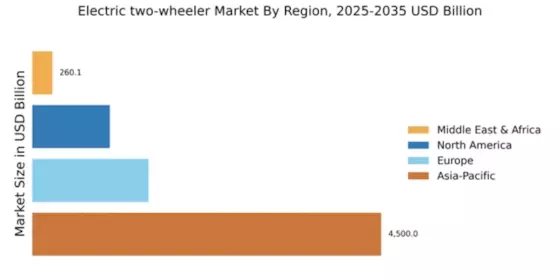
The North American electric two-wheeler market is poised for significant growth, driven by increasing environmental awareness and government incentives. With a market size of $1000.0 million, the region is witnessing a surge in demand for sustainable transportation solutions. Regulatory support, including tax credits and rebates, is further catalyzing this growth, making electric two-wheelers more accessible to consumers. Leading the charge in this market are the United States and Canada, where companies like Hero Electric and Bajaj Auto are expanding their presence. The competitive landscape is evolving, with traditional manufacturers like Yamaha and Honda also entering the electric segment. As consumer preferences shift towards eco-friendly options, the market is expected to see a robust increase in sales and adoption rates.

Europe : Sustainable Mobility Leader

Europe is emerging as a leader in the electric two-wheeler market, with a market size of €1500.0 million. The region's growth is fueled by stringent emissions regulations and a strong push for sustainable mobility solutions. Countries like Germany, France, and the Netherlands are at the forefront, implementing policies that encourage the adoption of electric vehicles, including two-wheelers. The European Union's Green Deal aims to make Europe climate-neutral by 2050, further driving demand. The competitive landscape is vibrant, with key players such as Ather Energy and TVS Motor Company making significant inroads. The presence of established brands like Yamaha and Honda also adds to the competitive dynamics. As the market matures, innovations in battery technology and charging infrastructure are expected to enhance consumer confidence and accelerate growth in the electric two-wheeler segment.

Asia-Pacific : Dominant Market Player

Asia-Pacific is the dominant player in the electric two-wheeler market, boasting a market size of $4500.0 million. The region's growth is driven by rapid urbanization, rising fuel prices, and government initiatives promoting electric mobility. Countries like China and India are leading the charge, with substantial investments in charging infrastructure and incentives for electric vehicle adoption. The region accounted for the majority market share in 2024, reflecting its pivotal role in the global landscape. The competitive environment is robust, featuring key players such as Niu Technologies and Ola Electric. Local manufacturers are innovating rapidly to meet consumer demands, while international brands like Honda and Yamaha are also expanding their electric offerings. As the market evolves, the focus on sustainability and technological advancements will continue to shape the future of electric two-wheelers in this region.

Middle East and Africa : Emerging Market Potential

The Middle East and Africa region is witnessing emerging potential in the electric two-wheeler market, with a market size of $260.13 million. Growth drivers include increasing urbanization, rising fuel costs, and a growing awareness of environmental issues. Governments are beginning to implement policies that support electric mobility, although the market is still in its nascent stages compared to other regions. The demand for electric two-wheelers is expected to rise as infrastructure develops and consumer awareness increases. Countries like South Africa and the UAE are leading the way in adopting electric mobility solutions. The competitive landscape is gradually evolving, with local startups and international players exploring opportunities in this market. As investments in charging infrastructure and technology improve, the region is likely to see a significant uptick in electric two-wheeler adoption in the coming years.

Key Players and Competitive Insights

The Electric two-wheeler Market is currently characterized by a dynamic competitive landscape, driven by increasing consumer demand for sustainable transportation solutions and advancements in battery technology. Key players such as Hero Electric (India), Ather Energy (India), and Ola Electric (India) are strategically positioning themselves through innovation and regional expansion. Hero Electric (India) has focused on enhancing its product portfolio with advanced battery management systems, while Ather Energy (India) emphasizes smart connectivity features in its vehicles. Ola Electric (India) is aggressively expanding its manufacturing capabilities to meet rising demand, thereby shaping a competitive environment that prioritizes technological advancement and consumer-centric solutions.

In terms of business tactics, companies are increasingly localizing manufacturing to mitigate supply chain disruptions and optimize costs. The market structure appears moderately fragmented, with several players vying for market share. However, the collective influence of major companies is significant, as they drive innovation and set industry standards. This competitive structure fosters an environment where agility and responsiveness to market trends are crucial for success.

In November 2025, Ather Energy (India) announced the launch of its new flagship model, which features a cutting-edge battery technology that extends range by 30%. This strategic move not only enhances Ather's product offering but also positions the company as a leader in the high-performance electric two-wheeler segment. The introduction of this model is likely to attract tech-savvy consumers looking for reliable and efficient transportation options.

In October 2025, Ola Electric (India) unveiled its ambitious plan to establish a network of battery swapping stations across major urban centers. This initiative is pivotal as it addresses the common concern of charging infrastructure, potentially increasing the adoption rate of electric two-wheelers. By facilitating easier access to charging solutions, Ola Electric (India) may significantly enhance user convenience and drive market growth.

In September 2025, Hero Electric (India) entered into a strategic partnership with a leading technology firm to develop AI-driven features for its electric scooters. This collaboration aims to integrate smart technology into their vehicles, enhancing user experience and safety. Such innovations could set Hero Electric apart in a crowded market, appealing to consumers who prioritize advanced technology in their purchasing decisions.

As of December 2025, the Electric two-wheeler Market is witnessing trends that emphasize digitalization, sustainability, and the integration of AI technologies. Strategic alliances among companies are increasingly shaping the competitive landscape, fostering innovation and collaboration. The shift from price-based competition to a focus on technological differentiation and supply chain reliability is evident. Companies that can leverage these trends are likely to thrive, as the market evolves towards a more sophisticated and consumer-oriented future.

Key Companies in the Electric two-wheeler Market market include

Industry Developments

  • Q1 2024: VinFast launches DrgnFly electric bike in the US at CES 2024 Vietnamese EV maker VinFast unveiled its DrgnFly electric bike at CES 2024, marking its official entry into the US electric two-wheeler market with a focus on urban mobility.

Future Outlook

Electric two-wheeler Market Future Outlook

The Electric two-wheeler Market is projected to grow at a 25.41% CAGR from 2024 to 2035, driven by technological advancements, environmental regulations, and increasing consumer demand.

New opportunities lie in:

  • Expansion of battery swapping infrastructure in urban areas.
  • Development of subscription-based electric two-wheeler services.
  • Partnerships with renewable energy providers for charging solutions.

By 2035, the market is expected to be robust, driven by innovation and sustainable practices.

Market Segmentation

Electric two-wheeler Market Application Outlook

  • Personal Transportation
  • Commercial Use
  • Delivery Services
  • Shared Mobility

Electric two-wheeler Market Battery Type Outlook

  • Lithium-ion Battery
  • Lead-acid Battery
  • Nickel Metal Hydride Battery
  • Solid State Battery

Electric two-wheeler Market Vehicle Type Outlook

  • Scooters
  • Motorcycles
  • Mopeds
  • Three-wheelers

Electric two-wheeler Market Consumer Segment Outlook

  • Individual Consumers
  • Fleet Operators
  • Government Agencies
  • Ride-sharing Services

Electric two-wheeler Market Charging Infrastructure Outlook

  • Home Charging
  • Public Charging Stations
  • Fast Charging Solutions
  • Battery Swapping

Report Scope

MARKET SIZE 2024 7260.13(USD Billion)
MARKET SIZE 2025 9105.08(USD Billion)
MARKET SIZE 2035 87634.55(USD Billion)
COMPOUND ANNUAL GROWTH RATE (CAGR) 25.41% (2024 - 2035)
REPORT COVERAGE Revenue Forecast, Competitive Landscape, Growth Factors, and Trends
BASE YEAR 2024
Market Forecast Period 2025 - 2035
Historical Data 2019 - 2024
Market Forecast Units USD Billion
Key Companies Profiled Hero Electric (IN), Bajaj Auto (IN), Ather Energy (IN), TVS Motor Company (IN), Ola Electric (IN), Niu Technologies (CN), Yamaha Motor (JP), Honda Motor (JP), Gogoro (TW)
Segments Covered Application, Battery Type, Vehicle Type, Charging Infrastructure, Consumer Segment
Key Market Opportunities Growing consumer demand for sustainable transportation solutions drives innovation in the Electric two-wheeler Market.
Key Market Dynamics Rising consumer demand for sustainable transportation drives innovation and competition in the electric two-wheeler market.
Countries Covered North America, Europe, APAC, South America, MEA

Market Highlights

Author
Swapnil Palwe
Team Lead - Research

With a technical background as Bachelor's in Mechanical Engineering, with MBA in Operations Management , Swapnil has 6+ years of experience in market research, consulting and analytics with the tasks of data mining, analysis, and project execution. He is the POC for our clients, for their consulting projects running under the Automotive/A&D domain. Swapnil has worked on major projects in verticals such as Aerospace & Defense, Automotive and many other domain projects. He has worked on projects for fortune 500 companies' syndicate and consulting projects along with several government projects.

Leave a Comment

FAQs

What is the expected market size of the Electric Two-Wheeler Market in 2024?

The Electric Two-Wheeler Market is expected to be valued at 30.05 USD Billion in 2024.

What is the projected market size of the Electric Two-Wheeler Market by 2035?

By 2035, the Electric Two-Wheeler Market is projected to reach a value of 100.0 USD Billion.

What is the expected compound annual growth rate (CAGR) for the Electric Two-Wheeler Market from 2025 to 2035?

The expected CAGR for the Electric Two-Wheeler Market from 2025 to 2035 is 11.55%.

Which region is anticipated to have the largest market share in 2035?

The Asia Pacific region is anticipated to hold the largest market share, valued at 42.5 USD Billion in 2035.

What is the market size forecast for electric scooters in 2035?

The market size forecast for electric scooters is expected to reach 36.0 USD Billion by 2035.

Who are the key players in the Electric Two-Wheeler Market?

Major players in the market include Ather Energy, Gogoro, TVS Motor Company, and Fuell among others.

What is the expected market size for electric motorcycles in 2024?

Electric motorcycles are expected to have a market size of 10.6 USD Billion in 2024.

What is the anticipated market size for electric mopeds in 2035?

The anticipated market size for electric mopeds is expected to be 10.67 USD Billion in 2035.

What is the market size for electric e-bikes in 2024?

The market size for electric e-bikes is projected to be 5.45 USD Billion in 2024.

Which region has the lowest market size forecast in 2035?

South America is projected to have the lowest market size forecast at 5.0 USD Billion in 2035.

Download Free Sample

Kindly complete the form below to receive a free sample of this Report

Compare Licence

×
Features License Type
Single User Multiuser License Enterprise User
Price $4,950 $5,950 $7,250
Maximum User Access Limit 1 User Upto 10 Users Unrestricted Access Throughout the Organization
Free Customization
Direct Access to Analyst
Deliverable Format
Platform Access
Discount on Next Purchase 10% 15% 15%
Printable Versions