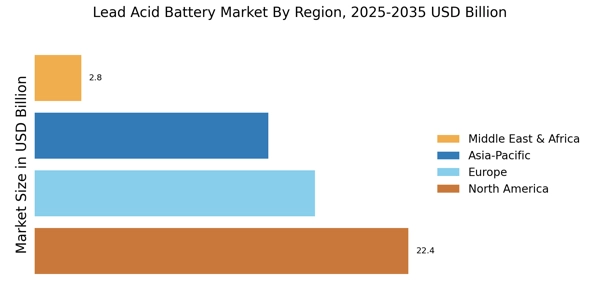
Research Methodology on Lead Acid Battery Market
1. Introduction
The research methodology proposed in this report seeks to investigate the Lead Acid Battery Market as described in a Market Research Future (MRFR) report. It outlines the research design, data collection procedure and data analysis that is expected to be undertaken to generate the information needed to come up with the insights required in the comprehensive analysis of the Lead Acid Battery market.
2. Research Objective
The main objective of this research is to provide a comprehensive insight into the Lead Acid Battery market. The research also aims to understand the key success factors in the industry and analyze the market dynamics and various parameters that have a bearing on the performance of the Lead Acid Battery industry.
3. Research Design
This research proposes to use a combination of qualitative and quantitative research techniques to generate evidence about the Lead Acid Battery market. The research design utilizes a combination of methods such as survey interviews, focus groups, in-depth interviews and secondary data analysis. The research also follows a sequential Multi-stage process consisting of a literature review, data collection and analysis, report generation and conclusion.
4. Data Collection Procedure
The primary data collection process involves different methods. The first method involves conducting questionnaires and surveys administered both online and through telephonic interviews. An online survey questionnaire is designed that can be administered to industry professionals, stalwarts and decision-makers. The survey primarily concentrates on analyzing the Lead Acid Battery market, understanding the market drivers and trends, consumer preferences and analyzing the competitive landscape.
The second method will involve conducting focus groups in order to understand the consumer perspectives in greater detail. Focus groups involving both customers and industry experts are conducted to capture consumer opinions, needs and preferences. Furthermore, the qualitative responses obtained from the focus groups are used to verify the data collected from the survey.
The primary data collected from the surveys and focus groups are then analyzed and used to triangulate the results. Along with primary data, the research also involves gathering data from secondary sources such as published reports, news articles, industry organizations, academics and experts in the Lead Acid Battery industry.
5. Data Analysis
The data that is collected from various sources are analyzed using various quantitative and qualitative techniques. The quantitative techniques include statistical tools such as correlation and regression to analyze the data and test for validity. The qualitative techniques involve thematic coding, content analysis and interpretive analysis.
The collected data is analyzed to provide evidence about the research objectives. This analysis involves synthesizing and making sense of the data collected, by understanding the relationships, perspectives and opinions expressed.
6. Report Generation
At the end of the research process, a report is generated that contains the detailed findings of the research. This report contains the collected data, analysis, interpretations and recommendations.
7. Conclusion
This research methodology is expected to provide insight into the Lead Acid Battery market and generate valuable information about the industry which is used to supplement the comprehensive analysis of the Lead Acid Battery market as described in the MRFR report.