×
Hero Background
English
Chinese
French
Japanese
Korean
German
Spanish

Energy Efficient Windows Market Analysis

ID: MRFR/PCM/1876-HCR
111 Pages
Snehal Singh
October 2025

Energy-Efficient Windows Market Research Report Information by Glazing Type (Double glazed, Triple Low-e, Others), By Component (Glass, Pane Spacers, Frame), By Application (Residential Commercial and Industrial), And By Region (North America, Europe, Asia-Pacific, and Rest Of The World) - Forecast Till 2035.

Share:
Download PDF ×

We do not share your information with anyone. However, we may send you emails based on your report interest from time to time. You may contact us at any time to opt-out.

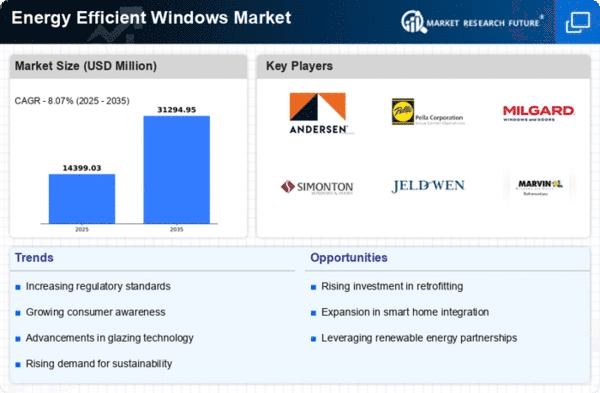
Energy Efficient Windows Market Infographic
Purchase Options

Market Analysis

In-depth Analysis of Energy Efficient Windows Market Industry Landscape

Energy-efficient windows market study analyzes how market products and segments decrease artificial heating and cooling. These windows consist of glass, frame, and hardware. These features insulate the structure from ambient heat, reducing energy use. These give development prospects to important local industries. Major market players in Japan, the US, and Belgium are employing inorganic and organic tactics to develop in the energy-efficient window market by 2028. The Energy Efficient Windows Market is changing due to supply and demand considerations. Modern building design and sustainability depend on energy-efficient windows that reduce heat transmission and improve insulation. The growing emphasis on energy saving and sustainable building drives market dynamics. As governments, organizations, and consumers emphasize energy efficiency to decrease carbon footprints, demand for sophisticated and eco-friendly energy-efficient windows has increased, positively affecting construction and architectural market dynamics. The building and real estate industries drive energy-efficient window market dynamics. Energy-efficient windows are becoming standard in construction projects due to environmental concerns and energy savings. These windows optimize natural light, reduce heating and cooling expenses, and improve building efficiency, affecting construction market dynamics. Energy-efficient window technology also affects market dynamics. Low-emissivity (Low-E) coatings, numerous glazing layers, and gas-filled gaps improve window insulation and thermal efficiency. Smart window technologies like electrochromic or thermochromic glazing affect market dynamics by offering customized light and heat transfer options. Market dynamics depend on sustainability and environmental concerns. Green construction guidelines have increased demand for energy-efficient windows using recyclable materials and sustainable production practices. By supplying sustainable building options, environmentally responsible window manufacturers affect market dynamics. Architectural trends and design choices affect energy-efficient window market dynamics. By meeting architects, designers, and building owners' changing desires, bigger windows, floor-to-ceiling glass, and new frame materials affect market dynamics. Energy-efficient windows in green building designs improve sustainability and aesthetics. Energy-efficient window market dynamics depend on regulatory norms and building codes. To maintain building code compliance, governments and regulatory agencies set window performance, energy efficiency, and insulation standards. Following these criteria affects market acceptance of energy-efficient window systems that meet or surpass regulatory requirements. Energy-efficient window market dynamics depend on economic circumstances and real estate developments. Economic development and building investments boost energy-efficient window demand. Conversely, economic downturns and real estate market volatility might affect window installation and refurbishment demand. Manufacturing, quality assurance, and a wide selection of energy-efficient window solutions affect market dynamics on the supply side. By satisfying building projects with varying energy efficiency and design criteria, window manufacturers that engage in research & development, concentrate on product innovation, and provide a wide variety of designs and functions affect market dynamics.


Author
Snehal Singh
Assistant Manager - Research

High acumen in analyzing complex macro & micro markets with more than 6 years of work experience in the field of market research. By implementing her analytical skills in forecasting and estimation into market research reports, she has expertise in Packaging, Construction, and Equipment domains. She handles a team size of 20-25 resources and ensures smooth running of the projects, associated marketing activities, and client servicing.

Leave a Comment

FAQs

How big is the energy-efficient windows market?

The energy-efficient windows market worth USD 31294.95 million by 2035.

What is the expected CAGR growth for the global market by the end of the global forecast period in 2035?

Energy Efficient Windows Market is expected to grow with a CAGR of 8.07% in the period 2025-2035

What is the major driver for the energy-efficient windows market?

A major key driver for the global efficient energy windows market is the escalating cost of energy.

Which region held the largest market share in the energy-efficient windows market?

North America region held the largest market share in the energy-efficient windows market.

Who are the key players in the energy-efficient windows market?

The companies such as Saint Gobain S.A. (France), Asahi Glass Co. Ltd. (Japan), Nippon Sheet Glass Co. Ltd. (Japan), Central Glass Co. Ltd. (Japan), Masco Corporation (U.S.), are the key players in the energy-efficient windows market.

Which windows type led the energy-efficient windows market?

Glass windows are the major type that led the energy-efficient windows market.

Which surgery had the largest market share in the energy-efficient windows market?

The commercial sector had the largest market share in the energy-efficient windows market.

Market Summary

As per MRFR analysis, the Energy Efficient Windows Market Size was estimated at 13323.8 USD Million in 2024. The Energy Efficient Windows industry is projected to grow from 14399.3 in 2025 to 31294.95 by 2035, exhibiting a compound annual growth rate (CAGR) of 8.07 during the forecast period 2025 - 2035.

Key Market Trends & Highlights

The Energy Efficient Windows Market is experiencing robust growth driven by technological advancements and increasing environmental awareness.

  • Technological innovations are reshaping the Energy Efficient Windows Market, enhancing performance and aesthetics.
  • North America remains the largest market, while Asia-Pacific is recognized as the fastest-growing region in this sector.
  • The residential segment dominates the market, whereas the commercial segment is witnessing the most rapid growth.
  • Rising energy costs and government incentives are key drivers propelling the demand for energy efficient windows.

Market Size & Forecast

2024 Market Size 13323.8 (USD Million)
2035 Market Size 31294.95 (USD Million)
CAGR (2025 - 2035) 8.07%
Largest Regional Market Share in 2024 North America

Major Players

<p>Andersen Corporation (US), Pella Corporation (US), Milgard Windows and Doors (US), Simonton Windows (US), Jeld-Wen Holding, Inc. (US), Marvin Windows and Doors (US), Aluplast GmbH (DE), Rehau AG + Co (DE), Saint-Gobain S.A. (FR), Schüco International KG (DE)</p>

Market Trends

The Energy Efficient Windows Market is currently experiencing a notable transformation, driven by a growing awareness of sustainability and energy conservation. As consumers and businesses alike prioritize reducing their carbon footprints, the demand for windows that enhance thermal performance and minimize energy loss appears to be on the rise. This shift is further supported by various government initiatives aimed at promoting energy efficiency in residential and commercial buildings. Consequently, manufacturers are increasingly focusing on innovative technologies and materials that improve the overall energy performance of windows, thereby catering to the evolving preferences of environmentally conscious consumers. In addition to technological advancements, the Energy Efficient Windows Market is also influenced by changing regulatory frameworks and building codes that emphasize energy efficiency. These regulations often encourage the adoption of energy-efficient products, creating a favorable environment for market growth. Furthermore, the integration of smart technologies into window systems is emerging as a significant trend, allowing for enhanced control over energy consumption. As the market continues to evolve, it is likely that the emphasis on sustainability and energy efficiency will remain at the forefront, shaping the future landscape of the Energy Efficient Windows Market.

Technological Innovations

The Energy Efficient Windows Market is witnessing a surge in technological advancements, with manufacturers developing new materials and designs that enhance thermal insulation and reduce energy consumption. These innovations may include low-emissivity coatings, triple glazing, and advanced frame materials that contribute to improved energy performance.

Regulatory Support

Government regulations and building codes are increasingly mandating energy efficiency standards, which is likely to drive the adoption of energy-efficient windows. This regulatory support not only encourages manufacturers to innovate but also incentivizes consumers to invest in energy-efficient solutions for their properties.

Integration of Smart Technologies

The incorporation of smart technologies into window systems is becoming a prominent trend within the Energy Efficient Windows Market. These systems may offer features such as automated shading, temperature control, and real-time energy monitoring, providing users with enhanced control over their energy usage and contributing to overall efficiency.

Energy Efficient Windows Market Market Drivers

Market Growth Projections

The Global Energy-Efficient Windows Market Industry is projected to experience substantial growth in the coming years. With a market value anticipated to reach 13.3 USD Billion in 2024 and further expand to 31.3 USD Billion by 2035, the industry is poised for a robust trajectory. The compound annual growth rate (CAGR) of 8.07% from 2025 to 2035 indicates a strong demand for energy-efficient solutions, driven by regulatory changes, consumer preferences, and technological advancements. This growth reflects a broader commitment to sustainability and energy conservation in the global construction landscape.

Growing Construction Sector

The expansion of the construction sector globally is a pivotal driver for the Global Energy-Efficient Windows Market Industry. As urbanization accelerates and new residential and commercial projects emerge, the demand for energy-efficient windows is likely to increase. Builders and architects are increasingly incorporating energy-efficient designs into their projects to meet regulatory standards and consumer preferences. This trend is expected to sustain the market's growth, particularly as the construction industry adapts to evolving energy efficiency norms and seeks to enhance the sustainability of new developments.

Increased Consumer Awareness

Consumer awareness regarding energy efficiency and environmental sustainability is a significant driver for the Global Energy-Efficient Windows Market Industry. As individuals become more informed about the benefits of energy-efficient windows, including reduced energy bills and improved indoor comfort, demand is likely to rise. Educational campaigns and initiatives by environmental organizations further enhance this awareness. This shift in consumer preferences is expected to contribute to the market's growth, with projections indicating a rise to 31.3 USD Billion by 2035, highlighting the increasing importance of energy-efficient solutions in residential and commercial buildings.

Government Incentives and Subsidies

Government incentives and subsidies play a crucial role in driving the Global Energy-Efficient Windows Market Industry. Various countries offer financial incentives to homeowners and businesses that invest in energy-efficient upgrades, including windows. These programs aim to stimulate the market by reducing the initial costs associated with purchasing and installing energy-efficient windows. For example, tax credits and rebates can significantly lower the financial burden on consumers, encouraging them to opt for energy-efficient solutions. This supportive policy environment is expected to contribute to the market's growth trajectory in the coming years.

Rising Energy Efficiency Regulations

The Global Energy-Efficient Windows Market Industry is experiencing growth due to stringent energy efficiency regulations imposed by governments worldwide. These regulations aim to reduce energy consumption in buildings, thereby promoting the adoption of energy-efficient windows. For instance, the implementation of the Energy Star program in various countries encourages manufacturers to produce windows that meet specific energy performance criteria. As a result, the market is projected to reach 13.3 USD Billion in 2024, reflecting a growing emphasis on energy conservation and sustainability in the construction sector.

Technological Advancements in Window Manufacturing

Technological advancements in window manufacturing processes are propelling the Global Energy-Efficient Windows Market Industry forward. Innovations such as low-emissivity (Low-E) coatings, triple glazing, and advanced frame materials enhance the thermal performance of windows. These technologies not only improve energy efficiency but also offer better durability and aesthetics. As manufacturers adopt these cutting-edge technologies, the market is likely to witness a compound annual growth rate (CAGR) of 8.07% from 2025 to 2035, indicating a robust future for energy-efficient window solutions.

Market Segment Insights

By Application: Residential (Largest) vs. Commercial (Fastest-Growing)

<p>The Energy Efficient Windows Market is witnessing a notable distribution across its application segments, with the Residential sector holding the largest share. This dominance can be attributed to increasing consumer awareness regarding energy conservation and sustainable housing solutions. Meanwhile, the Commercial segment is rapidly gaining traction, driven by green building initiatives and increased regulatory pressures for energy efficiency in new commercial constructions. In terms of growth trends, the Residential application is expected to remain a key focus due to the rising demand for home renovations and energy-efficient upgrades. On the other hand, the Commercial sector is identified as the fastest-growing segment, benefiting from substantial investments in energy-efficient technologies and a shift towards environmentally friendly business practices. The combination of eco-conscious consumer behavior and emerging energy-saving technologies underpins significant growth prospects for both segments.</p>

<p>Residential (Dominant) vs. Institutional (Emerging)</p>

<p>The Residential segment in the Energy Efficient Windows Market is characterized by its strong emphasis on reducing energy consumption in homes. As consumers increasingly prioritize energy efficiency, this segment benefits from a diverse range of product offerings that cater to varying climate needs and aesthetic preferences. The availability of energy-efficient features, such as low-E coatings and insulated frames, enhances the appeal of residential windows. In contrast, the Institutional segment, while smaller in market share, is emerging rapidly as more educational and healthcare institutions adopt energy-efficient practices. Factors such as budget constraints and funding for sustainability initiatives are driving institutions to consider energy-efficient windows, presenting a significant opportunity for vendors targeting this unique market.</p>

By Material Type: Vinyl (Largest) vs. Wood (Fastest-Growing)

<p>In the Energy Efficient Windows Market, vinyl windows are the largest segment, commanding a significant share due to their affordability, durability, and low maintenance requirements. Their popularity stems from the combination of energy efficiency and cost-effectiveness, making them a preferred choice for both residential and commercial applications. Wood, on the other hand, is emerging as a fast-growing segment, appealing to consumers seeking aesthetic value and the natural insulation properties it offers. Increasing awareness of sustainability drives interest in wood options, further enhancing its market presence.</p>

<p>Vinyl (Dominant) vs. Wood (Emerging)</p>

<p>Vinyl windows are the dominant choice in the Energy Efficient Windows Market, primarily due to their energy-saving features and ease of installation. They offer excellent thermal performance, require minimal maintenance, and are available in various designs and colors, making them highly versatile. Conversely, wood windows are emerging as a popular alternative, especially in luxury and eco-conscious segments. With their natural beauty and superior insulation capabilities, they appeal to environmentally aware consumers. The growth in wood windows is supported by advancements in treatment methods, which enhance durability and reduce maintenance needs, making them a viable choice for energy-efficient solutions.</p>

By Glazing Type: Double Glazing (Largest) vs. Triple Glazing (Fastest-Growing)

<p>In the Energy Efficient Windows Market, the distribution of market share among glazing types reveals a clear preference for Double Glazing, renowned for its effective insulation properties and cost-efficiency. It holds the largest share due to its established presence and wide adoption across both residential and commercial sectors. In comparison, Triple Glazing, while currently less popular, is rapidly gaining traction as consumers become more aware of energy conservation and seek advanced solutions that optimize thermal performance. Growth trends in this segment are driven by rising energy efficiency standards and increased consumer awareness regarding sustainability. Innovations in glass technology, such as Low-E and Tempered Glass, complement these developments, offering enhanced features that attract environmentally conscious buyers. The push towards sustainability in construction practices further fuels the demand for energy-efficient glazing options, making this a dynamic segment of the market.</p>

<p>Double Glazing (Dominant) vs. Triple Glazing (Emerging)</p>

<p>Double Glazing remains the dominant player in the Energy Efficient Windows Market, celebrated for its excellent thermal insulation and soundproofing capabilities. It typically consists of two glass panes with a gap filled with argon gas, significantly reducing heat loss and enhancing indoor comfort. This technology has been widely adopted in both new constructions and retrofit applications, aligning well with energy-saving initiatives. On the other hand, Triple Glazing is an emerging competitor, designed with three panes for superior insulating performance. As energy efficiency regulations become more stringent, Triple Glazing is poised to gain market share, appealing to consumers willing to invest in long-term energy savings. Although it presently commands a smaller share, its technological advancements make it a strong candidate for future growth.</p>

By Frame Type: Fixed Frame (Largest) vs. Sliding Frame (Fastest-Growing)

<p>In the Energy Efficient Windows Market, the frame type segment exhibits a varied distribution of market share among its components. Fixed frames hold the largest share thanks to their excellent insulation properties and simplicity in design, making them a popular choice for residential buildings. On the other hand, sliding frames are gaining traction, effectively catering to the need for wider openings and improved ventilation, thereby attracting homeowners looking for stylish and practical solutions.</p>

<p>Fixed Frame (Dominant) vs. Sliding Frame (Emerging)</p>

<p>Fixed frames are characterized by their stationary construction, offering superior thermal performance and energy efficiency, which contributes to their dominance in the market. Their robust design is ideal for spaces where ventilation is not a primary concern, making them a favorite among builders and architects focusing on energy conservation. Conversely, sliding frames represent the emerging trend, being celebrated for their space-saving features and ease of use. They are highly sought after in modern designs that prioritize natural light and airflow, motivating a surge in demand within urban settings.</p>

Get more detailed insights about Energy Efficient Windows Market Research Report - Forecast to 2035

Regional Insights

North America : Market Leader in Efficiency

North America is poised to maintain its leadership in the Energy Efficient Windows market, holding a significant market share of 6000.0. The growth is driven by increasing consumer awareness of energy conservation, stringent building codes, and incentives for energy-efficient home improvements. Regulatory frameworks, such as the Energy Star program, further catalyze demand for high-performance windows, enhancing energy savings and reducing carbon footprints. The competitive landscape is robust, with key players like Andersen Corporation, Pella Corporation, and Jeld-Wen Holding, Inc. leading the charge. The U.S. market is particularly strong, supported by a growing trend towards sustainable building practices. As energy efficiency becomes a priority, these companies are innovating to meet consumer demands, ensuring a diverse range of products that cater to both residential and commercial sectors.

Europe : Sustainable Innovation Hub

Europe is emerging as a significant player in the Energy Efficient Windows market, with a market size of 4000.0. The region's growth is fueled by stringent EU regulations aimed at reducing energy consumption and greenhouse gas emissions. Initiatives like the EU Green Deal and various national policies promote the adoption of energy-efficient technologies, driving demand for advanced window solutions that enhance thermal performance and sustainability. Leading countries such as Germany, France, and the UK are at the forefront of this transition, with companies like Saint-Gobain S.A. and Schüco International KG leading the market. The competitive landscape is characterized by innovation, with a focus on developing products that meet both aesthetic and energy efficiency standards. As consumers increasingly prioritize sustainability, the market is expected to expand further, supported by government incentives and consumer awareness campaigns.

Asia-Pacific : Emerging Market Potential

Asia-Pacific is witnessing rapid growth in the Energy Efficient Windows market, with a market size of 2500.0. The region's expansion is driven by urbanization, rising disposable incomes, and increasing awareness of energy conservation. Governments are implementing policies to promote energy-efficient building practices, which are crucial for meeting sustainability targets and reducing energy consumption in rapidly growing urban areas. Countries like China, Japan, and India are leading the charge, with significant investments in energy-efficient technologies. The competitive landscape includes both local and international players, with companies like Rehau AG + Co and Aluplast GmbH making notable contributions. As the demand for energy-efficient solutions rises, the market is expected to grow, supported by technological advancements and favorable government policies.

Middle East and Africa : Untapped Market Opportunities

The Middle East and Africa region is gradually recognizing the importance of energy efficiency, with a market size of 823.8. The growth is driven by increasing energy costs and a rising awareness of environmental issues. Governments are beginning to implement regulations that encourage the adoption of energy-efficient technologies, particularly in the construction sector, which is crucial for sustainable development in the region. Countries like South Africa and the UAE are leading the way, with initiatives aimed at promoting energy-efficient building practices. The competitive landscape is still developing, with opportunities for both local and international players to enter the market. As awareness grows and regulations tighten, the demand for energy-efficient windows is expected to rise, paving the way for significant market growth in the coming years.

Key Players and Competitive Insights

The Energy Efficient Windows Market is currently characterized by a dynamic competitive landscape, driven by increasing consumer awareness regarding energy conservation and sustainability. Key players are actively engaging in innovation and strategic partnerships to enhance their market positioning. For instance, Andersen Corporation (US) has focused on expanding its product line to include more sustainable materials, while Pella Corporation (US) emphasizes energy-efficient technologies in its offerings. These strategies not only cater to the growing demand for eco-friendly solutions but also foster a competitive environment where companies are compelled to innovate continuously.

In terms of business tactics, companies are increasingly localizing manufacturing to reduce lead times and optimize supply chains. This approach appears to be particularly effective in a moderately fragmented market, where the collective influence of major players like Milgard Windows and Doors (US) and Jeld-Wen Holding, Inc. (US) shapes overall market dynamics. The emphasis on supply chain optimization and localized production is likely to enhance operational efficiency and responsiveness to market demands.

In November 2025, Marvin Windows and Doors (US) announced a strategic partnership with a leading technology firm to integrate smart home features into their window products. This move is significant as it aligns with the growing trend of digitalization in the construction sector, potentially attracting tech-savvy consumers who prioritize smart home integration. By leveraging technology, Marvin aims to differentiate its offerings in a competitive market.

Similarly, in October 2025, Schüco International KG (DE) unveiled a new line of windows that utilize advanced glazing technologies to improve thermal performance. This innovation is crucial as it addresses the increasing regulatory pressures for energy efficiency in building materials. Schüco's commitment to sustainability through product innovation may enhance its competitive edge, particularly in regions with stringent energy efficiency standards.

In December 2025, Saint-Gobain S.A. (FR) launched a comprehensive sustainability initiative aimed at reducing its carbon footprint across its manufacturing processes. This initiative not only reflects the company's commitment to environmental stewardship but also positions it favorably among consumers who are increasingly prioritizing sustainability in their purchasing decisions. Such strategic actions are likely to resonate well in a market that is progressively leaning towards eco-friendly solutions.

As of December 2025, the competitive trends in the Energy Efficient Windows Market are heavily influenced by digitalization, sustainability, and the integration of AI technologies. Strategic alliances are becoming more prevalent, enabling companies to pool resources and expertise to enhance product offerings. The shift from price-based competition to a focus on innovation, technology, and supply chain reliability is evident. Moving forward, companies that can effectively differentiate themselves through advanced technologies and sustainable practices are likely to thrive in this evolving landscape.

Key Companies in the Energy Efficient Windows Market market include

Industry Developments

February 2022: Jeld-Wen introduced Stormsure Express, a collection of colored timber windows. The window provides a wide collection of 36 design options varies in configurations and size. Additionally, Stormsure Express is six of Jeld-Wen's most famous colors.

March 2023: Pella Corporation announced that it has acquired Milgard Windows and Doors. This acquisition will expand Pella's product portfolio and make it a leading provider of energy-efficient windows in the United States.

April 2023: Marvin Windows and Doors announced that it has launched its new line of Solar Eclipse windows. These windows feature a solar-powered tint that can help to reduce energy costs by up to 30%.

May 2023: Andersen Windows announced that it has received the ENERGY STAR® Most Efficient Windows Award for its 400 Series windows. These windows are among the most energy-efficient windows on the market, and they can help homeowners save up to 30% on their energy bills.

Future Outlook

Energy Efficient Windows Market Future Outlook

<p>The Energy Efficient Windows Market is projected to grow at an 8.07% CAGR from 2024 to 2035, driven by increasing energy regulations, consumer awareness, and technological advancements.</p>

New opportunities lie in:

  • <p>Expansion into smart window technologies for enhanced energy management.</p>
  • <p>Development of partnerships with green building initiatives for market penetration.</p>
  • <p>Investment in R&D for innovative materials to improve thermal performance.</p>

<p>By 2035, the market is expected to be robust, driven by innovation and sustainability.</p>

Market Segmentation

Energy Efficient Windows Market Frame Type Outlook

  • Fixed Frame
  • Sliding Frame
  • Casement Frame
  • Awning Frame

Energy Efficient Windows Market Application Outlook

  • Residential
  • Commercial
  • Industrial
  • Institutional

Energy Efficient Windows Market Glazing Type Outlook

  • Double Glazing
  • Triple Glazing
  • Low-E Glass
  • Tempered Glass

Energy Efficient Windows Market Material Type Outlook

  • Vinyl
  • Wood
  • Aluminum
  • Fiberglass

Report Scope

MARKET SIZE 202413323.8(USD Million)
MARKET SIZE 202514399.3(USD Million)
MARKET SIZE 203531294.95(USD Million)
COMPOUND ANNUAL GROWTH RATE (CAGR)8.07% (2024 - 2035)
REPORT COVERAGERevenue Forecast, Competitive Landscape, Growth Factors, and Trends
BASE YEAR2024
Market Forecast Period2025 - 2035
Historical Data2019 - 2024
Market Forecast UnitsUSD Million
Key Companies ProfiledAndersen Corporation (US), Pella Corporation (US), Milgard Windows and Doors (US), Simonton Windows (US), Jeld-Wen Holding, Inc. (US), Marvin Windows and Doors (US), Aluplast GmbH (DE), Rehau AG + Co (DE), Saint-Gobain S.A. (FR), Schüco International KG (DE)
Segments CoveredApplication, Material Type, Glazing Type, Frame Type
Key Market OpportunitiesIntegration of smart technologies enhances energy efficiency in the Energy Efficient Windows Market.
Key Market DynamicsRising consumer demand for sustainable building solutions drives innovation and competition in the energy efficient windows market.
Countries CoveredNorth America, Europe, APAC, South America, MEA

FAQs

How big is the energy-efficient windows market?

The energy-efficient windows market worth USD 31294.95 million by 2035.

What is the expected CAGR growth for the global market by the end of the global forecast period in 2035?

Energy Efficient Windows Market is expected to grow with a CAGR of 8.07% in the period 2025-2035

What is the major driver for the energy-efficient windows market?

A major key driver for the global efficient energy windows market is the escalating cost of energy.

Which region held the largest market share in the energy-efficient windows market?

North America region held the largest market share in the energy-efficient windows market.

Who are the key players in the energy-efficient windows market?

The companies such as Saint Gobain S.A. (France), Asahi Glass Co. Ltd. (Japan), Nippon Sheet Glass Co. Ltd. (Japan), Central Glass Co. Ltd. (Japan), Masco Corporation (U.S.), are the key players in the energy-efficient windows market.

Which windows type led the energy-efficient windows market?

Glass windows are the major type that led the energy-efficient windows market.

Which surgery had the largest market share in the energy-efficient windows market?

The commercial sector had the largest market share in the energy-efficient windows market.

  1. Research Methodology
    1. Scope of the Study
      1. Definition
      2. Research Objective
      3. Assumptions
      4. Limitations
    2. Research Process
      1. Primary Research
      2. Secondary Research
    3. Market size Estimation
    4. Forecast Model
    5. 3... Market Dynamics
    6. Market Drivers
    7. Market Inhibitors
    8. Supply/Value Chain Analysis
    9. Porter’s Five Forces Analysis
    10. 4... Global Energy-Efficient
  2. Windows Market, By Glazing Type
    1. Double
    2. Triple Low-e
    3. other
    4. 5... Global Energy-Efficient Windows Market, By
    5. Components
    6. Introduction
    7. Glass
    8. Pane spacers
    9. Frame
  3. Global Energy-Efficient Windows
  4. Market, By Application
    1. Introduction
    2. Residential
    3. Commercial
    4. Industrial
  5. Regional Market
    1. Analysis
    2. Introduction
    3. North America
    4. U.S.
    5. Canada
    6. Europe
    7. U.K
    8. France
    9. Germany
    10. Spain
    11. Rest of Europe
    12. Asia-Pacific
    13. China
    14. Japan
    15. India
    16. Rest of Asia-Pacific
    17. Rest of the World
    18. Competitive Analysis
    19. Introduction
    20. Competitive Scenario
      1. Market Share Analysis
      2. Market Development Analysis
      3. Product/Service Benchmarking
    21. Saint Gobain S.A. (France)
      1. Overview
      2. Product/Service Offering
      3. Strategy
    22. Asahi Glass Co., Ltd. (Japan)
      1. Overview
      2. Product/Service Offering
      3. Strategy
    23. Masco Corporation (U.S.)
      1. Overview
      2. Product/Service Offering
      3. Strategy
    24. Nippon Sheet Glass Co. Ltd. (Japan)
      1. Overview
      2. Product/Service Offering
      3. Strategy
    25. SCHOTT AG (Germany)
      1. Overview
      2. Product/Service Offering
      3. Strategy
    26. Central Glass Co. Ltd. (Japan)
      1. Overview
      2. Product/Service Offering
      3. Strategy
    27. Builders FirstSource, Inc. (U.S.)
      1. Overview
      2. Product/Service Offering
      3. Strategy
    28. Jeld-Wen Holding, Inc. (U.S.)
      1. Overview
      2. Product/Service Offering
      3. Strategy
    29. YKK AP, Inc. (Japan)
      1. Overview
      2. Product/Service Offering
      3. Strategy
    30. Ply Gem Holdings, Inc. (U.S.)
      1. Overview
      2. Product/Service Offering
      3. Strategy
  6. LIST OF TABLES
    1. TABLE 1
  7. GLOBAL ENERGY-EFFICIENT WINDOWS MARKET, BY GLAZING TYPE
    1. TABLE 2
  8. GLOBAL ENERGY-EFFICIENT WINDOWS MARKET, BY COMPONENTS
    1. TABLE 3
  9. GLOBAL ENERGY-EFFICIENT WINDOWS MARKET, BY APPLICATION
    1. TABLE 4
  10. GLOBAL ENERGY-EFFICIENT WINDOWS MARKET, BY REGIONS
    1. TABLE 5
  11. NORTH AMERICA ENERGY-EFFICIENT WINDOWS MARKET, BY COUNTRY
    1. TABLE 6
  12. NORTH AMERICA ENERGY-EFFICIENT WINDOWS MARKET, BY GLAZING TYPE
    1. TABLE
  13. NORTH AMERICA ENERGY-EFFICIENT WINDOWS MARKET, BY COMPONENTS
  14. NORTH AMERICA ENERGY-EFFICIENT WINDOWS MARKET, BY APPLICATION
  15. U.S. ENERGY-EFFICIENT WINDOWS MARKET, BY GLAZING TYPE
  16. U.S. ENERGY-EFFICIENT WINDOWS MARKET, BY COMPONENTS
  17. U.S. ENERGY-EFFICIENT WINDOWS MARKET, BY APPLICATION
  18. CANADA ENERGY-EFFICIENT WINDOWS MARKET, BY GLAZING
    1. TYPE
  19. CANADA ENERGY-EFFICIENT WINDOWS MARKET, BY
    1. COMPONENTS
  20. CANADA ENERGY-EFFICIENT WINDOWS MARKET,
    1. BY APPLICATION
  21. EUROPE ENERGY-EFFICIENT WINDOWS MARKET,
    1. BY COUNTRY
  22. EUROPE ENERGY-EFFICIENT WINDOWS MARKET,
    1. BY GLAZING TYPE
  23. EUROPE ENERGY-EFFICIENT WINDOWS
  24. MARKET, BY COMPONENTS
  25. EUROPE ENERGY-EFFICIENT WINDOWS
  26. MARKET, BY APPLICATION
  27. GERMANY ENERGY-EFFICIENT
  28. WINDOWS MARKET, BY GLAZING TYPE
  29. GERMANY ENERGY-EFFICIENT
  30. WINDOWS MARKET, BY COMPONENTS
  31. GERMANY ENERGY-EFFICIENT
  32. WINDOWS MARKET, BY APPLICATION
  33. FRANCE ENERGY-EFFICIENT
  34. WINDOWS MARKET, BY GLAZING TYPE
  35. FRANCE ENERGY-EFFICIENT
  36. WINDOWS MARKET, BY COMPONENTS
  37. FRANCE ENERGY-EFFICIENT
  38. WINDOWS MARKET, BY APPLICATION
  39. U.K. ENERGY-EFFICIENT
  40. WINDOWS MARKET, BY GLAZING TYPE
  41. U.K. ENERGY-EFFICIENT
  42. WINDOWS MARKET, BY COMPONENTS
  43. U.K. ENERGY-EFFICIENT
  44. WINDOWS MARKET, BY APPLICATION
  45. SPAIN ENERGY-EFFICIENT
  46. WINDOWS MARKET, BY GLAZING TYPE
  47. SPAIN ENERGY-EFFICIENT
  48. WINDOWS MARKET, BY COMPONENTS
  49. SPAIN ENERGY-EFFICIENT
  50. WINDOWS MARKET, BY APPLICATION
  51. REST OF EUROPE ENERGY-EFFICIENT
  52. WINDOWS MARKET, BY GLAZING TYPE
  53. REST OF EUROPE ENERGY-EFFICIENT
  54. WINDOWS MARKET, BY COMPONENTS
  55. REST OF EUROPE ENERGY-EFFICIENT
  56. WINDOWS MARKET, BY APPLICATION
  57. ASIA-PACIFIC ENERGY-EFFICIENT
  58. WINDOWS MARKET, BY COUNTRY
  59. ASIA-PACIFIC ENERGY-EFFICIENT
  60. WINDOWS MARKET, BY GLAZING TYPE
  61. ASIA-PACIFIC ENERGY-EFFICIENT
  62. WINDOWS MARKET, BY COMPONENTS
  63. ASIA-PACIFIC ENERGY-EFFICIENT
  64. WINDOWS MARKET, BY APPLICATION
  65. CHINA ENERGY-EFFICIENT
  66. WINDOWS MARKET, BY GLAZING TYPE
  67. CHINA ENERGY-EFFICIENT
  68. WINDOWS MARKET, BY COMPONENTS
  69. CHINA ENERGY-EFFICIENT
  70. WINDOWS MARKET, BY APPLICATION
  71. JAPAN ENERGY-EFFICIENT
  72. WINDOWS MARKET, BY GLAZING TYPE
  73. JAPAN ENERGY-EFFICIENT
  74. WINDOWS MARKET, BY COMPONENTS
  75. JAPAN ENERGY-EFFICIENT
  76. WINDOWS MARKET, BY APPLICATION
  77. INDIA ENERGY-EFFICIENT
  78. WINDOWS MARKET, BY GLAZING TYPE
  79. INDIA ENERGY-EFFICIENT
  80. WINDOWS MARKET, BY COMPONENTS
  81. INDIA ENERGY-EFFICIENT
  82. WINDOWS MARKET, BY APPLICATION
  83. REST OF ASIA-PACIFIC
  84. ENERGY-EFFICIENT WINDOWS MARKET, BY GLAZING TYPE
  85. REST
  86. OF ASIA-PACIFIC ENERGY-EFFICIENT WINDOWS MARKET, BY COMPONENTS
    1. TABLE 49
  87. REST OF ASIA-PACIFIC ENERGY-EFFICIENT WINDOWS MARKET, BY APPLICATION
    1. TABLE
  88. RoW ENERGY-EFFICIENT WINDOWS MARKET, BY GLAZING TYPE
    1. TABLE
  89. RoW ENERGY-EFFICIENT WINDOWS MARKET, BY COMPONENTS
    1. TABLE
  90. RoW ENERGY-EFFICIENT WINDOWS MARKET, BY APPLICATION
  91. LIST OF FIGURES
  92. RESEARCH COMPONENTS
  93. GLOBAL ENERGY-EFFICIENT WINDOWS MARKET: BY GLAZING
    1. TYPE (%)
  94. GLOBAL ENERGY-EFFICIENT WINDOWS MARKET:
    1. BY COMPONENTS (%)
  95. GLOBAL ENERGY-EFFICIENT WINDOWS
    1. MARKET: BY APPLICATION (%)
  96. GLOBAL ENERGY-EFFICIENT
    1. WINDOWS MARKET: BY REGION
  97. NORTH AMERICA ENERGY-EFFICIENT
  98. WINDOWS MARKET, BY GLAZING TYPE (%)
  99. NORTH AMERICA
  100. ENERGY-EFFICIENT WINDOWS MARKET, BY COMPONENTS (%)
  101. NORTH
  102. AMERICA ENERGY-EFFICIENT WINDOWS MARKET, BY APPLICATION (%)
    1. FIGURE 9
  103. EUROPE ENERGY-EFFICIENT WINDOWS MARKET, BY GLAZING TYPE (%)
    1. FIGURE 10
  104. EUROPE ENERGY-EFFICIENT WINDOWS MARKET, BY COMPONENTS (%)
    1. FIGURE 11
  105. EUROPE ENERGY-EFFICIENT WINDOWS MARKET, BY APPLICATION (%)
    1. FIGURE 12
  106. ASIA-PACIFIC ENERGY-EFFICIENT WINDOWS MARKET, BY GLAZING TYPE (%)
    1. FIGURE
  107. ASIA-PACIFIC ENERGY-EFFICIENT WINDOWS MARKET, BY COMPONENTS
    1. (%)
  108. ASIA-PACIFIC ENERGY-EFFICIENT WINDOWS MARKET,
    1. BY APPLICATION (%)
  109. ROW ENERGY-EFFICIENT WINDOWS
  110. MARKET, BY GLAZING TYPE (%)
  111. ROW ENERGY-EFFICIENT
  112. WINDOWS MARKET, BY COMPONENTS (%)
  113. ROW ENERGY-EFFICIENT
  114. WINDOWS MARKET, BY APPLICATION (%)

Energy-Efficient Windows Market Segmentation

Energy-Efficient Windows Glazing Type Outlook (USD Million, 2018-2030)

  • Double glazed
  • Triple Low-e
  • Others

Energy-Efficient Windows Component Type Outlook (USD Million, 2018-2030)

  • Glass
  • Pane Spacers
  • Frame

Energy-Efficient Windows Application Outlook (USD Million, 2018-2030)

  • Residential
  • Commercial
  • Industrial

Energy-Efficient Windows Regional Outlook (USD Million, 2018-2030)

  • North America Outlook (USD Million, 2018-2030)
    • North America Energy-Efficient Windows by Glazing Type
      • Double glazed
      • Triple Low-e
      • Others
    • North America Energy-Efficient Windows by Component Type
      • Glass
      • Pane Spacers
      • Frame
    • North America Energy-Efficient Windows by Application
      • Residential
      • Commercial
      • Industrial
    • US Outlook (USD Million, 2018-2030)
    • US Energy-Efficient Windows by Glazing Type
      • Double glazed
      • Triple Low-e
      • Others
    • US Energy-Efficient Windows by Component Type
      • Glass
      • Pane Spacers
      • Frame
    • US Energy-Efficient Windows by Application
      • Residential
      • Commercial
      • Industrial
    • CANADA Outlook (USD Million, 2018-2030)
    • CANADA Energy-Efficient Windows by Glazing Type
      • Double glazed
      • Triple Low-e
      • Others
    • CANADA Energy-Efficient Windows by Component Type
      • Glass
      • Pane Spacers
      • Frame
    • CANADA Energy-Efficient Windows by Application
      • Residential
      • Commercial
      • Industrial
  • Europe Outlook (USD Million, 2018-2030)
    • Europe Energy-Efficient Windows by Glazing Type
      • Double glazed
      • Triple Low-e
      • Others
    • Europe Energy-Efficient Windows by Component Type
      • Glass
      • Pane Spacers
      • Frame
    • Europe Energy-Efficient Windows by Application
      • Residential
      • Commercial
      • Industrial
    • Germany Outlook (USD Million, 2018-2030)
    • Germany Energy-Efficient Windows by Glazing Type
      • Double glazed
      • Triple Low-e
      • Others
    • Germany Energy-Efficient Windows by Component Type
      • Glass
      • Pane Spacers
      • Frame
    • Germany Energy-Efficient Windows by Application
      • Residential
      • Commercial
      • Industrial
    • France Outlook (USD Million, 2018-2030)
    • France Energy-Efficient Windows by Glazing Type
      • Double glazed
      • Triple Low-e
      • Others
    • France Energy-Efficient Windows by Component Type
      • Glass
      • Pane Spacers
      • Frame
    • France Energy-Efficient Windows by Application
      • Residential
      • Commercial
      • Industrial
    • UK Outlook (USD Million, 2018-2030)
    • UK Energy-Efficient Windows by Glazing Type
      • Double glazed
      • Triple Low-e
      • Others
    • UK Energy-Efficient Windows by Component Type
      • Glass
      • Pane Spacers
      • Frame
    • UK Energy-Efficient Windows by Application
      • Residential
      • Commercial
      • Industrial
    • ITALY Outlook (USD Million, 2018-2030)
    • ITALY Energy-Efficient Windows by Glazing Type
      • Double glazed
      • Triple Low-e
      • Others
    • ITALY Energy-Efficient Windows by Component Type
      • Glass
      • Pane Spacers
      • Frame
    • ITALY Energy-Efficient Windows by Application
      • Residential
      • Commercial
      • Industrial
    • SPAIN Outlook (USD Million, 2018-2030)
    • Spain Energy-Efficient Windows by Glazing Type
      • Double glazed
      • Triple Low-e
      • Others
    • Spain Energy-Efficient Windows by Component Type
      • Glass
      • Pane Spacers
      • Frame
    • Spain Energy-Efficient Windows by Application
      • Residential
      • Commercial
      • Industrial
    • Rest Of Europe Outlook (USD Million, 2018-2030)
    • REST OF EUROPE Energy-Efficient Windows by Glazing Type
      • Double glazed
      • Triple Low-e
      • Others
    • REST OF EUROPE Energy-Efficient Windows by Component Type
      • Glass
      • Pane Spacers
      • Frame
    • REST OF EUROPE Energy-Efficient Windows by Application
      • Residential
      • Commercial
      • Industrial
  • Asia-Pacific Outlook (USD Million, 2018-2030)
    • Asia-Pacific Energy-Efficient Windows by Glazing Type
      • Double glazed
      • Triple Low-e
      • Others
    • Asia-Pacific Energy-Efficient Windows by Component Type
      • Glass
      • Pane Spacers
      • Frame
    • Asia-Pacific Energy-Efficient Windows by Application
      • Residential
      • Commercial
      • Industrial
    • China Outlook (USD Million, 2018-2030)
    • China Energy-Efficient Windows by Glazing Type
      • Double glazed
      • Triple Low-e
      • Others
    • China Energy-Efficient Windows by Component Type
      • Glass
      • Pane Spacers
      • Frame
    • China Energy-Efficient Windows by Application
      • Residential
      • Commercial
      • Industrial
    • Japan Outlook (USD Million, 2018-2030)
    • Japan Energy-Efficient Windows by Glazing Type
      • Double glazed
      • Triple Low-e
      • Others
    • Japan Energy-Efficient Windows by Component Type
      • Glass
      • Pane Spacers
      • Frame
    • Japan Energy-Efficient Windows by Application
      • Residential
      • Commercial
      • Industrial
    • India Outlook (USD Million, 2018-2030)
    • India Energy-Efficient Windows by Glazing Type
      • Double glazed
      • Triple Low-e
      • Others
    • India Energy-Efficient Windows by Component Type
      • Glass
      • Pane Spacers
      • Frame
    • India Energy-Efficient Windows by Application
      • Residential
      • Commercial
      • Industrial
    • Australia Outlook (USD Million, 2018-2030)
    • Australia Energy-Efficient Windows by Glazing Type
      • Double glazed
      • Triple Low-e
      • Others
    • Australia Energy-Efficient Windows by Component Type
      • Glass
      • Pane Spacers
      • Frame
    • Australia Energy-Efficient Windows by Application
      • Residential
      • Commercial
      • Industrial
    • Rest of Asia-Pacific Outlook (USD Million, 2018-2030)
    • Rest of Asia-Pacific Energy-Efficient Windows by Glazing Type
      • Double glazed
      • Triple Low-e
      • Others
    • Rest of Asia-Pacific Energy-Efficient Windows by Component Type
      • Glass
      • Pane Spacers
      • Frame
    • Rest of Asia-Pacific Energy-Efficient Windows by Application
      • Residential
      • Commercial
      • Industrial
    • Rest of the World Outlook (USD Million, 2018-2030)
    • Rest of the World Energy-Efficient Windows by Glazing Type
      • Double glazed
      • Triple Low-e
      • Others
    • Rest of the World Energy-Efficient Windows by Component Type
      • Glass
      • Pane Spacers
      • Frame
    • Rest of the World Energy-Efficient Windows by Application
      • Residential
      • Commercial
      • Industrial
  • Middle East Outlook (USD Million, 2018-2030)
    • Middle East Energy-Efficient Windows by Glazing Type
      • Double glazed
      • Triple Low-e
      • Others
    • Middle East Energy-Efficient Windows by Component Type
      • Glass
      • Pane Spacers
      • Frame
    • Middle East Energy-Efficient Windows by Application
      • Residential
      • Commercial
      • Industrial
    • Africa Outlook (USD Million, 2018-2030)
    • Africa Energy-Efficient Windows by Glazing Type
      • Double glazed
      • Triple Low-e
      • Others
    • Africa Energy-Efficient Windows by Component Type
      • Glass
      • Pane Spacers
      • Frame
    • Africa Energy-Efficient Windows by Application
      • Residential
      • Commercial
      • Industrial
    • Latin America Outlook (USD Million, 2018-2030)
    • Latin America Energy-Efficient Windows by Glazing Type
      • Double glazed
      • Triple Low-e
      • Others
    • Latin America Energy-Efficient Windows by Component Type
      • Glass
      • Pane Spacers
      • Frame
    • Latin America Energy-Efficient Windows by Application
      • Residential
      • Commercial
      • Industrial
Infographic

Free Sample Request

Kindly complete the form below to receive a free sample of this Report

Get Free Sample

Customer Strories

Compare Licence

×
Features License Type
Single User Multiuser License Enterprise User
Price $4,950 $5,950 $7,250
Maximum User Access Limit 1 User Upto 10 Users Unrestricted Access Throughout the Organization
Free Customization
Direct Access to Analyst
Deliverable Format
Platform Access
Discount on Next Purchase 10% 15% 15%
Printable Versions